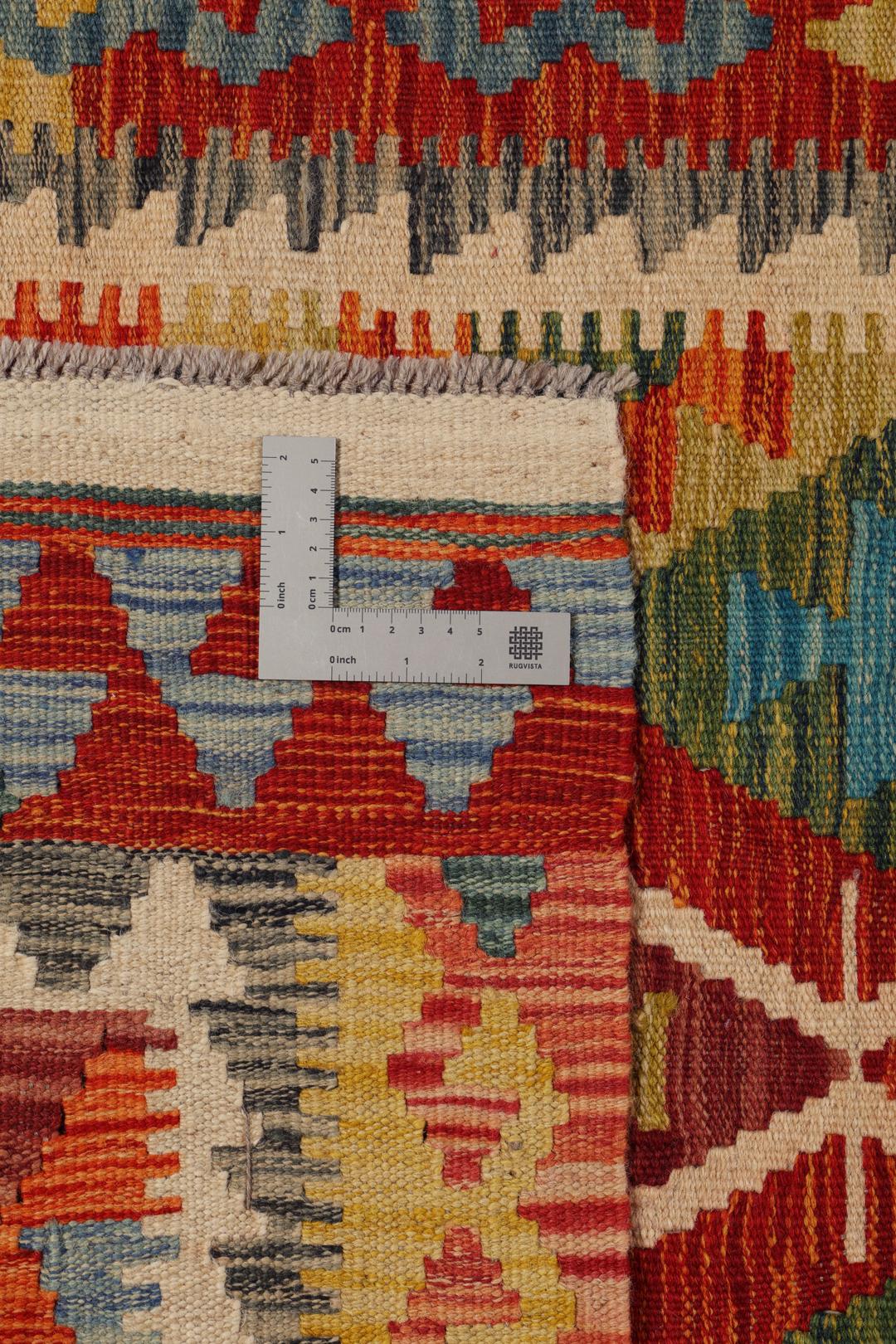
Kelim rugs have long been a cornerstone of nomadic and village life across the Middle East and Central Asia. Historically, these flat-woven pieces were created for practical use, serving as floor coverings, blankets, or wall hangings in portable dwellings. The Afghan tradition, in particular, is celebrated for its robust construction and the use of bold, earthy pigments that reflect the rugged landscapes of the region.
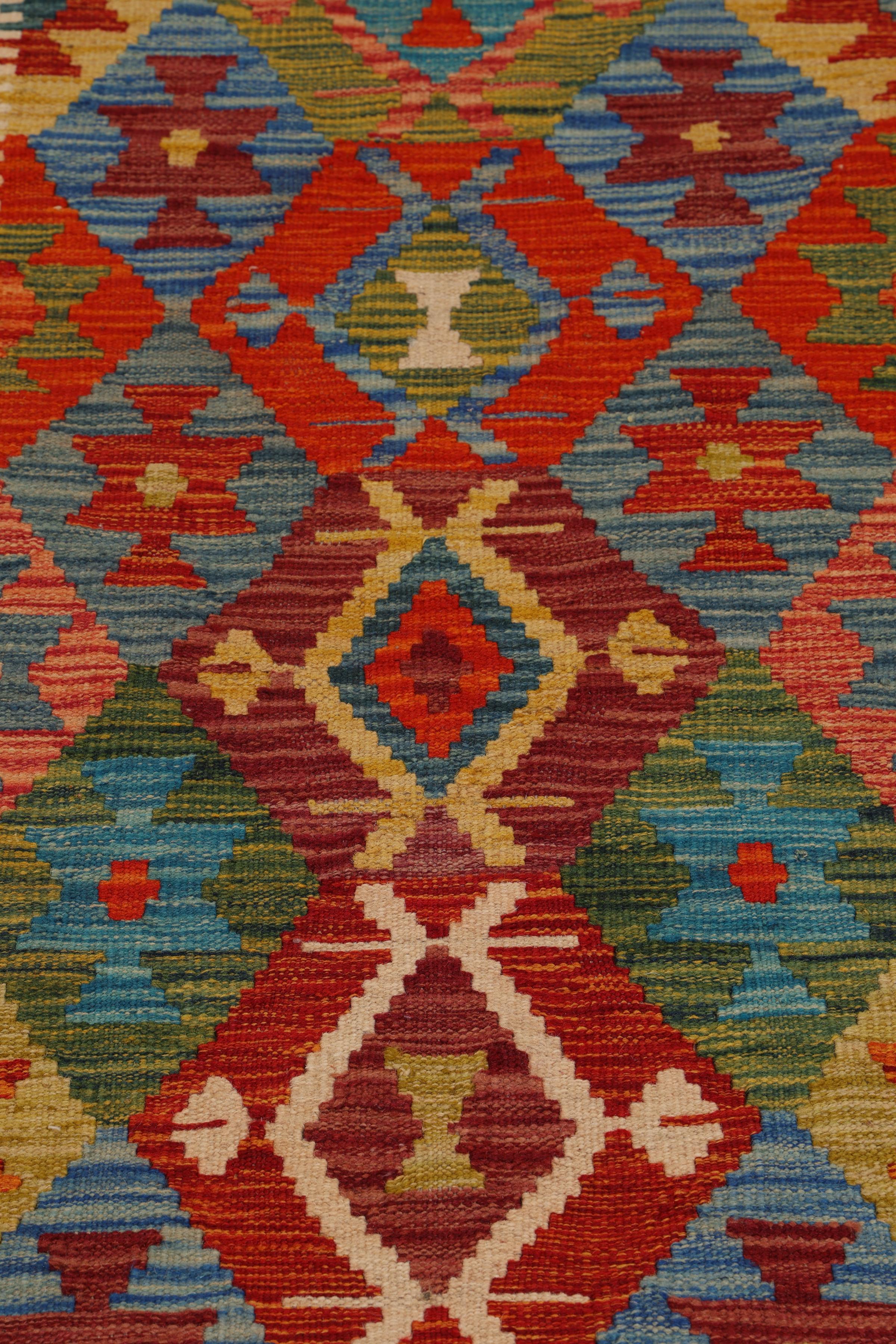
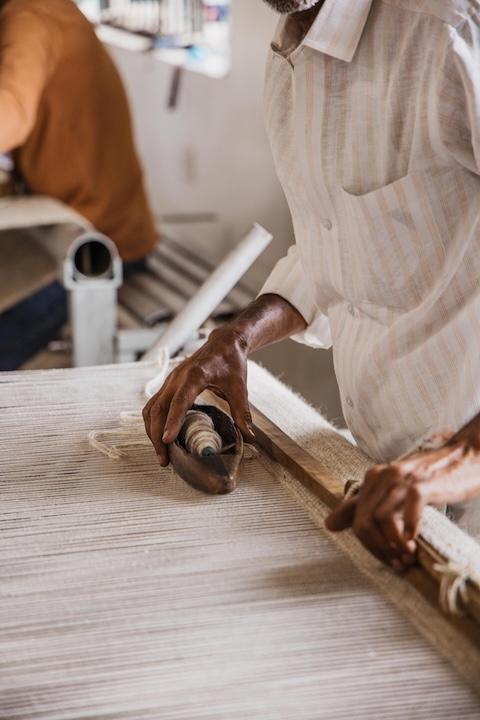
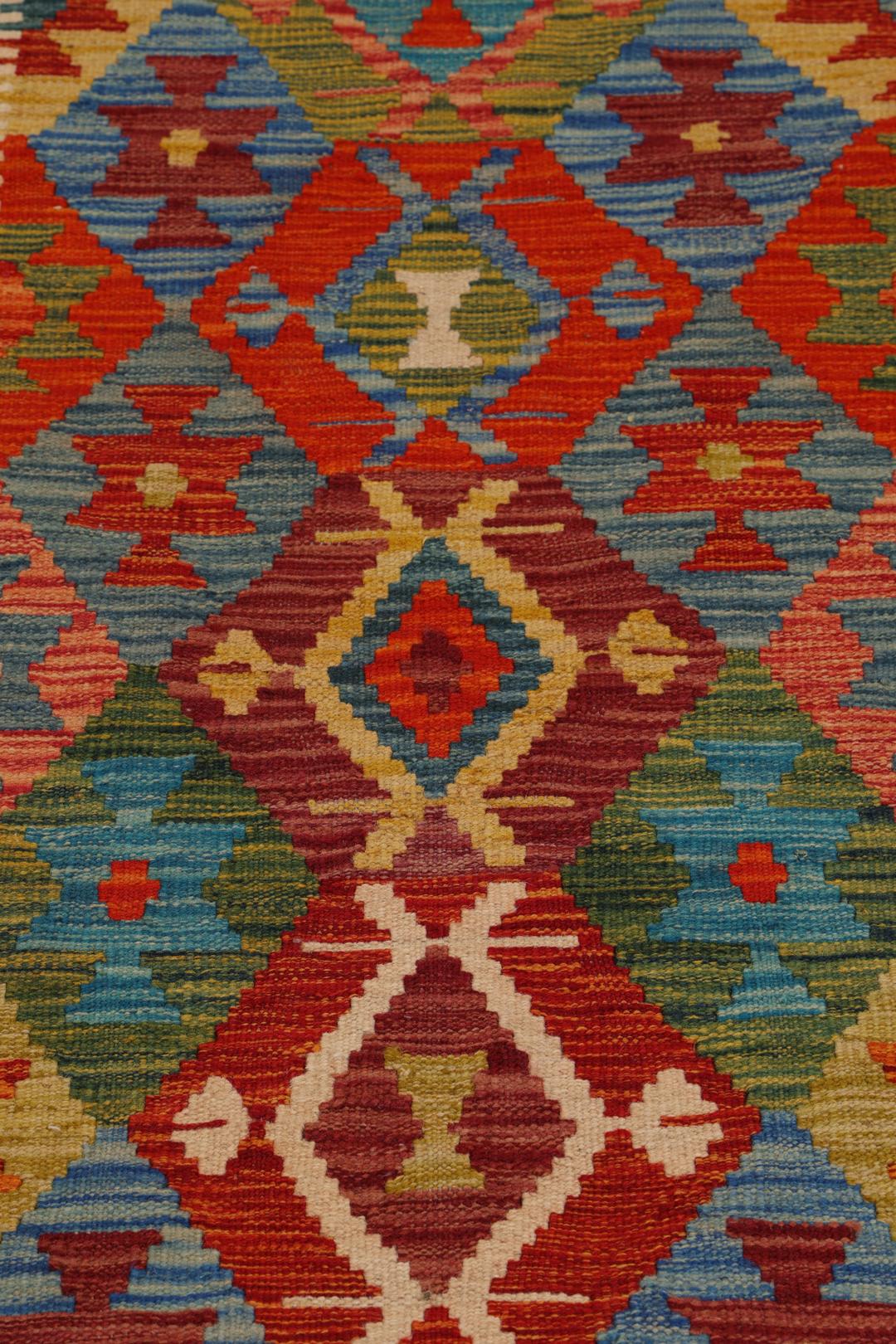
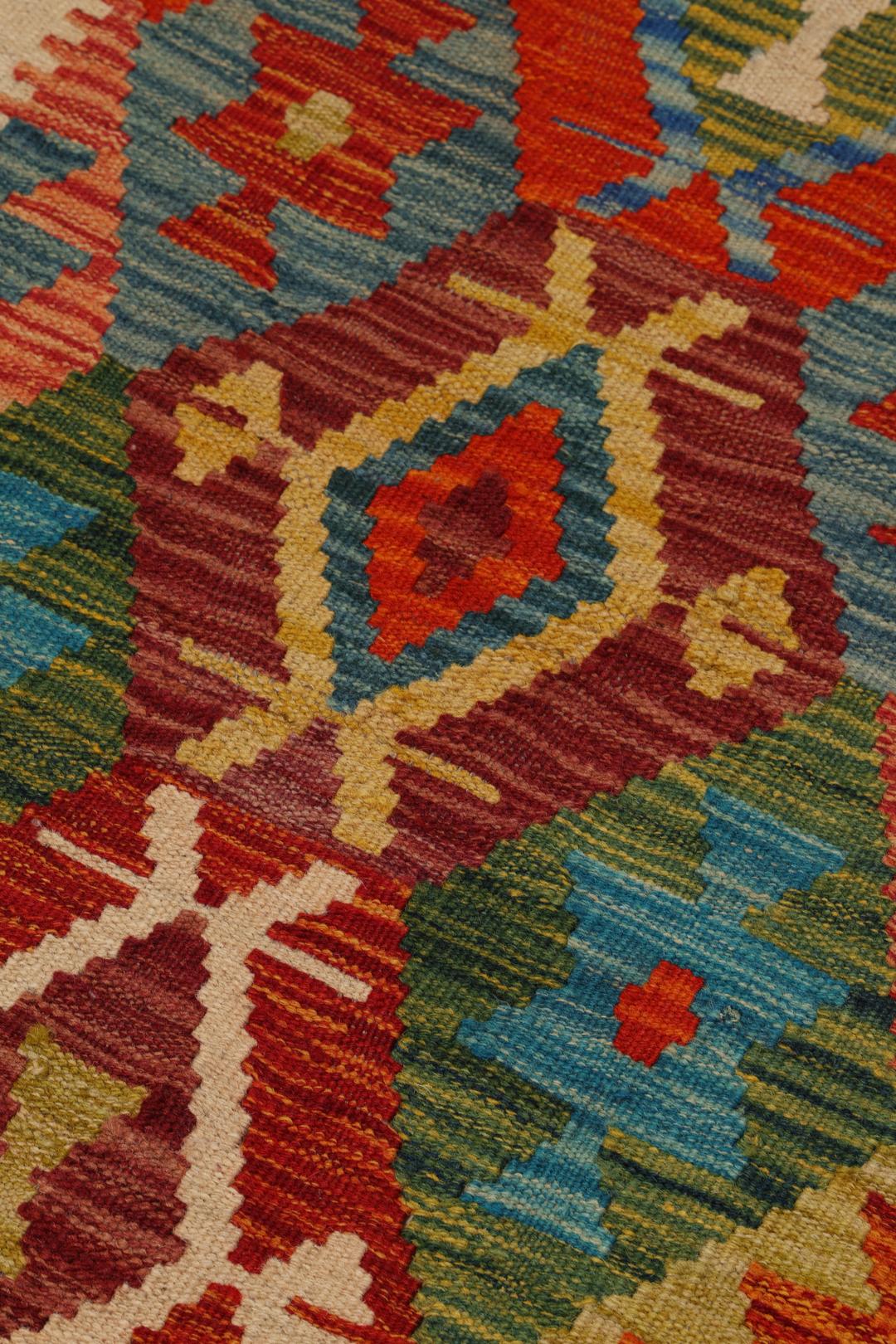
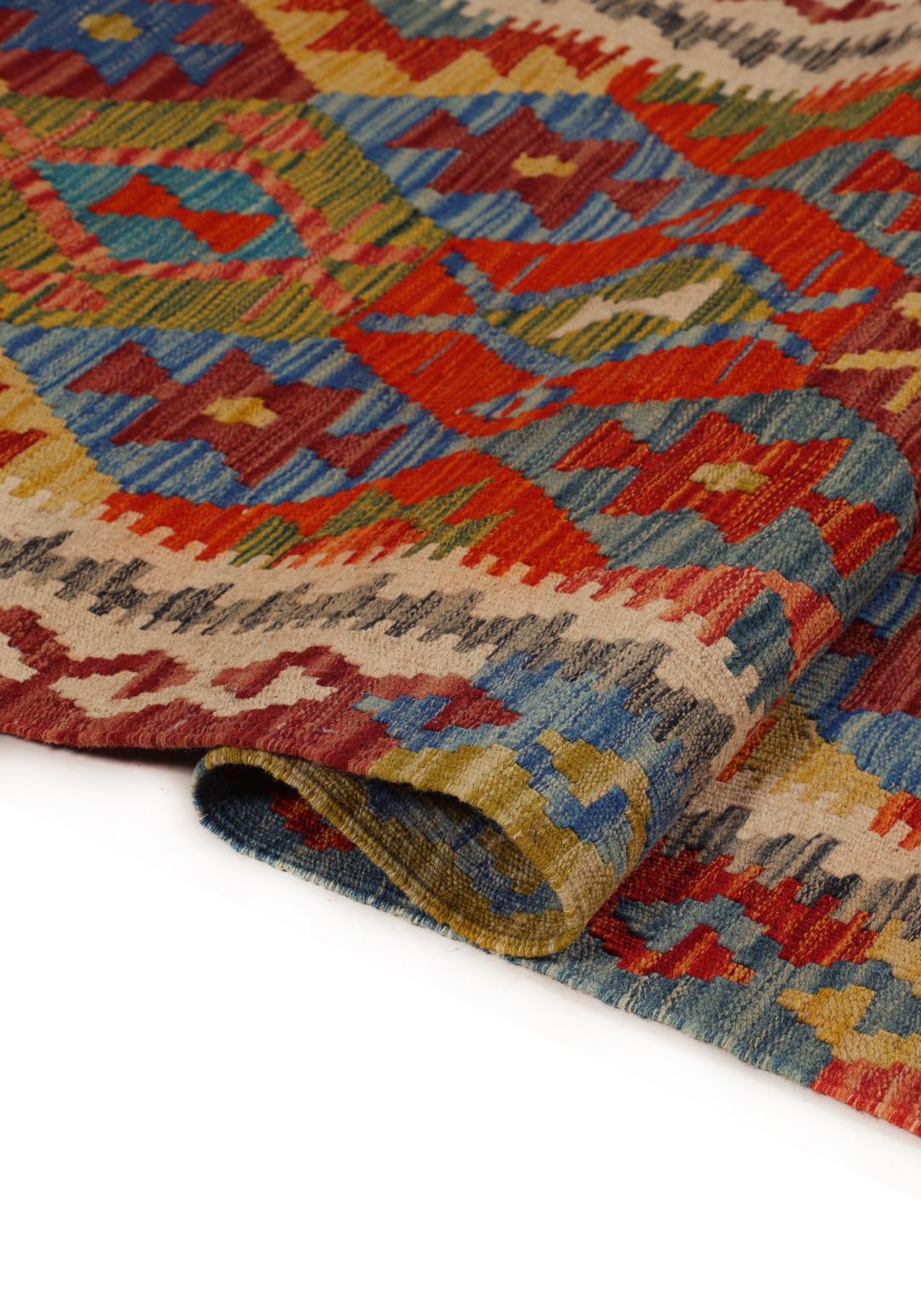
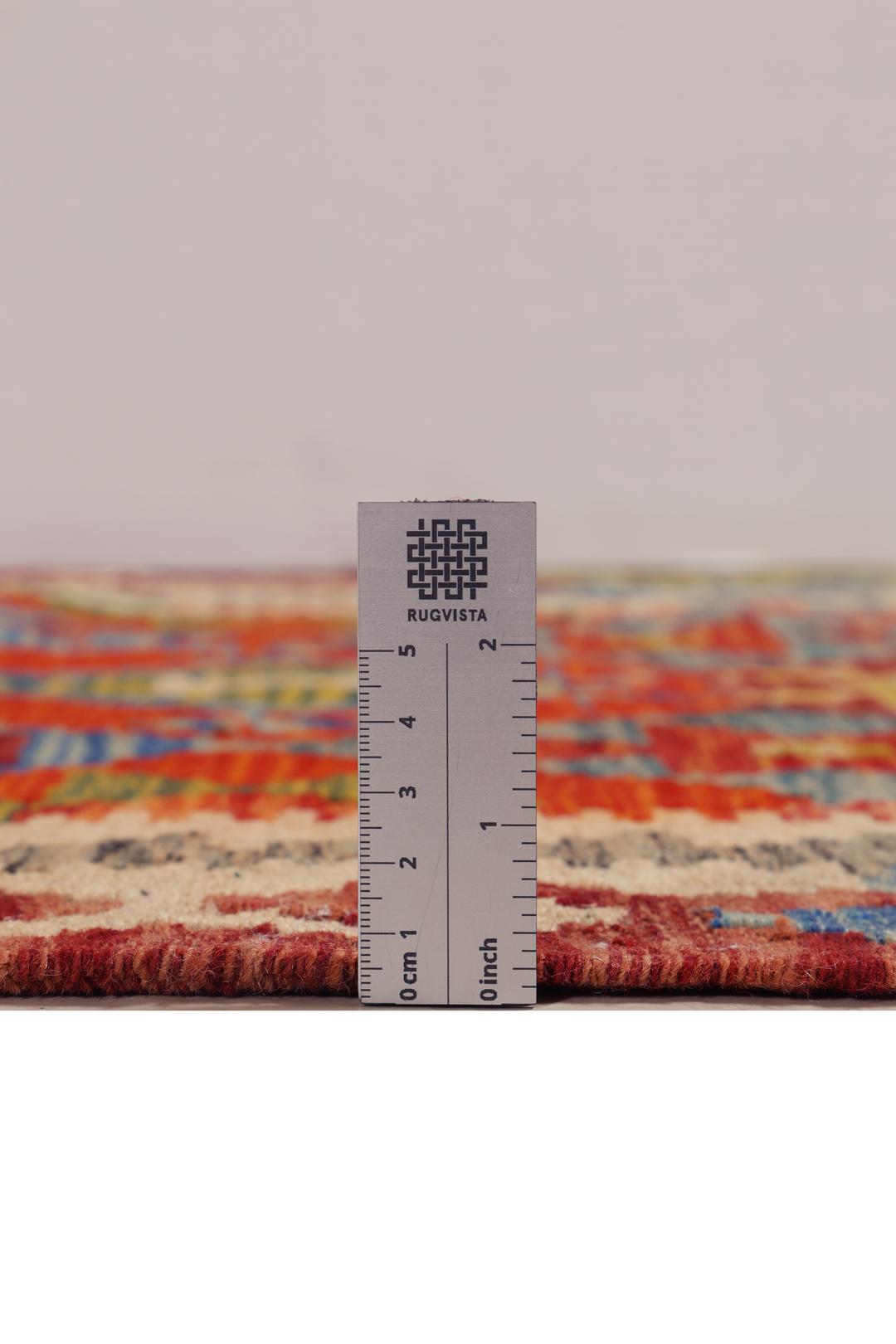
The term Kelim refers to the specific slit-weave technique where the weft threads are pulled tightly over the warp threads, creating a surface without a pile. This method is what gives the rug its characteristic thin, durable feel. Because there is no pile to obscure the pattern, the geometric motifs appear exceptionally sharp and clear, showcasing the weaver's ability to maintain tension and precision across the entire length of the runner.
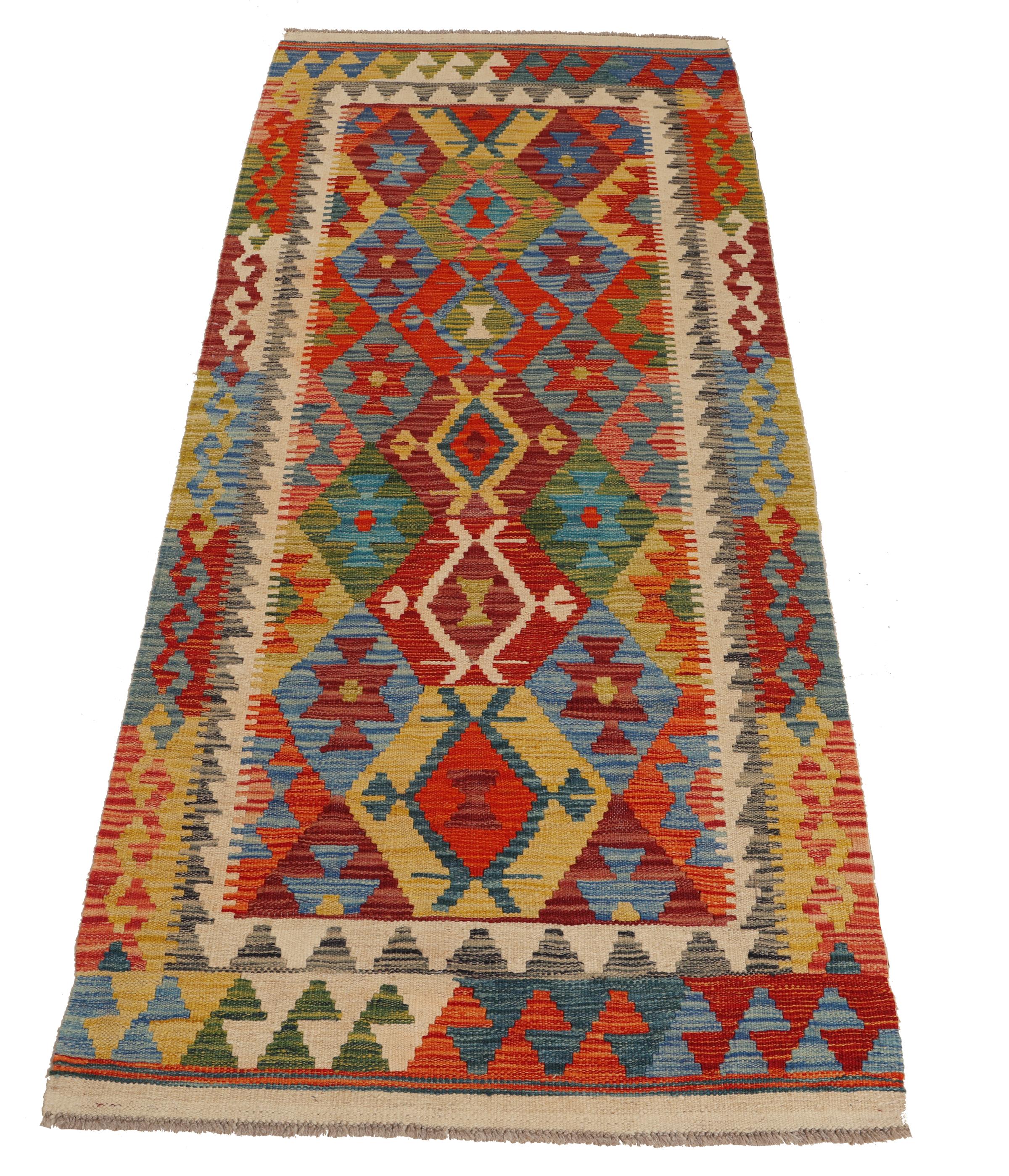
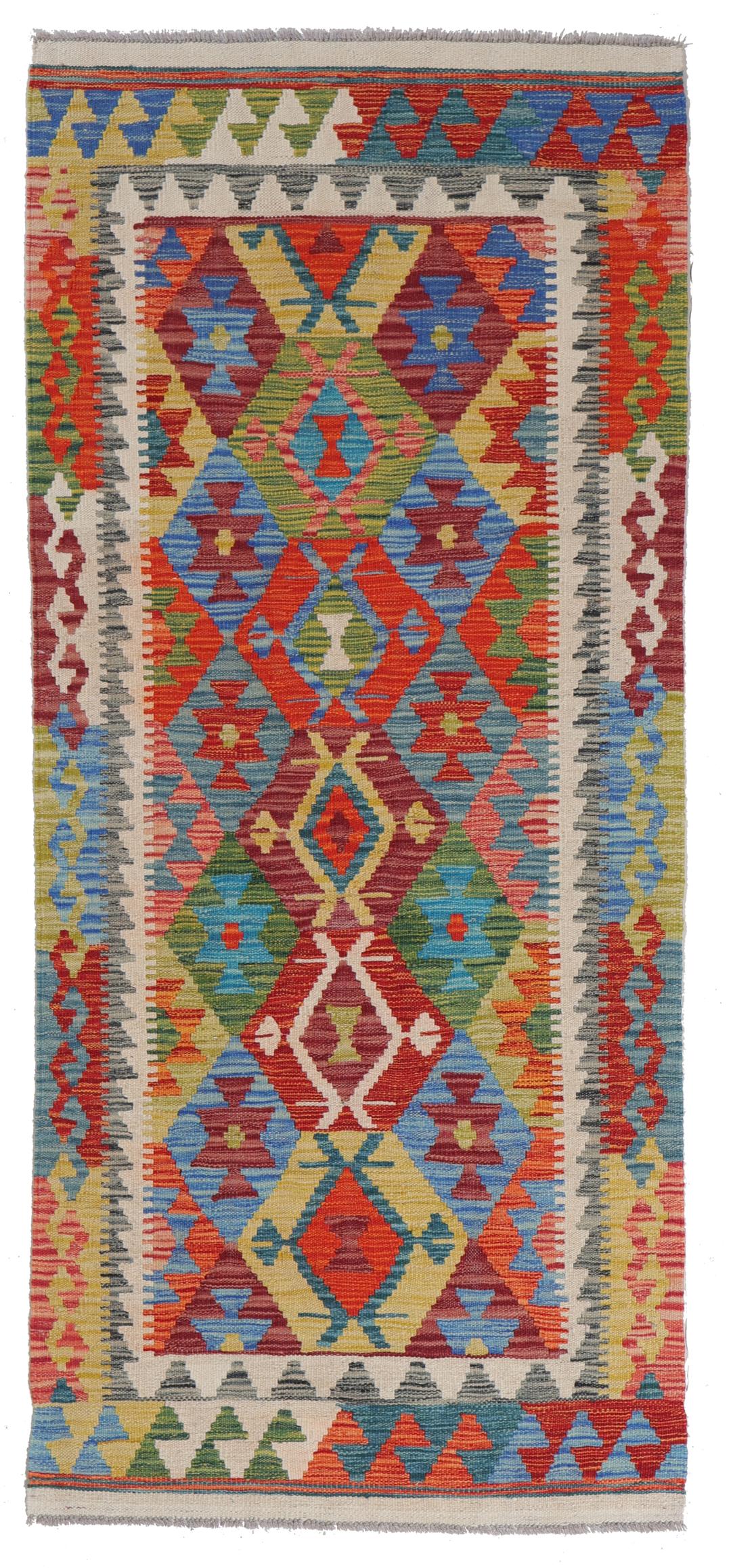
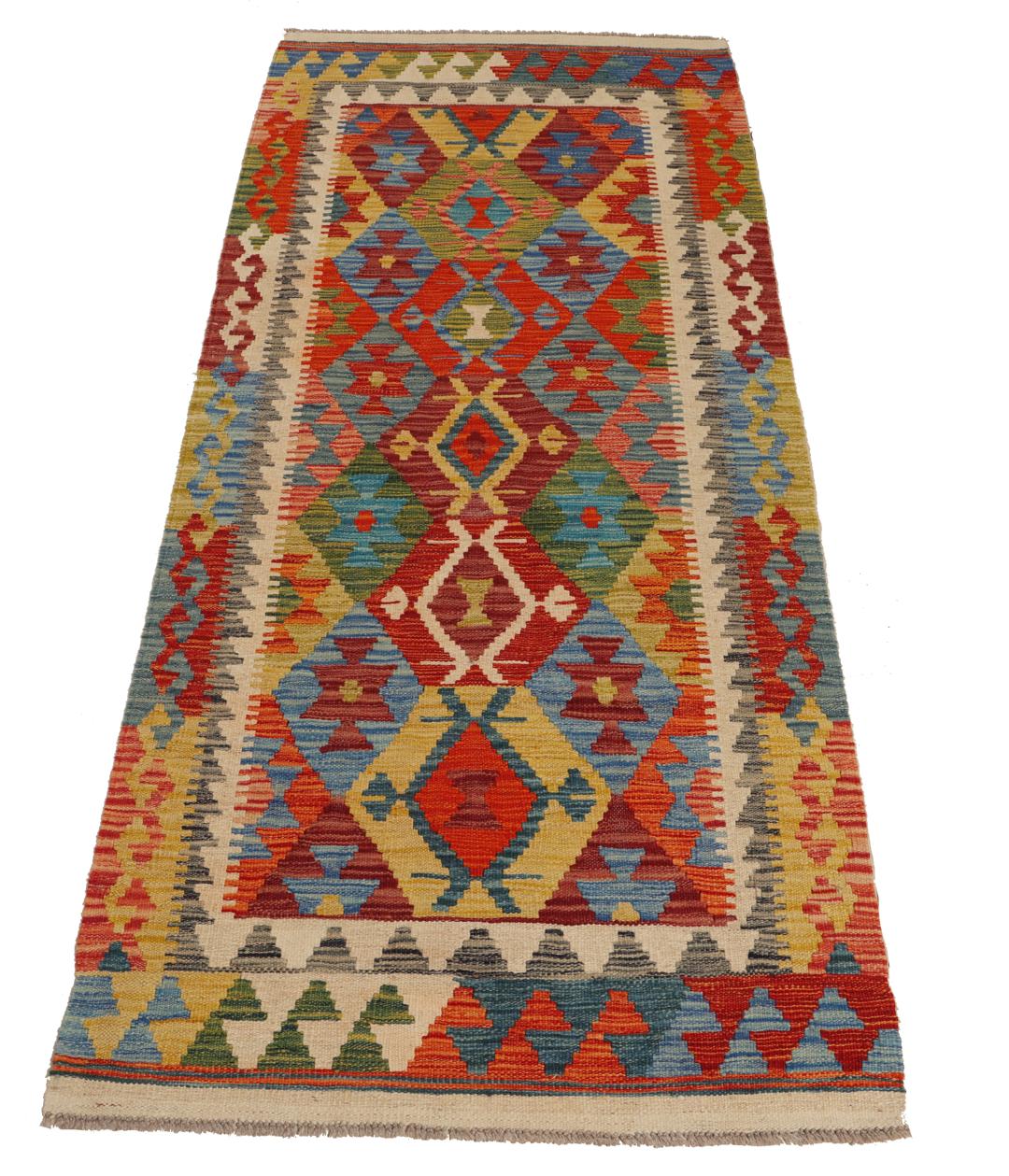
Signature design elements in these runners often include large, repeating diamonds and medallions, which are common motifs in tribal weaving. The borders are frequently decorated with smaller, complementary geometric shapes that frame the main field. This particular rug features a vibrant array of colours, a hallmark of the 'Old Style' tradition that favours a rich, saturated aesthetic that has been refined over generations of practice.
Collecting these rugs is an investment in human skill and regional heritage. Unlike mass-produced items, these runners are deeply connected to the families and communities who create them, with each piece telling a story through its unique variation in colour and pattern. By bringing one into your home, you are preserving a legacy of craft that values time, patience, and the beauty of handmade imperfection.