The tradition of weaving flat-weave rugs, known as Kelims, has been a cornerstone of life in the Middle East and Central Asia for centuries. These rugs were historically created by nomadic tribes to serve as practical, portable floor coverings, room dividers, and bags. Over time, these weaving traditions evolved into the sophisticated styles we recognise today, with Afghan artisans becoming world-renowned for their ability to blend ancient techniques with bold, expressive designs.
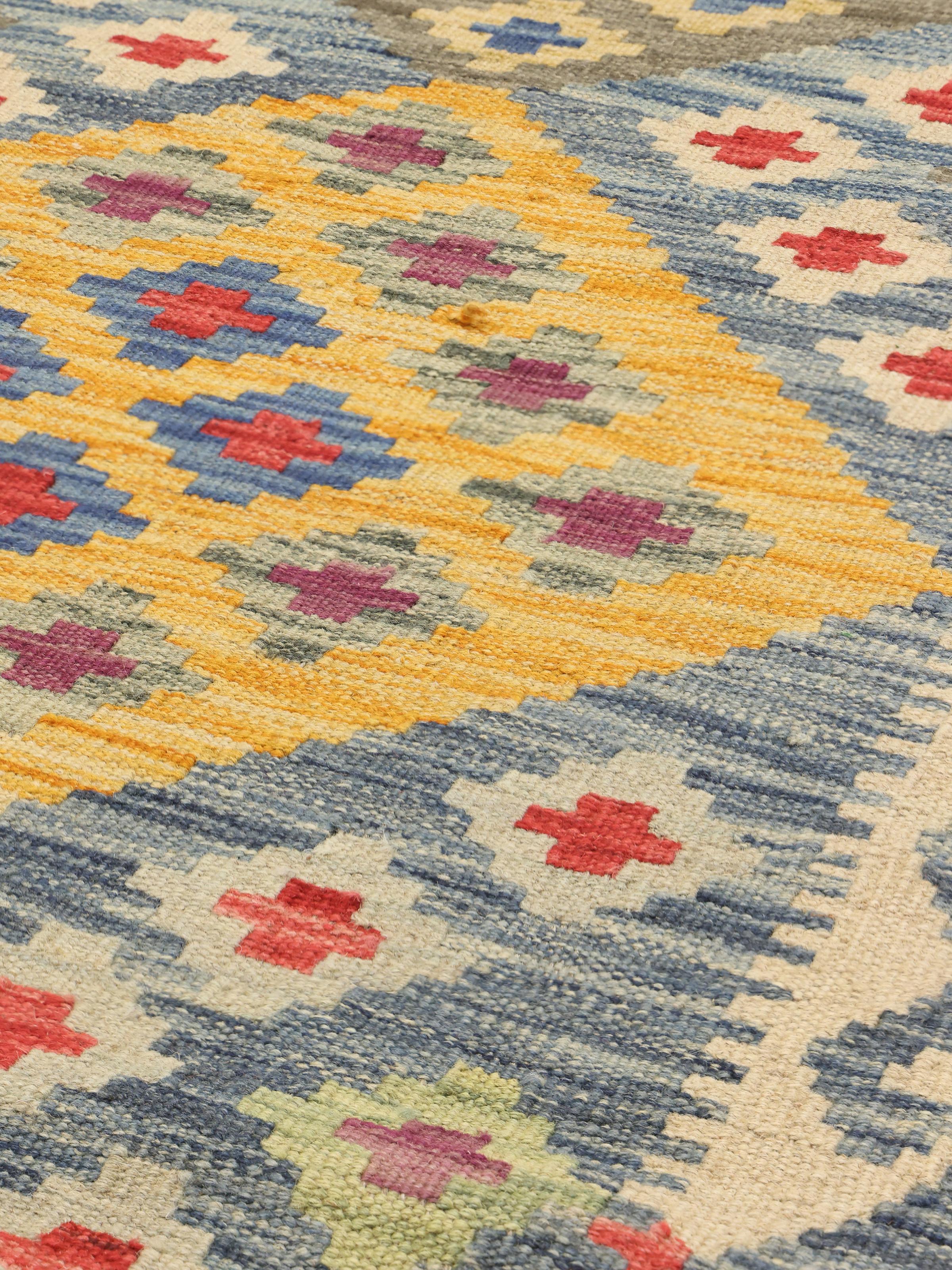
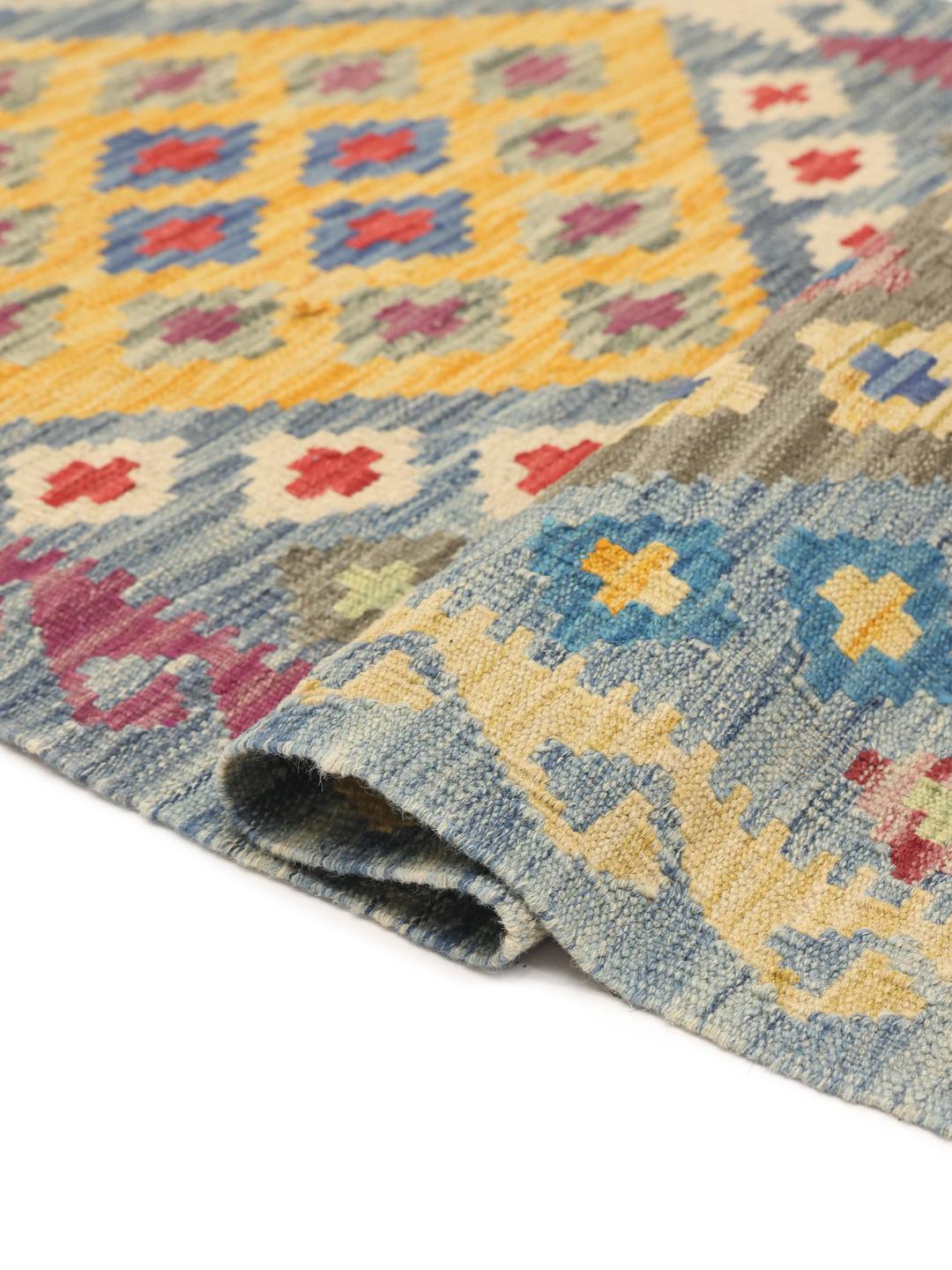
The term 'Kelim' refers to the specific tapestry-weave technique where no pile is created. Instead, the weaver wraps the horizontal weft threads around the vertical warp threads, creating a smooth, reversible surface that is incredibly durable. This technique allows for the creation of intricate, angular patterns, as the design is dictated by the grid of the loom itself. The resulting weave is tight and resilient, making these rugs an ideal choice for busy homes.
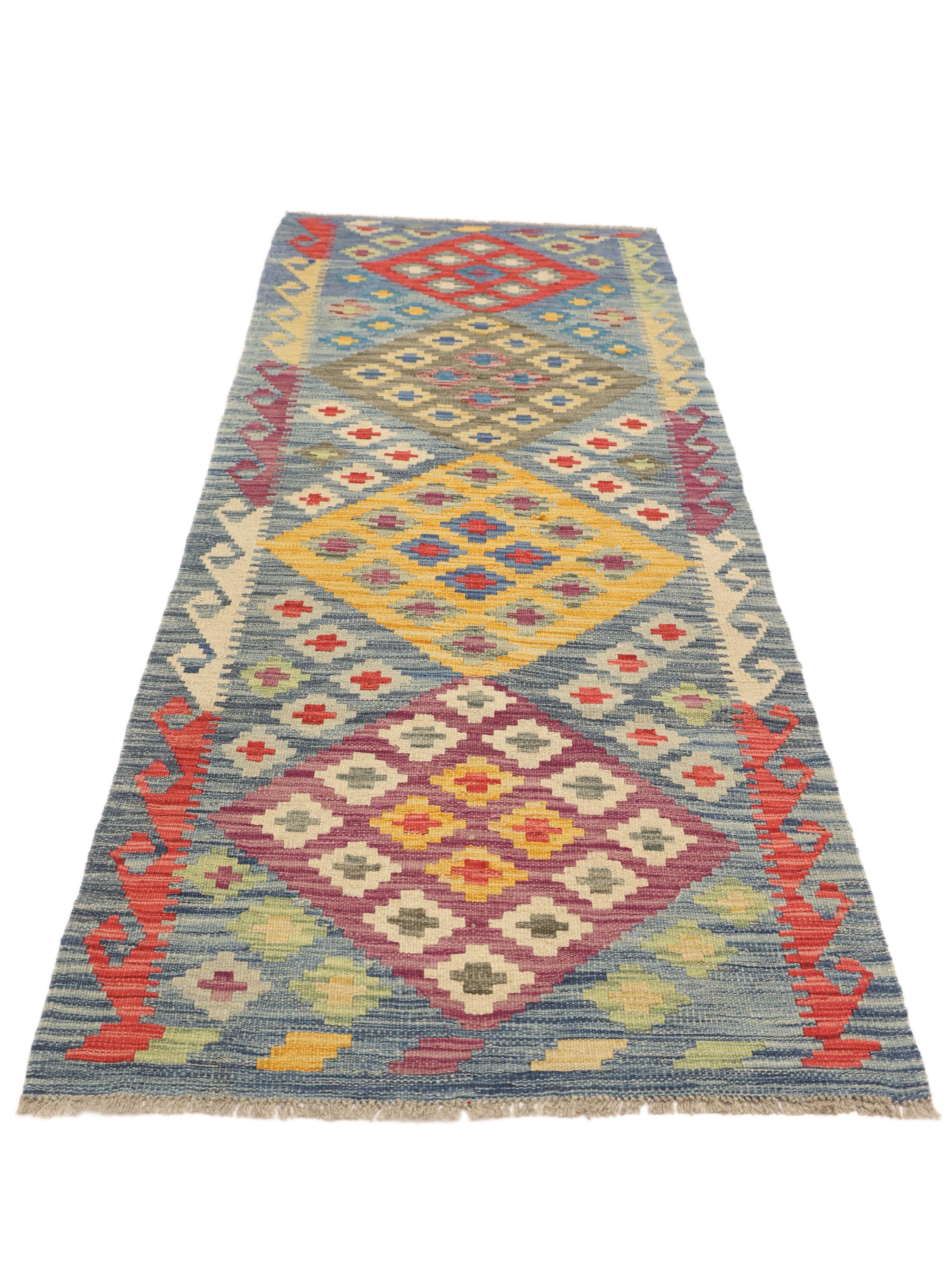
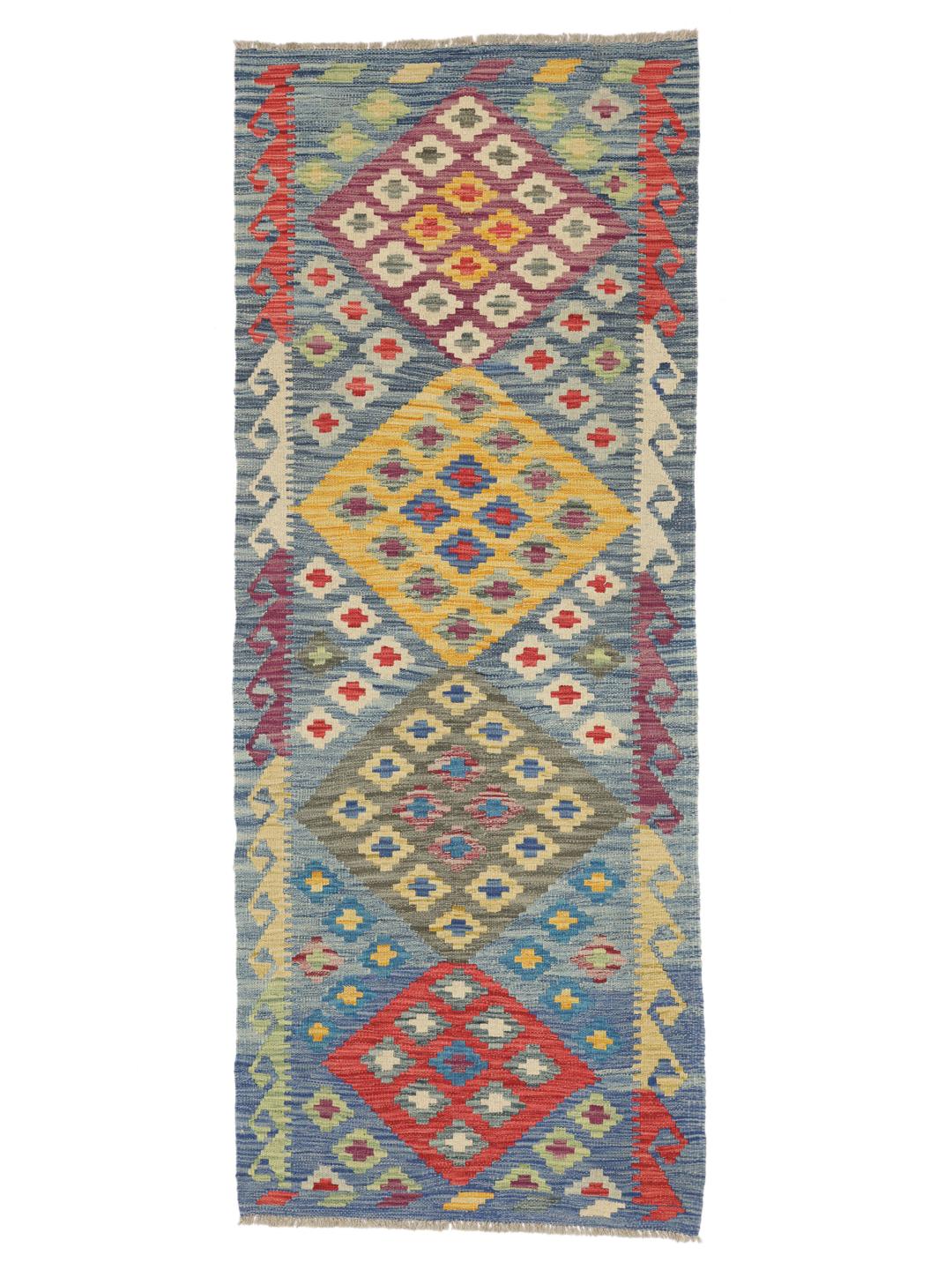
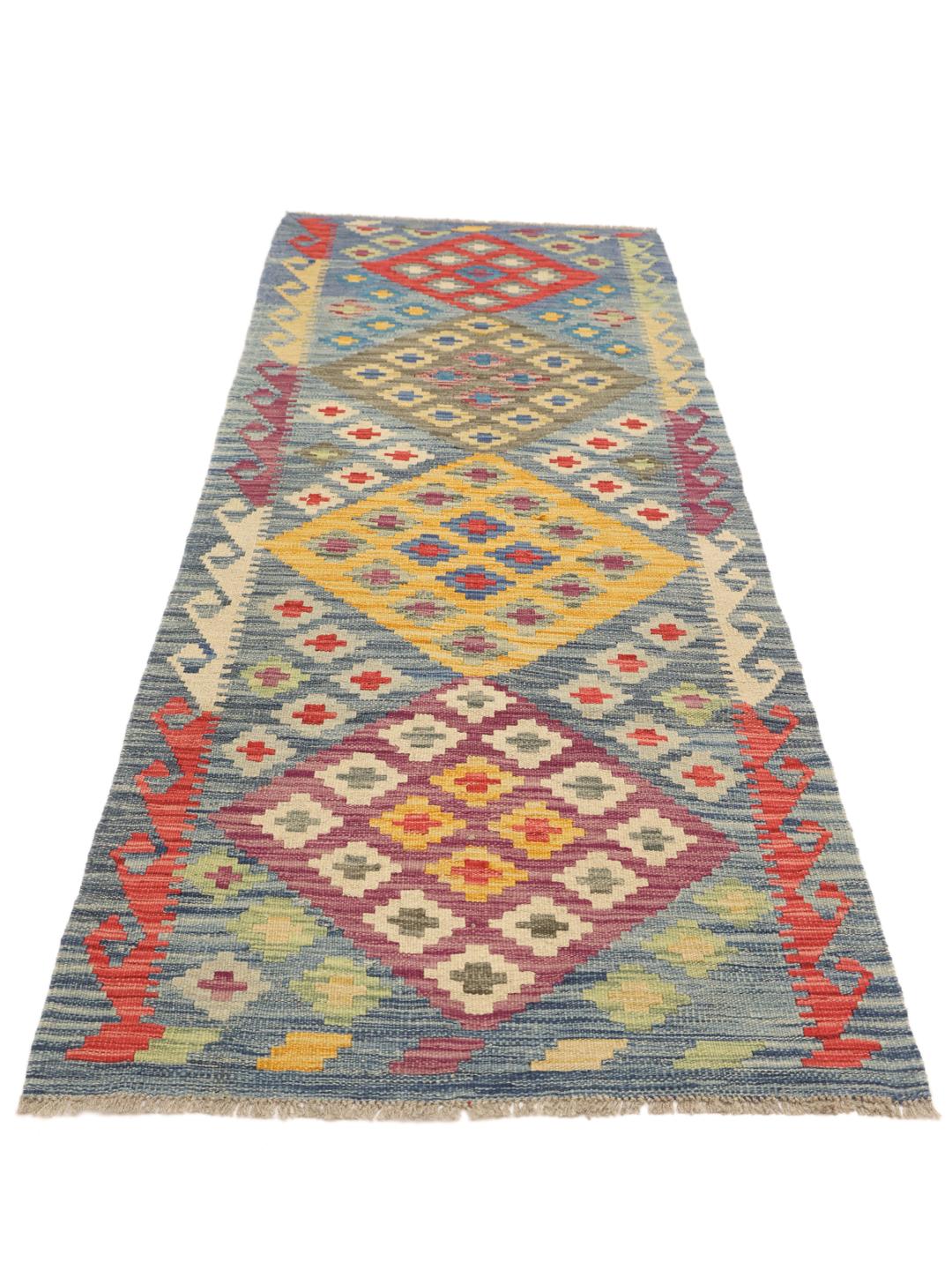
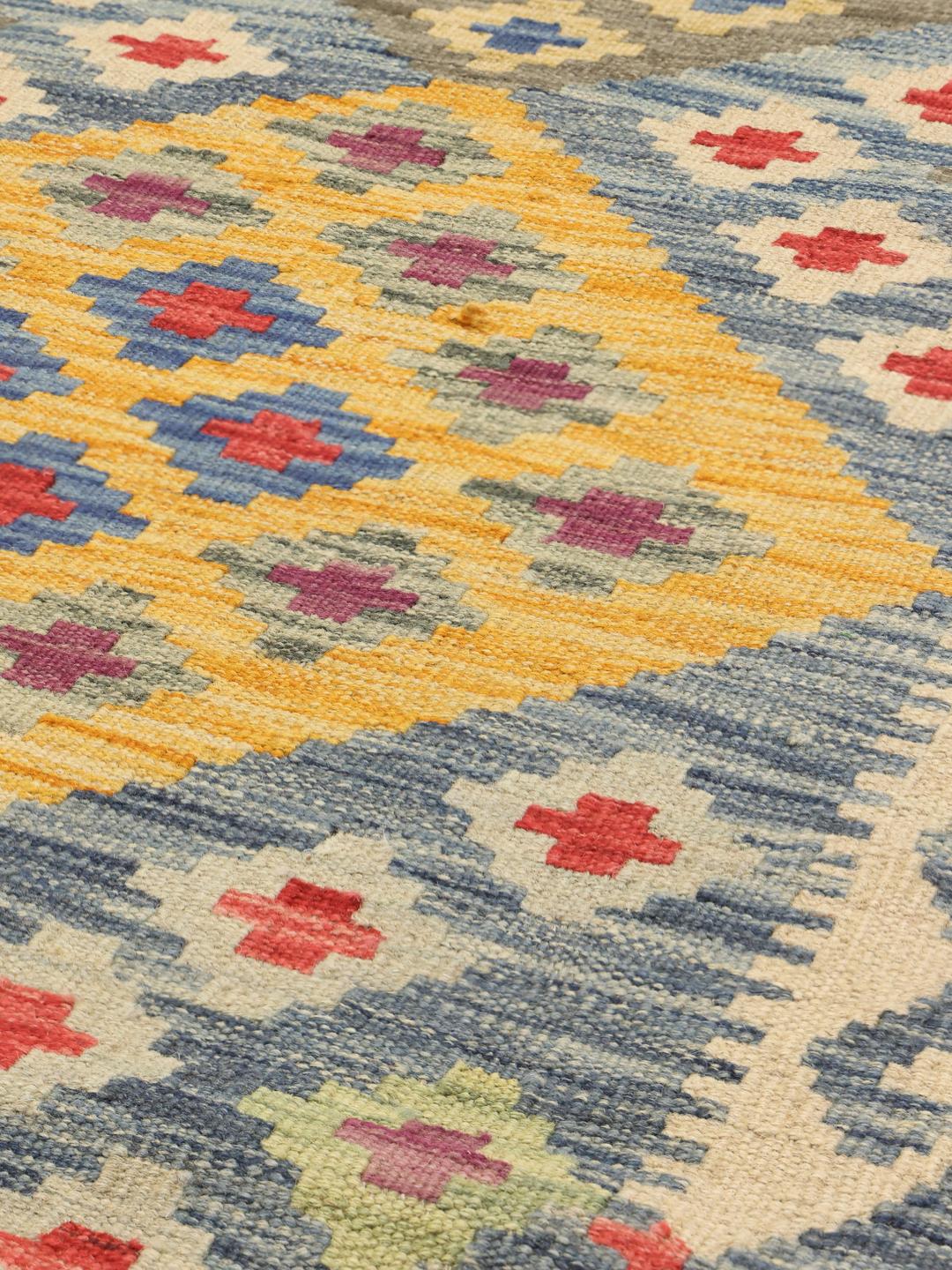
Visual language in these rugs is deeply rooted in regional identity. The repeating diamond motifs seen here are common in the Afghan tradition, often representing protection or prosperity, with colours derived from natural sources that have been used for generations. The use of vibrant blues and reds against more neutral tones is a hallmark of this style, creating a balanced yet energetic look that has remained popular for its timeless appeal.
Collecting these rugs is an investment in cultural heritage. Each piece reflects the specific environment and artistic vision of the community where it was made. By owning such a rug, you are preserving a craft that has been passed down through families for generations, ensuring that these skills and stories continue to thrive in modern homes. It is a tangible link to a rich, historical past that adds depth and authenticity to any room.