Flatwoven Kelim rugs hold a central place in the rich textile heritage of Afghanistan and the wider Middle East.
Historically created by nomadic and village weavers, these utilitarian textiles were designed as versatile floor coverings, storage bags, and horse blankets, made to withstand the rigours of a nomadic lifestyle.
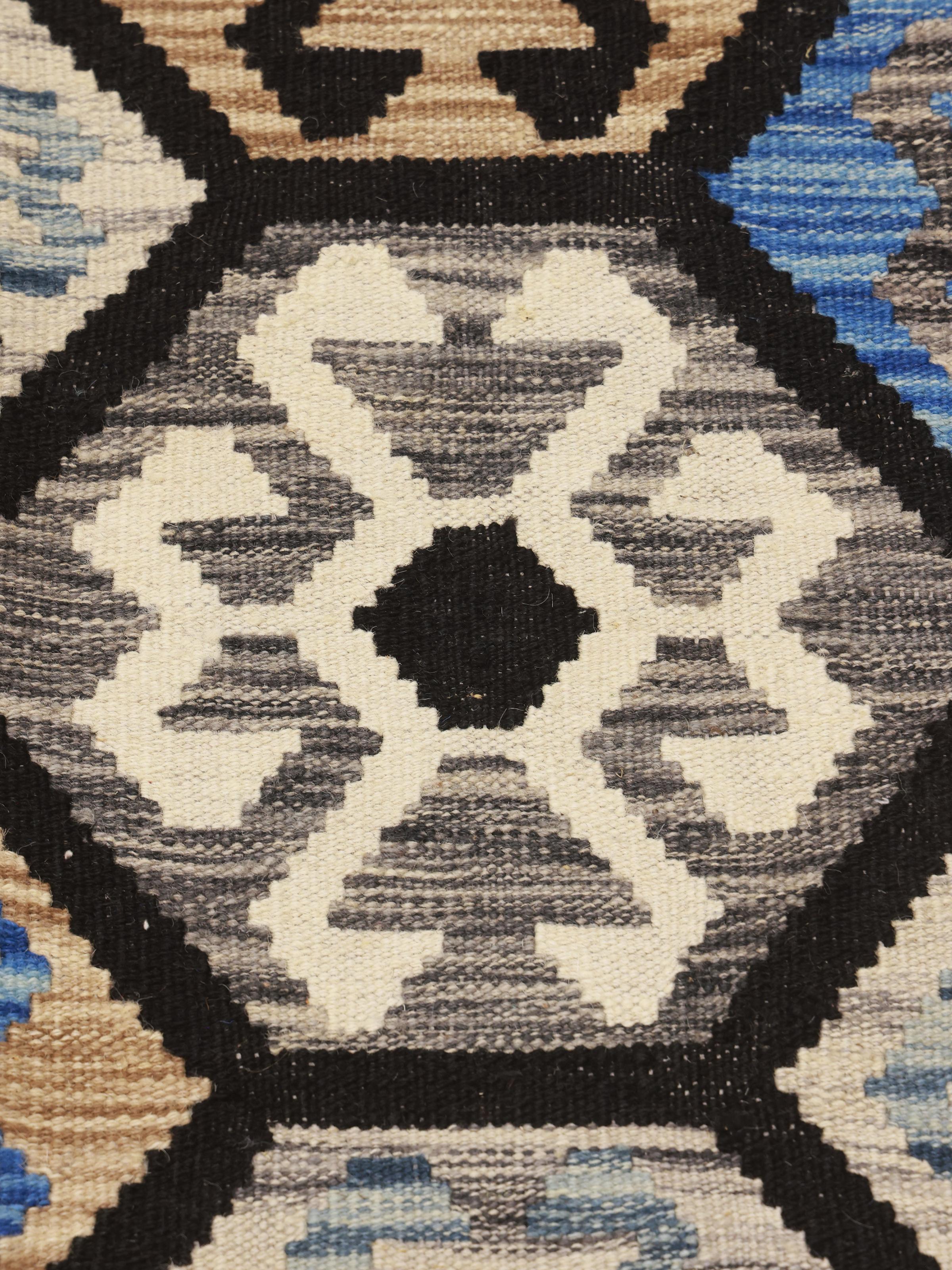
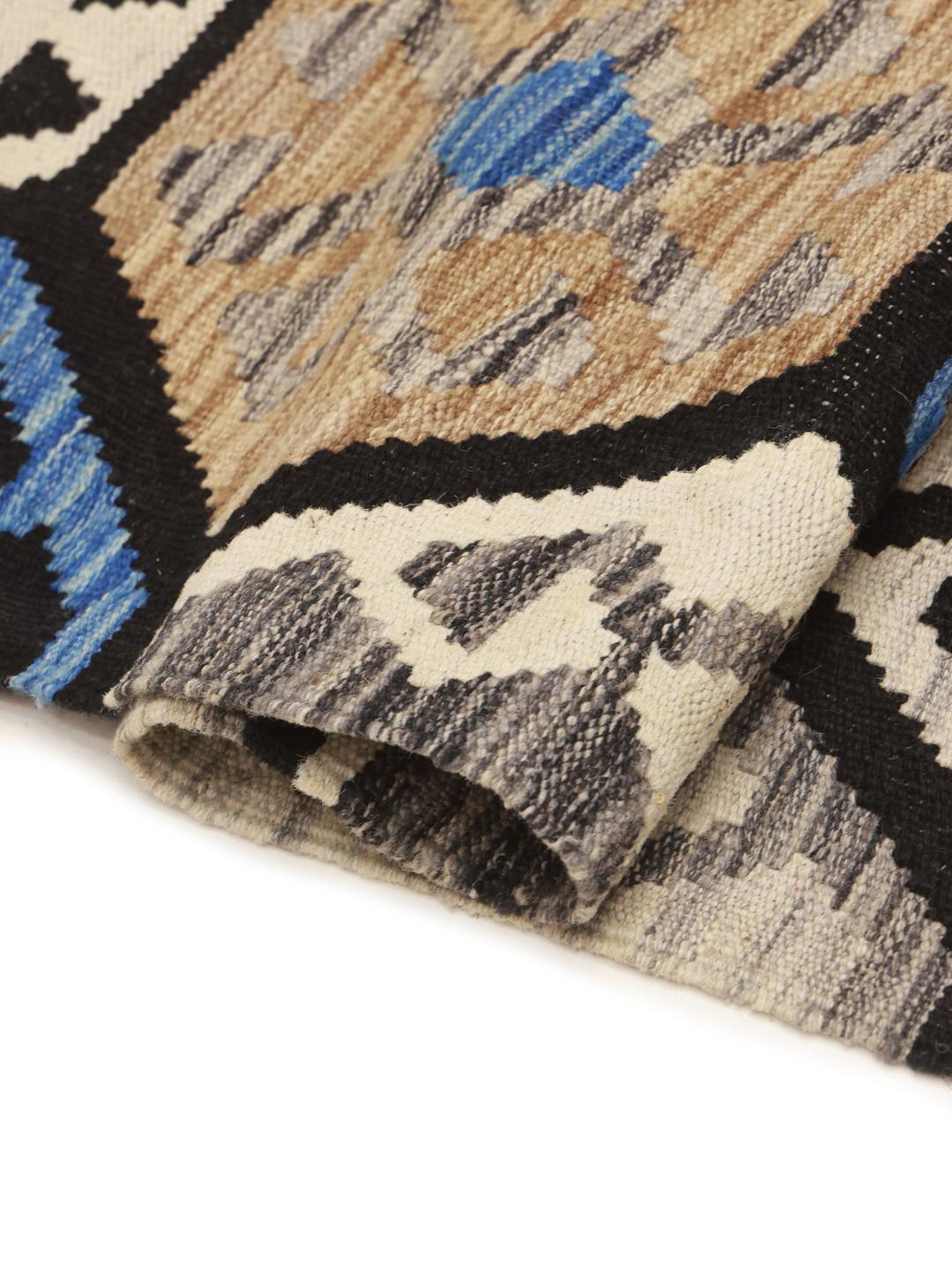
The term kelim refers to a flatweave construction where no pile is knotted into the foundation.
Instead, the coloured weft threads are tightly wrapped and tightly beaten across the warp threads, creating a smooth, reversible fabric with clean lines and sharp pattern definition.
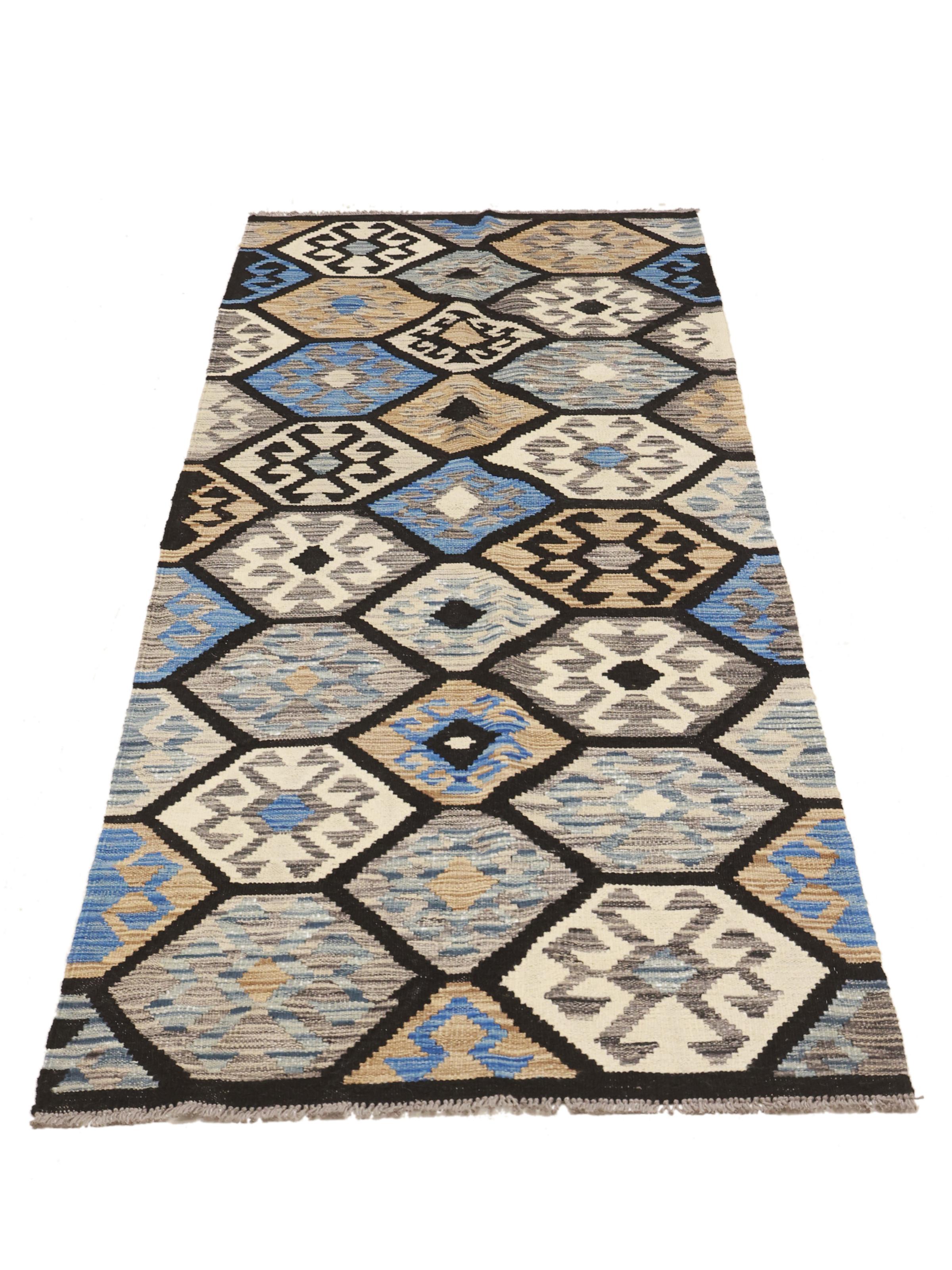
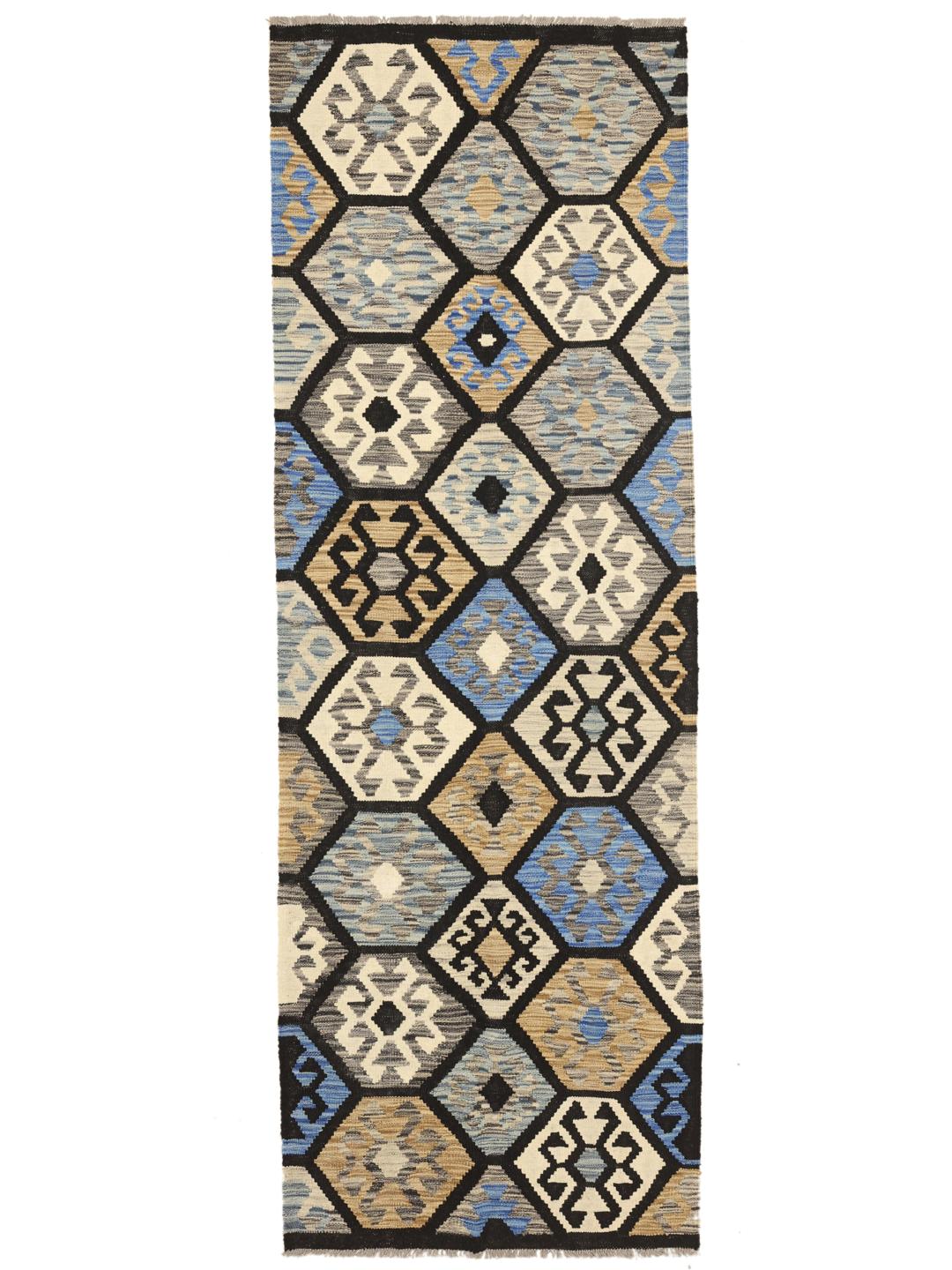
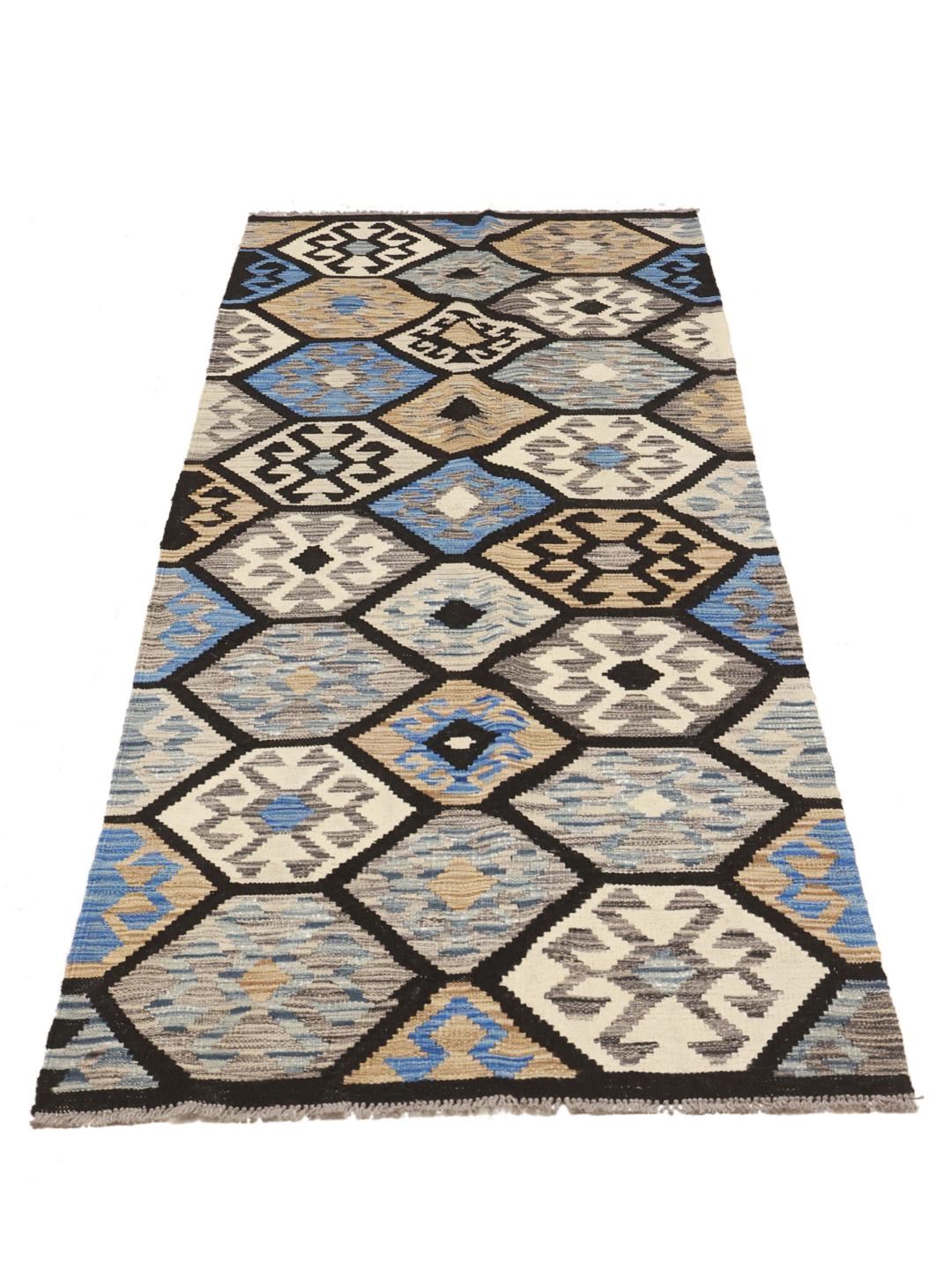
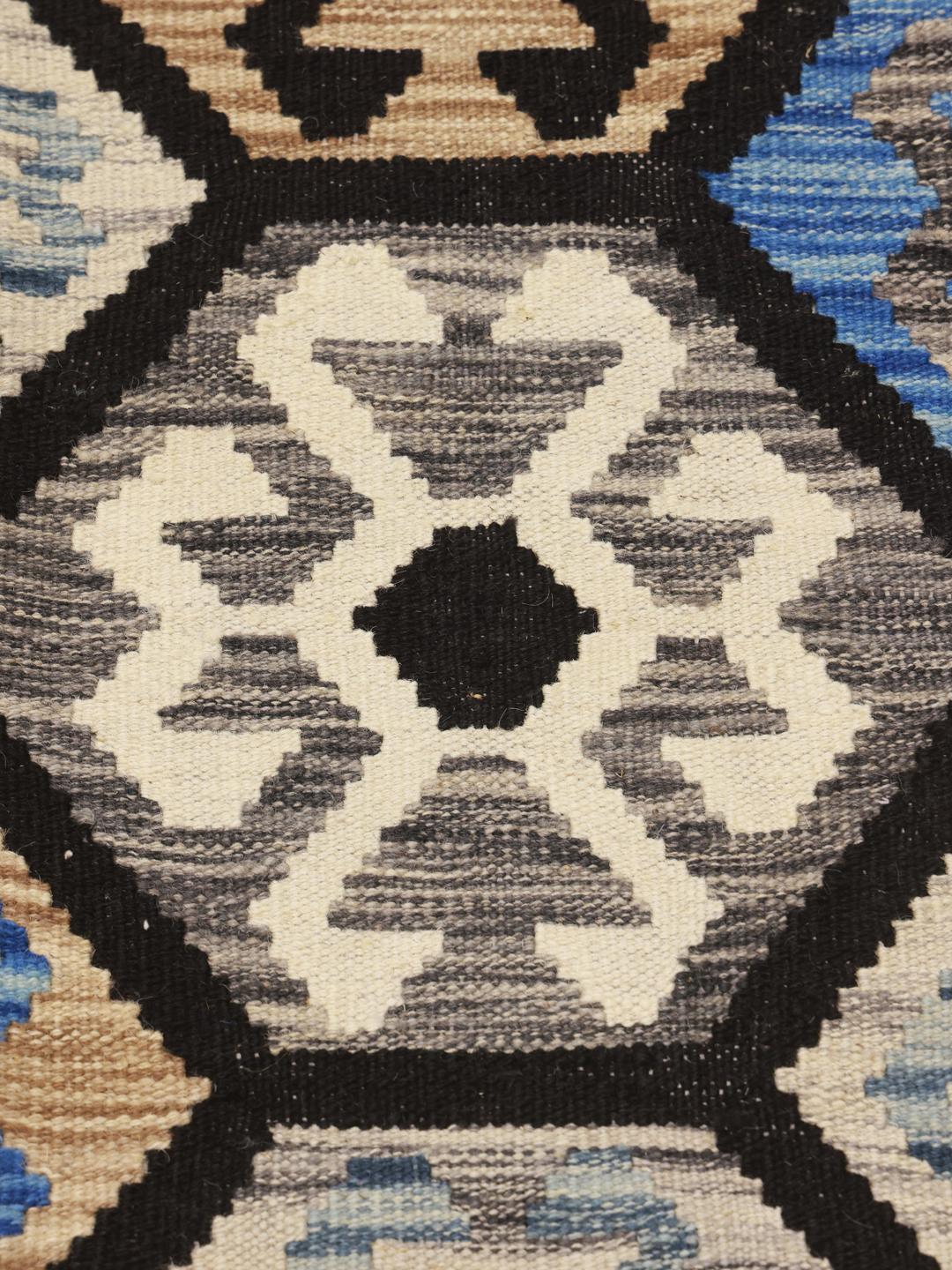
Visually, this runner is defined by an orderly arrangement of geometric hexagonal medallions, often referred to as honeycombs or guls.
These repeated motifs draw on ancient tribal symbolism, framed carefully by dark contrasting outlines that enhance the rhythm and depth of the design.
Collecting these traditional flatweaves allows you to bring a tangible piece of cultural heritage into your home.
Each rug reflects the inherited skills and artistic expressions of generations of makers, preserving a living craft tradition that cannot be replicated by modern industrial looms.