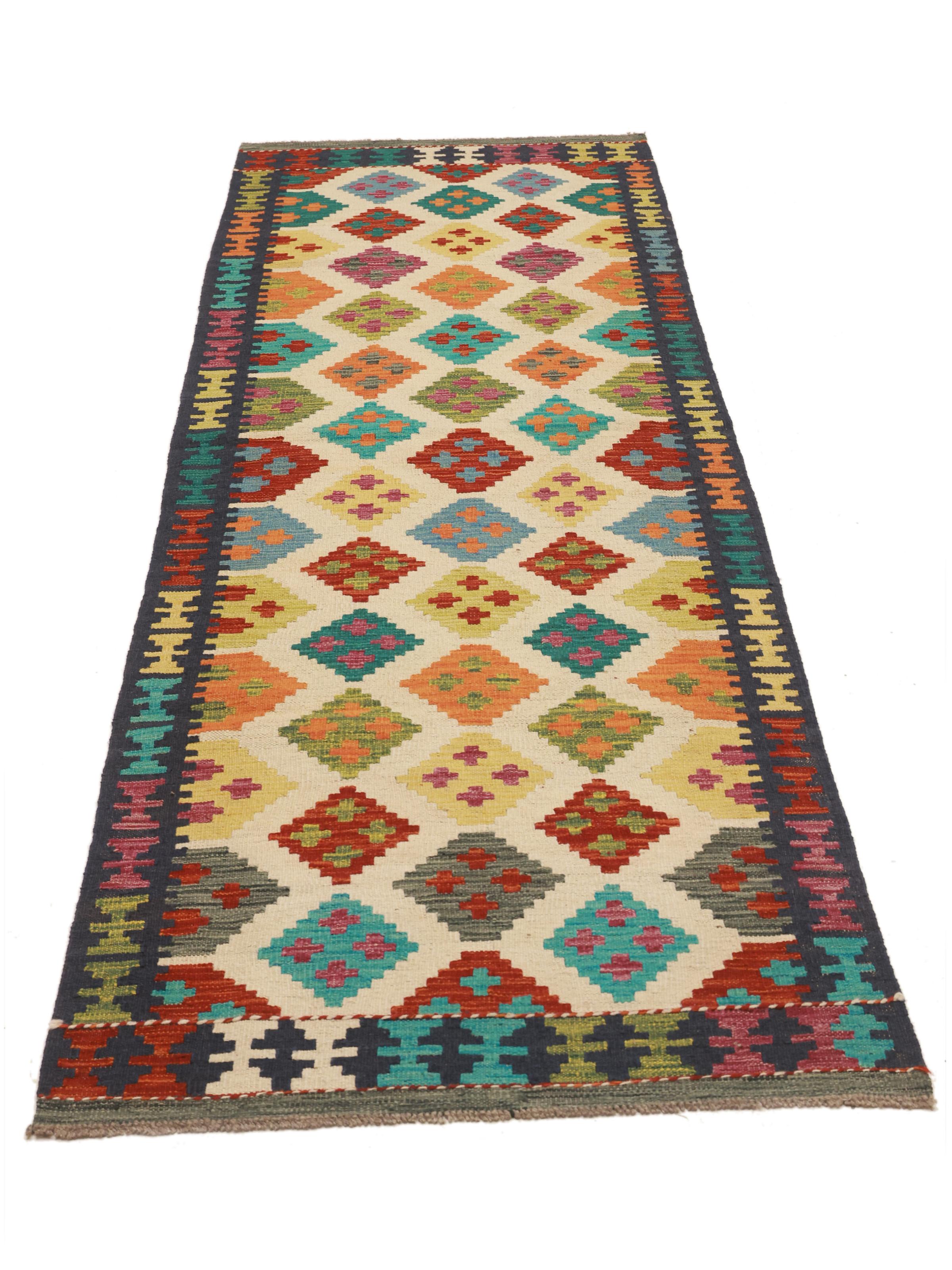
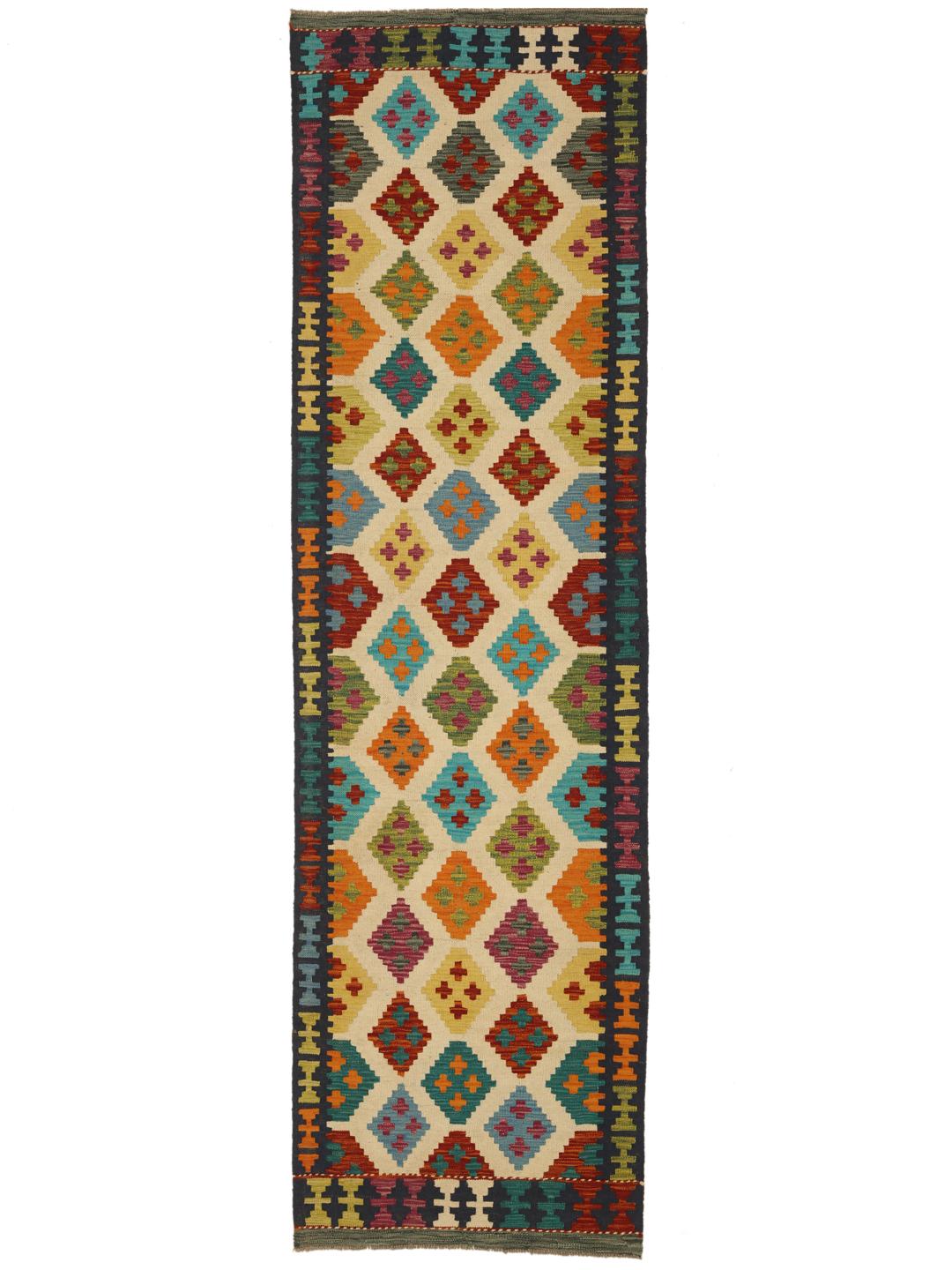
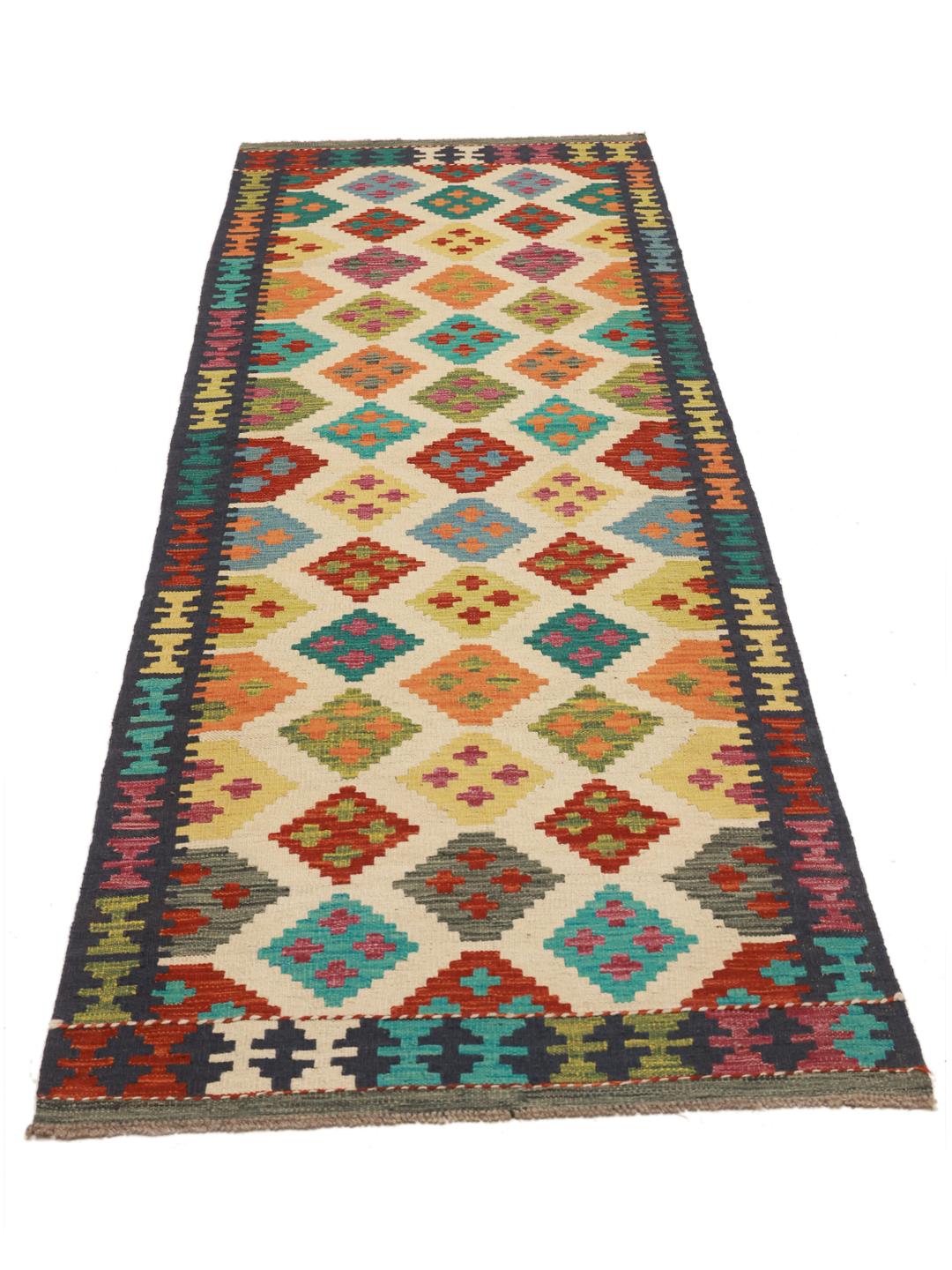
The Kelim Afghan Old Style tradition is deeply rooted in the nomadic heritage of the Middle East, where weaving has served as both a practical necessity and a vital form of artistic expression for centuries. These rugs are born from a culture that values the portability and durability of flat-woven textiles, which were historically used as floor coverings, blankets, and storage bags by travelling tribes.
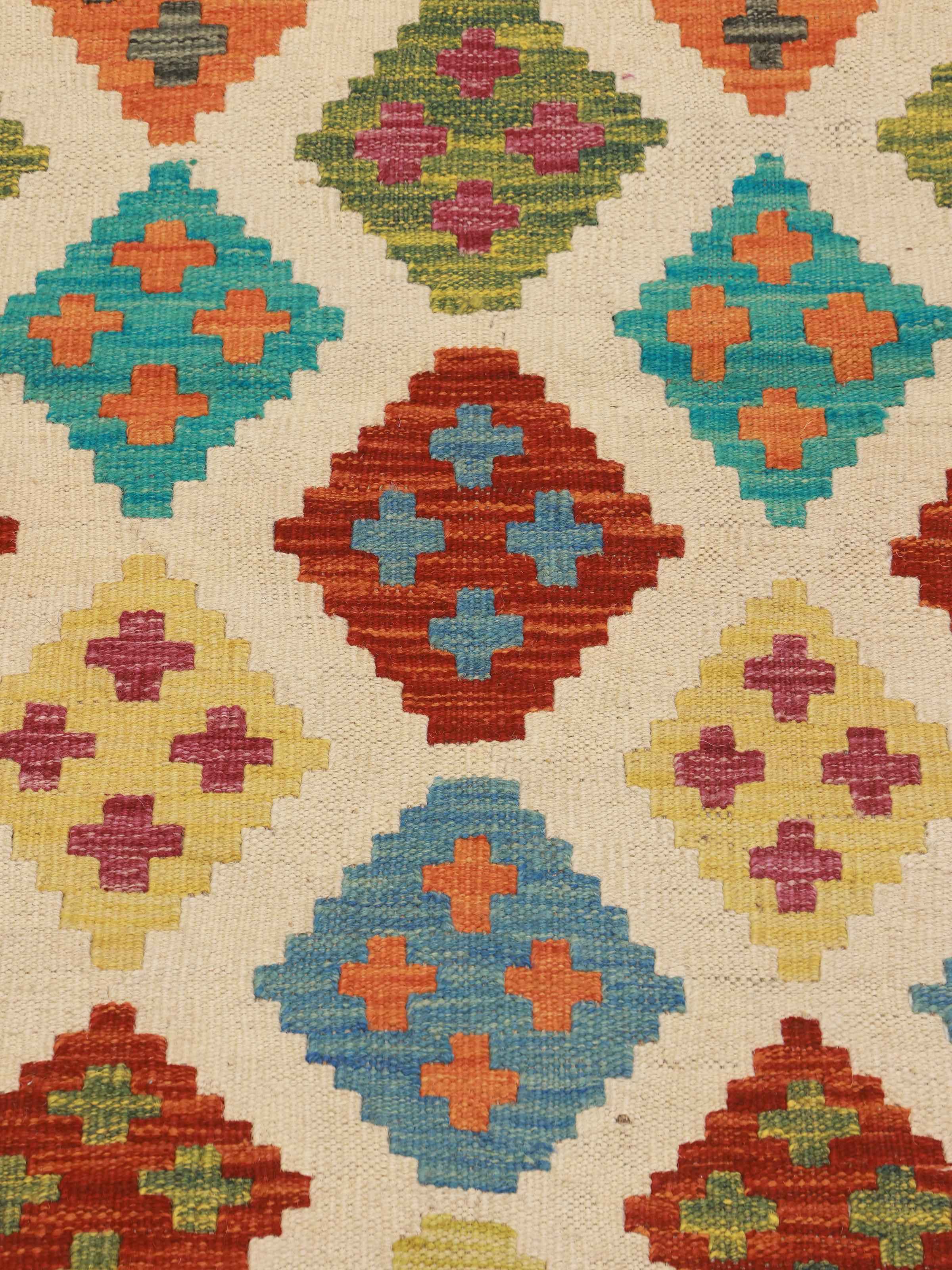
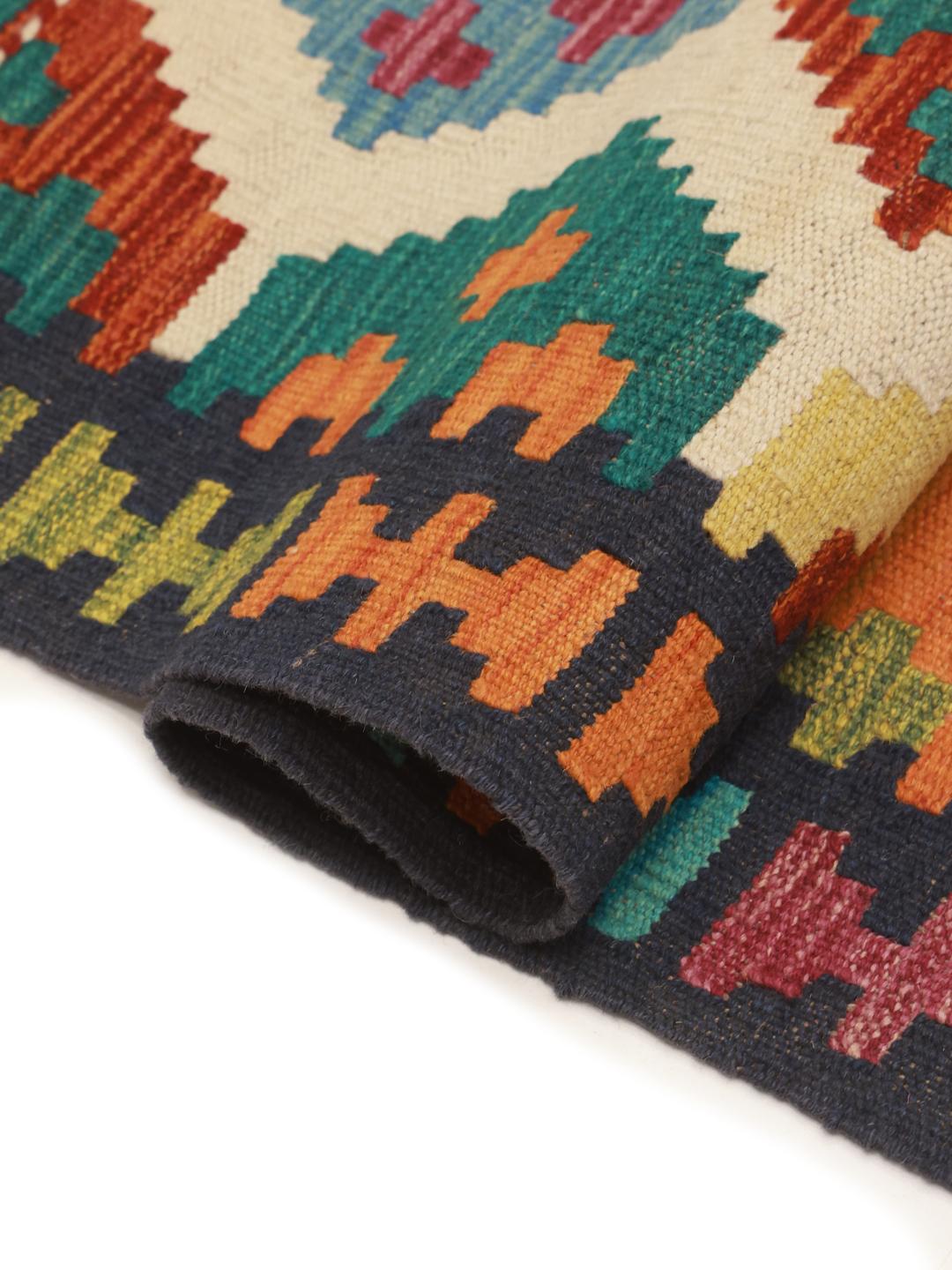
The term 'Kelim' refers to a specific flat-weaving technique where the warp and weft are interlaced to create a smooth, pileless surface. This method is highly prized for its clarity of design, as it allows the weaver to create sharp, geometric transitions between colours that would be blurred in knotted pile rugs. The resulting fabric is lightweight yet incredibly strong.
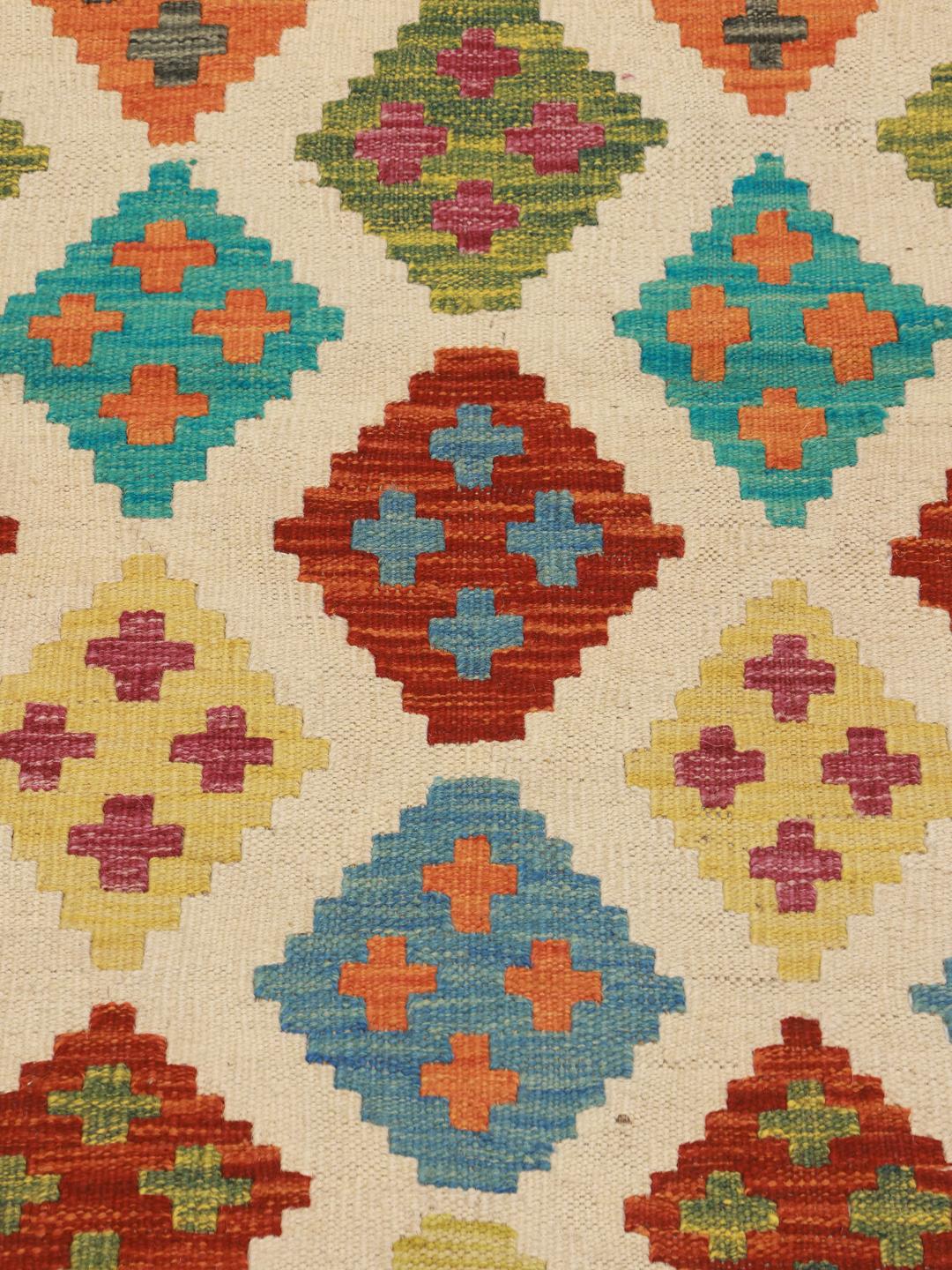
Signature elements of these rugs include the repeating diamond motifs and bold, earthy palettes that reflect the natural dyes and landscapes of the region. The geometric shapes are not merely decorative but often carry symbolic meanings related to protection, prosperity, and the natural world, passed down through generations of weaving families.
Owning a piece from this tradition means connecting with a legacy of craftsmanship that has survived the pressures of modern mass production. Collectors value these rugs for their authenticity, the depth of their cultural narrative, and the remarkable skill required to produce such precise geometric patterns by hand, ensuring each rug remains a lasting piece of history.