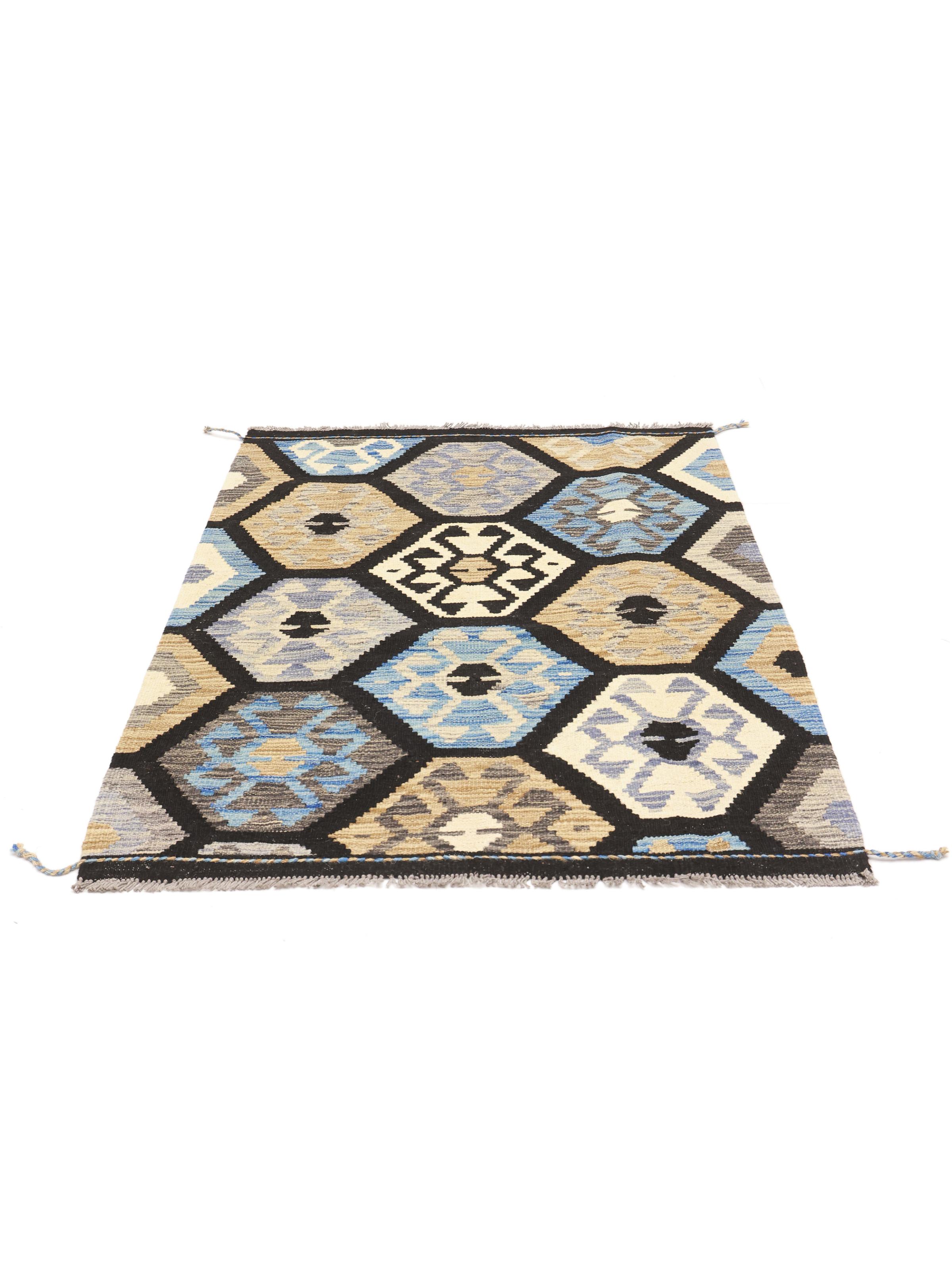
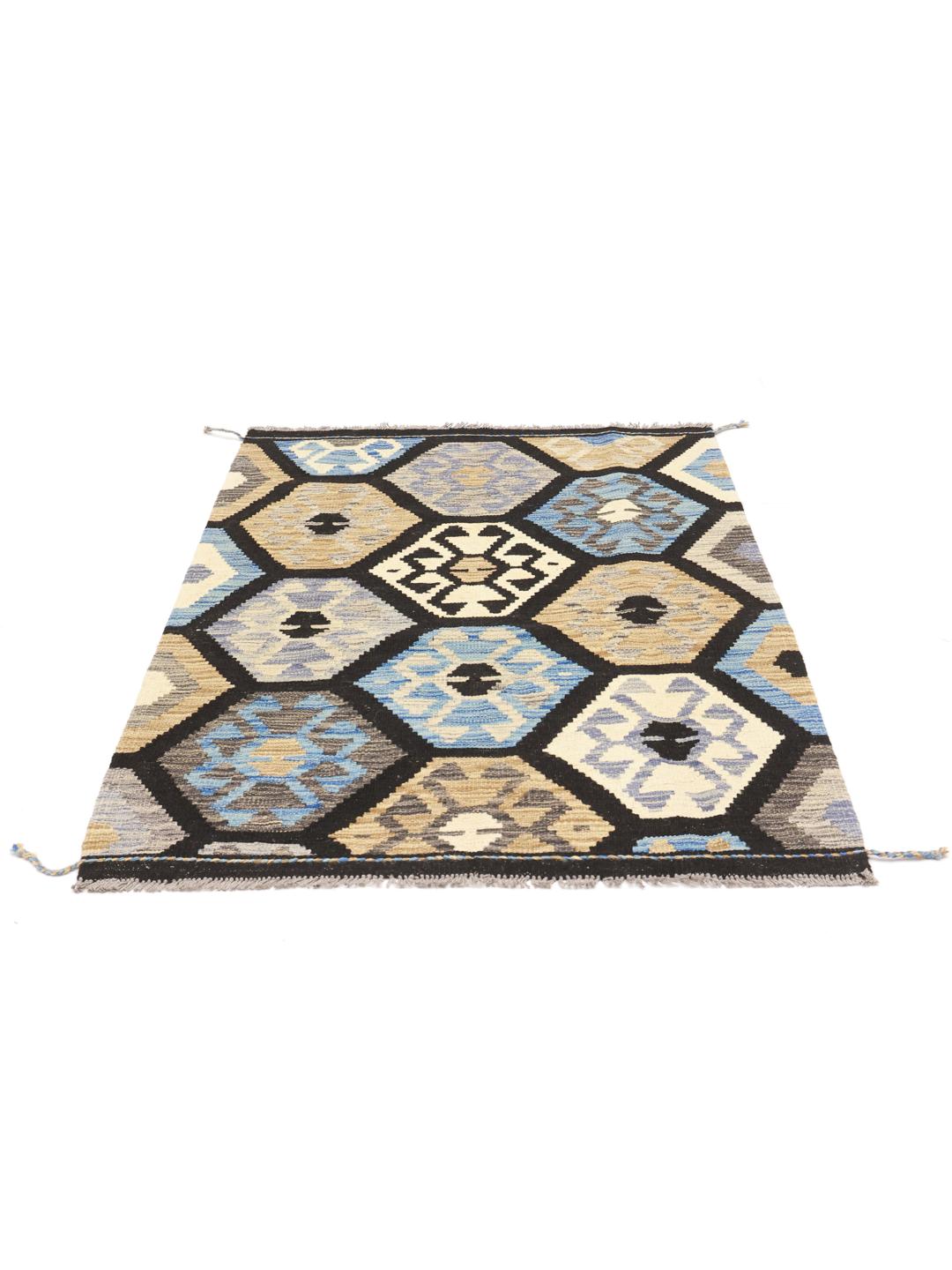
Kelim rugs from Afghanistan are deeply rooted in the nomadic traditions of the region, where weaving was historically a vital skill for creating functional, portable art. These rugs were designed to serve as floor coverings, wall hangings, and storage bags, reflecting the practical needs of life on the move across the rugged landscapes of the Middle East.
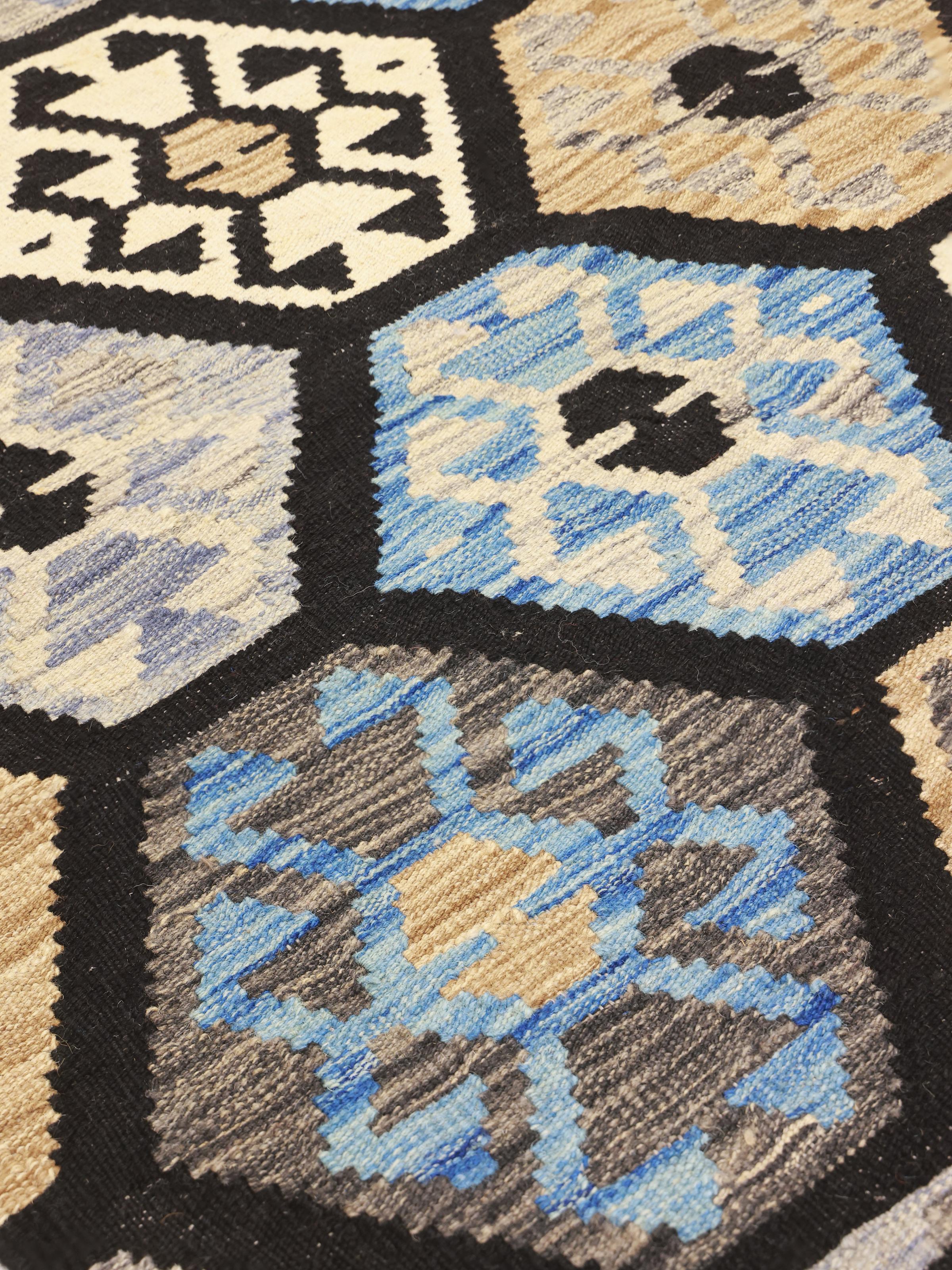
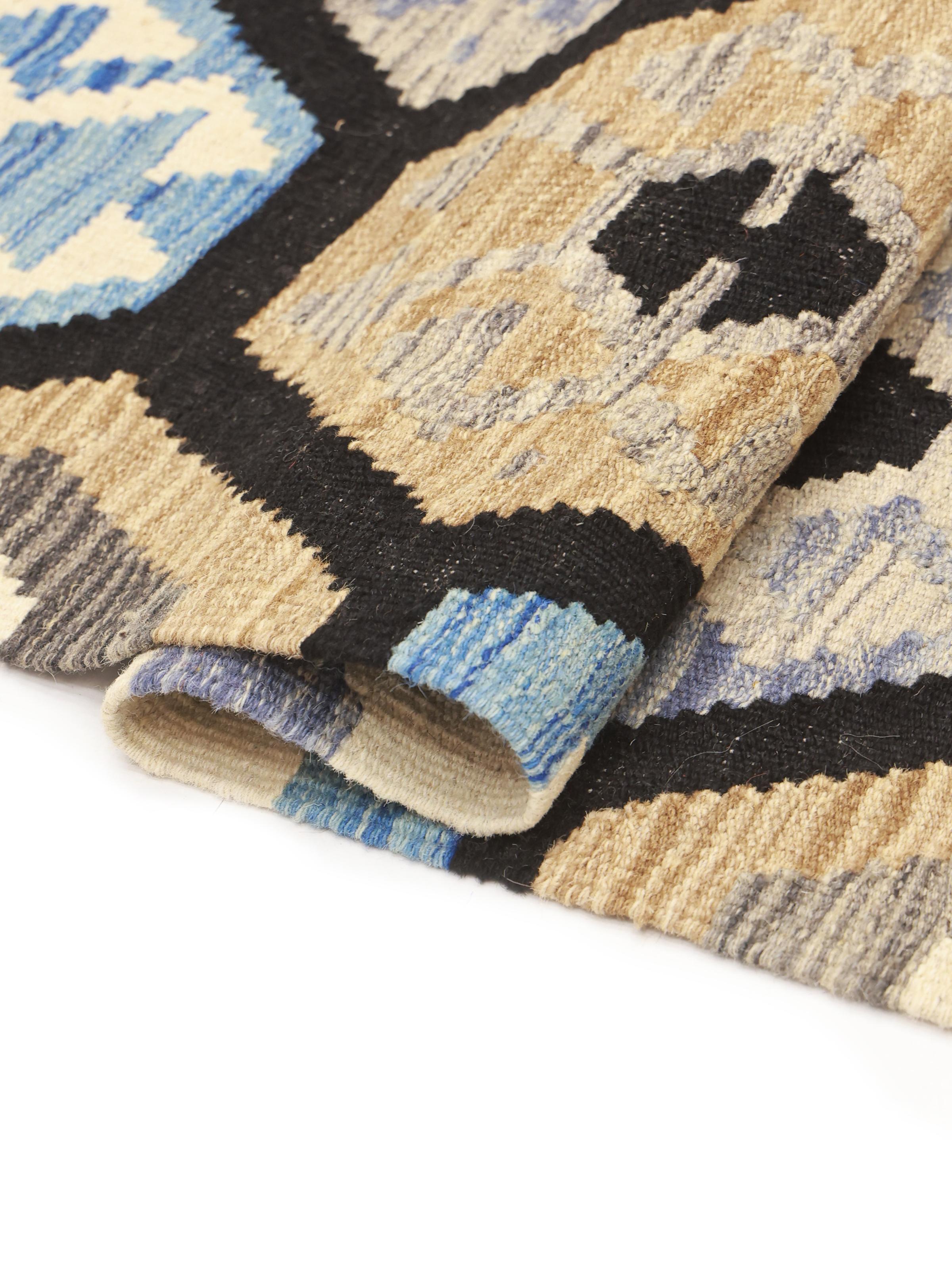
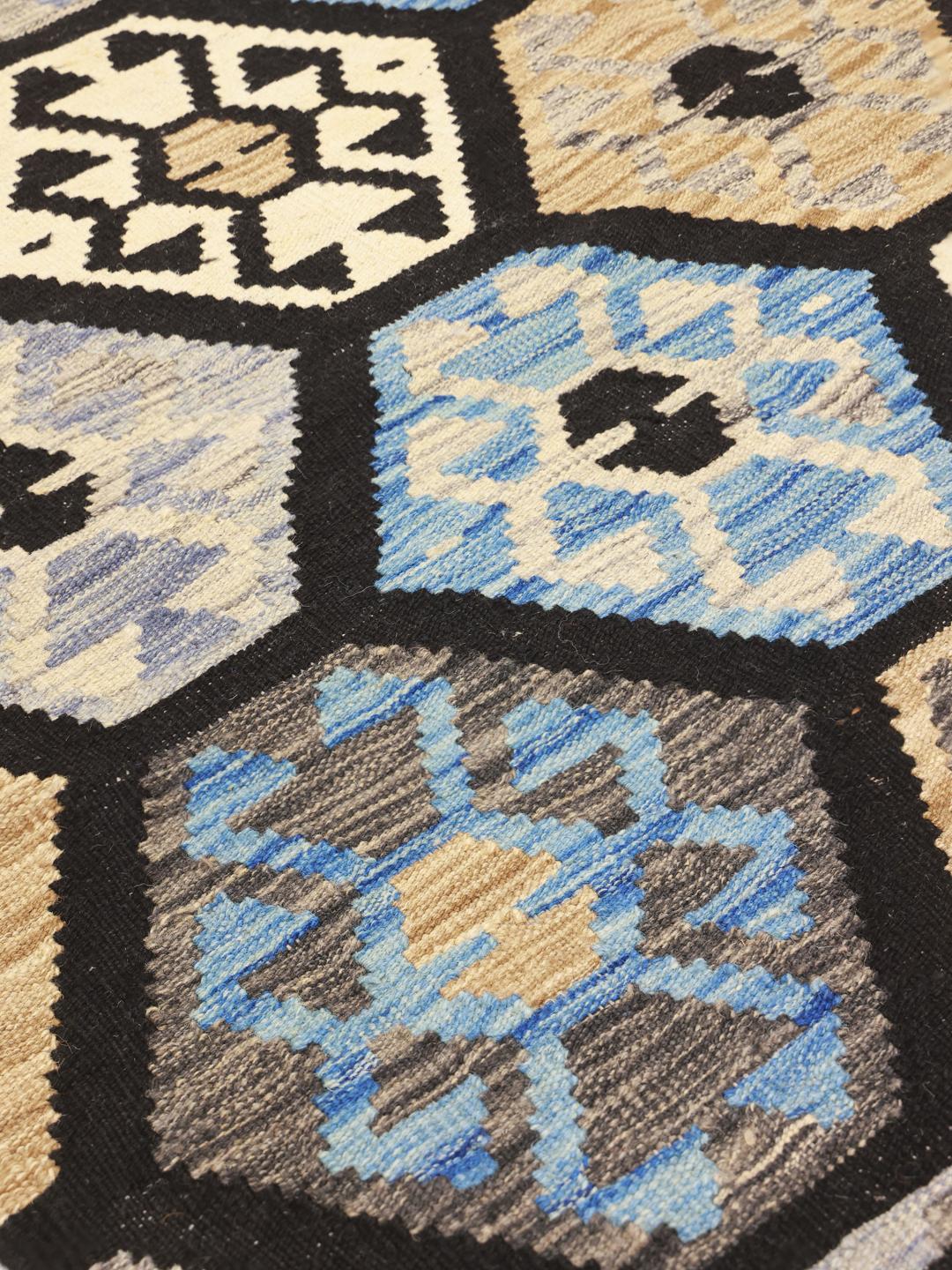
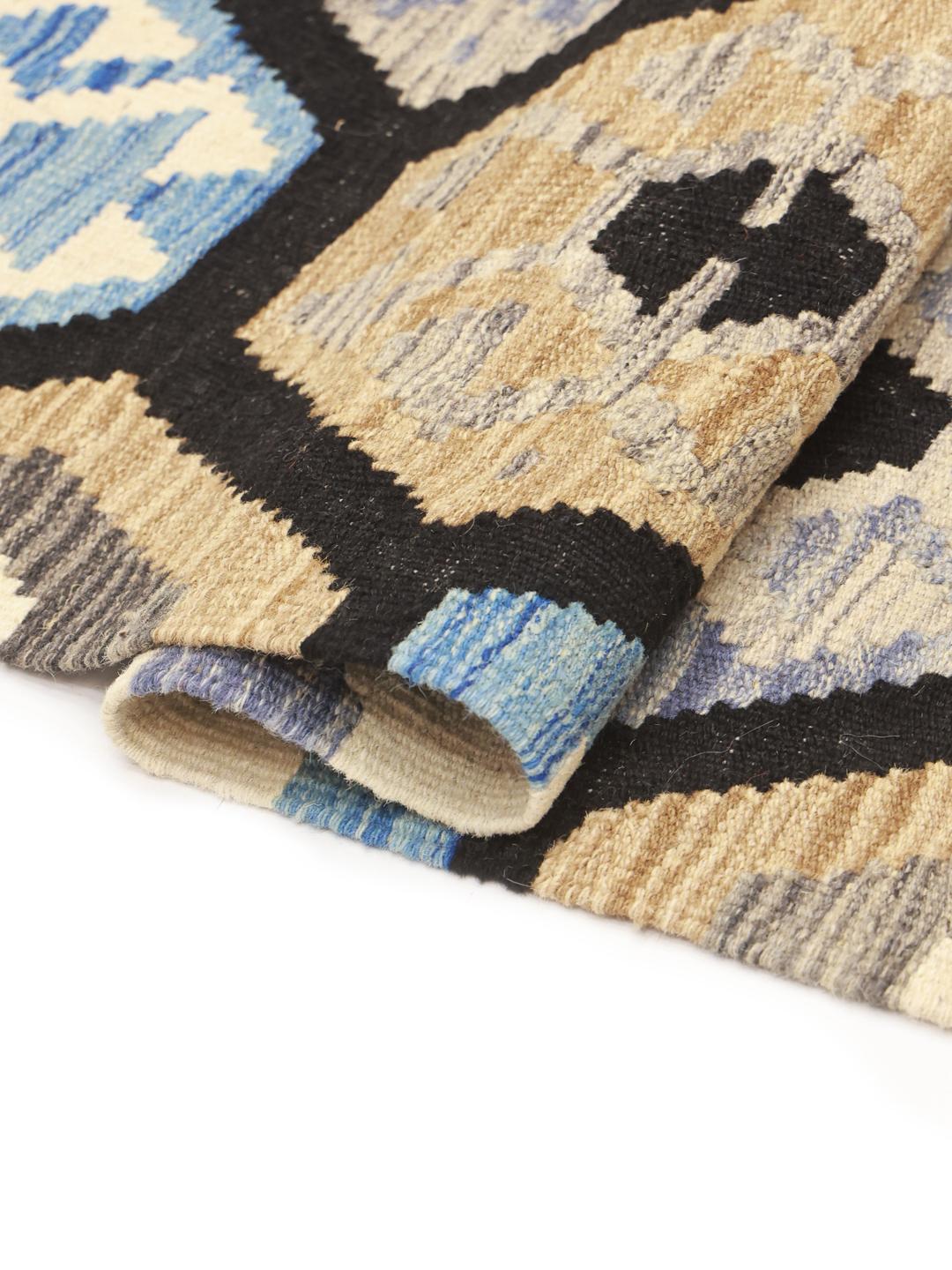
The term 'Kelim' refers to a flat-weave technique where no knots are used. Instead, the weaver creates the pattern by interlacing the coloured weft threads through the warp threads. This method produces a lightweight, reversible, and durable textile that showcases the weaver's ability to maintain consistent tension and precise colour changes across the entire loom.
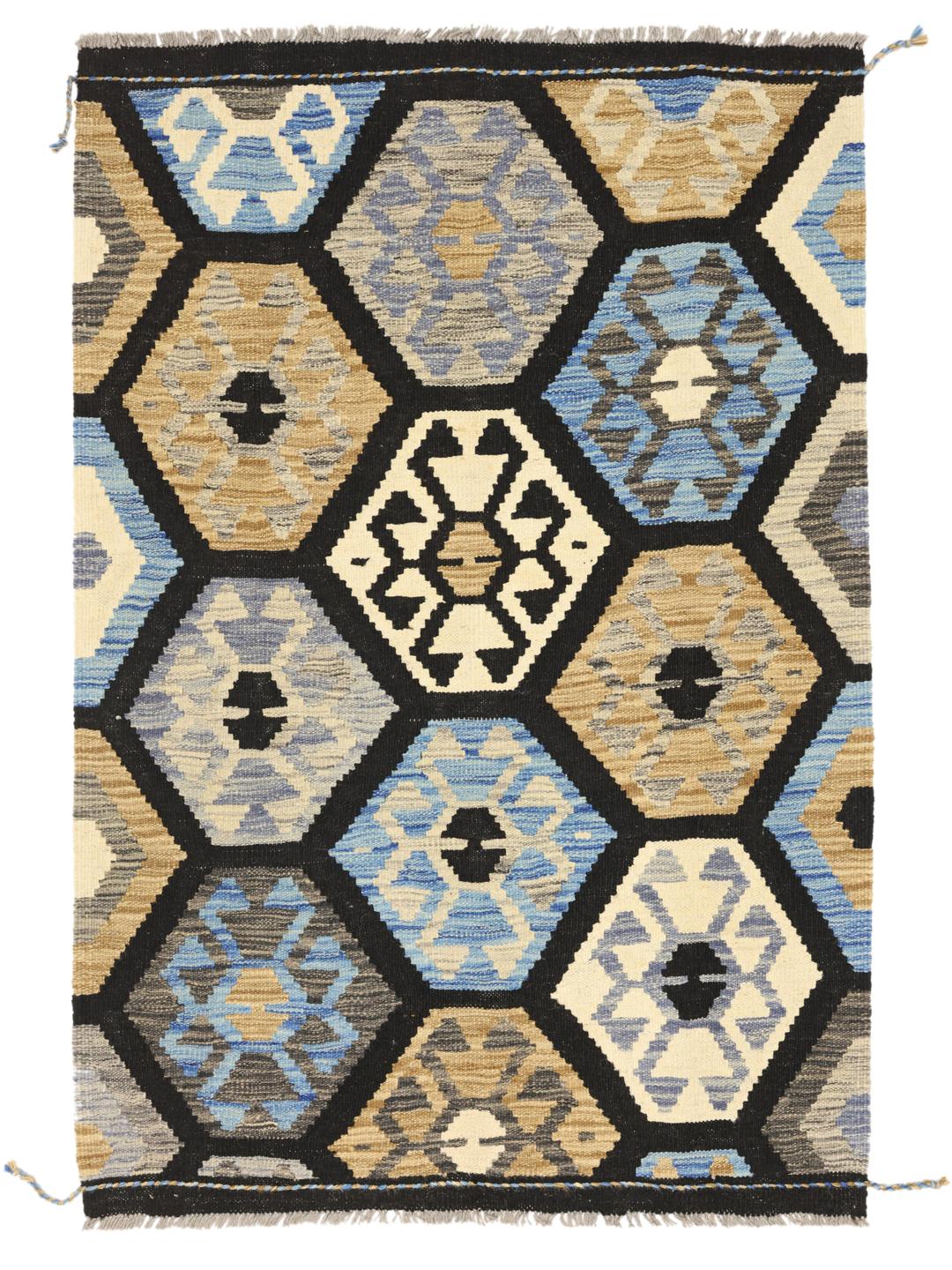
Visually, these rugs are defined by their bold, geometric language. Motifs often include stylized representations of tribal symbols, protective amulets, and local wildlife, all arranged in repeating patterns that display a deep understanding of symmetry and balance. The use of dark, grounding outlines often helps to define these shapes, making the designs stand out with remarkable clarity.
Collecting these rugs is an investment in the enduring heritage of Middle Eastern craft. Each piece serves as a cultural artifact that tells the story of its maker and the region's long-standing aesthetic values. Owning a Kelim is a way to bring a sense of history and human connection into a modern home, celebrating a tradition that has been passed down through generations.