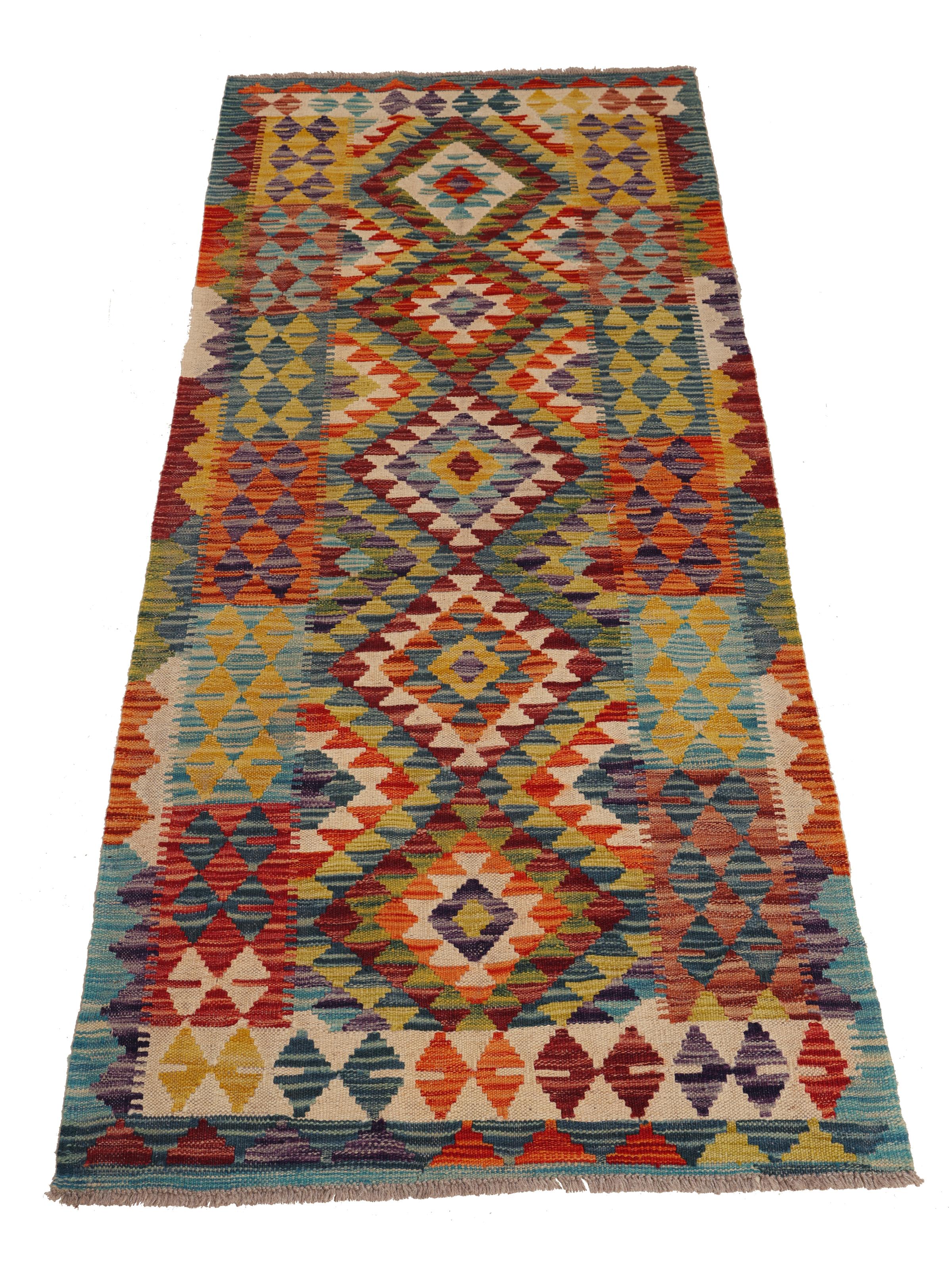
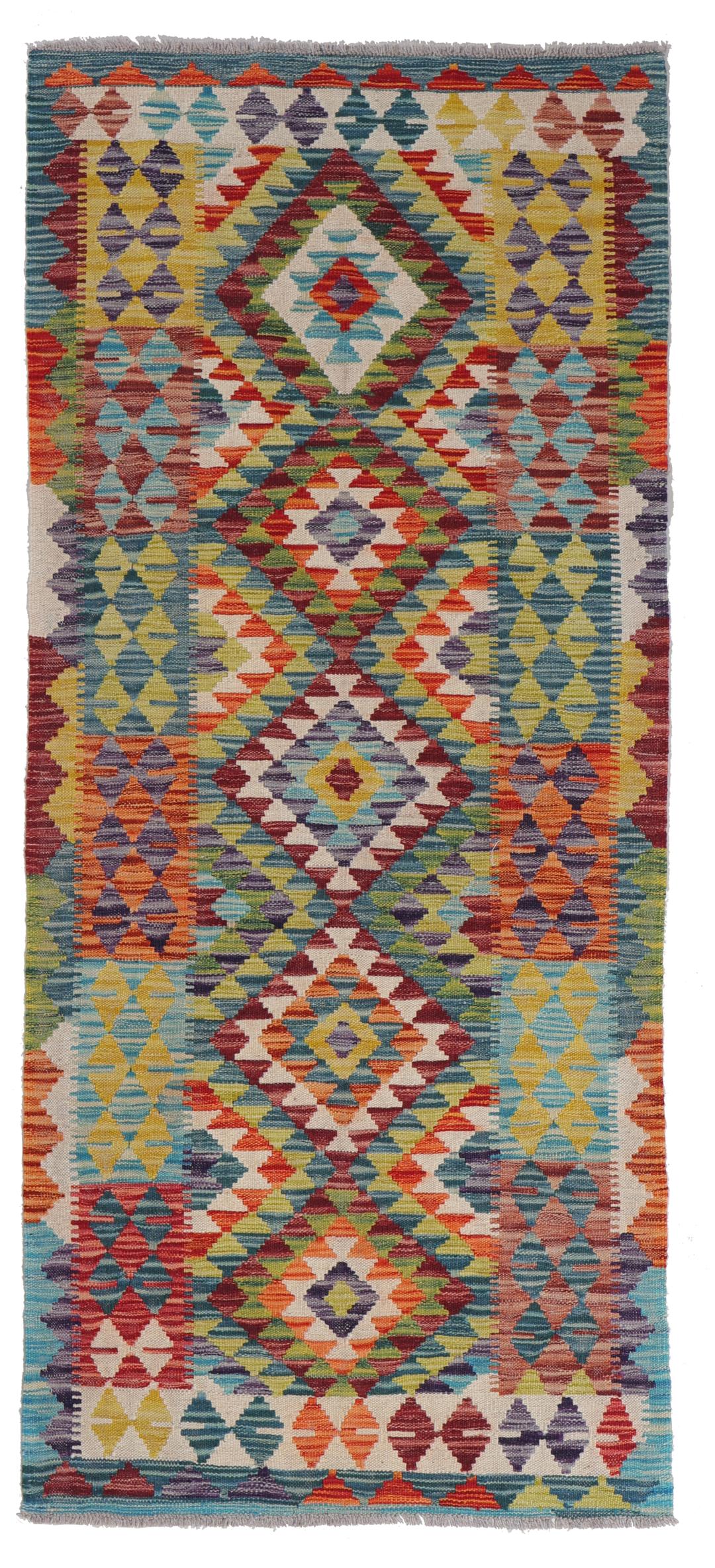
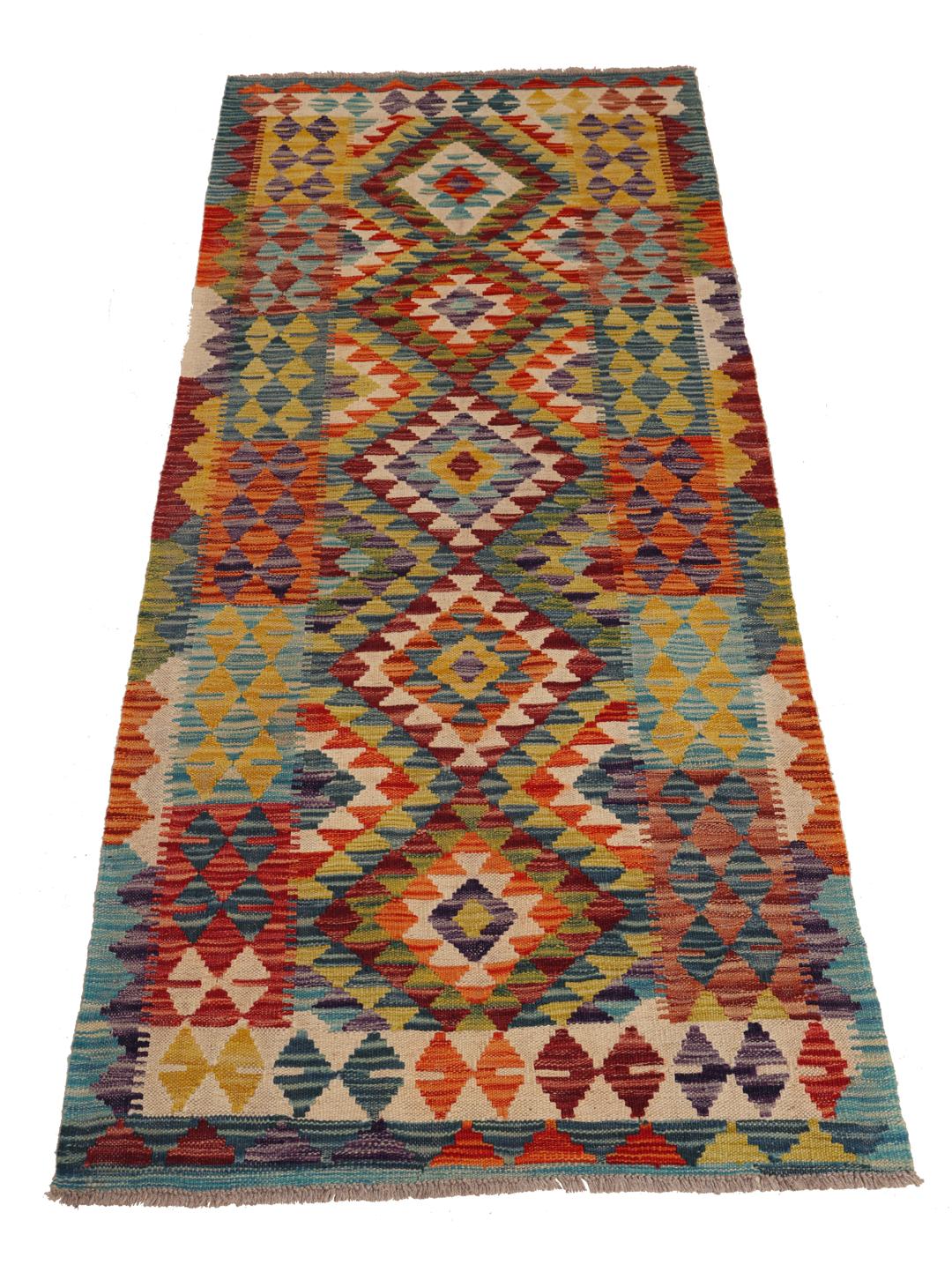
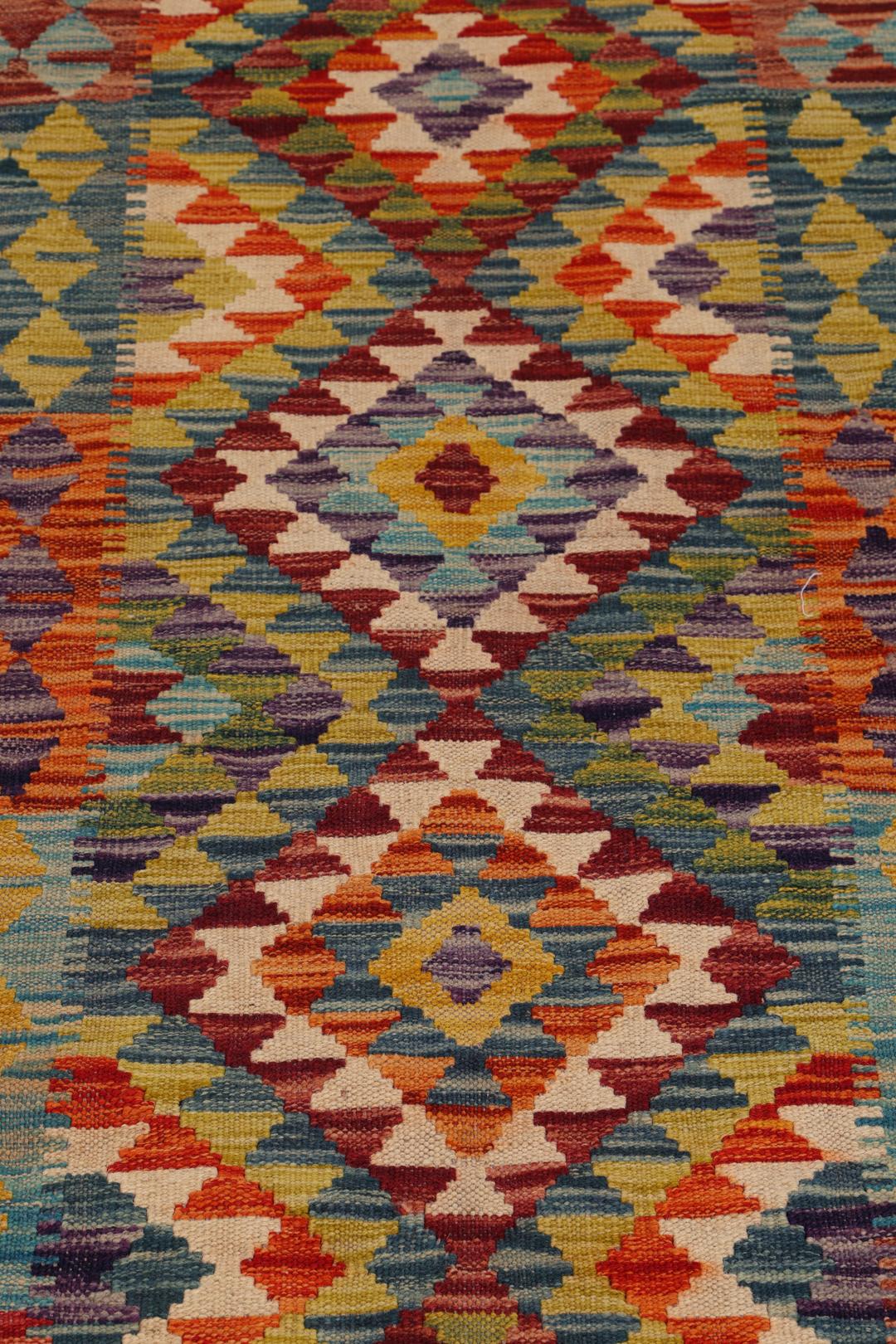
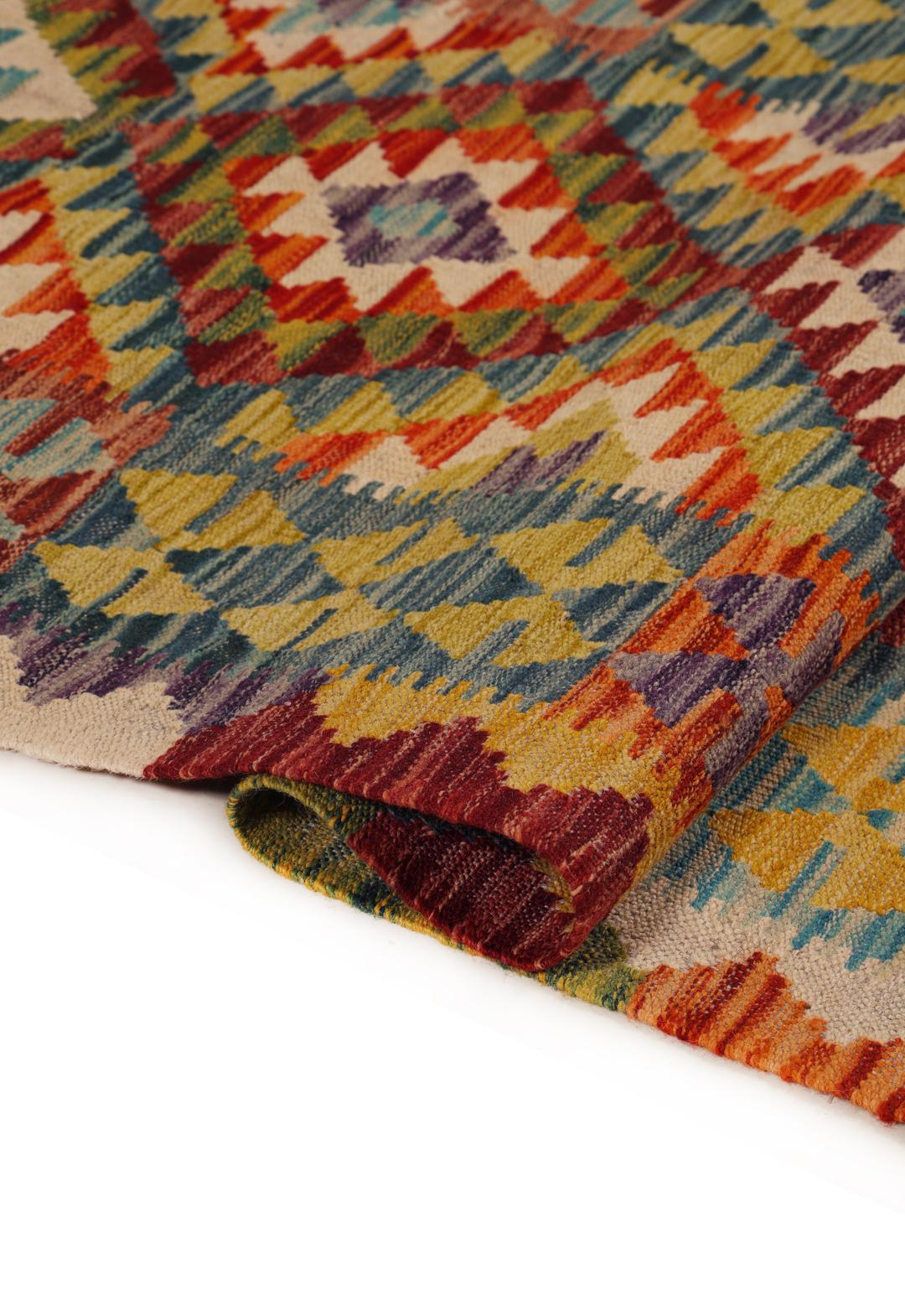
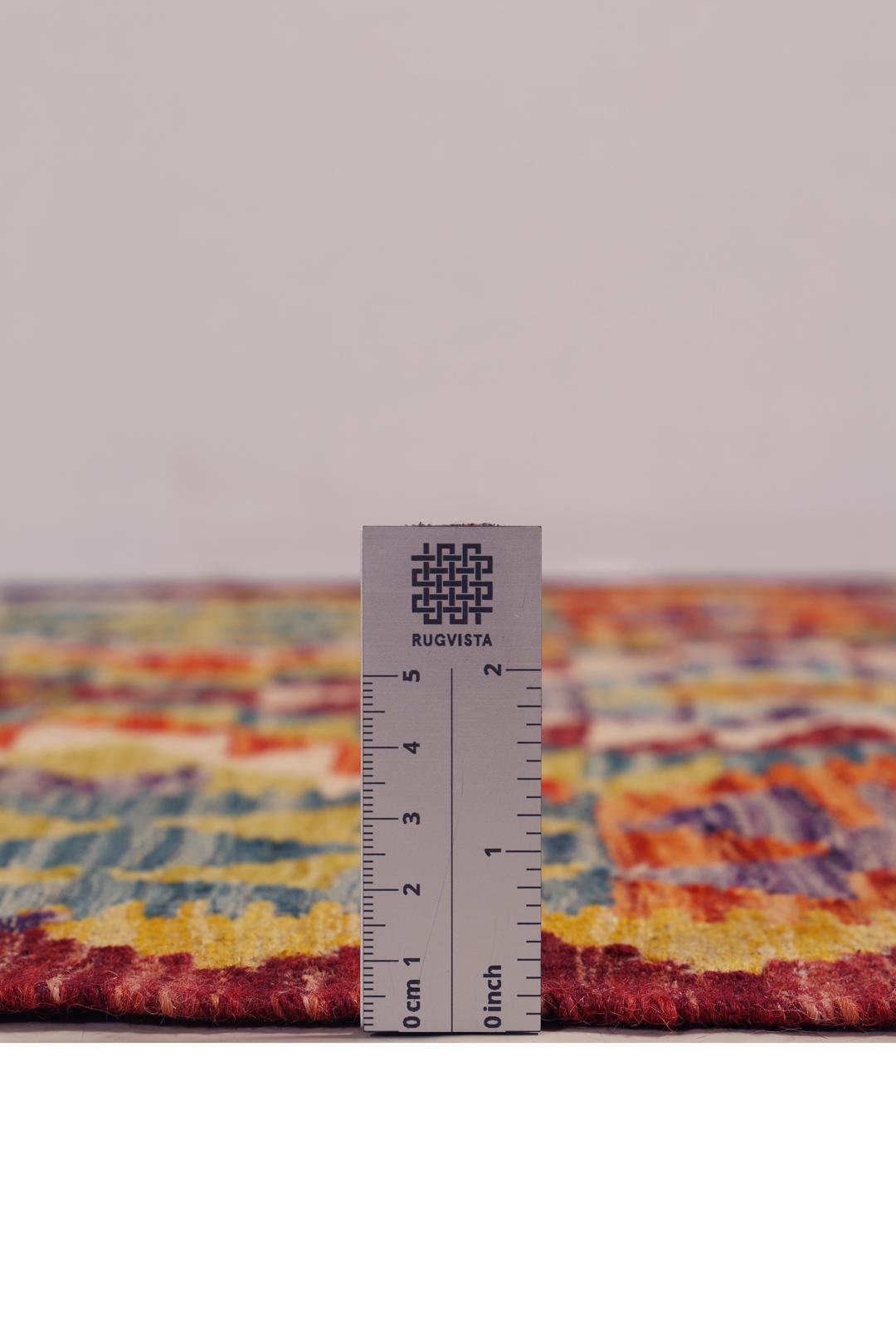
The Kelim tradition in Afghanistan is deeply rooted in the nomadic and semi-nomadic cultures of the region, where flat-woven rugs served as essential, portable furnishings. These textiles, known for their lack of a pile, were traditionally used as floor coverings, wall hangings, and storage bags, reflecting a lifestyle that valued both utility and artistic expression.
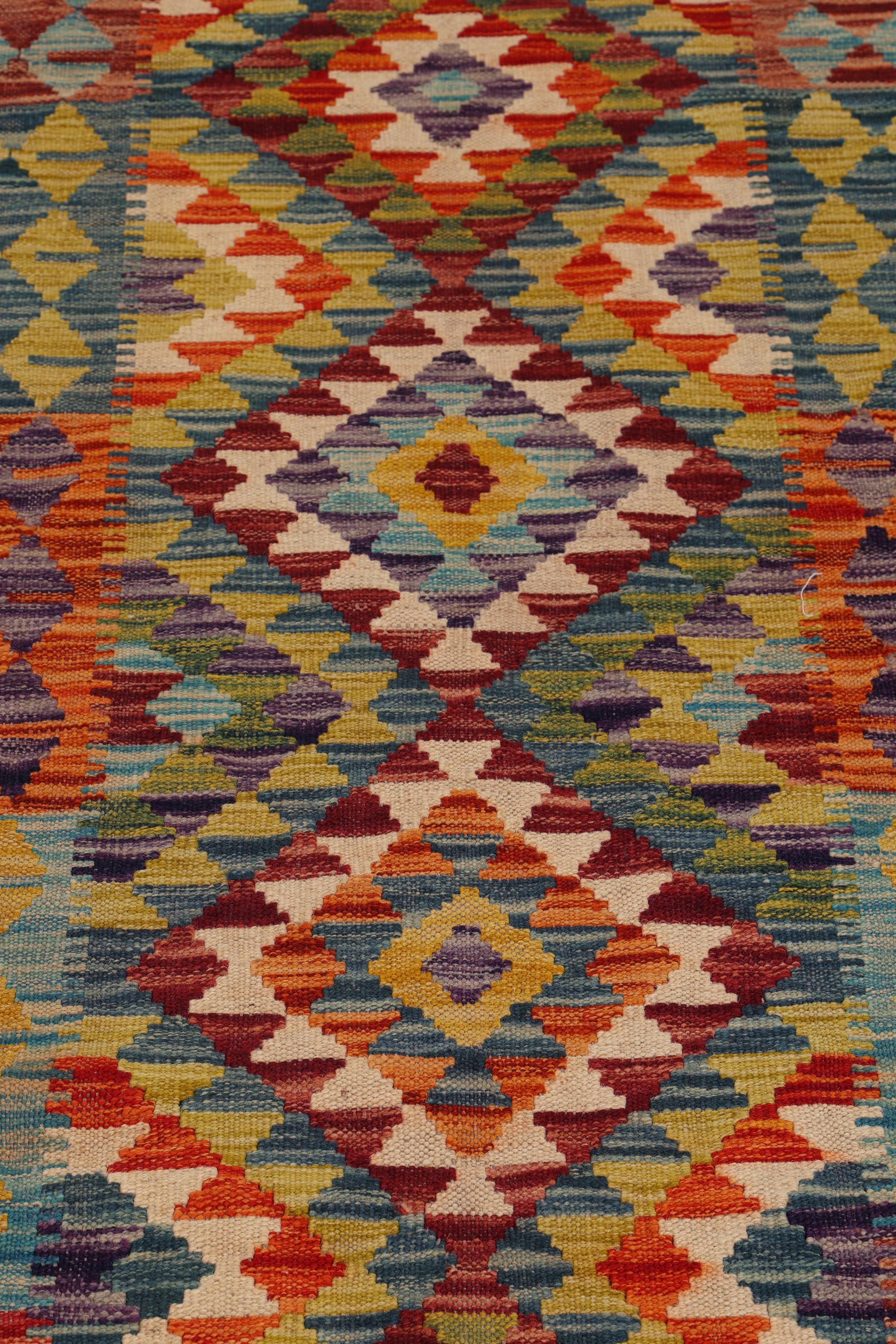
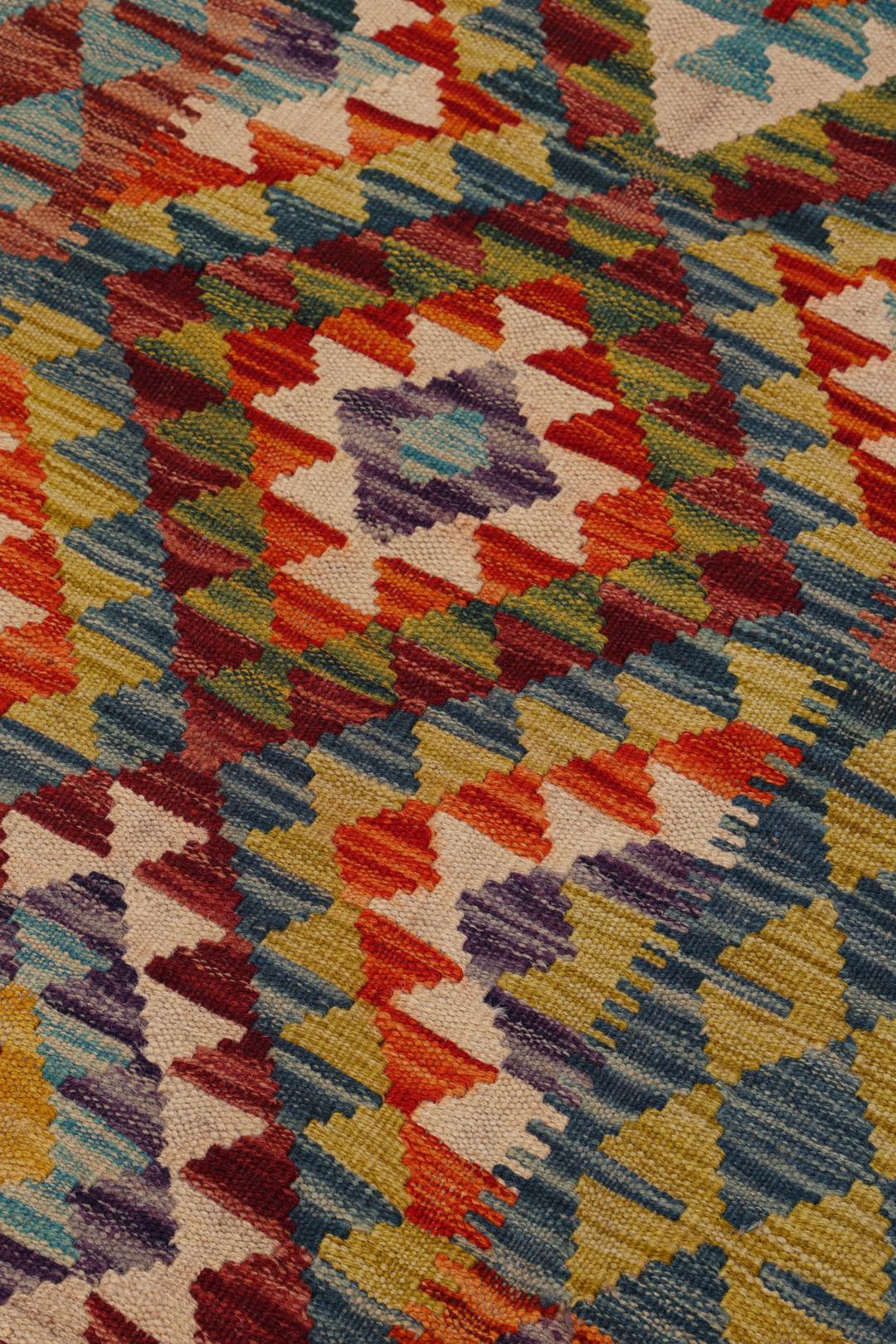
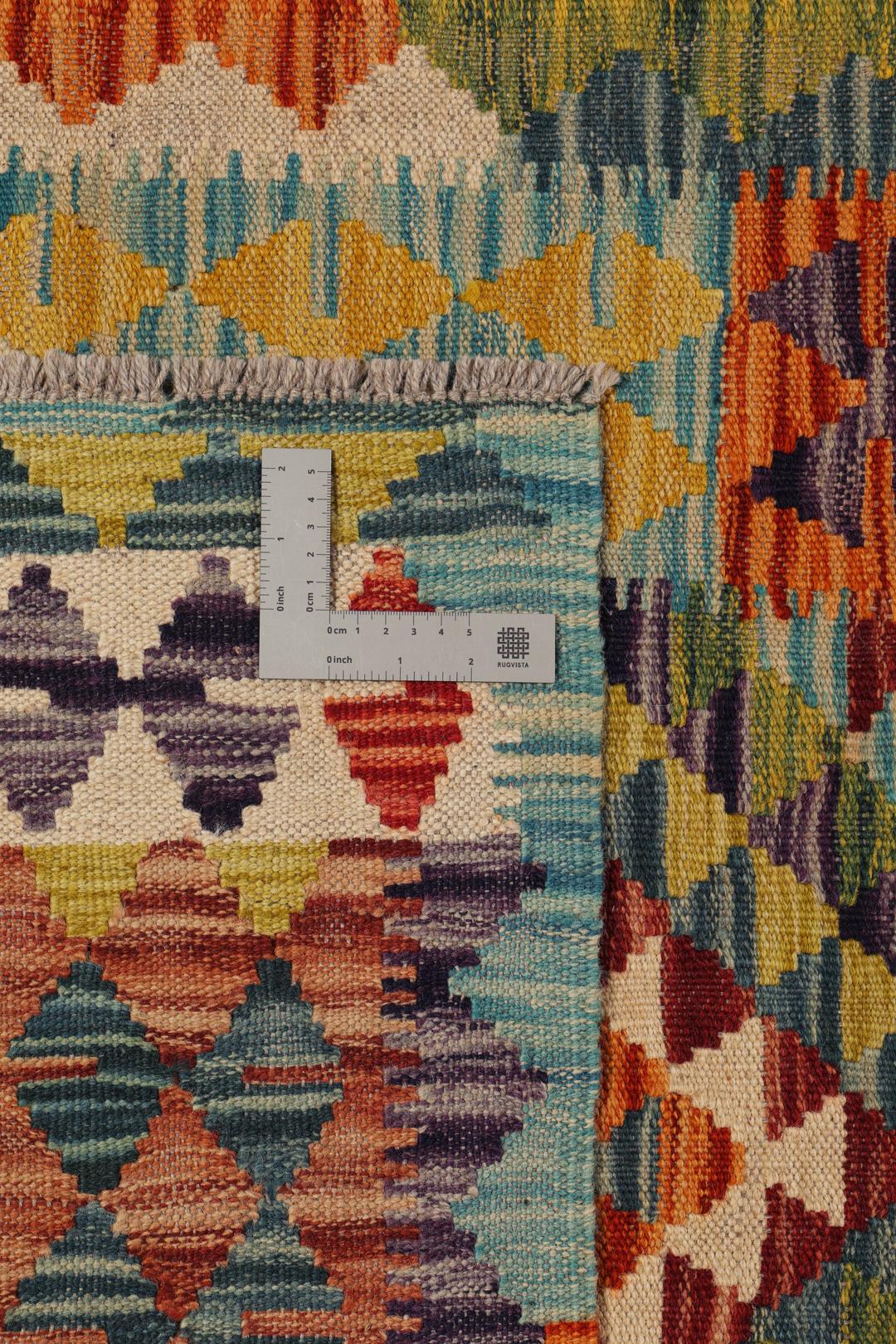
The term Kelim refers to the specific slit-weave technique used to create these rugs. By wrapping the wool weft threads around the warp threads and shifting colours at specific intervals, weavers create clean, sharp-edged geometric shapes. This method requires a high degree of foresight and precision, as the pattern is built directly into the structure of the rug during the weaving process.
Signature design elements in Afghan Kelims often include bold, repeating diamonds, triangles, and zigzag motifs. These patterns are not merely decorative but are deeply symbolic, often representing tribal identities, local flora, or protective talismans. The vibrant palette seen here is characteristic of the regional preference for natural dyes that age gracefully, developing a soft, muted patina over time.
Collecting these rugs is an investment in cultural heritage. They are valued for the human story embedded in every thread, representing a skill set passed down through generations. By bringing one into your home, you are preserving a timeless craft and supporting the continuation of a tradition that balances ancient techniques with a modern aesthetic.