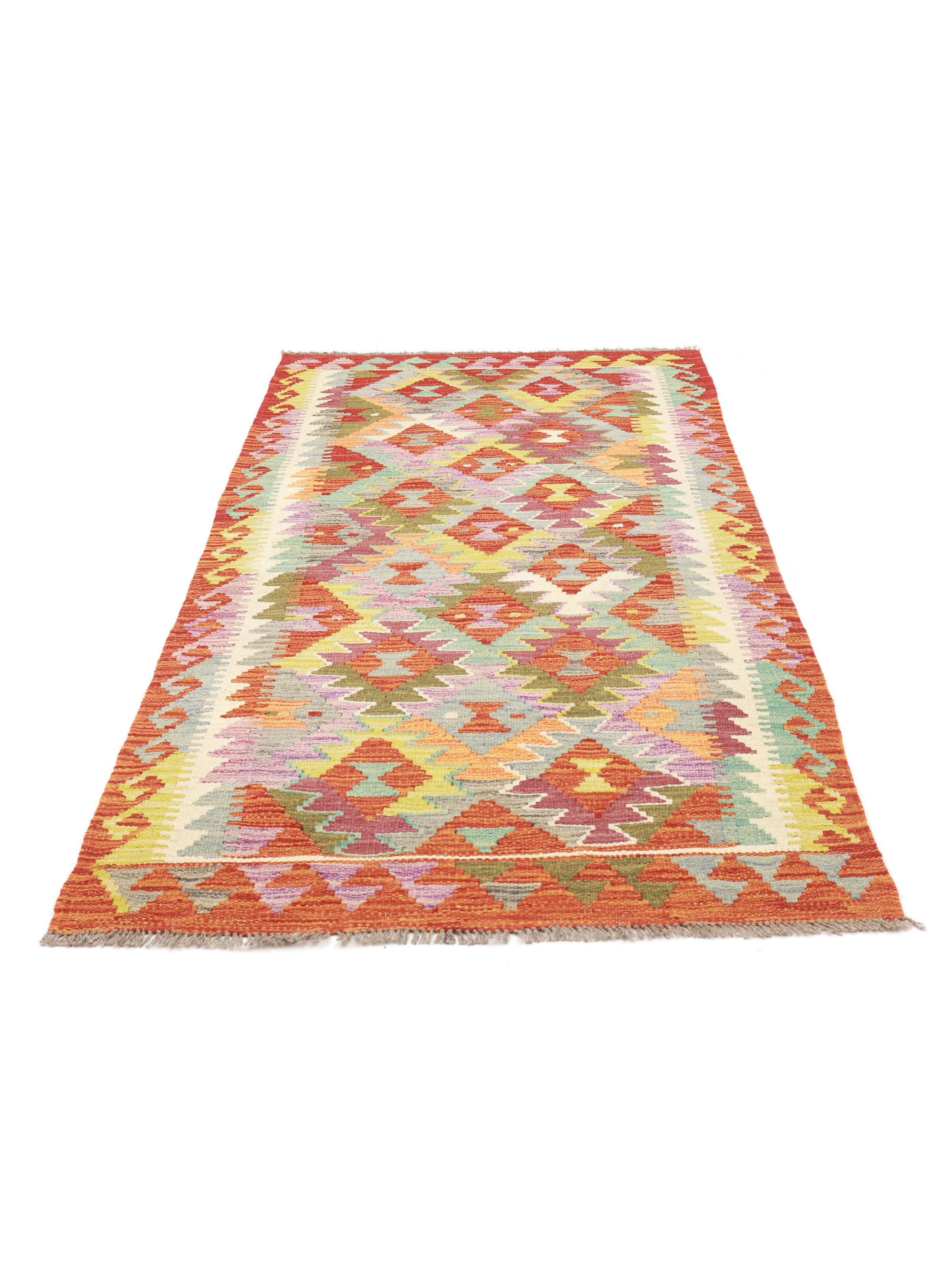
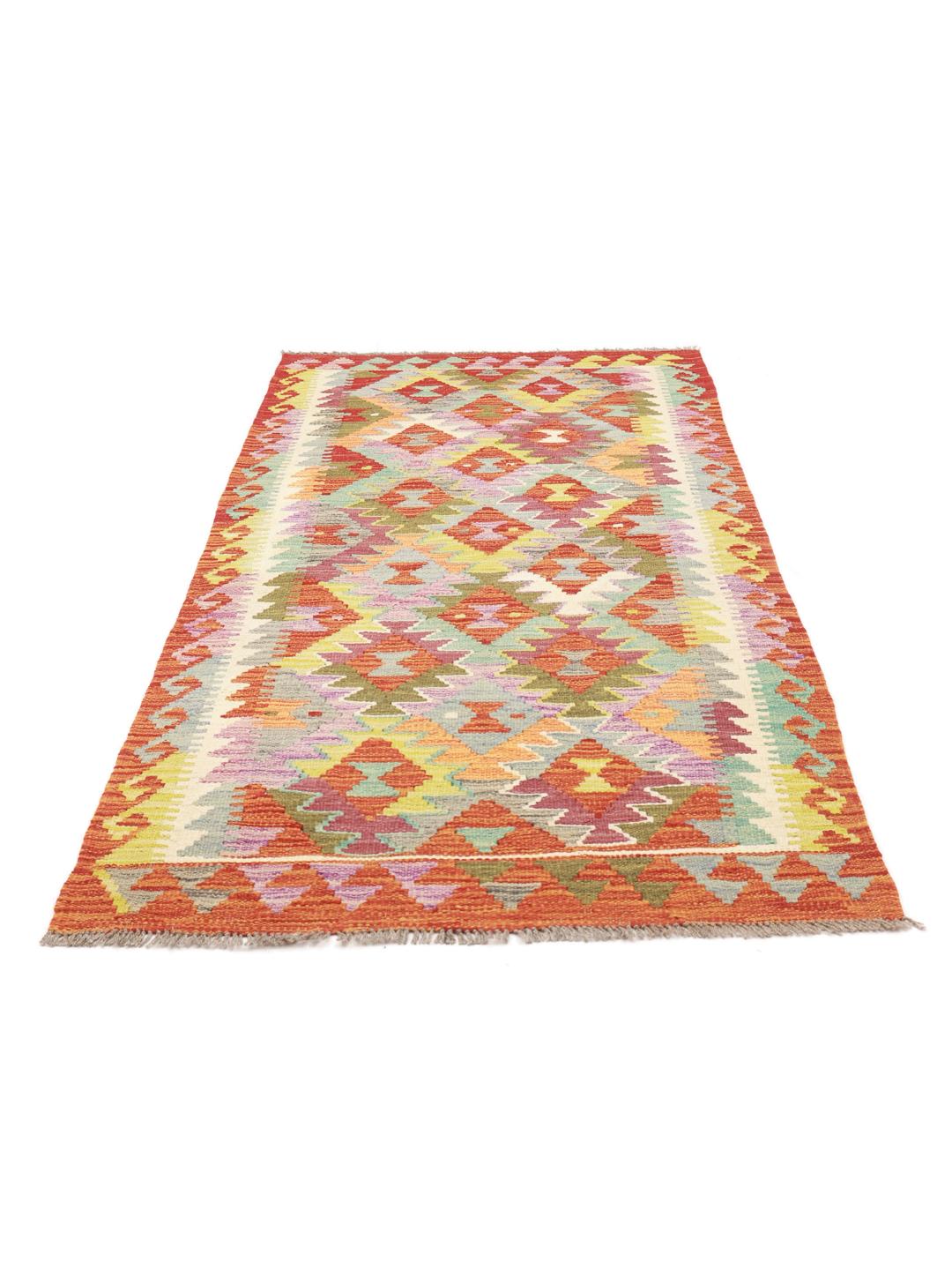
The Kelim tradition in Afghanistan is deeply rooted in the nomadic and semi-nomadic lifestyles of the region. Historically, these flat-woven rugs were created by tribal weavers for practical use in tents, serving as floor coverings, saddlebags, and blankets. Their portability and durability made them essential items for life on the move across the rugged landscapes of Central Asia.
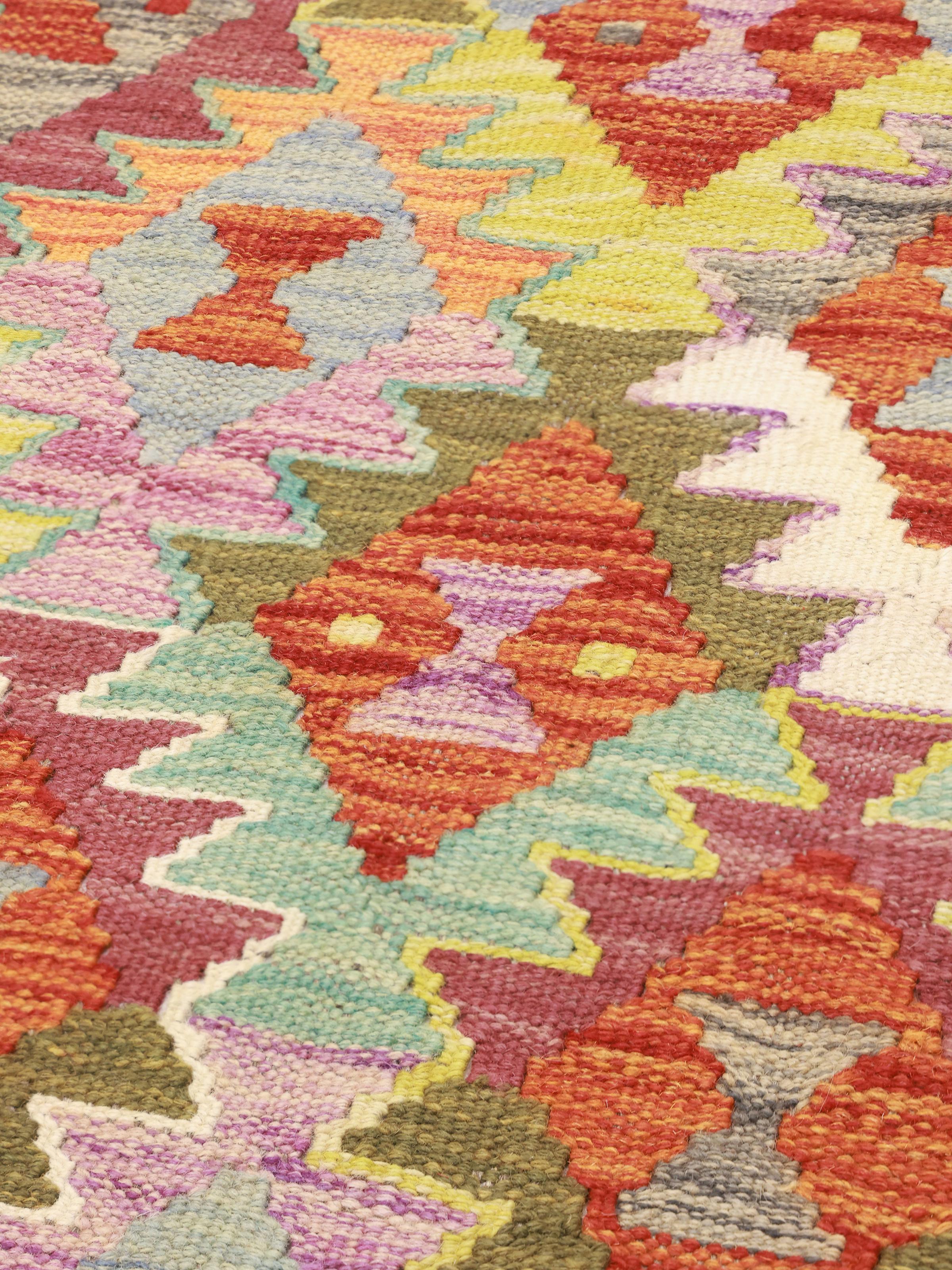
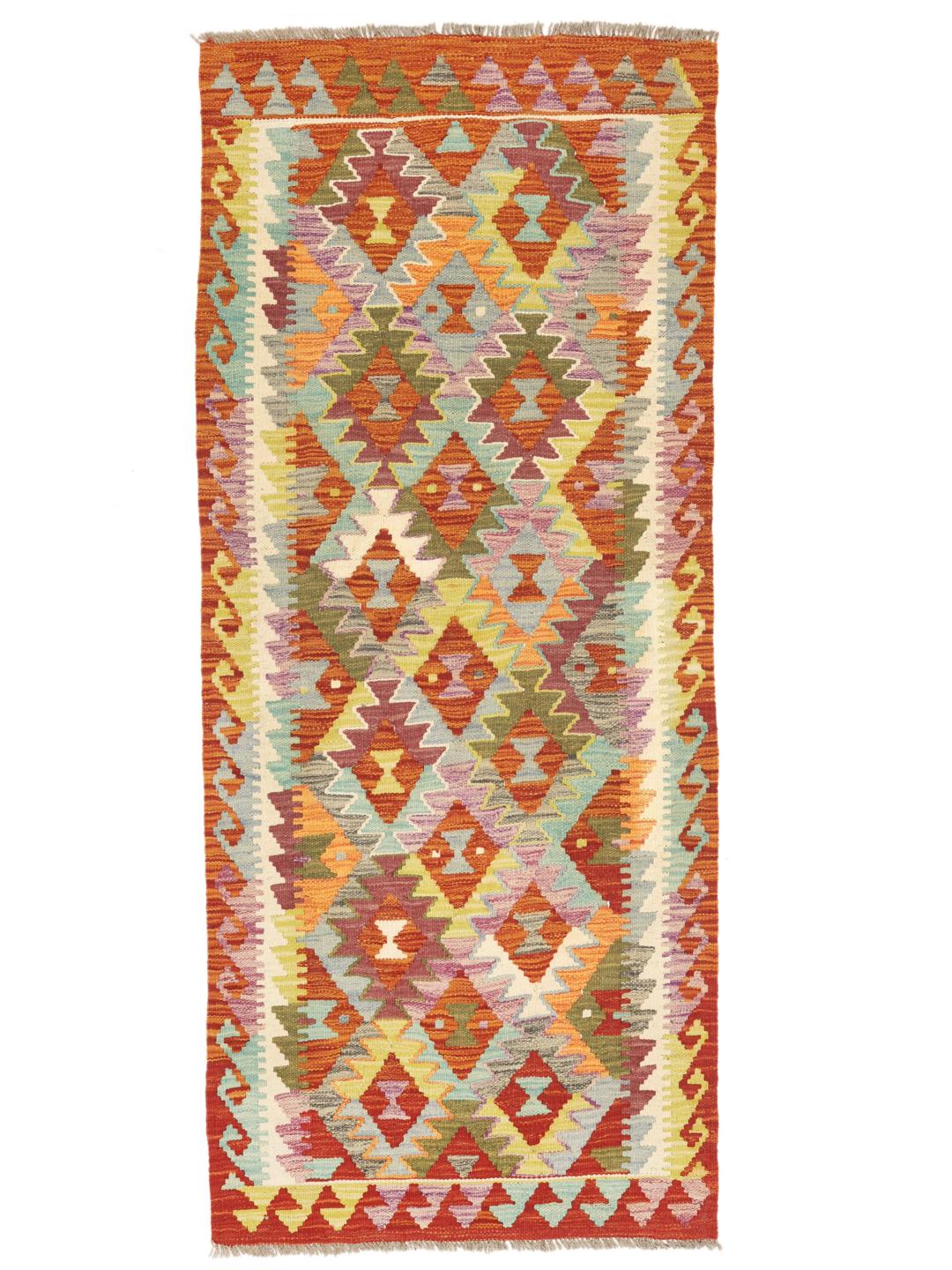
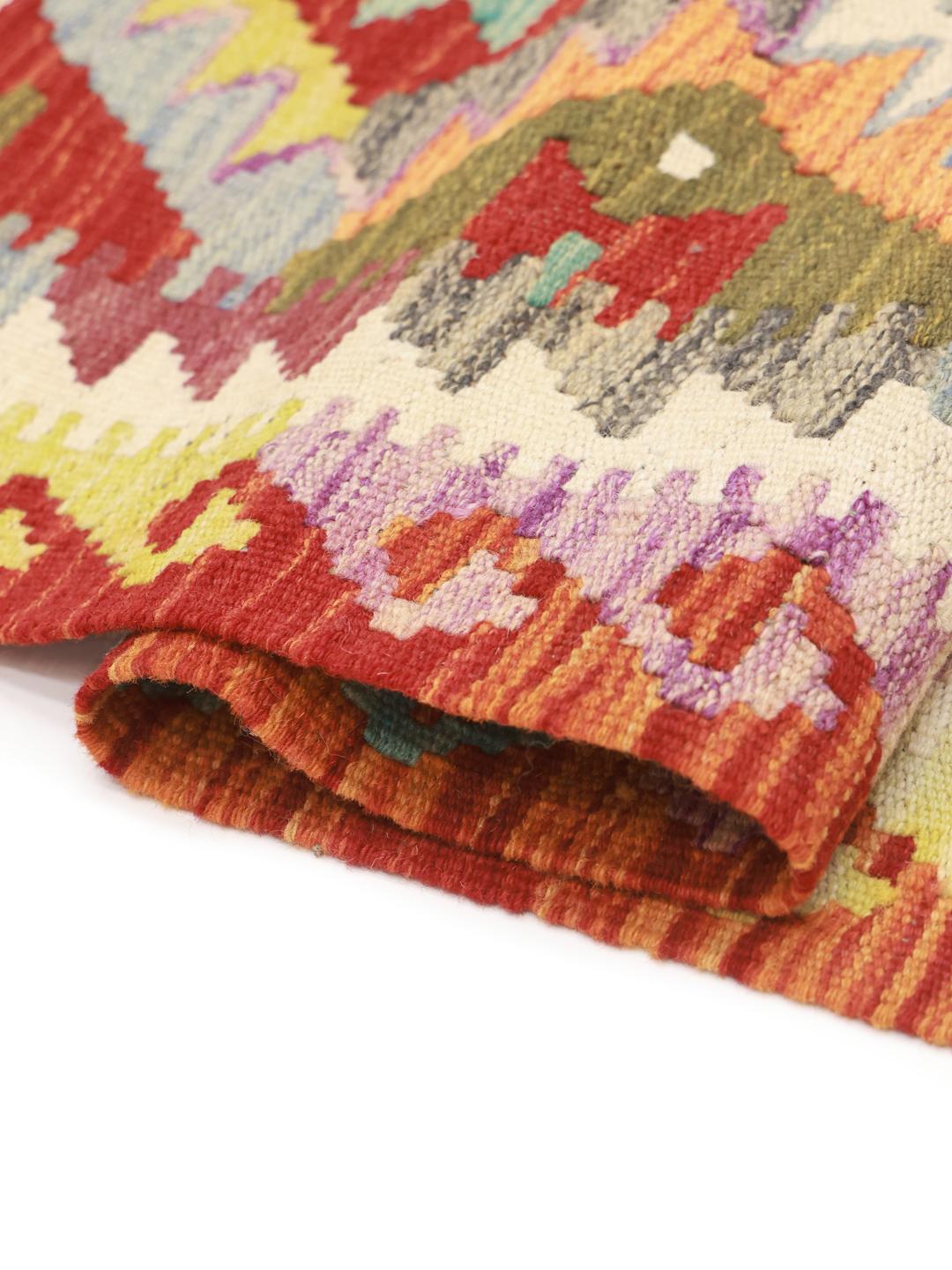
The term 'Kelim' refers to a specific tapestry-weave technique that lacks a knotted pile. This method results in a reversible rug with a clean, smooth surface. Because the weaver must create the pattern simultaneously with the structural weave, the technique demands an exceptional level of foresight and mathematical precision, ensuring that the design remains consistent across the entire length of the runner.
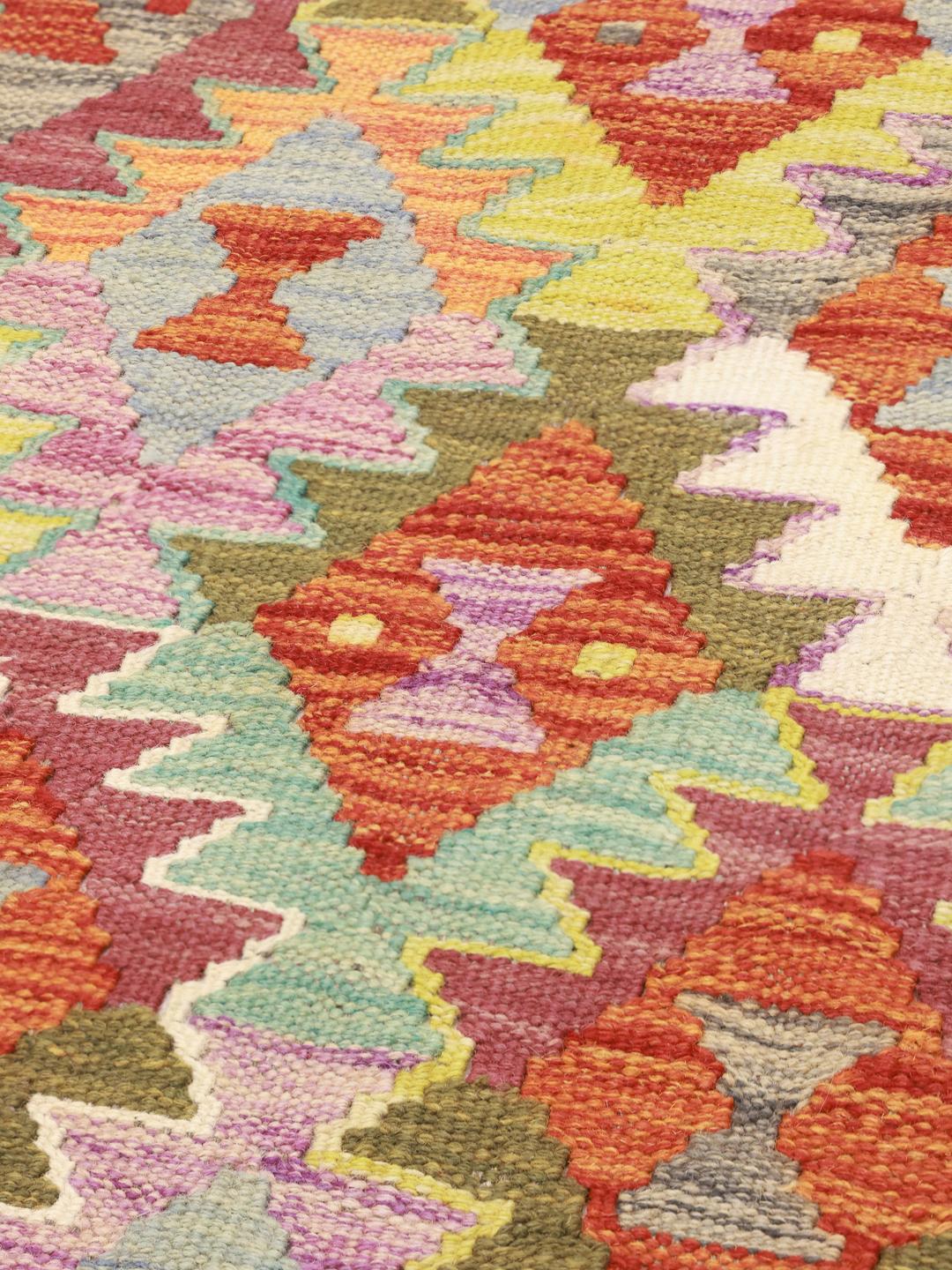
Visually, these pieces are defined by their bold, geometric language. You will often find diamonds, triangles, and zig-zag motifs that carry symbolic meaning, often representing protection or the natural environment. The use of vibrant, earthy dyes—traditionally derived from local plants and minerals—gives these rugs their signature look, with the colours often mellowing beautifully over time.
Owning an Afghan Kelim is a way of connecting with a rich heritage of craft. These rugs are highly valued by collectors for their authenticity and the human effort embedded in every centimetre of the weave. By choosing this piece, you are not just selecting a floor covering, but a durable, cultural artefact that carries the story of its makers and the enduring traditions of the Middle East.