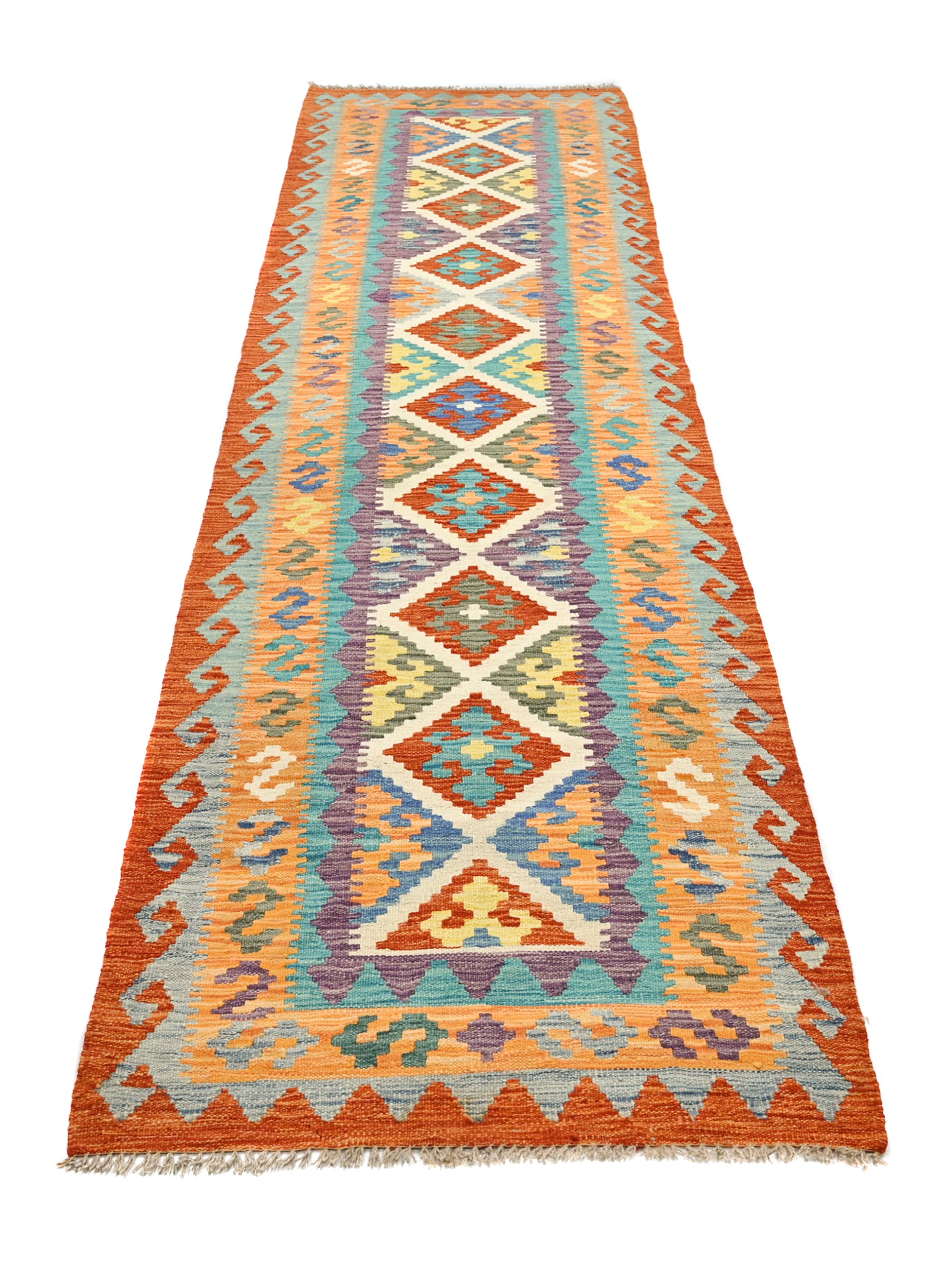
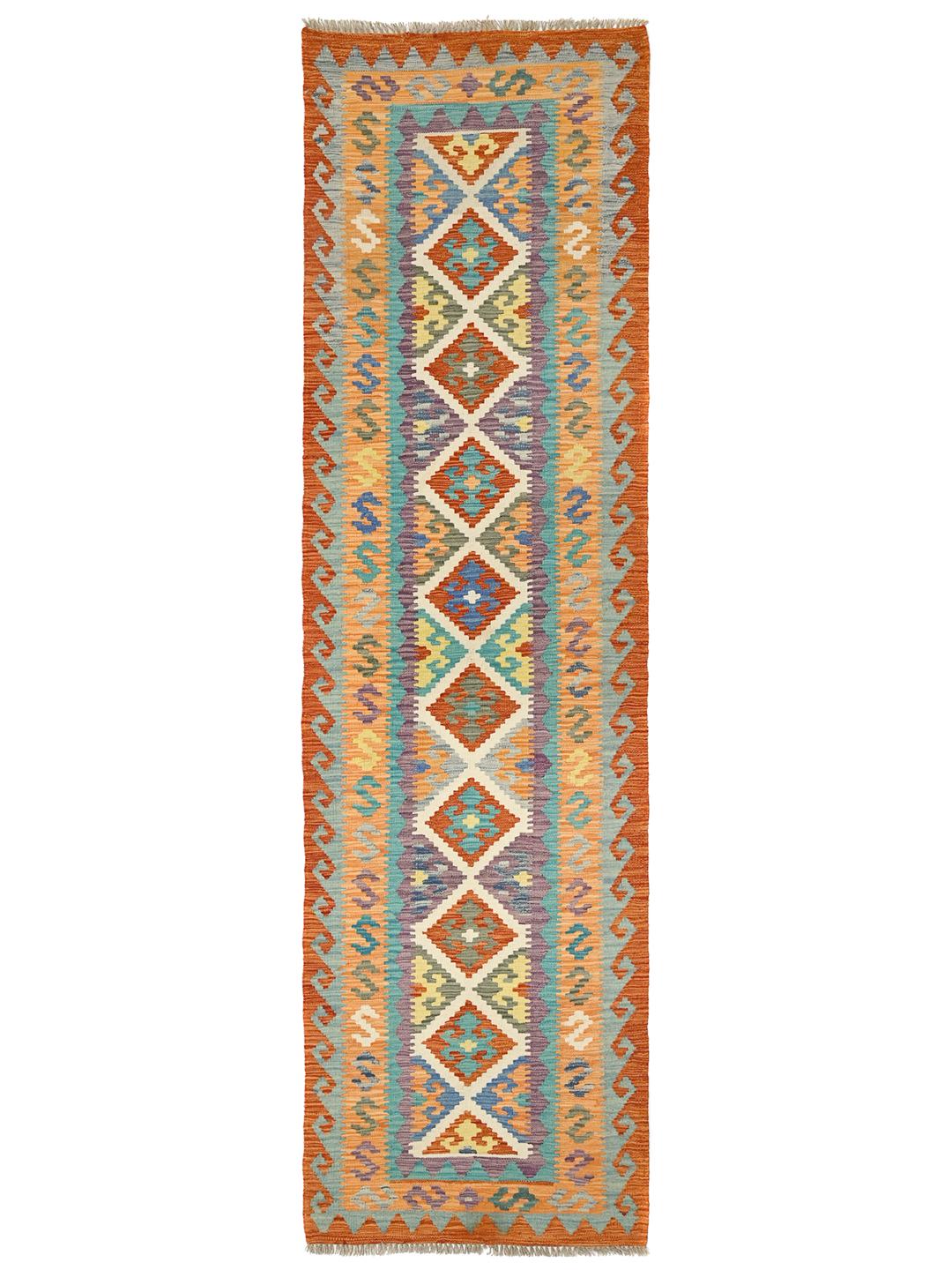
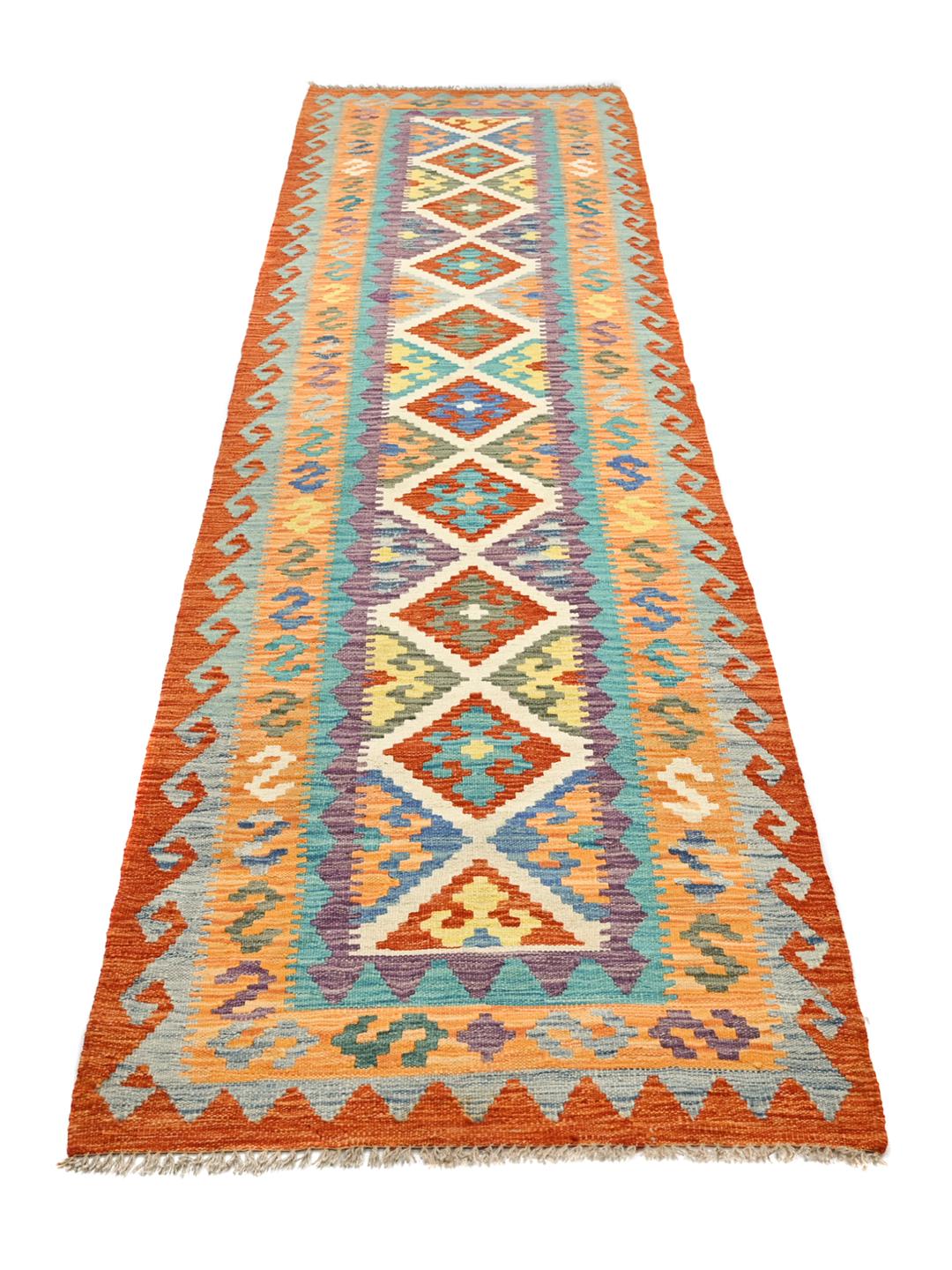
The tradition of weaving kelims in Afghanistan is deeply rooted in the cultural heritage of the region, where these flat-woven textiles have served both functional and decorative purposes for centuries. Historically, these rugs were essential for nomadic life, used as floor coverings, wall hangings, and even as storage bags. Today, the craft continues to thrive, with weavers drawing on ancient techniques to produce pieces that reflect the rich artistic legacy of the Middle East.
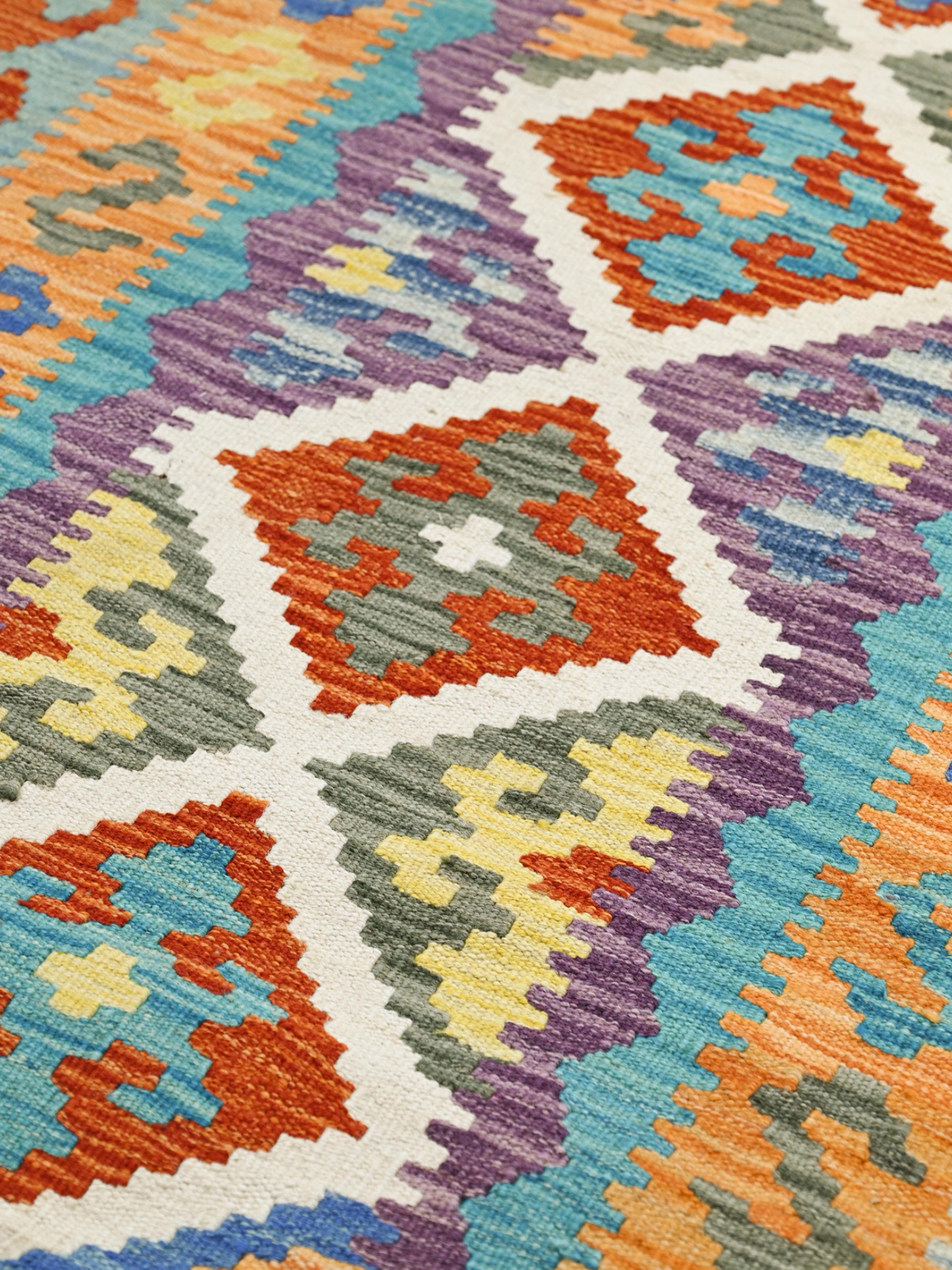
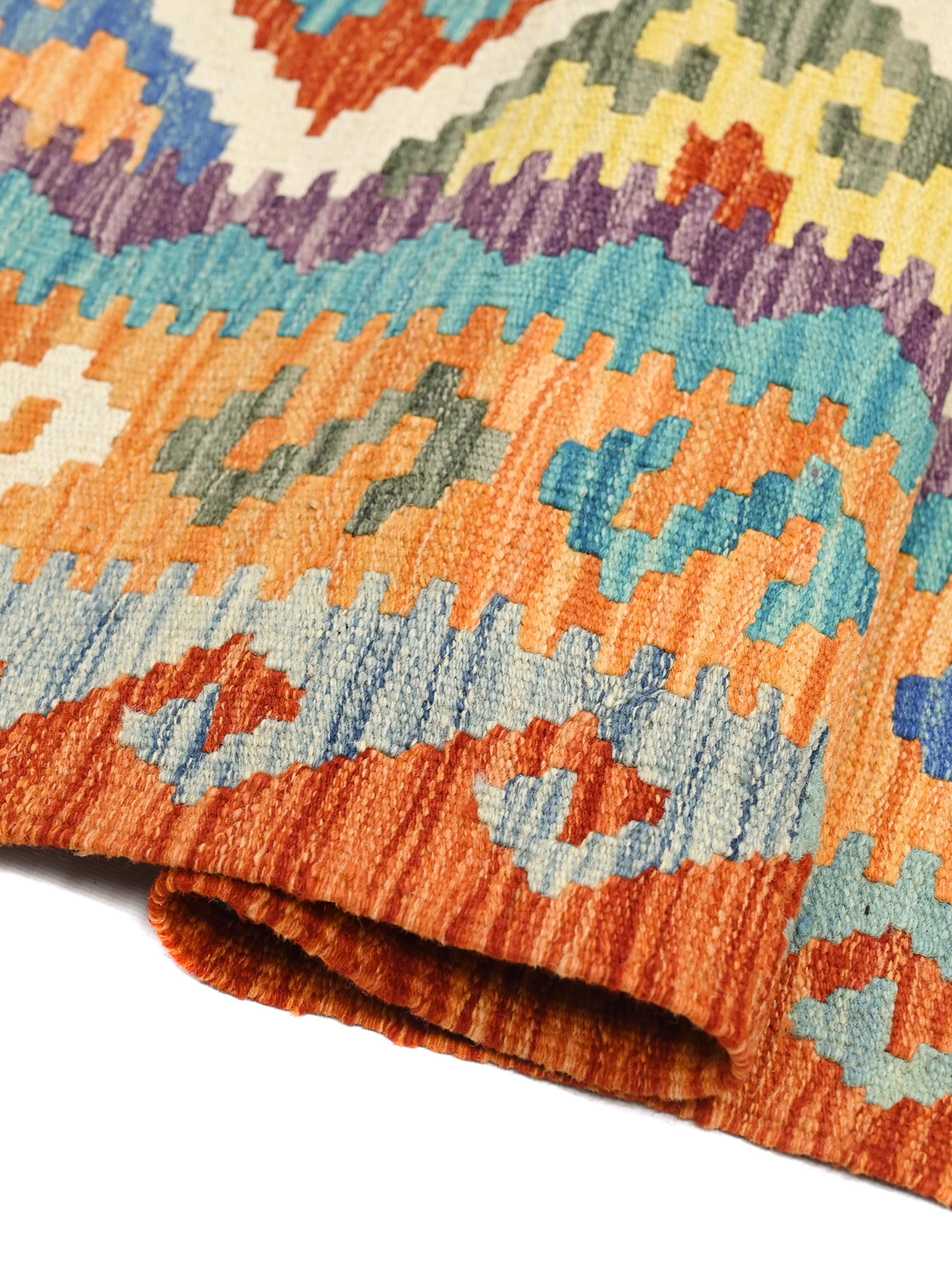
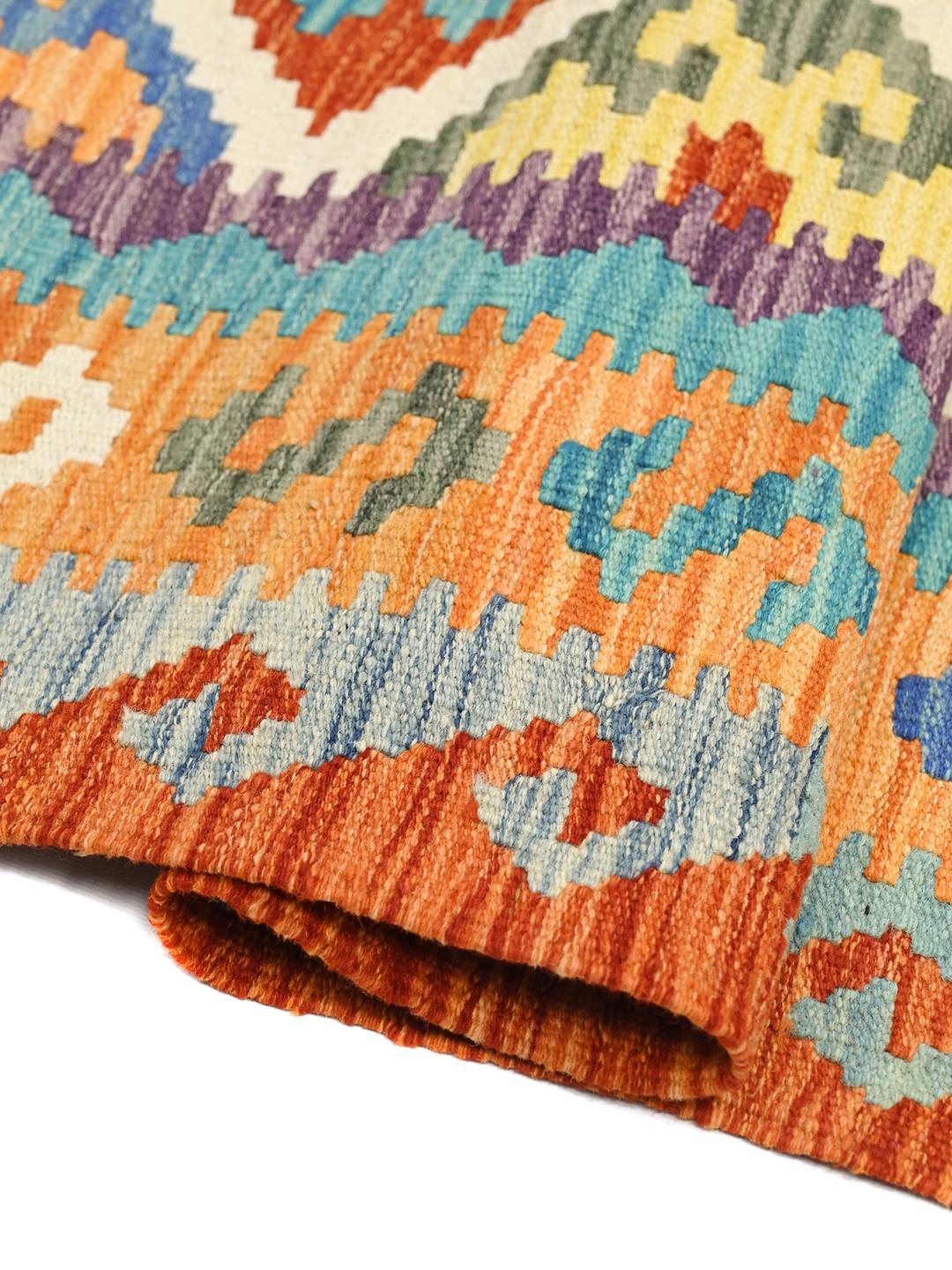
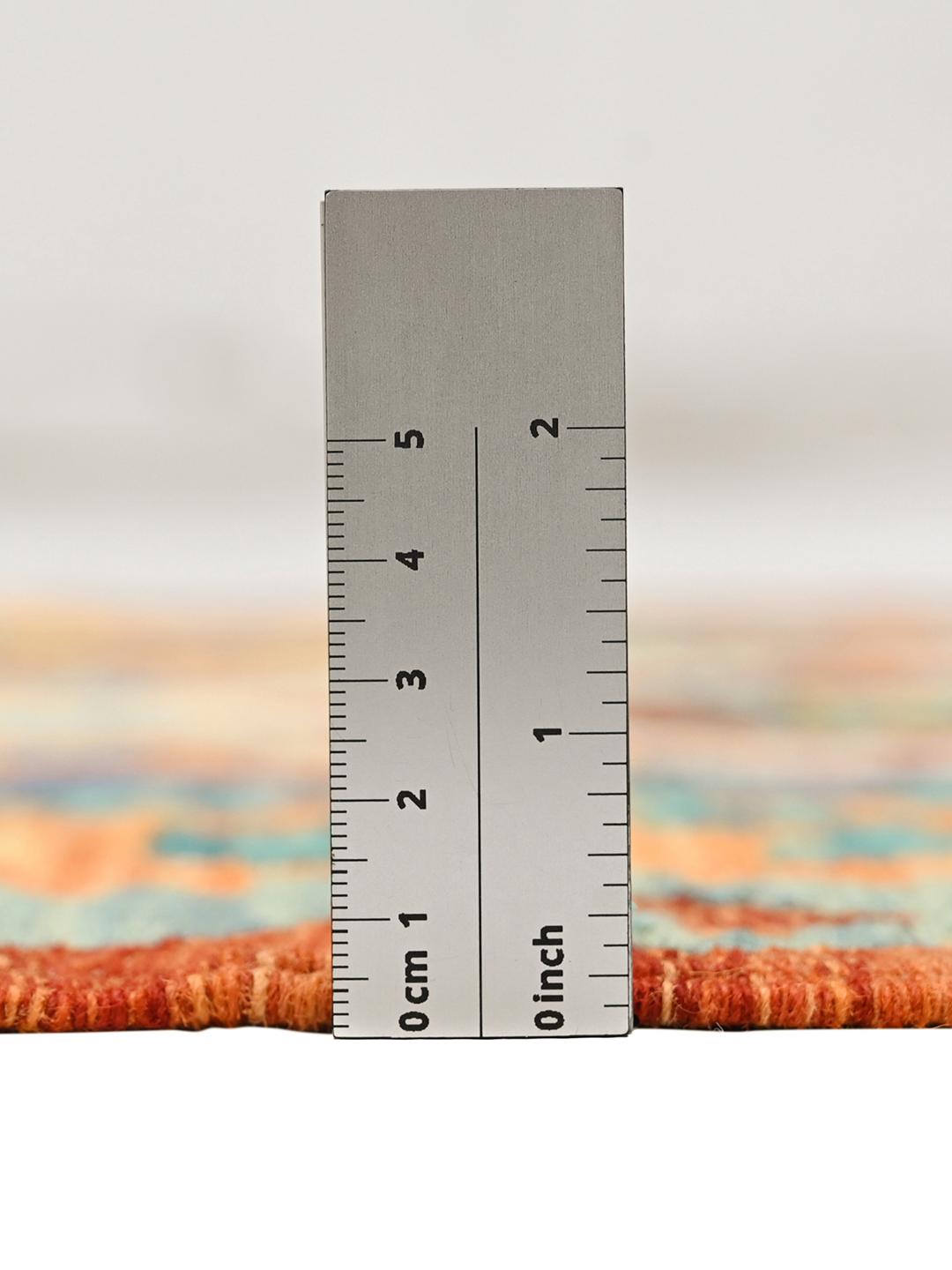
The term 'kelim' refers to the specific flat-weaving technique used, where the warp and weft are interlaced without the use of pile knots. This creates a reversible, lightweight, and incredibly durable textile. The absence of pile means that the design is created directly through the weaving process, requiring immense precision to ensure that the geometric shapes remain sharp and well-defined across the entire length of the runner.
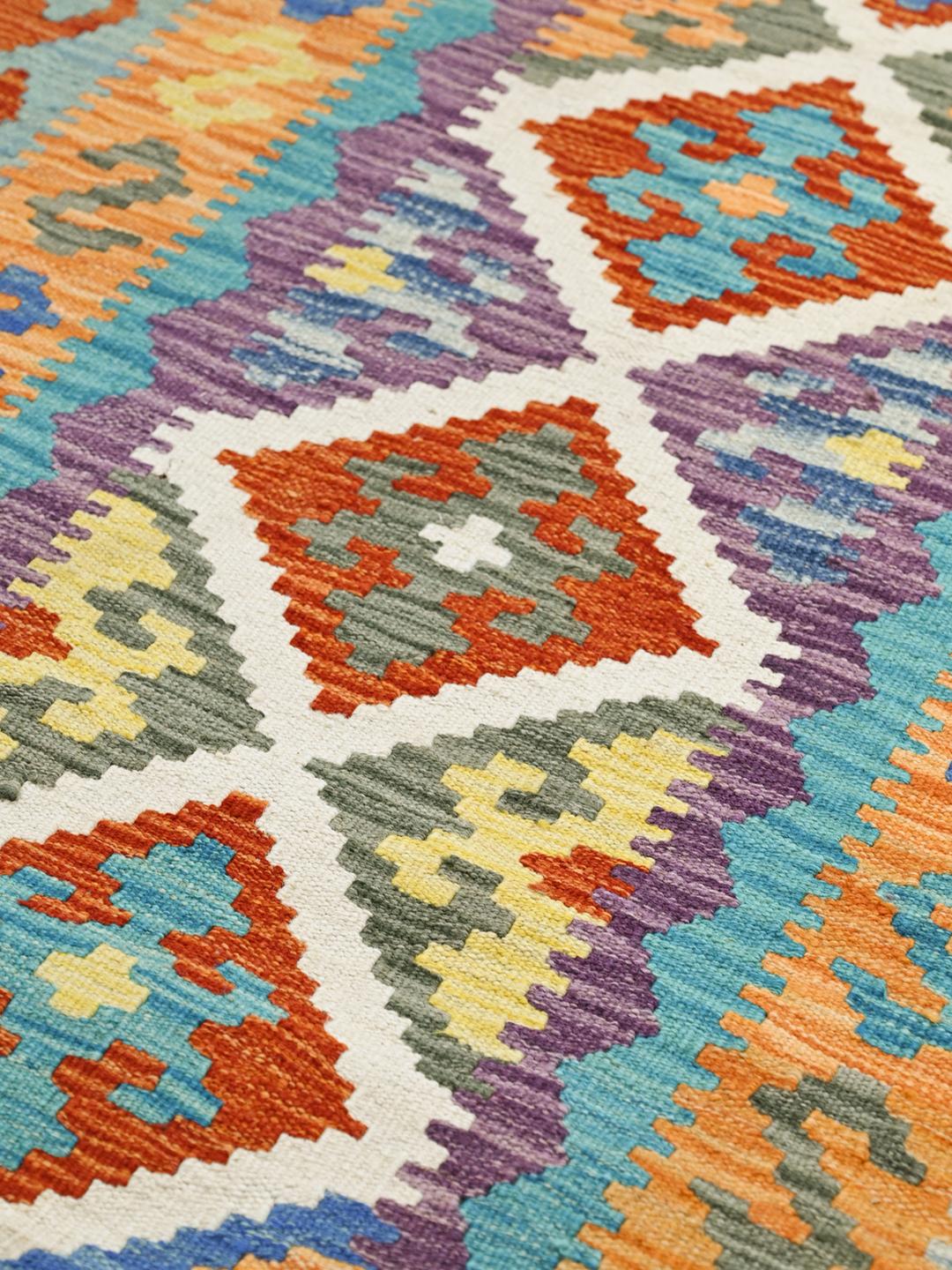
Signature elements of these rugs often include bold, geometric motifs such as diamonds, triangles, and zigzag lines. These patterns are not merely decorative but are often symbolic, representing local beliefs or the natural environment. The use of vibrant, contrasting colours is a hallmark of the Afghan style, designed to stand out against the more muted tones of traditional dwellings while showcasing the weaver's skill in dye selection.
Owning a hand-woven runner from this tradition is a way to connect with a history of craftsmanship that values patience and personal expression. These rugs are highly sought after by collectors and homeowners alike for their authenticity and the way they bring a sense of cultural weight into a modern home. By bringing this piece into your space, you are preserving a craft that celebrates the human touch and the beauty of traditional materials.