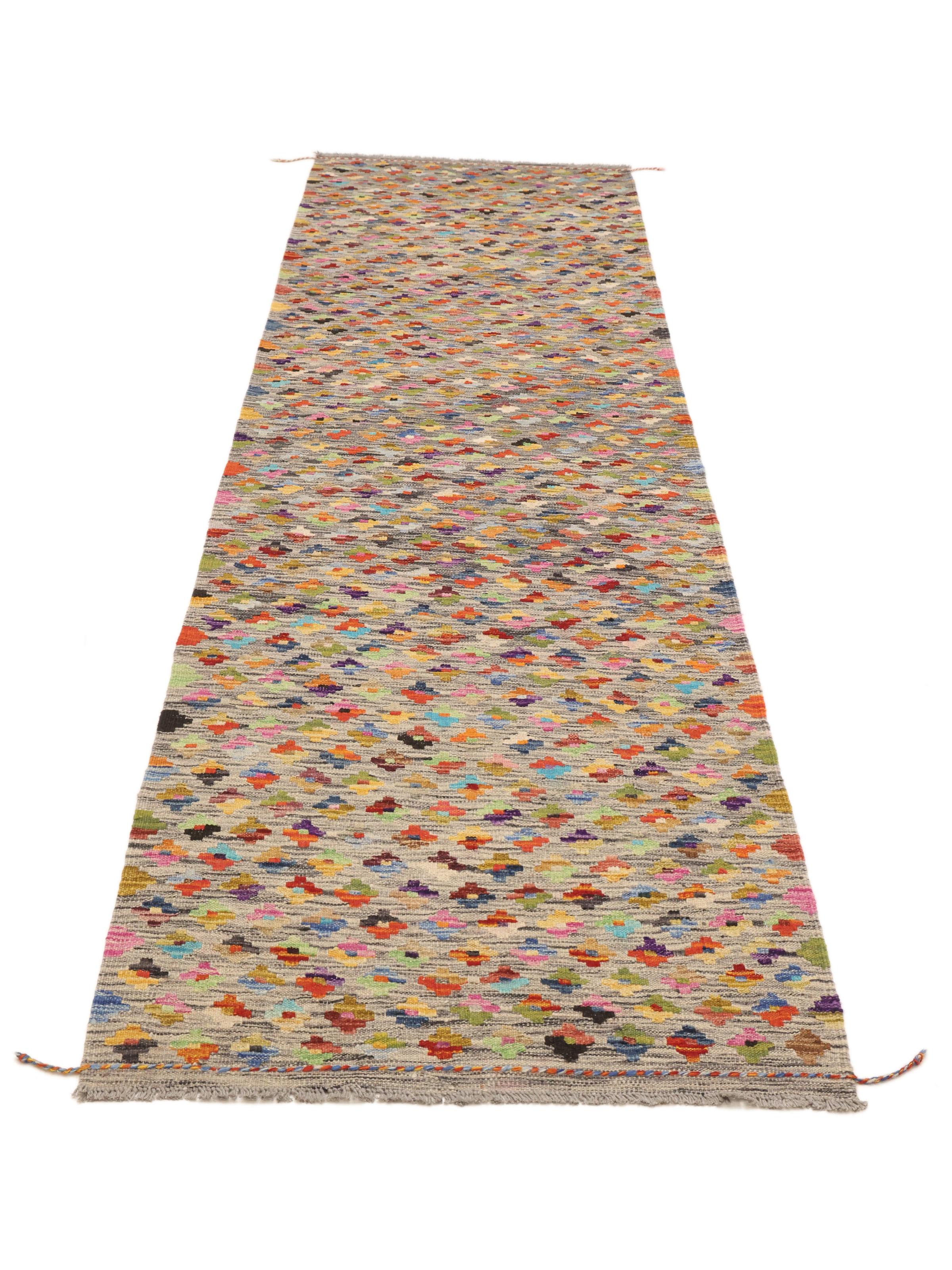
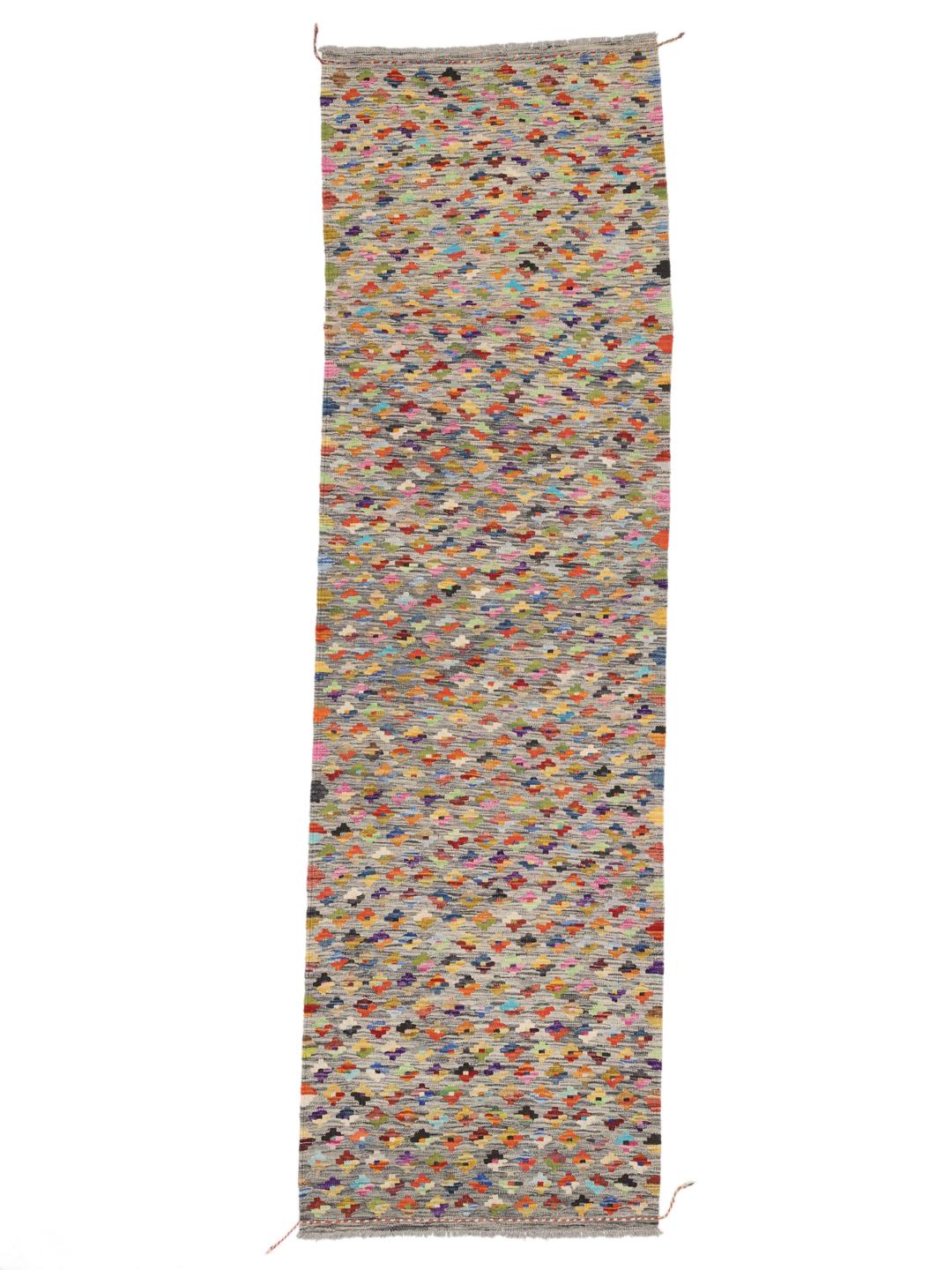
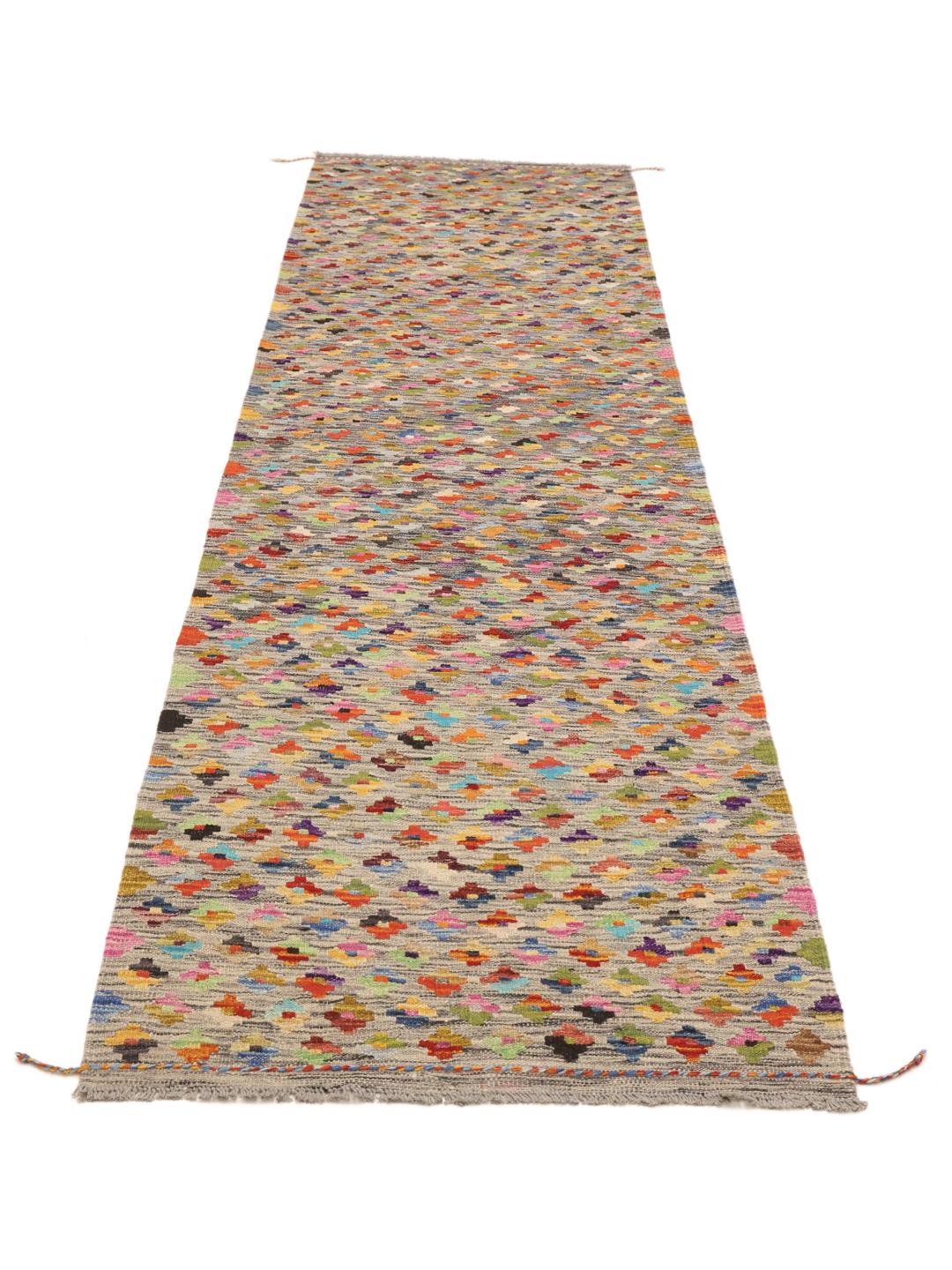
The Kelim tradition in Afghanistan is deeply rooted in the nomadic and village cultures of the region. Historically, these flat-woven rugs were created as versatile, portable floor coverings and blankets, reflecting the practical needs of life while showcasing the creative spirit of the weavers.
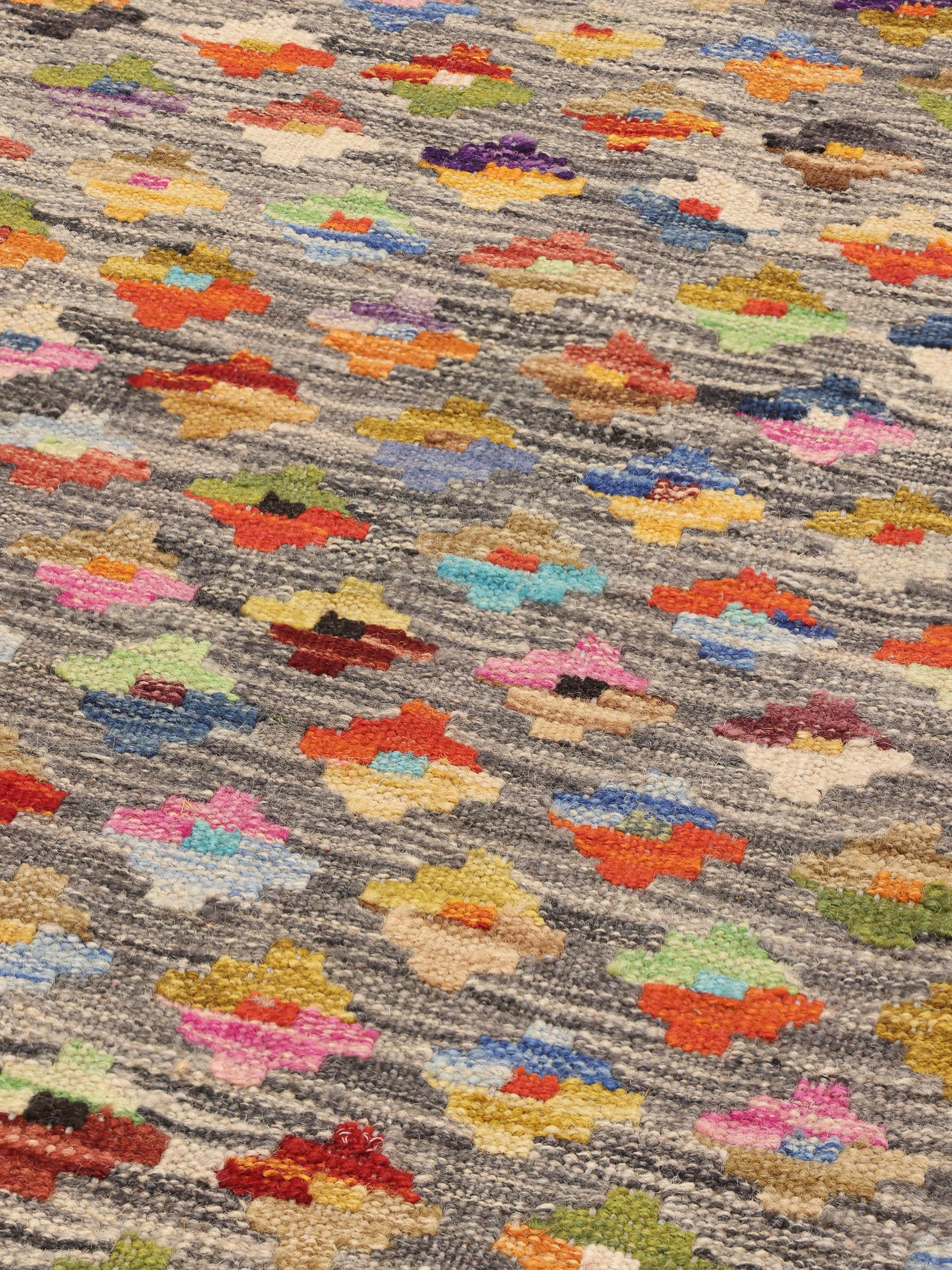
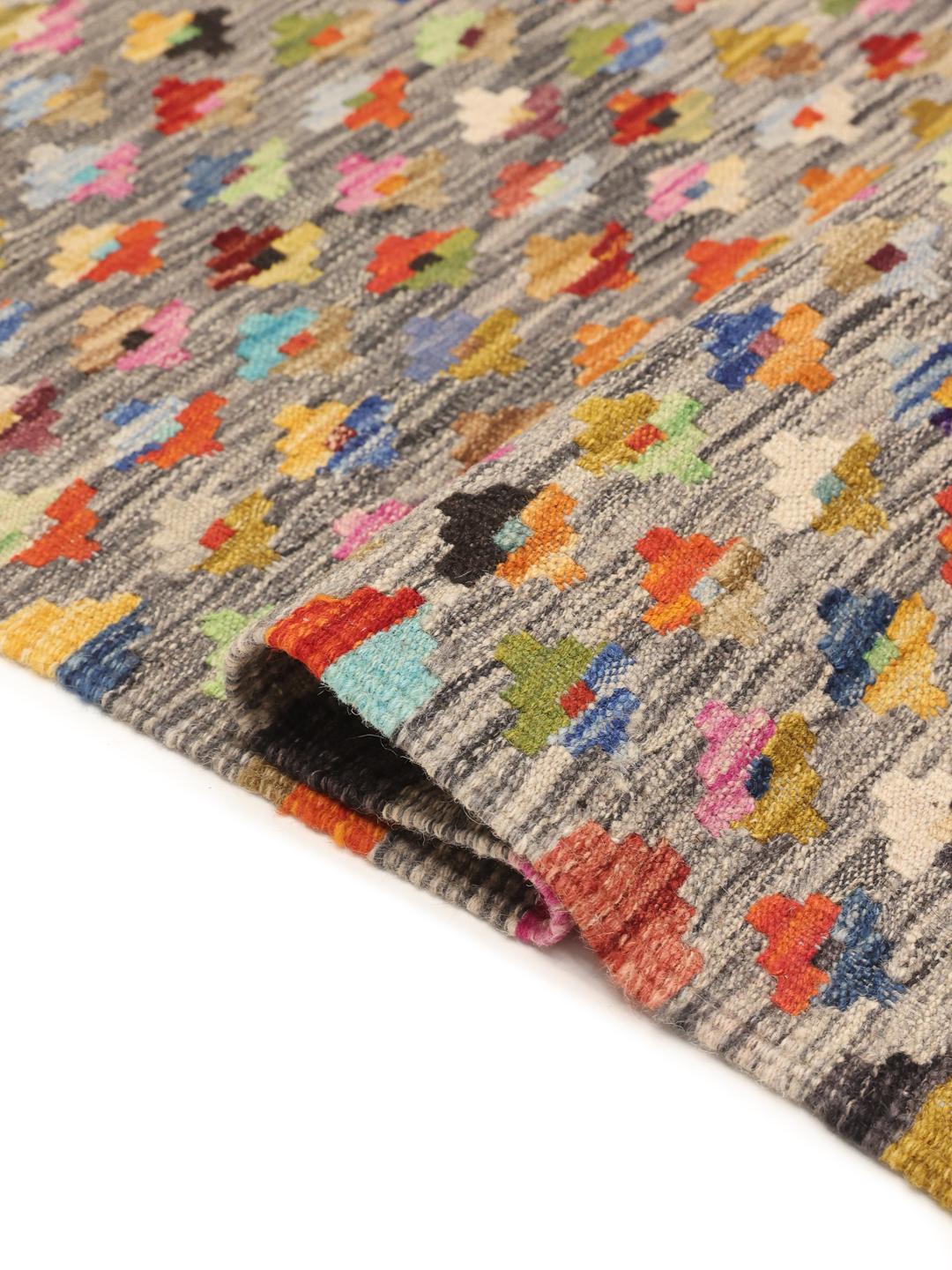
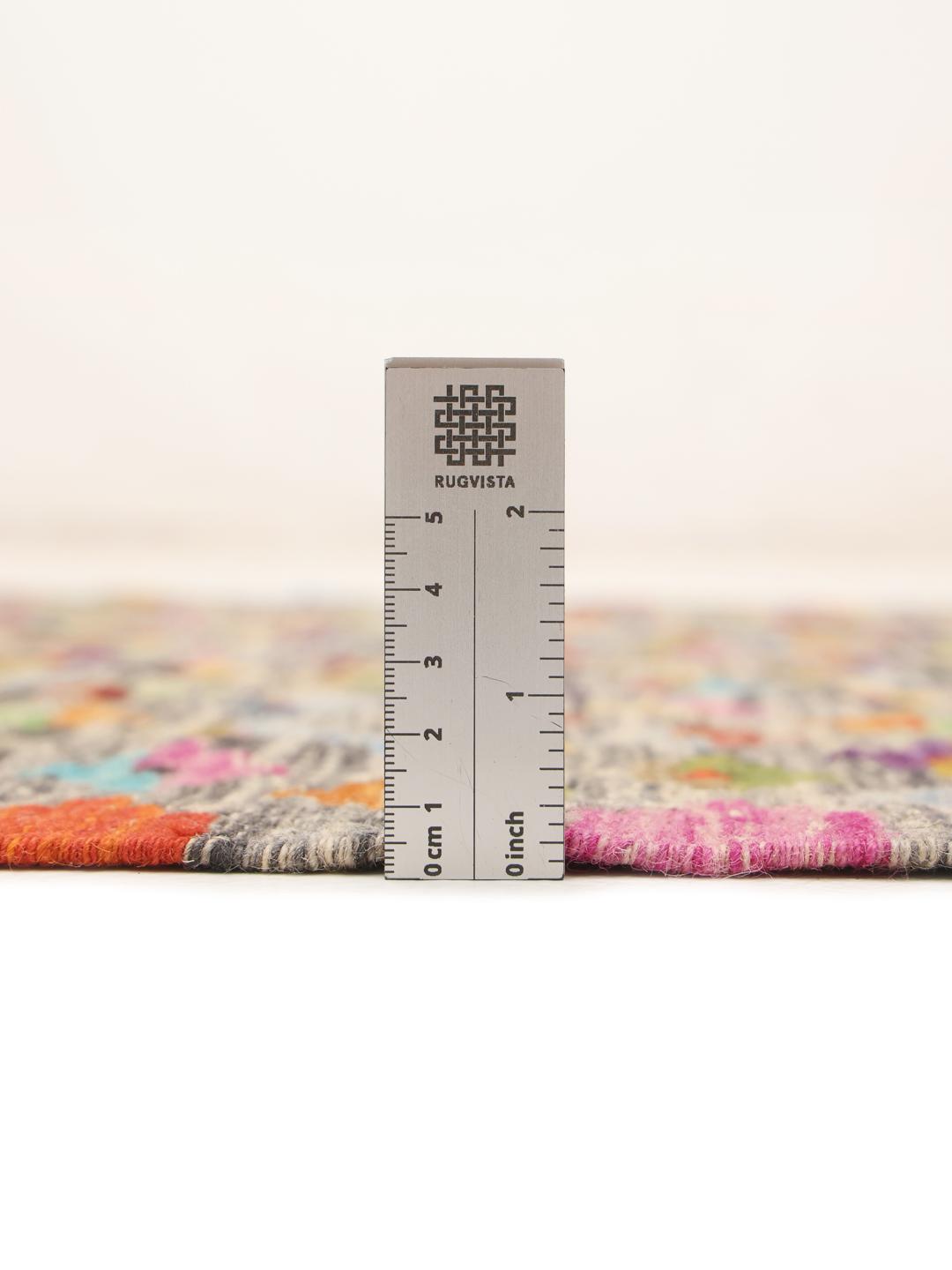
Technically, a Kelim is a flat-weave rug, meaning it lacks a pile. This construction method involves interlacing the warp and weft threads to create the pattern, resulting in a lightweight, reversible, and incredibly durable product. This technique is a hallmark of Middle Eastern textile history and requires a high level of mathematical precision to maintain symmetry.
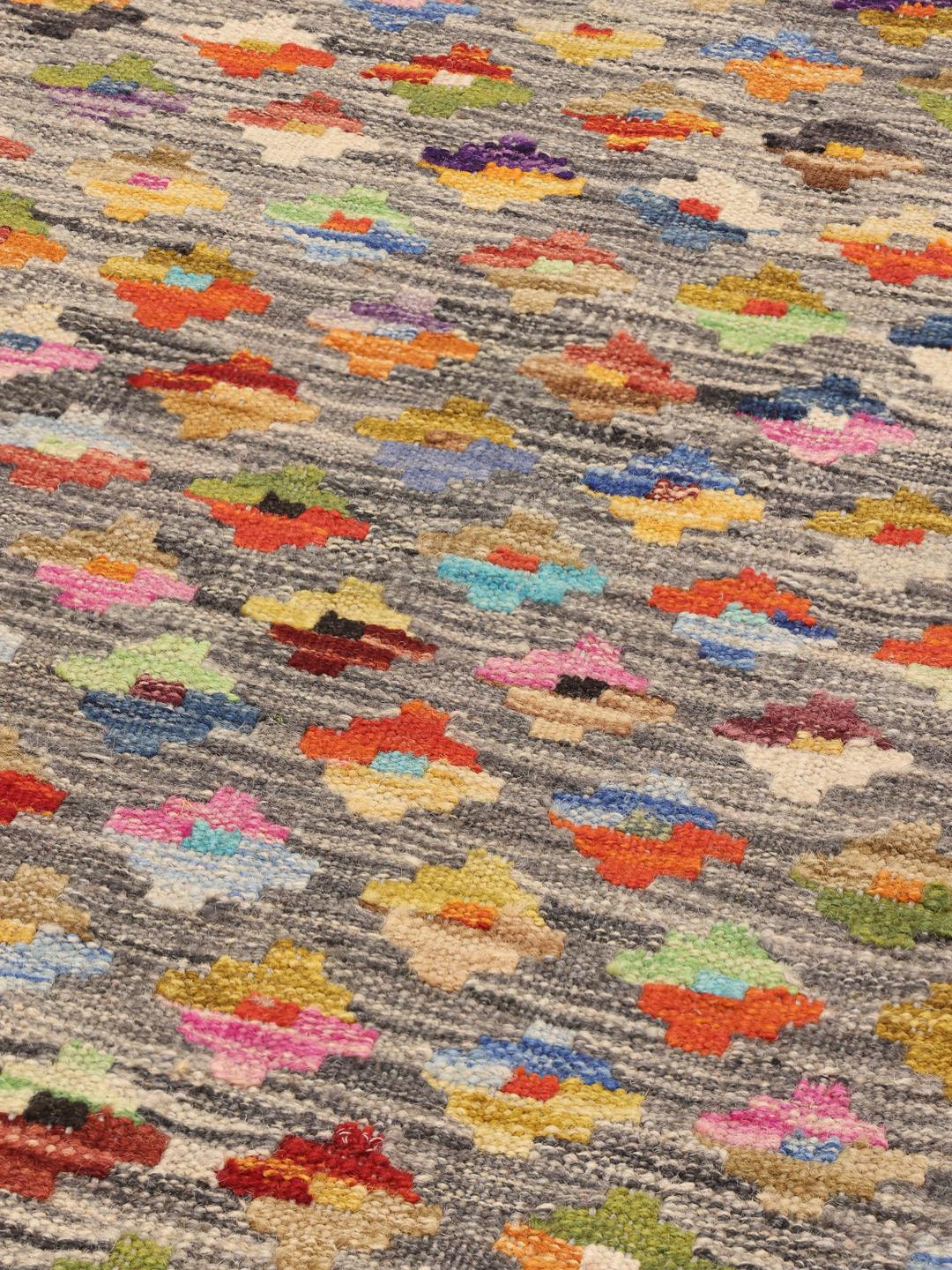
The visual language of these rugs is defined by geometric motifs and an inventive use of colour. While traditional designs often lean into tribal symbolism, modern variations like this one embrace a more liberated, multicoloured approach. The interplay of these diverse hues against a neutral base creates a visual depth that feels both contemporary and deeply connected to its origins.
Collecting these rugs is an investment in human heritage. They are valued not just for their utility, but for the story they tell of the region's artistic evolution. By bringing a piece like this into your home, you are preserving a legacy of craft that has been passed down through generations of skilled weavers.