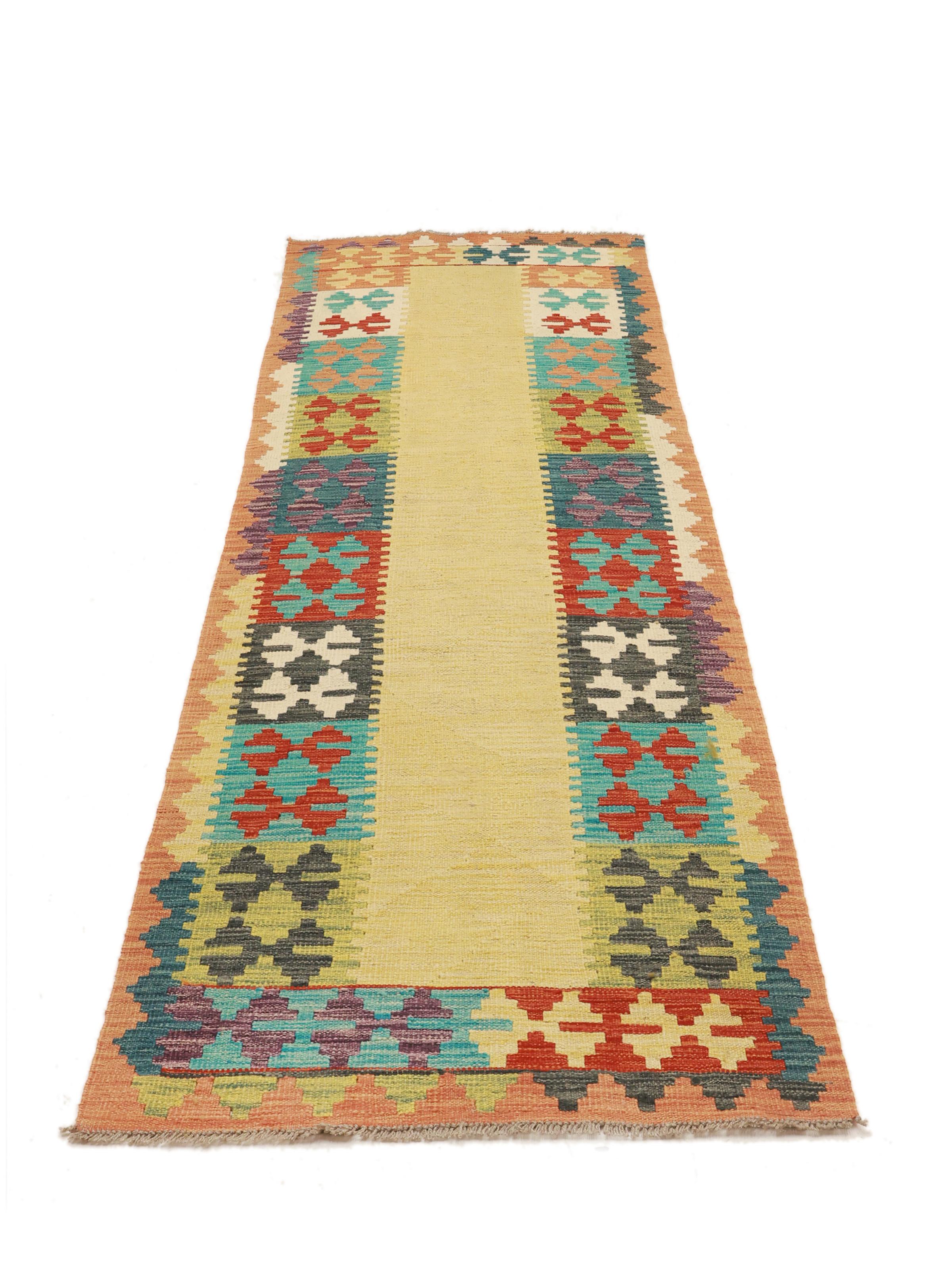
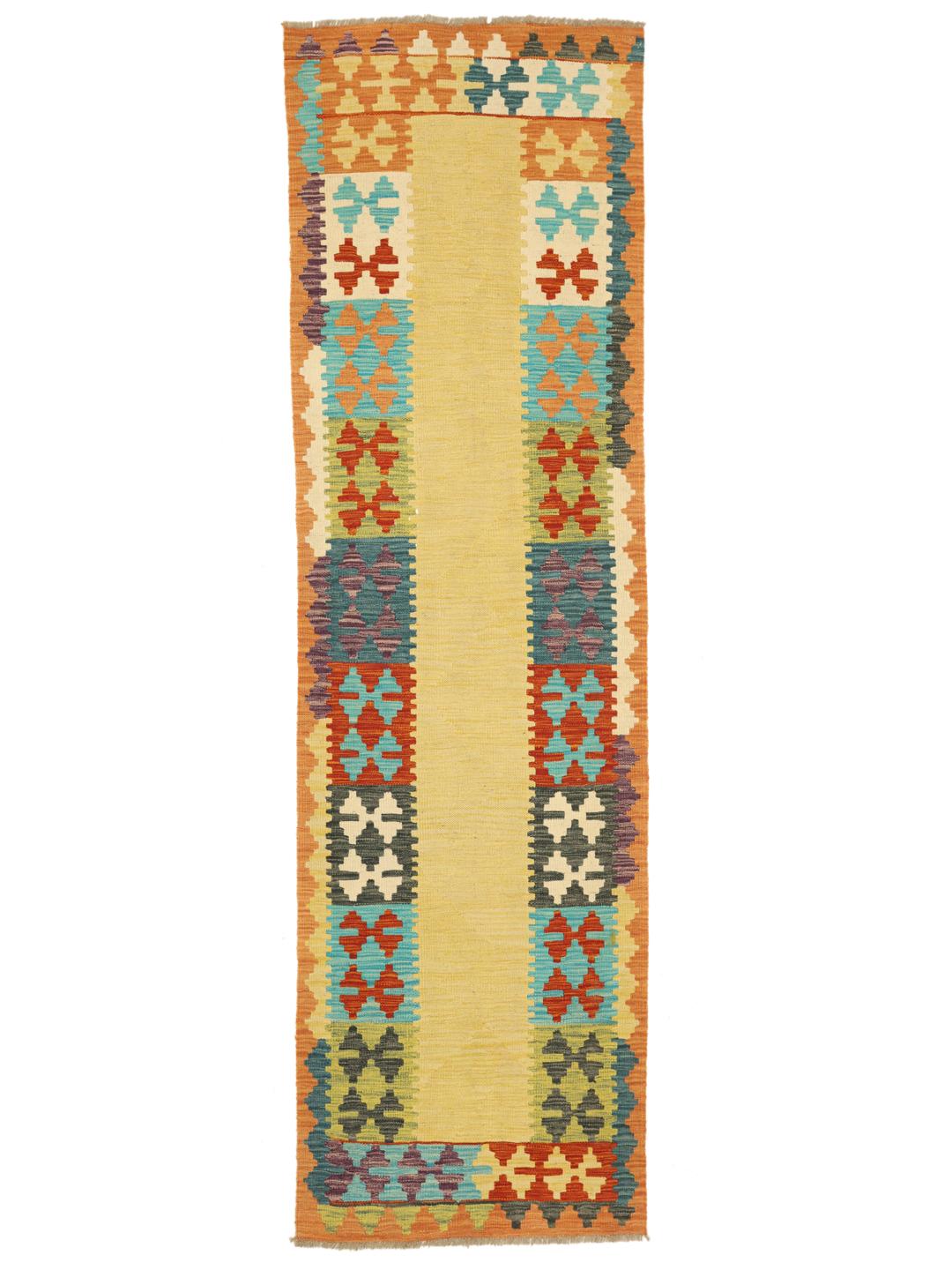
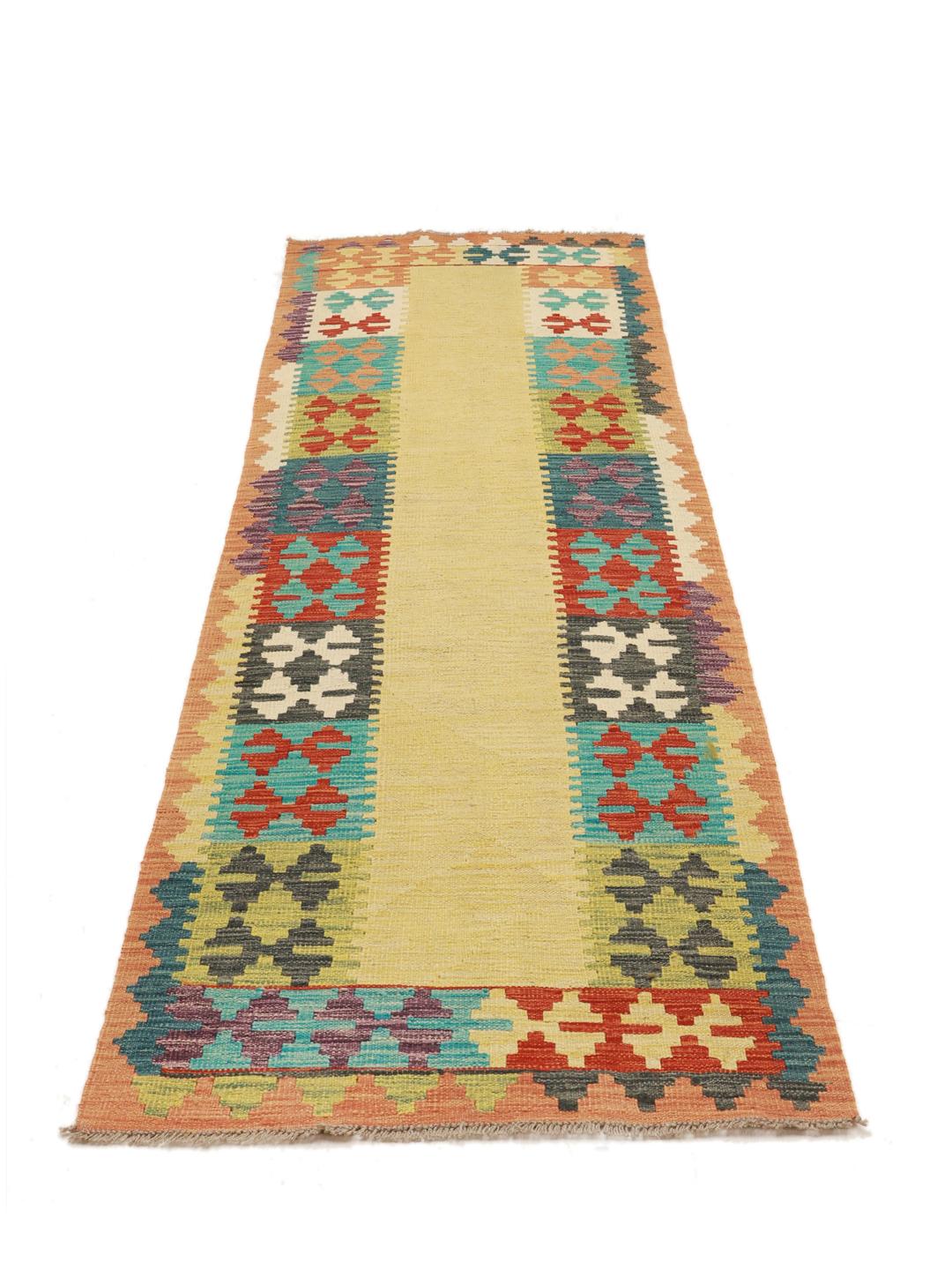
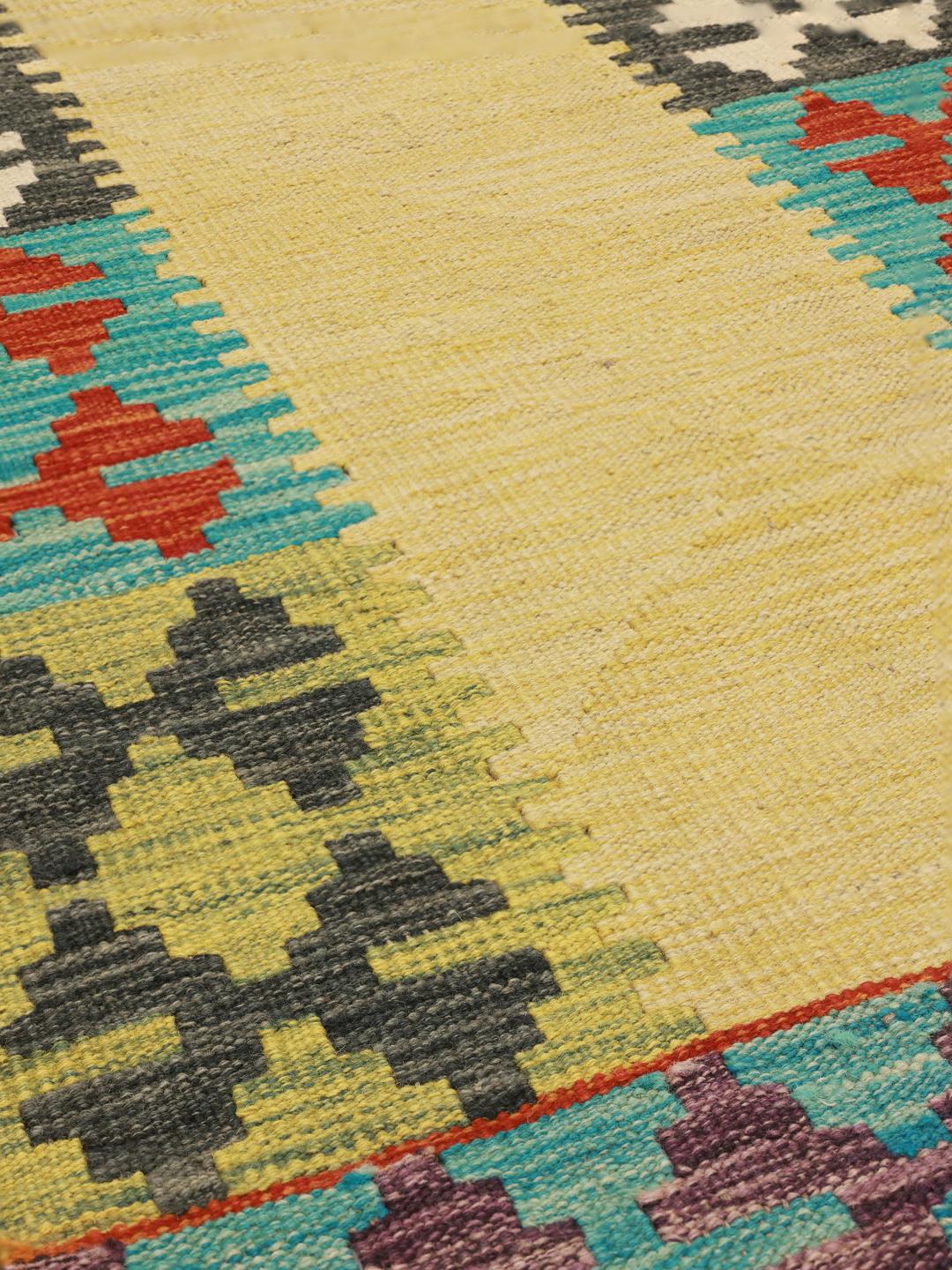
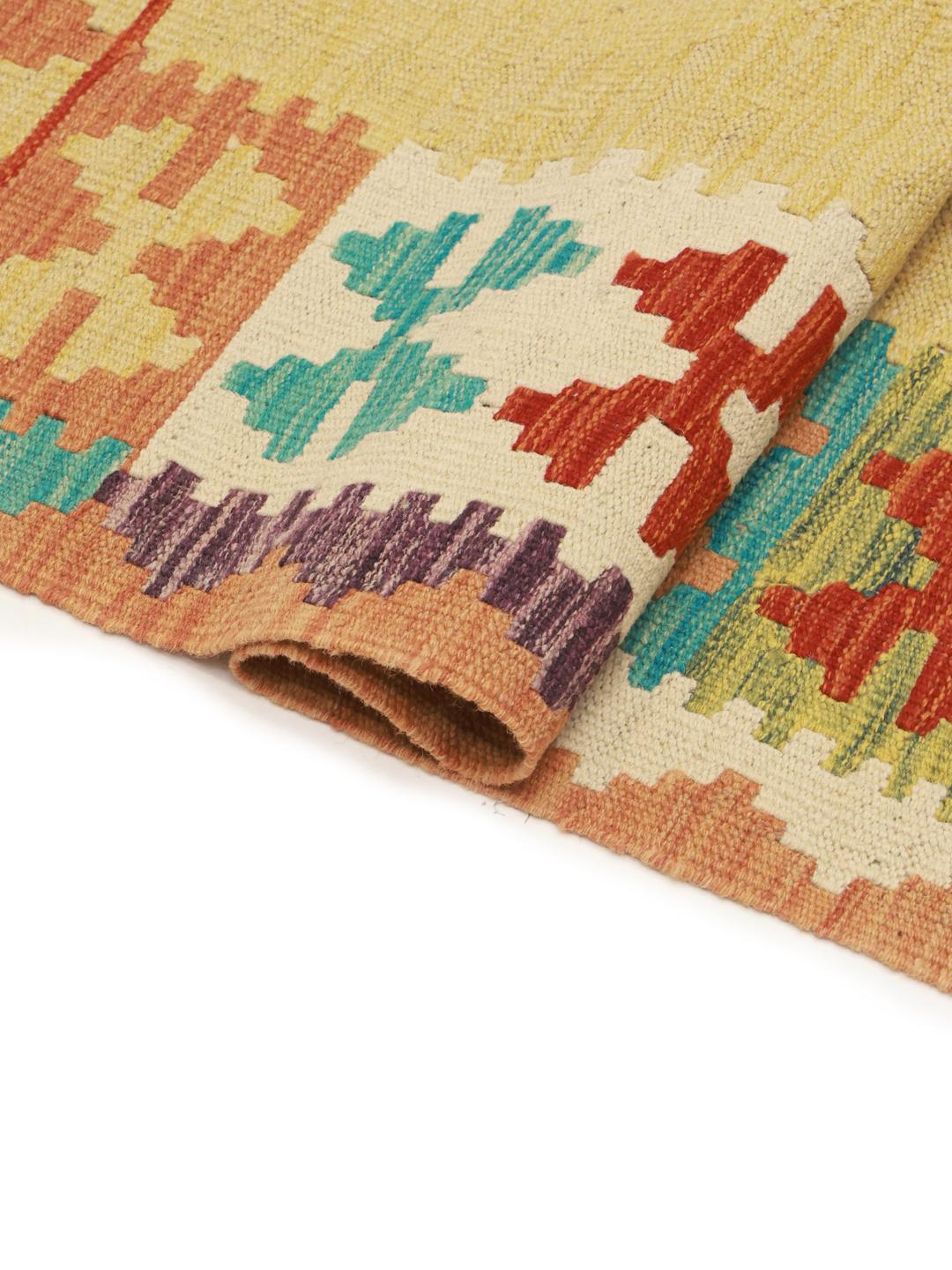
The Kelim tradition is deeply rooted in the nomadic and village cultures of the Middle East and Central Asia. These flat-woven rugs have served as essential, multi-functional textiles for centuries, used as floor coverings, wall hangings, and even as storage bags by migratory tribes. The Afghan style, in particular, is celebrated for its robust construction and earthy, authentic aesthetic.
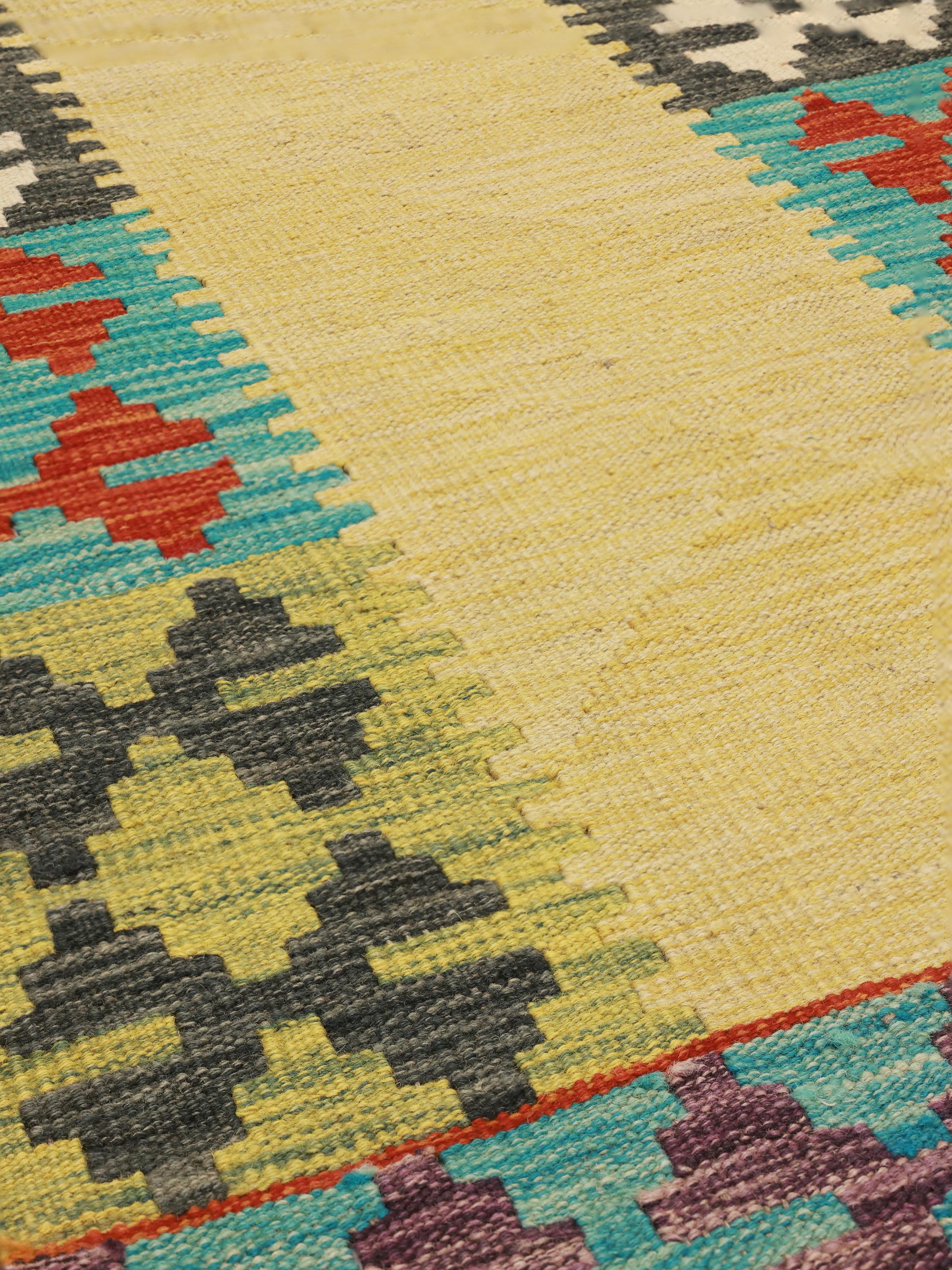
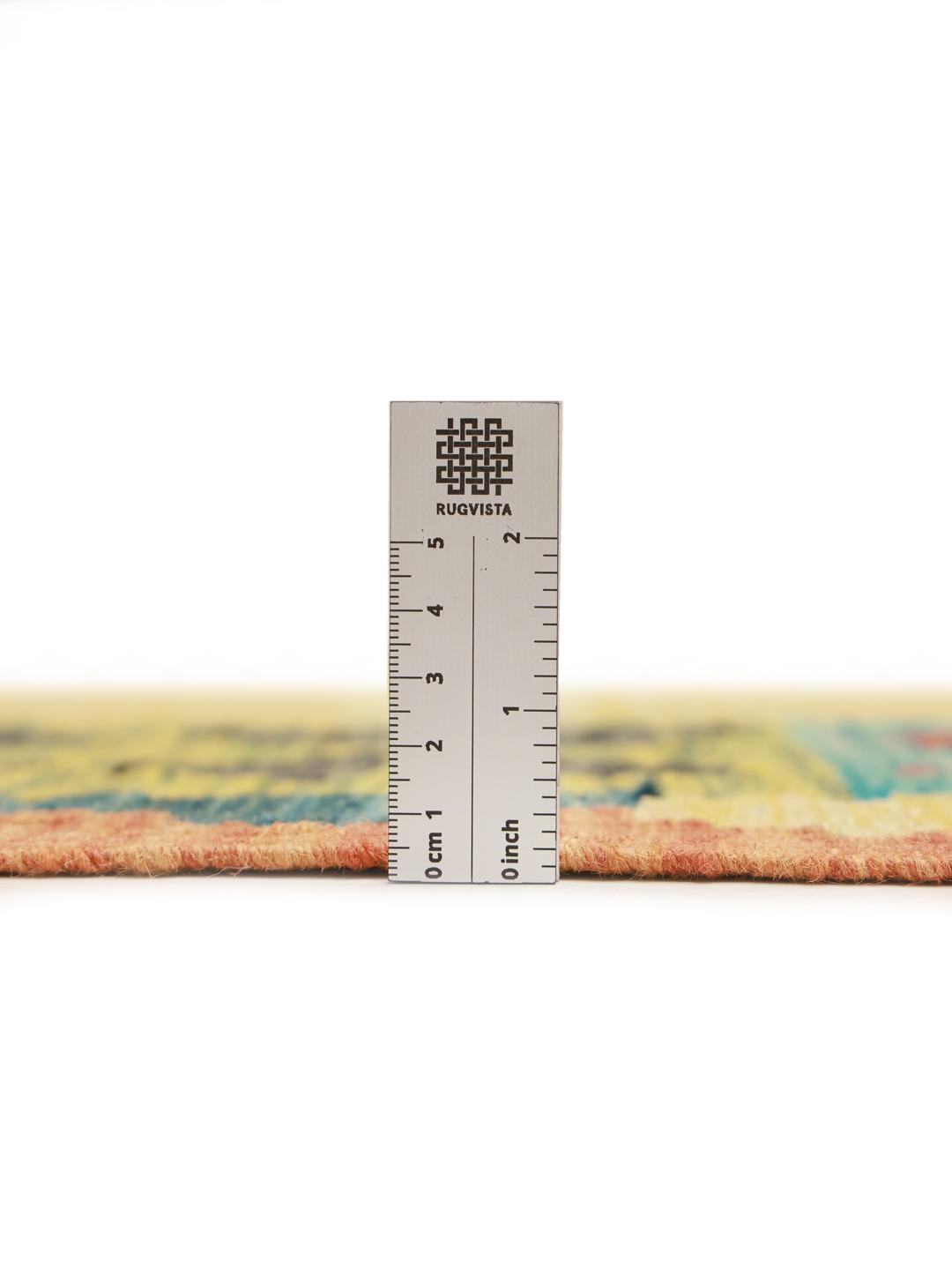
Technically, a Kelim is distinguished by its lack of pile. Instead of knotting individual strands of wool onto a warp, the weaver interlaces the coloured weft threads directly through the warp to create the pattern. This produces a lightweight yet incredibly strong fabric that is reversible, as the design typically appears identical on both sides. This technique allows for the sharp, clean-cut geometric shapes that are the hallmark of the style.
The visual language of these rugs relies on geometric symbolism and vibrant, natural dyes. You will often see repeating diamond or latch-hook motifs that have been passed down through generations of weavers. These patterns are not merely decorative but often act as a visual narrative, representing tribal identity, protection, or the surrounding landscape. The use of bold, contrasting colours is designed to stand out against the more neutral interiors of traditional dwellings.
Collecting a Kelim is an appreciation of a craft that survives in an era of mass production. These rugs are highly valued for their honest, unpretentious beauty and the immense amount of time and patience required to weave them. By bringing one into your home, you are connecting with a long lineage of artisans and preserving a cultural tradition that values human touch above all else.