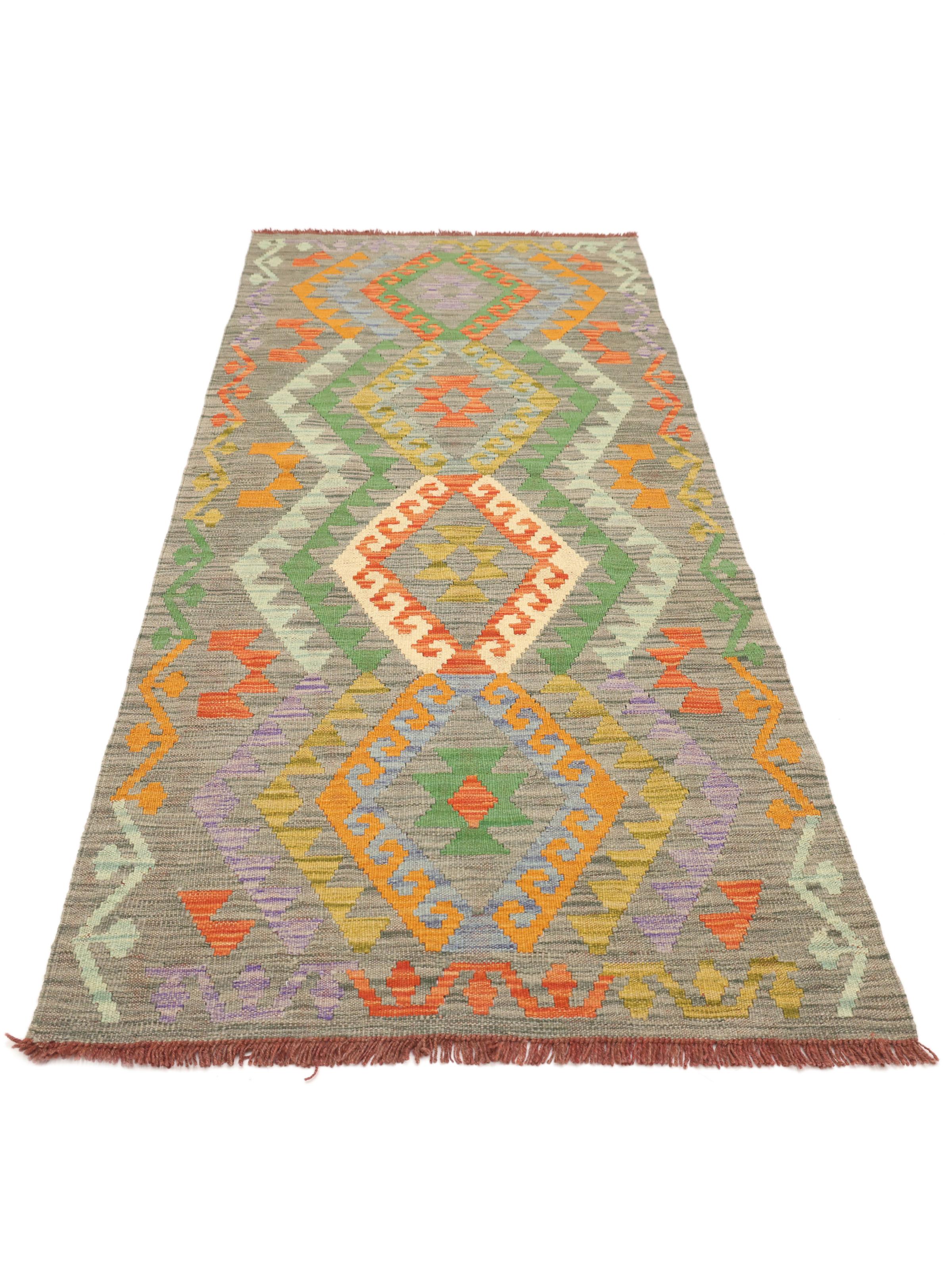
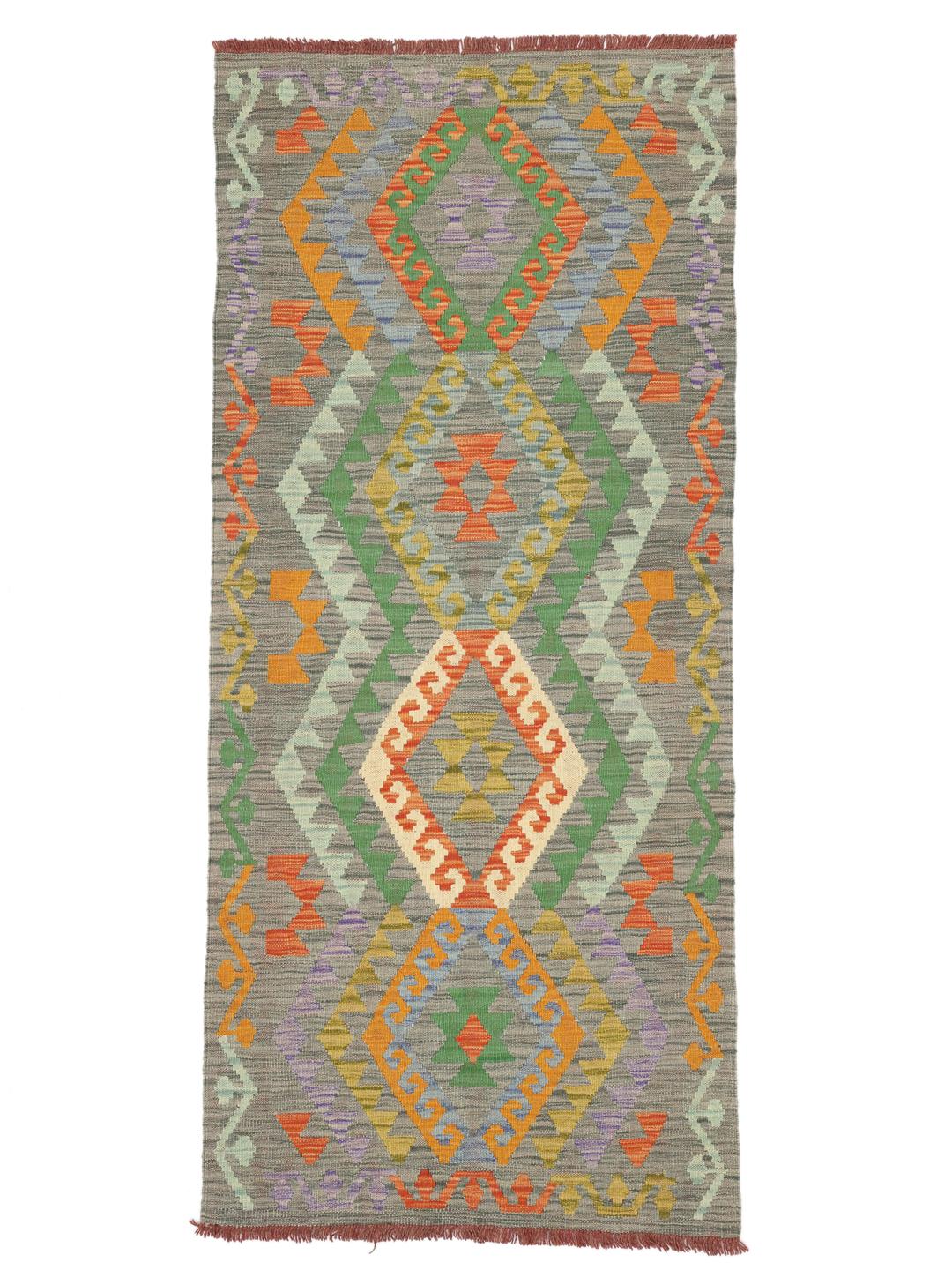
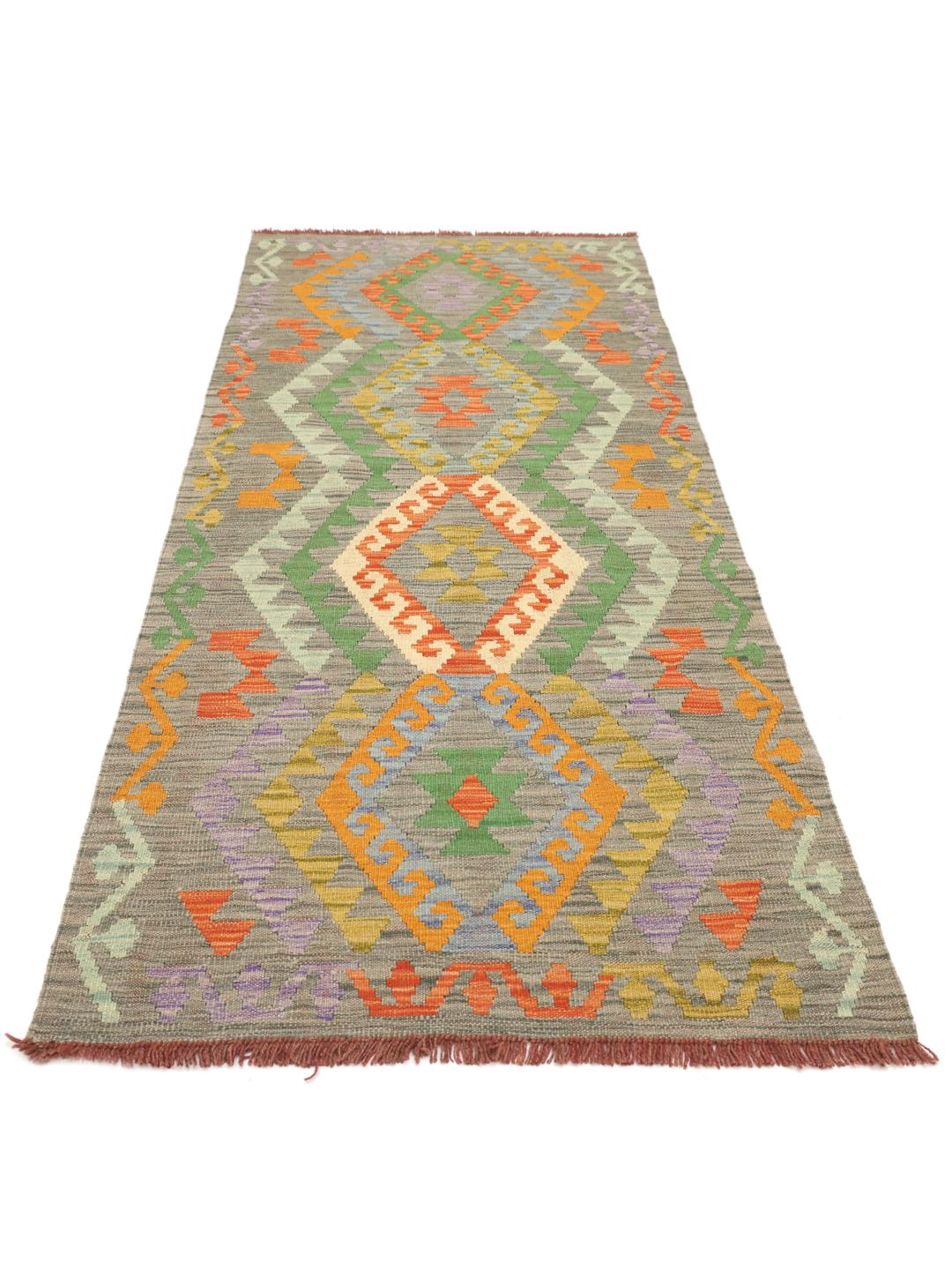
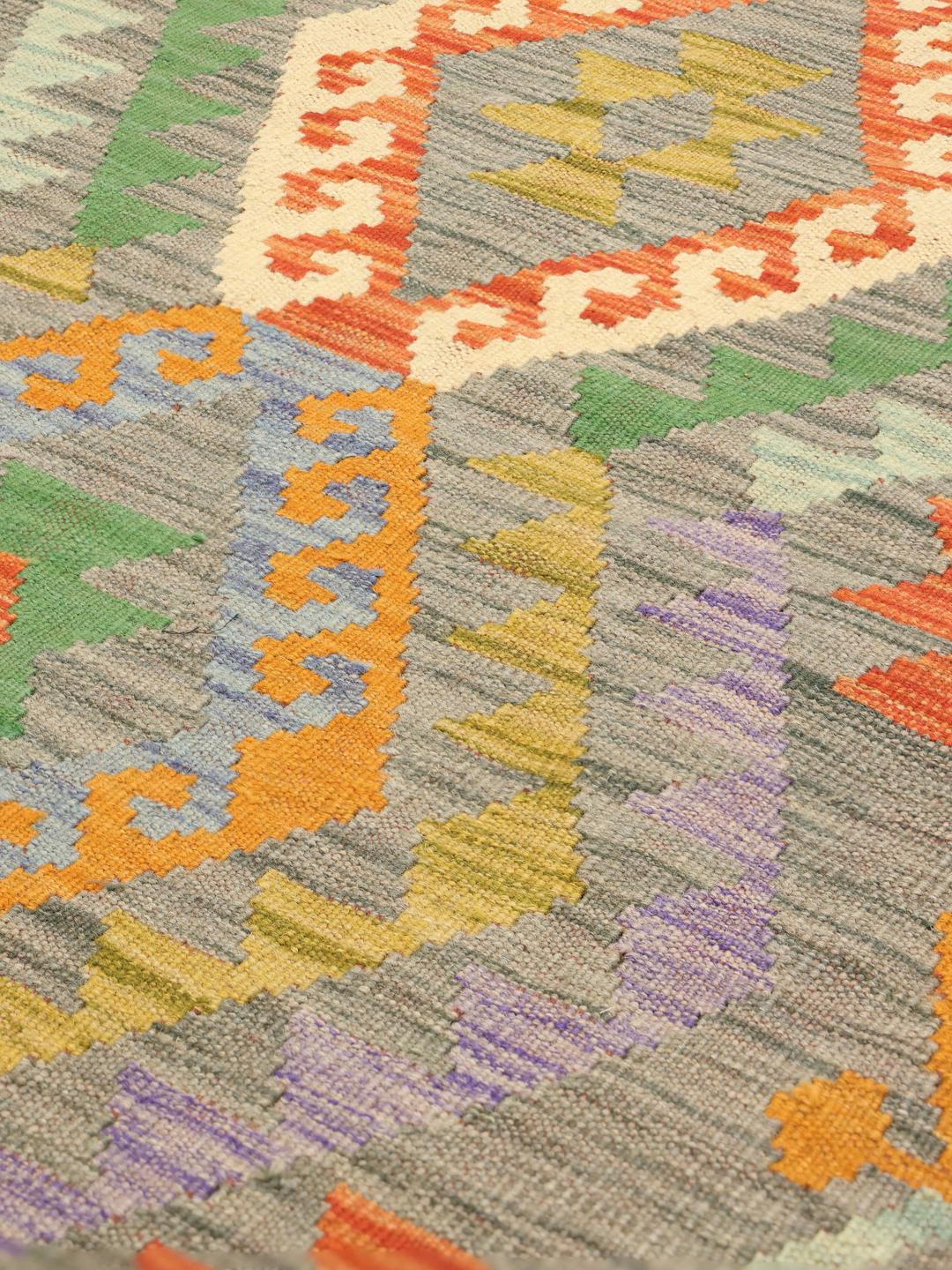
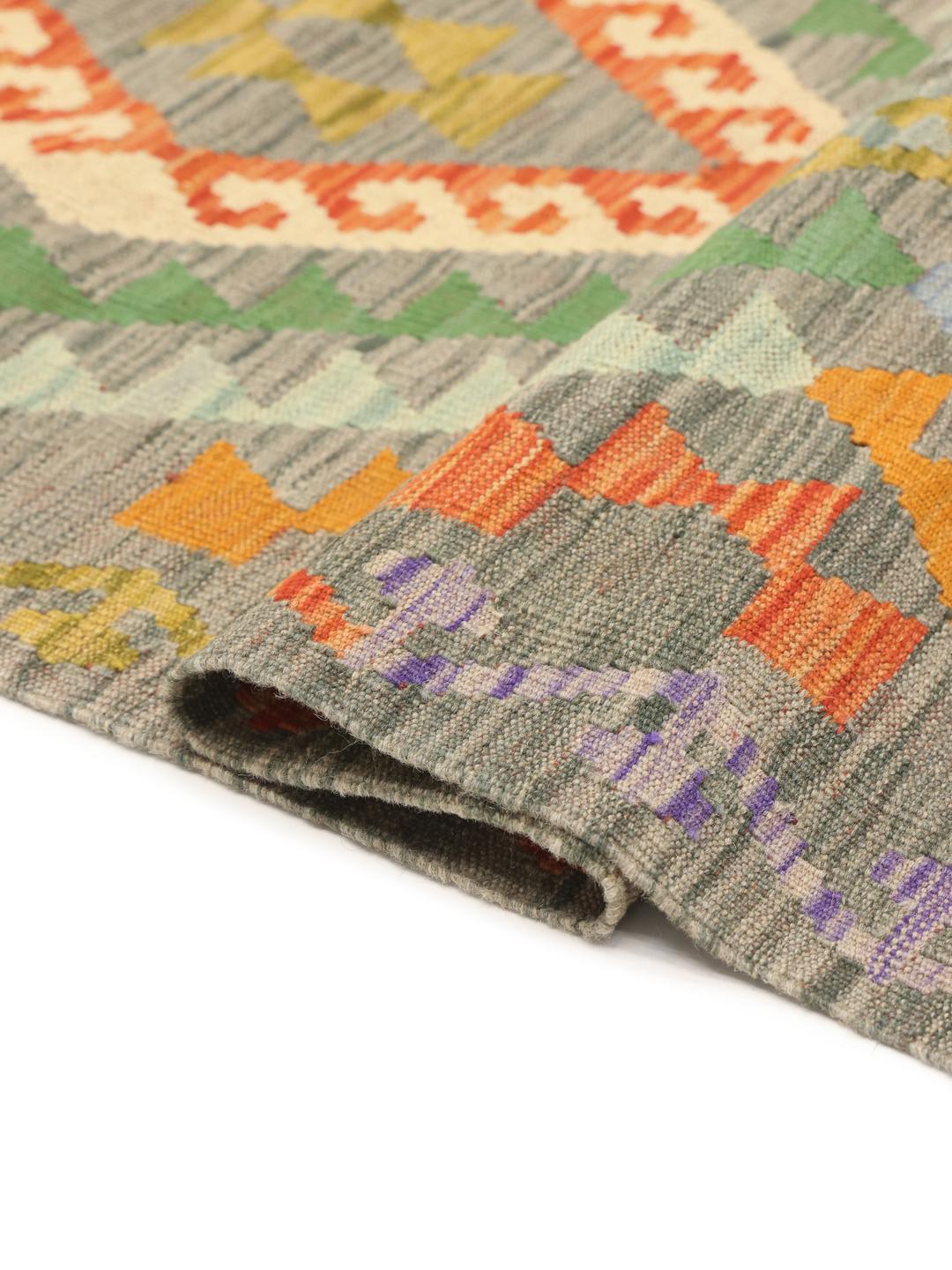
The history of these runners is deeply rooted in the nomadic traditions of Afghanistan, where flat-woven textiles have served as essential household items for generations. Known as Kelims, these rugs are traditionally made without a pile, making them versatile and lightweight, perfect for the mobile lifestyles of tribal weavers who moved across the rugged landscapes of Central Asia.
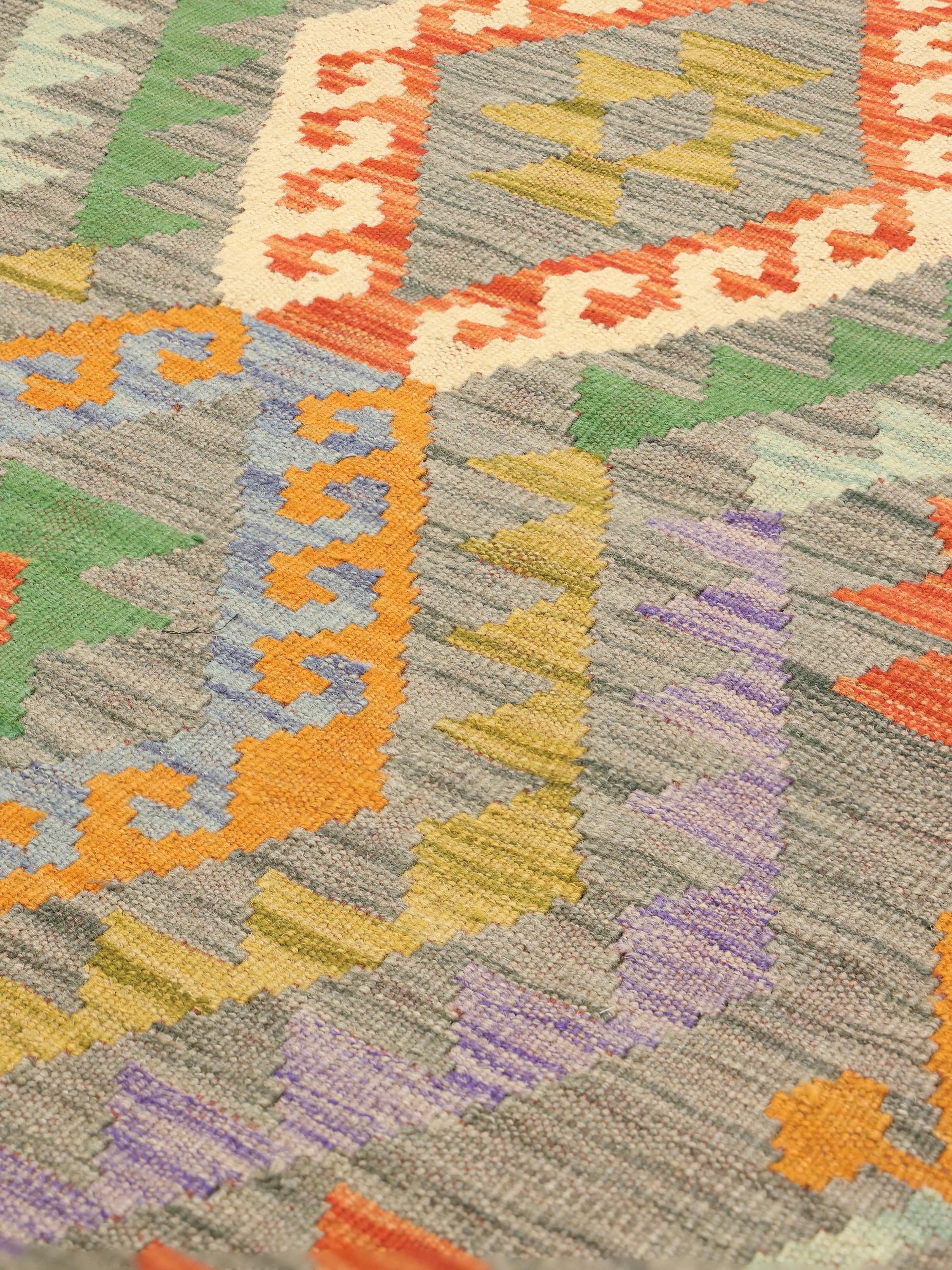
The term 'Kelim' refers to the specific slit-weave technique used to create these pieces. This method involves the weft threads being passed back and forth through the warp, creating sharp, clean lines between different coloured sections. This technique is not just a stylistic choice but a hallmark of quality that ensures the rug remains thin yet incredibly strong.
Visually, these rugs are defined by a language of geometric motifs, often featuring diamonds, triangles, and serrated edges. These patterns are rarely just decorative; they often carry symbolic meanings related to protection, fertility, and the weaver's environment. The use of vibrant, contrasting colours is a signature of this tradition, reflecting the bold spirit of the region.
Collecting an Afghan Kelim is more than just purchasing a floor covering; it is an investment in cultural heritage. These pieces are valued for their enduring beauty and the skill required to maintain the symmetry of complex patterns on a loom. Owning one means connecting with a long lineage of craft, where every rug serves as a narrative of the weaver’s history and creative expression.