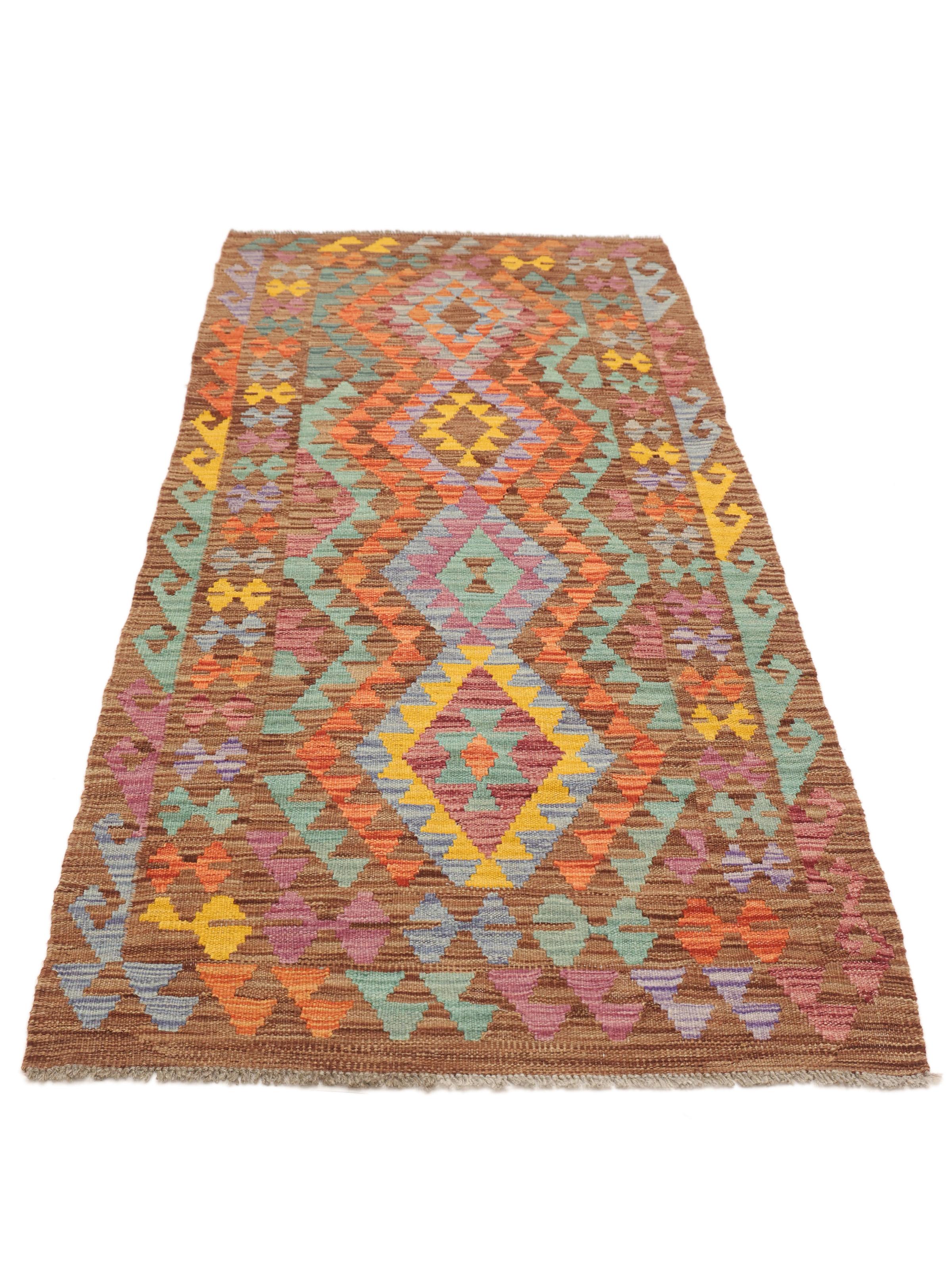
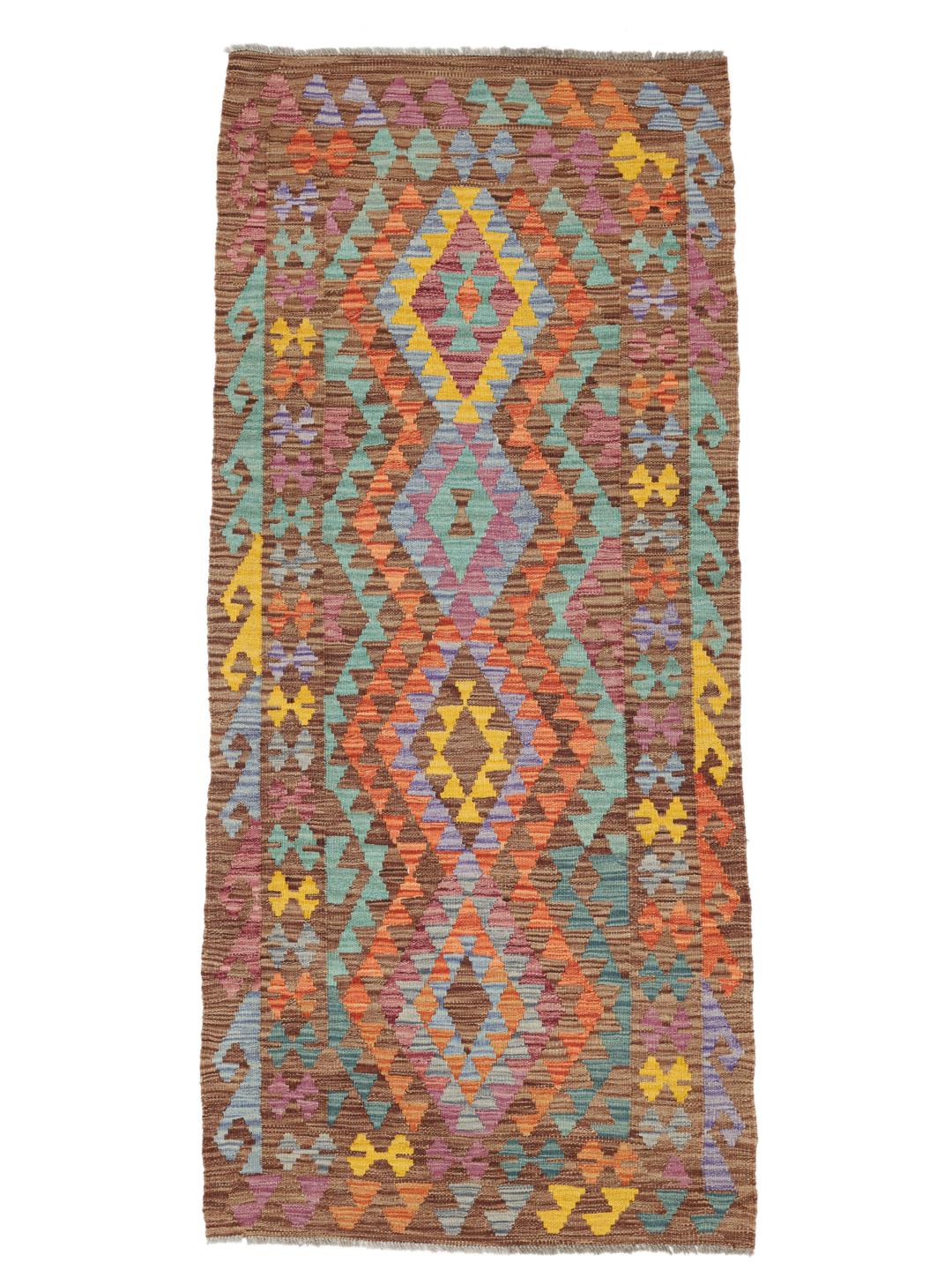
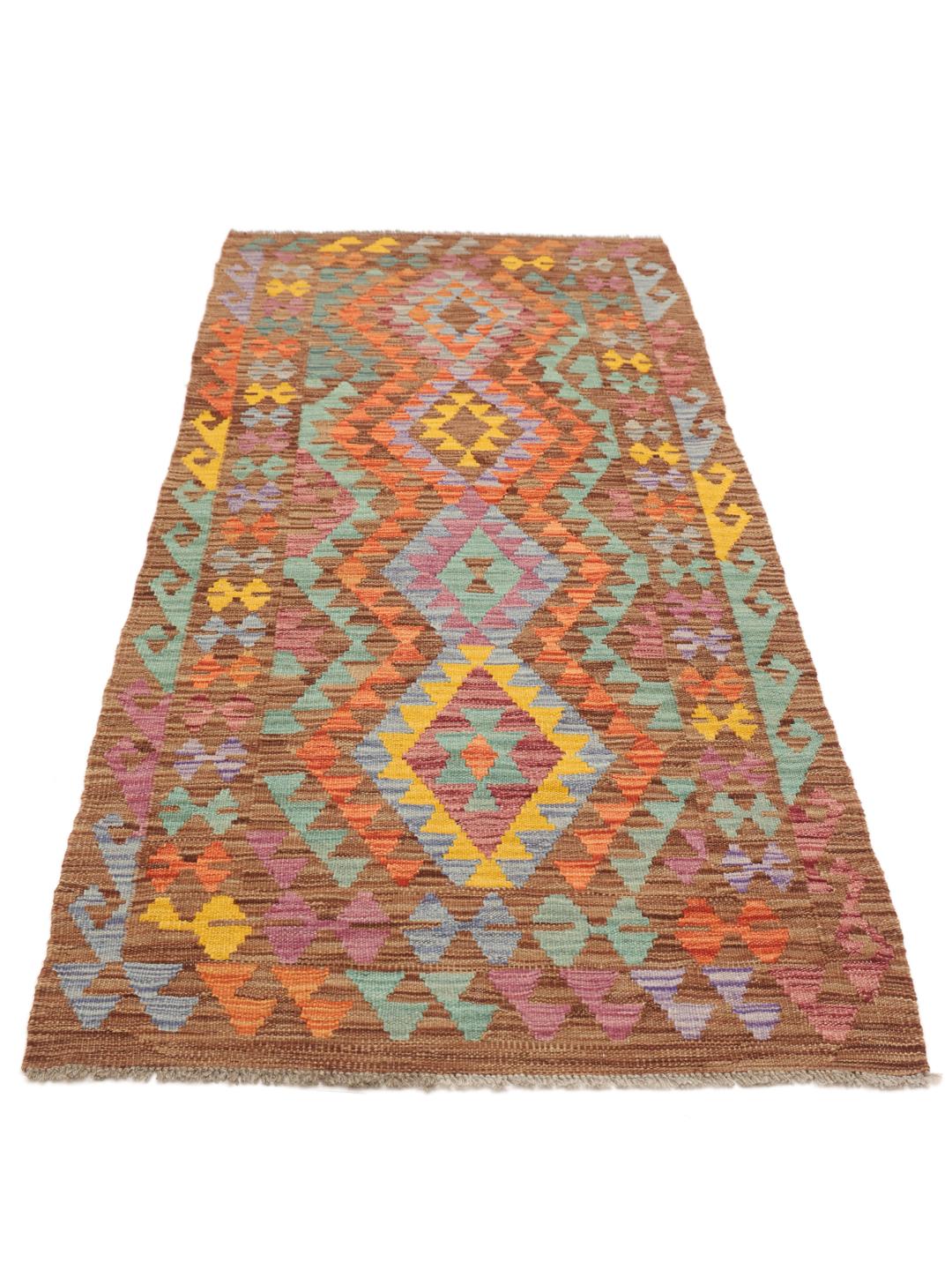
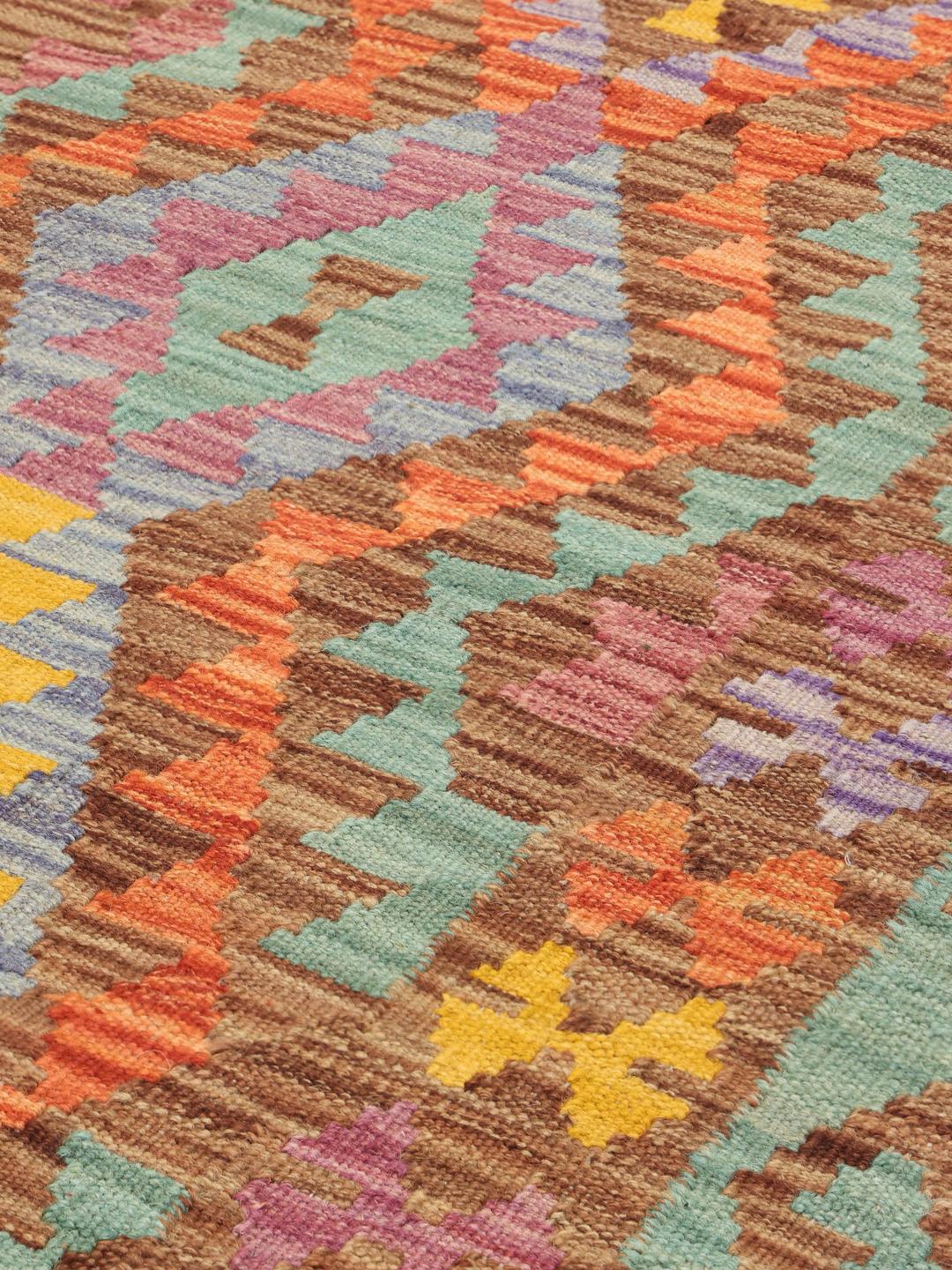
The Kelim tradition is deeply rooted in the nomadic cultures of the Middle East and Central Asia, where these rugs have served as functional, portable, and decorative staples for centuries. Afghan Kelims are particularly celebrated for their sturdy construction and the bold, expressive use of colour that reflects the landscapes and aesthetic values of the region.
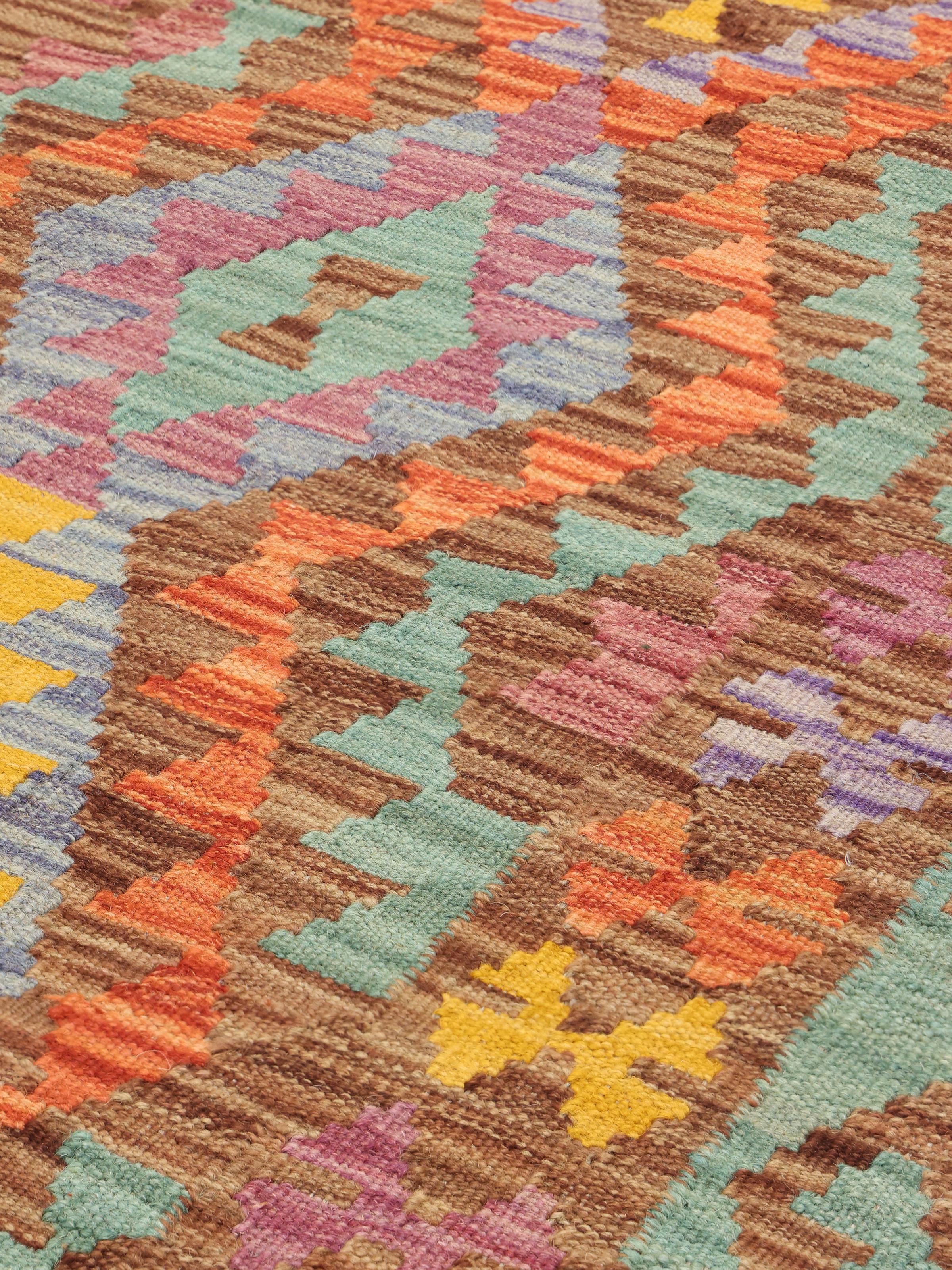
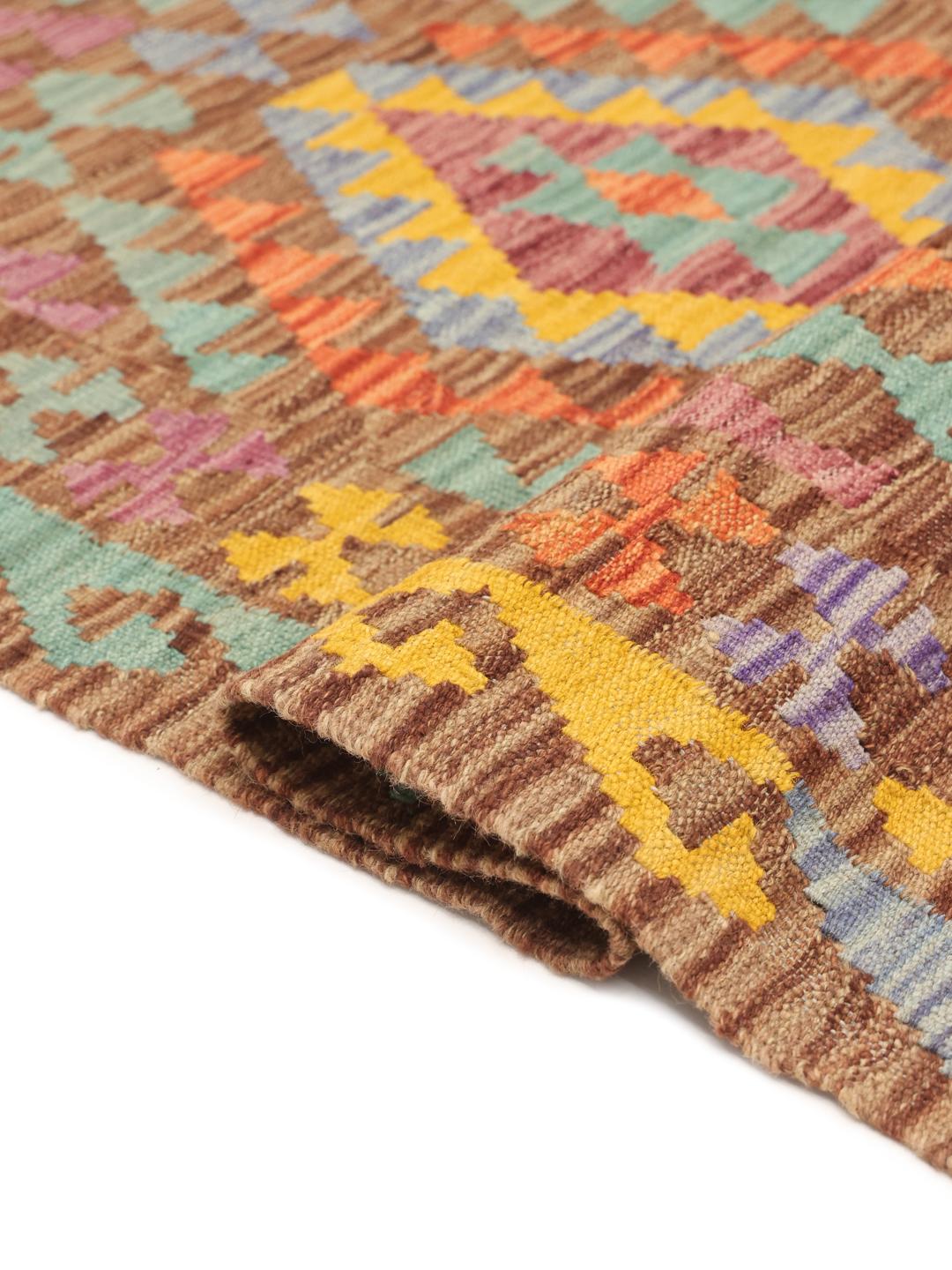
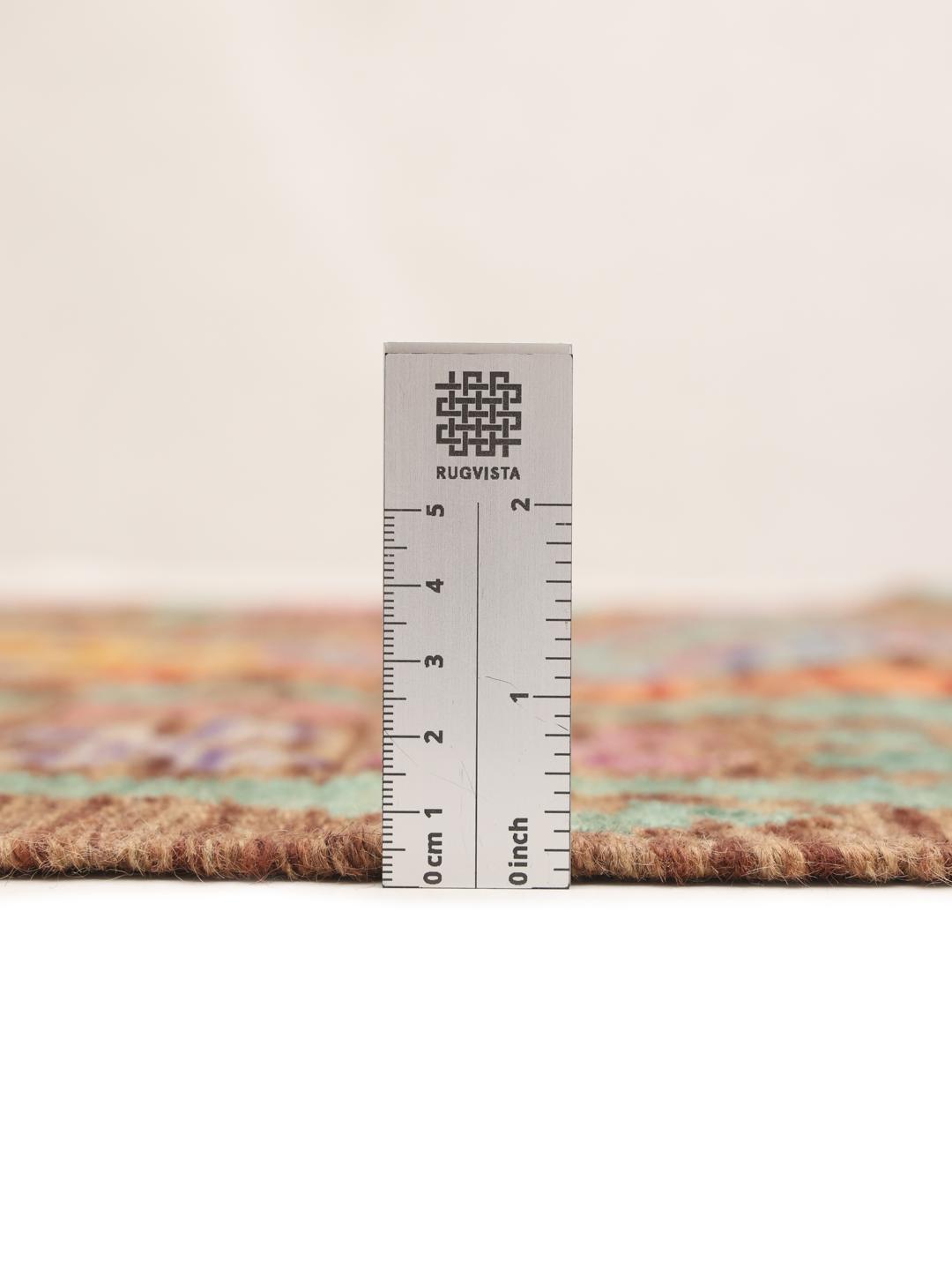
The term 'Kelim' refers to the specific flat-weaving technique used to create these pieces. Unlike pile rugs, which are made by knotting individual strands of wool onto a foundation, a Kelim is created by weaving the coloured weft strands directly through the warp. This results in a thinner, lighter rug that is often reversible, making it an incredibly practical choice for nomadic life, where rugs were frequently moved, packed, and repurposed.
Design-wise, these rugs are defined by their geometric language. You will often see repeating diamond motifs, zig-zags, and stylised tribal symbols that have been passed down through generations of weavers. The colour palettes are traditionally derived from natural dyes, which give the wool a rich, organic quality that mellows beautifully with age. The specific combination of vibrant hues used here is a hallmark of Afghan weaving identity.
Collecting a Kelim is more than just purchasing a floor covering; it is an investment in cultural heritage. Because each rug is made by hand without the use of a pre-set digital pattern, the weaver's personal expression and local history are woven directly into the fabric. This makes every piece a unique artifact of human skill, valued by collectors for its authenticity, cultural narrative, and the enduring quality of its natural materials.