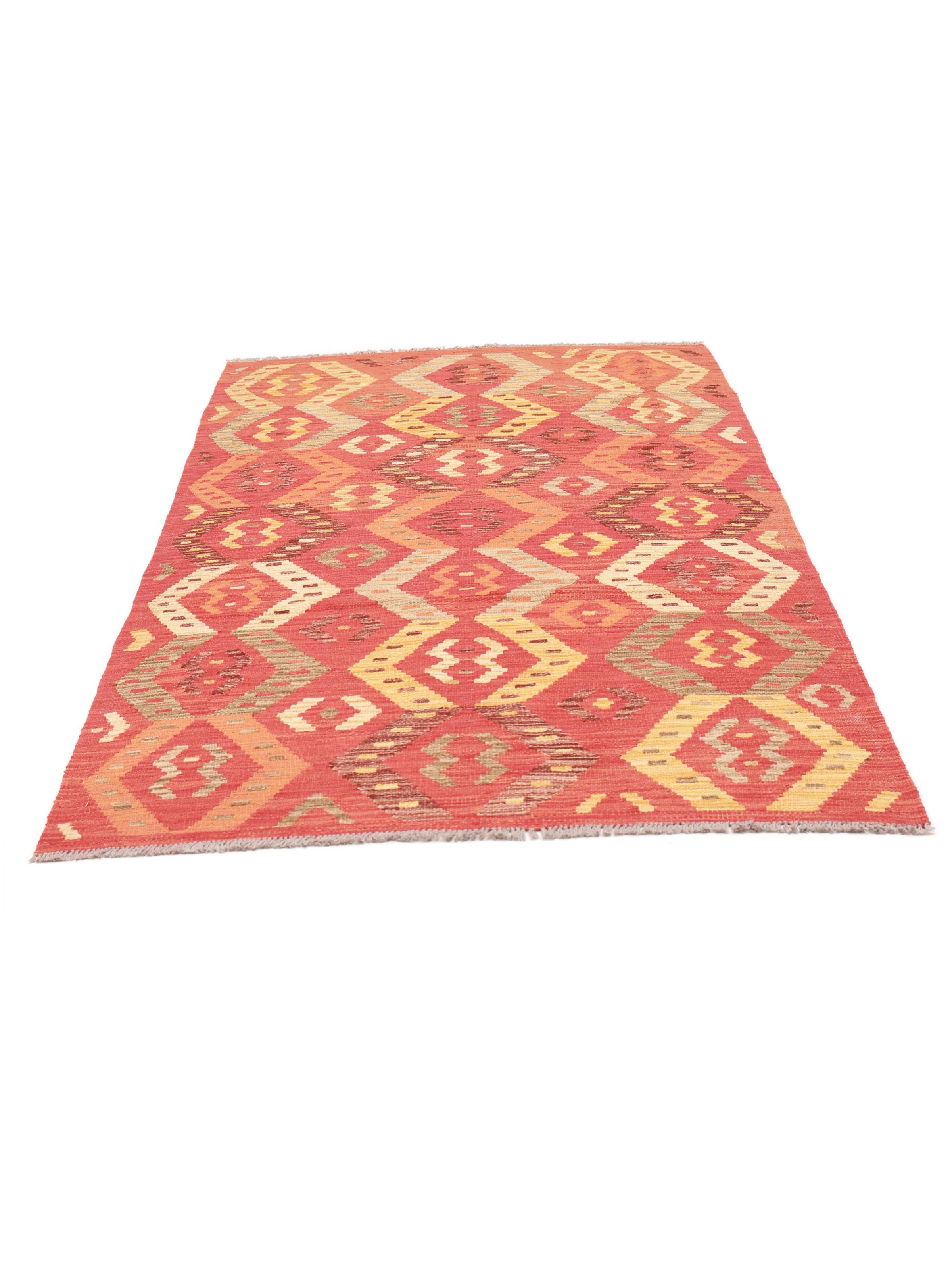
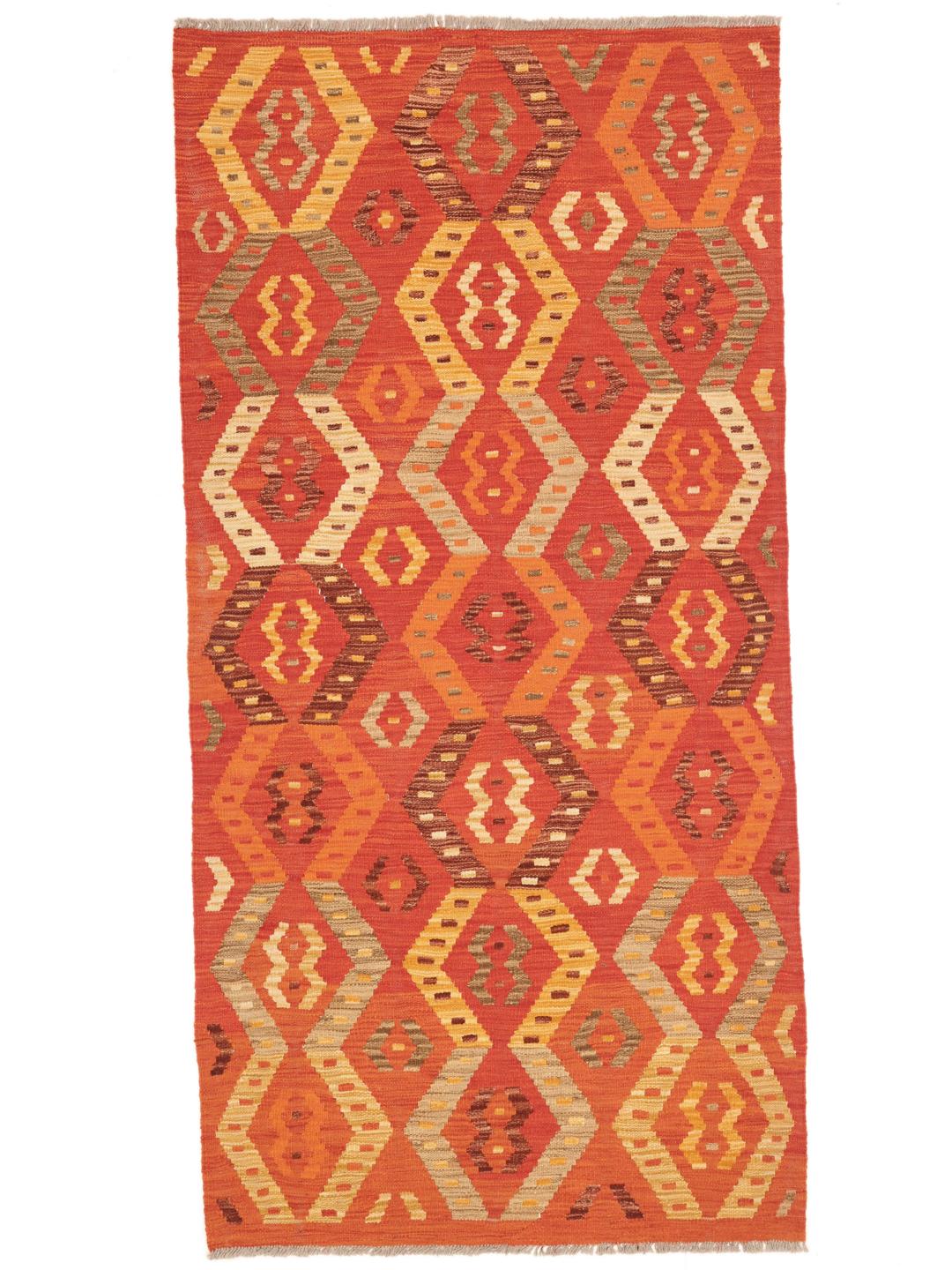
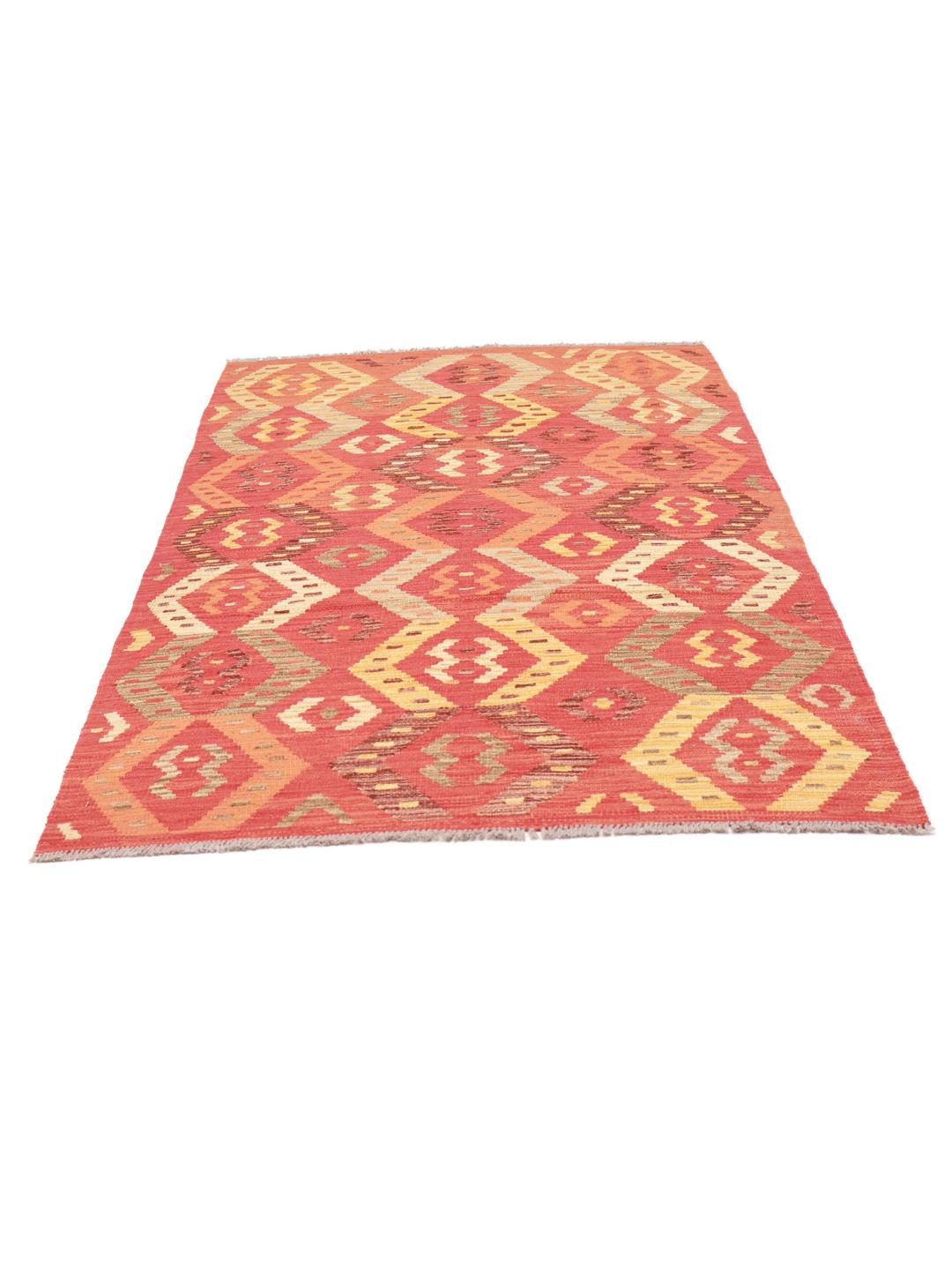
Kelim rugs have long been a cornerstone of nomadic life across the Middle East and Central Asia. Originally created by tribal groups for their practical utility, these flat-weave textiles served as floor coverings, blankets, and storage bags, designed to be easily transported during seasonal migrations.
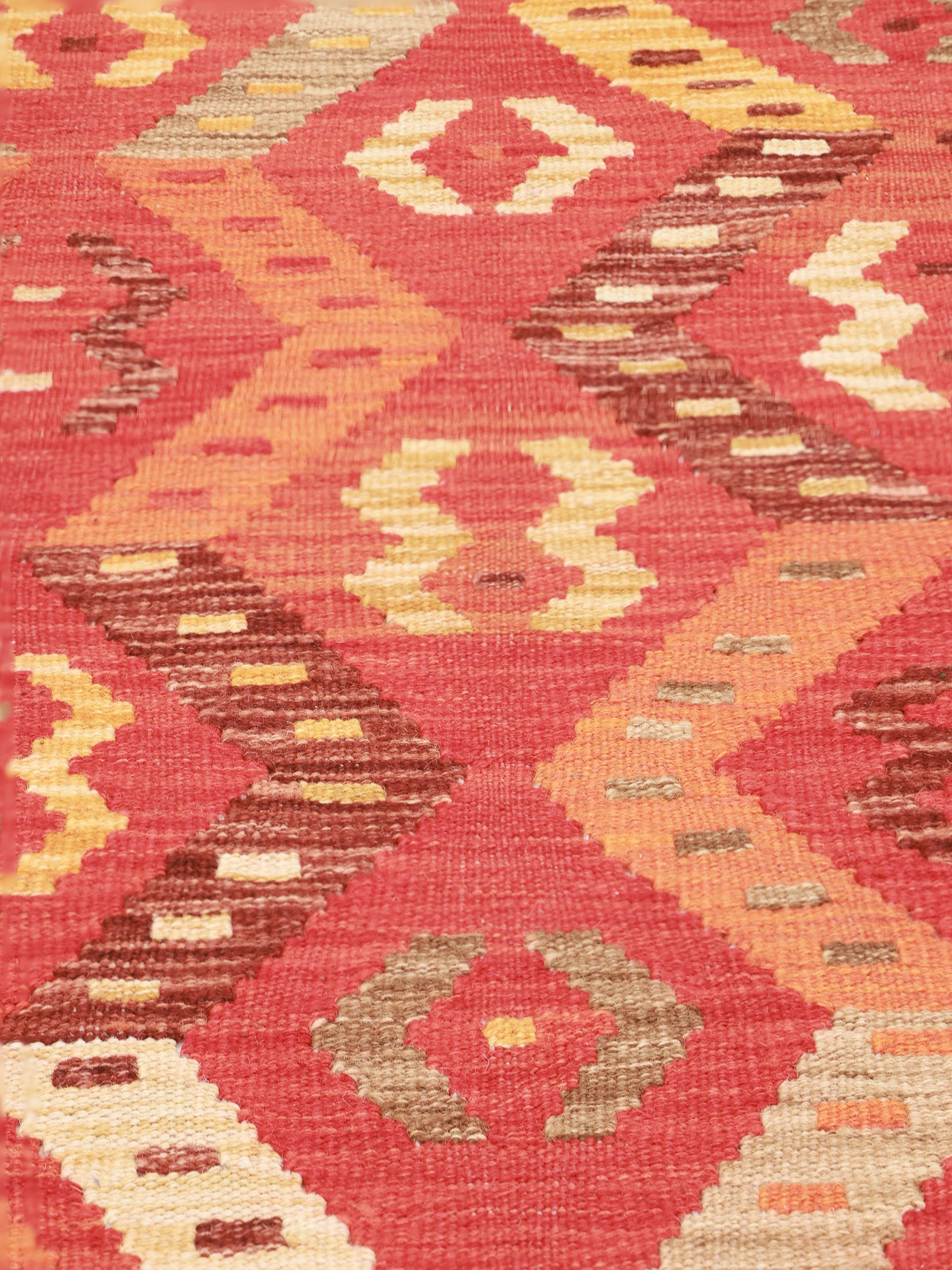
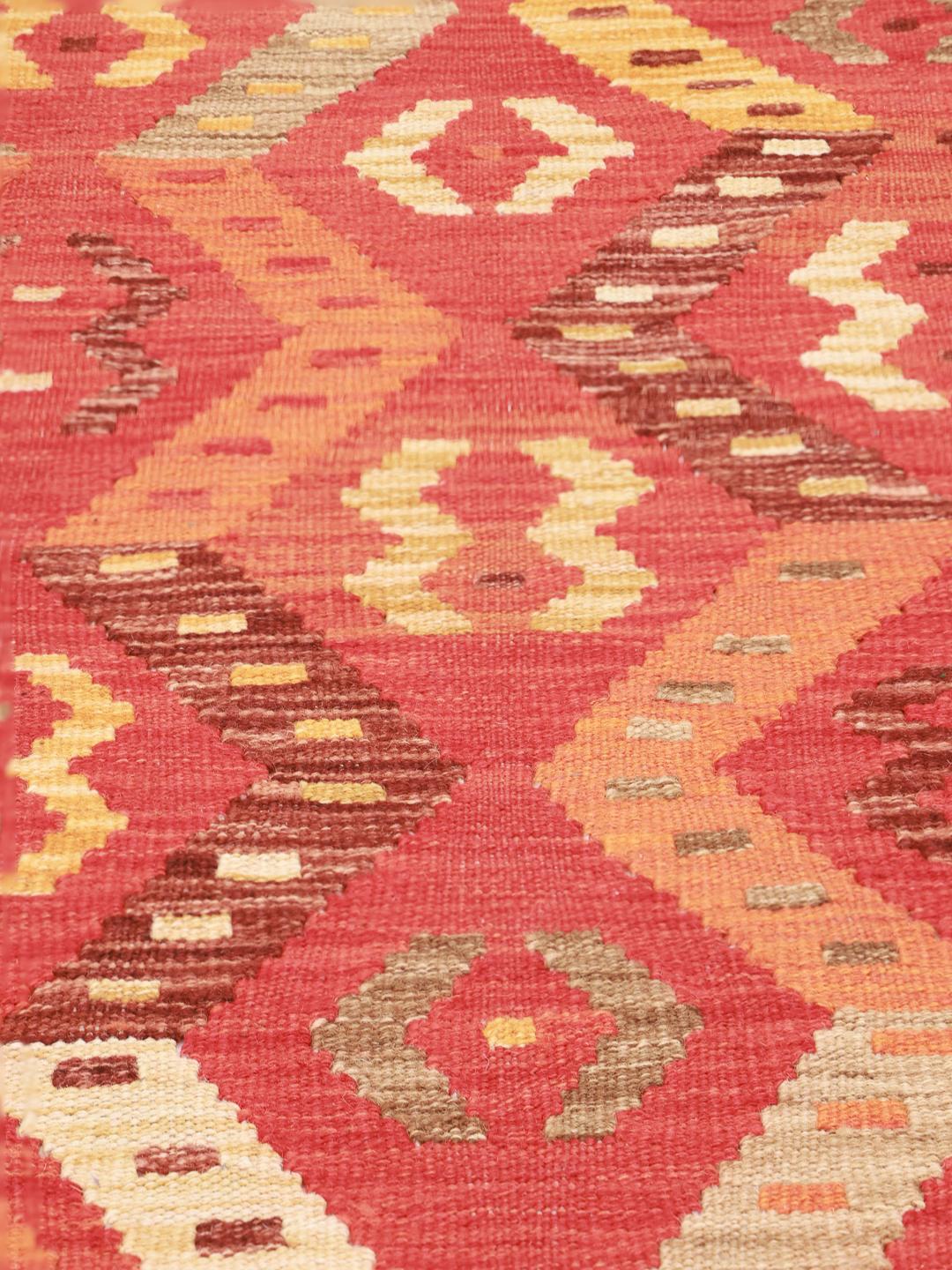
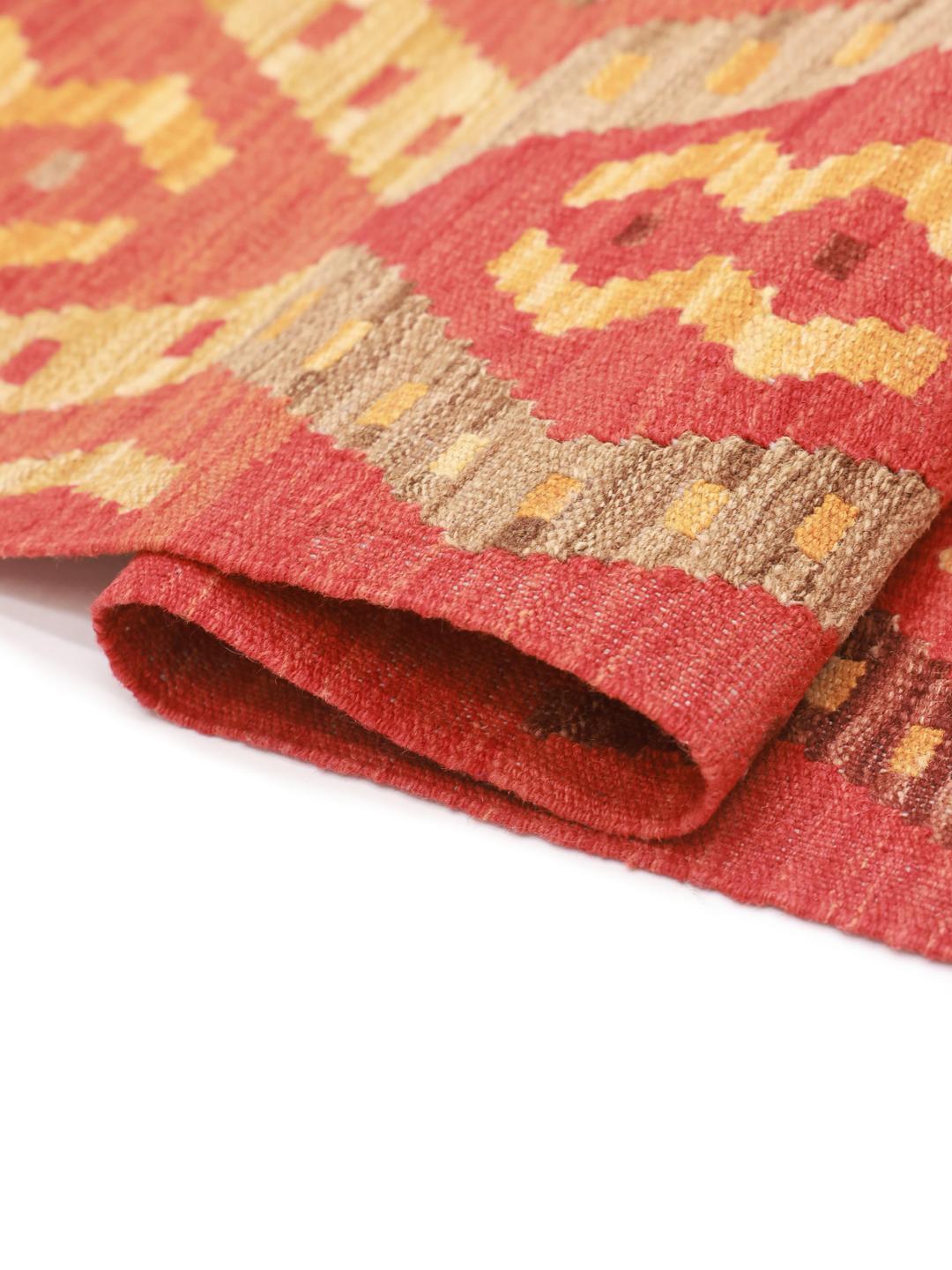
The term 'Kelim' refers to the specific slit-weave technique used to create the pattern, where the weft threads are pulled tightly to hide the warp, resulting in a smooth, pileless surface. This method requires great precision, as the weaver must manage multiple colour changes throughout the process to achieve the intricate geometric designs that define the style.
The visual language of this rug is deeply rooted in ancient tribal traditions, featuring repeating diamond and geometric motifs that often carry symbolic meaning related to protection and prosperity. The rich colour palette, derived from traditional organic dyes, reflects the natural landscape of Afghanistan, where bold reds and earthy tones have been favoured for generations.
Today, these rugs are highly sought after by collectors who value the authenticity and human effort behind each piece. Owning an Afghan Kelim is an opportunity to preserve a living heritage, as the specific tribal patterns and local weaving nuances represent a cultural legacy that continues to thrive in the hands of skilled artisans.