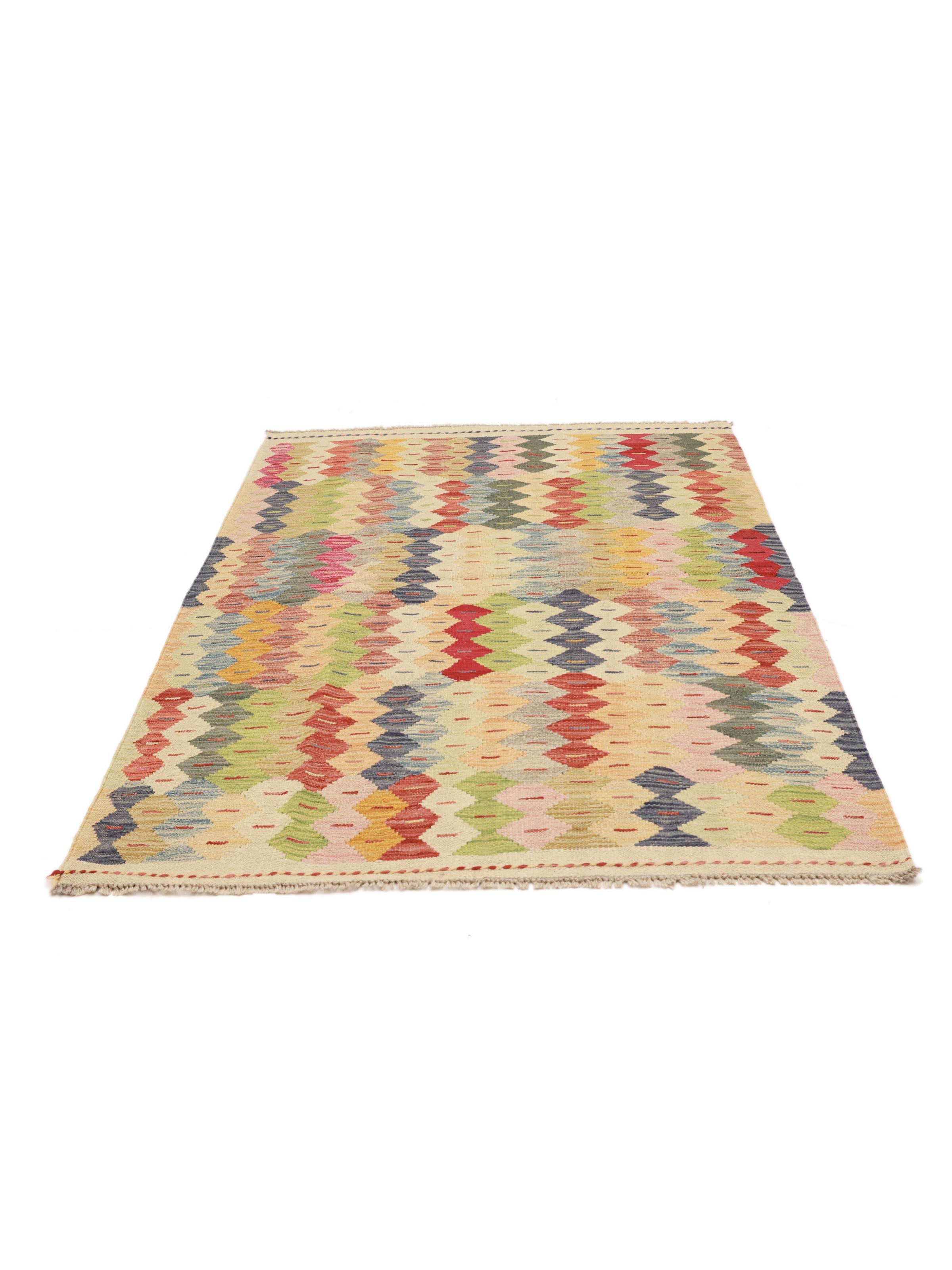
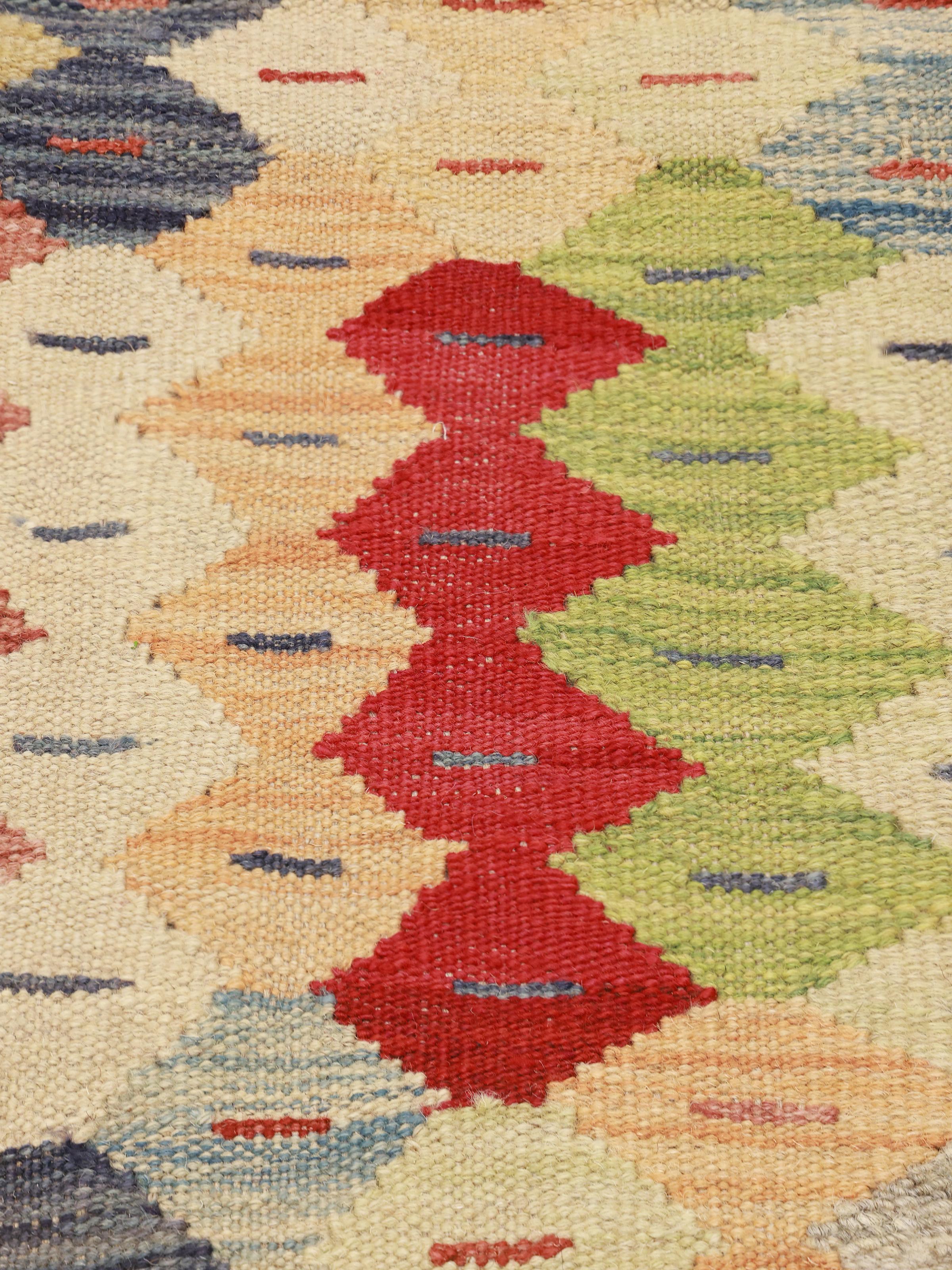
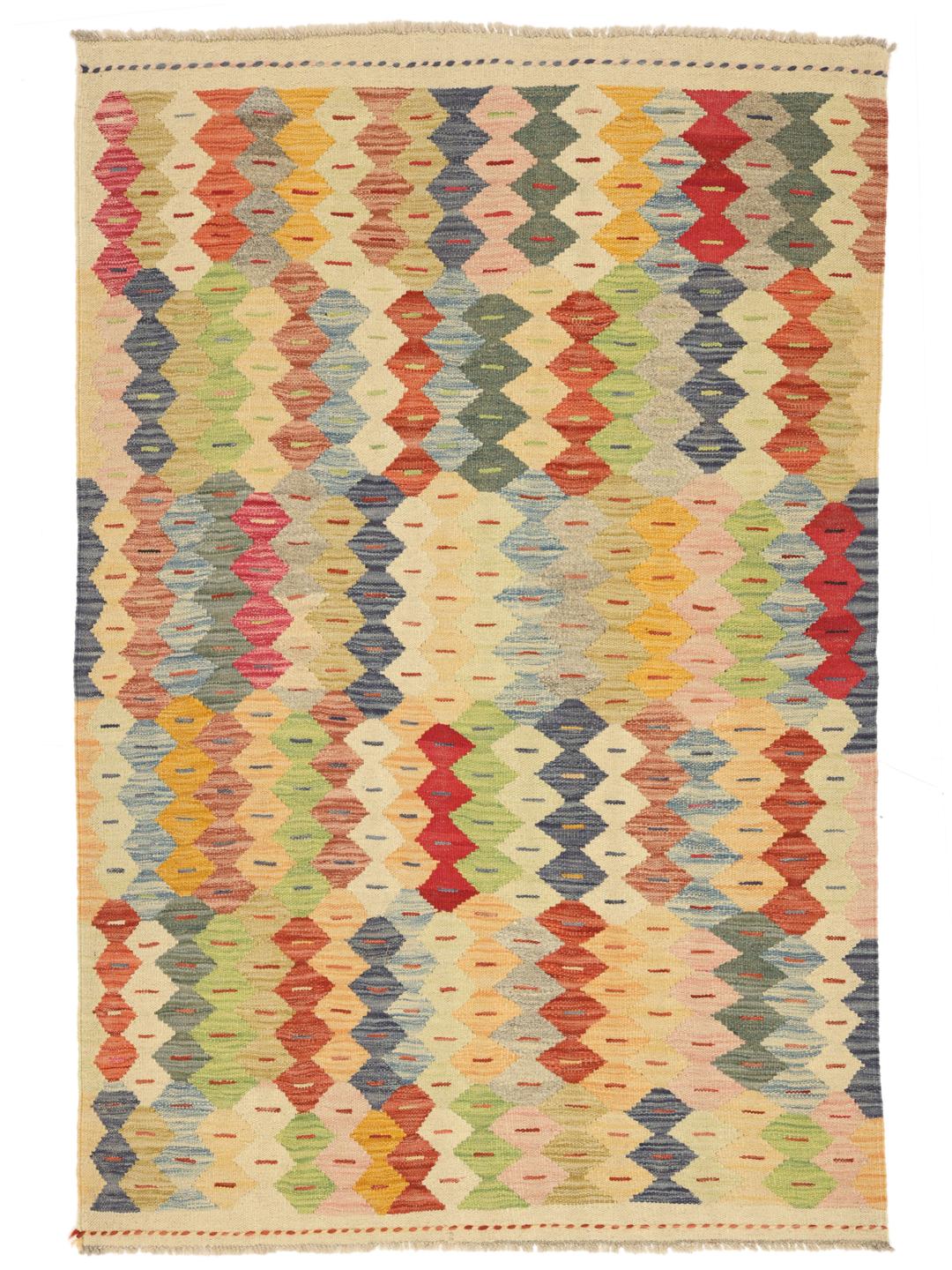
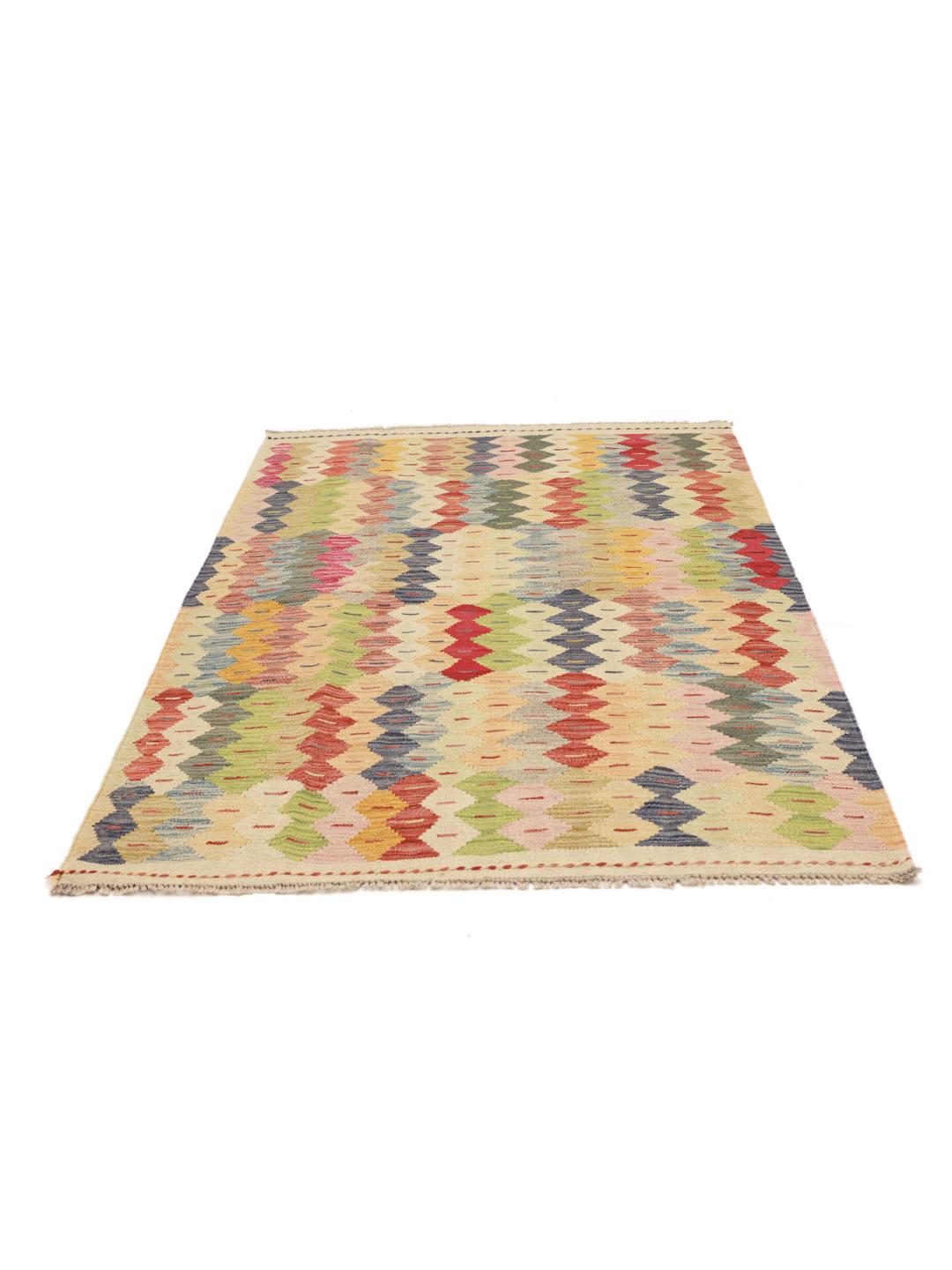
Kilim weaving in Afghanistan belongs to an ancient tradition of flatwoven textiles created across Central Asia and the Middle East. Woven without a pile by interlocking the warp and weft strands, kilims were historically made by nomadic and village communities for practical everyday use, from floor coverings to saddlebags.
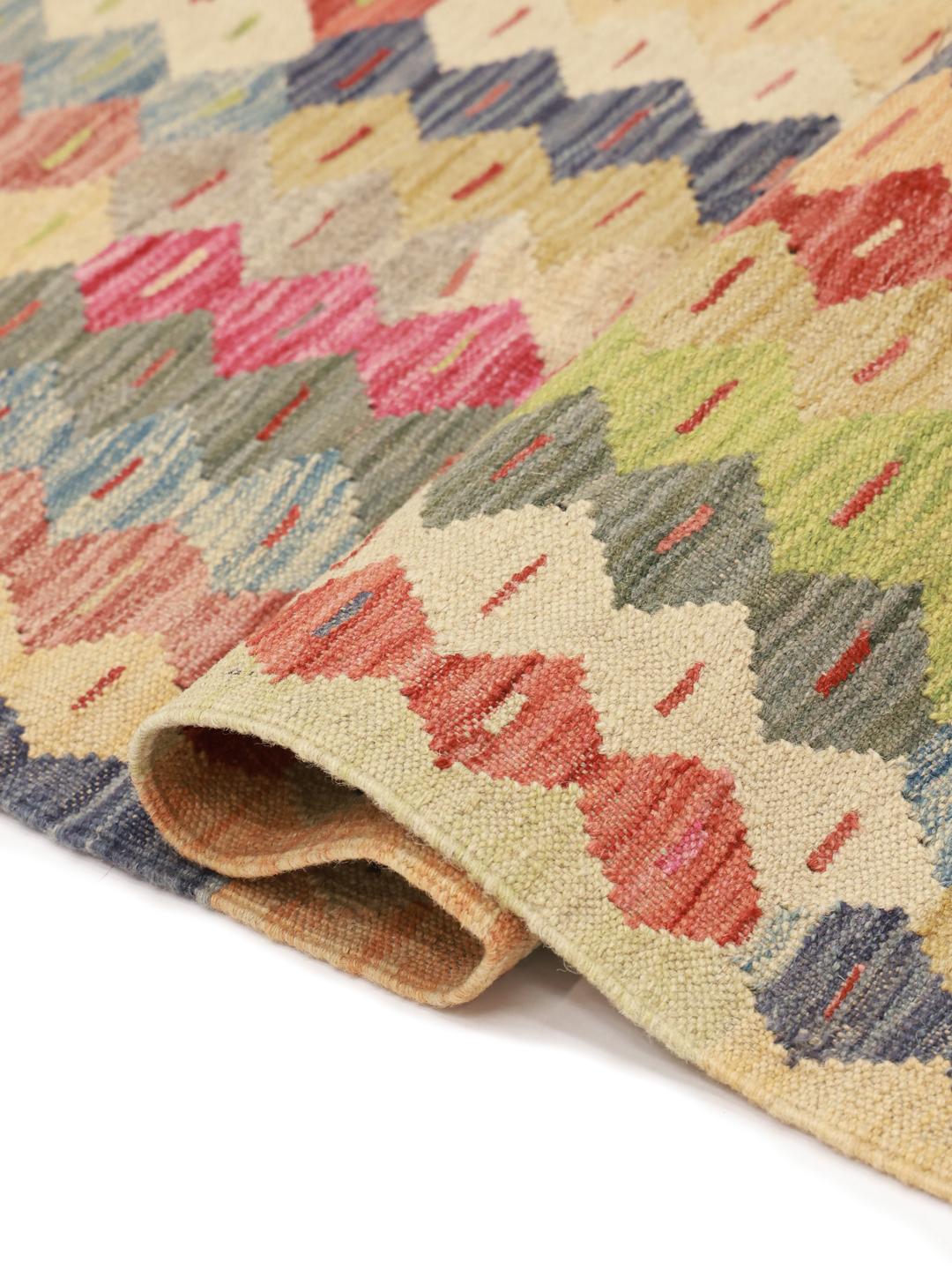
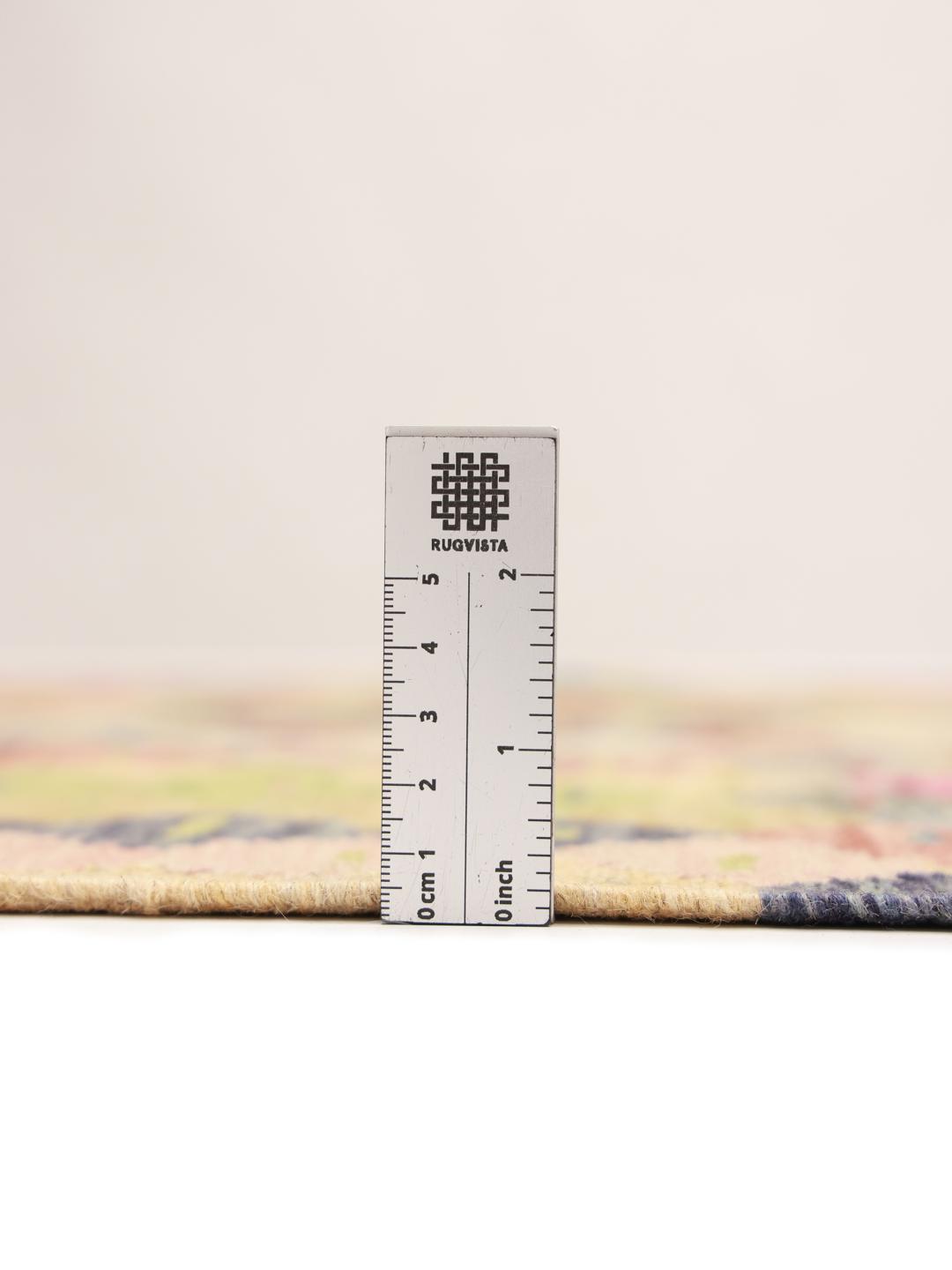
The Ariana Trend distinction refers to a modern evolution within traditional Afghan flatweaves, where classic geometric structures are refreshed with broader, more diverse color palettes. The term kilim signifies this specialized flatweave construction, which creates a lightweight, reversible, and durable rug with a clean, low-profile finish.
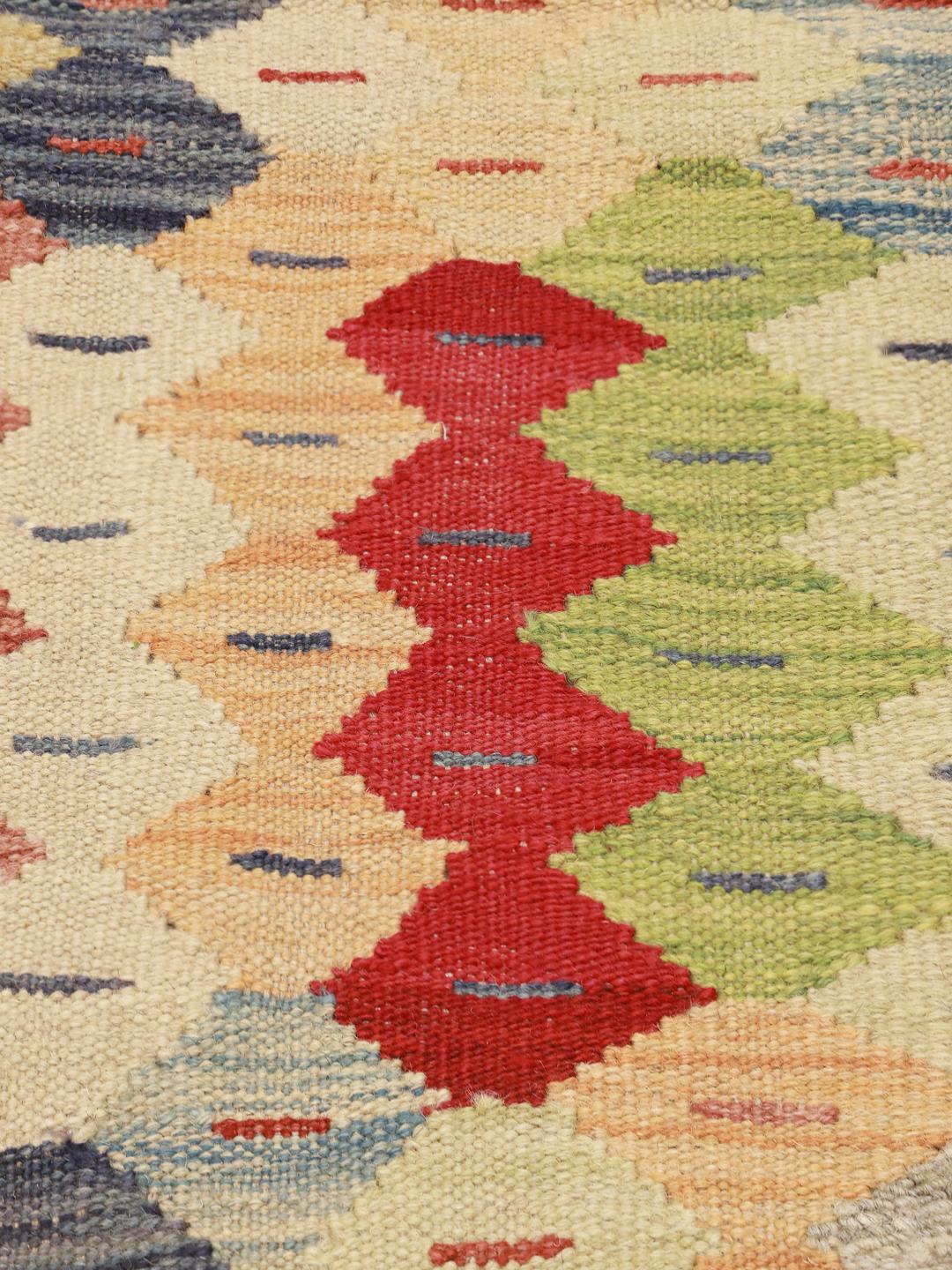
Visually, this tradition is defined by repeating diamond patterns, stepped medallions, and decorative borders. The diamond motif holds deep symbolic roots across weaving cultures, often representing protection, harmony, or regional tribal identity. The striations in color, known as abrash, occur naturally as different batches of hand-dyed yarn are introduced during weaving.
Afghan kilims remain highly prized by collectors and homeowners alike for their authentic craftsmanship, rich color harmony, and cultural grounding. Acquiring a hand-woven kilim brings a genuine piece of Central Asian textile history into modern interior settings.