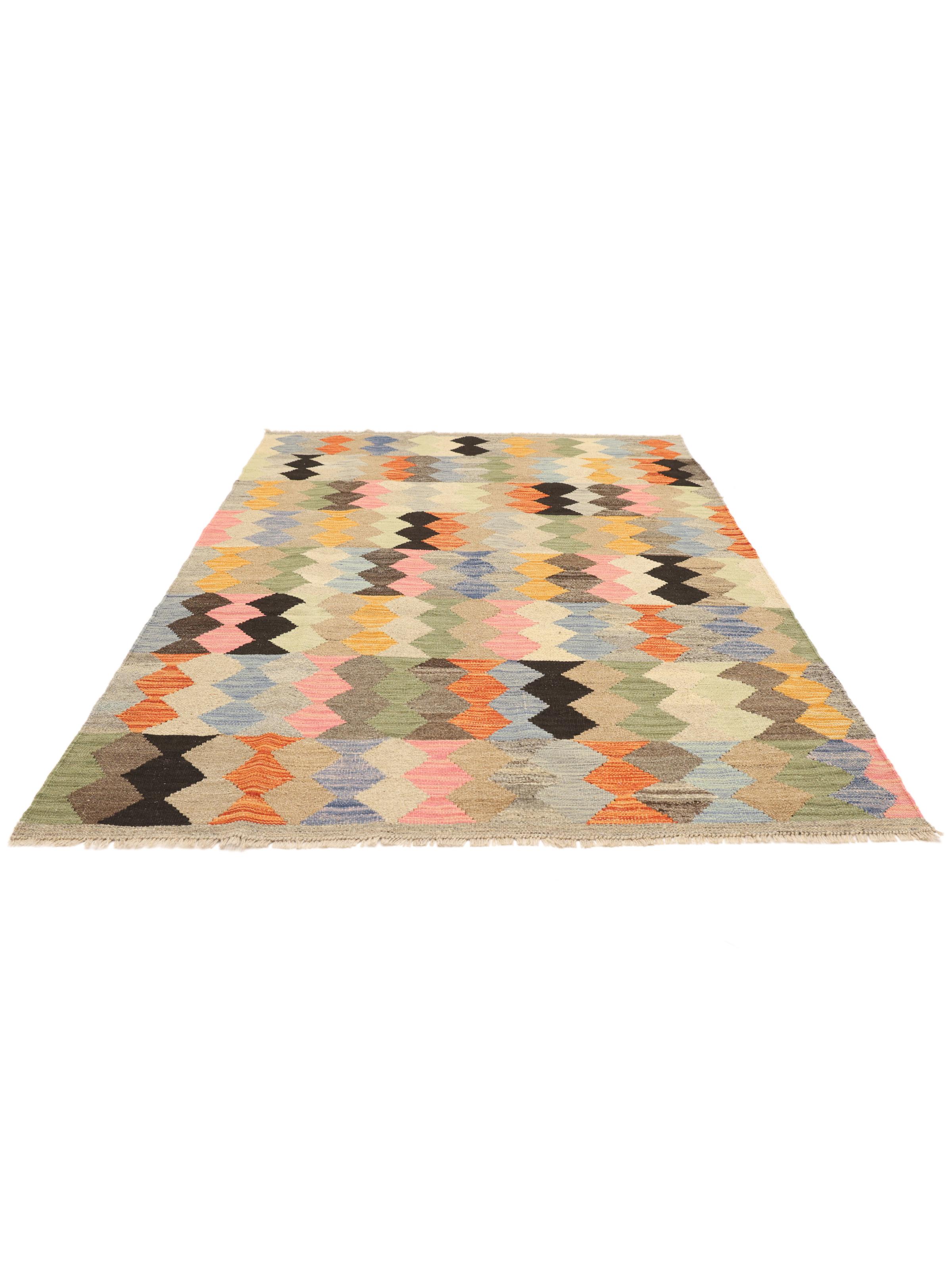
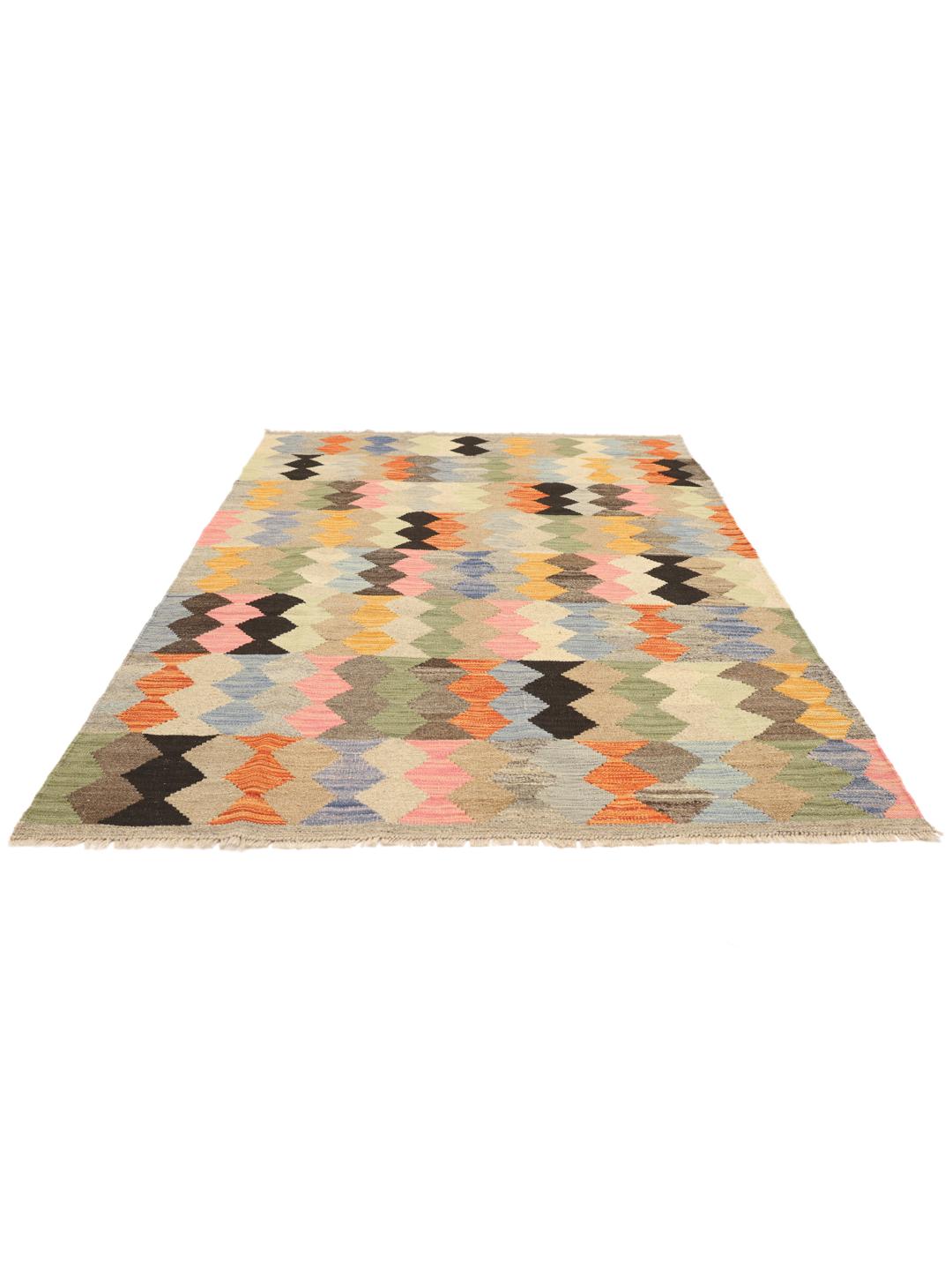
The tradition of flatweaving in Afghanistan is deeply rooted in the nomadic and semi-nomadic lifestyles of the region. For generations, weavers have used these flatwoven rugs, known as kilims, not just as floor coverings but as versatile household items, tent hangings, and protective bags.
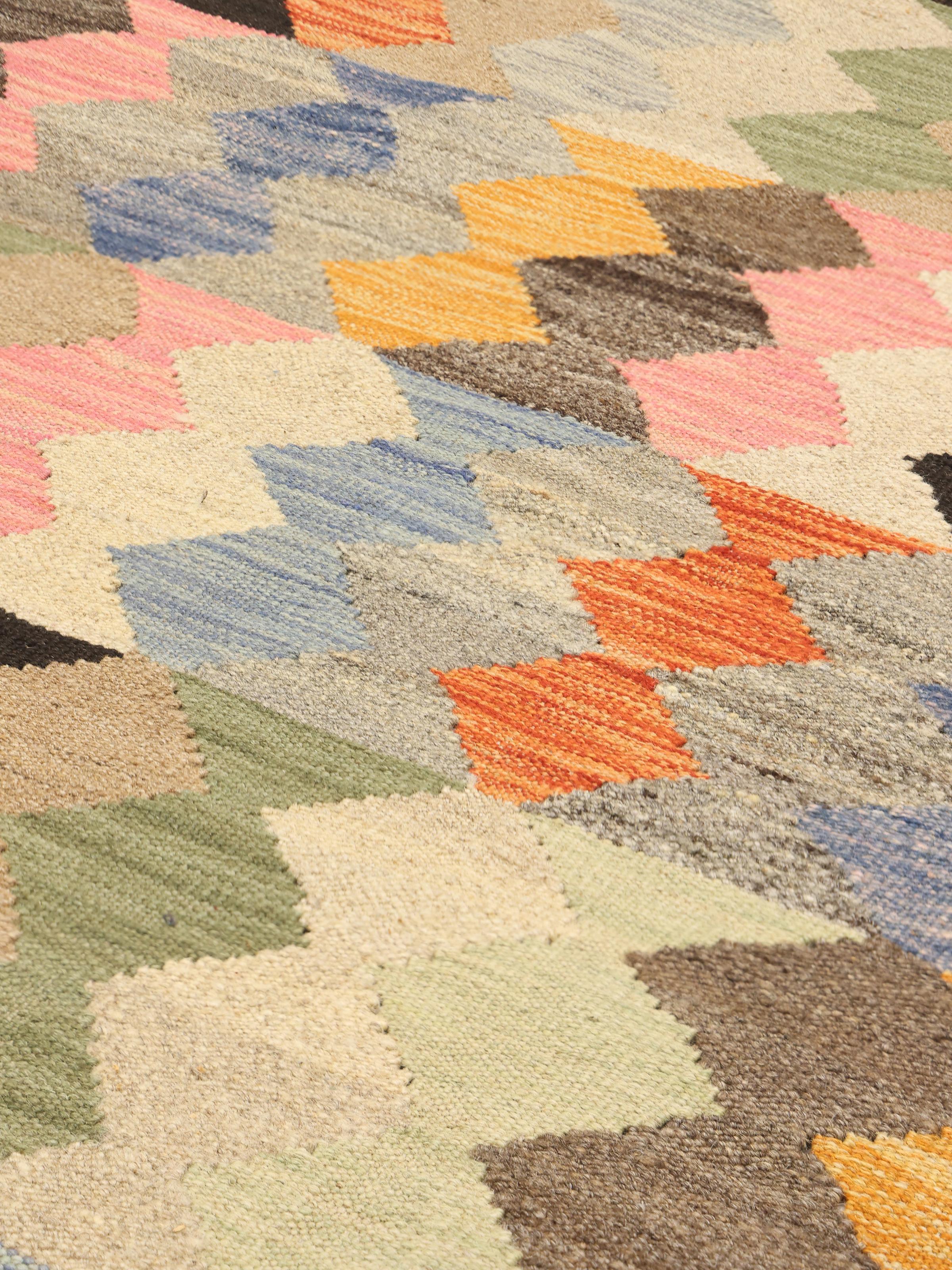
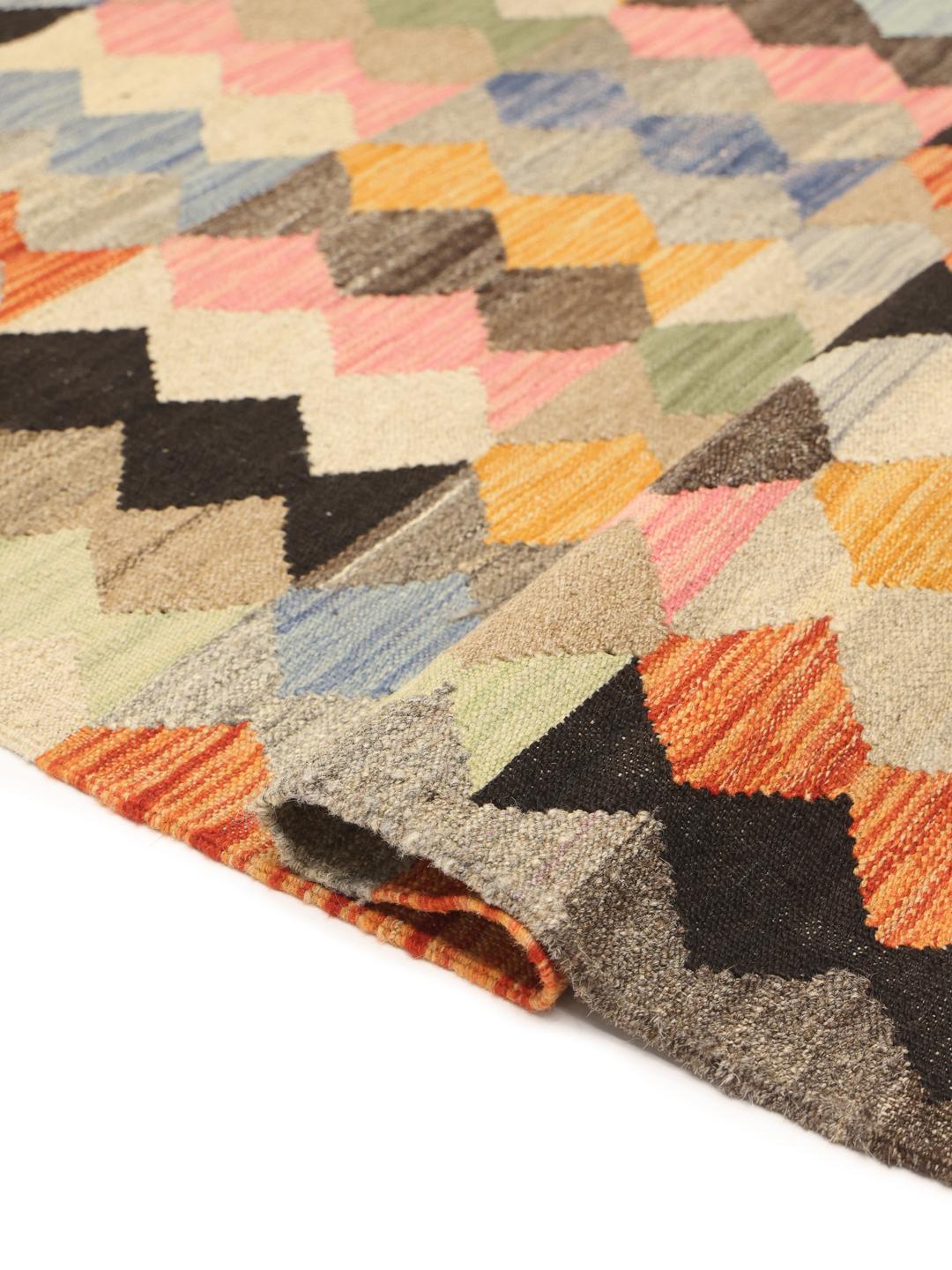
The term kilim refers to a specific pileless weaving technique where the horizontal weft strands are tightly pulled through the vertical warp strands. This hand-woven method produces a lightweight yet incredibly durable textile that is flat on both sides, making it highly practical, easy to move, and reversible for extended wear.
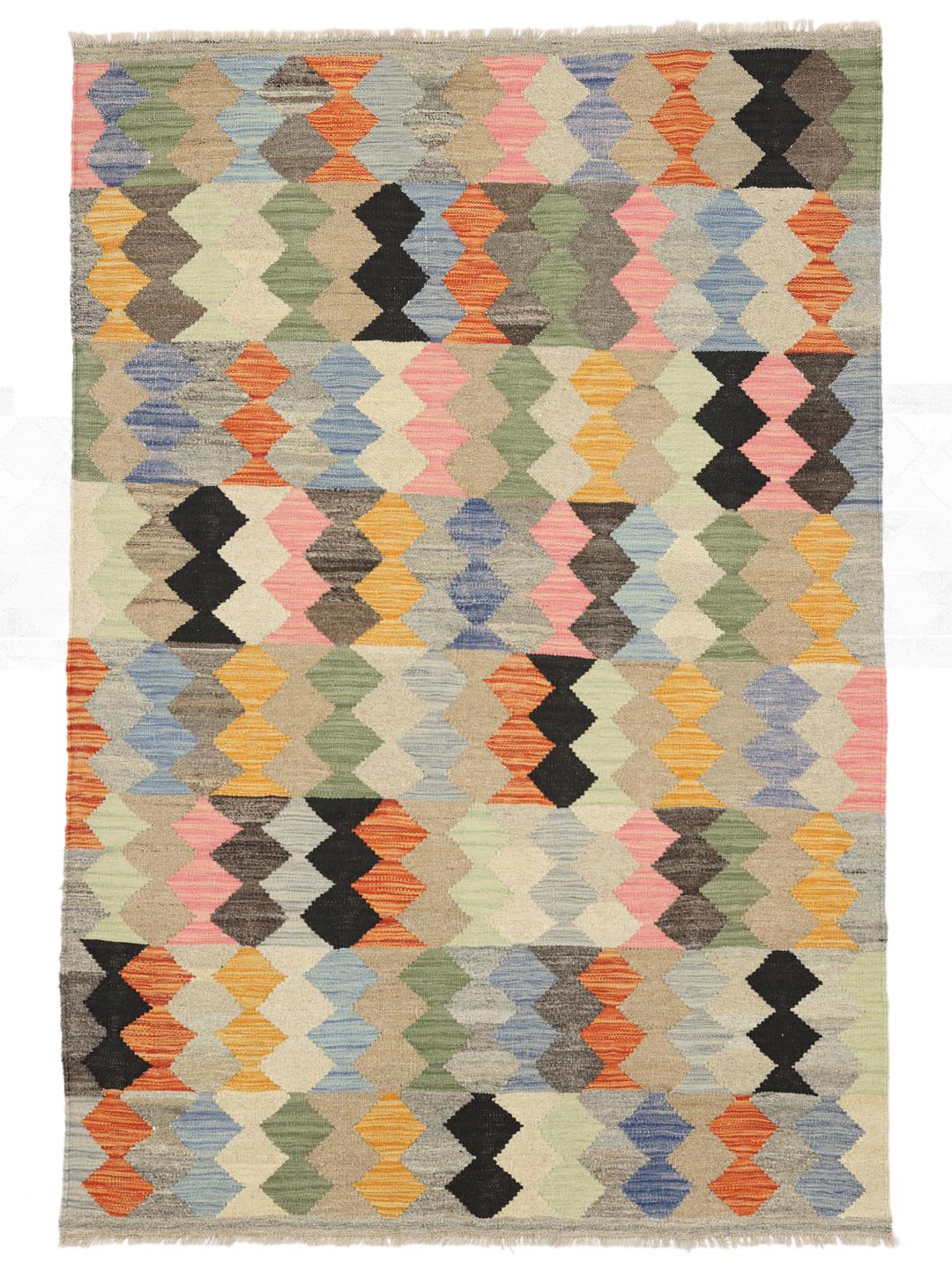
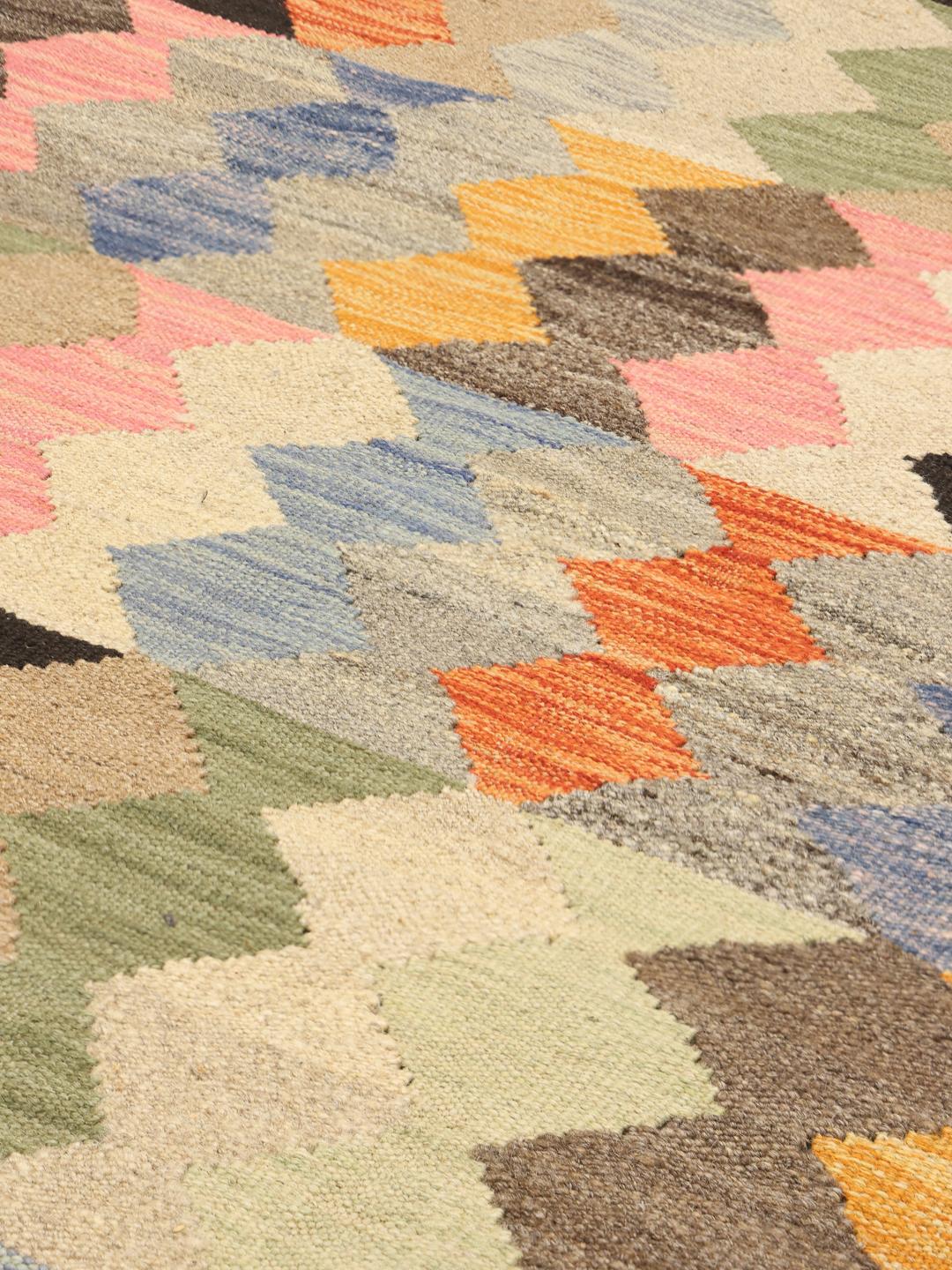
Ariana kilims are celebrated for their distinctive geometric patterns, often featuring stepped diamonds, triangles, and clean borders. While traditional tribal designs relied on deep reds and dark blues, contemporary Ariana pieces embrace a broader, more playful palette of soft pastels and earthy tones, giving a modern twist to ancient geometric symbols.
Today, these rugs are highly valued by collectors and homeowners alike for their graphic appeal and cultural depth. Owning a hand-woven Afghan kilim connects your home to a rich lineage of textile art, celebrating the individual expression and enduring skill of the weaver who created it.