Kilim weaving has a deep history in Afghanistan, where nomadic and village weavers have passed down flatweaving techniques through generations. These rugs were originally created for practical daily use, serving as floor coverings, blankets, and storage bags that could easily be transported.
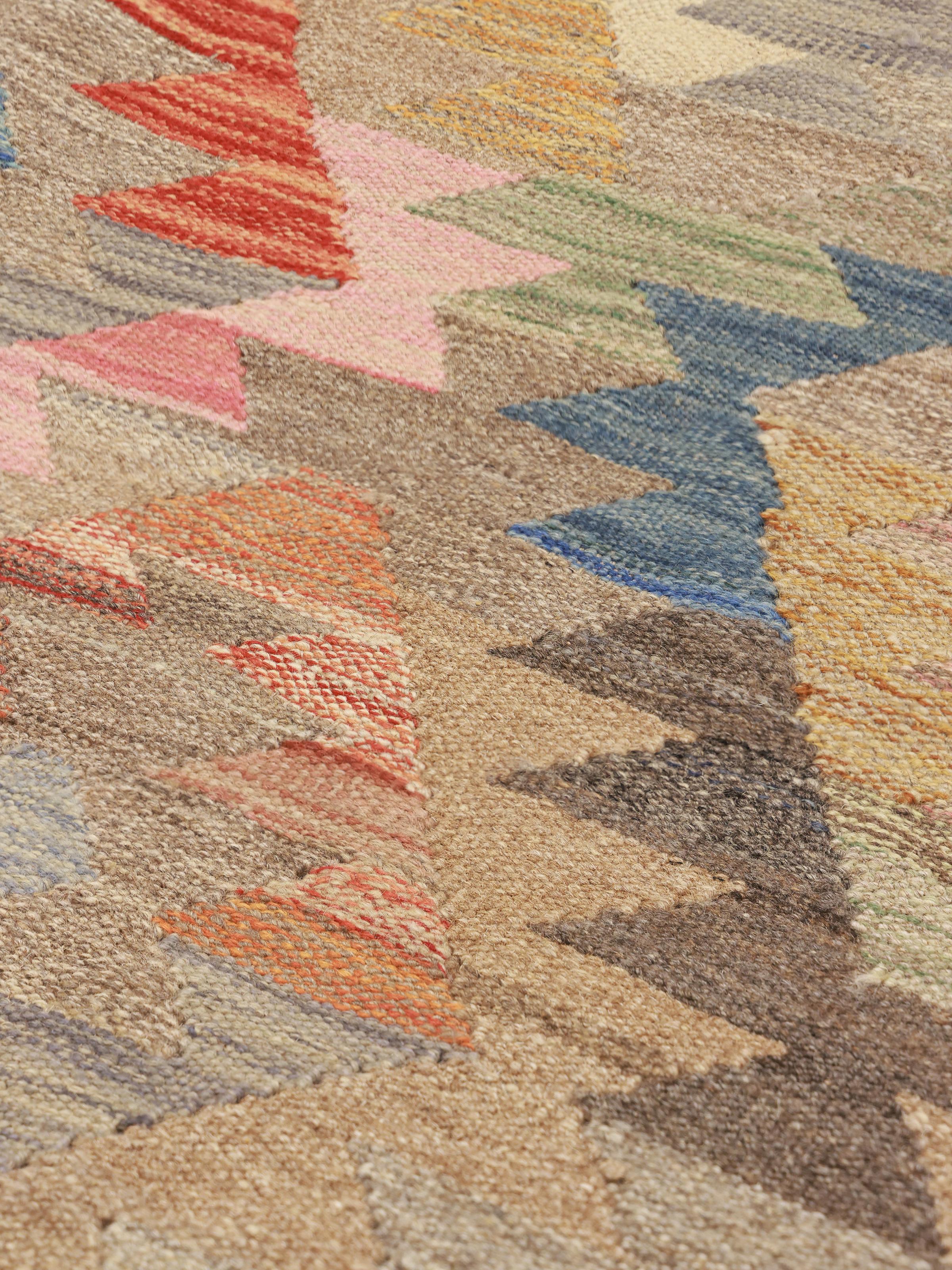
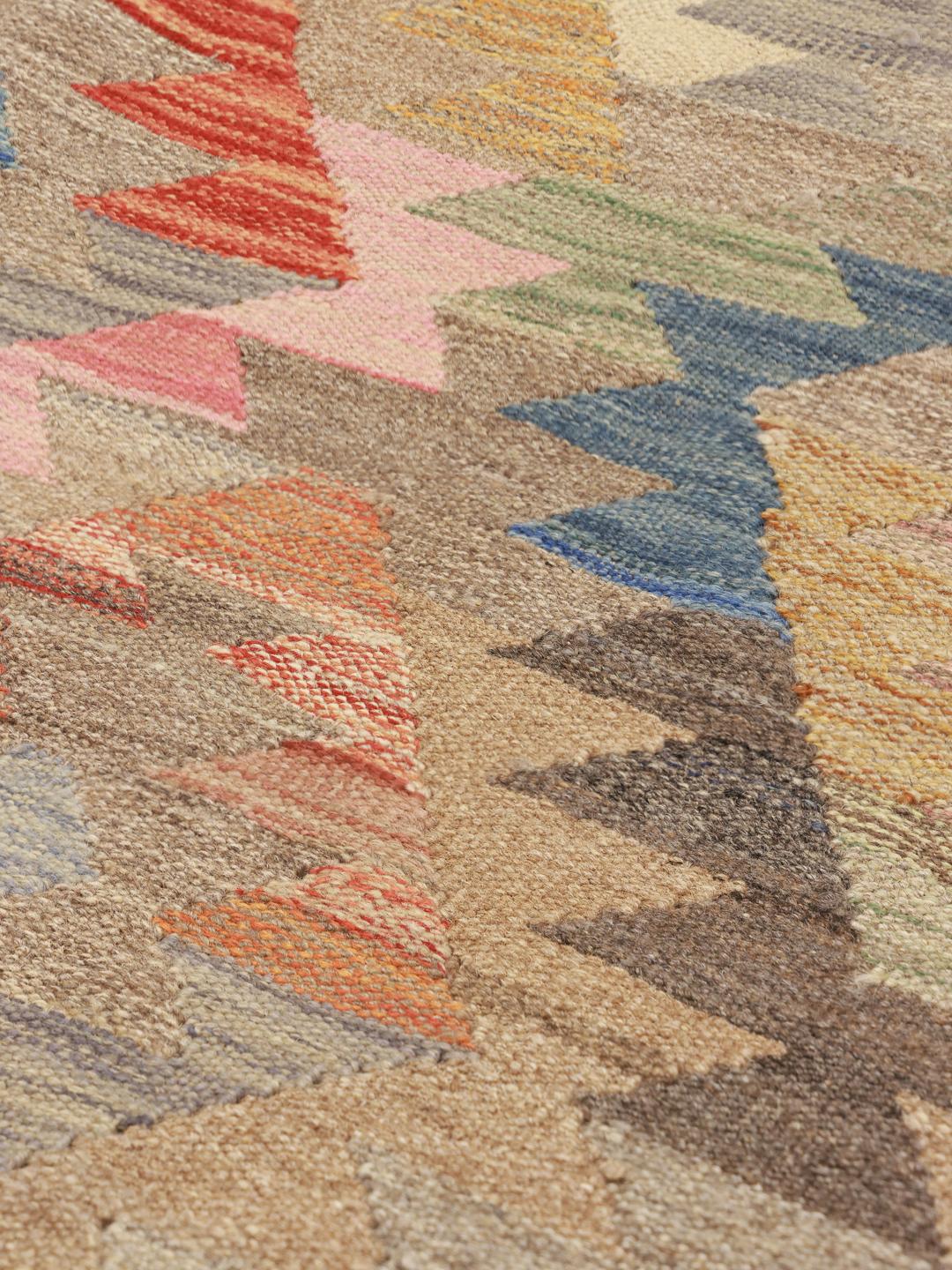
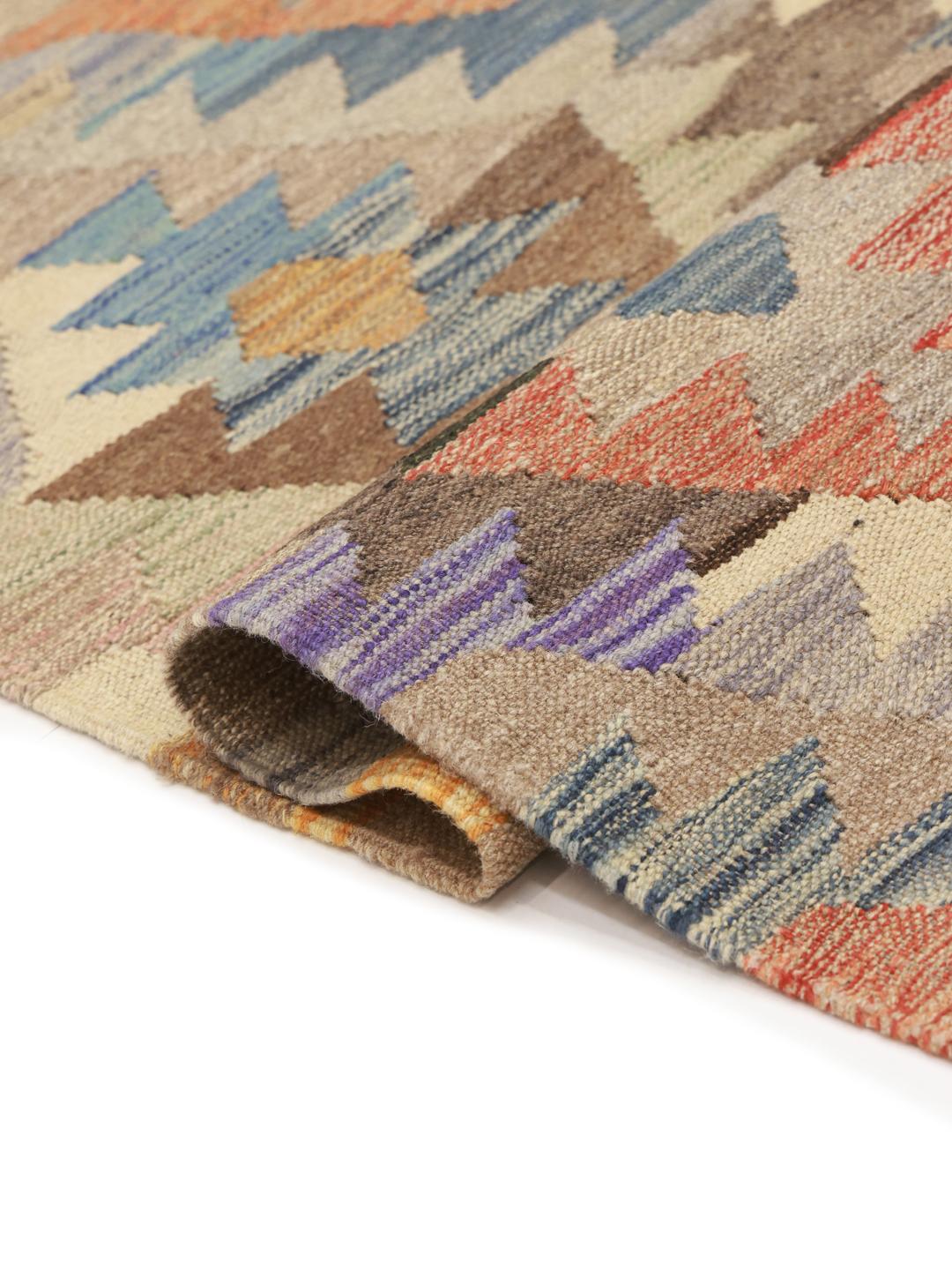
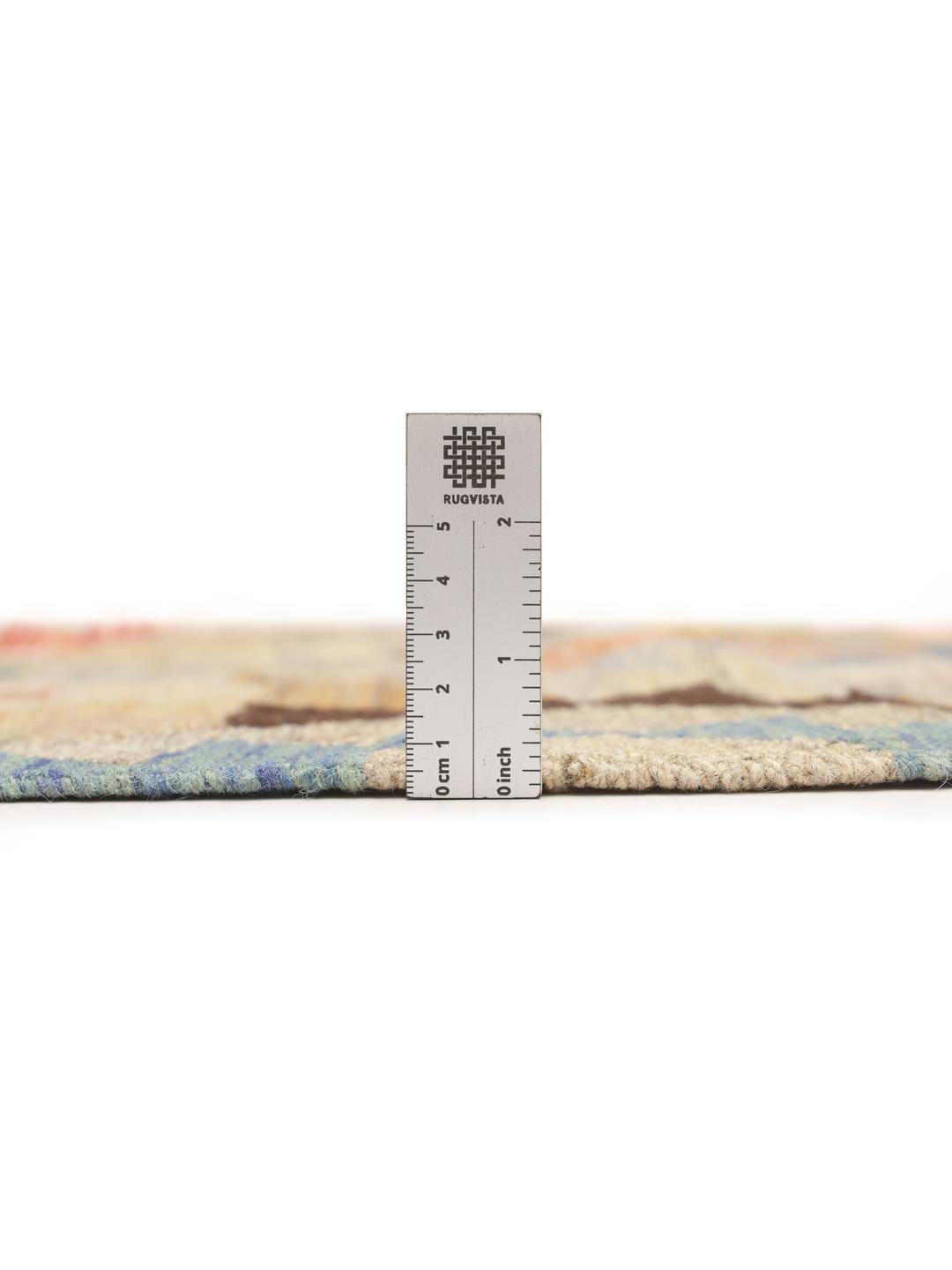
Unlike knotted rugs, a Kilim is created using a flatweave technique where the threads are tightly interwoven. This method produces a light, durable, and pile-free textile with a distinct geometric structure that is highly valued for its clean lines and reversible nature.
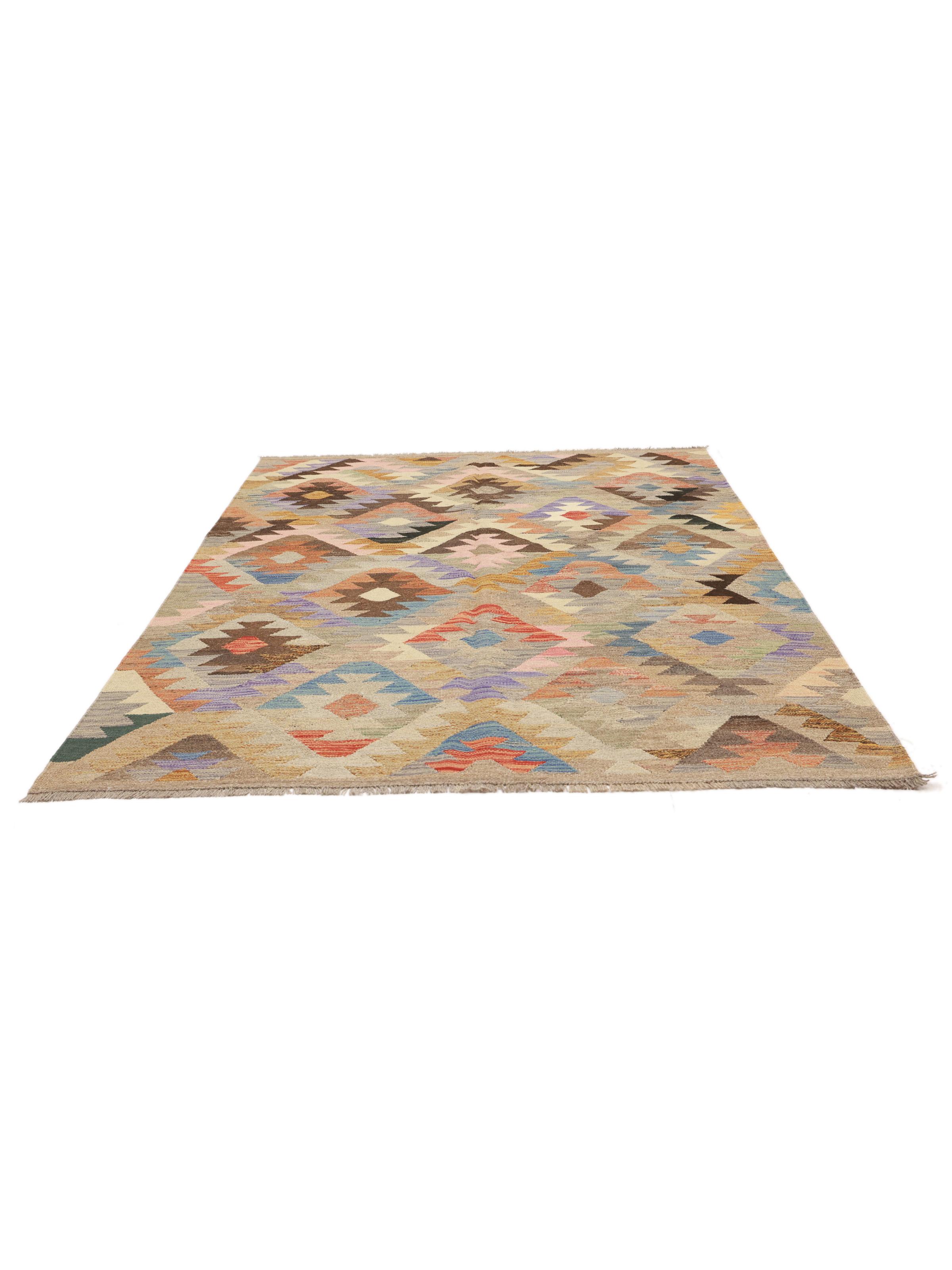
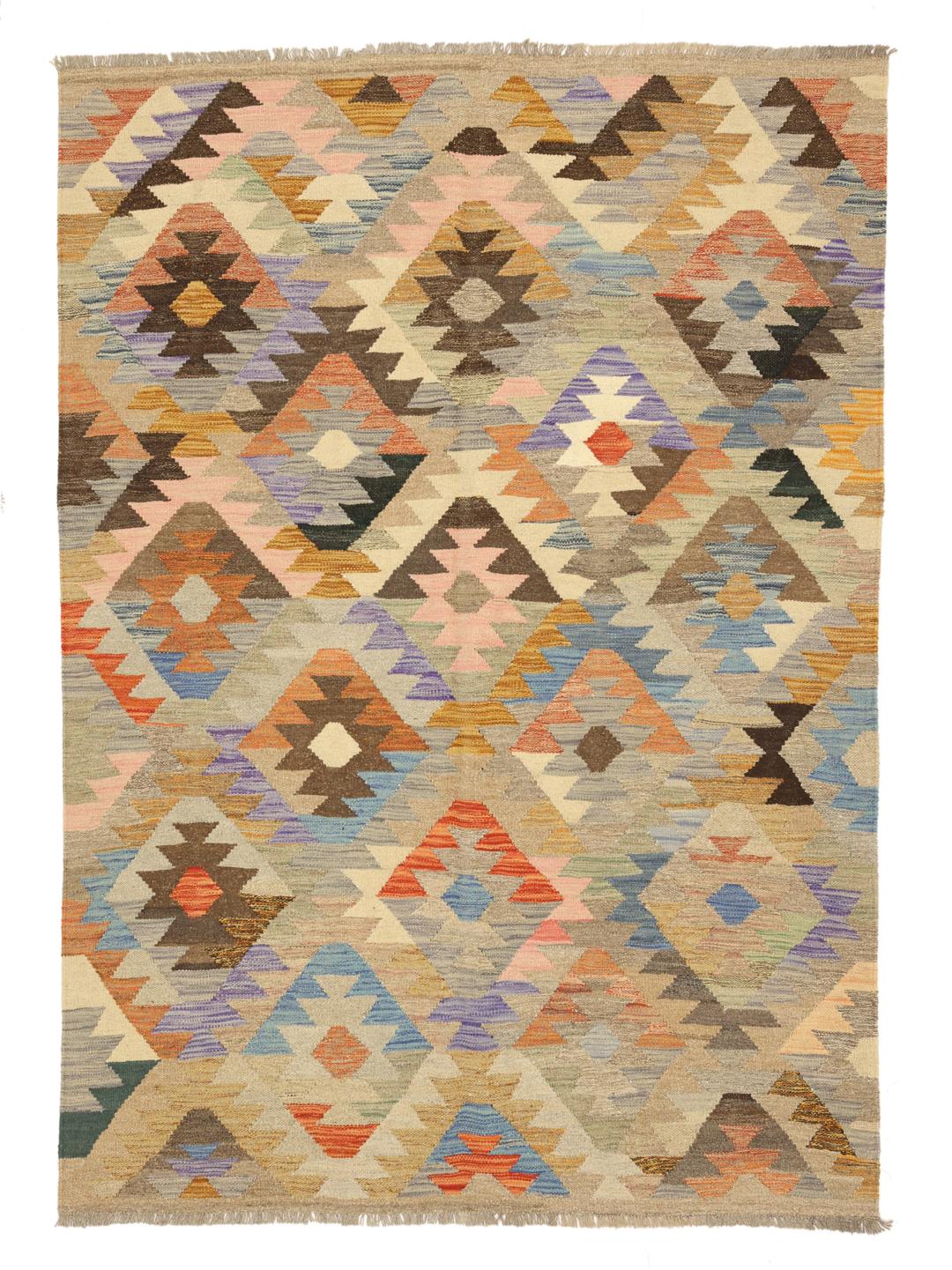
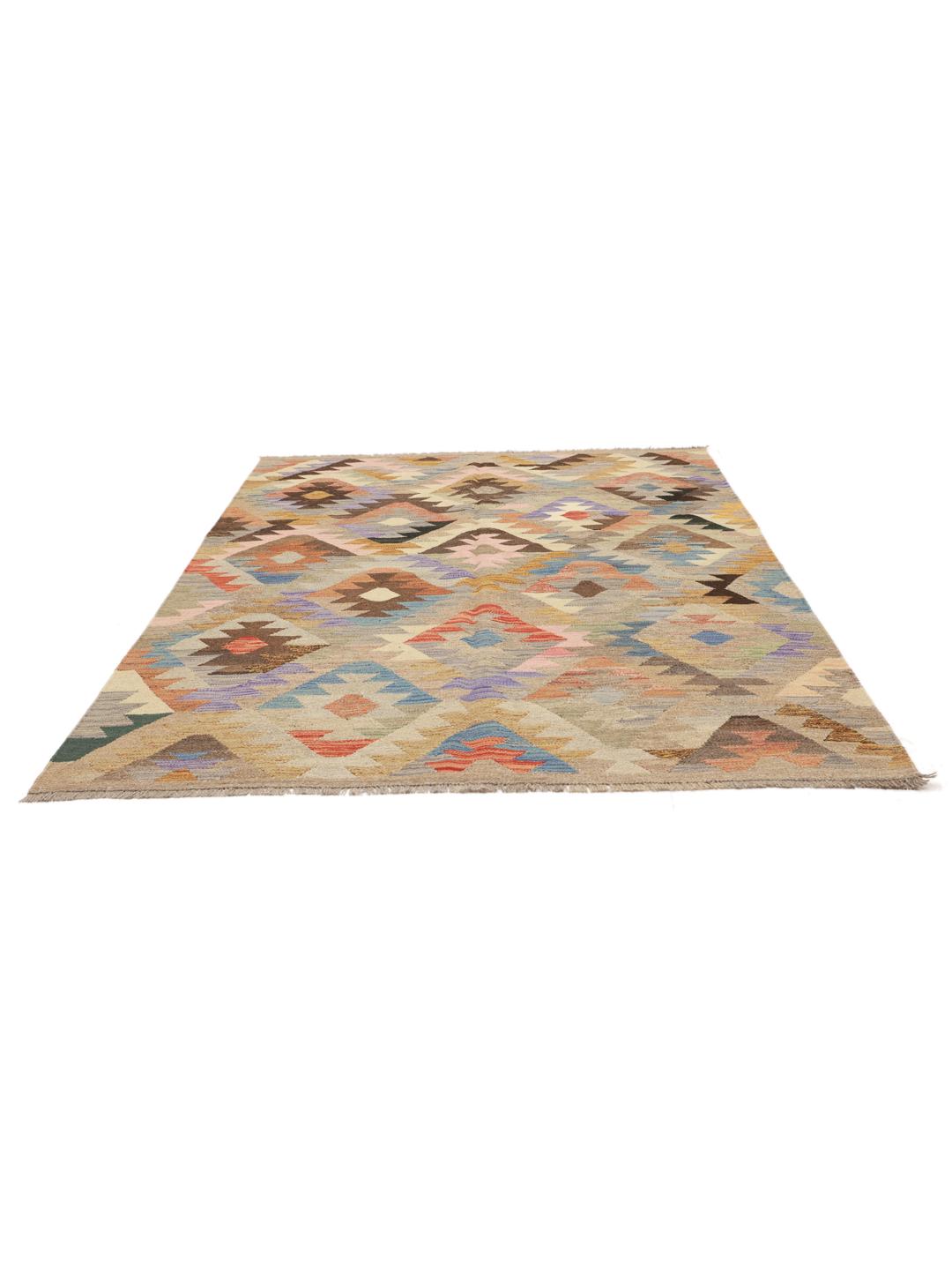
The design of this Ariana piece features repeating diamond motifs and stepped geometric patterns that are characteristic of regional tribal designs. Each shape and colour choice carries historical meaning, traditionally representing protection, fertility, or the natural landscape of the weaver's surroundings.
Today, Afghan Kilims are highly sought after by collectors and interior enthusiasts for their artistic integrity and cultural depth. Owning a hand-woven Kilim means preserving a piece of living history, bringing a sense of human connection and enduring craftsmanship into a modern living space.