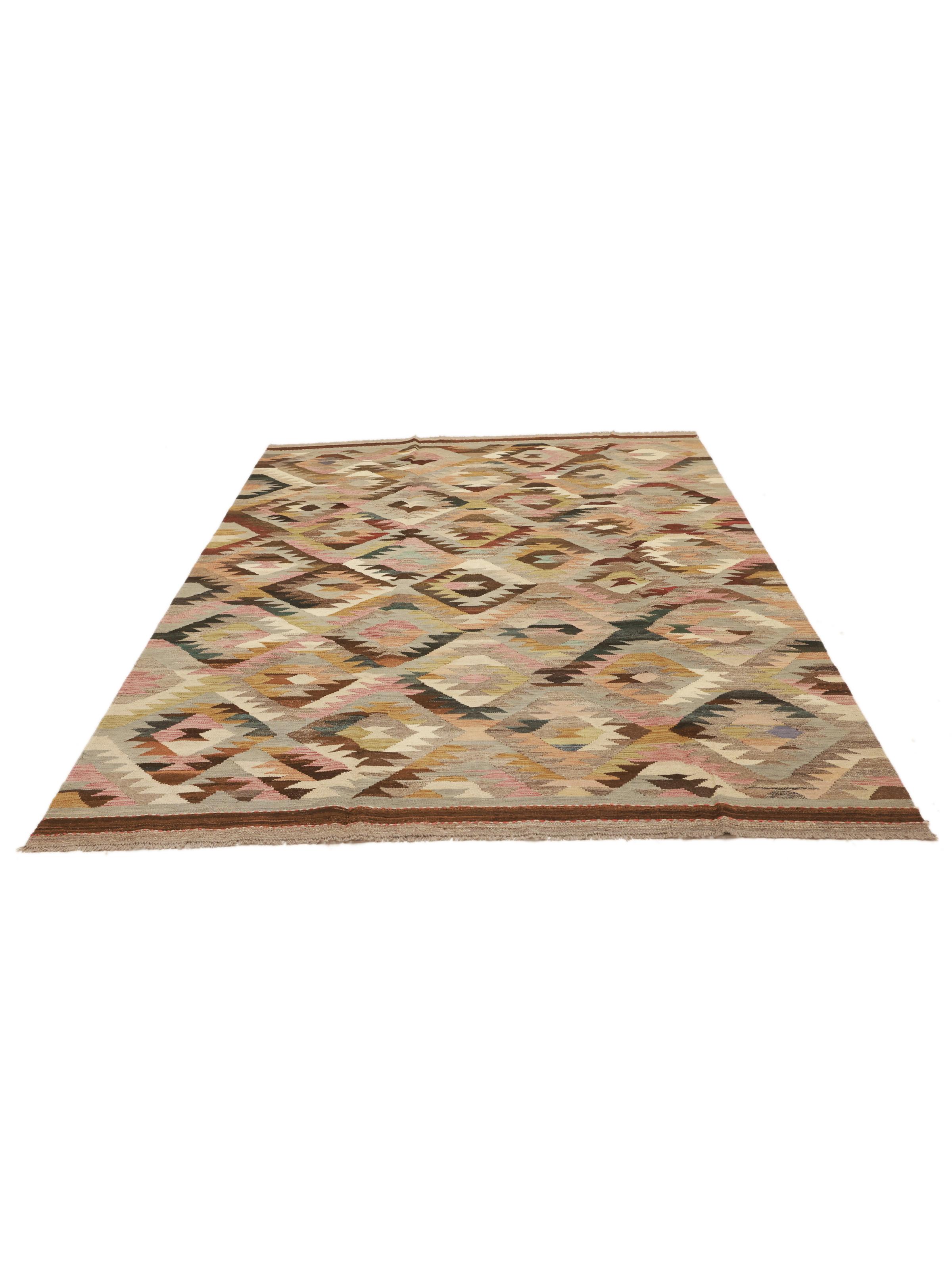
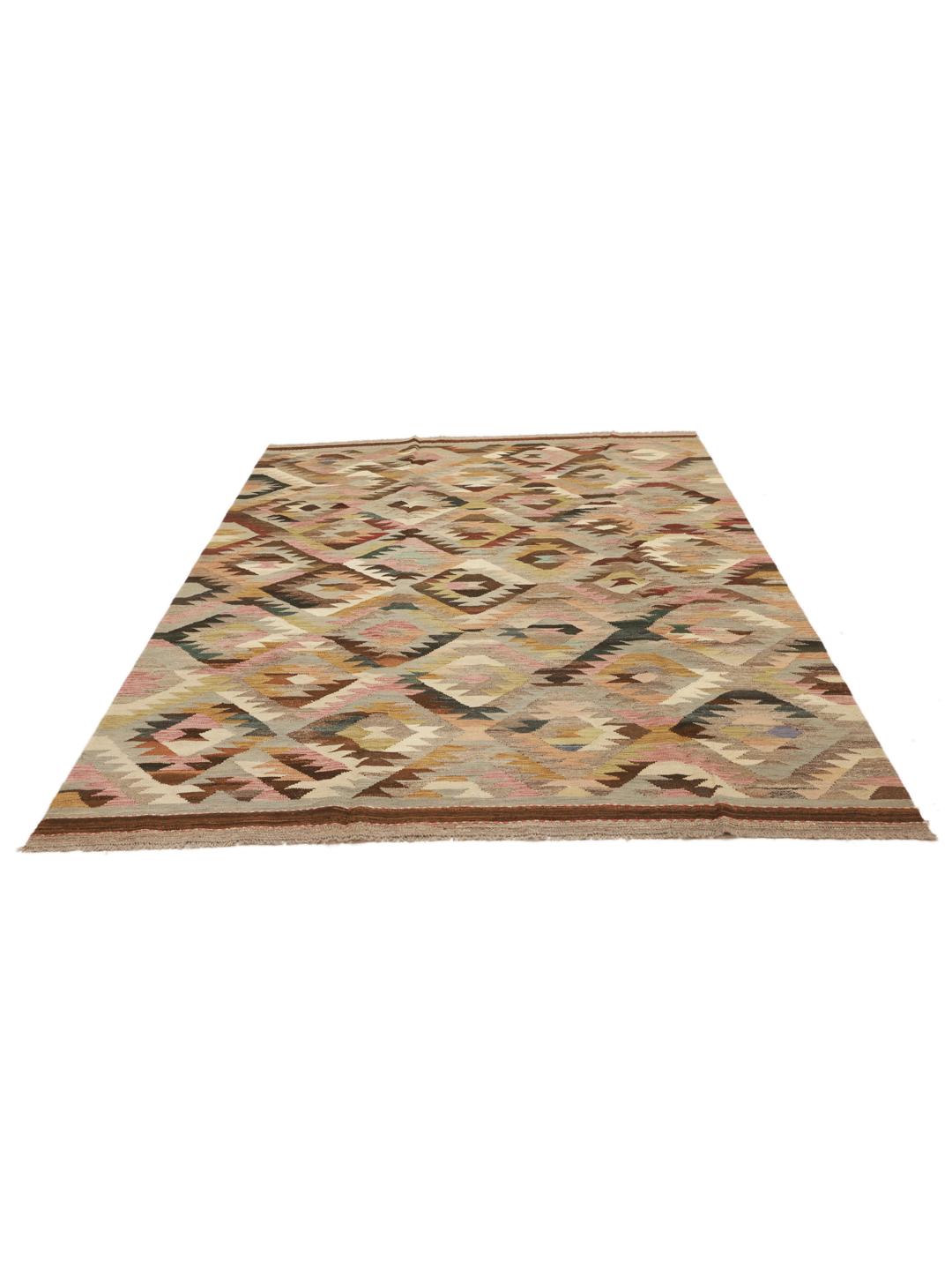
The tradition of weaving kilims in Afghanistan is deeply rooted in the cultural history of the Middle East, serving as both a functional necessity and a medium for artistic expression. Historically, these flat-woven rugs were created by nomadic and village communities to provide insulation and decoration within tents and homes. Today, the Ariana style represents a sophisticated evolution of these ancient techniques, blending historic tribal aesthetics with a modern sensibility that appeals to contemporary design tastes.
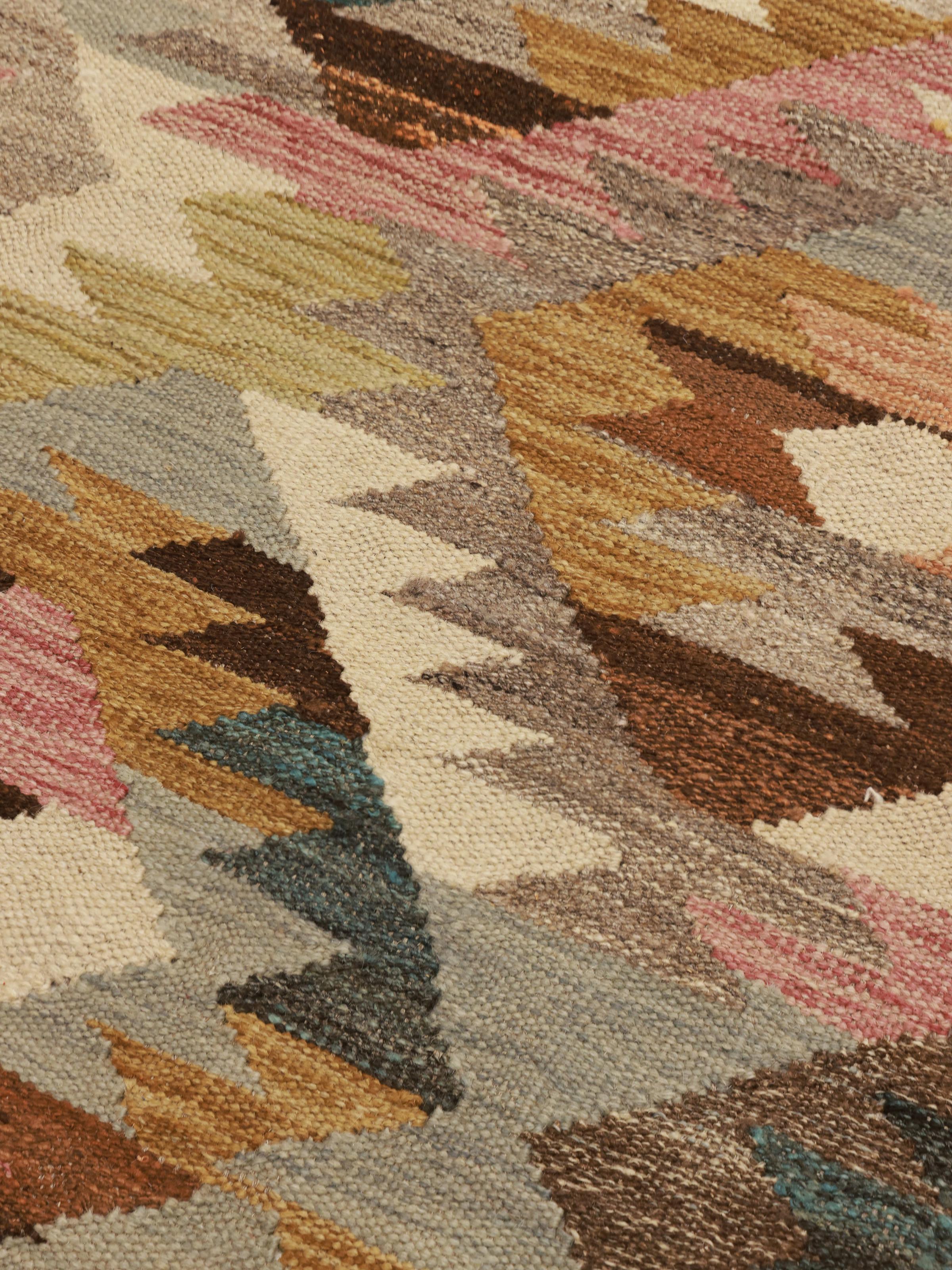
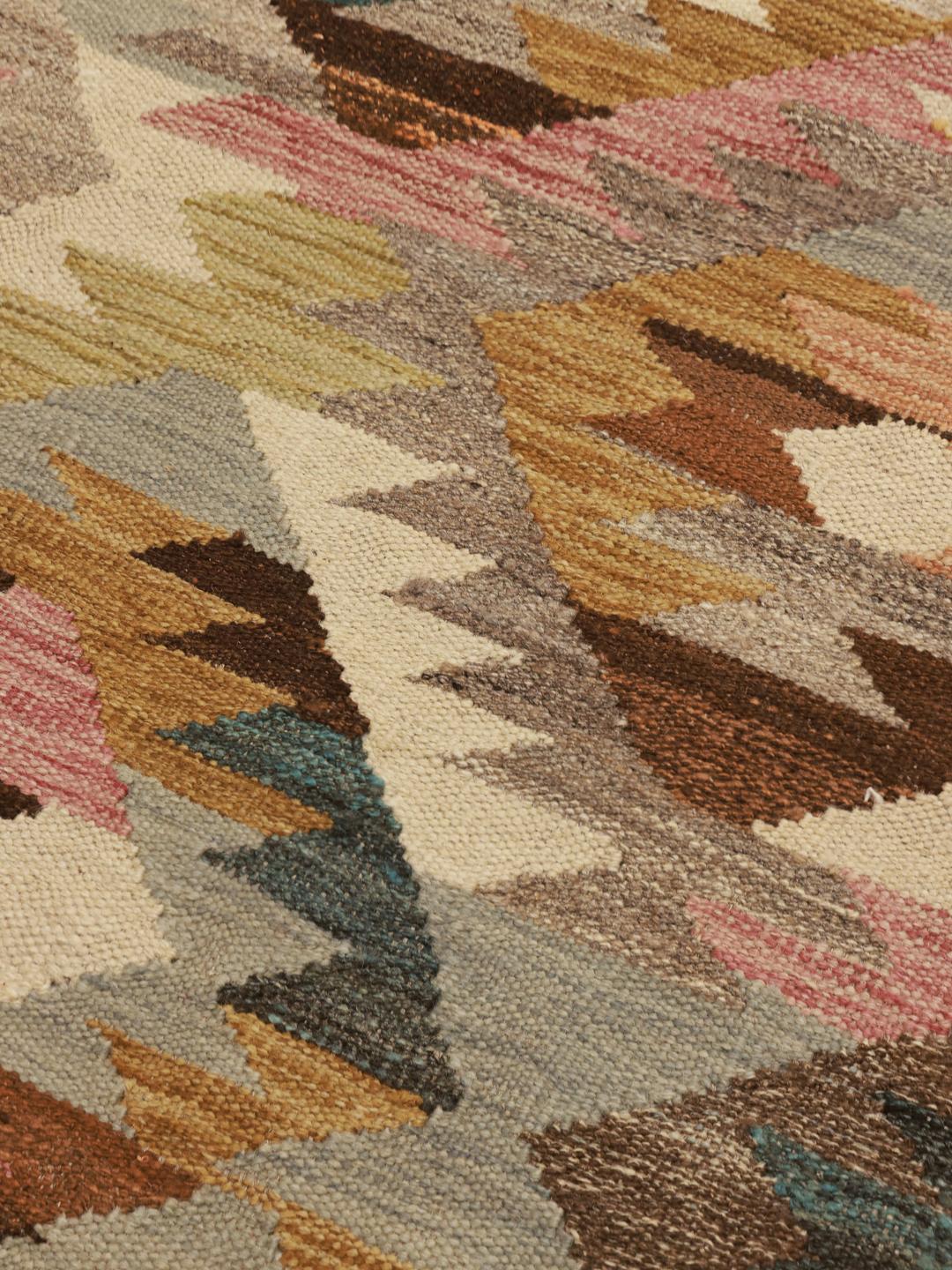
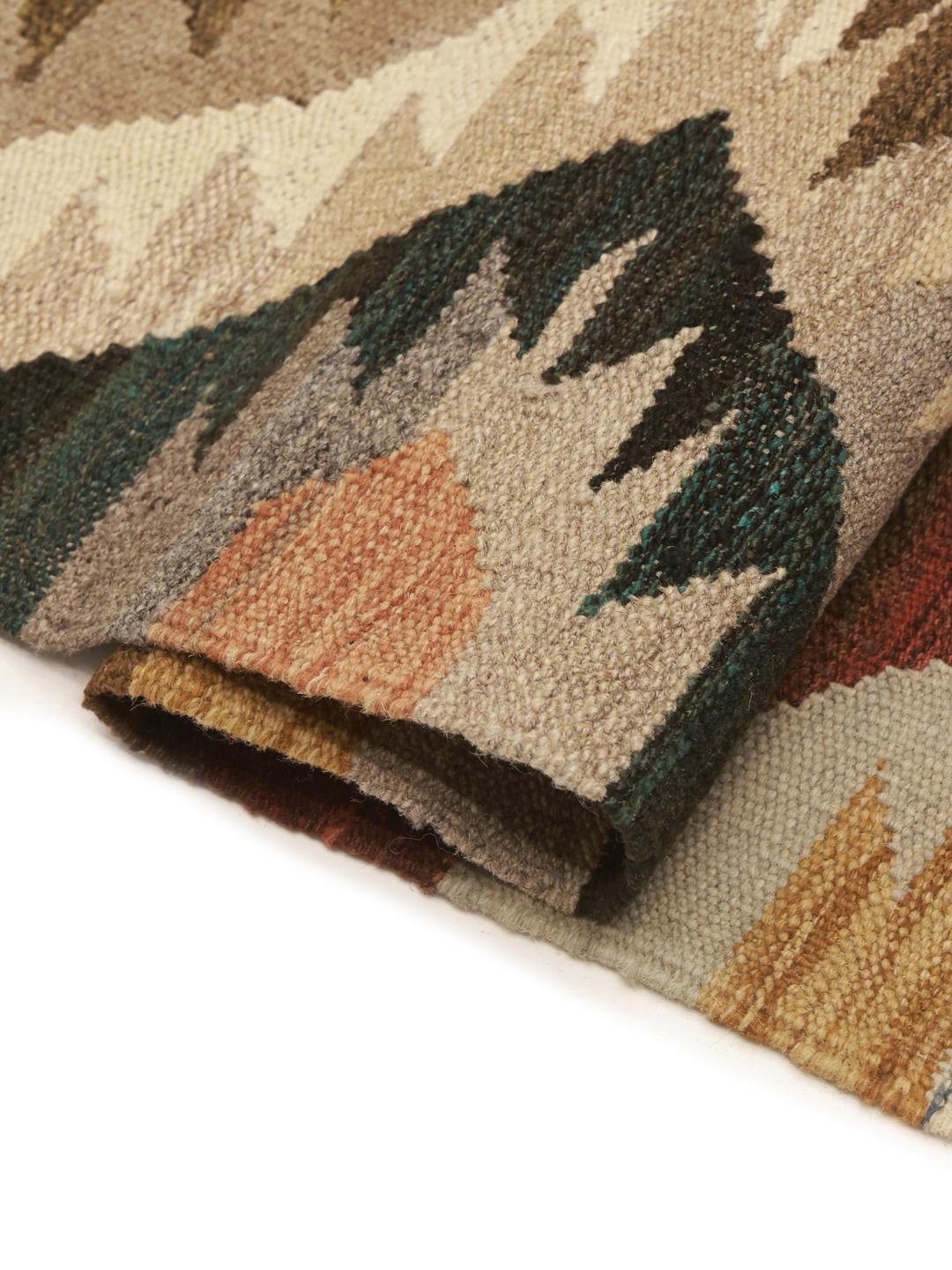
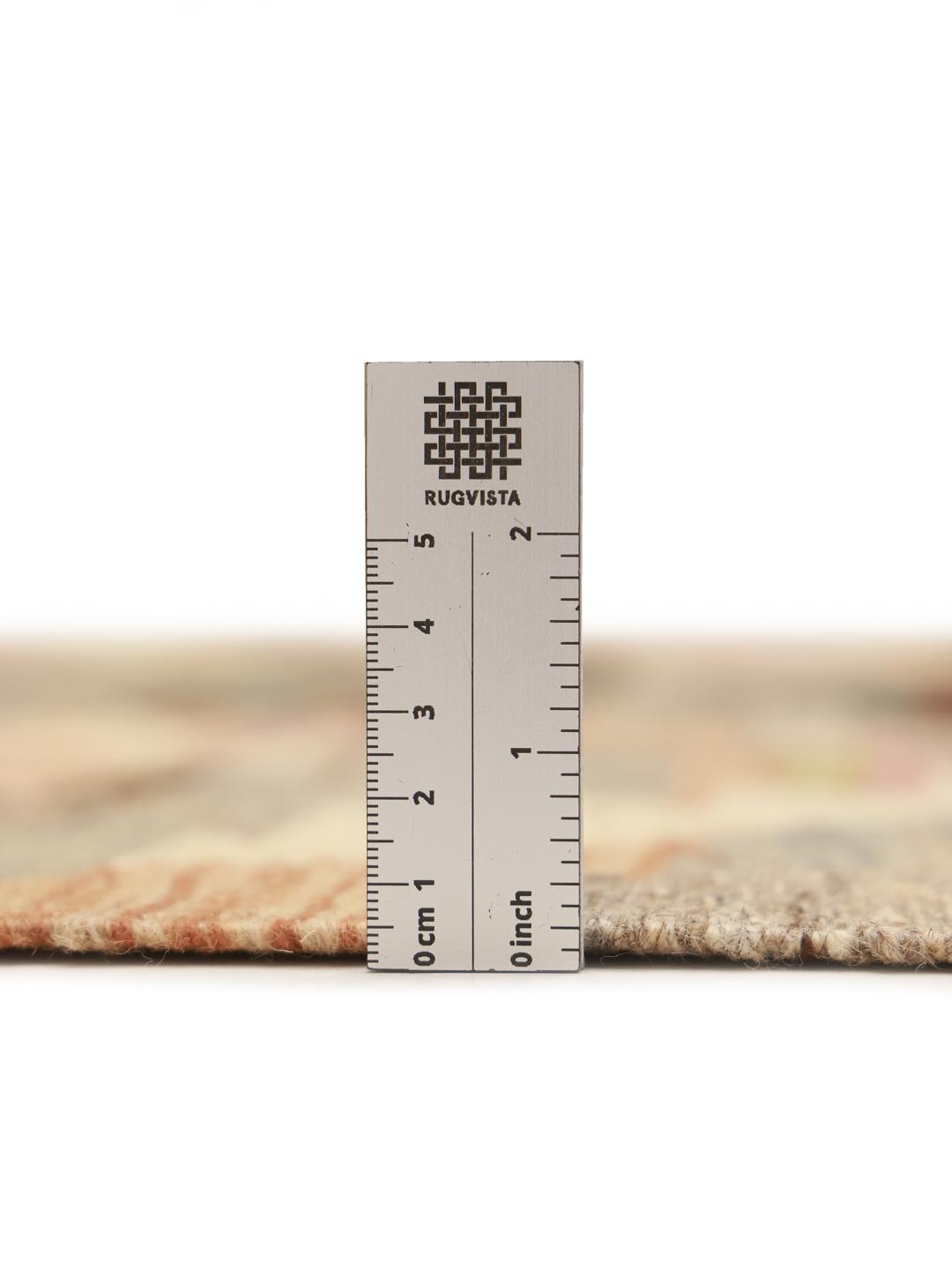
A kilim is defined by its flat-weave construction, meaning it is made without a pile. The weaver interlaces the coloured weft threads directly with the warp threads, creating a rug that is reversible and notably lightweight. This specific method requires a high degree of precision, as the pattern is built directly into the structure of the rug rather than being knotted onto a foundation. The result is a crisp, clean aesthetic that highlights the clarity of the design motifs.
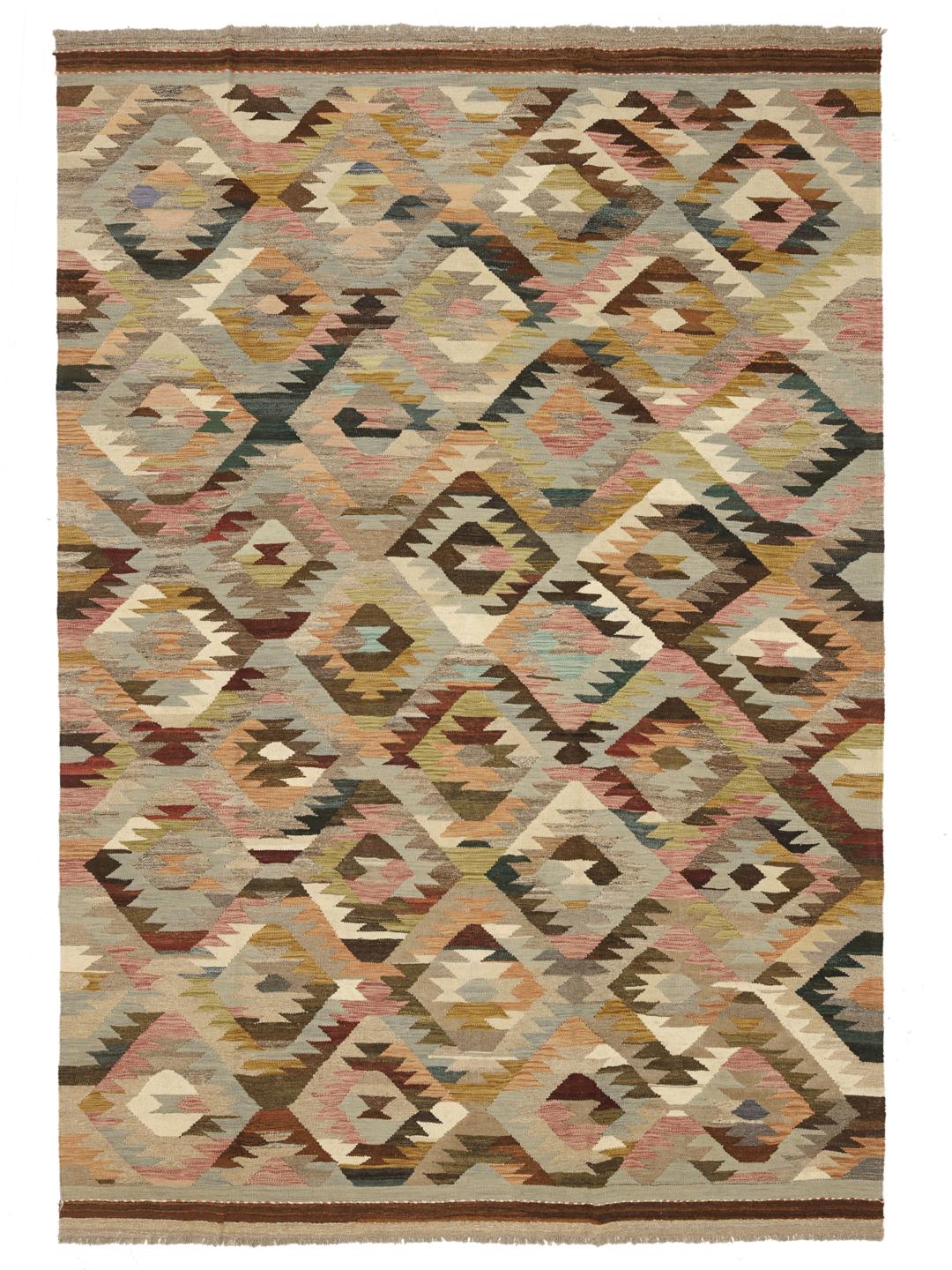
Signature elements of the Ariana style include a focus on geometric forms, often featuring diamonds, triangles, or stepped medallions that repeat across the field. These rugs are celebrated for their use of natural dyes, which yield a muted, organic colour palette that ages gracefully over time. The borders are typically understated, allowing the main field of the rug to serve as the visual focal point, often framed by simple, elegant banding that reinforces the rug’s structural integrity.
Collecting a hand-woven kilim is an investment in the preservation of a centuries-old craft. These rugs are highly valued for their connection to the heritage of the region and the human effort required to bring them into existence. By bringing such a piece into your home, you are not only acquiring a beautiful floor covering but also supporting a tradition that prioritises manual skill, cultural storytelling, and the enduring nature of natural materials.