Kelim weaving has deep roots in the traditions of Central Asia and the Middle East, where flatweave rugs were historically created by nomadic and village communities for practical daily use. These flat-surfaced textiles were essential for portable flooring, blankets, and storage bags, reflecting a lifestyle closely connected to nature and utility. Over time, these functional crafts evolved into celebrated decorative arts, carrying forward motifs and techniques passed down through generations of skilled weavers.
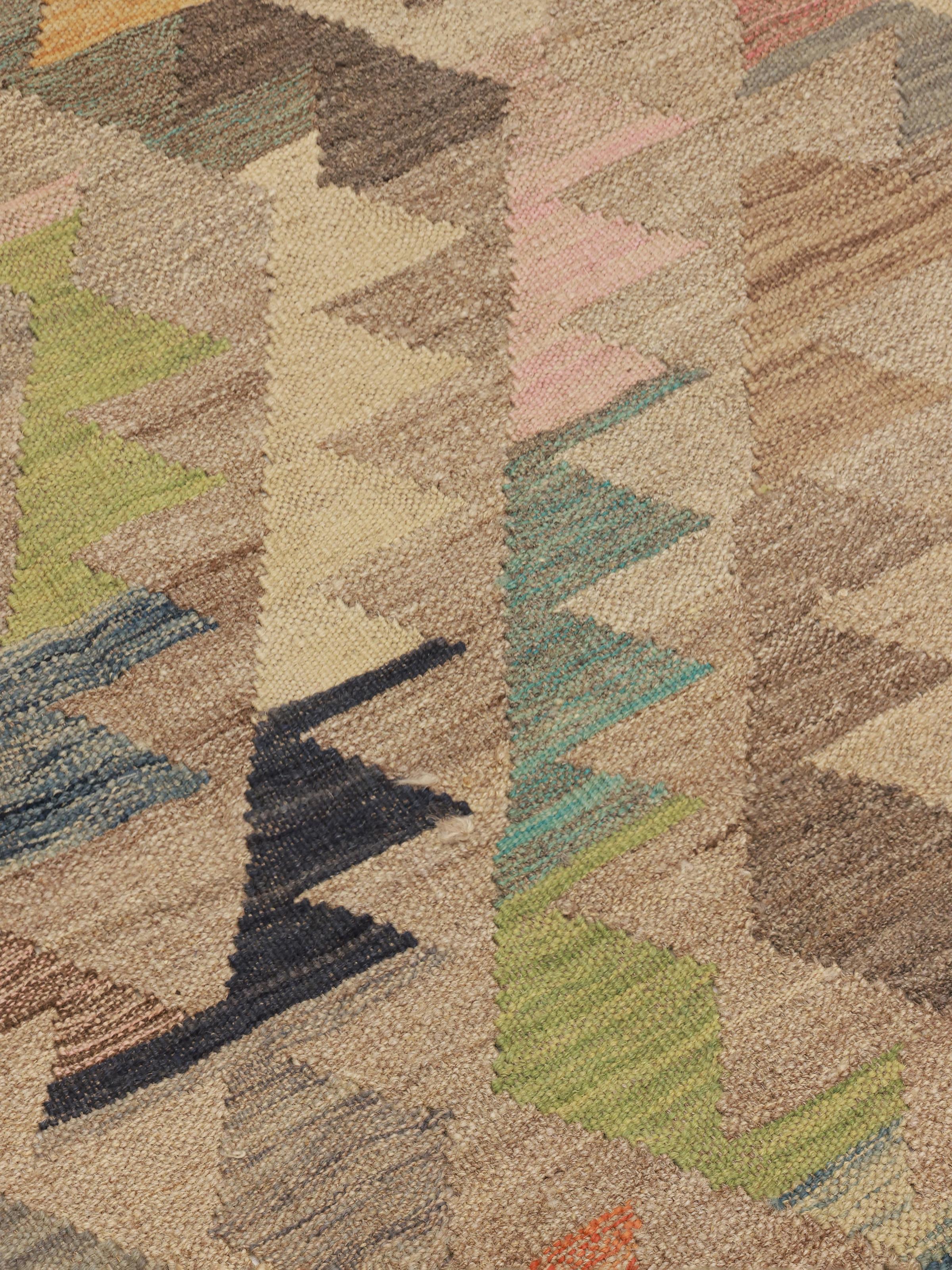
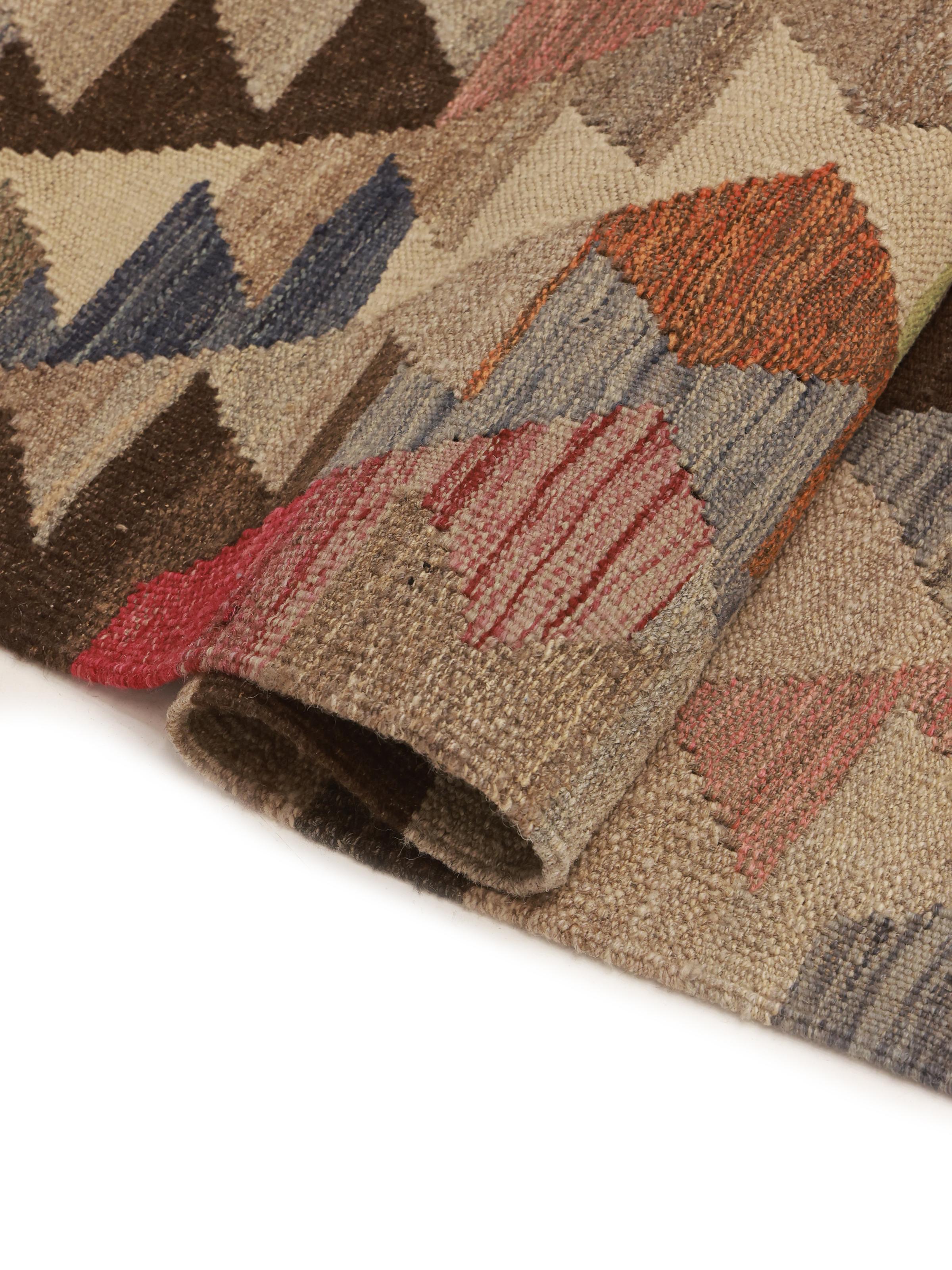
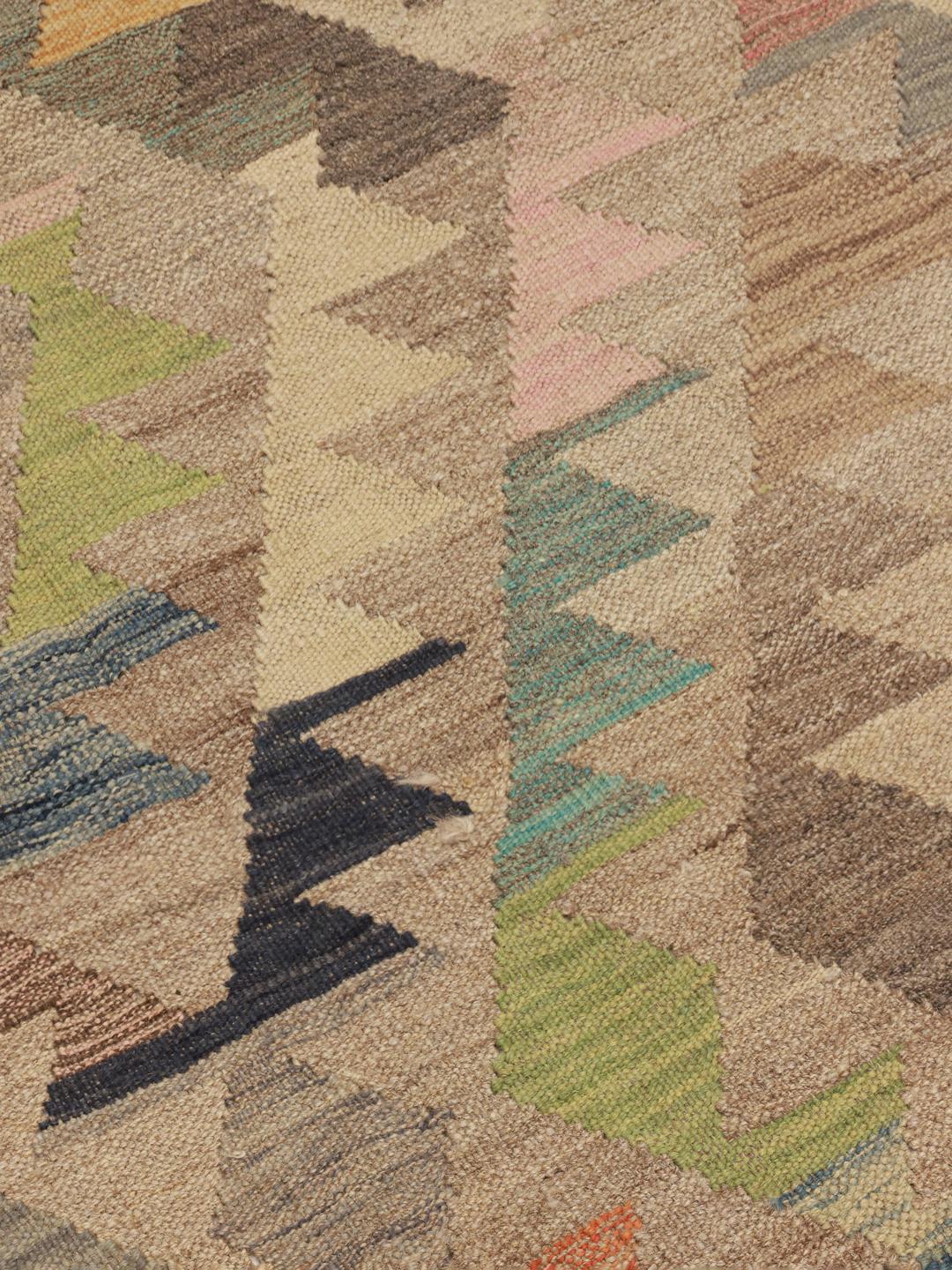
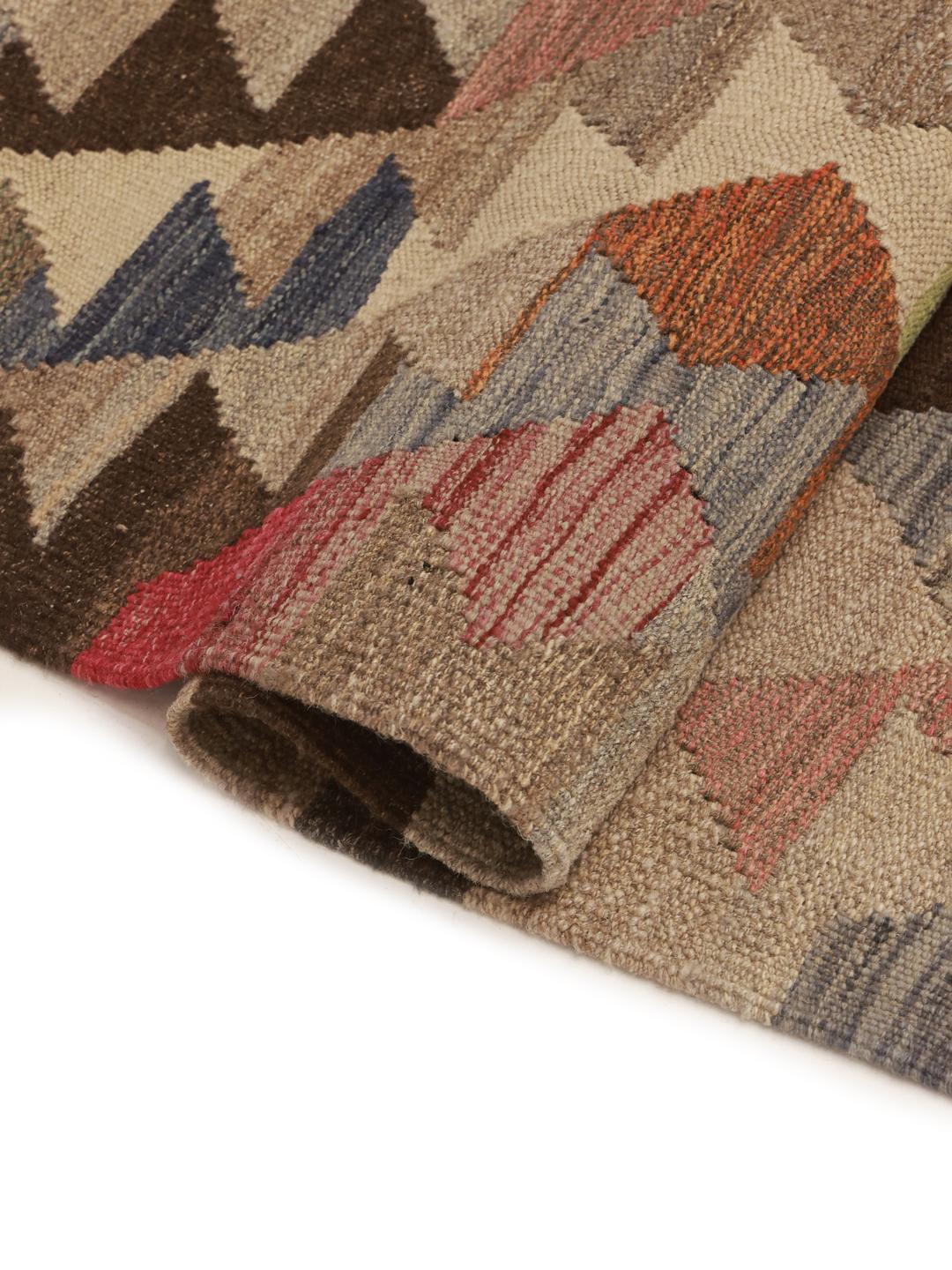
The Ariana style represents a specific artistic evolution within Afghan rug making, often drawing inspiration from antique aesthetics while adapting to contemporary interior needs. The flatweave technique involves interlocking warp and weft threads without creating a raised pile, resulting in a smooth, durable textile that showcases crisp geometric patterns and a rich interplay of natural dyes.
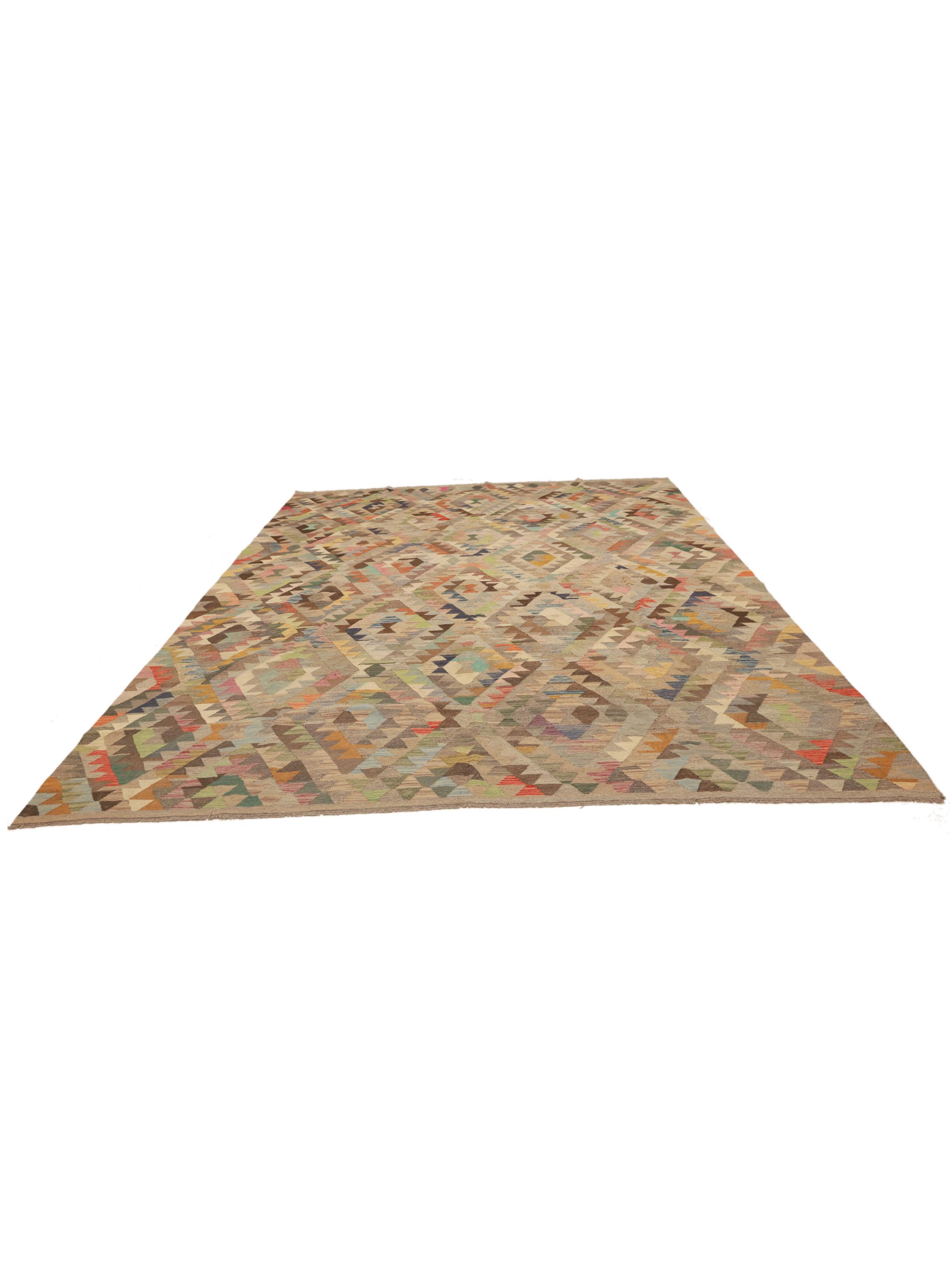
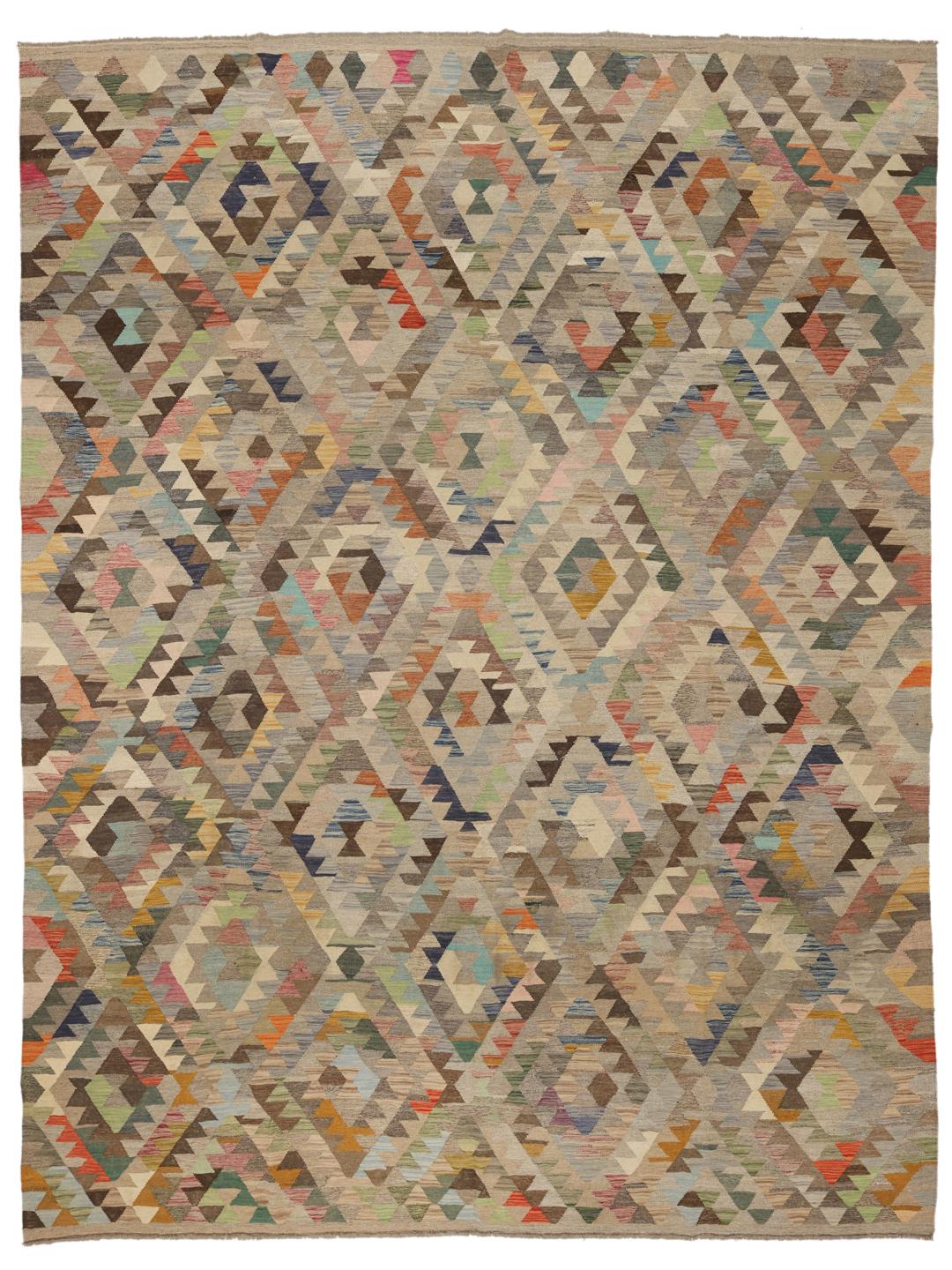
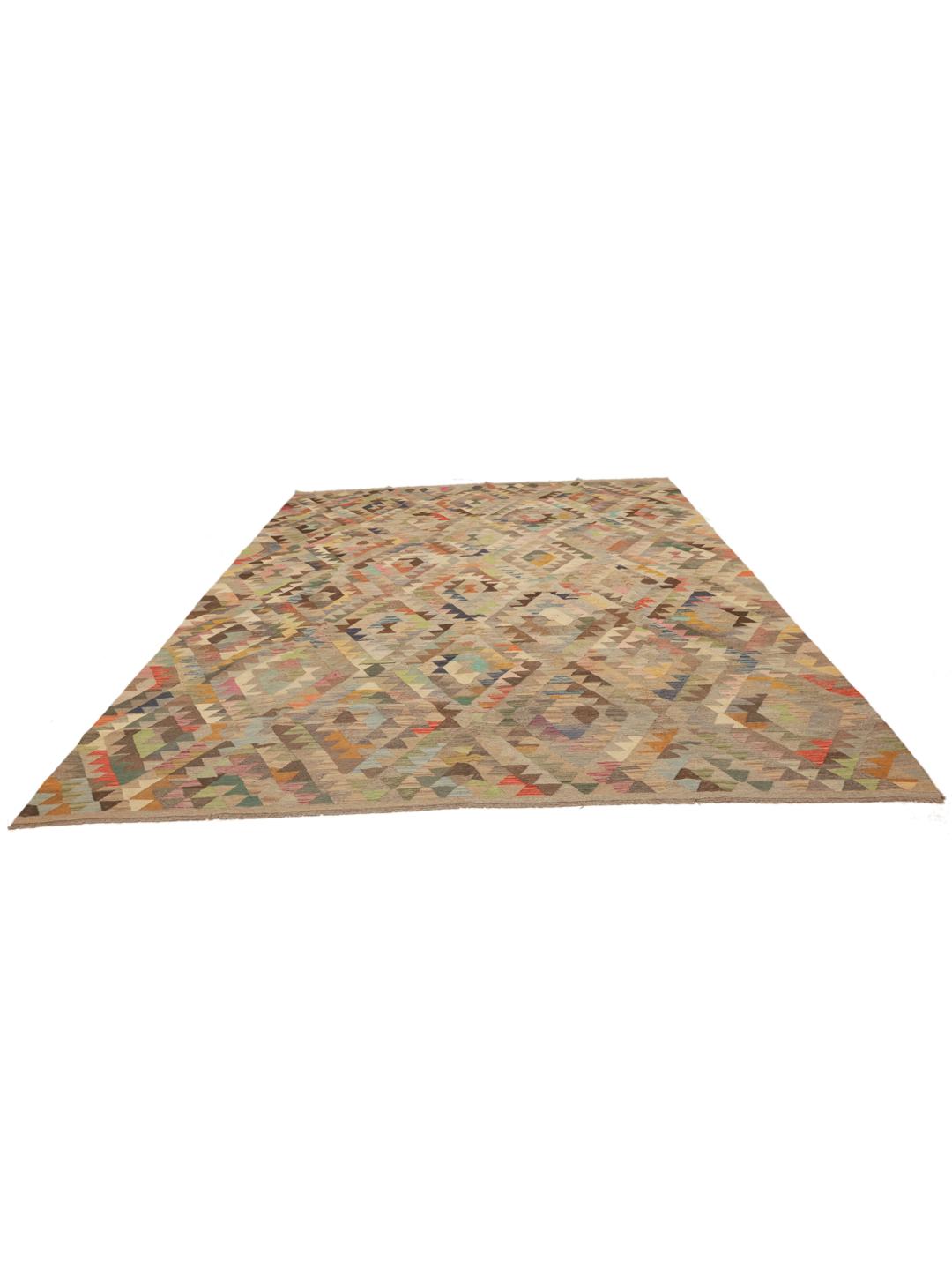
A defining feature of this tradition is the use of geometric motifs, diamond shapes, and repeating symbols that hold cultural meaning for the weavers. In this particular piece, the intricate arrangement of diamonds creates a harmonious visual rhythm across the beige field, accented by subtle colour transitions that reflect the organic nature of traditional dyeing methods.
Rugs from this region are highly valued by collectors and home decorators alike for their authenticity and connection to ancient craft heritages. Owning a piece like this means embracing a tradition of hand labour and cultural storytelling, where every thread preserves the dedication and skill of the artisan who made it.