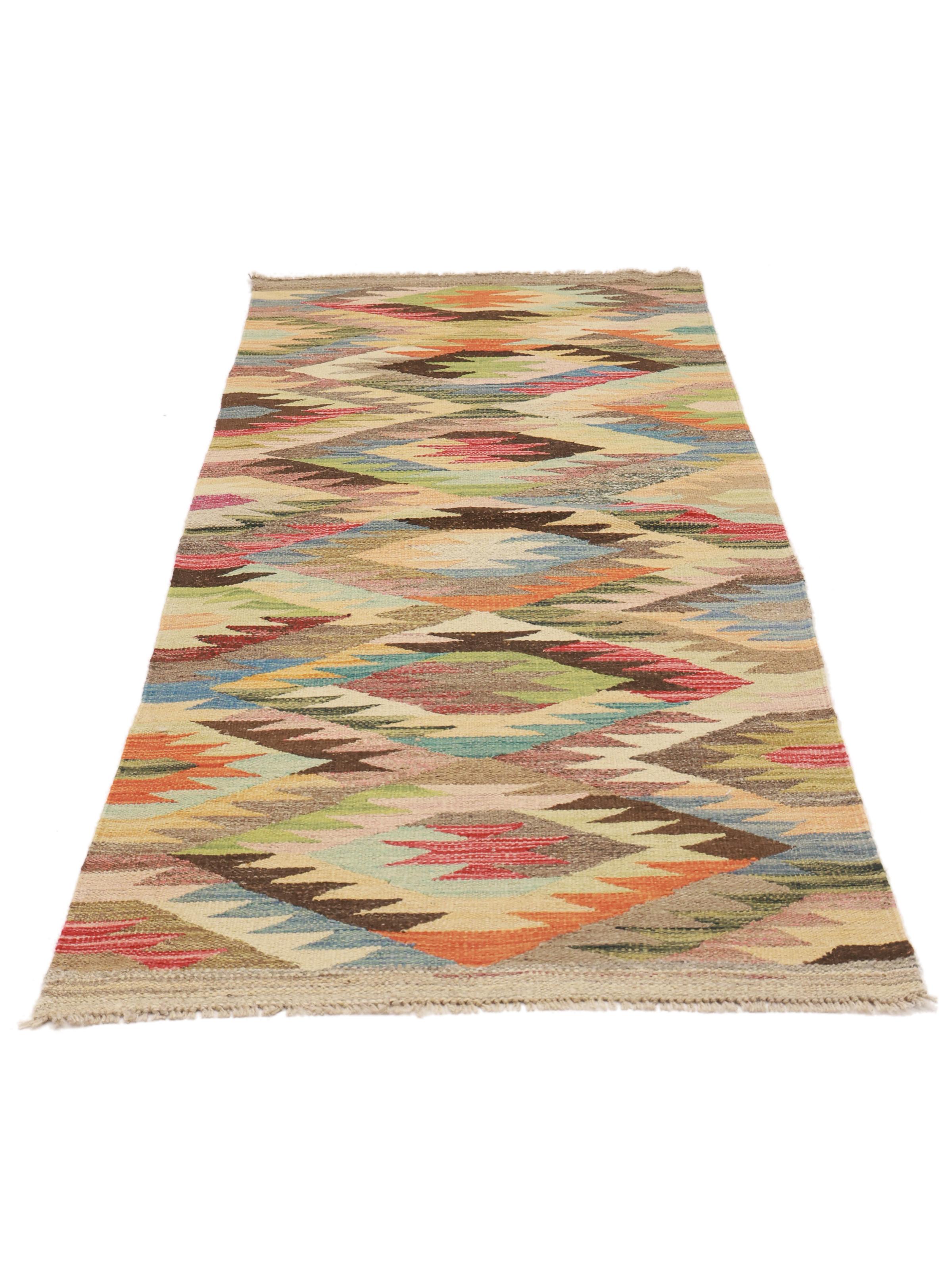
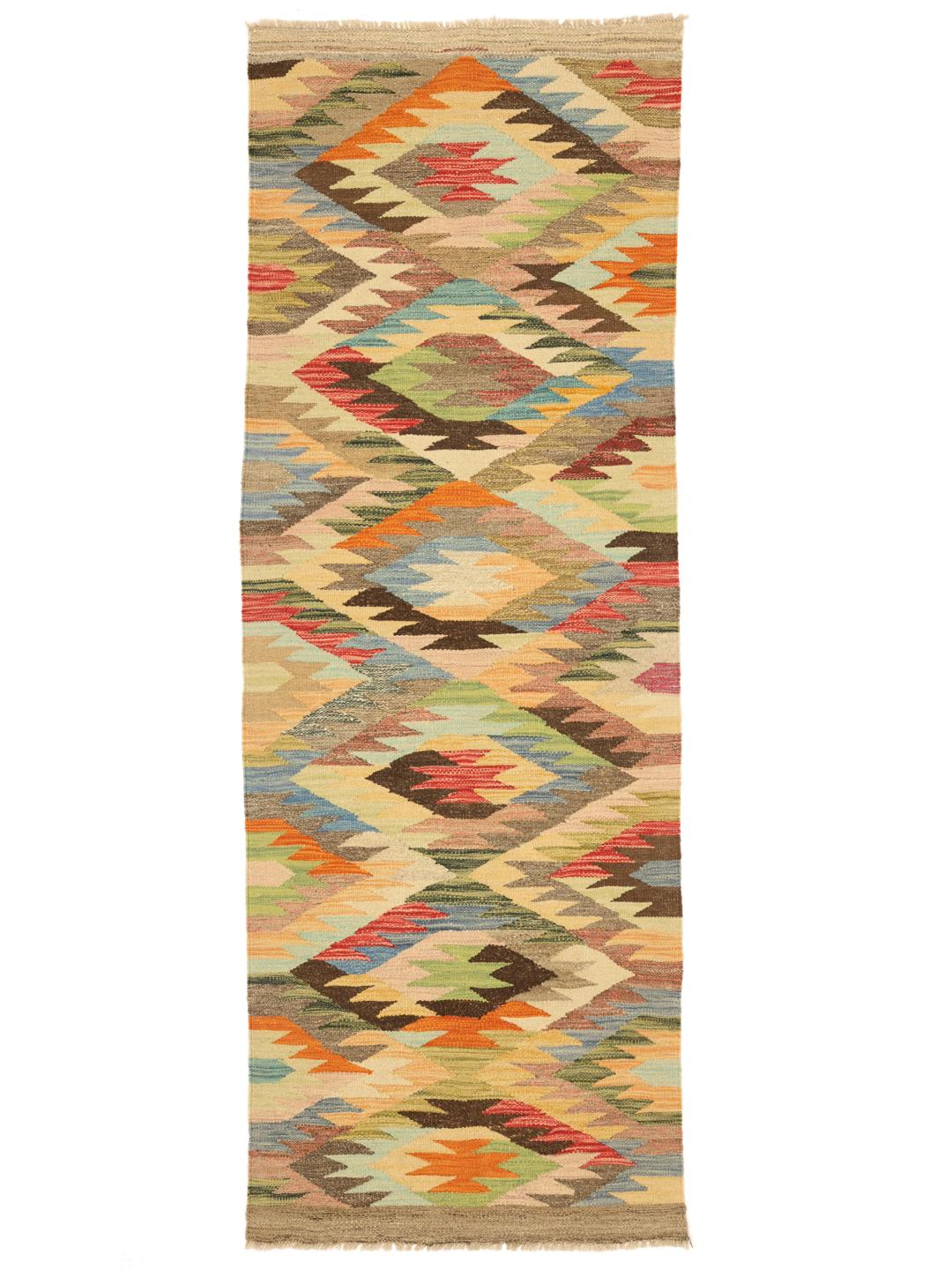
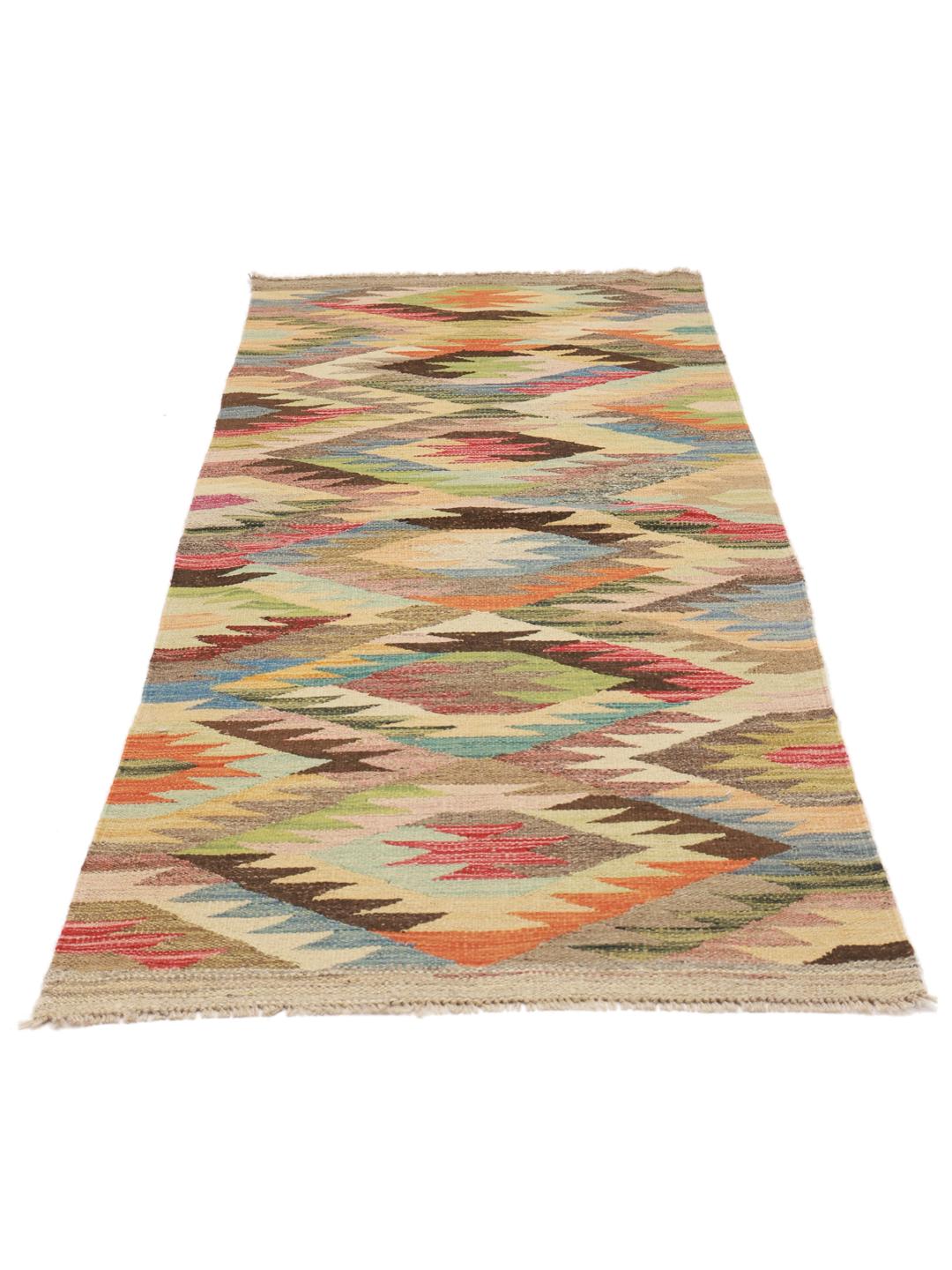
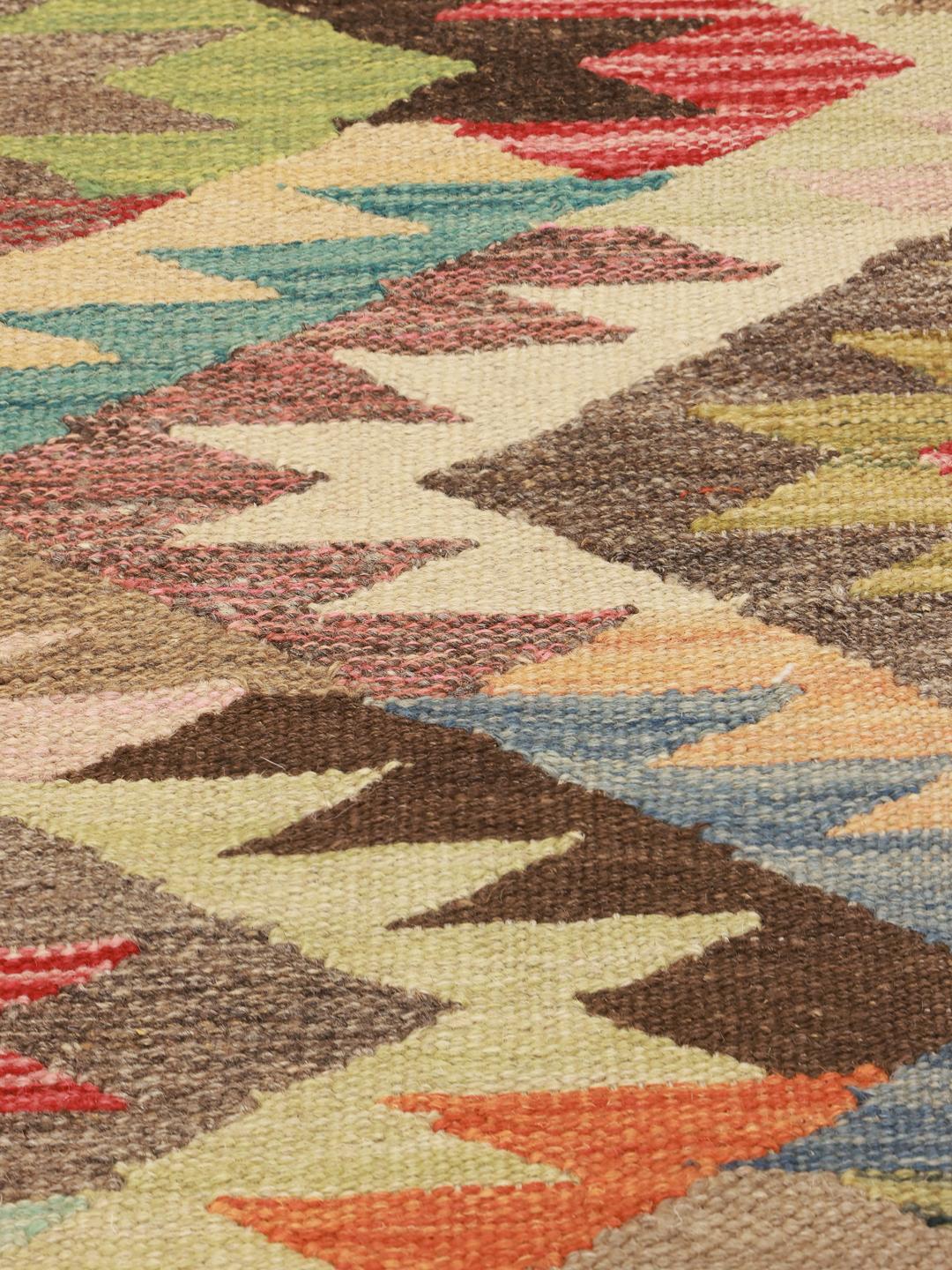
The Kelim Ariana tradition originates from the rich textile heritage of Afghanistan, where the art of flat-weaving has been refined over centuries. These rugs are deeply connected to the semi-nomadic lifestyles of the region, where portability and durability were just as important as beauty. Over time, the Ariana style has evolved to incorporate a more sophisticated approach to colour and pattern, making them highly sought after for contemporary interiors that value authenticity.
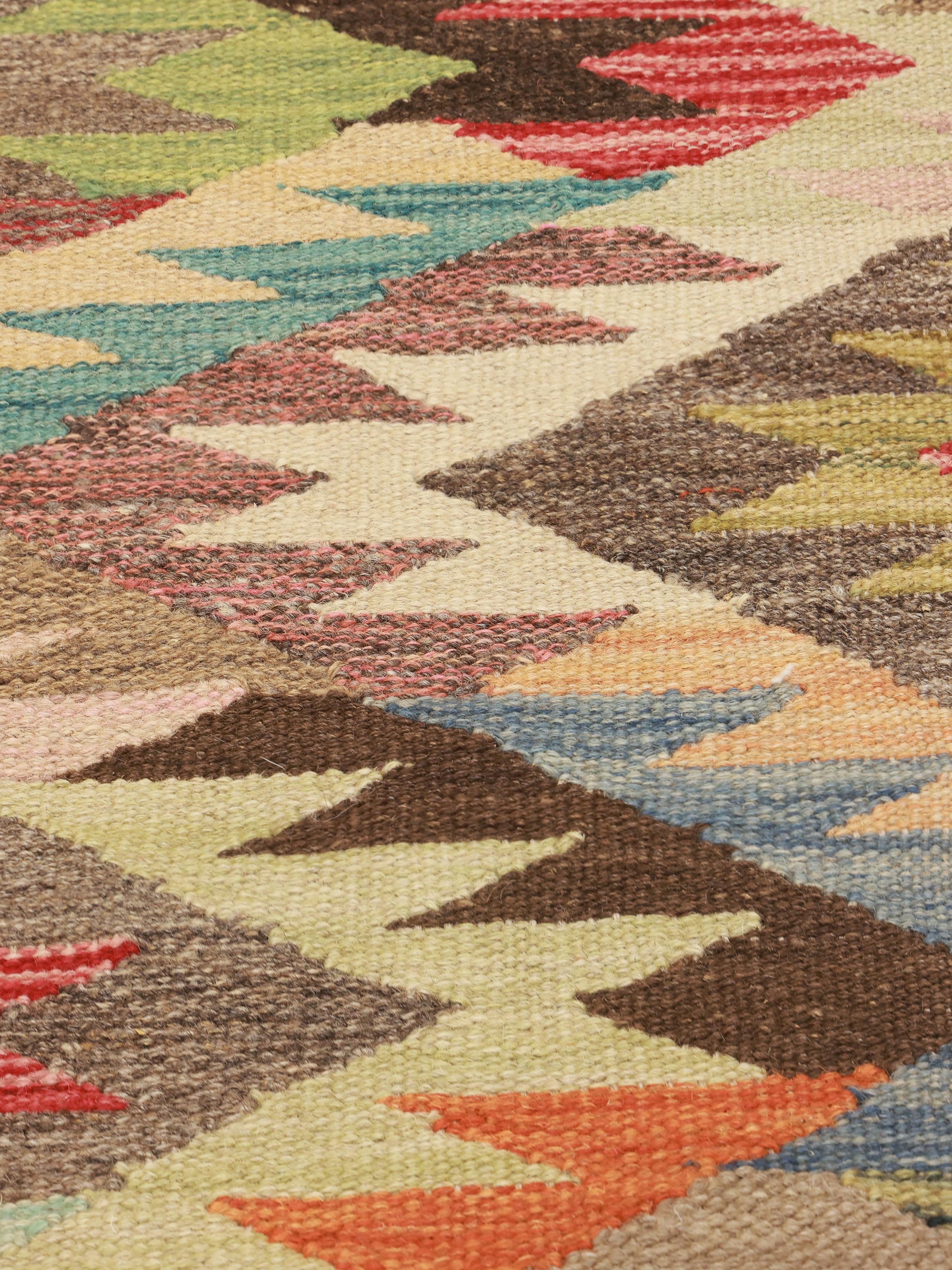
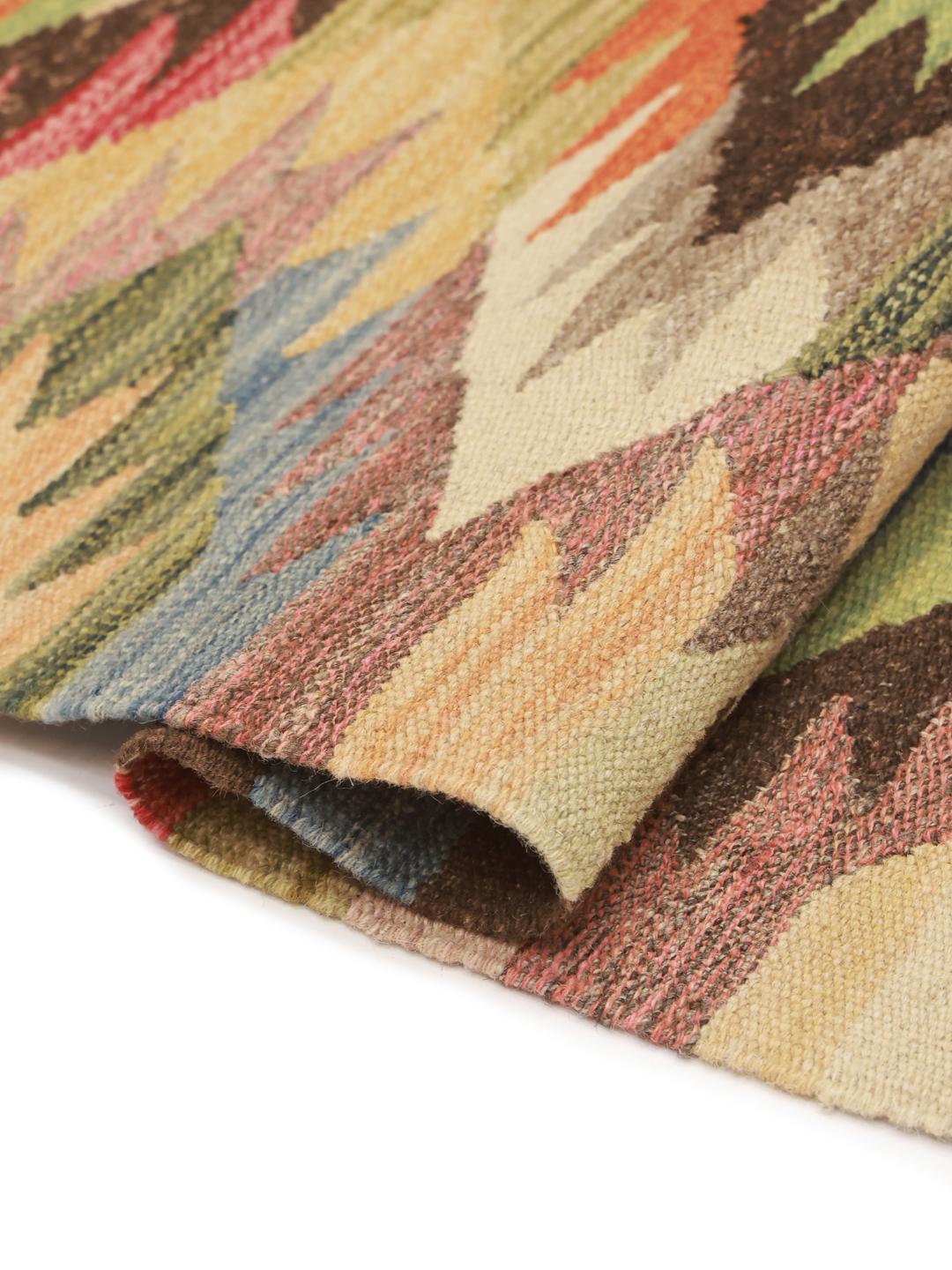
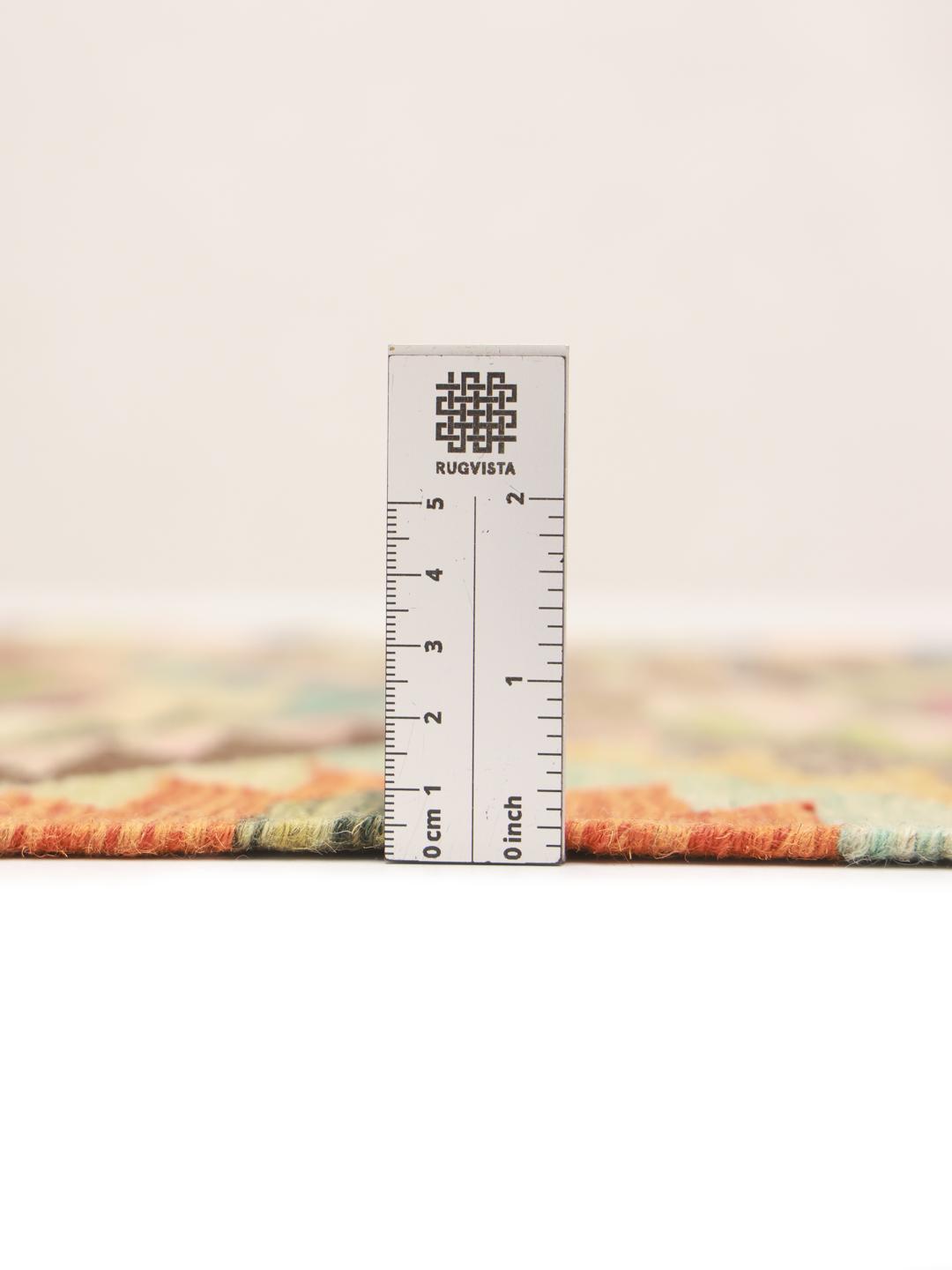
The term Kelim refers to the specific flat-weaving technique used to create these pieces. Unlike pile rugs that use knots, a Kilim is created by interweaving the warp and weft threads, resulting in a thin, reversible textile. This method is incredibly demanding, as the weaver must manage the structural tension of the rug while simultaneously building the design, creating a final product that is both lightweight and structurally sound.
Signature elements of the Ariana style include bold, large-scale geometric motifs, particularly diamonds and triangles, which are often arranged in repeating sequences. These designs are frequently inspired by tribal symbols and natural surroundings, translated into a vibrant language of colour. The use of hand-spun Wool adds a subtle variation in tone and texture, giving the rug a natural, living quality that machine-made alternatives simply cannot match.
Collecting a hand-woven Kilim is an investment in cultural preservation. These rugs are valued not just for their appearance, but for the human story embedded in every strand of Wool. When you own a piece from this tradition, you are continuing a legacy of craftsmanship that has survived changing times and trends, proving that true quality remains relevant regardless of the era.