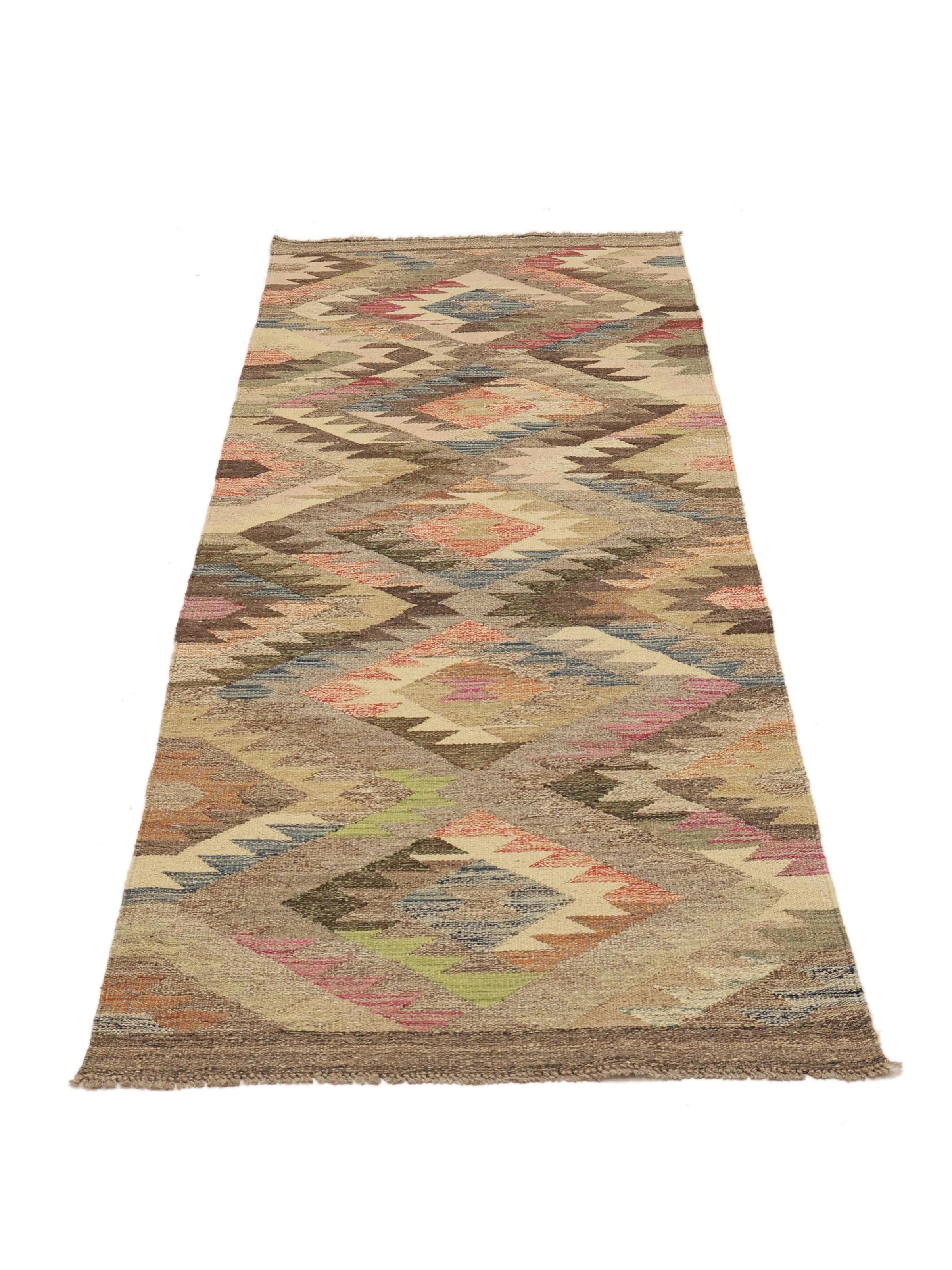
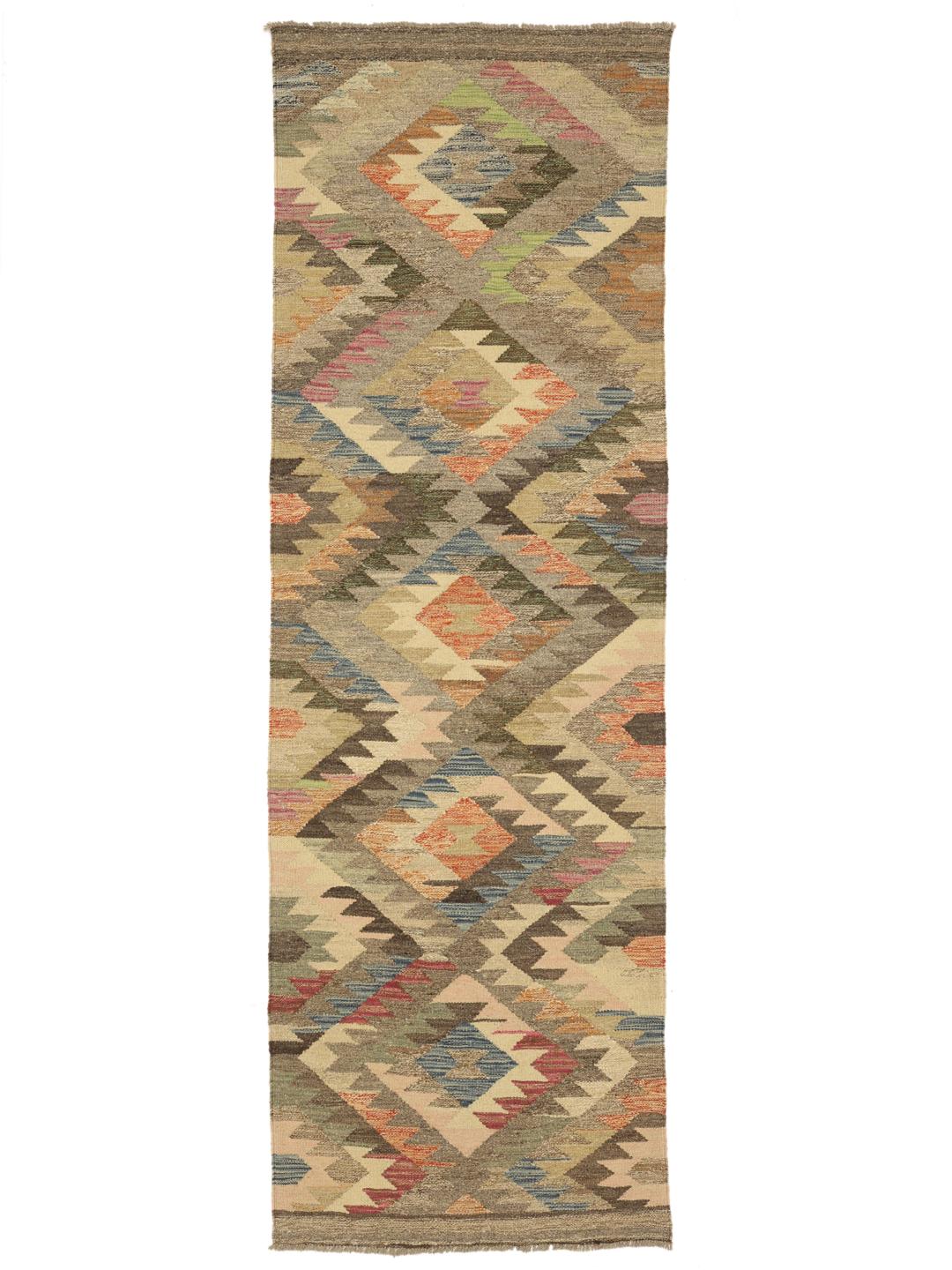
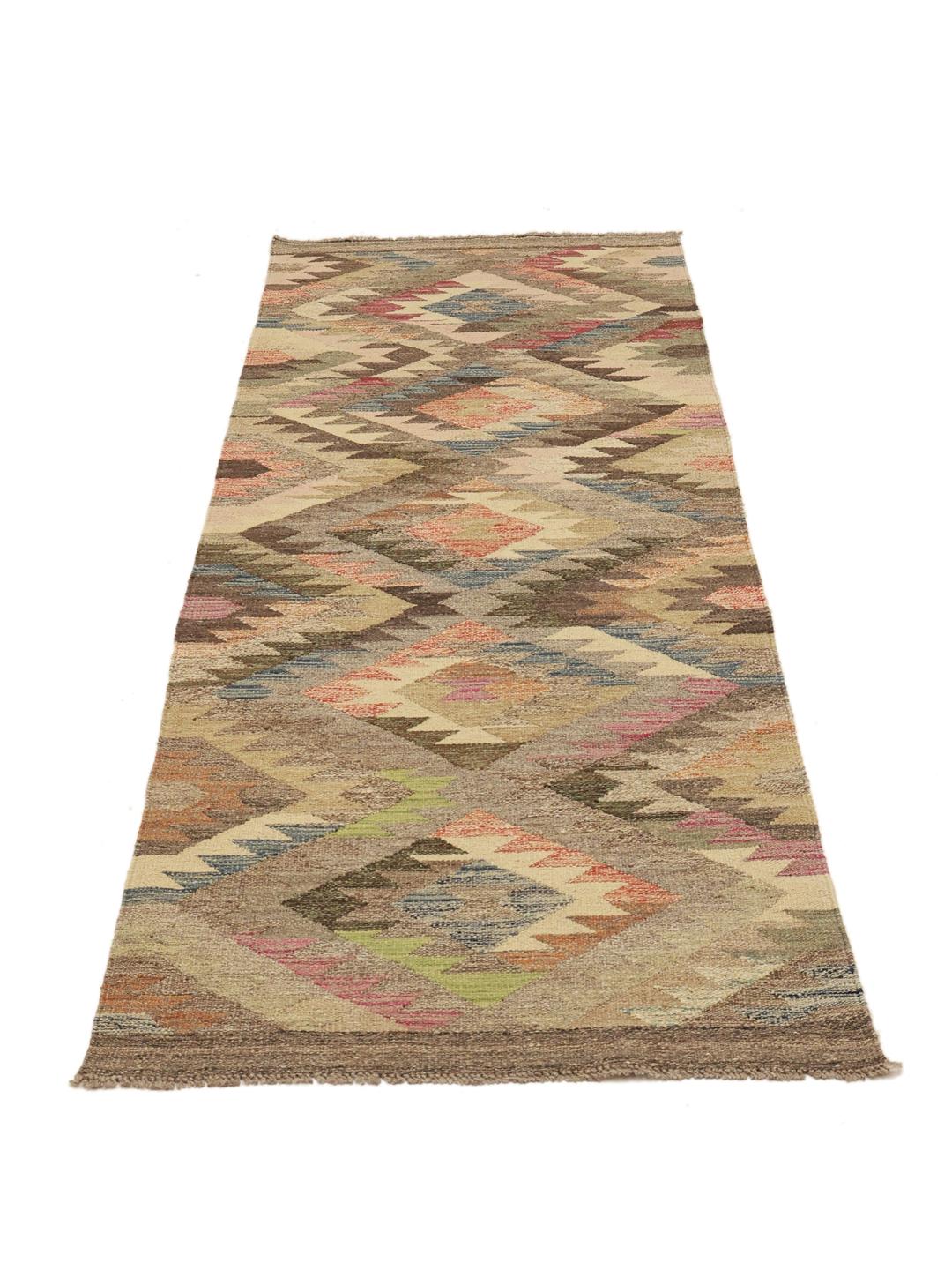
The Kelim Ariana tradition originates from the rugged border regions of Afghanistan, where nomadic and semi-nomadic weavers have crafted flatwoven textiles for centuries. Originally made for practical use in tents and homes, these rugs served as protective floor coverings, blankets, and storage bags, designed to withstand the demands of travel.
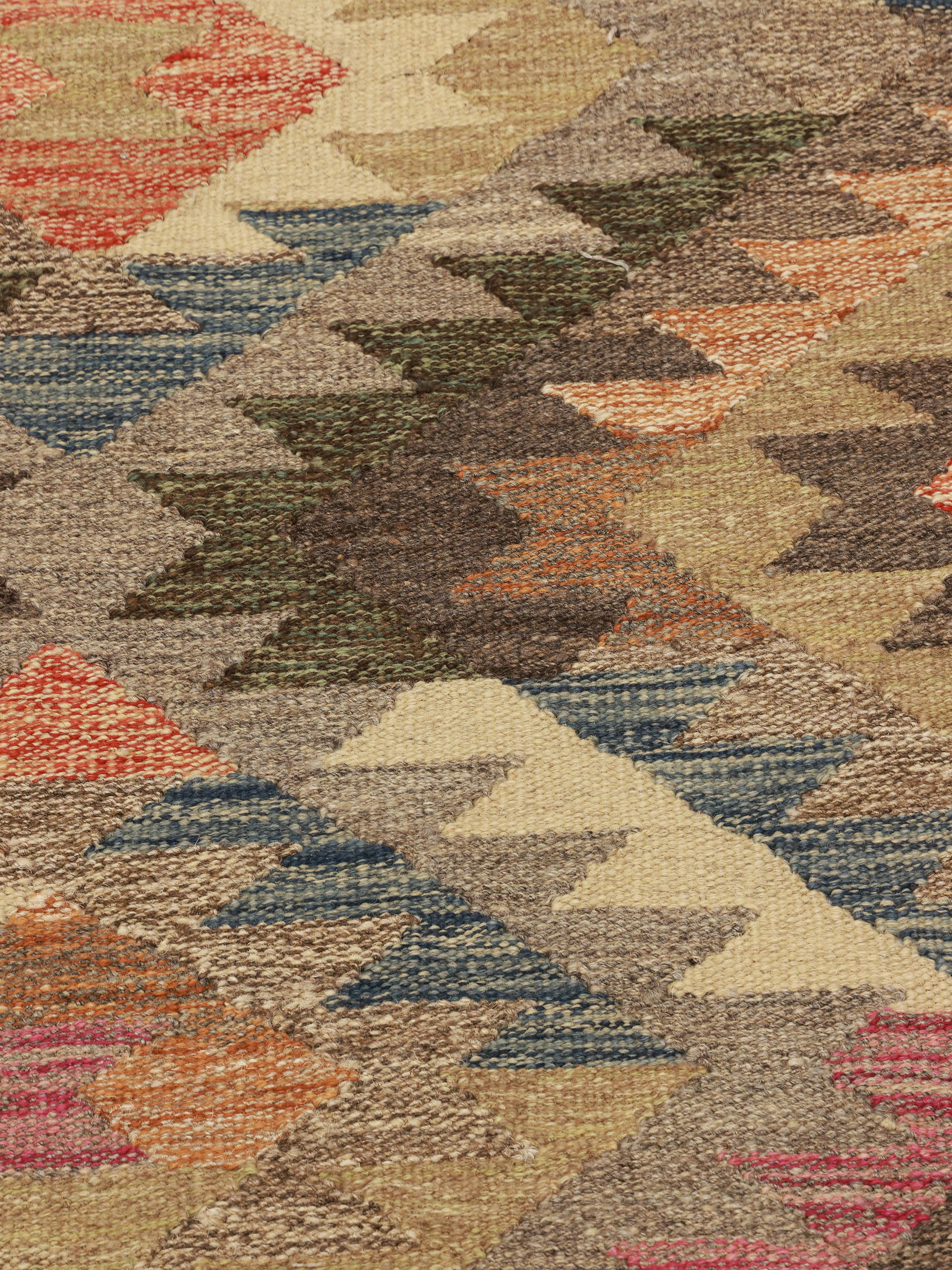
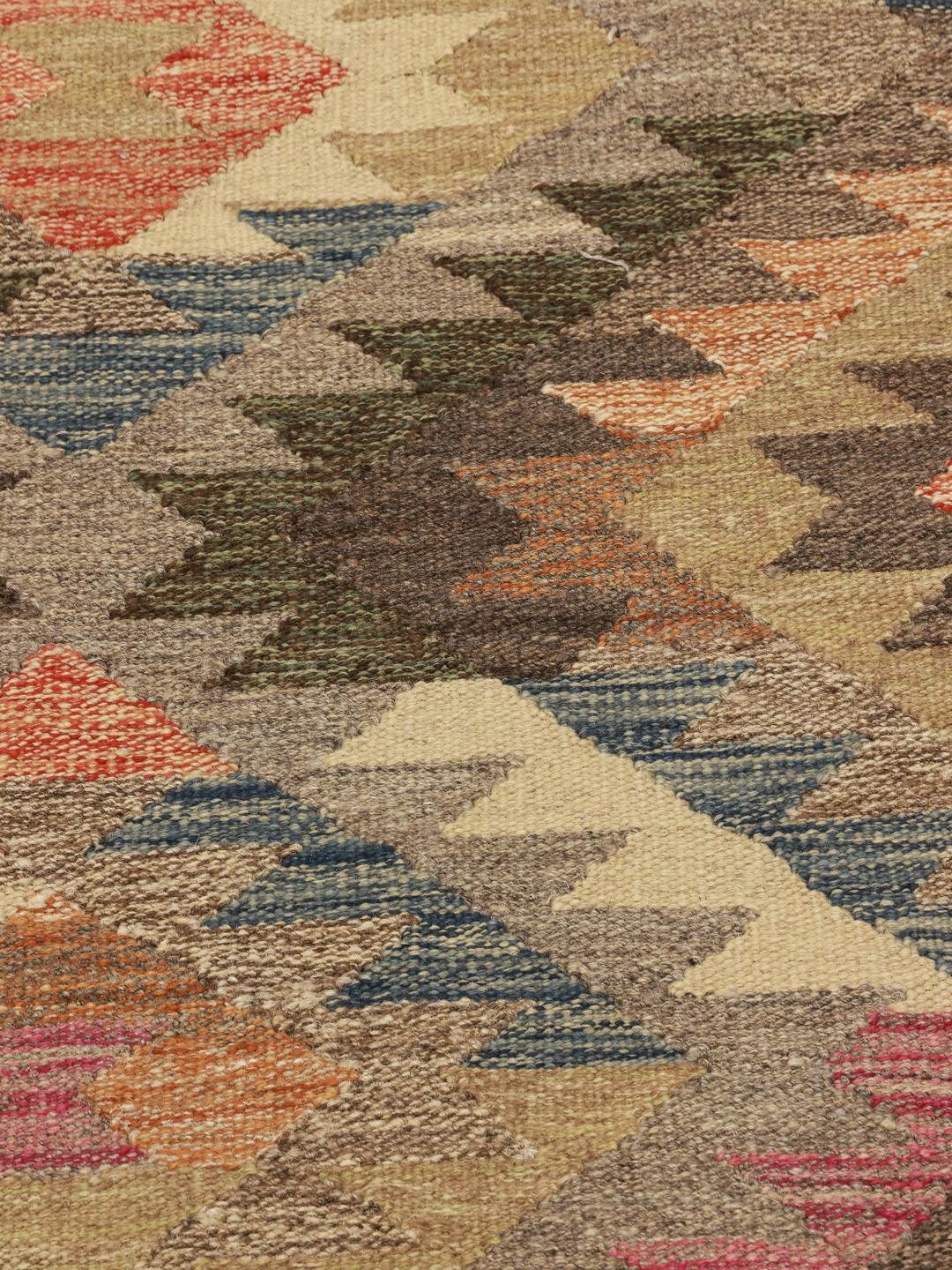
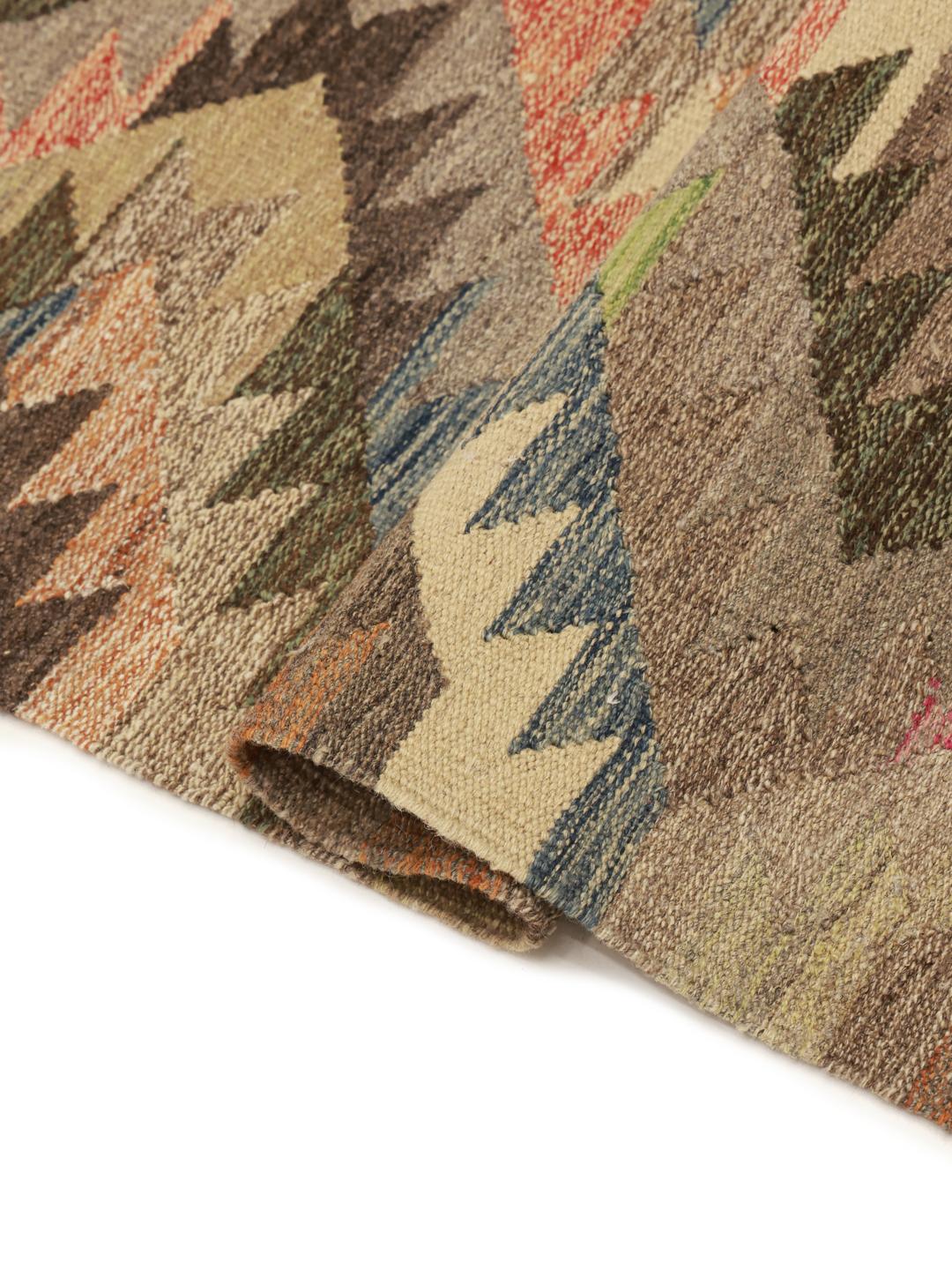
The term Kilim refers to a specific flatweave technique where the weft threads are tightly woven through the warp without creating a pile. This produces a lightweight, reversible textile with sharp, clean geometric lines, celebrated for its structural integrity and clean aesthetic.
The patterns on this runner, featuring repeating diamonds and stepped borders, are rich in cultural symbolism. Historically, these geometric motifs served as protective symbols or represented elements of the natural world, such as water sources or local flora, acting as a visual language unique to the weaver's community.
Today, contemporary Kelim Ariana rugs are highly valued by collectors and homeowners alike for their ability to bridge traditional tribal art with modern interior design. Owning this piece means preserving a slice of Central Asian weaving heritage that continues to evolve while keeping its authentic roots intact.