Kelims have a long and storied history rooted in the nomadic and village traditions of the Middle East and Central Asia.
Originally created by tribal weavers for practical domestic use as floor coverings, blankets, and storage sacks, these flatwoven textiles relied on portable upright looms that suited a mobile lifestyle.
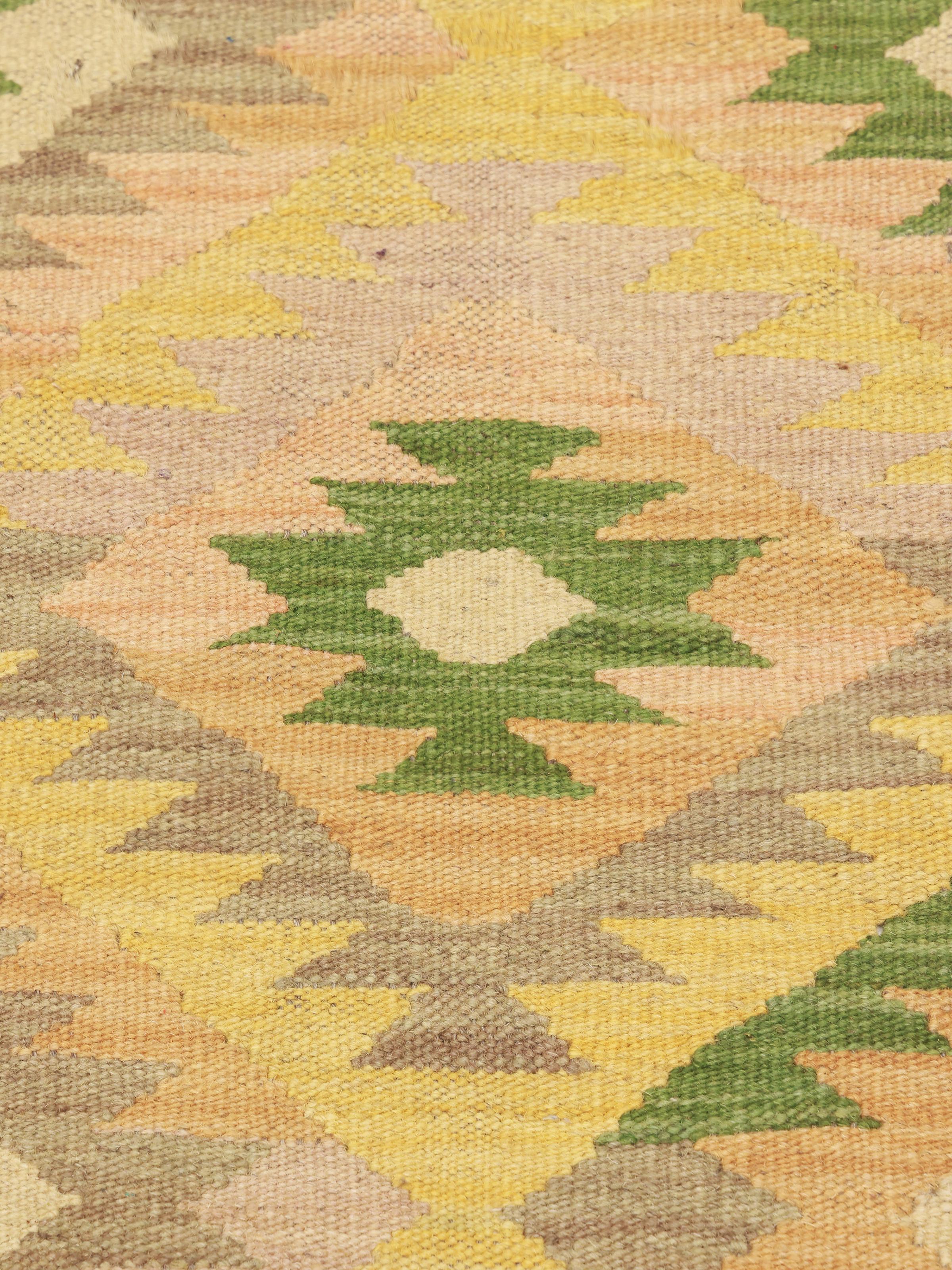
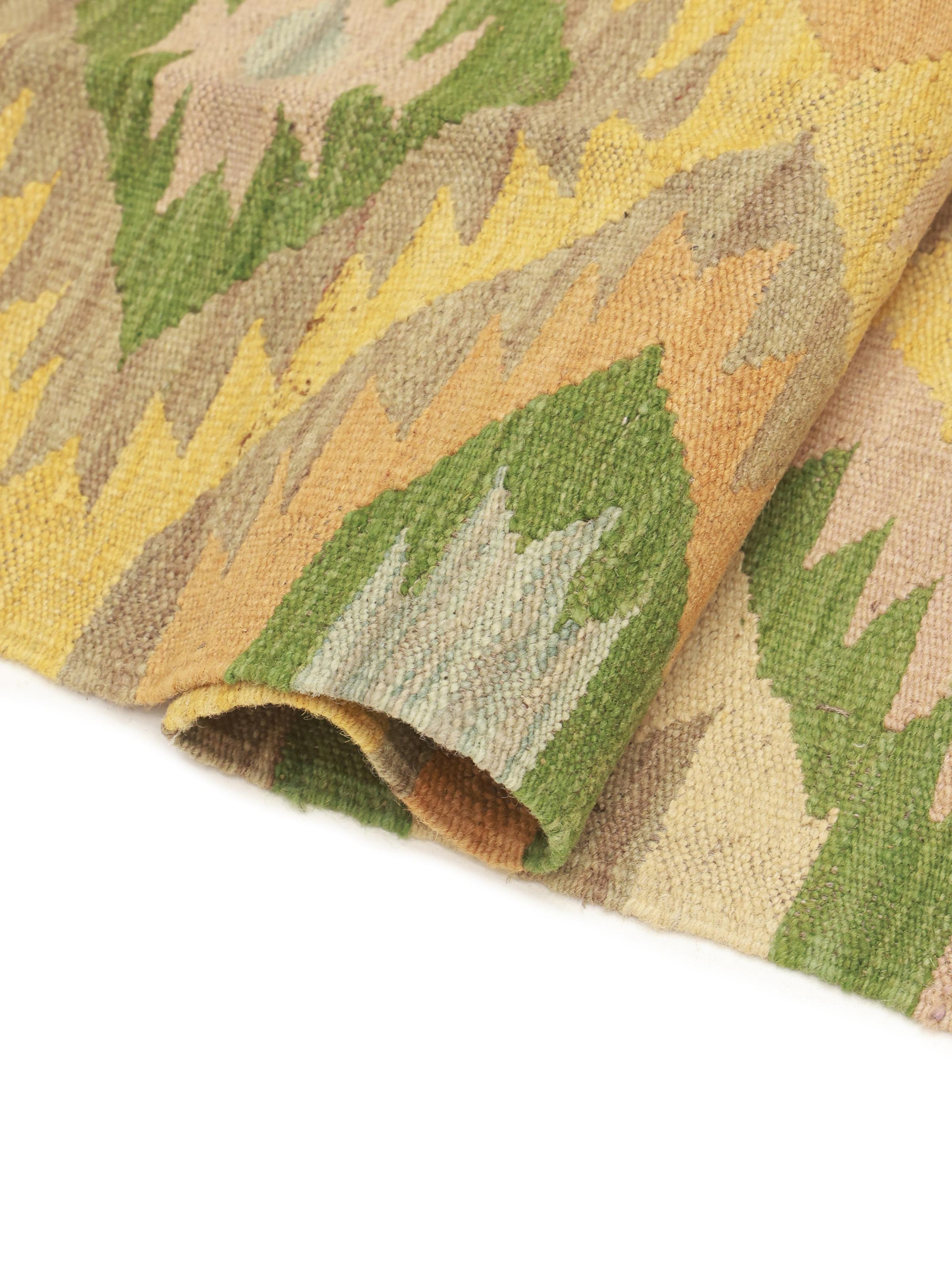
The term kelim refers to a flatweave construction where no pile is knotted into the foundation.
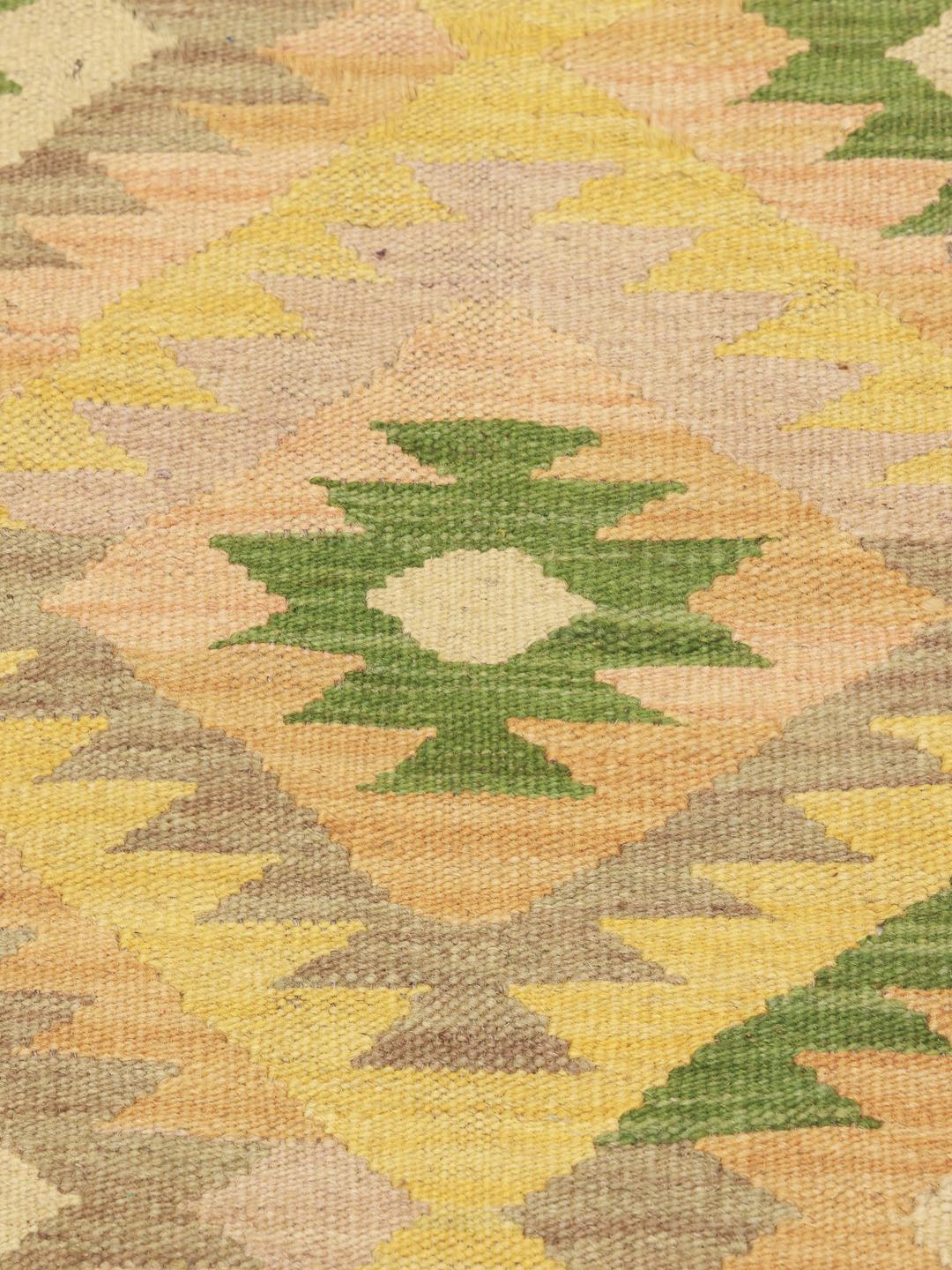
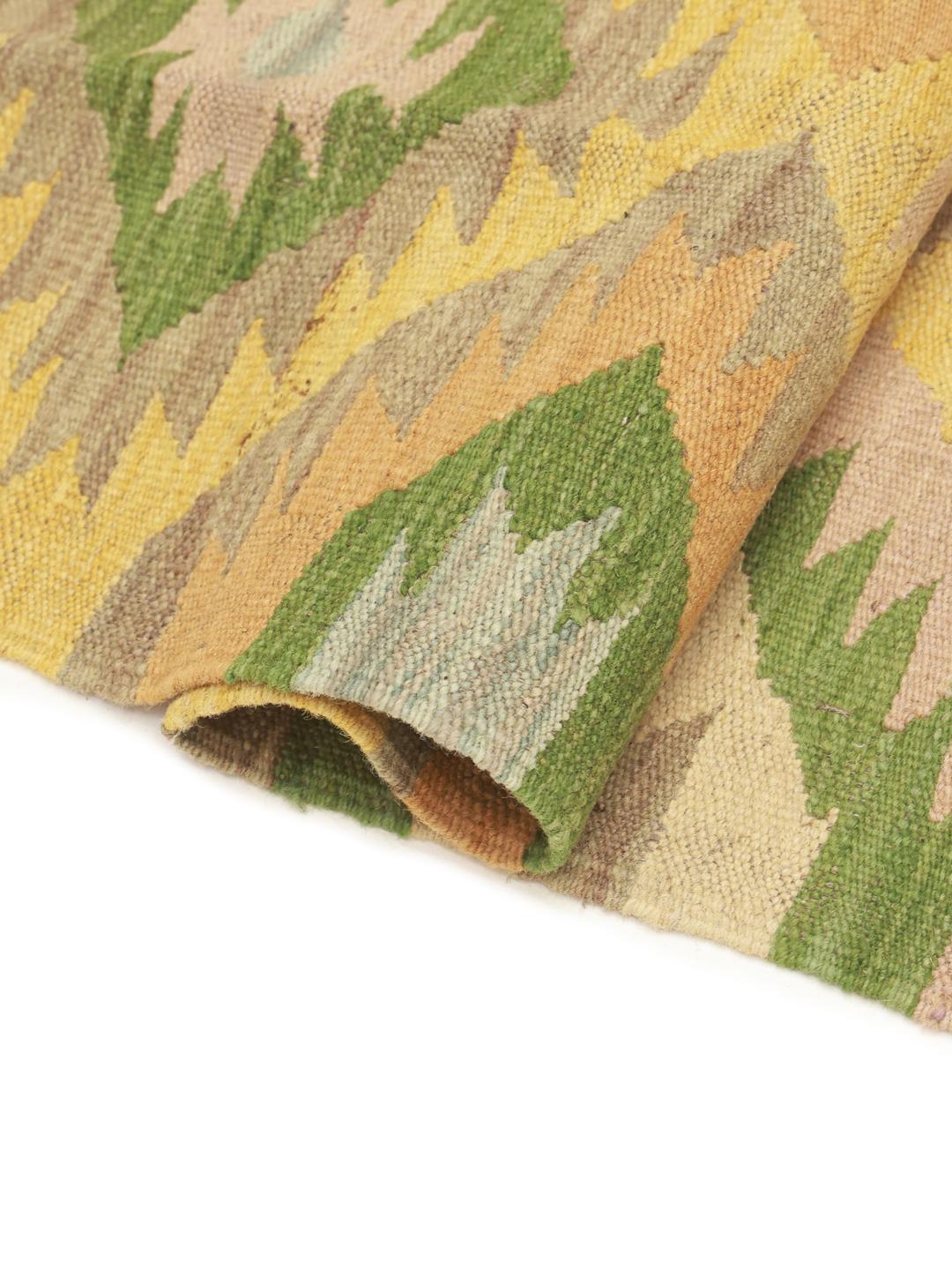
Instead, the coloured weft threads are tightly wrapped and interlocked across the warp threads, producing a lightweight yet remarkably sturdy textile that looks identical from both sides.
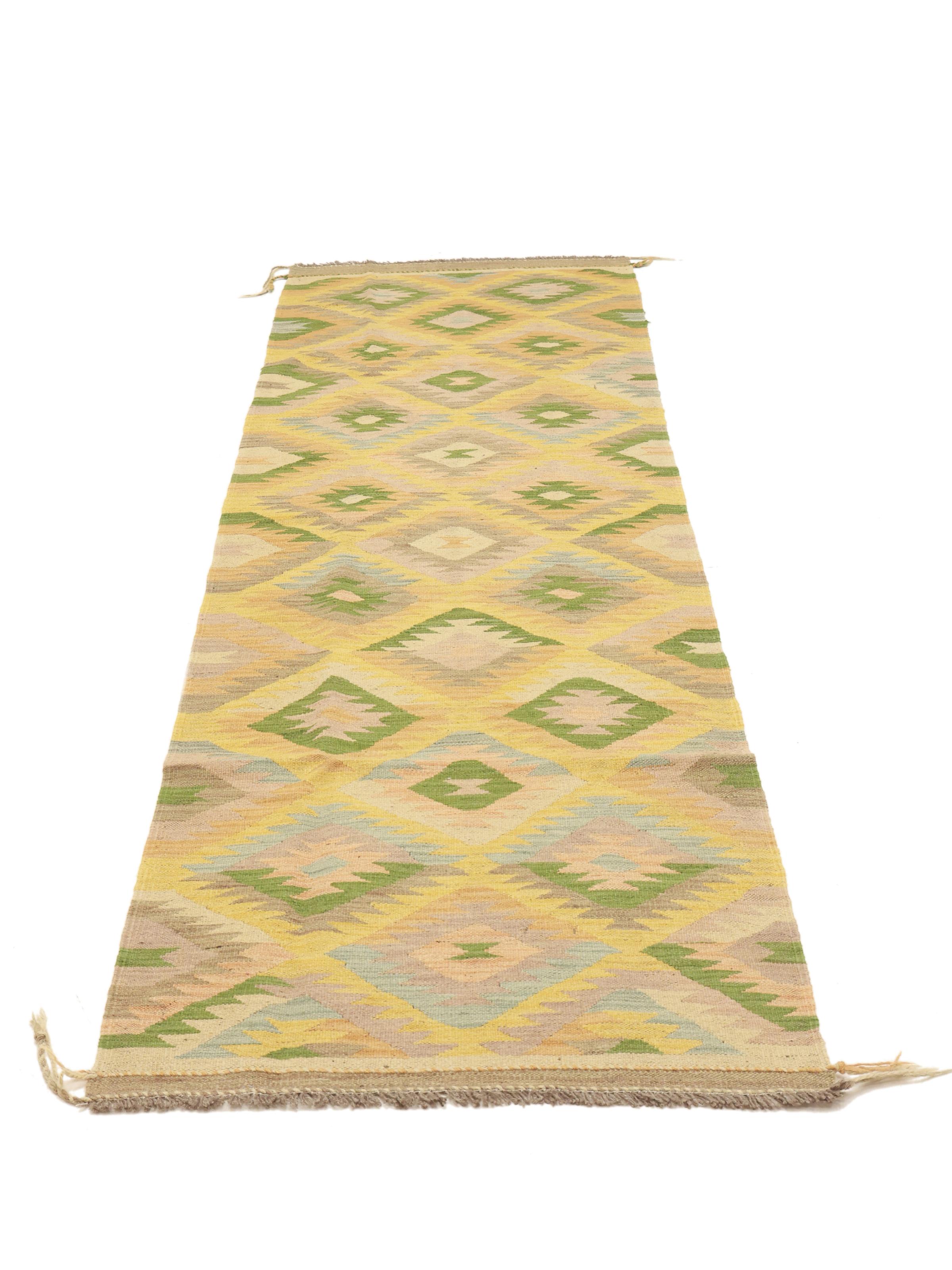
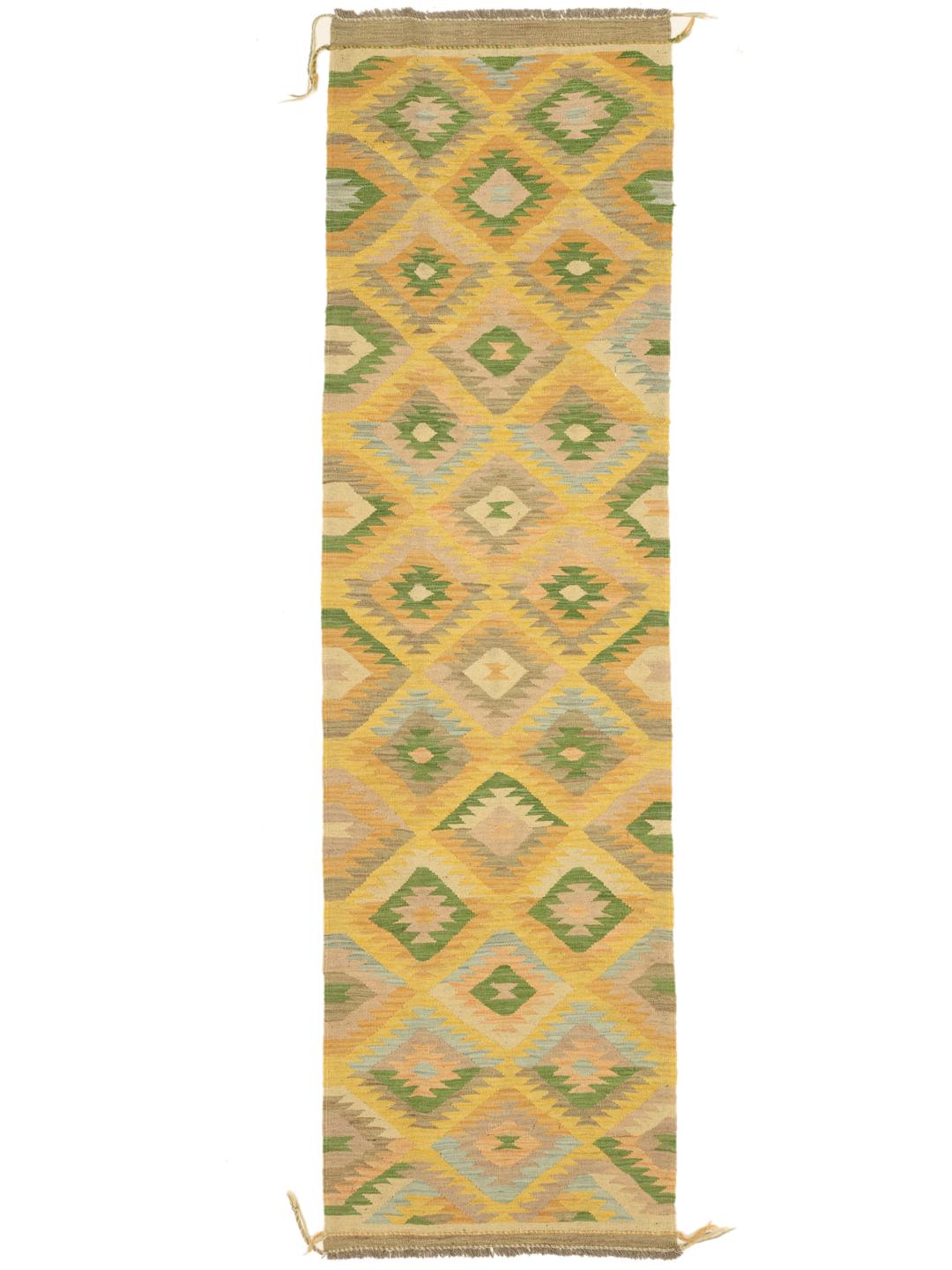
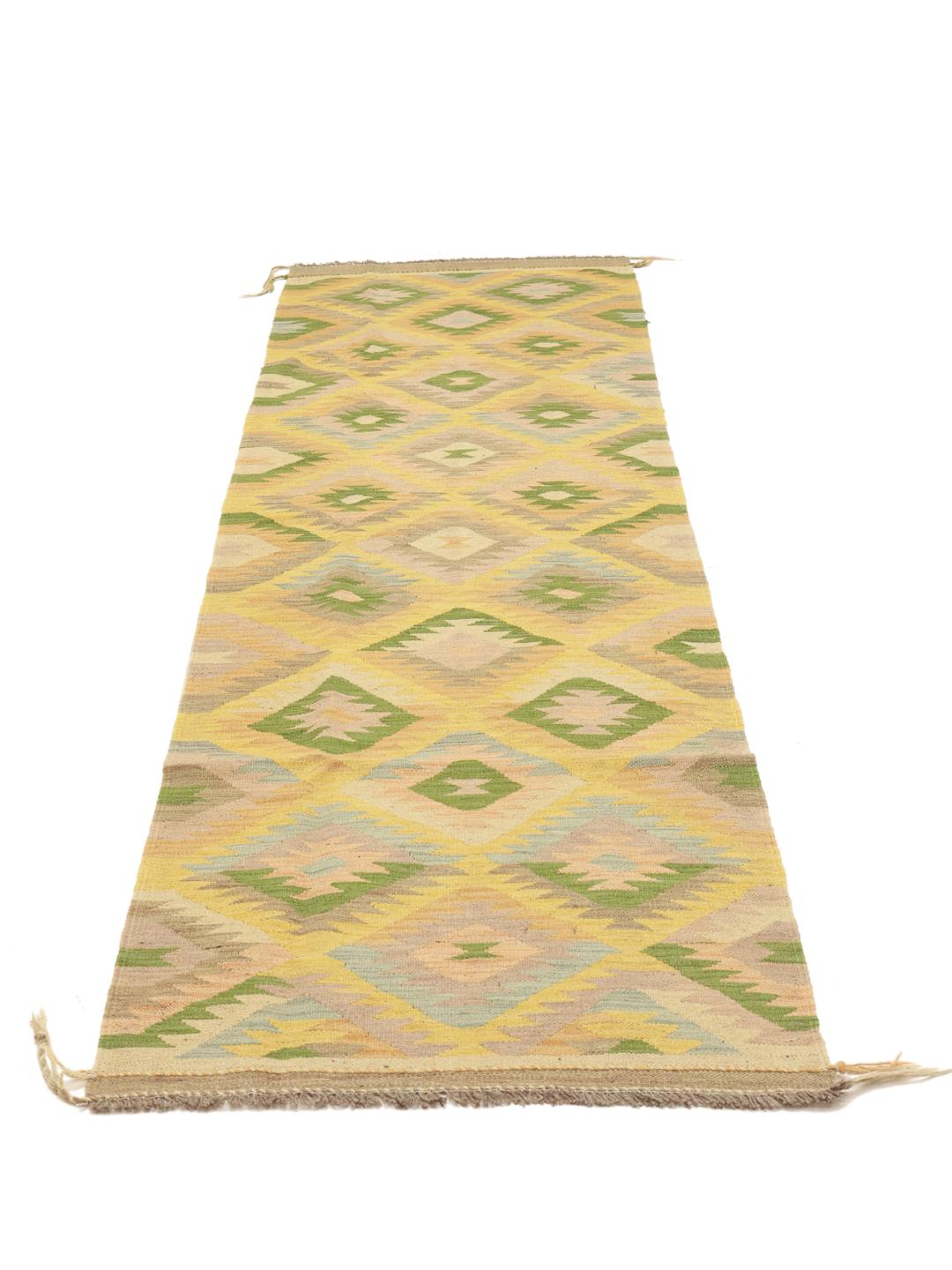
Kelims are traditionally defined by their geometric vocabulary, featuring sharp diamonds, triangles, and repeating medallions born from the limitations and precision of horizontal and vertical weaving.
This Afghan interpretation combines earthy tones of yellow and green with crisp tribal symbols, honouring ancient motifs while fitting naturally into modern interior spaces.
Collecting a kelim connects your home to generations of textile heritage and human artistry.
Each piece represents a living archive of regional culture, crafted through skills handed down within families and communities over centuries.