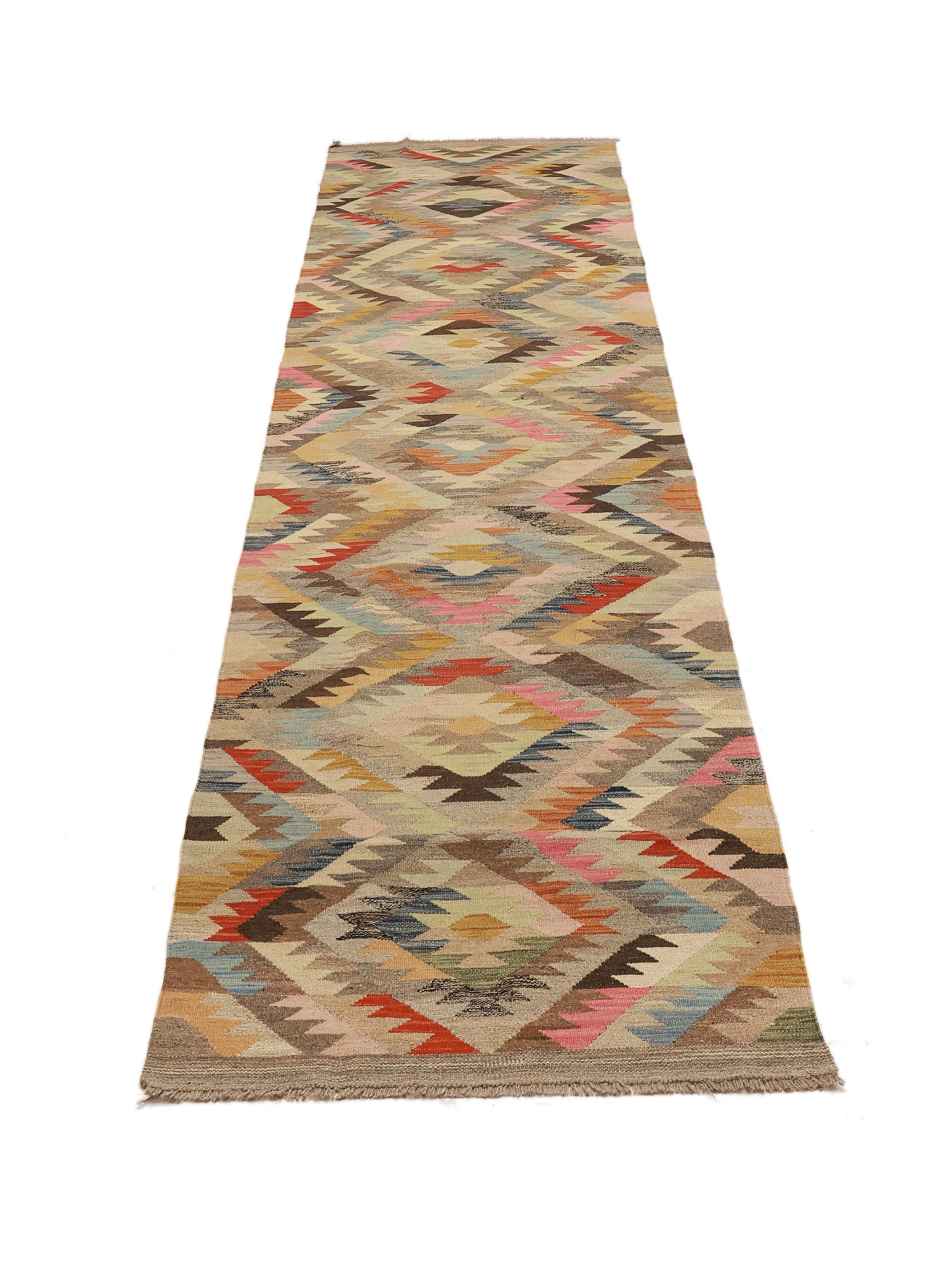
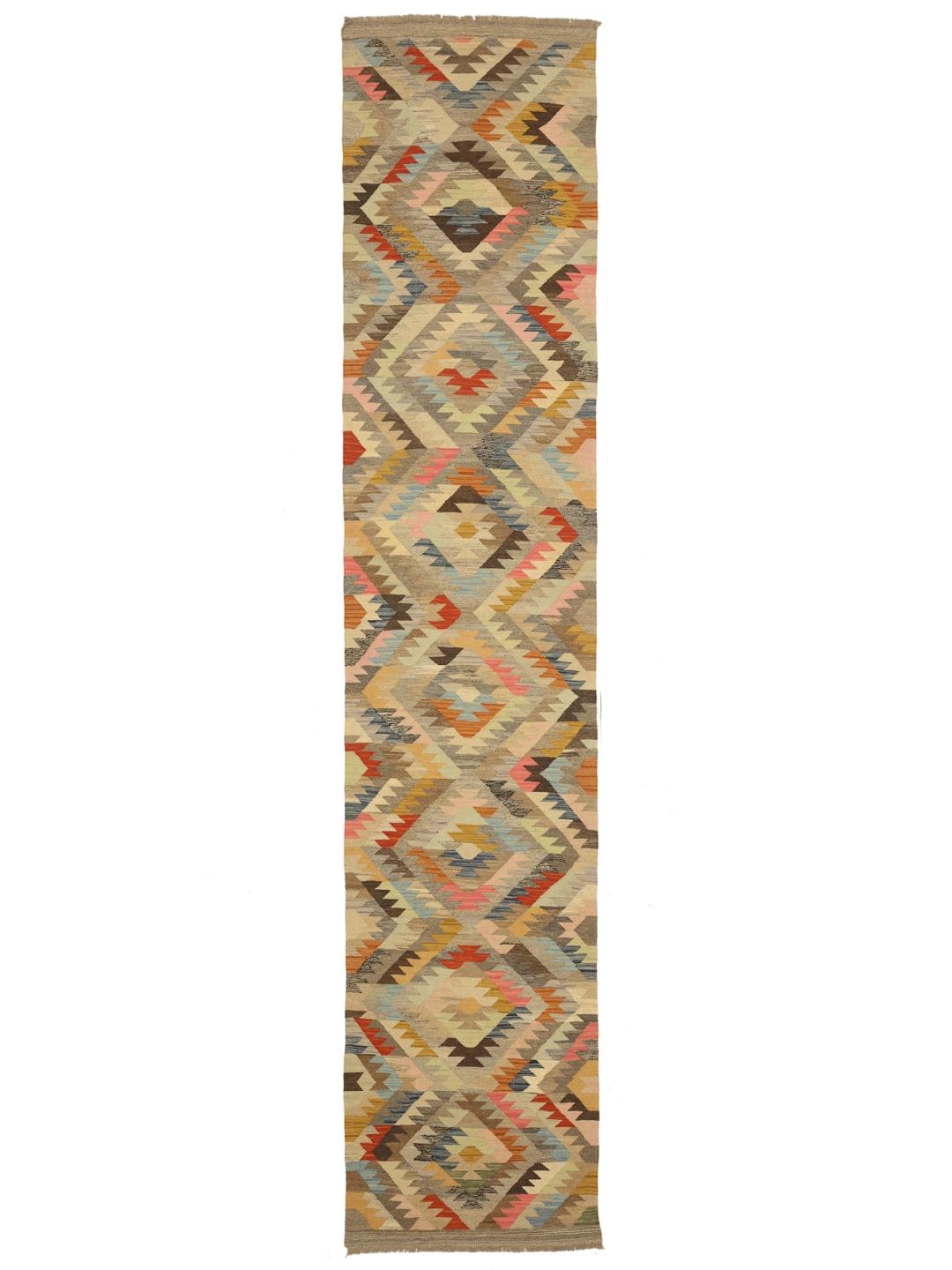
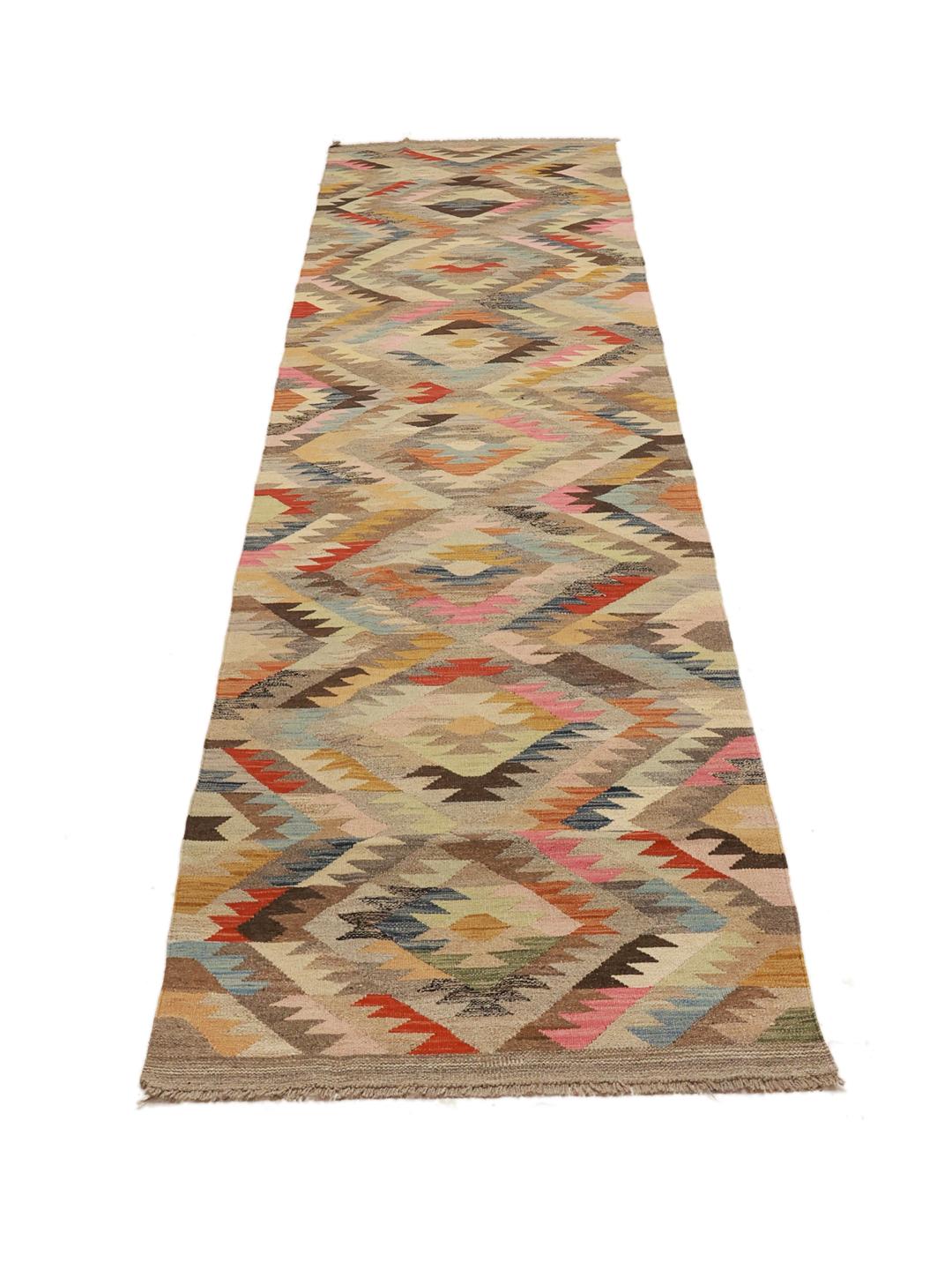
The Ariana kilim tradition is deeply rooted in the rugged landscapes of Afghanistan, where weaving has been an essential part of nomadic and village life for centuries. Historically, these flatwoven textiles were created not just as floor coverings, but as functional art for tents, decorative bags, and protective blankets. The designs reflect the heritage of the local weavers, who pass down their geometric repertoires through generations.
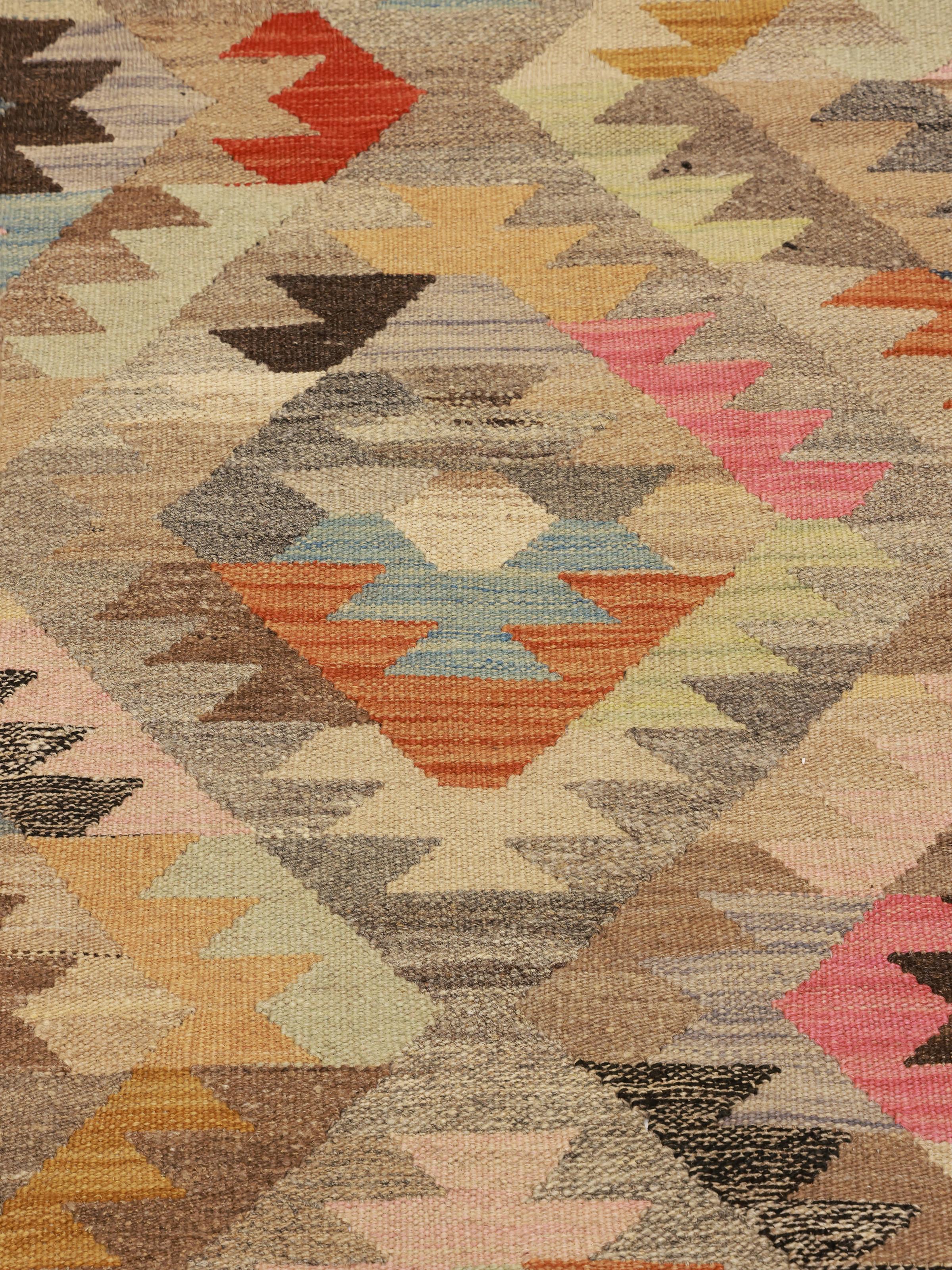
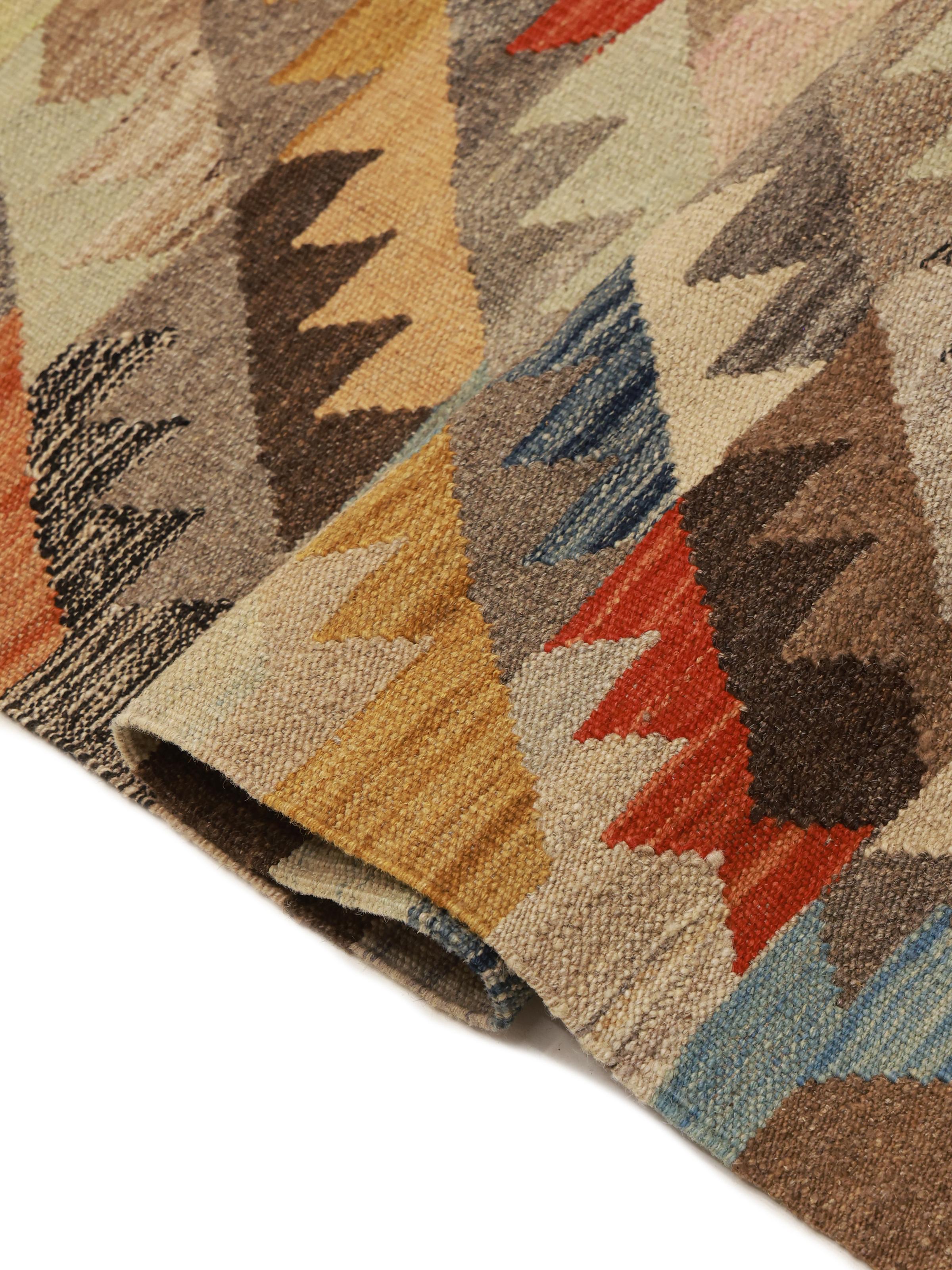
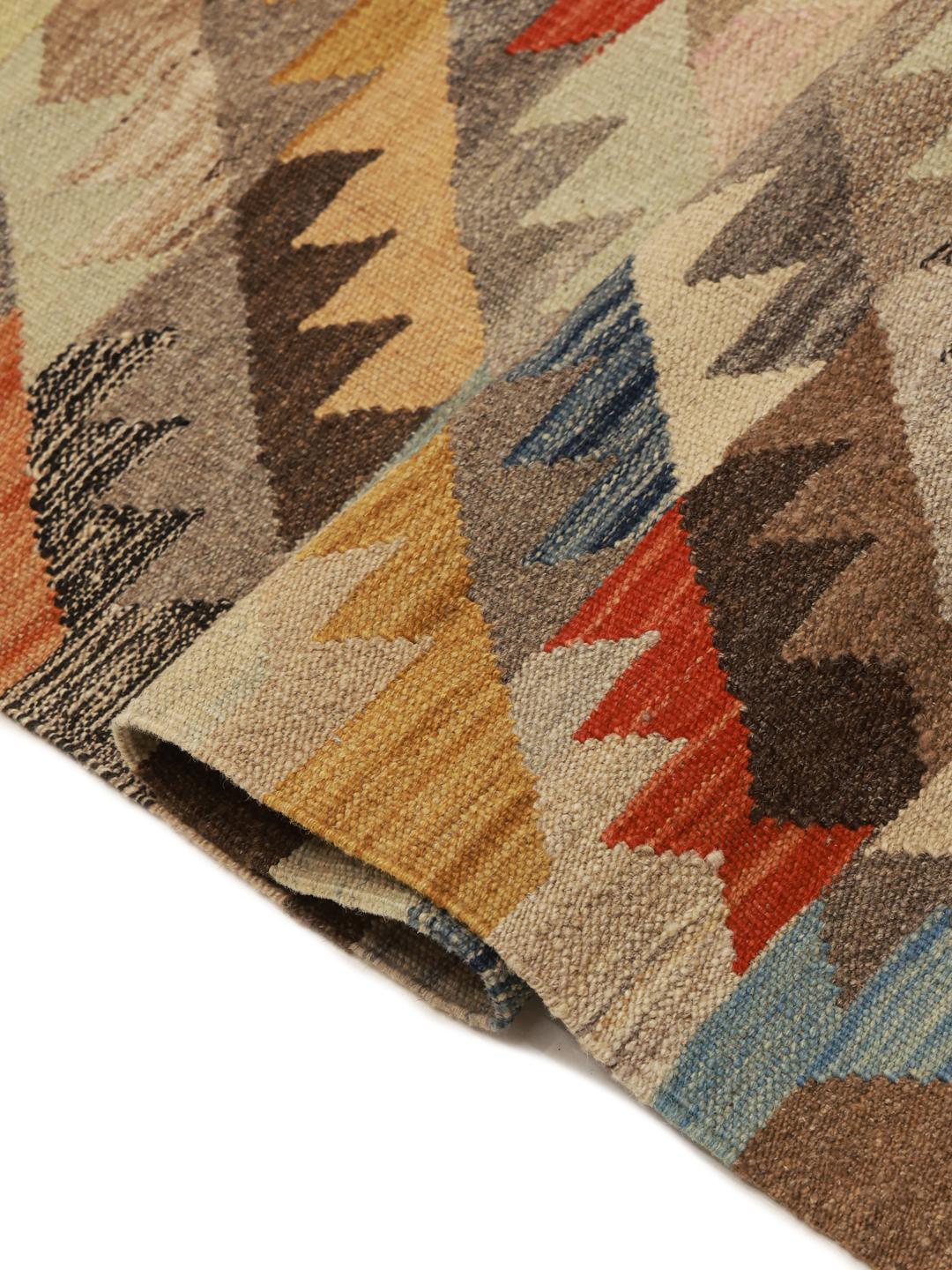
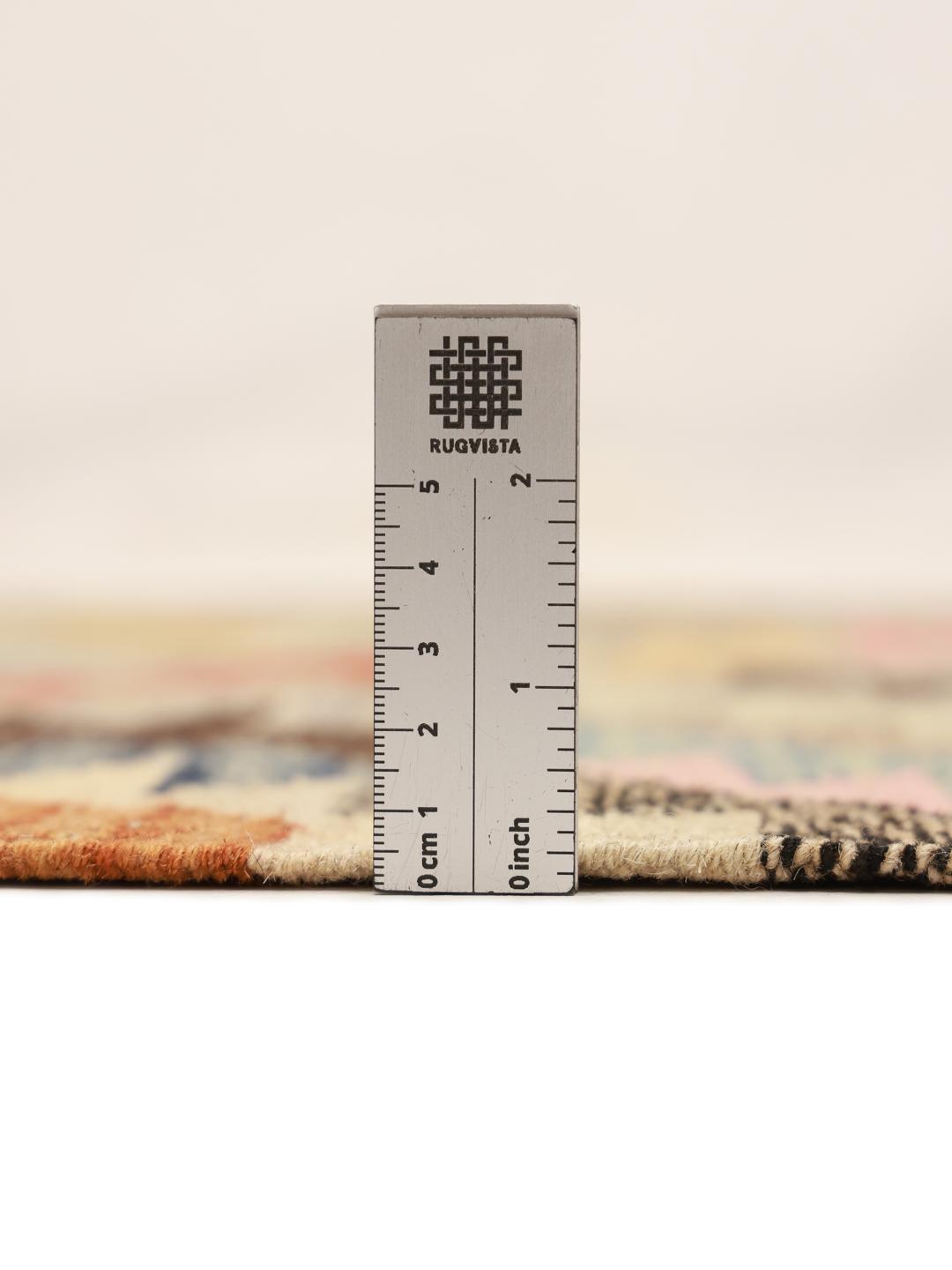
Unlike piled rugs, a kilim is created using a flatweaving technique where the wool yarns are tightly interwoven to form a smooth, pileless surface. This traditional method produces a lightweight, reversible textile with a clean, low-profile finish. For the home, this means a highly versatile rug that sits flat against the floor, reducing trip hazards in busy hallways while remaining easy to move and maintain.
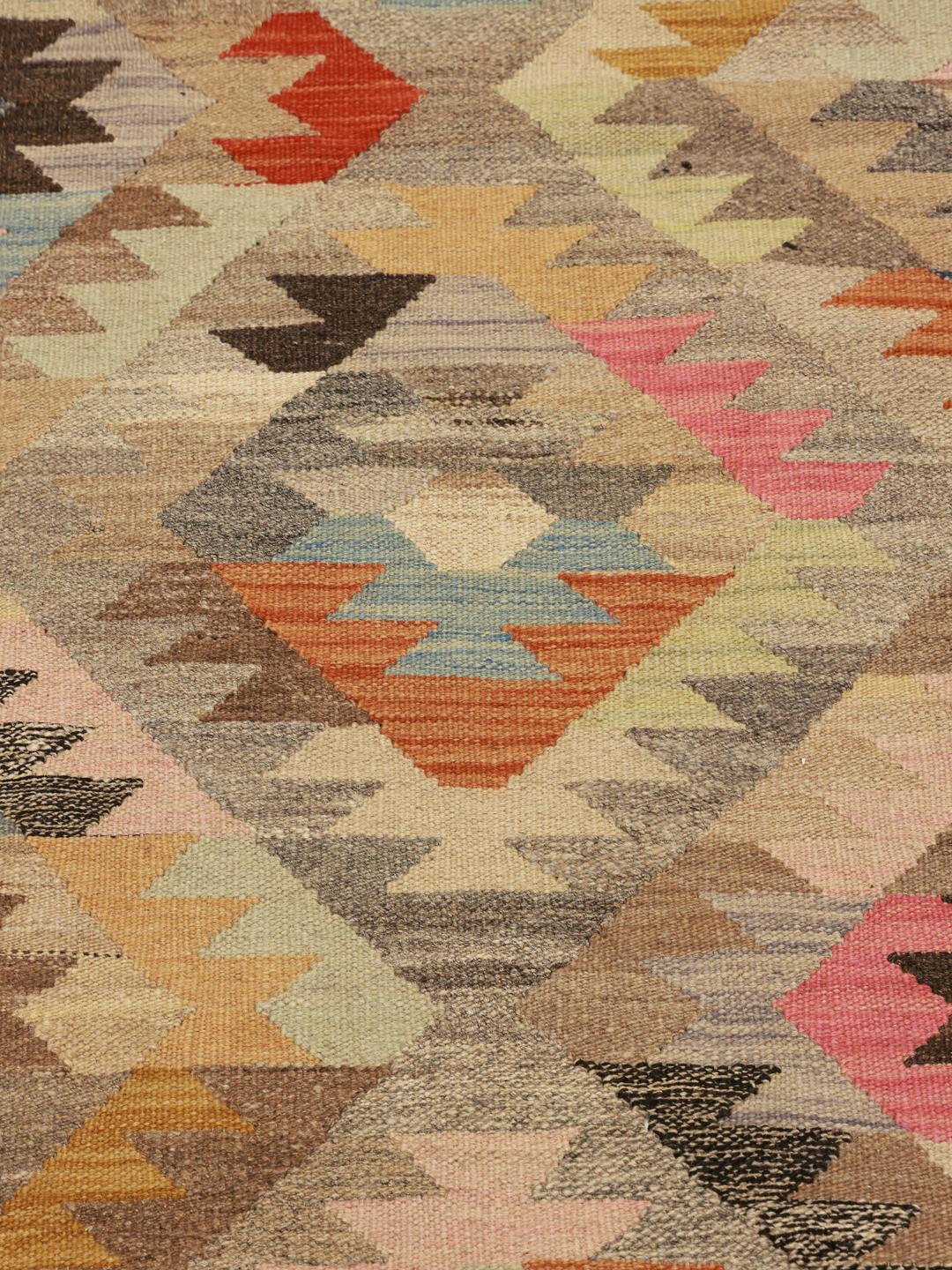
The visual language of the Kelim Ariana is characterised by its striking geometric patterns, most notably the repeating diamond medallions and stepped borders seen here. These motifs often carry symbolic meanings related to protection, family, and nature. The harmonious blend of warm earth tones and soft accent colours is achieved through traditional dyeing methods, which create subtle, beautiful variations in shade throughout the design.
Owning an Afghan kilim is an appreciation of a living craft tradition that has survived through immense historical changes. These rugs are highly valued by collectors and homeowners alike for their authentic character, durability, and the human story woven into every line. They bring a sense of history and global heritage into contemporary interiors, serving as a beautiful connection to ancient nomadic craft.