Kilim weaving is one of the oldest textile traditions in Central and South Asia, rooted in nomadic communities who created flatwoven covers, bags, and floor coverings for daily life. While traditional kilims were made purely for practical home use, modern Afghan weavers continue to evolve the art by adapting regional methods to expressive contemporary aesthetics.
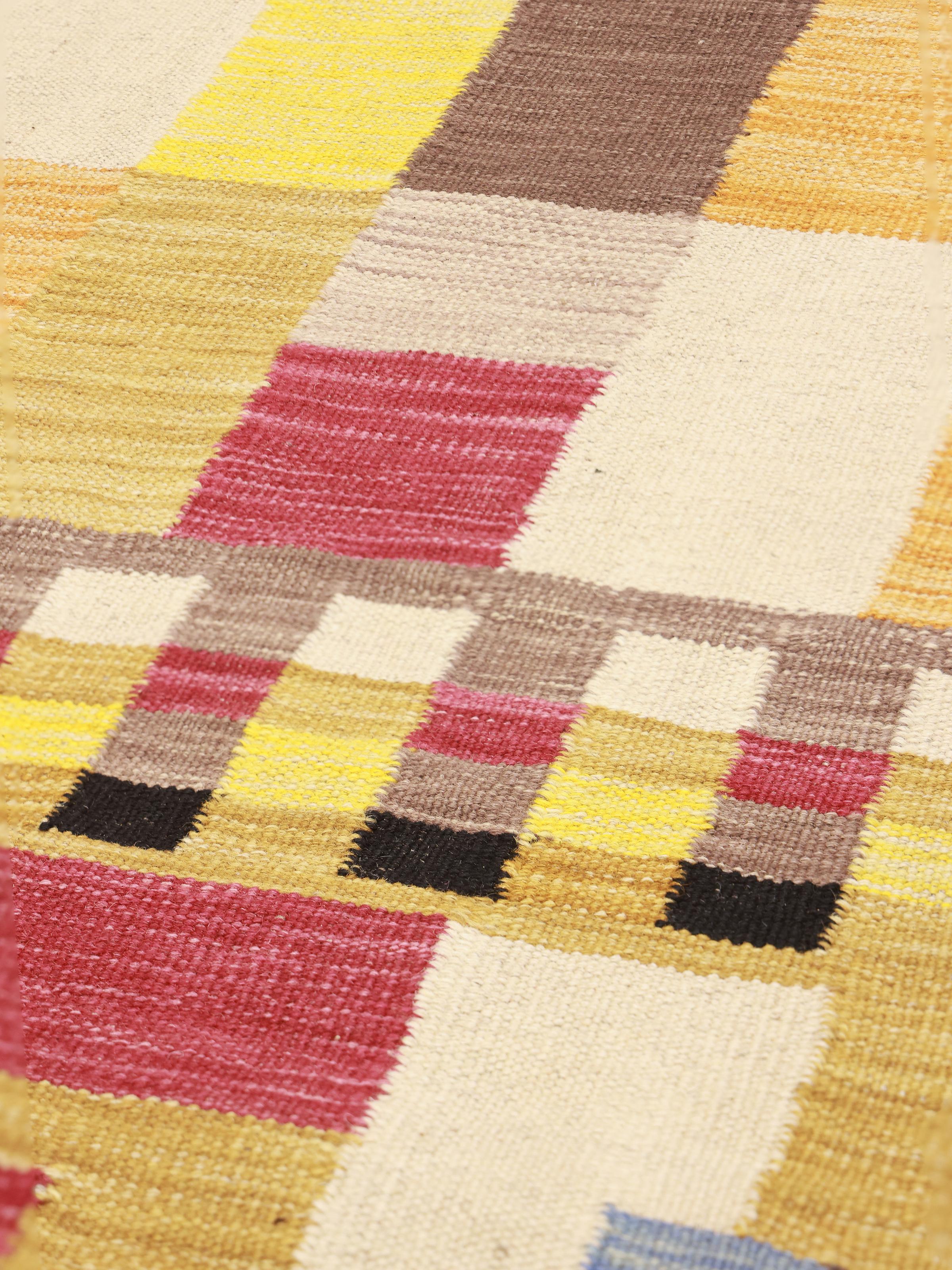
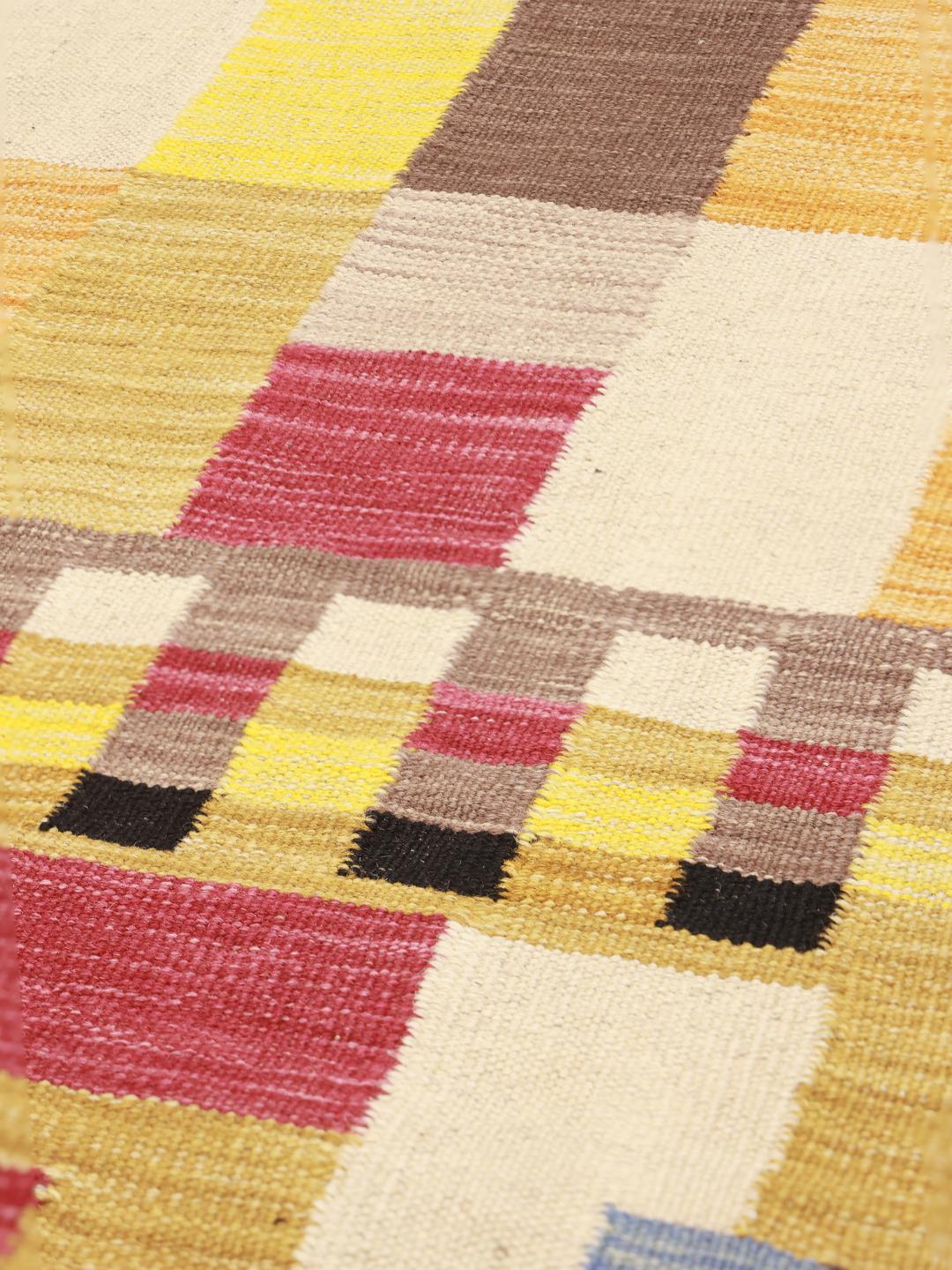
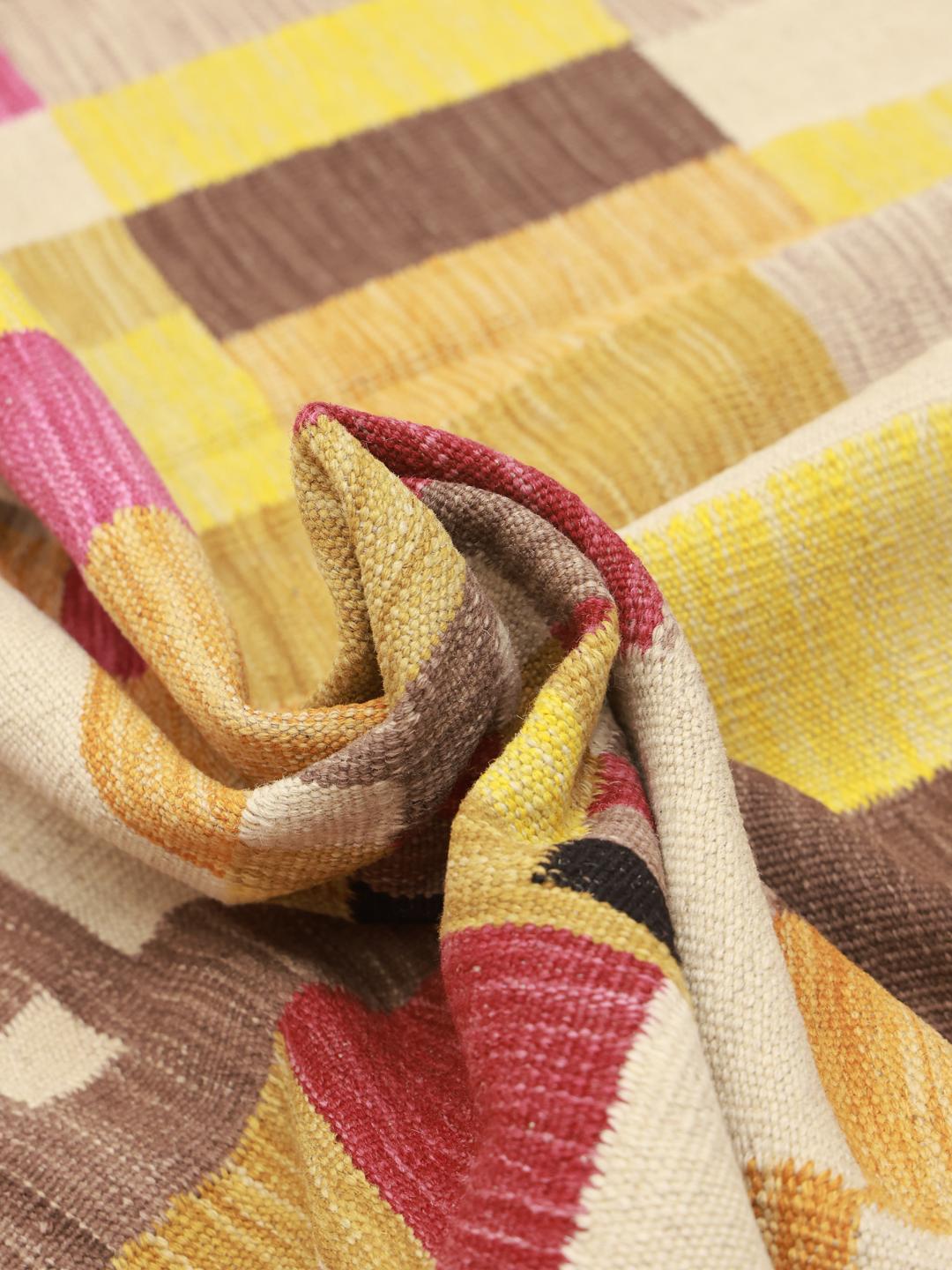
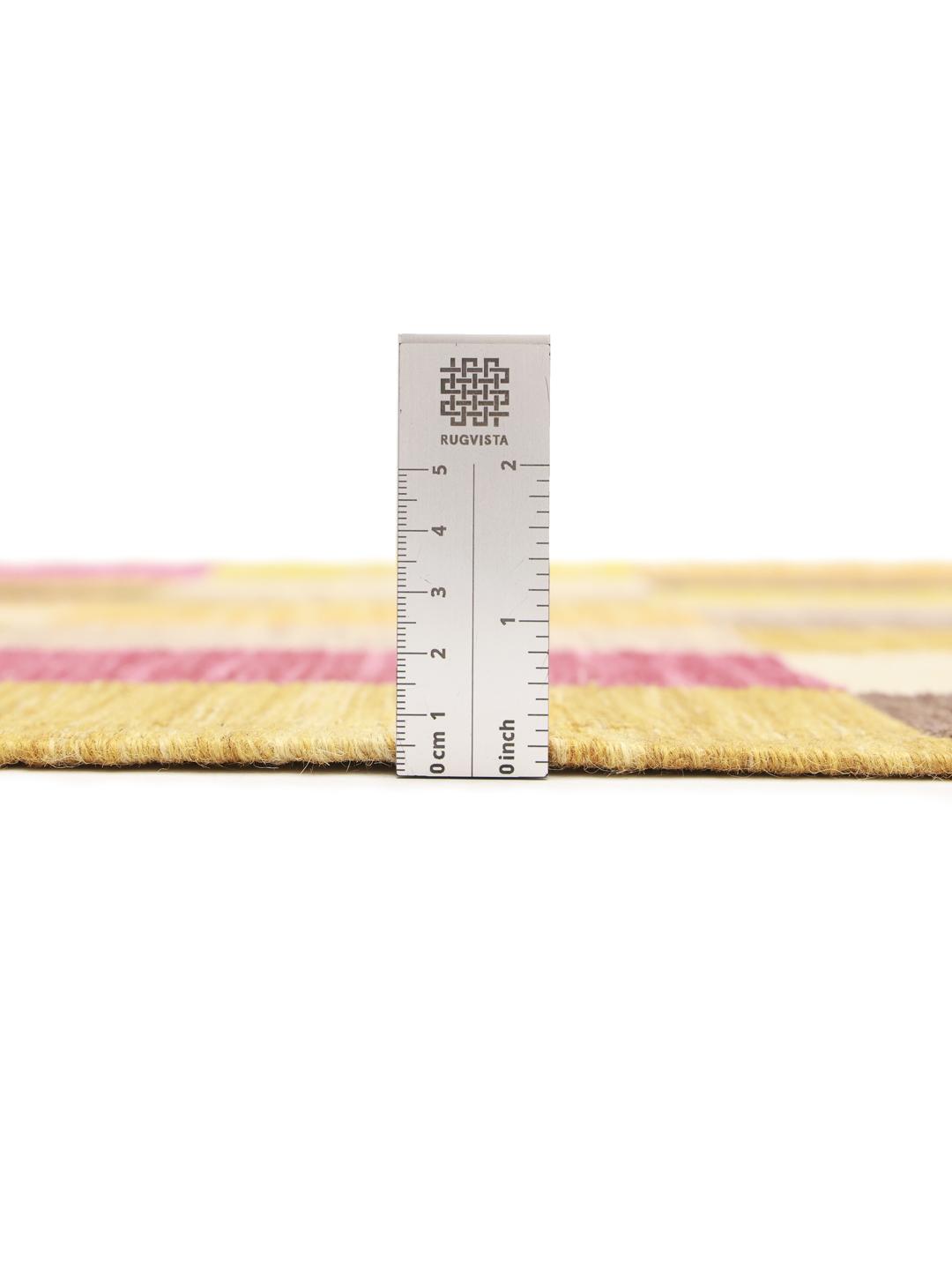
Flatweaving relies on a tapestry weave where the weft threads are tightly packed to completely cover the warp threads. Unlike pile rugs created with individual knots, a flatweave gets its strength from the taut interlocking of wool fibers, resulting in a flexible, light, and hard-wearing textile.
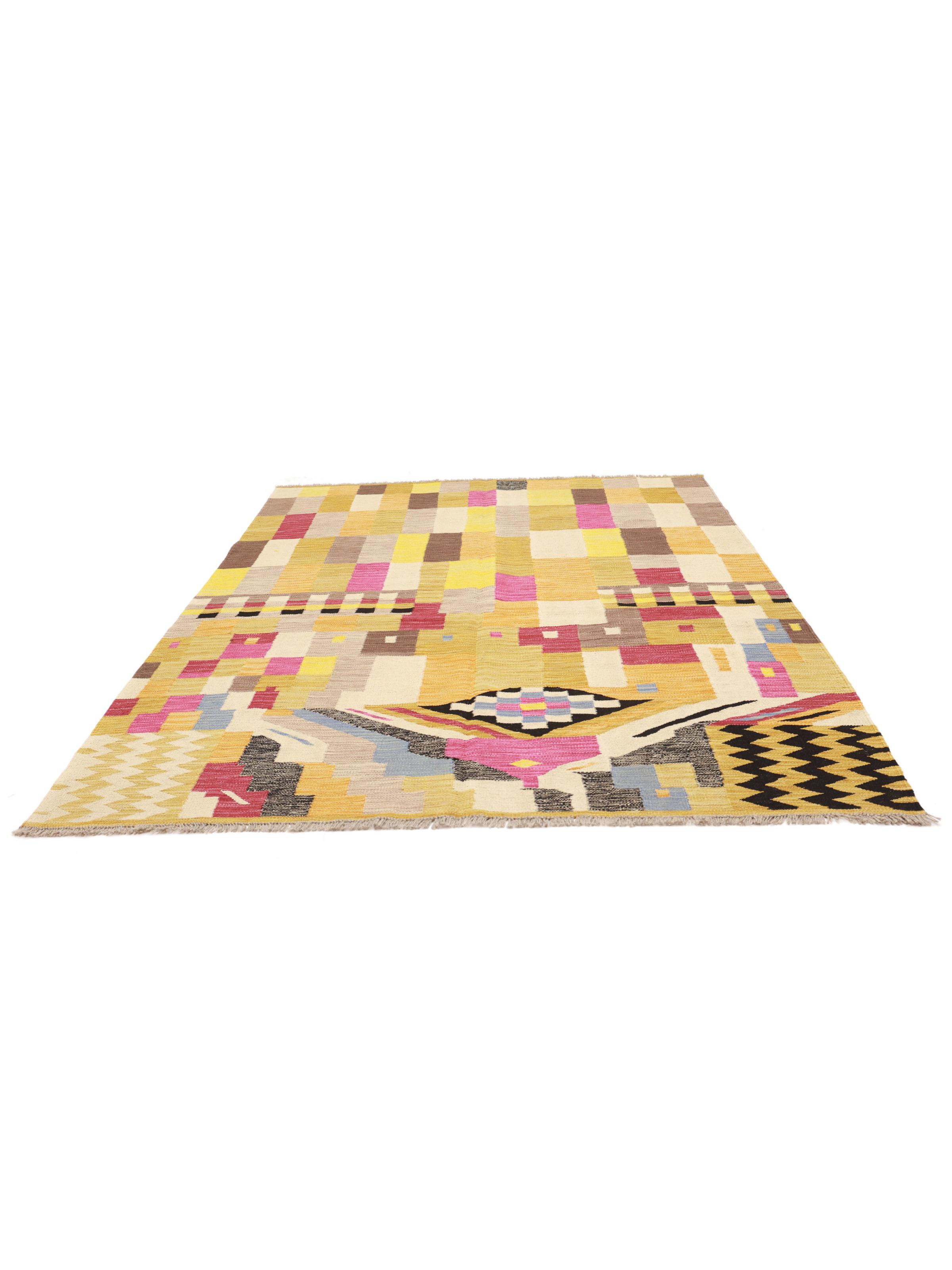
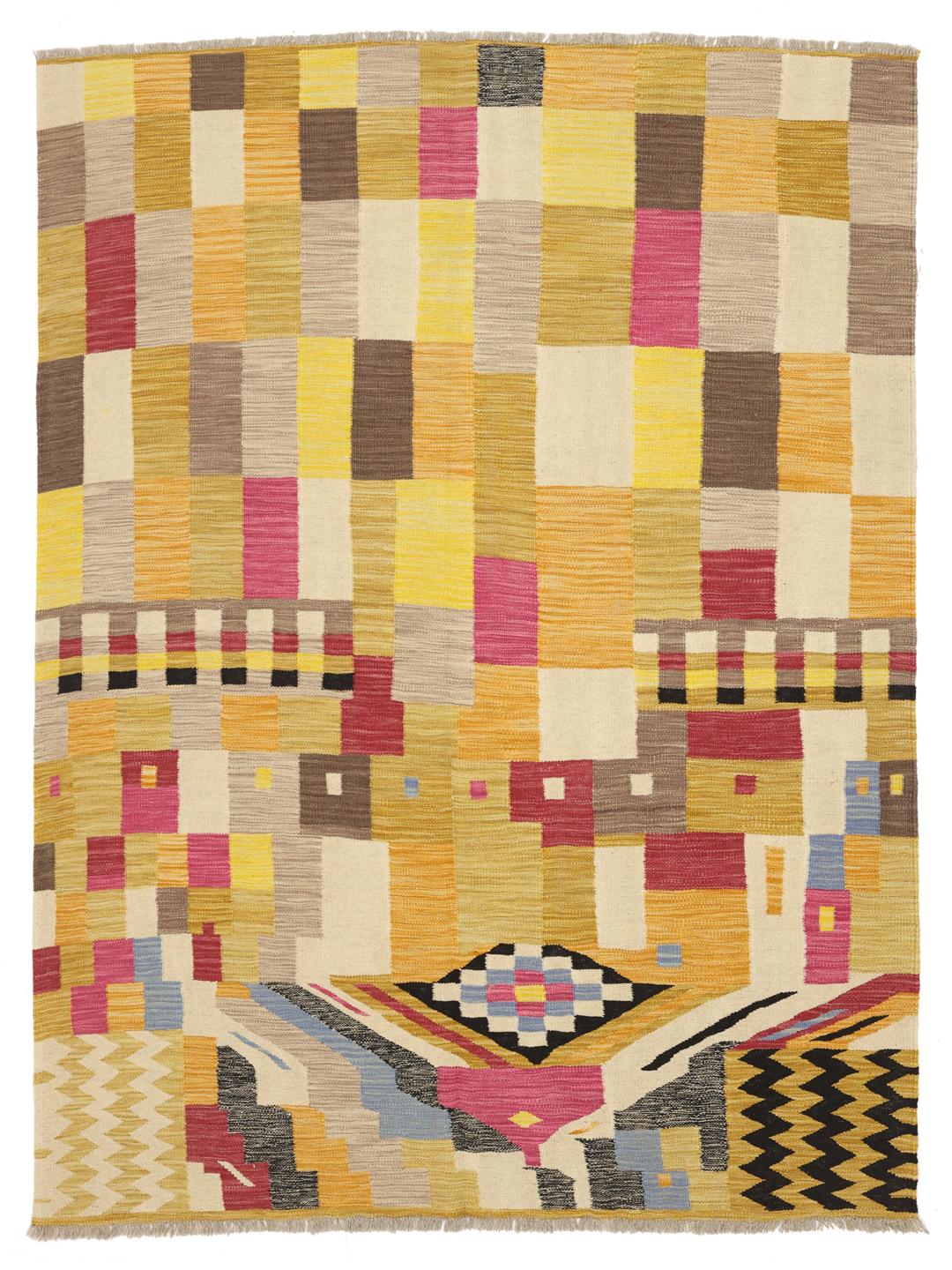
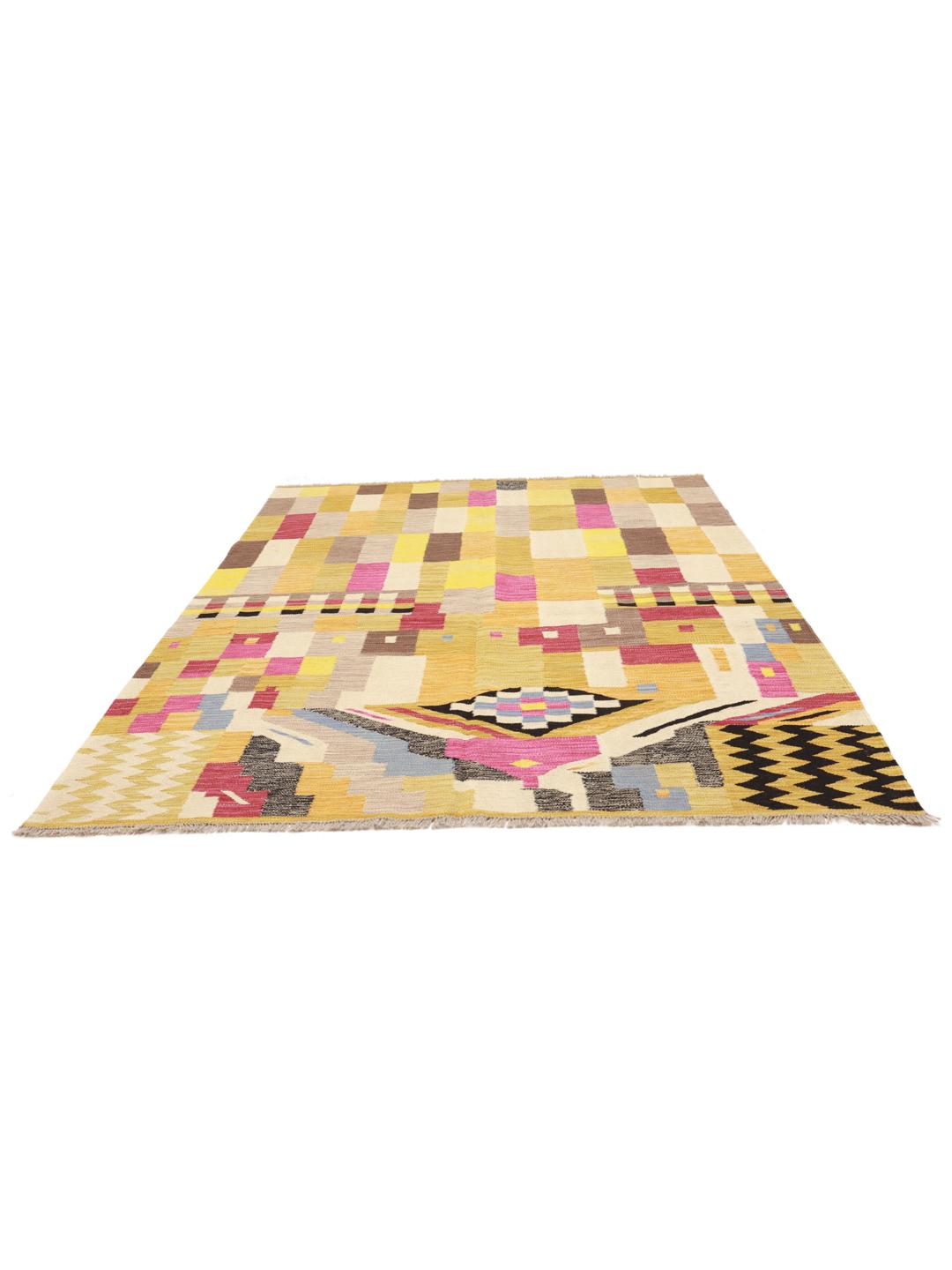
This piece combines the graphic language of Berber-inspired design with traditional Afghan flatweaving. The pattern features structured geometric blocks, vertical stripes, and abstract motifs in contrasting shades of beige, brown, pink, and black, framed by natural fringes on both ends.
Flatwoven rugs from Afghanistan are valued by collectors and interior enthusiasts alike for their cultural durability and authentic craftsmanship. Acquiring a unique flatweave adds a narrative layer to a home, celebrating centuries of regional weaving knowledge.