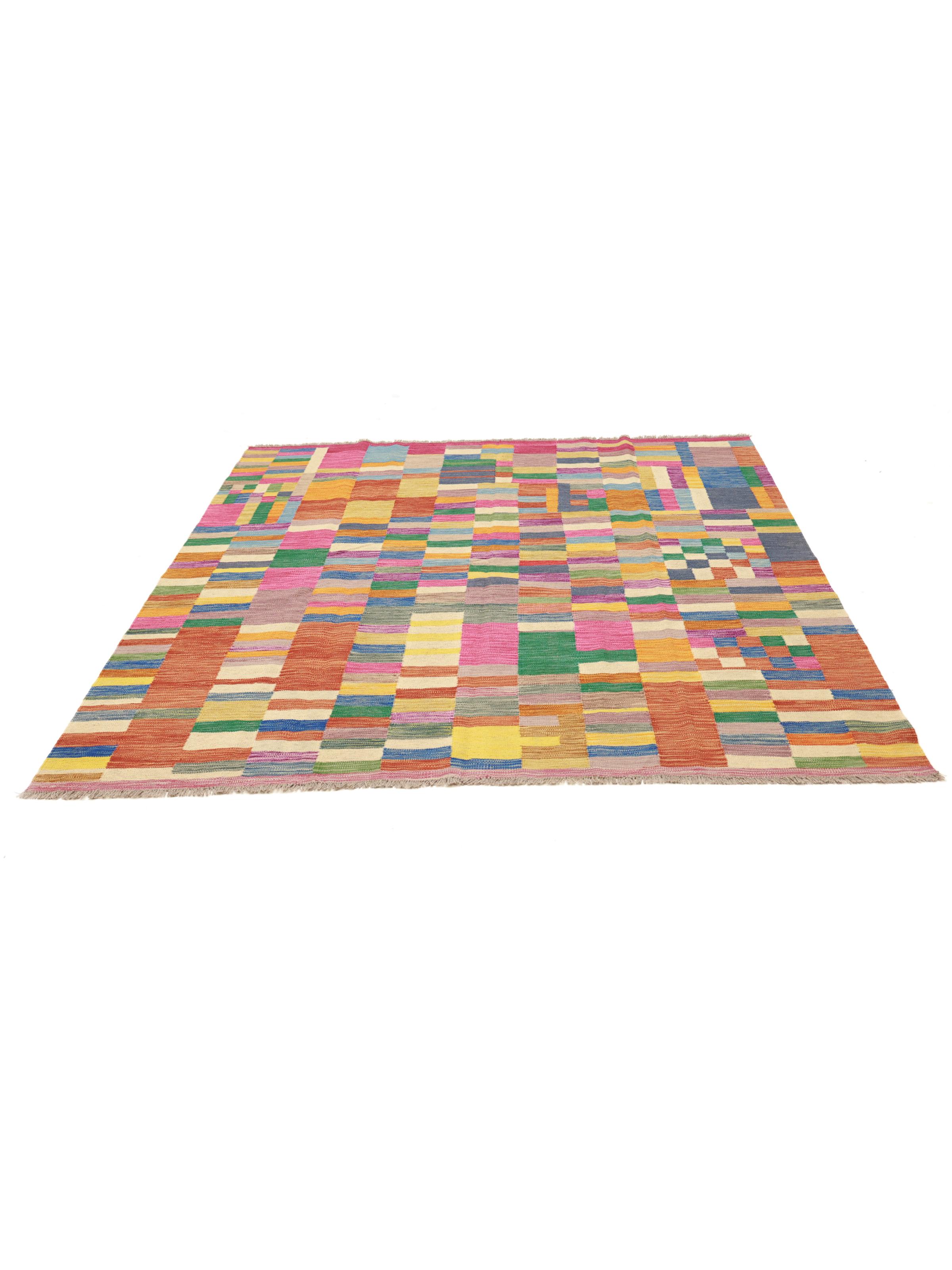
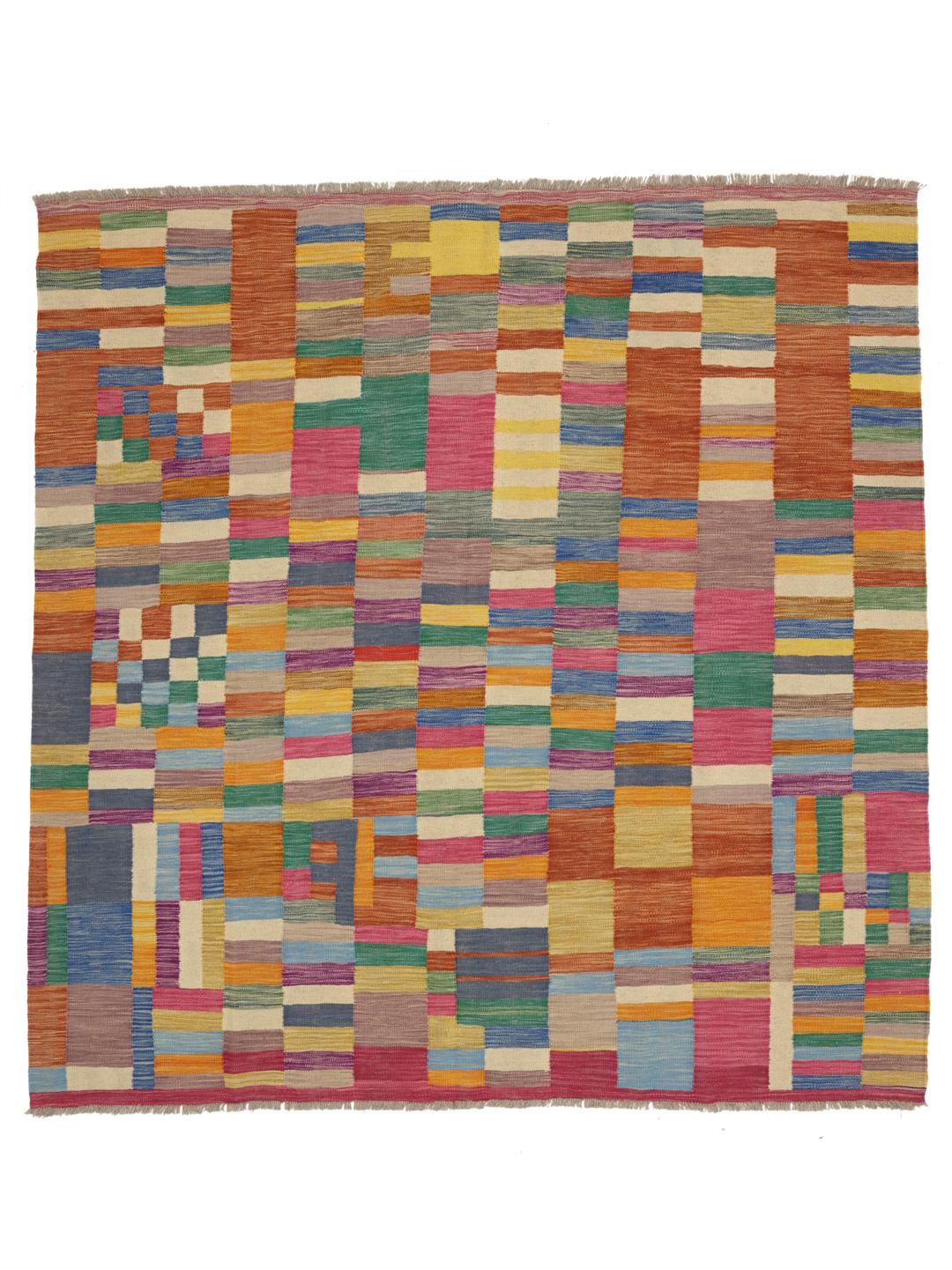
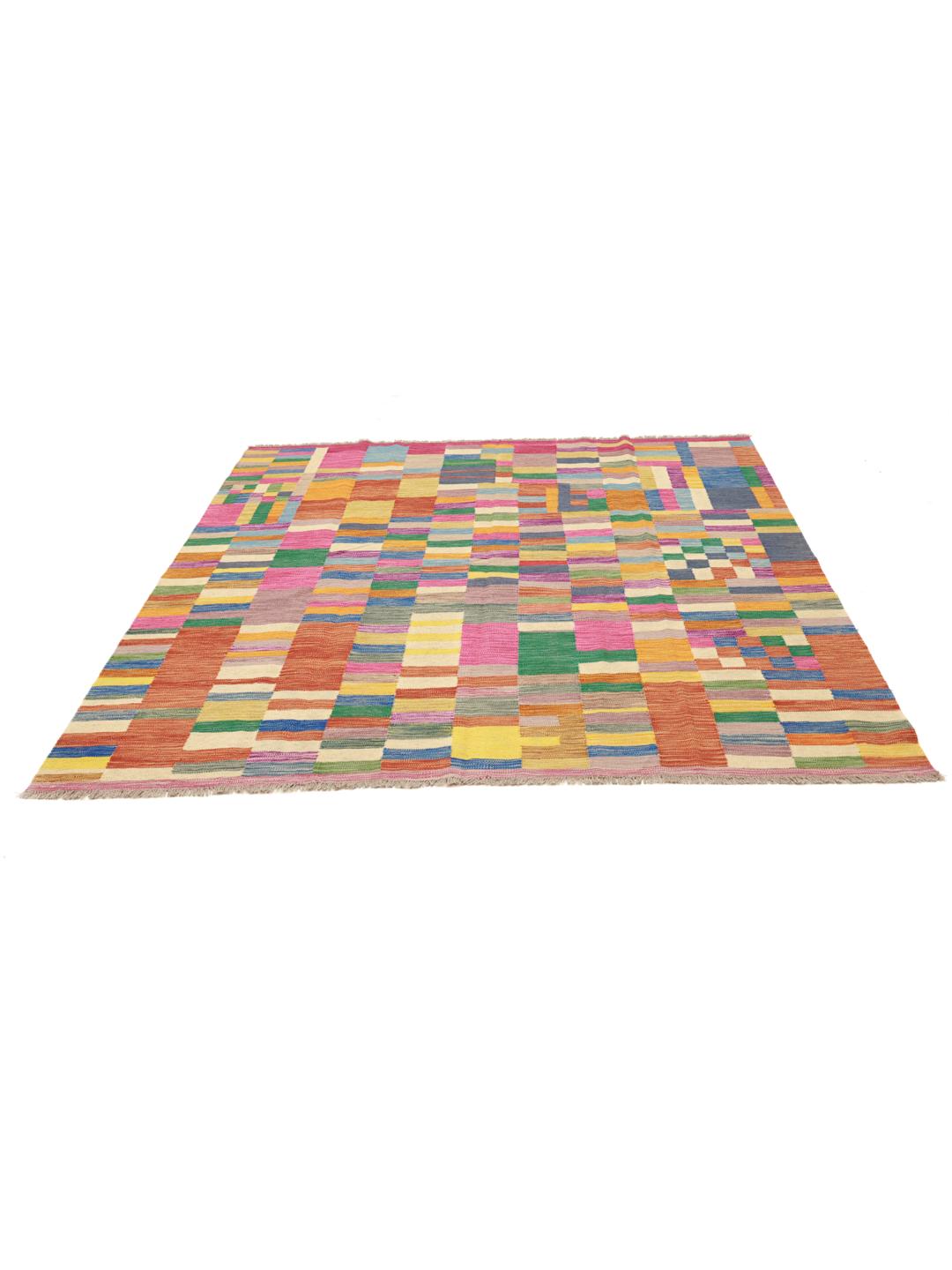
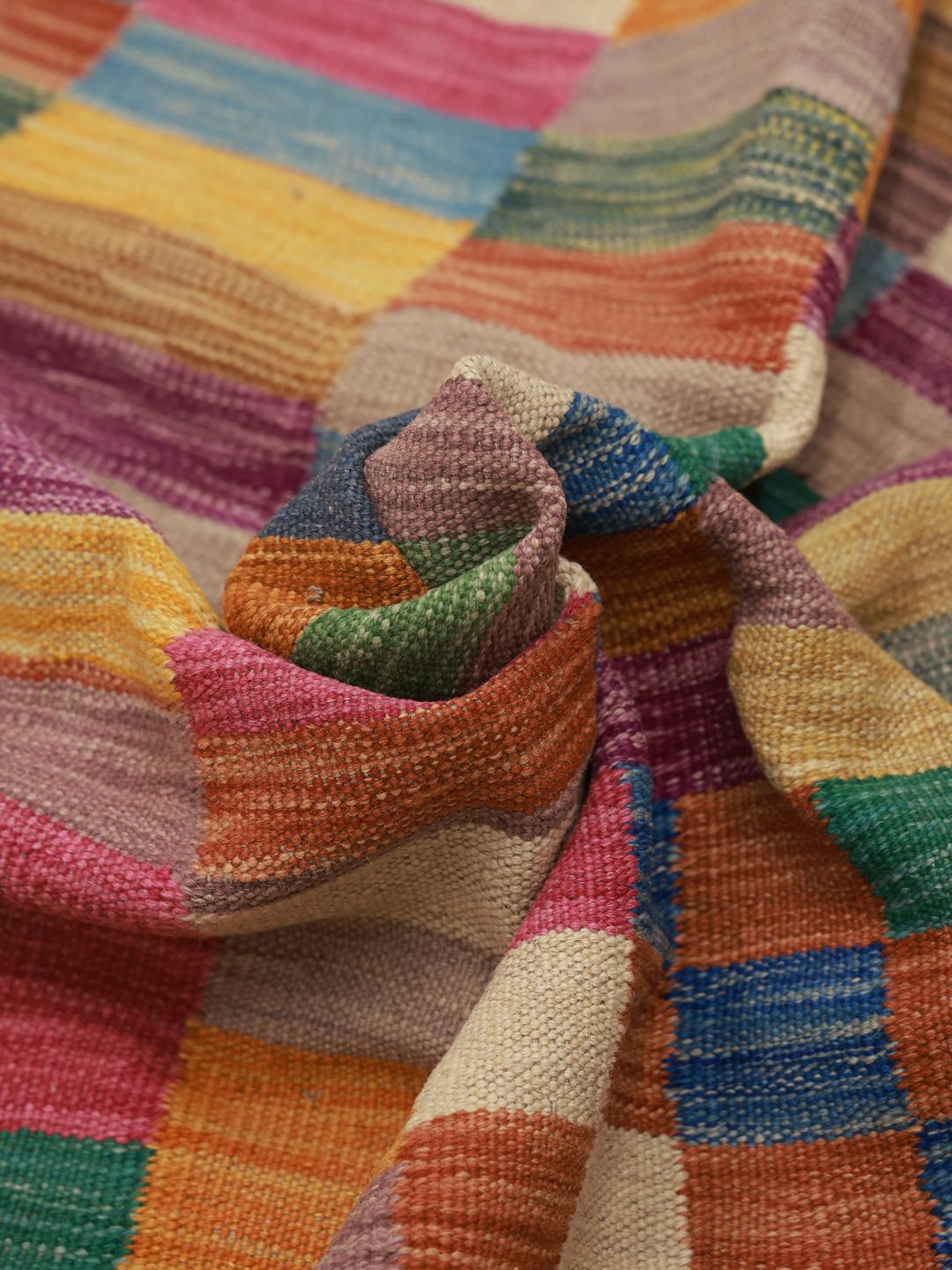
Kilim flatweaves have a long and rich history across Central and South Asia, valued for their durability, versatility, and expressive geometric designs. While the Berber style originates from Northern Africa, contemporary Afghan weavers have embraced these iconic tribal motifs, adapting them into fresh artistic interpretations that celebrate traditional hand-weaving skills.
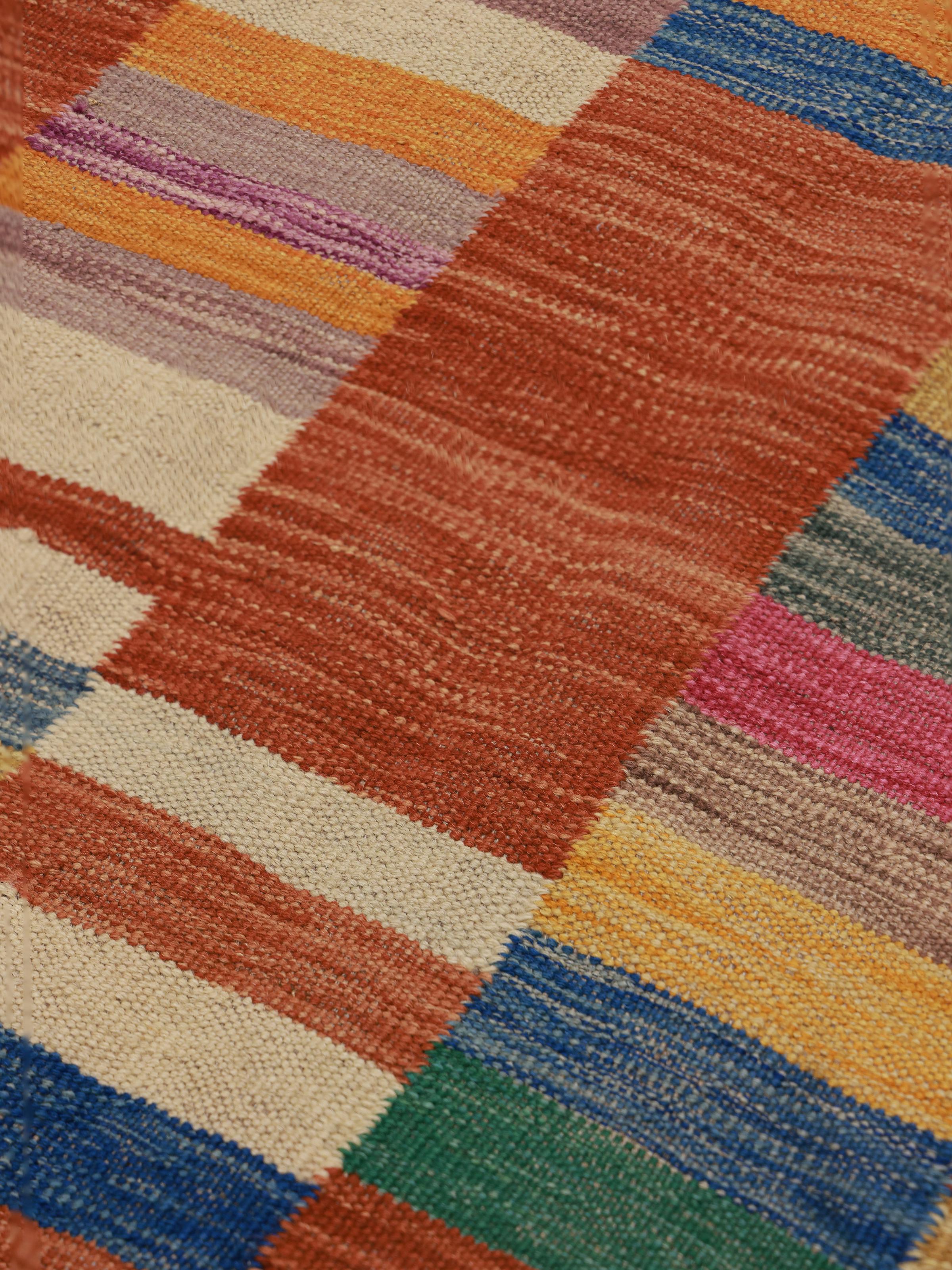
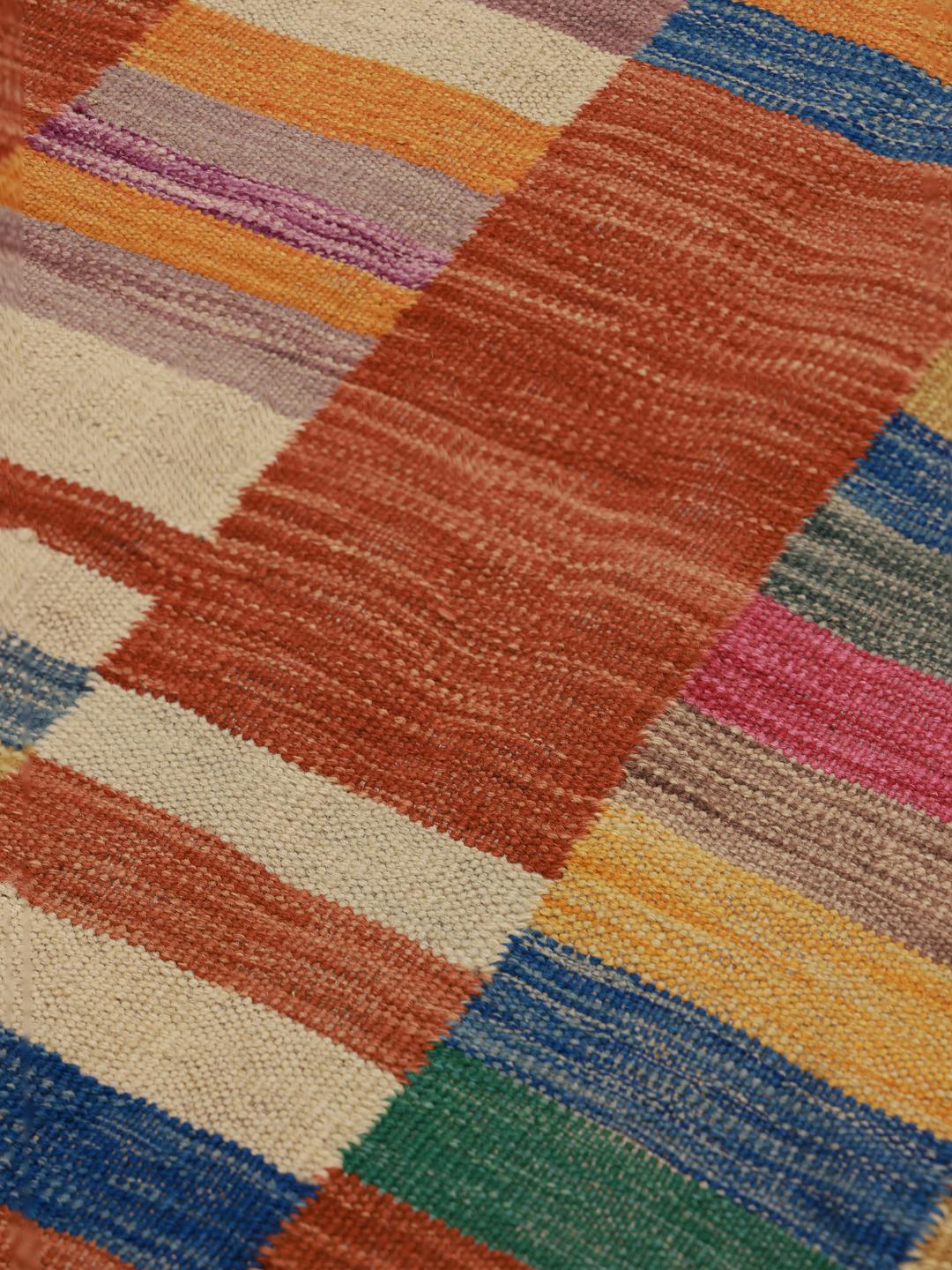
Unlike pile rugs, flatwoven kilims are constructed by tightly intertwining the weft and warp threads to create a surface with no pile. This technique creates a light, flexible, and extremely sturdy textile that was historically used as floor coverings, wall hangings, and protective blankets by nomadic communities.
The visual language of this rug relies on a dynamic interplay of geometric blocks and contrasting columns. Repeating grid patterns and colorful patchwork motifs are classic elements of regional weaving traditions, where each weaver balances symmetry and color choices to create a visually engaging layout.
Hand-woven kilims remain highly sought after by collectors and interior enthusiasts alike for their cultural character and utility. Acquiring a piece like this connects your home to a living tradition of craftsmanship, bringing genuine artistic value to your living space.