Flat-woven rugs known as kelims have a rich heritage deeply rooted in the nomadic and village cultures of the Middle East and Central Asia. Woven without a pile by interlacing warp and weft threads, these textiles were originally created by tribal communities for practical household use, serving as durable floor coverings, blankets, and storage bags. Over generations, the craft evolved as weavers developed distinct regional styles, incorporating local symbols and colour palettes that told the stories of their makers.
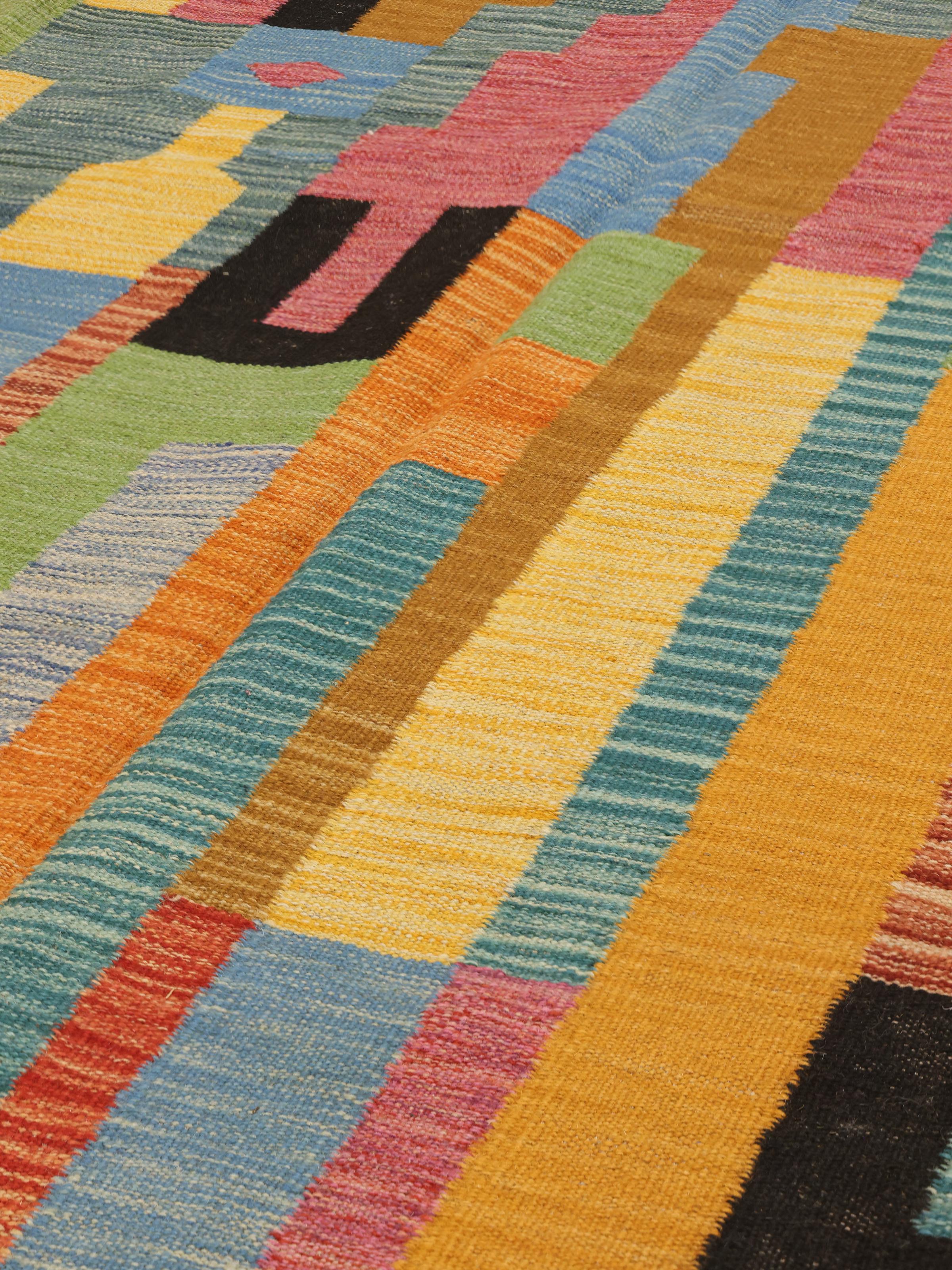
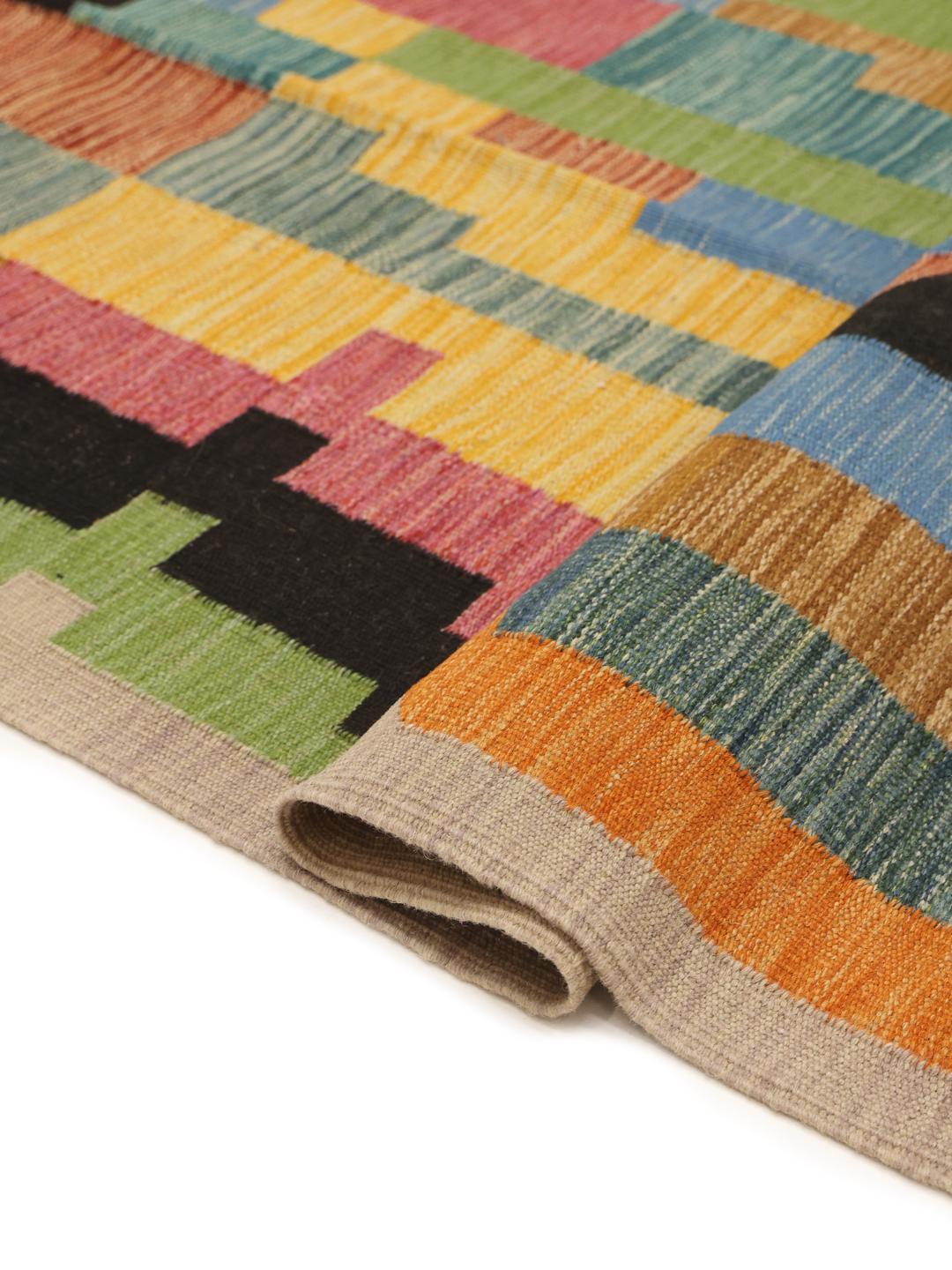
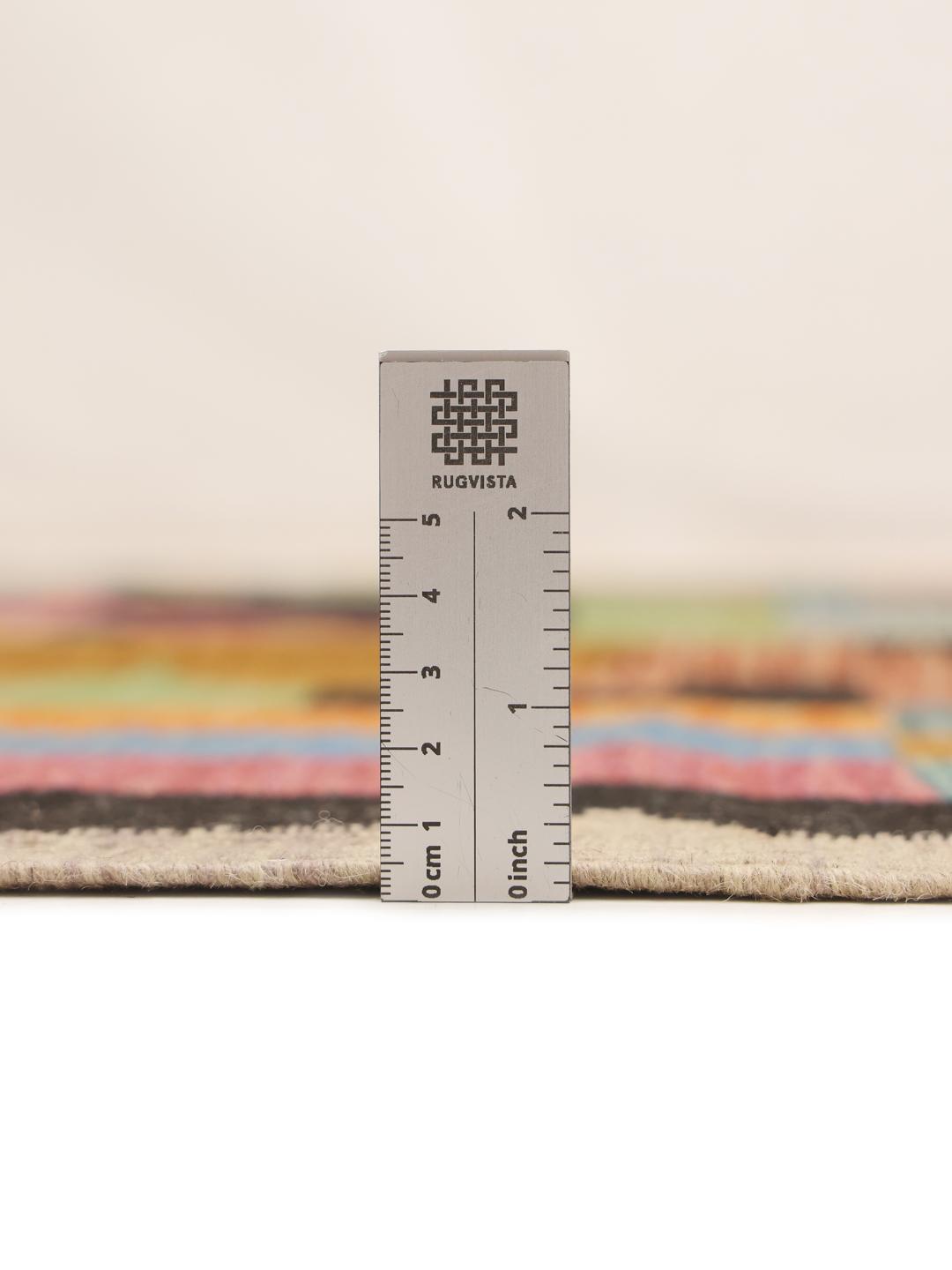
The term kilim refers specifically to this flat-weave construction method, where the design is formed by tightly packing the weft threads down to completely conceal the warp. This technique creates a lightweight yet remarkably strong fabric that can be easily folded, transported, and used on both sides. The absence of pile distinguishes kelims from knotted rugs, giving them a sharper graphic clarity and a distinctively sleek profile.
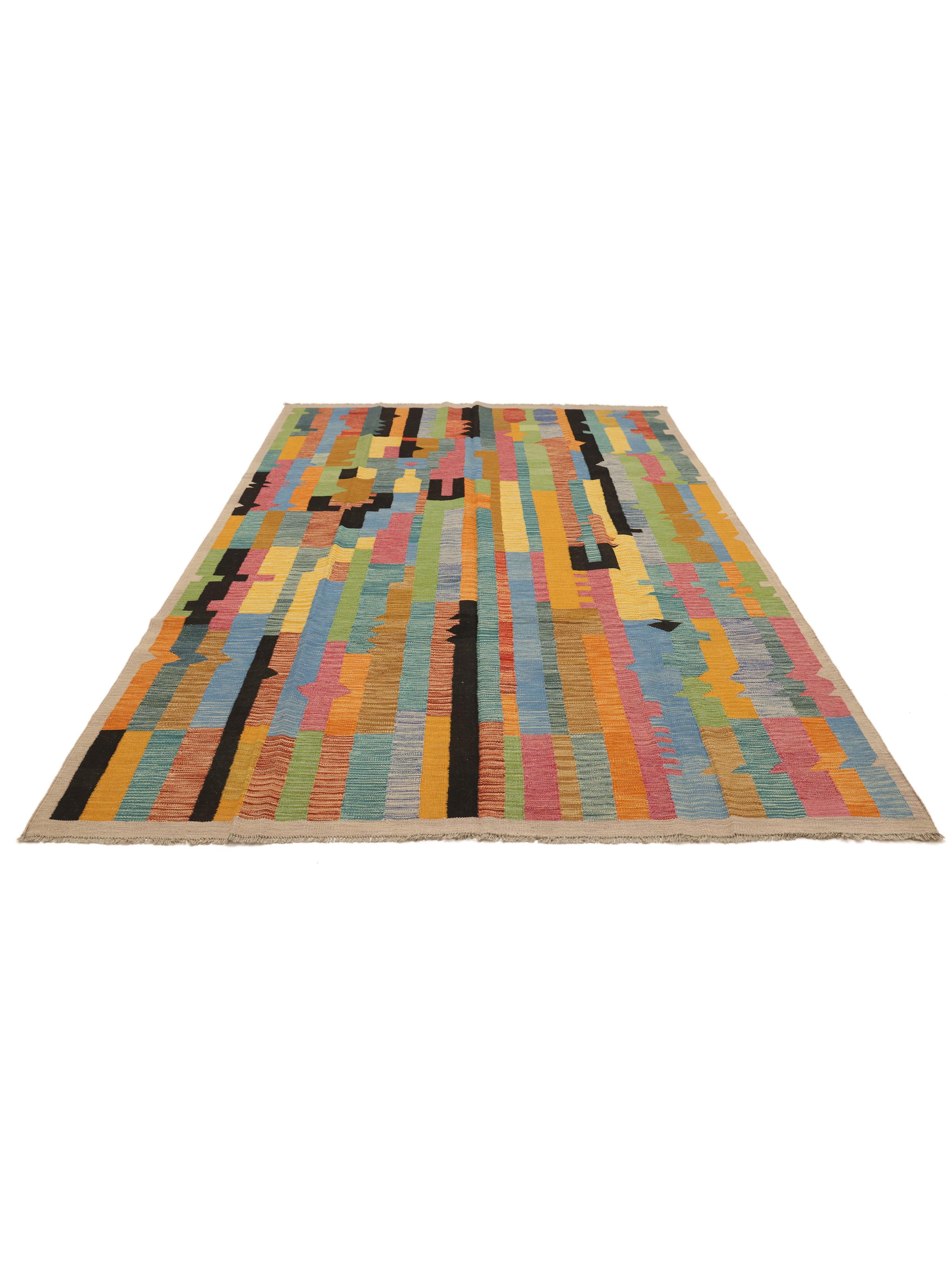
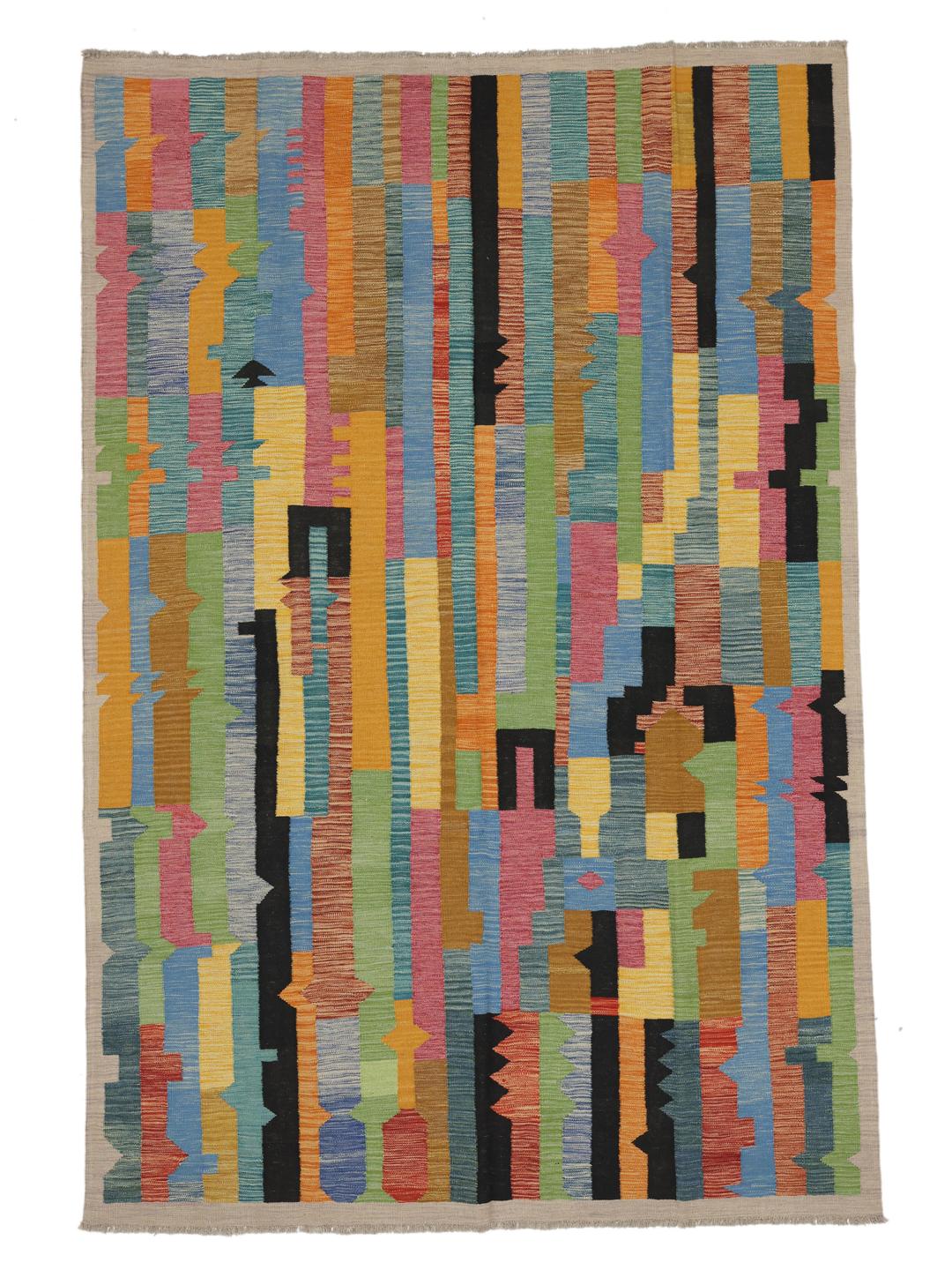
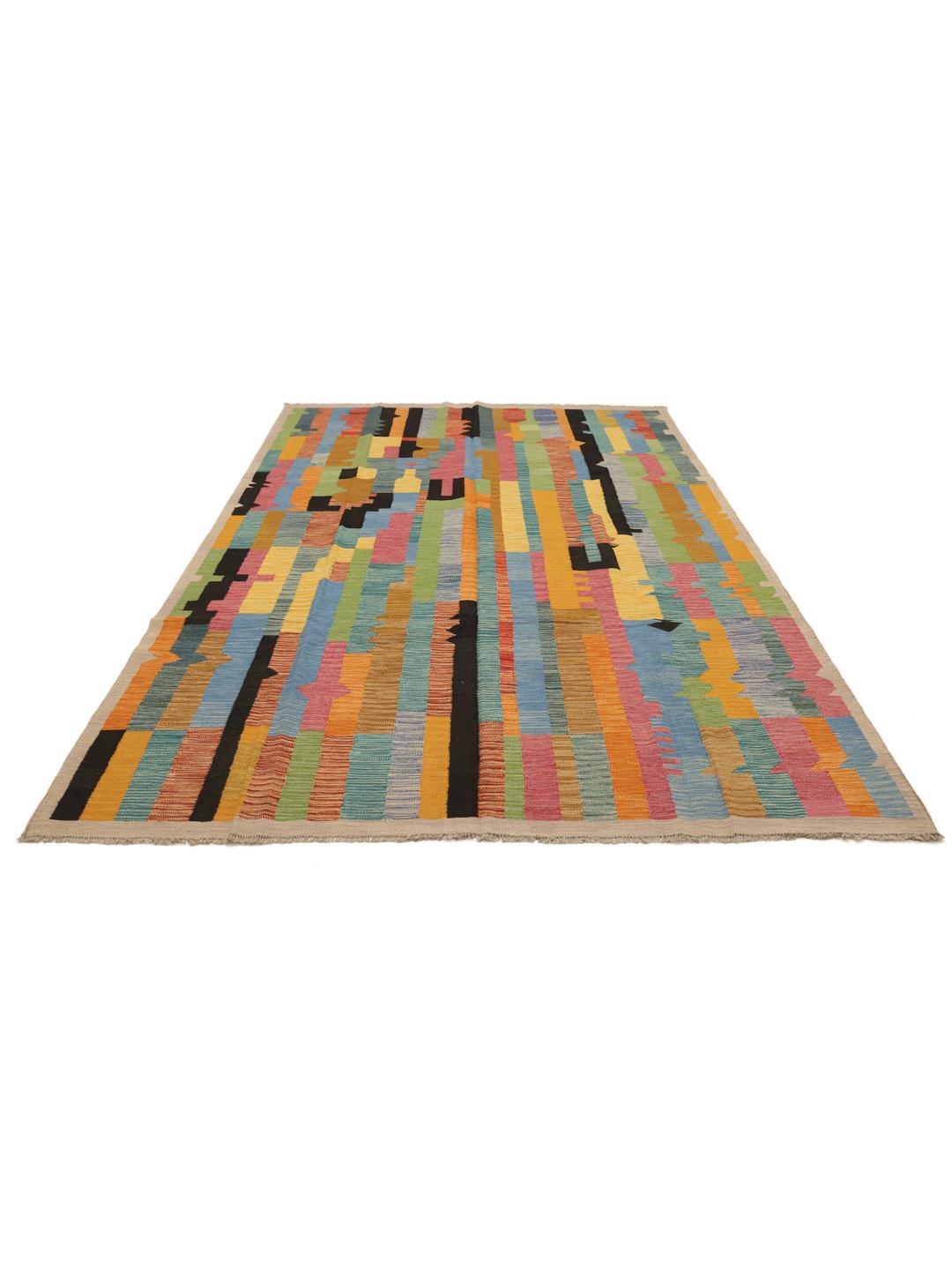
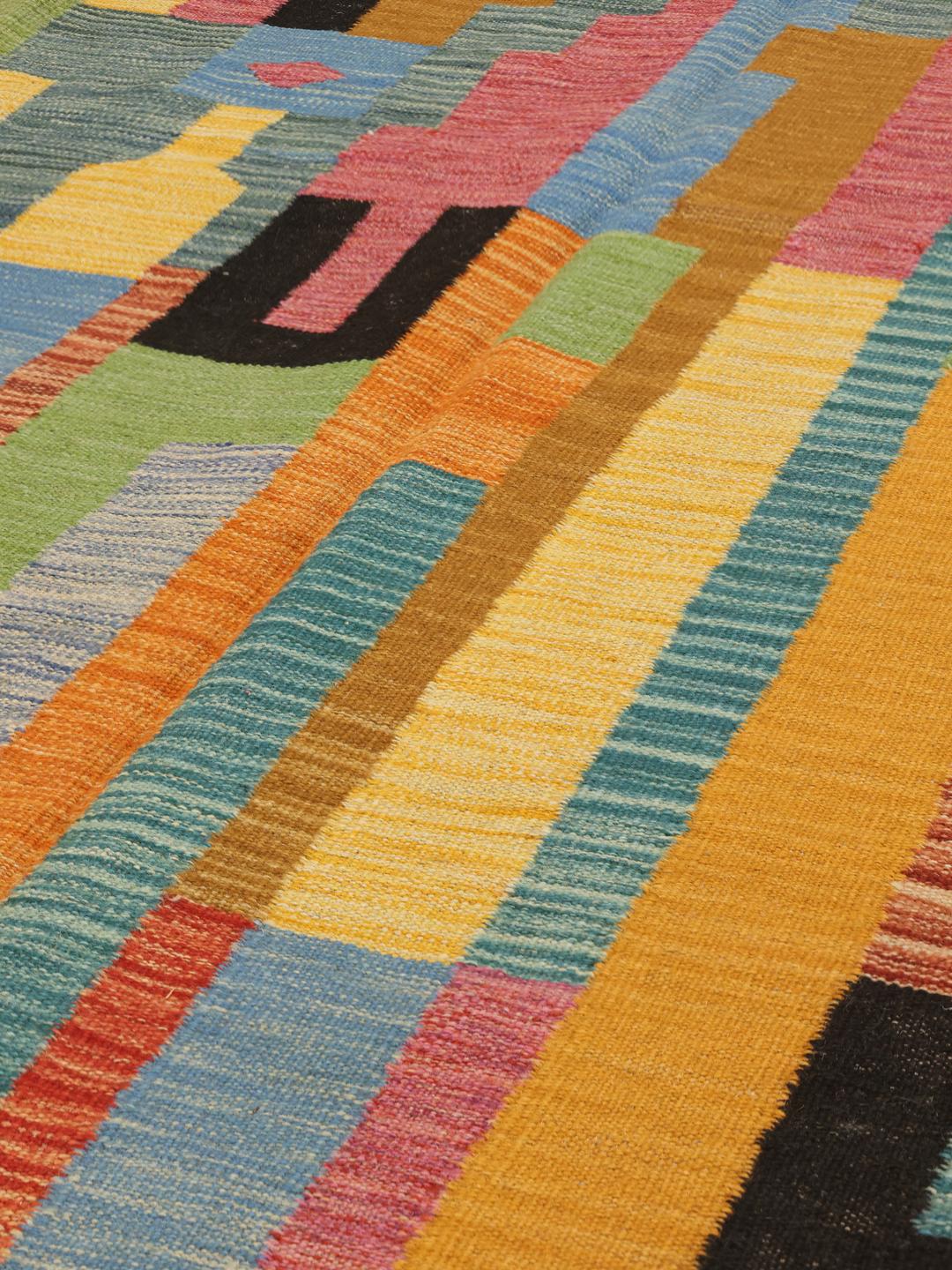
Afghan kelims are celebrated for their bold use of colour and geometric storytelling, drawing on a palette derived from local plants and natural dyes. The design on this particular rug blends traditional striped layouts with playful modern motifs, creating a bridge between ancient weaving heritage and contemporary interior aesthetics. The contrasting dark vertical elements and vivid colour blocks reflect the spontaneous creativity of the artisan at the loom.
Collecting vintage and contemporary kelims has become a way to preserve a disappearing art form that relies entirely on human hands and ancestral knowledge. Owning an authentic Afghan flat-weave connects you to a global lineage of textile artistry, bringing a piece of cultural history and genuine human dedication into your living environment.