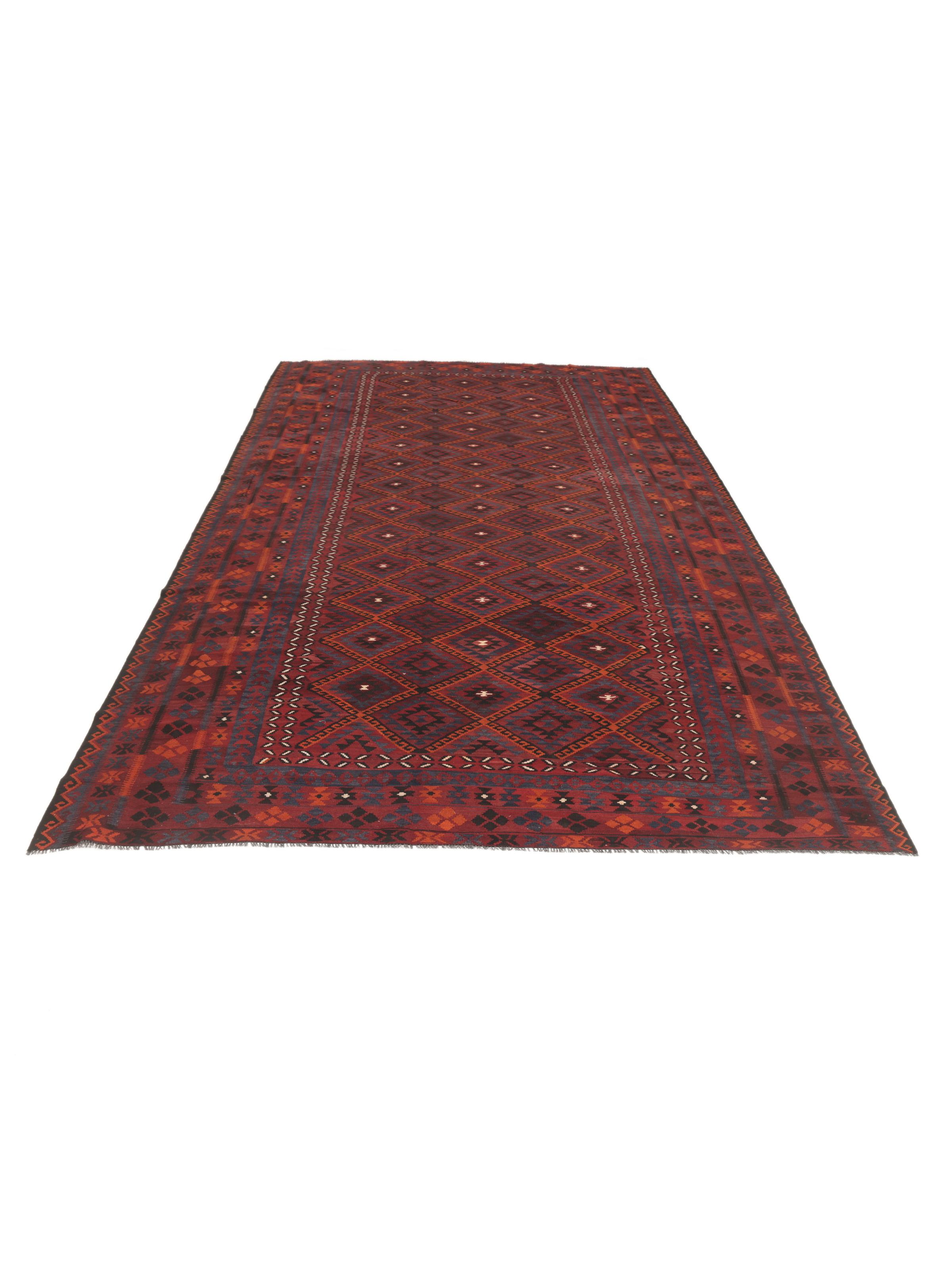
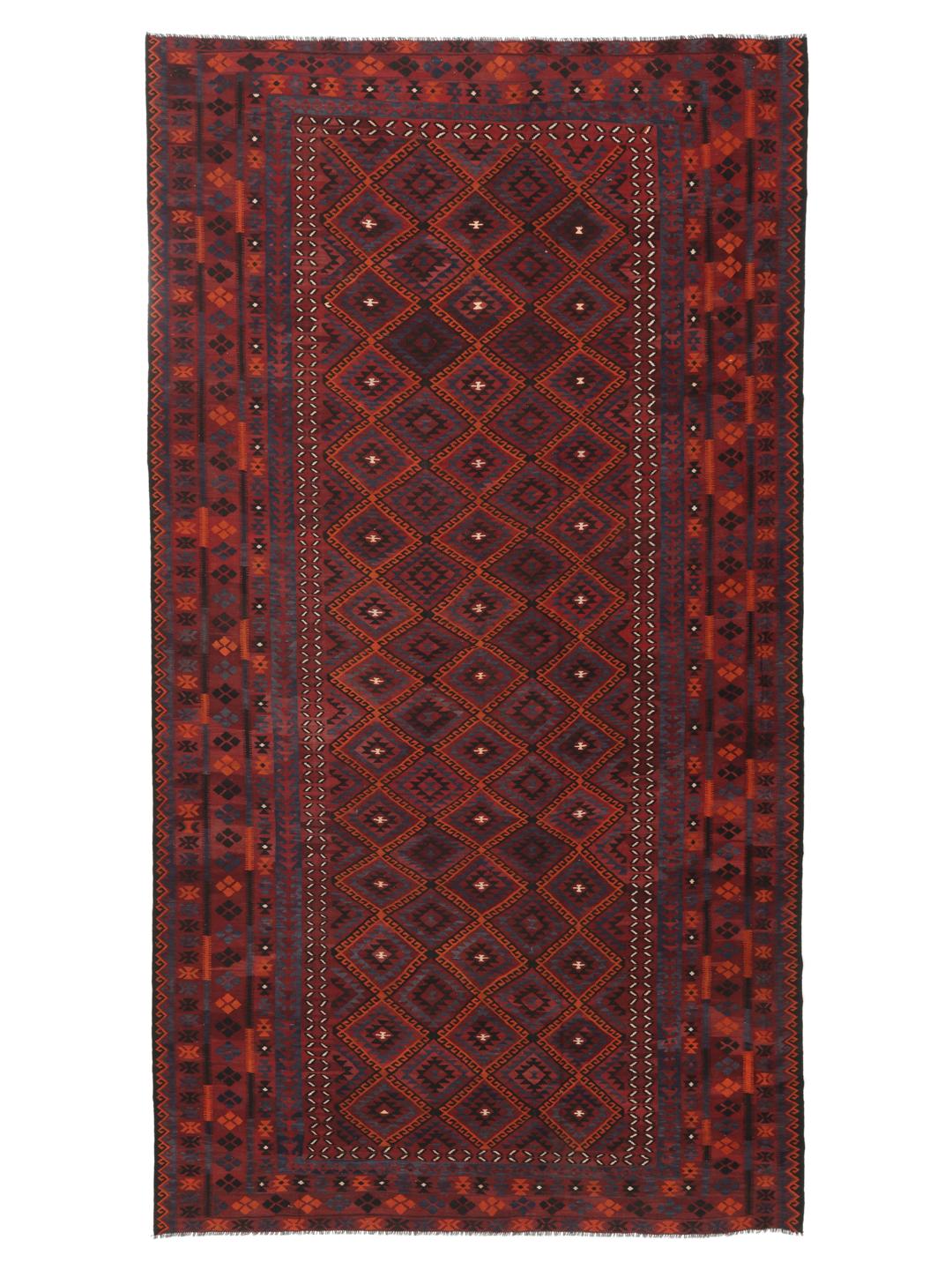
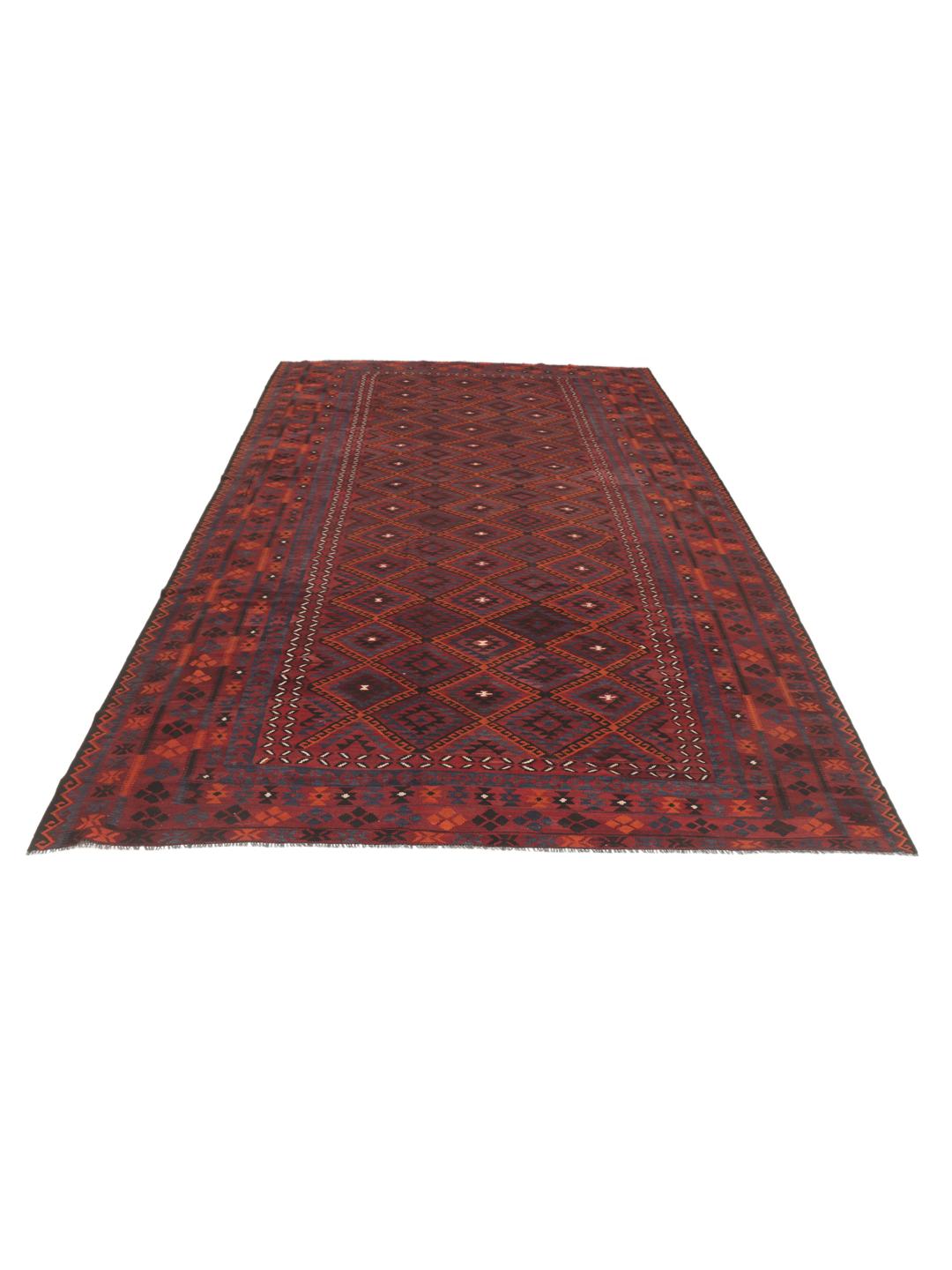
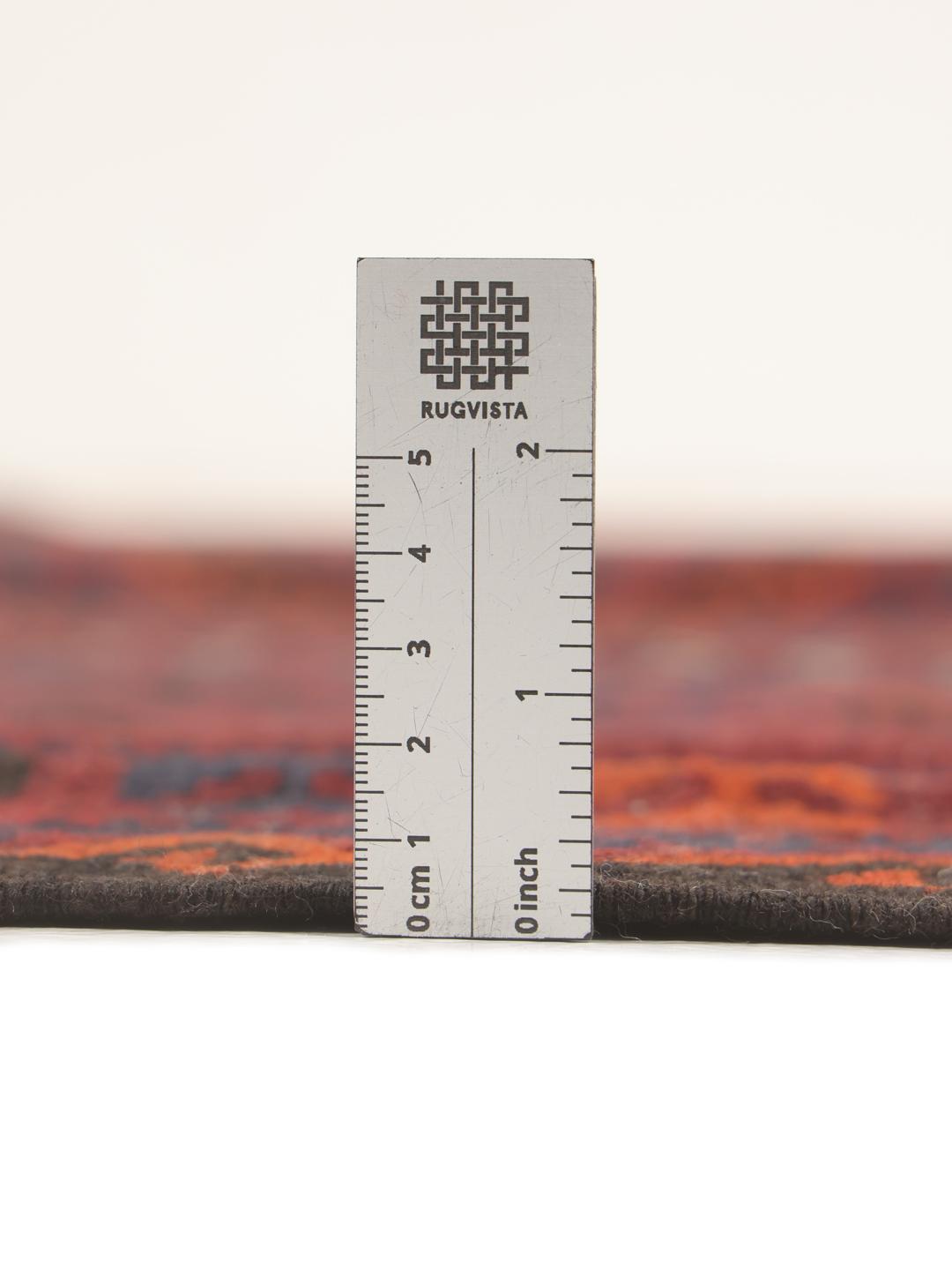
The Maimane kilim originates from the Faryab province in northern Afghanistan, a region with a long-standing reputation for producing some of the most distinctive flat-woven textiles in the Middle East. These rugs are deeply rooted in the nomadic and semi-nomadic traditions of the local tribal populations, who have historically crafted these textiles for both practical use, such as floor coverings and room dividers, and for their symbolic cultural value.
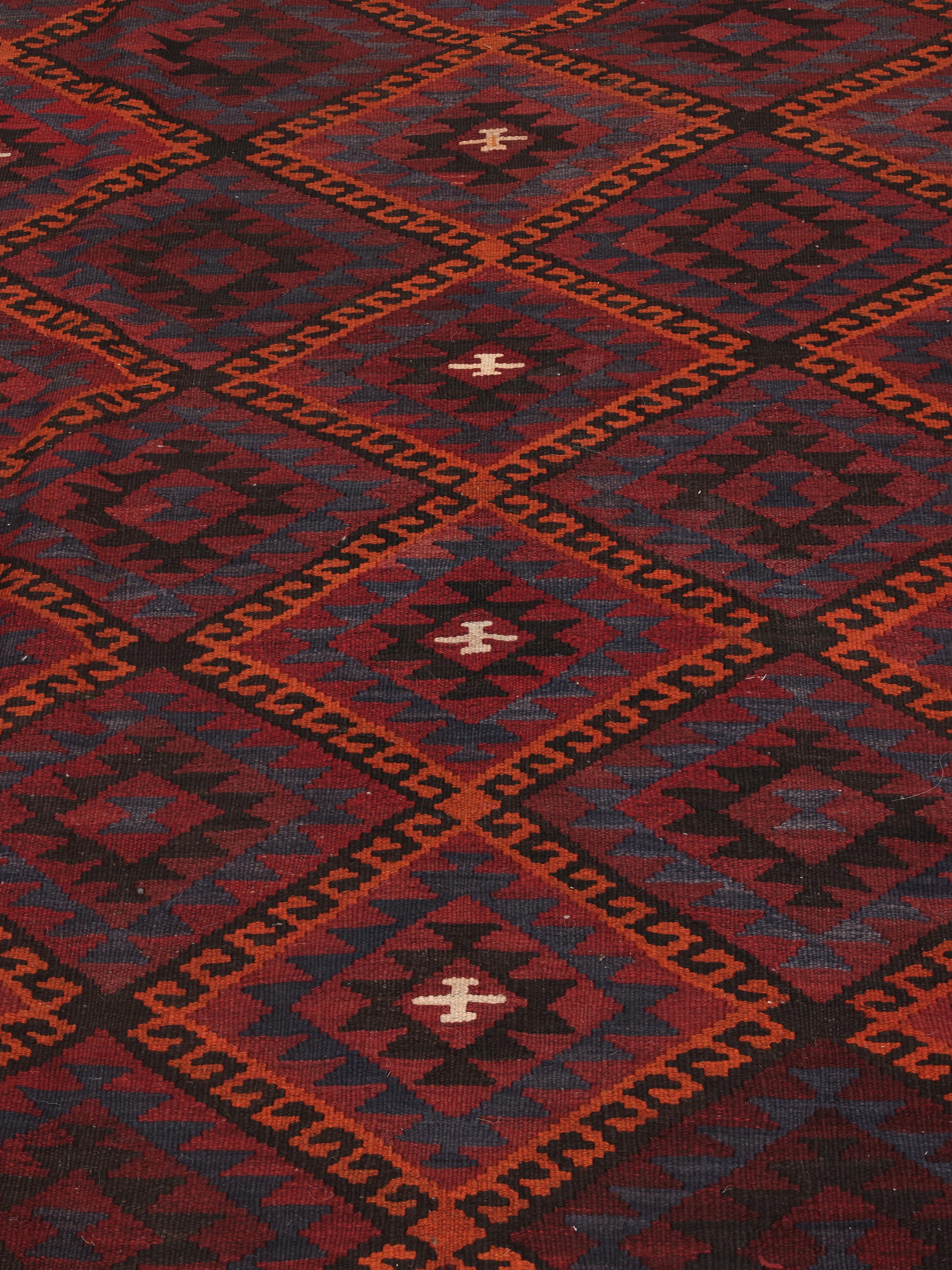
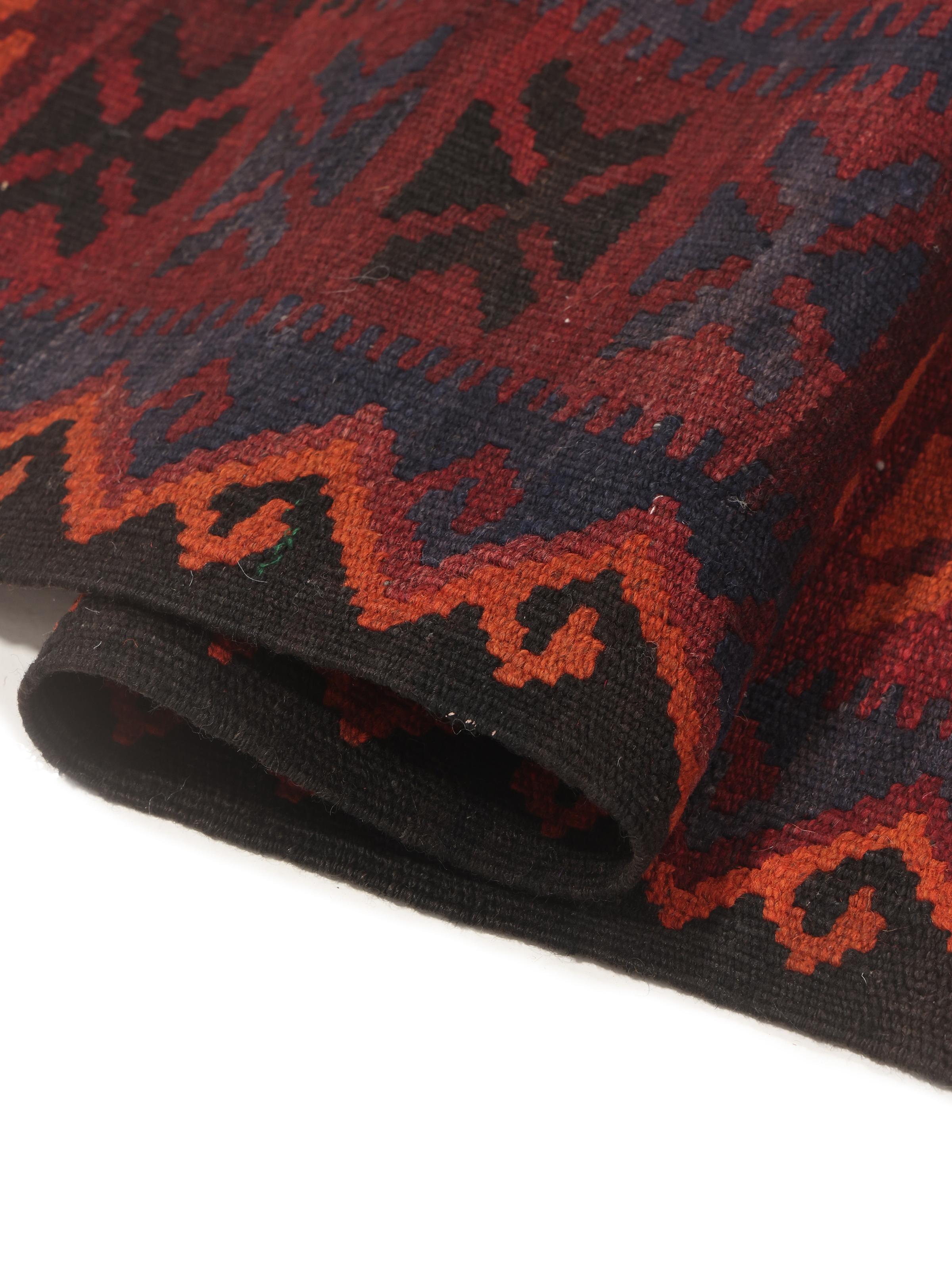
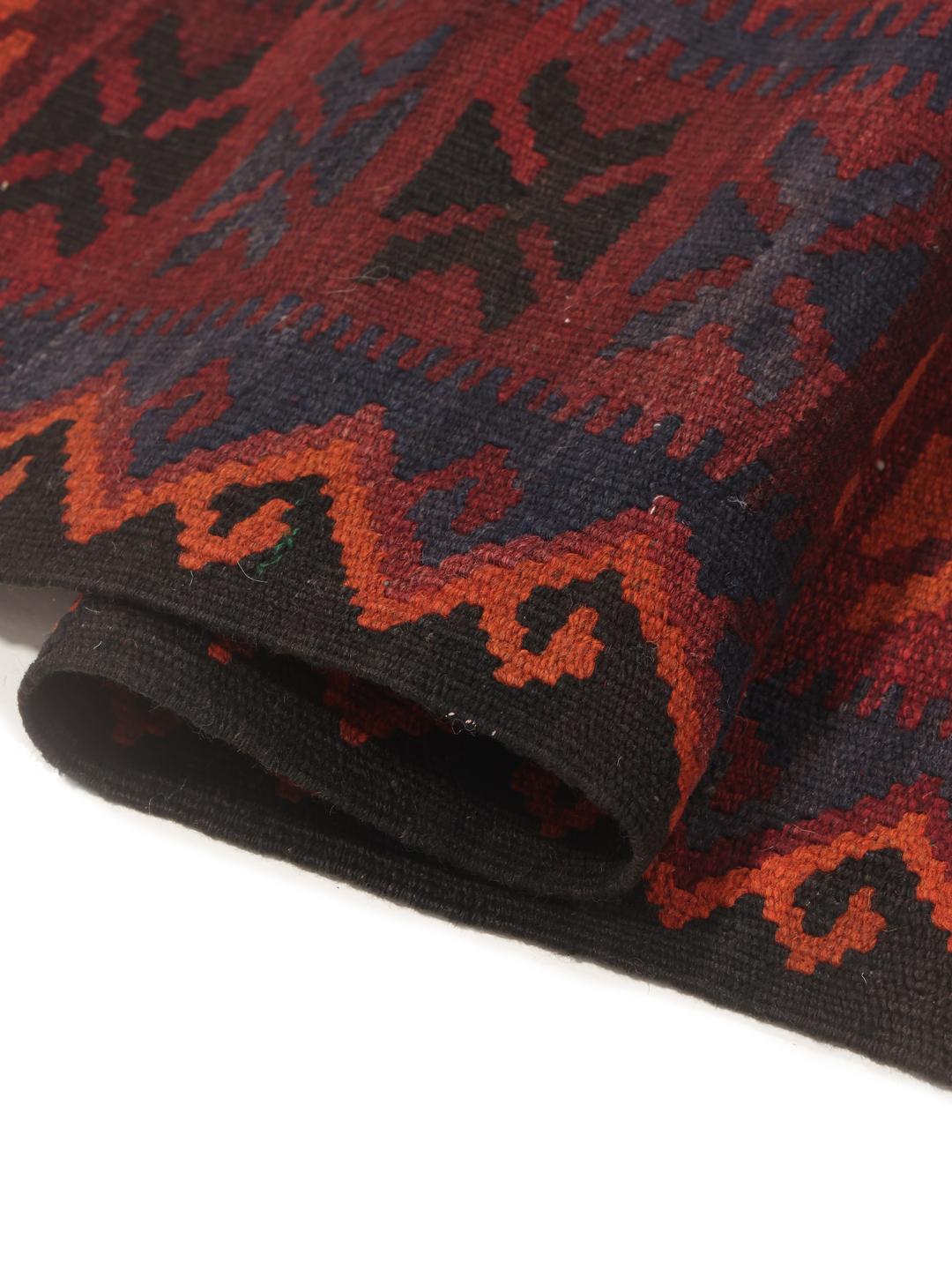
The term 'kilim' refers to the specific flat-weave technique where no pile is created, resulting in a lightweight yet strong textile. This method involves interlocking the weft threads tightly around the warp threads, producing a reversible rug with a clean, graphic appearance. This technique is highly prized for its ability to showcase bold, geometric designs with crisp lines that are synonymous with the Maimane style.
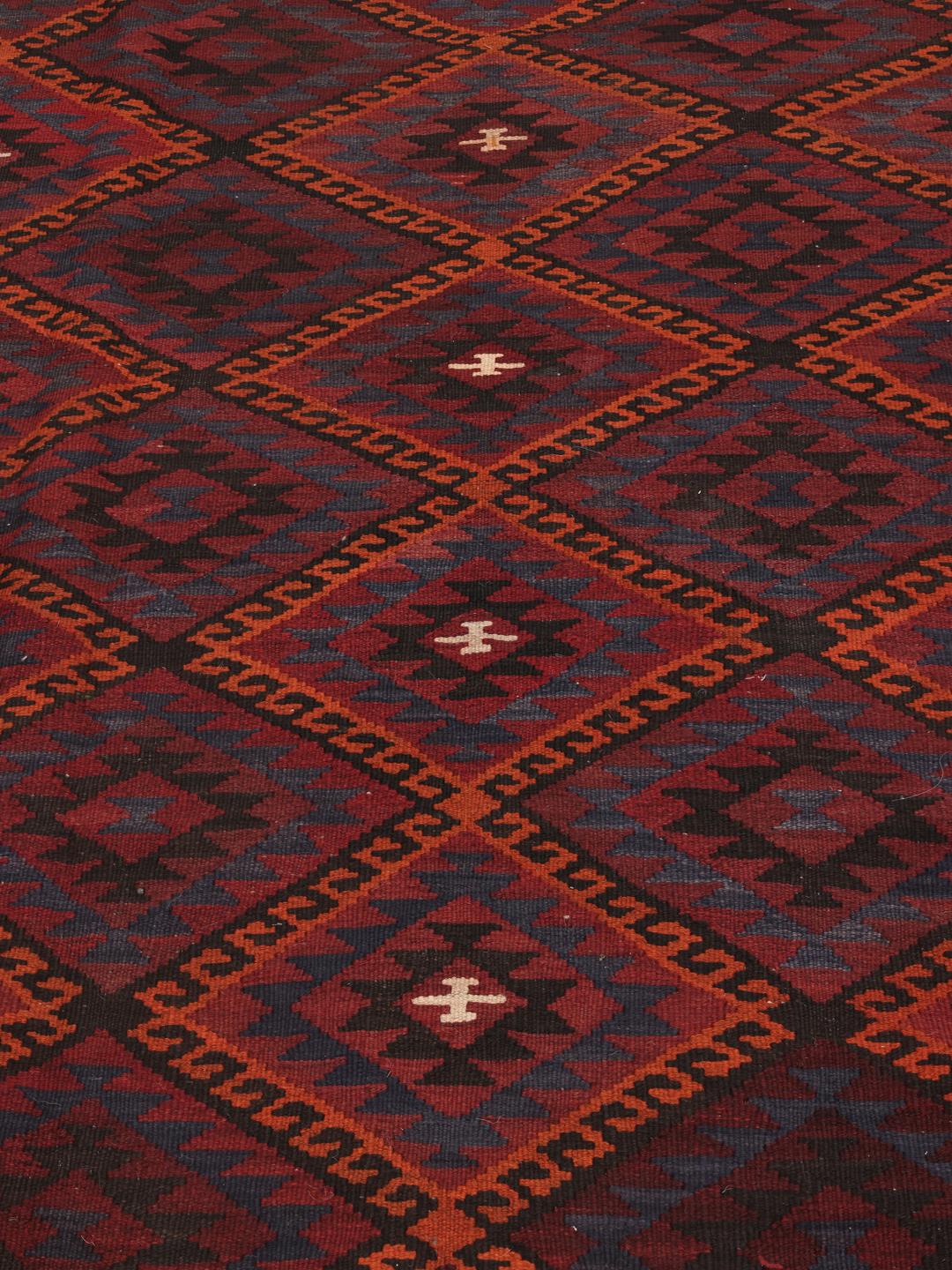
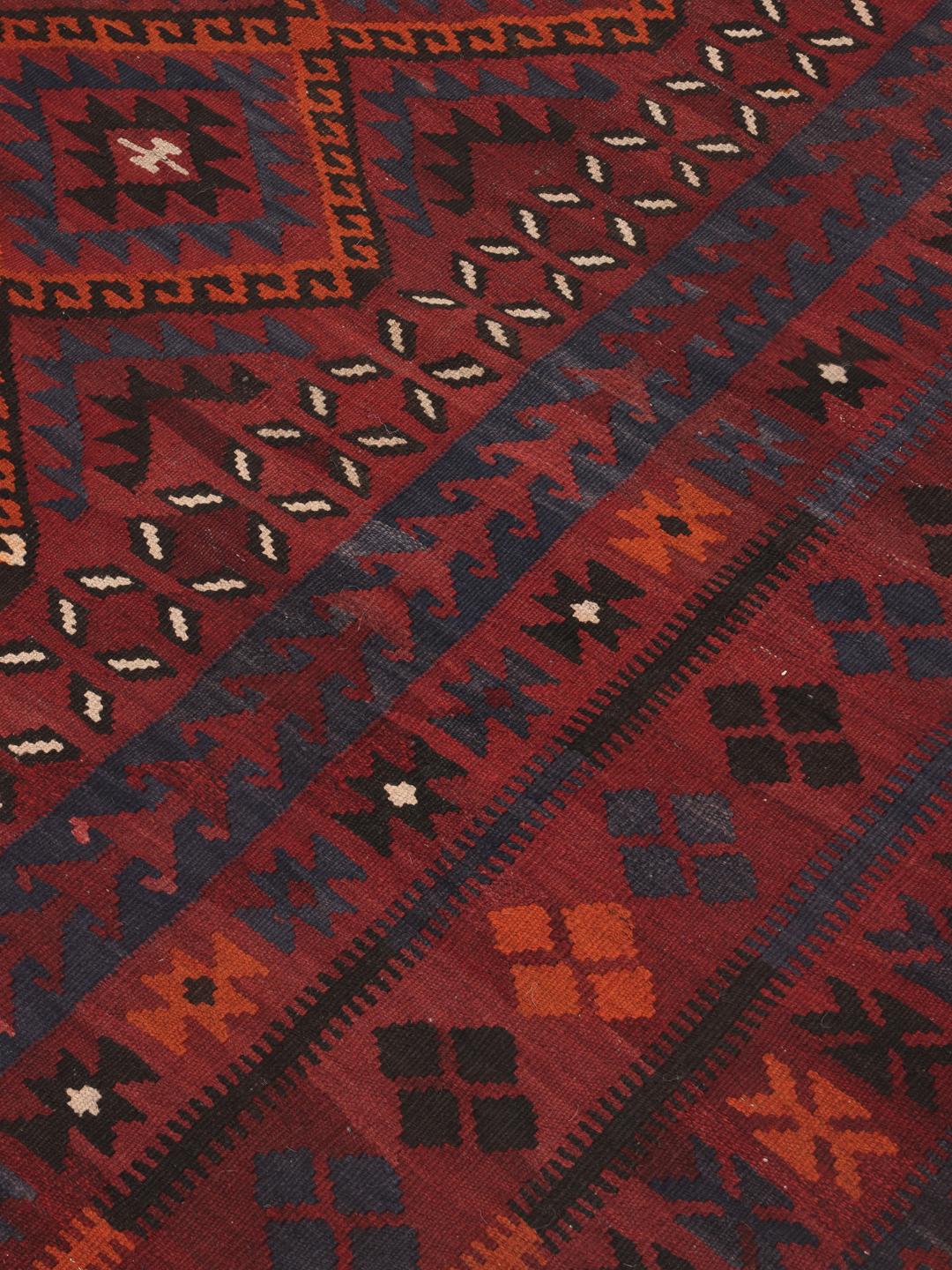
Signature design elements of the Maimane kilim typically include a field filled with repeating diamond or lozenge motifs, often enclosed by complex, multi-layered borders. The colour palette is traditionally derived from natural dyes, favouring deep reds, browns, and dark blues. The patterns are not merely decorative but often carry tribal significance, serving as a visual language that connects the weaver to their heritage and environment.
Collecting a Maimane kilim is an investment in a living history. These rugs are celebrated for their authentic, rustic charm and the enduring quality of their construction. By choosing a hand-woven kilim, you are supporting a craft tradition that has resisted the pressures of industrialisation, keeping alive the manual skills and cultural narratives of Afghan artisans for future generations to appreciate.