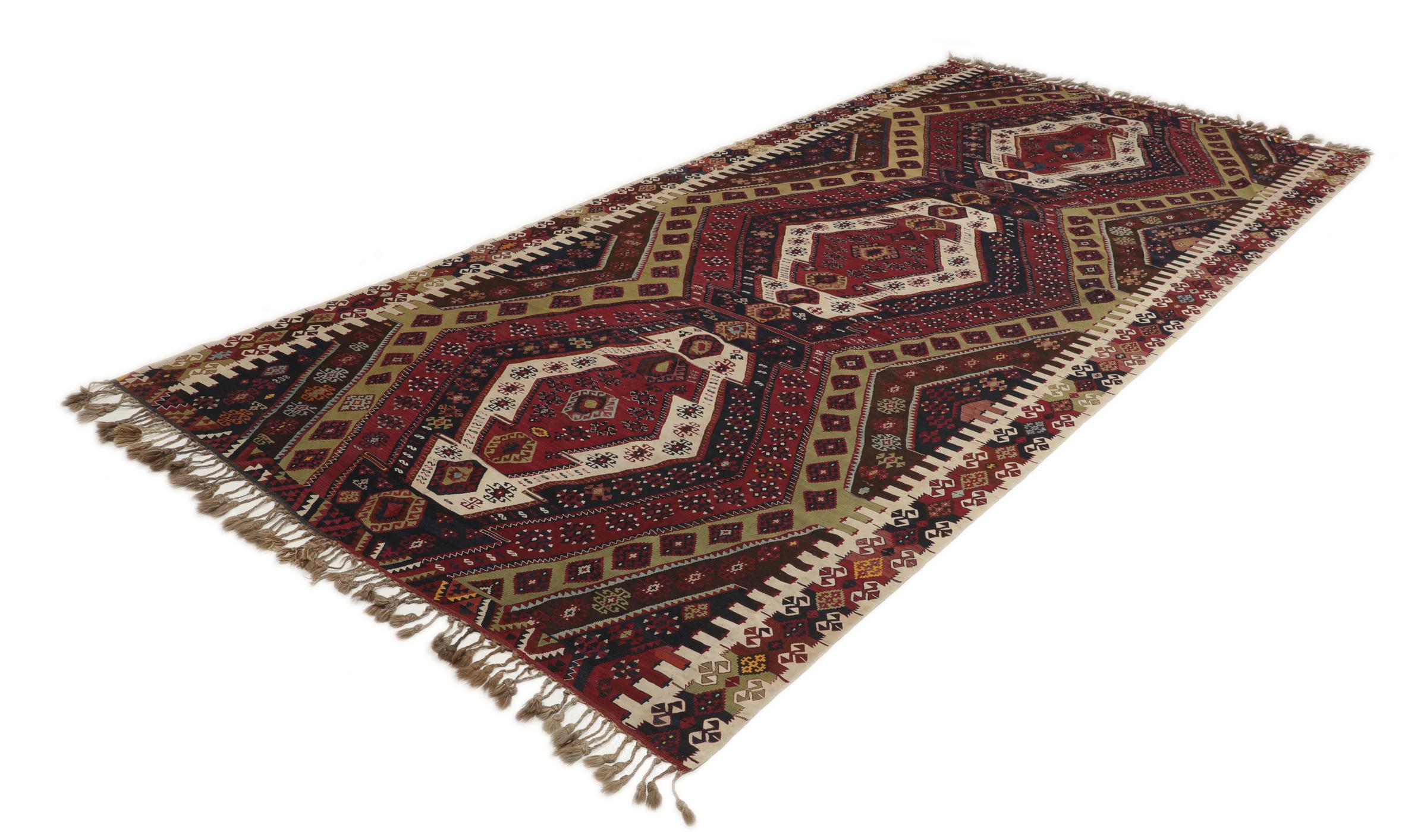
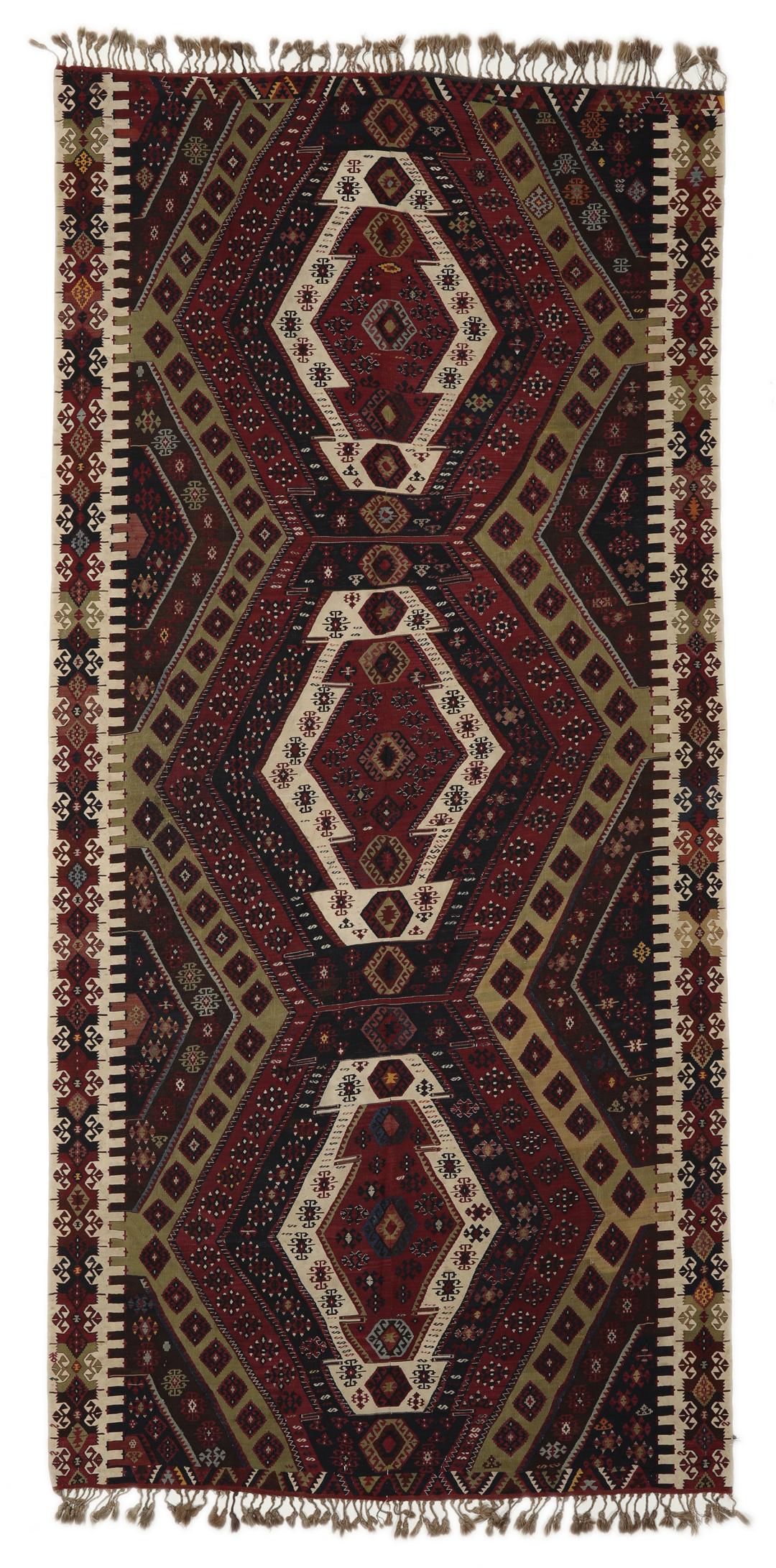
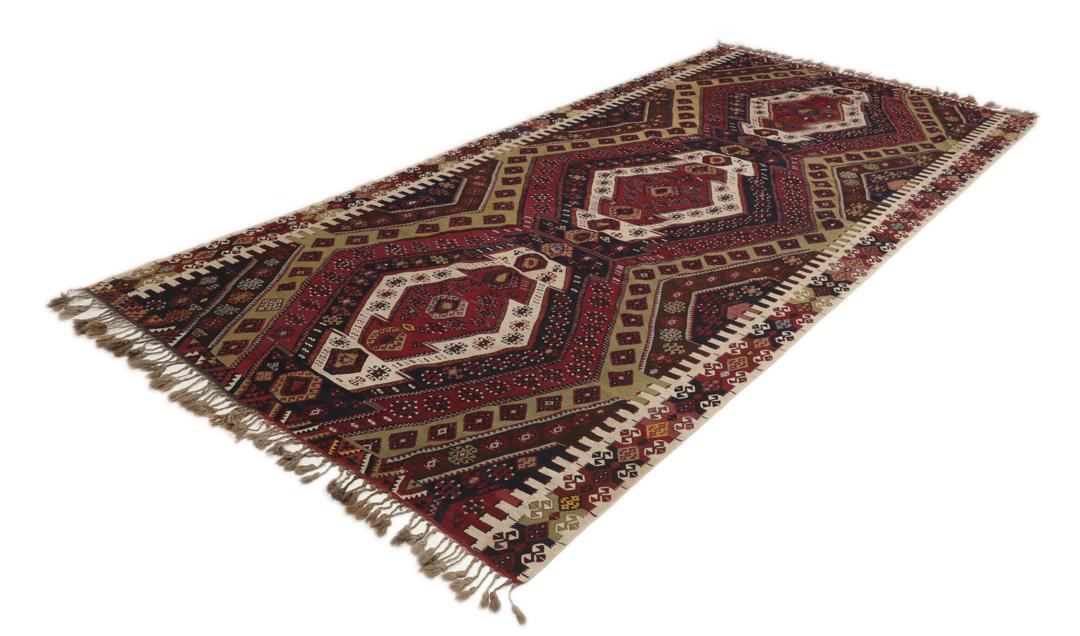
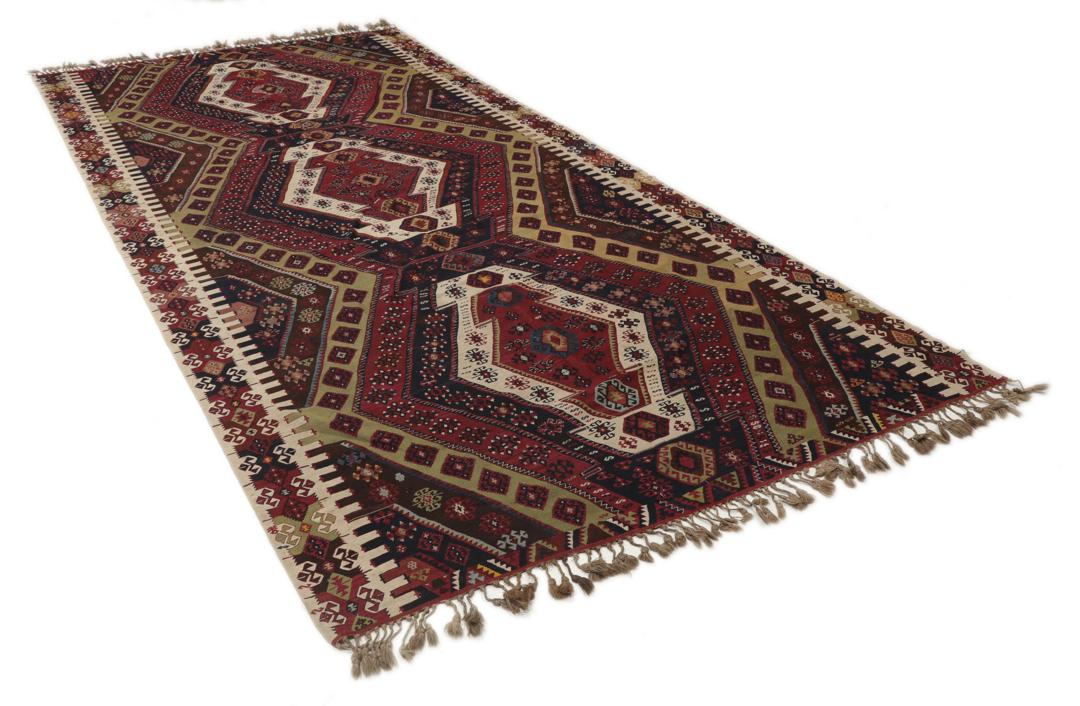
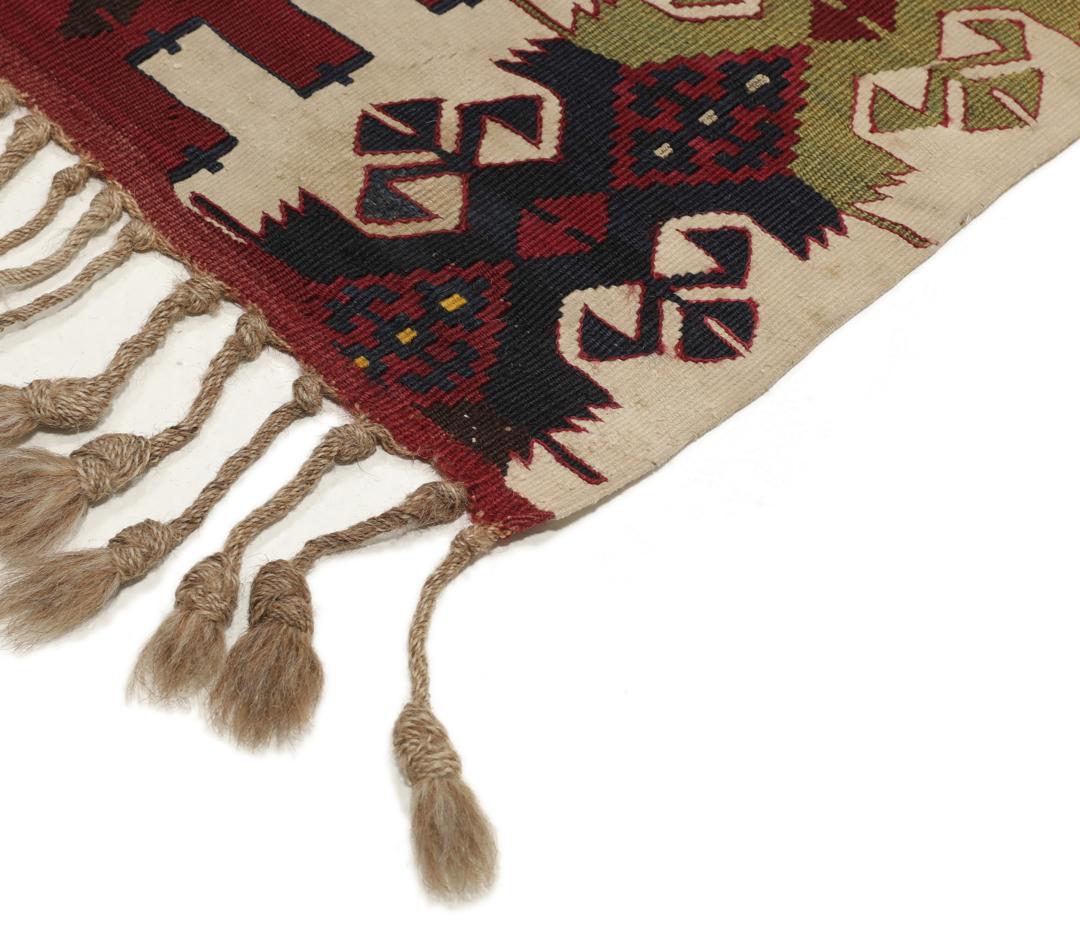
The Malatya region in eastern Turkey has long been a vital centre for the production of flat-woven textiles. Historically, these Kilims were woven by nomadic and semi-nomadic groups to serve functional needs within their homes, such as floor coverings, wall hangings, and storage bags. Over generations, the patterns and weaving techniques became a language of their own, reflecting the identity and environment of the weavers.
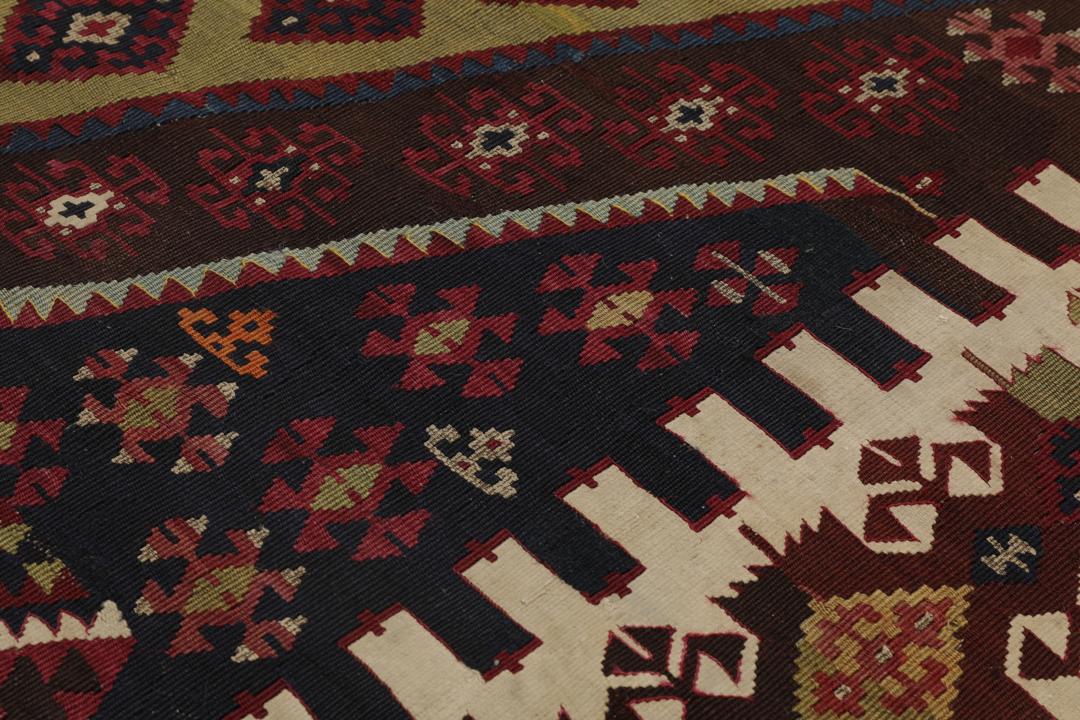
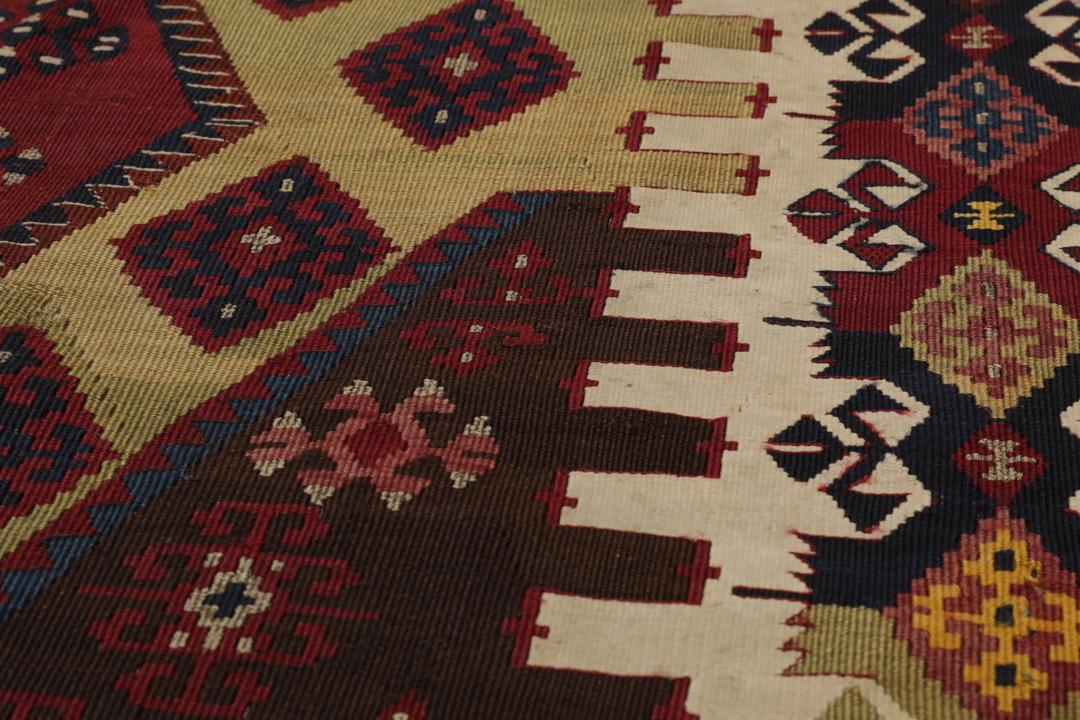
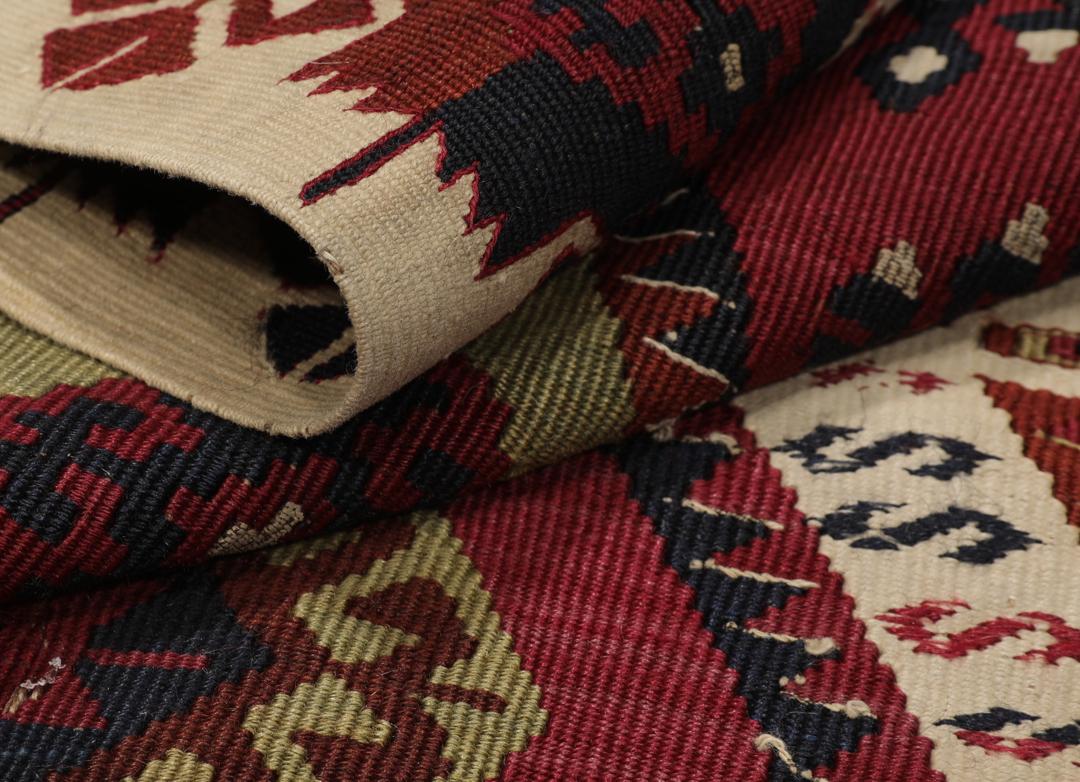
A Kilim is defined by its slit-weave technique, where the weaver stops one colour and begins another, creating small vertical gaps or 'slits' between colour blocks. This is not a flaw but the defining characteristic of the craft, allowing for the crisp, bold geometric shapes that are the hallmark of the tradition. This method requires immense focus, as the weaver must manage the tension perfectly to ensure the rug remains flat and durable.
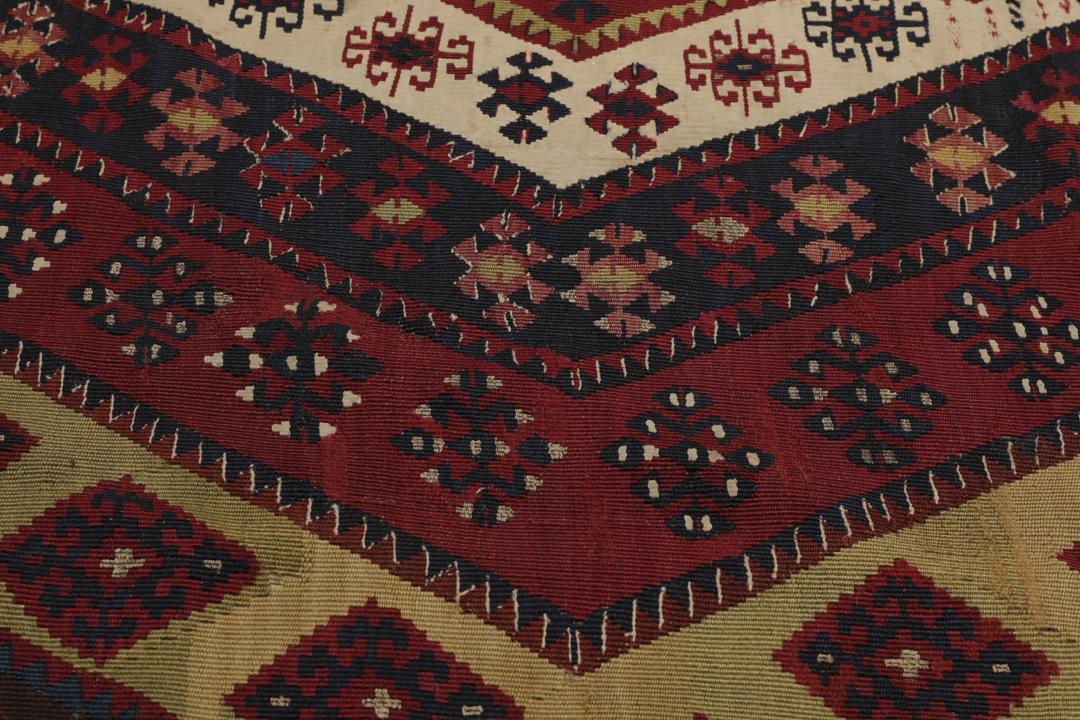
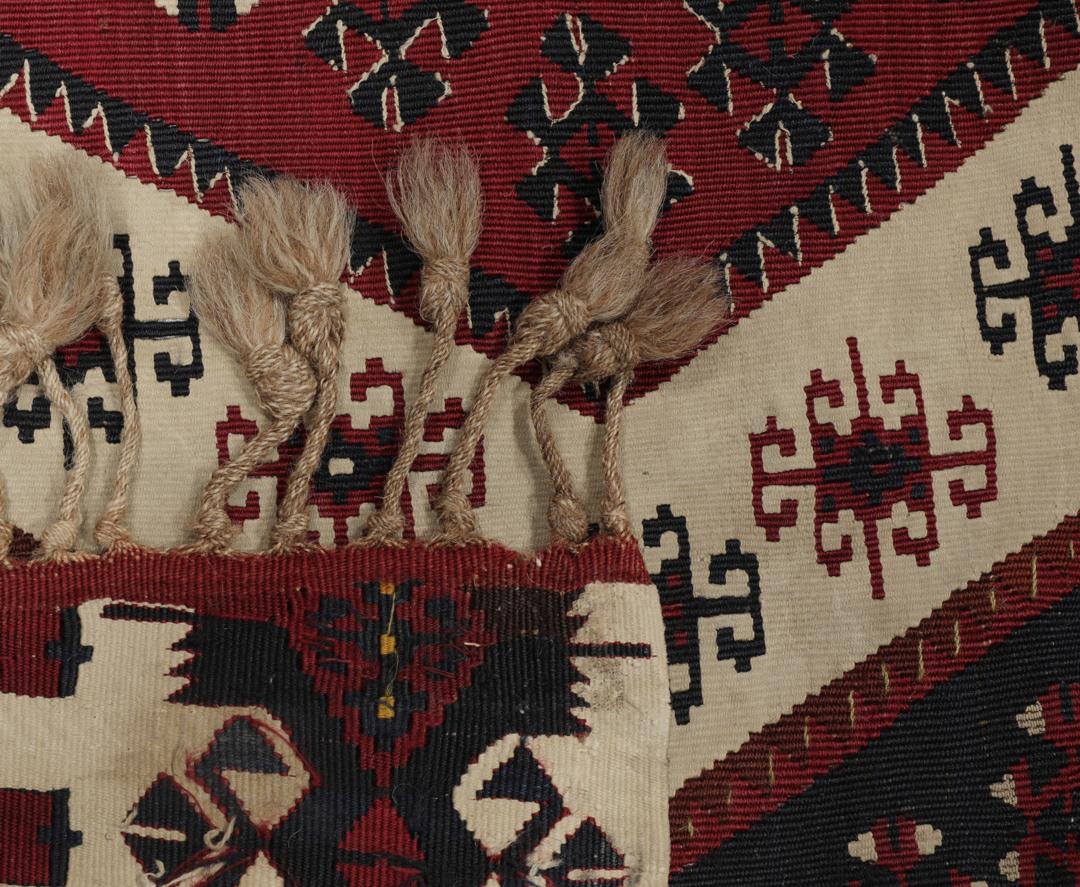
The design language of this Malatya rug is deeply rooted in tribal symbolism, featuring geometric medallions and borders that have been passed down through families. These motifs are more than decorative; they often represent protection, fertility, or the natural landscape of the Anatolian plateau. The use of rich, deep reds and contrasting dark tones is typical of the region's aesthetic, which favours bold, high-contrast palettes.
Today, vintage Kilims are highly sought after by collectors who value them as documents of cultural heritage. Owning one means participating in a legacy of skill that has survived the transition from nomadic necessity to modern design staple. These pieces are not just floor coverings but lasting expressions of human creativity that bring a grounded, historical presence to any contemporary home.