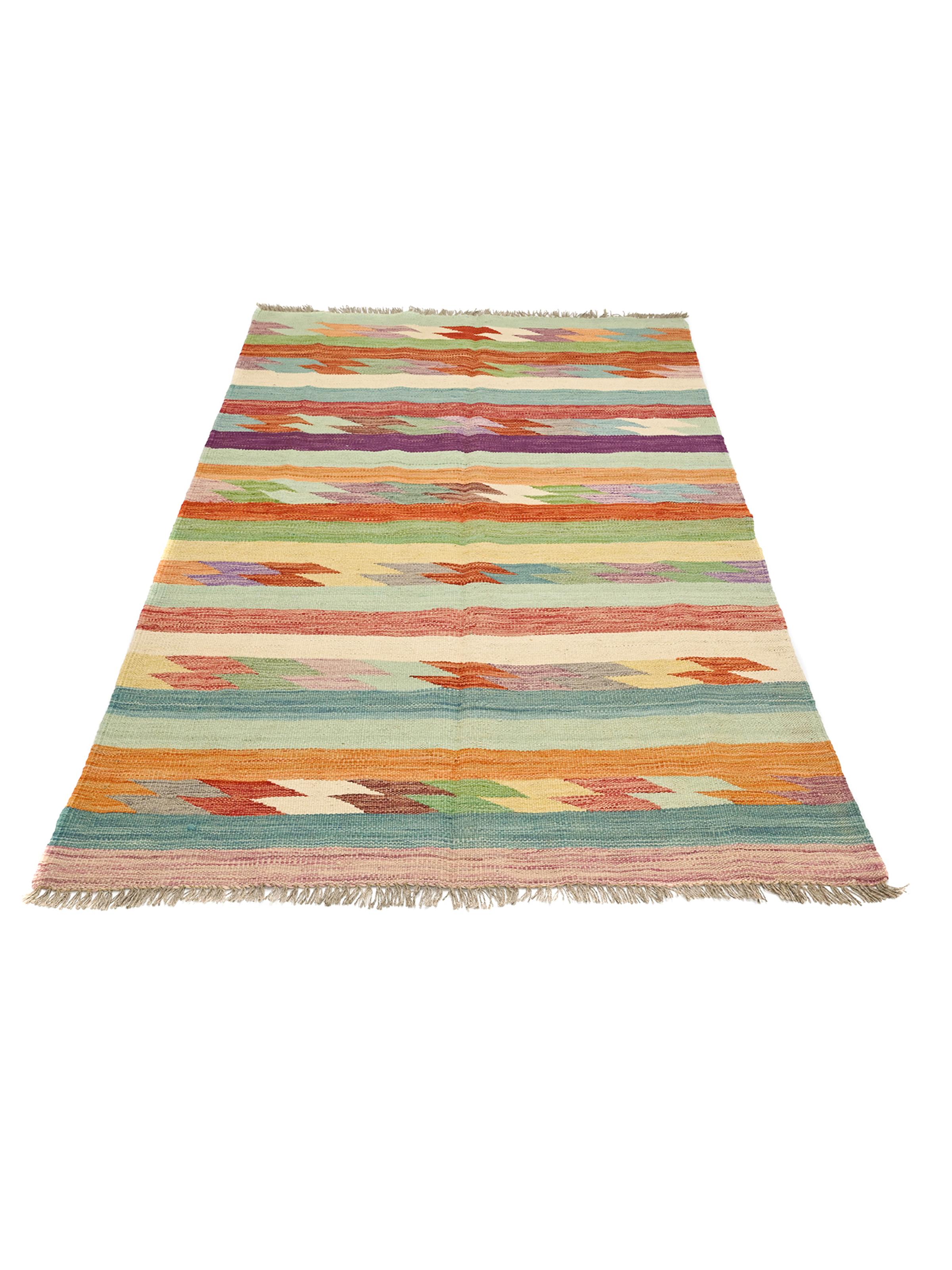
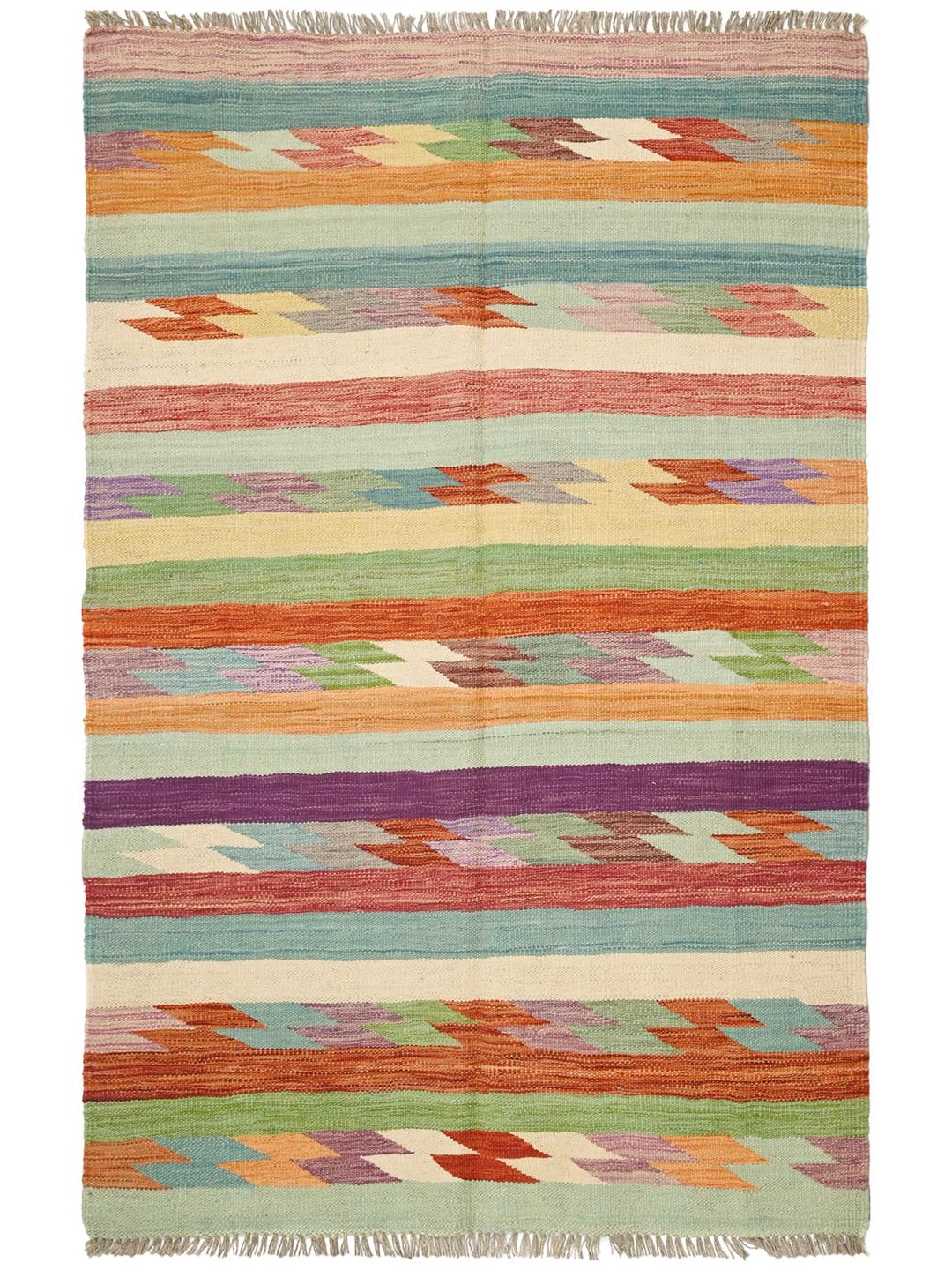
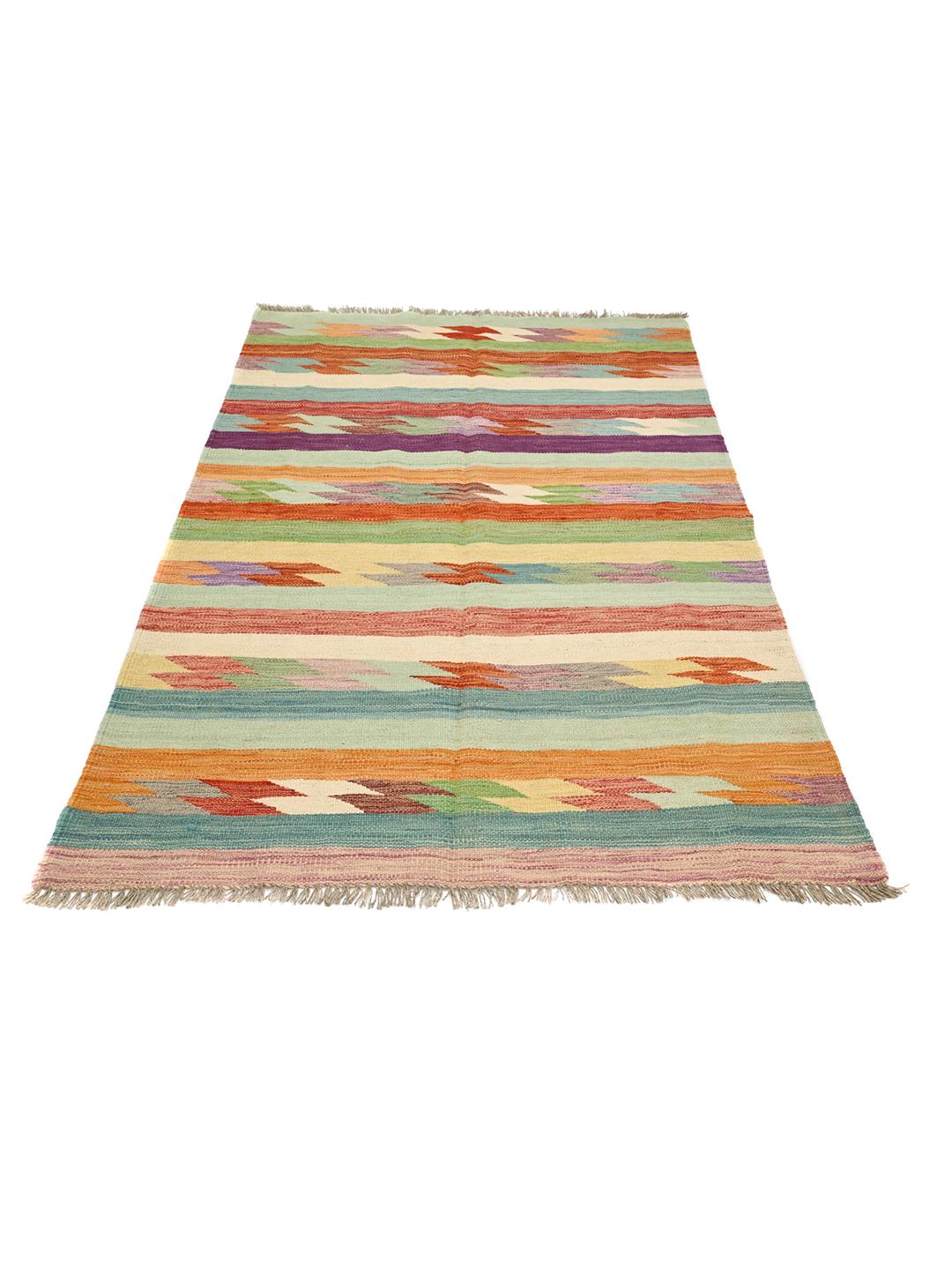
Kilim rugs are deeply rooted in the nomadic and village traditions of the Middle East and Central Asia. Originally created by tribal weavers for practical use as floor coverings, blankets, or wall hangings, these textiles have evolved into highly sought-after decorative pieces that bridge the gap between ancient function and contemporary aesthetics.
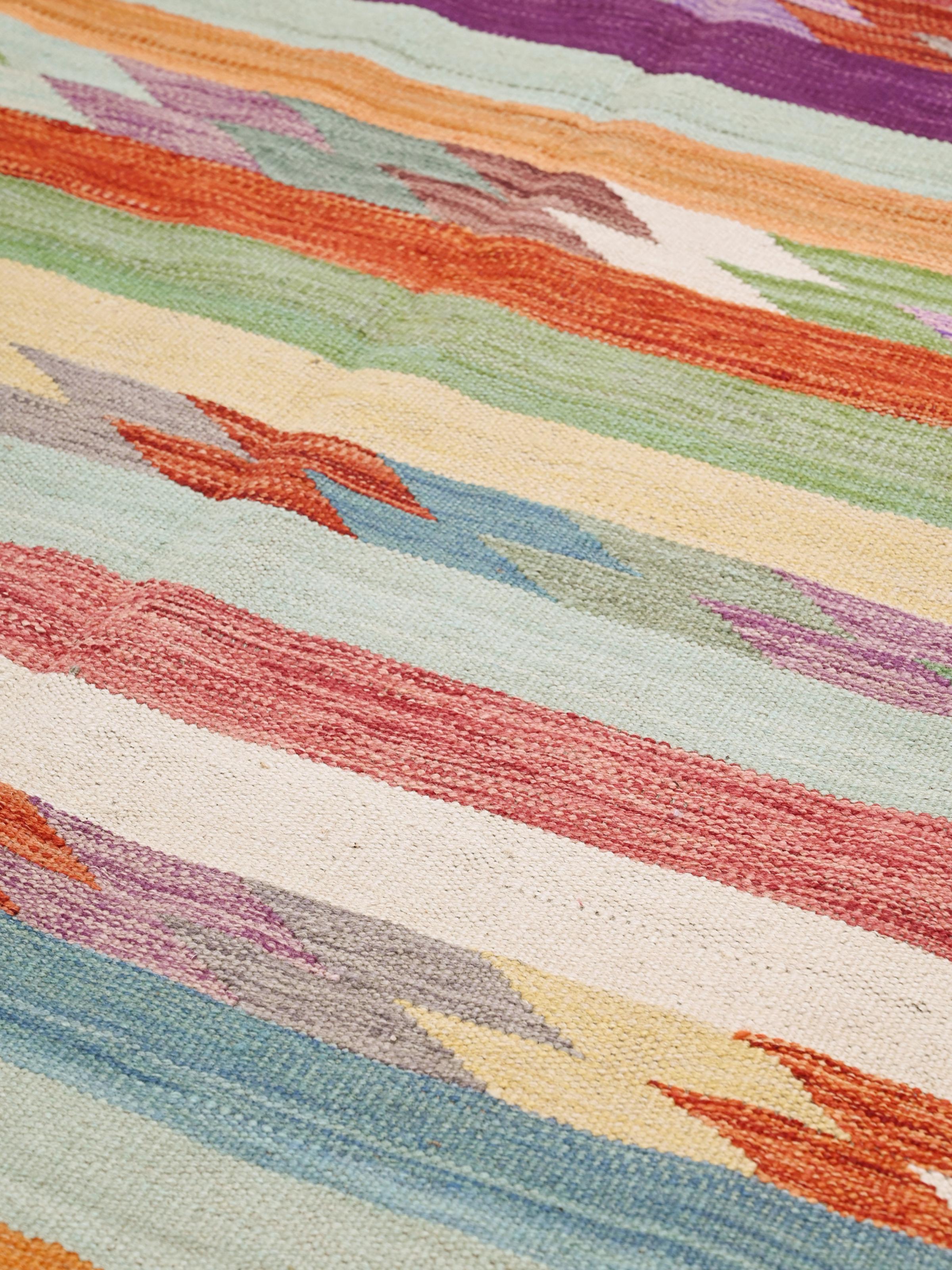
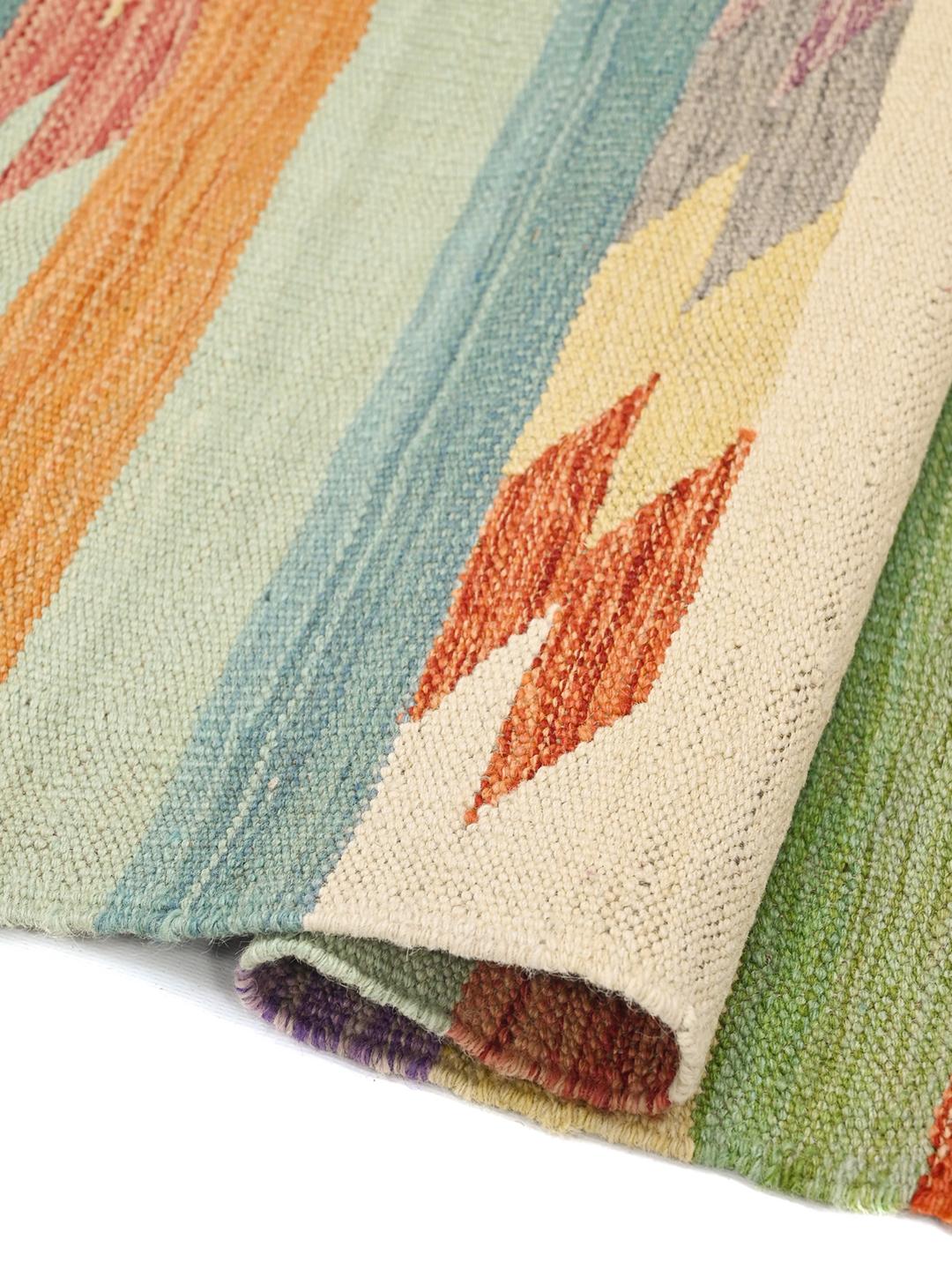
The term kilim refers to the specific flat-weaving technique where the warp and weft threads are woven tightly to create a smooth, pile-less surface. This method creates a thin yet incredibly resilient fabric that is reversible, as the design typically appears identical on both sides, a hallmark of high-quality craftsmanship in this tradition.
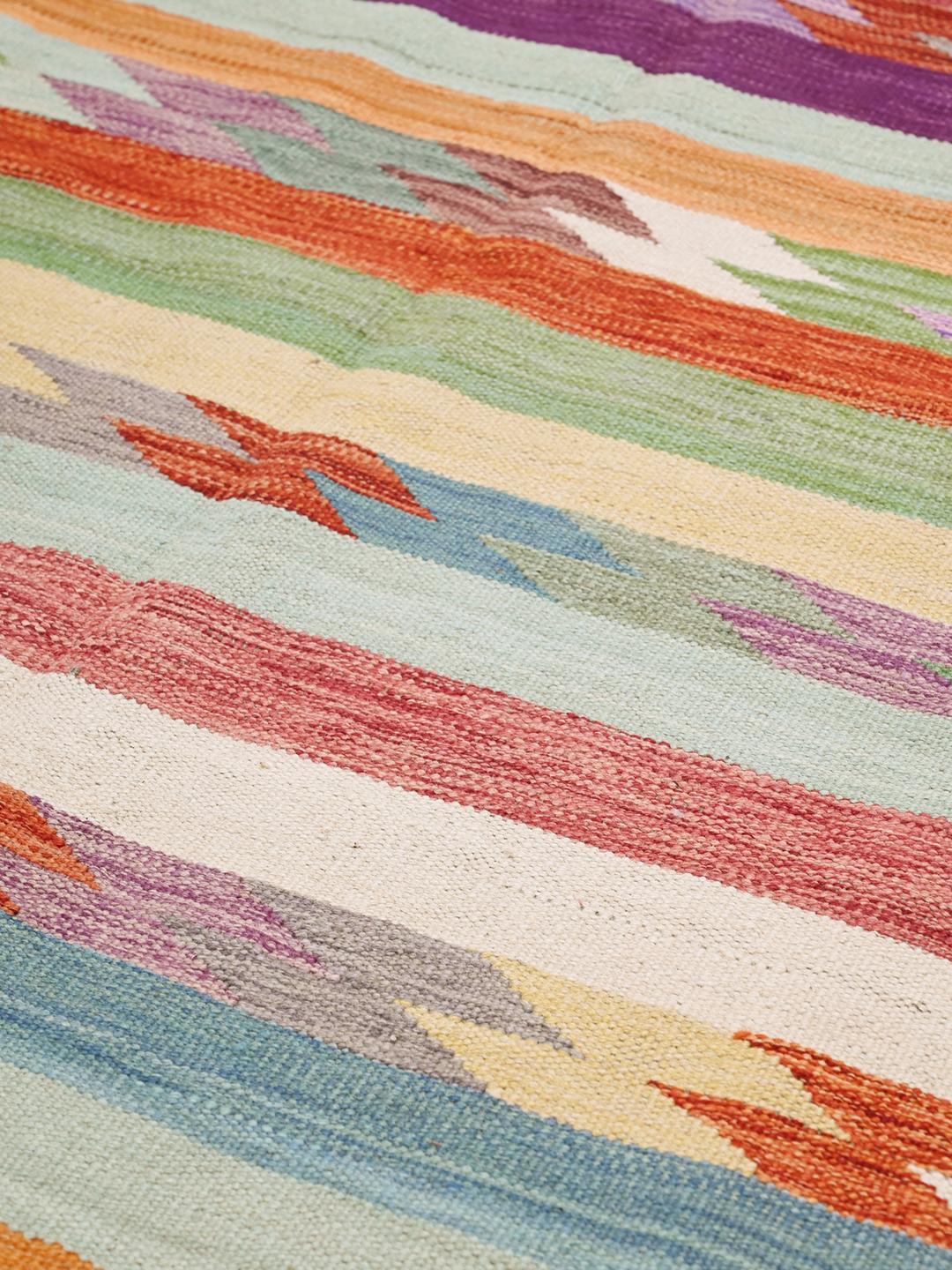
Visually, these rugs are defined by their geometric language. You will often see repeating motifs like zig-zags, diamonds, and stripes, which are created by the weaver using a discontinuous weft technique. This specific rug showcases a vibrant, multicoloured palette that highlights the creative freedom found in Afghan textile design, moving away from more rigid, formal floral patterns.
Today, owning a hand-woven kilim is a way to connect with a long-standing cultural legacy. These rugs are prized by collectors not just for their aesthetic appeal, but for the skill and cultural narrative they represent. Each piece is a tangible link to the history of the regions where these techniques have been passed down through generations.