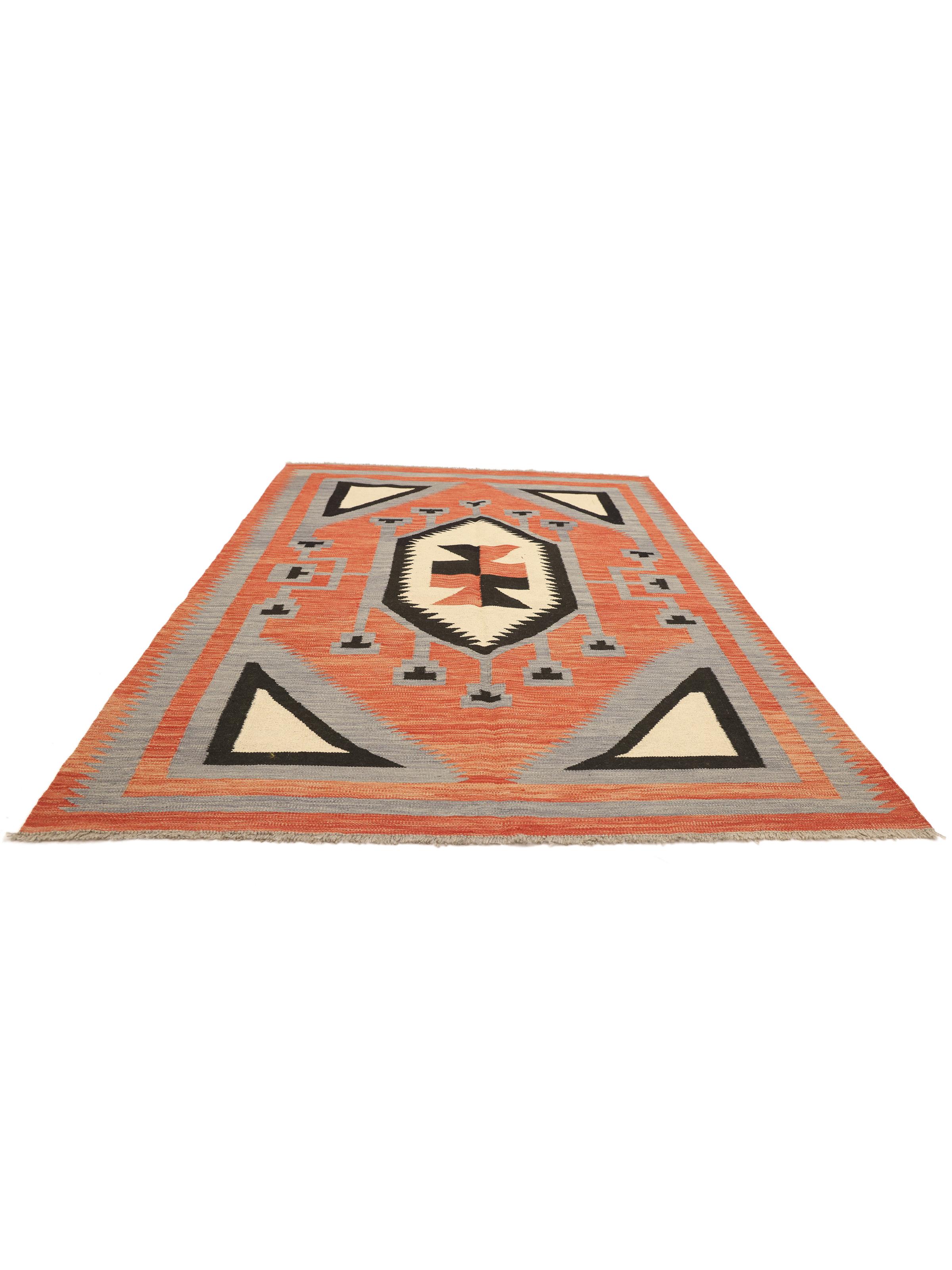
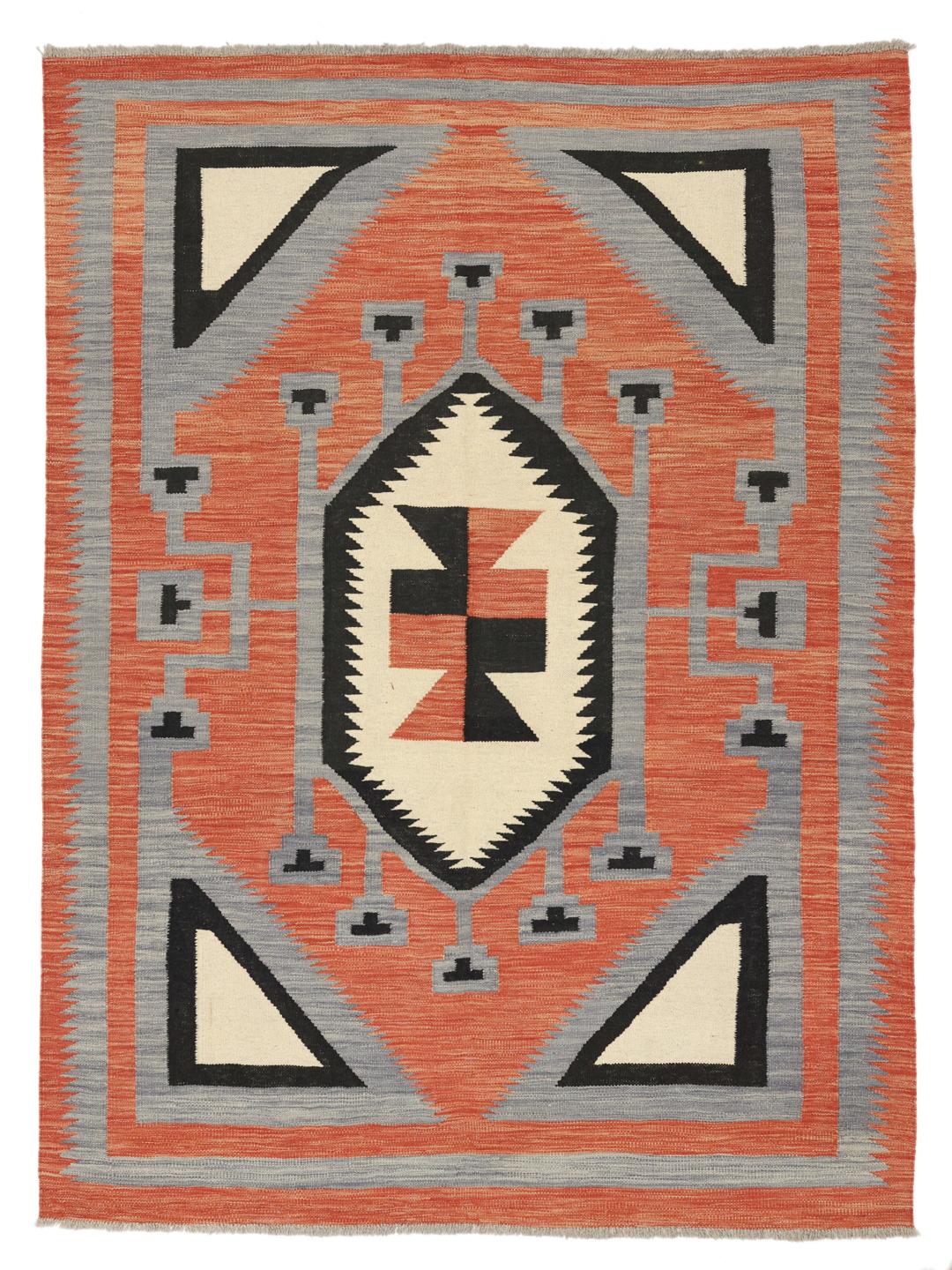
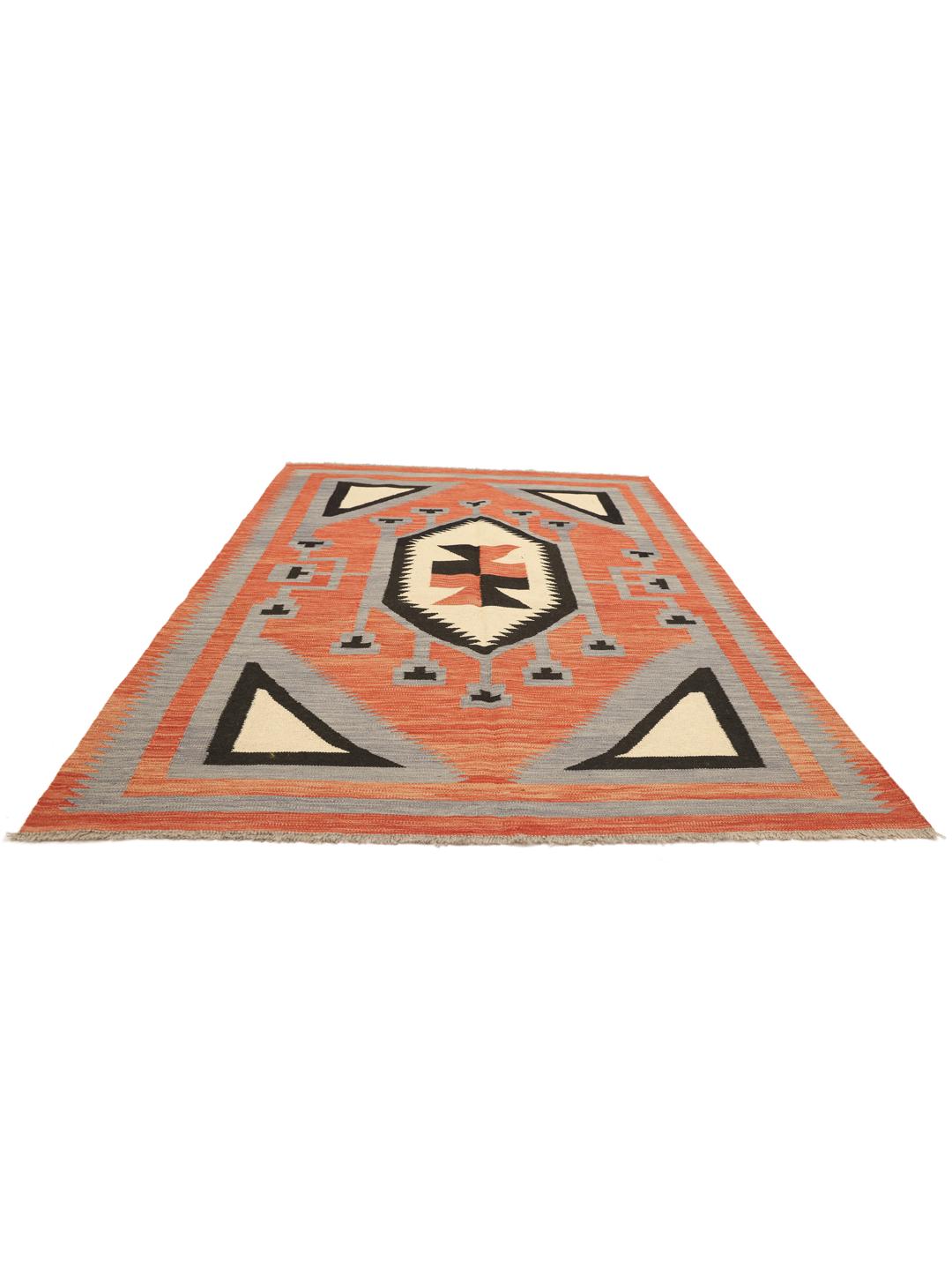
Kilim weaving has deep roots across Central Asia and the Middle East, where flatwoven textiles were originally crafted by nomadic tribes for practical everyday use. Flatwoven rugs from Afghanistan carry a long history of tribal motifs and regional weaving identity, adapting over centuries while maintaining their traditional essence.
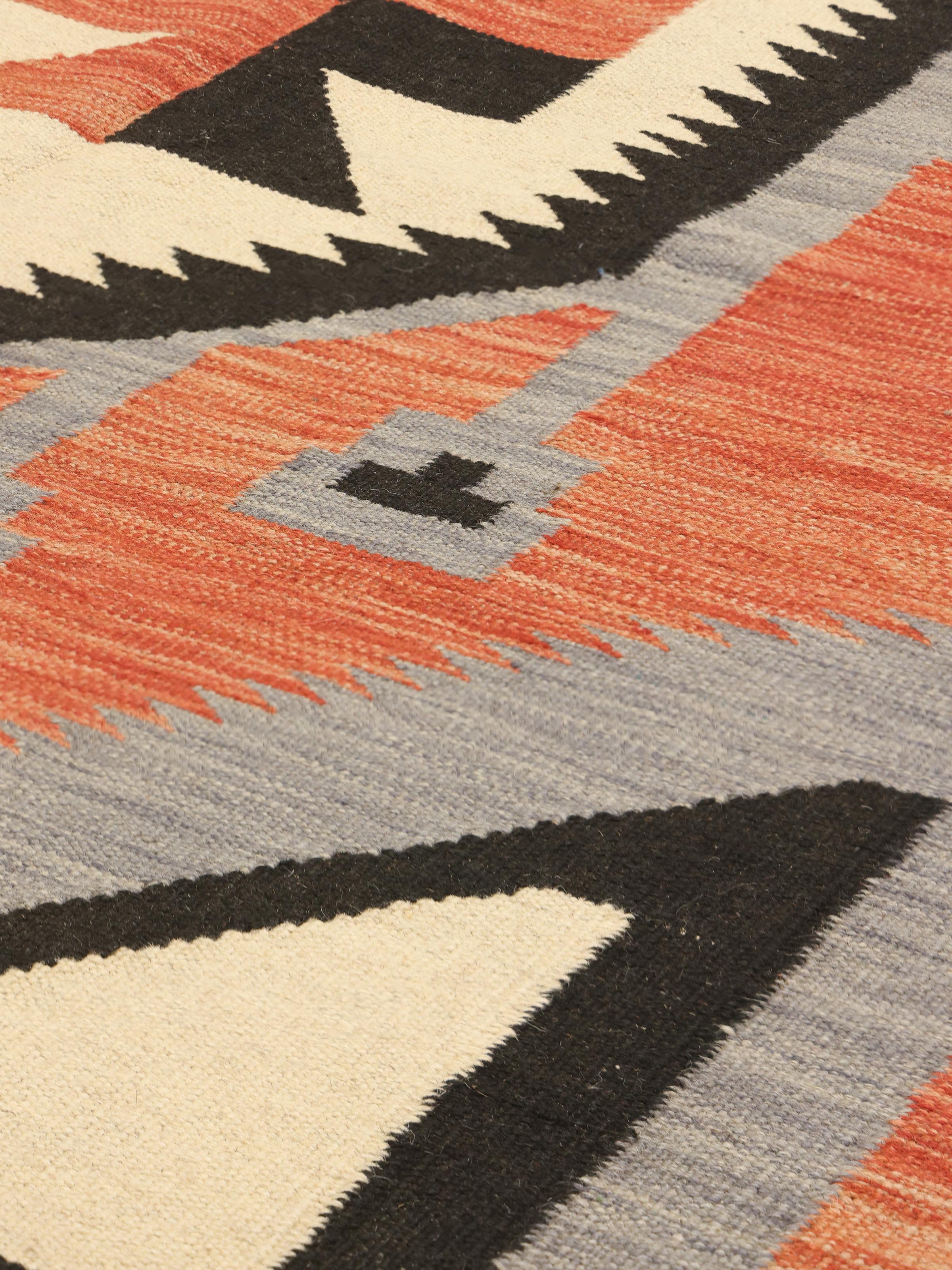
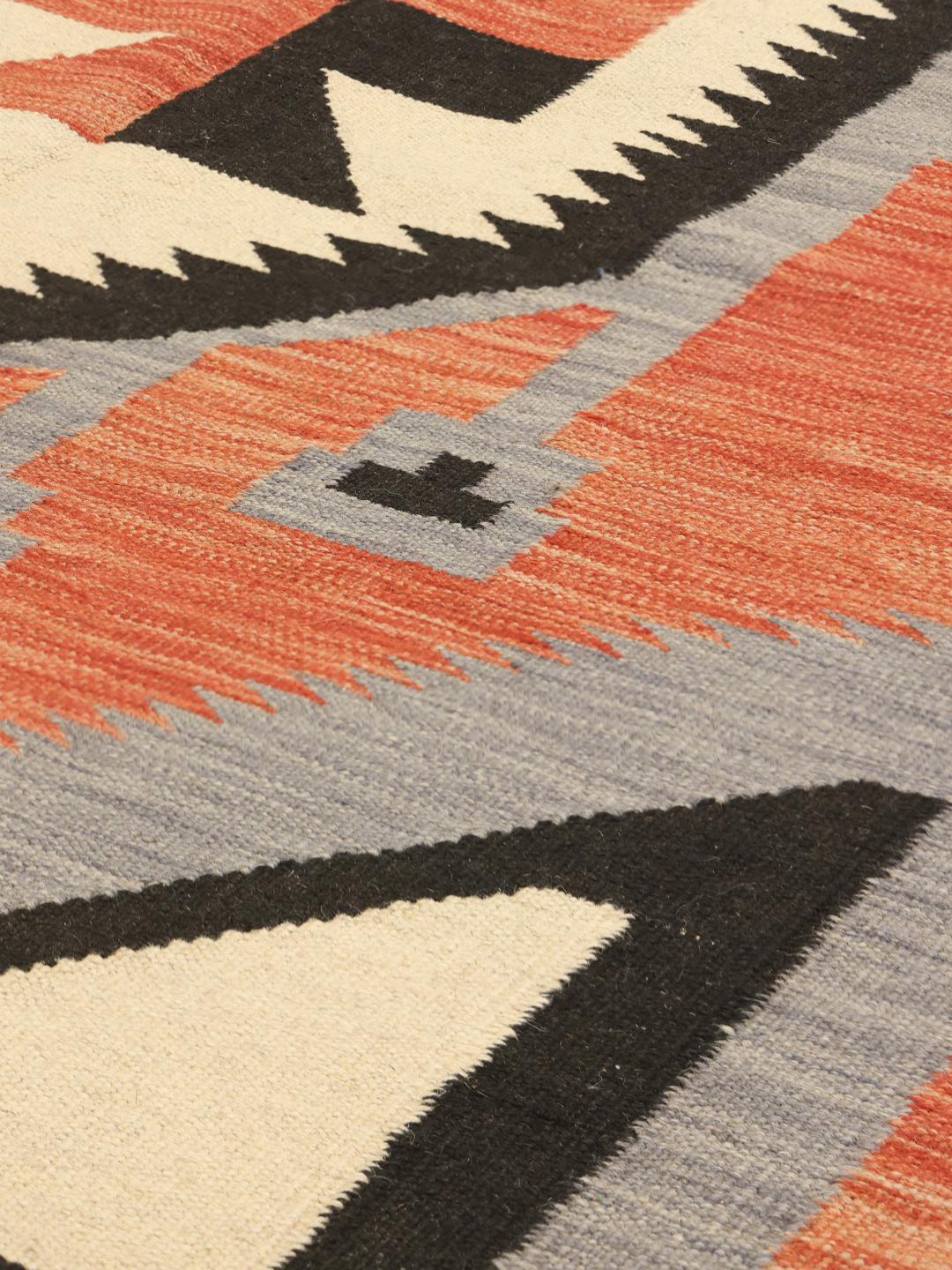
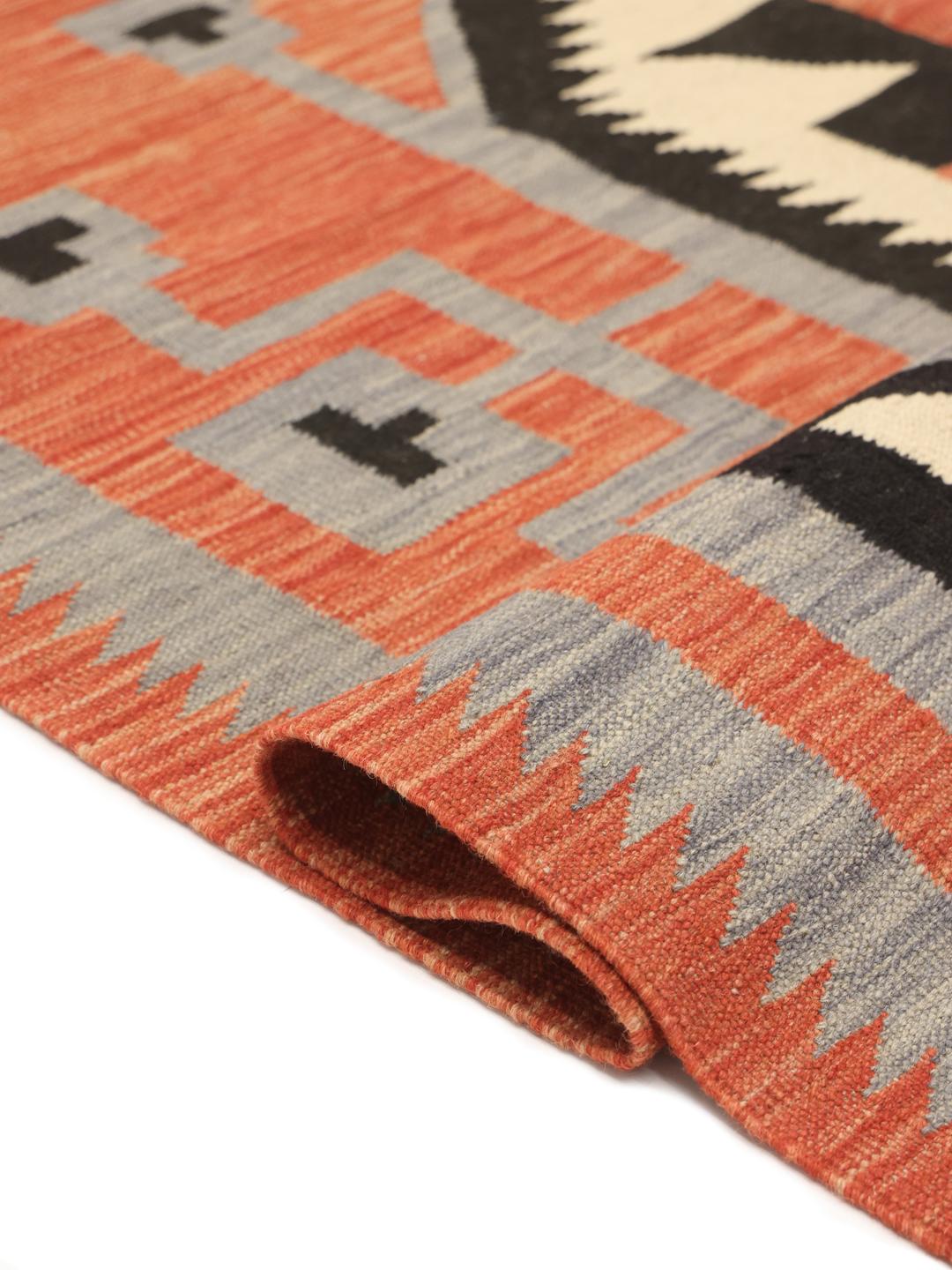
Unlike pile rugs, kilims are made using a flatweave construction where the pattern is created directly by interlacing the colored strands through the foundation. This creates a light, flexible, and reversible structure that is free of pile, highlighting the raw texture of the natural wool.
The visual language of modern kilims builds on traditional tribal symbology, featuring sharp geometric shapes, diamonds, and contrasting border elements. The central medallion motifs often carried protective meanings or family identifiers, translated here into clean, bold geometry that suits contemporary rooms.
Rugs from this tradition remain sought after for their authentic connection to regional craft techniques. Acquiring an authentic flatwoven piece connects your home to a living tradition of hand weaving, preserving cultural history in a functional form.