Kilim weaving is one of the oldest textile traditions in the world, rooted in the nomadic communities of Central and South Asia. Traditionally woven for practical use as floor coverings, tent dividers, and saddlebags, kilims are defined by their flat, pileless structure. Afghan weavers have long been recognized for their mastery of this form, using indigenous weaving styles passed down through generations.
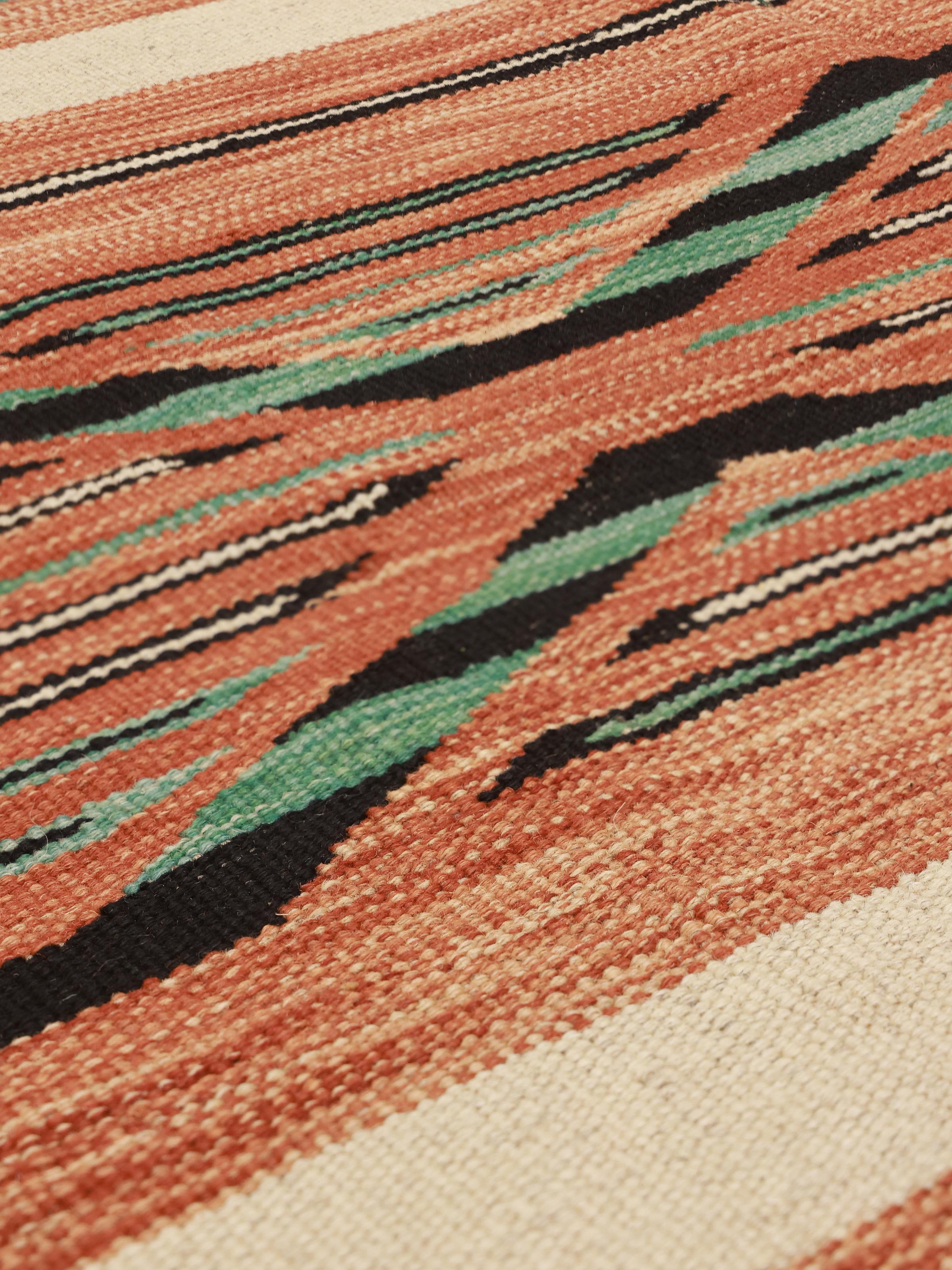
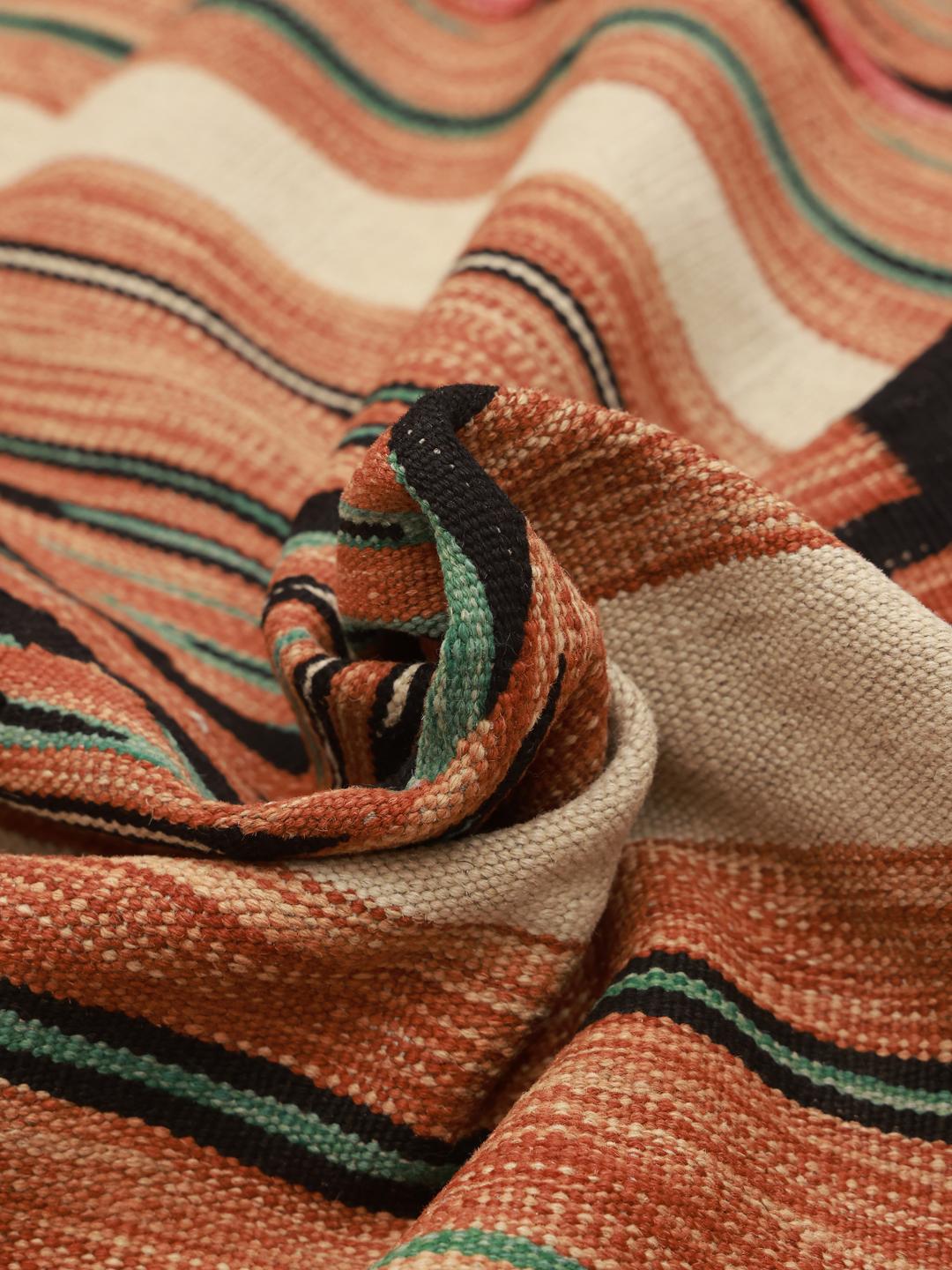
The modern kilim category represents an evolution of this ancient craft. While traditional tribal kilims often feature deep red fields and specific clan symbols, modern adaptations introduce a broader palette and contemporary spatial layouts. The use of hand-twisted wool on a cotton frame ensures a stable structure that retains its shape over time, giving modern interiors access to authentic traditional craft.
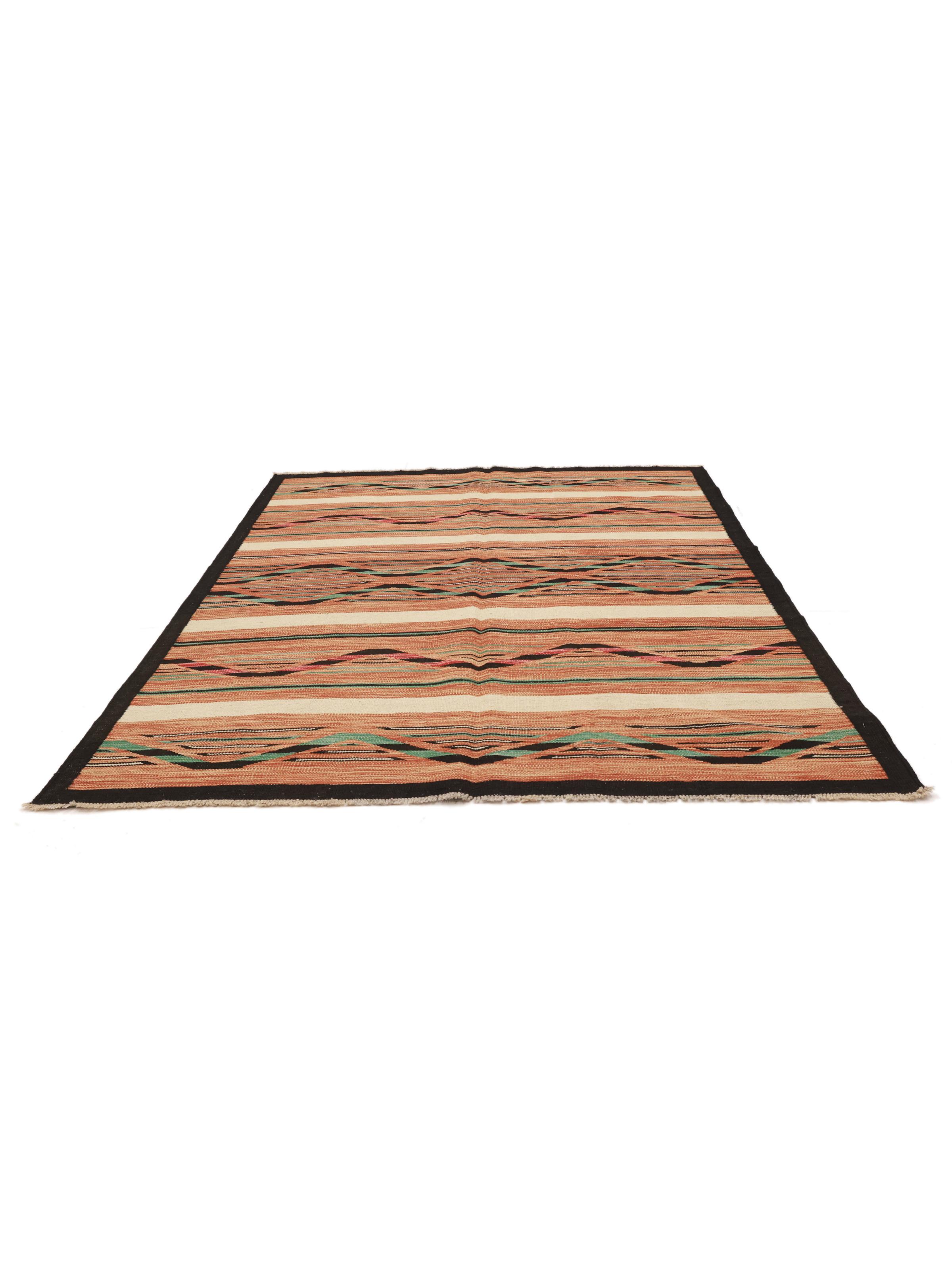
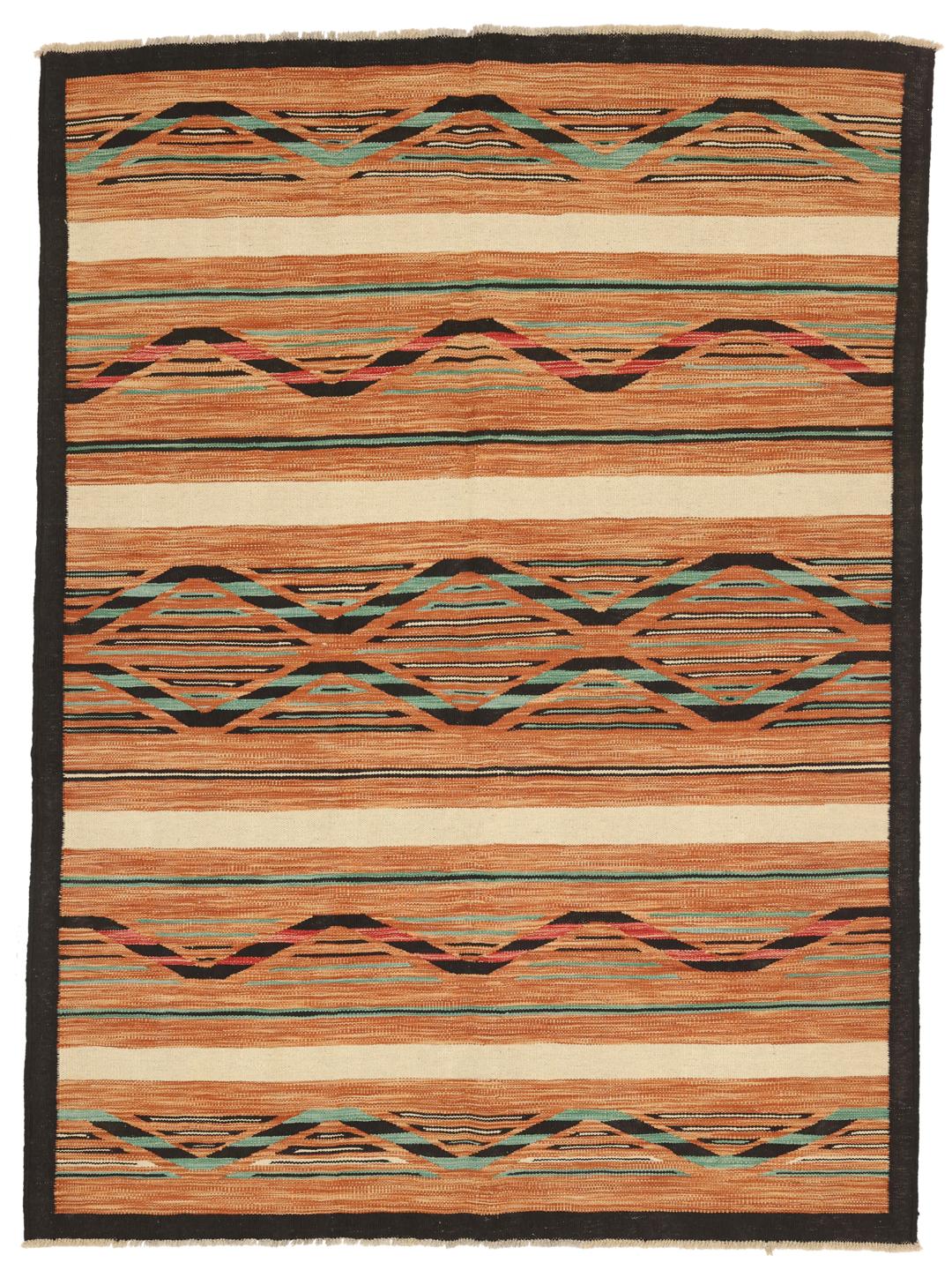
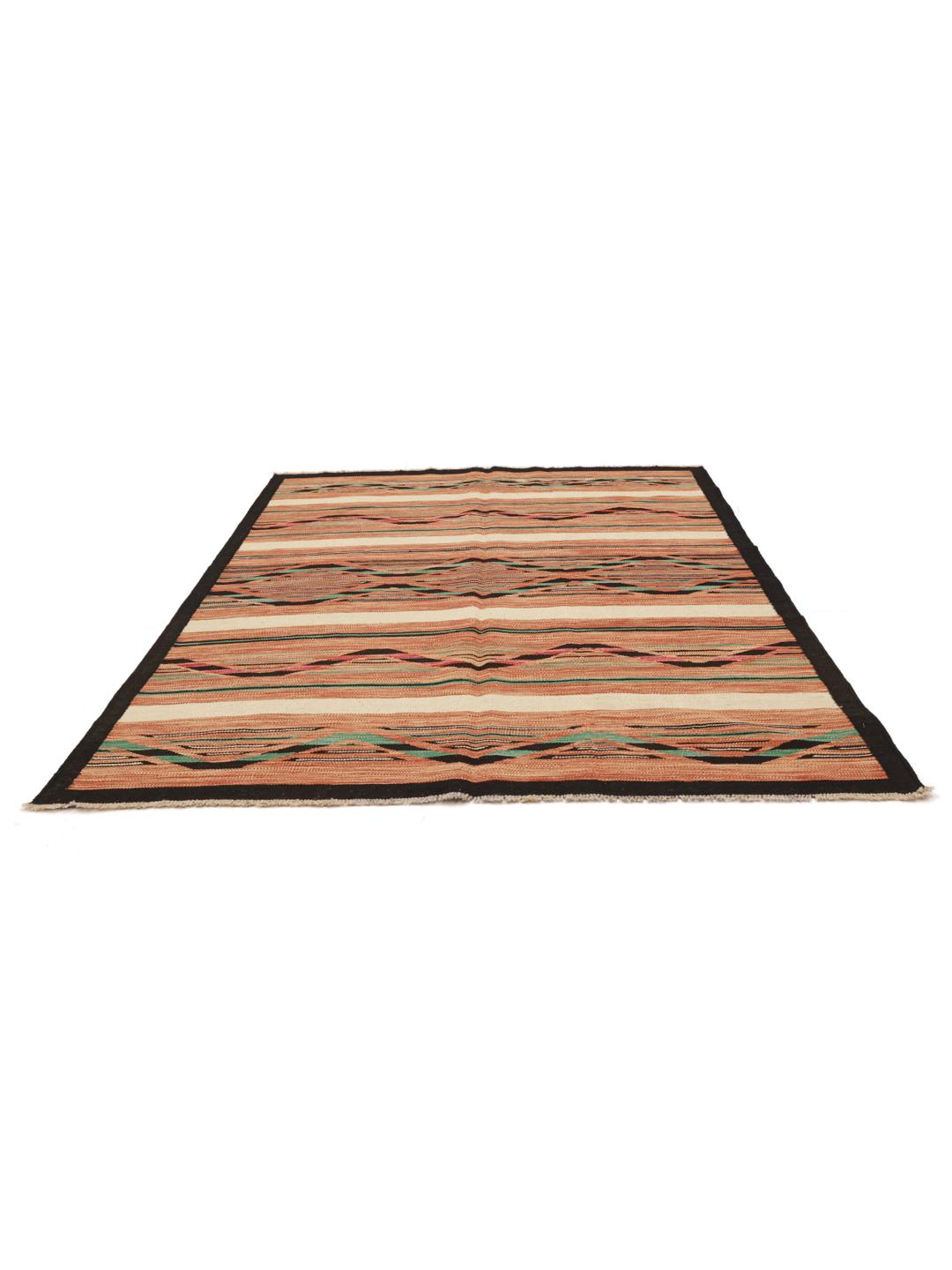
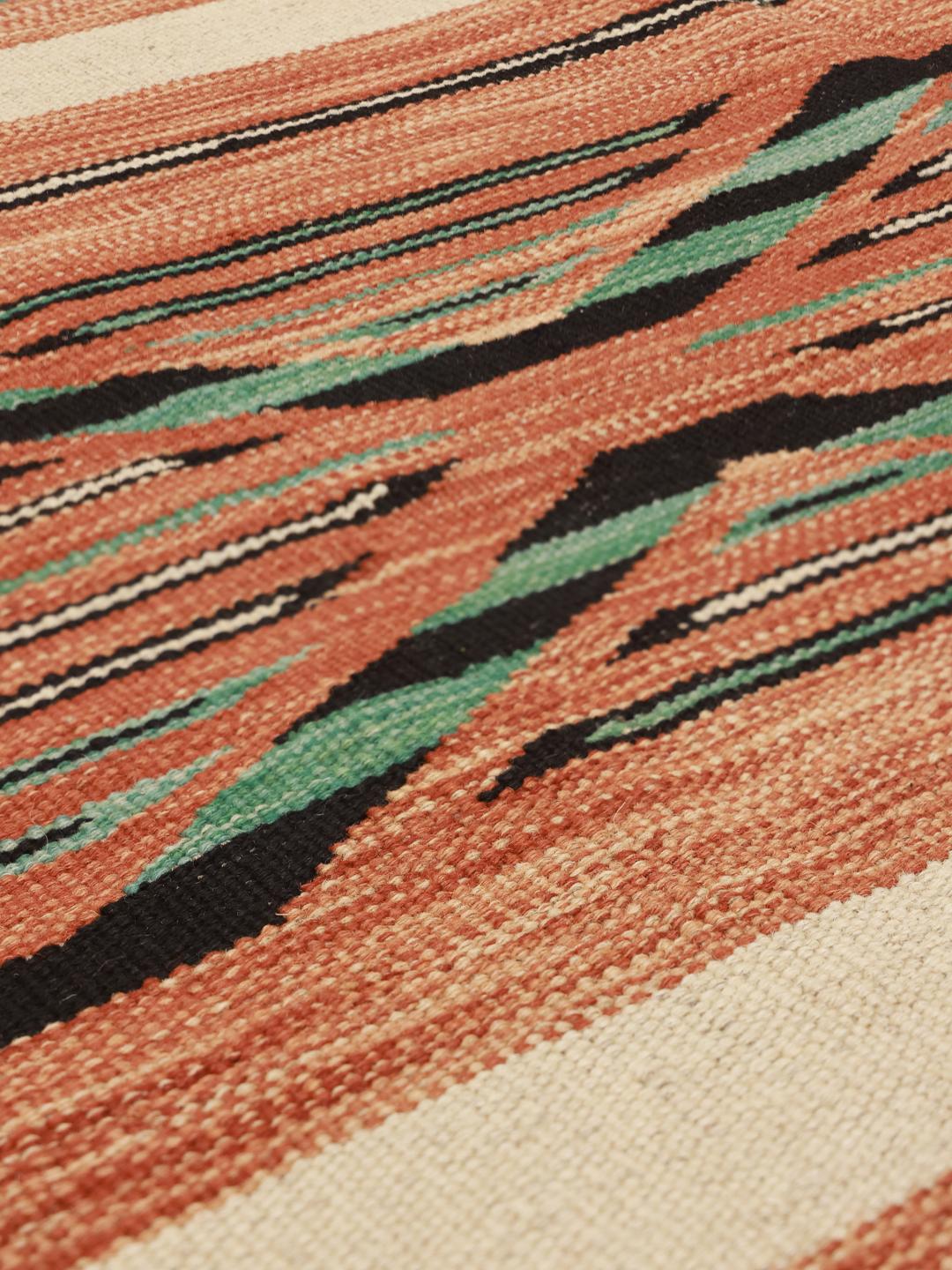
Design elements in modern Afghan kilims often balance geometric simplicity with rich decorative bands. Diamond motifs, stepped borders, and rhythmic stripes work together to create structure across the surface. The inclusion of vibrant orange tones alongside classic geometric framing highlights how contemporary color choices can refresh historic pattern traditions.
Flatwoven rugs from Afghanistan are highly prized by interior enthusiasts for their authenticity and versatility. Unlike mass-produced floor coverings, a handwoven kilim holds individual variations that showcase human touch. Acquiring an authentic Afghan kilim connects your home to a living artistic heritage.