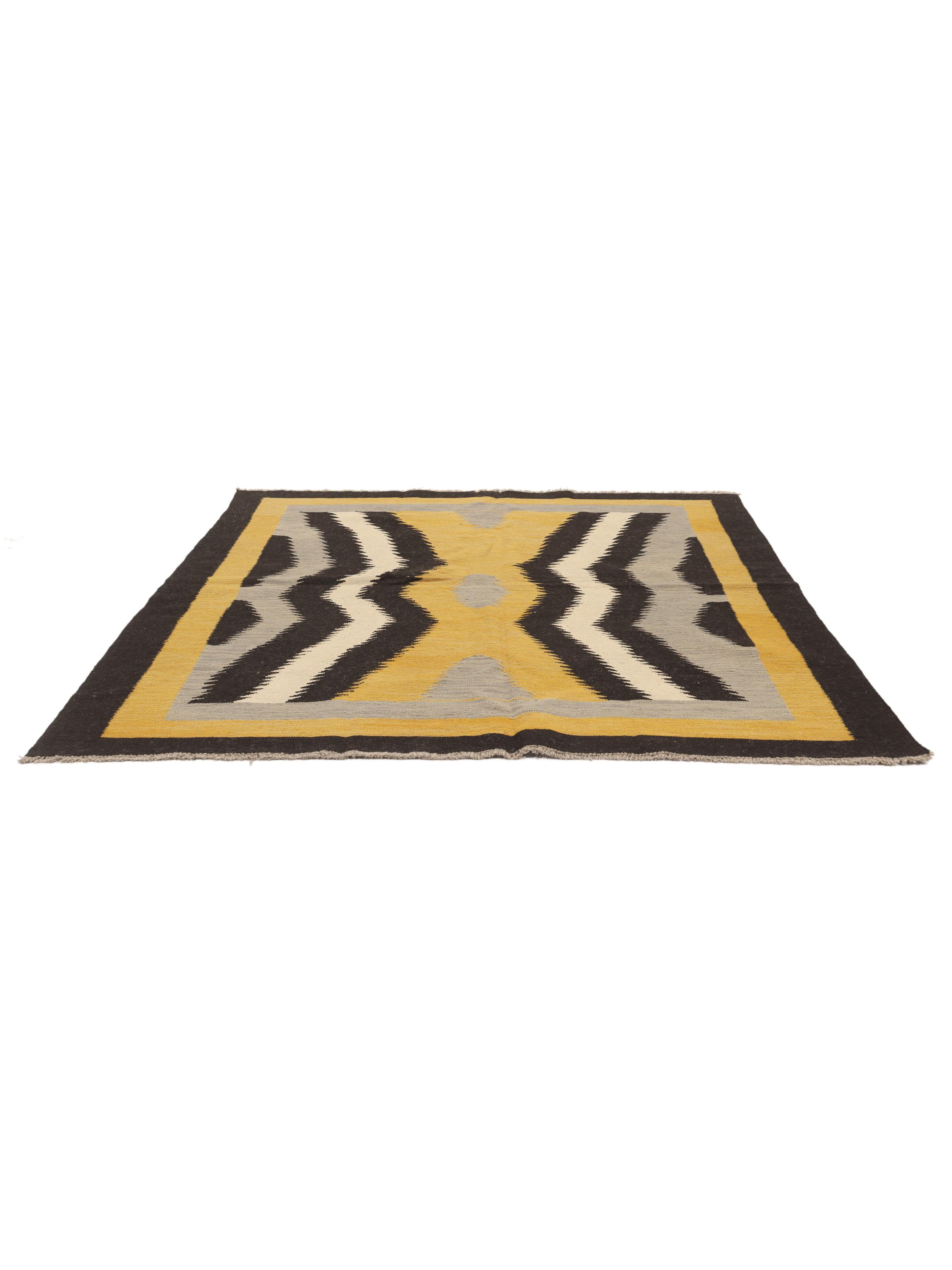
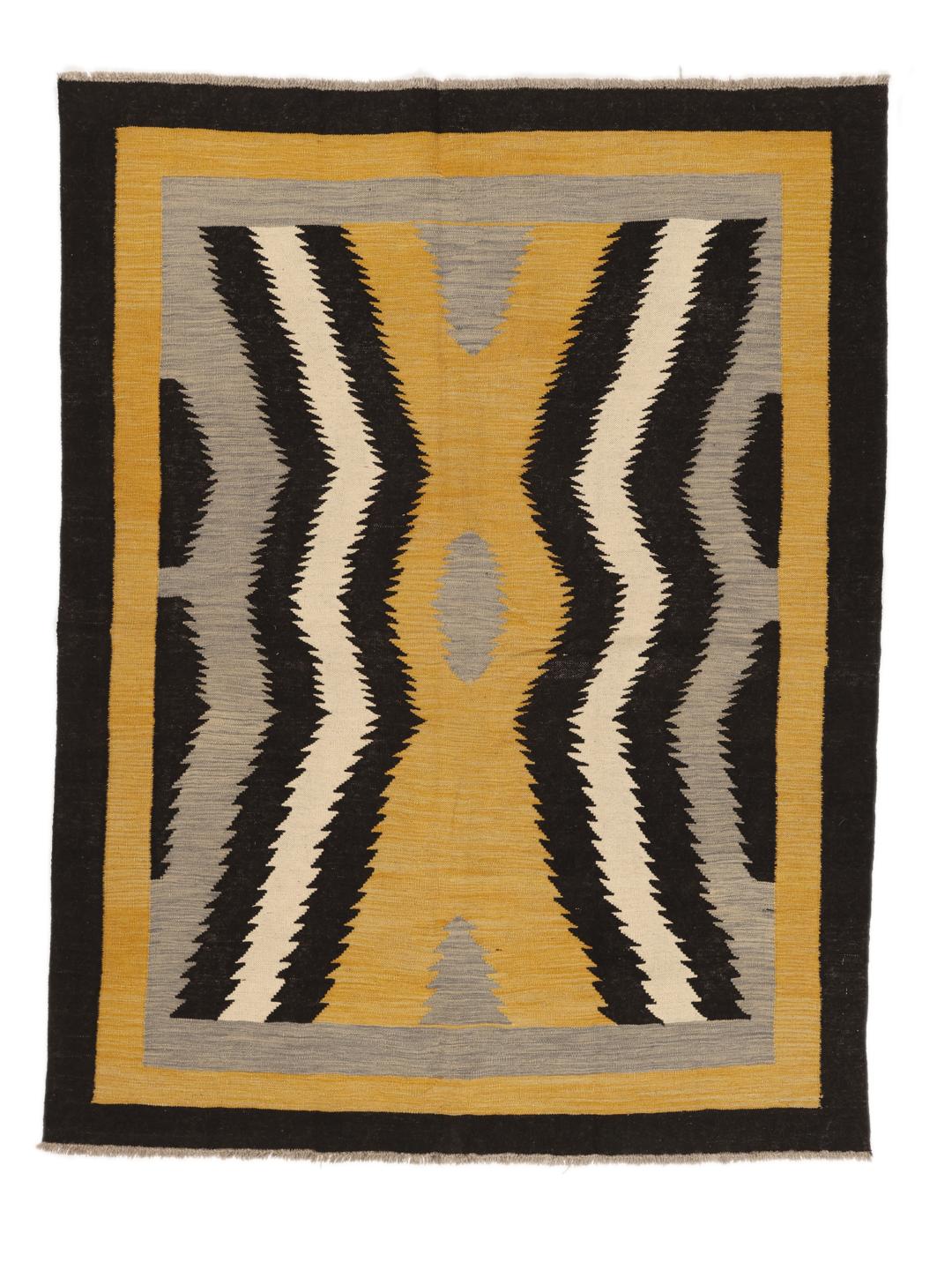
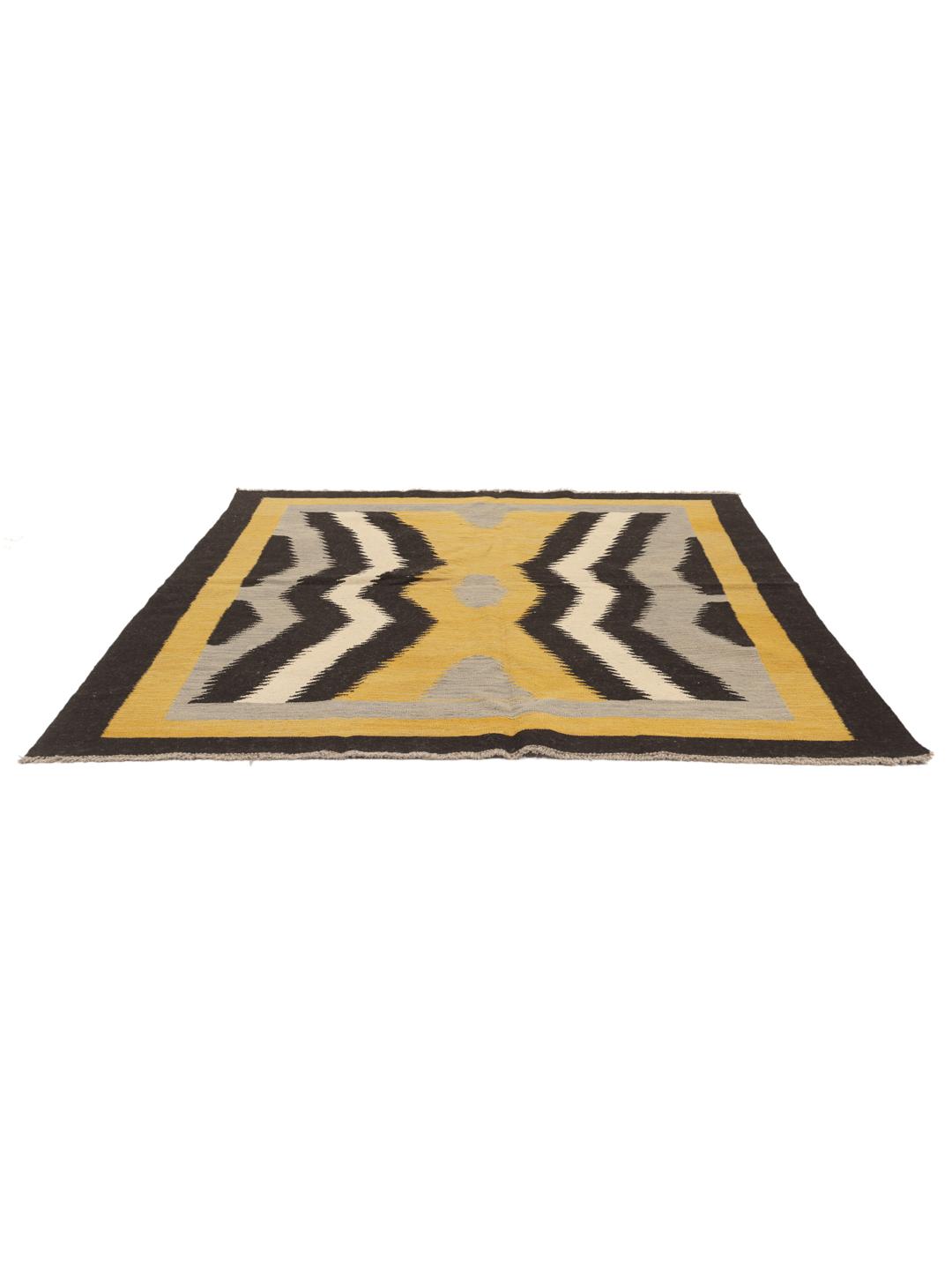
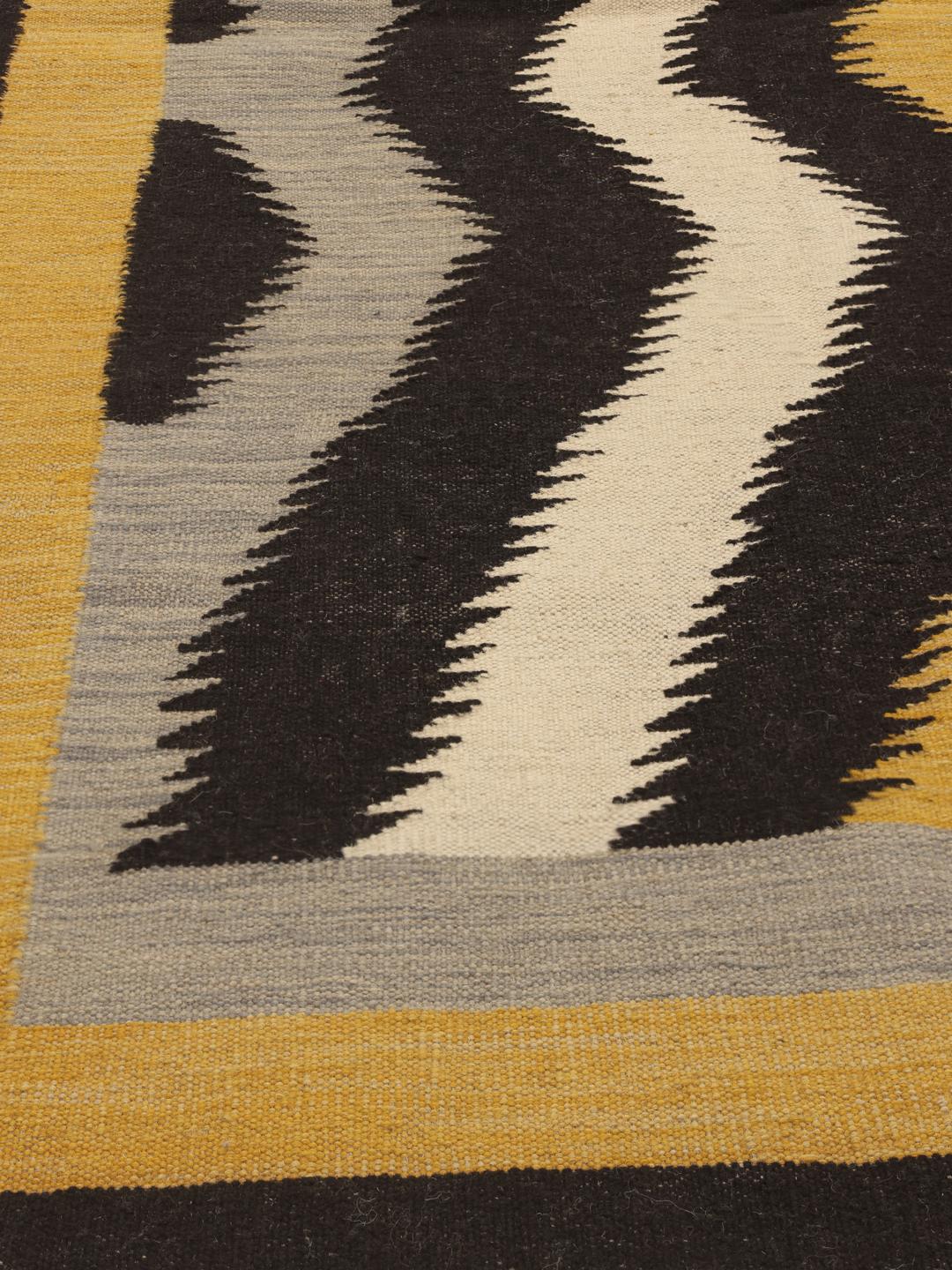
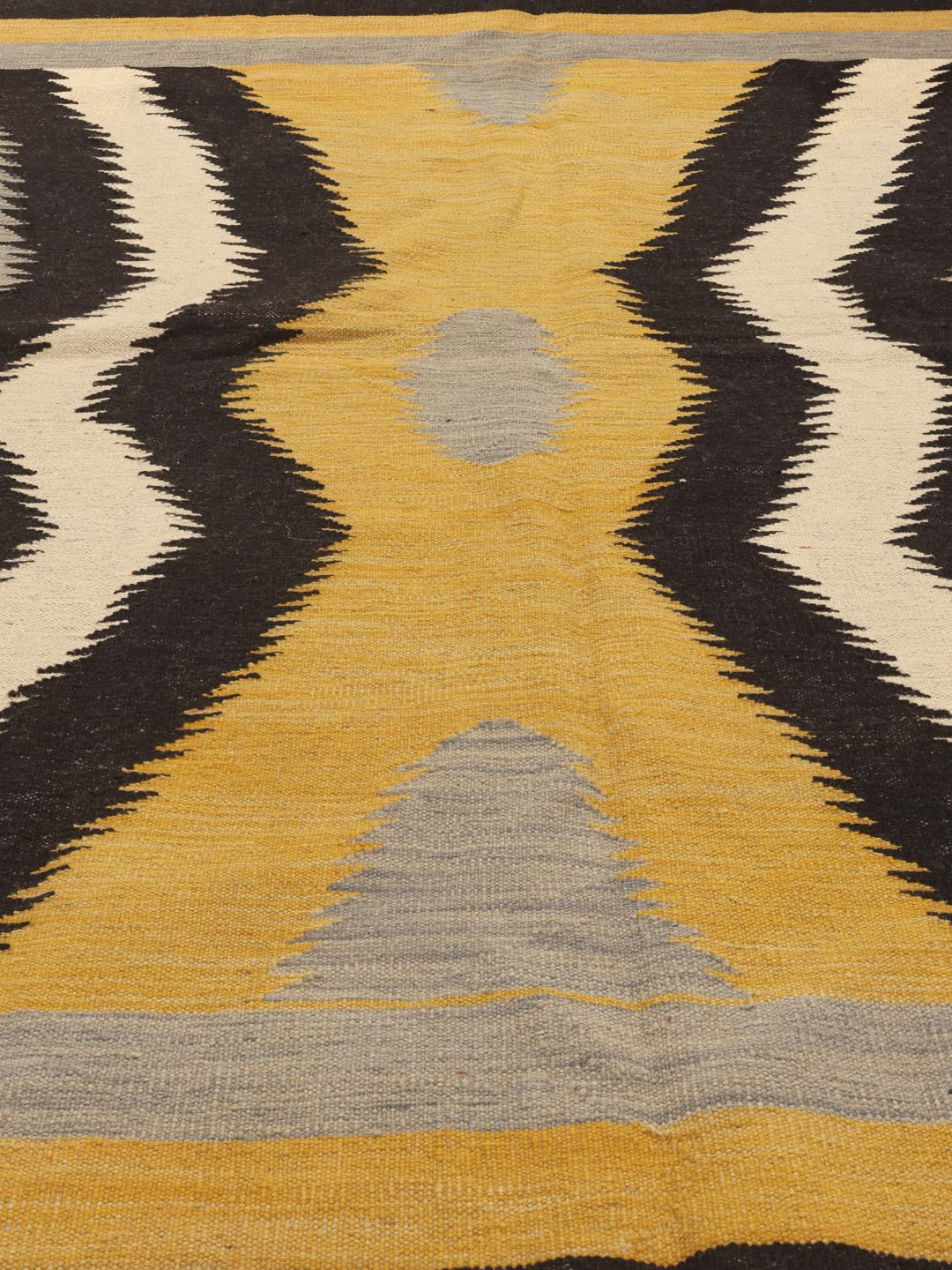
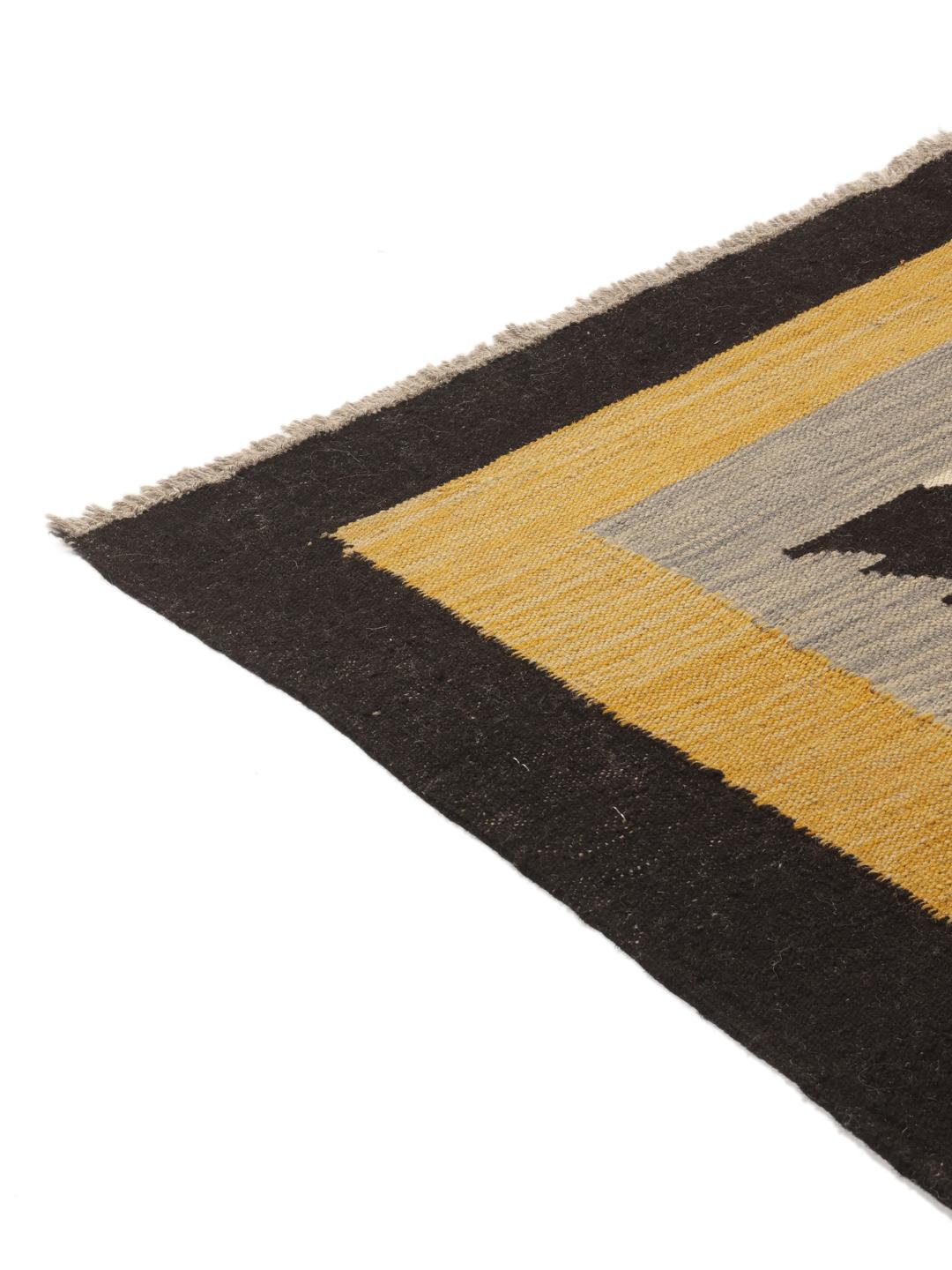
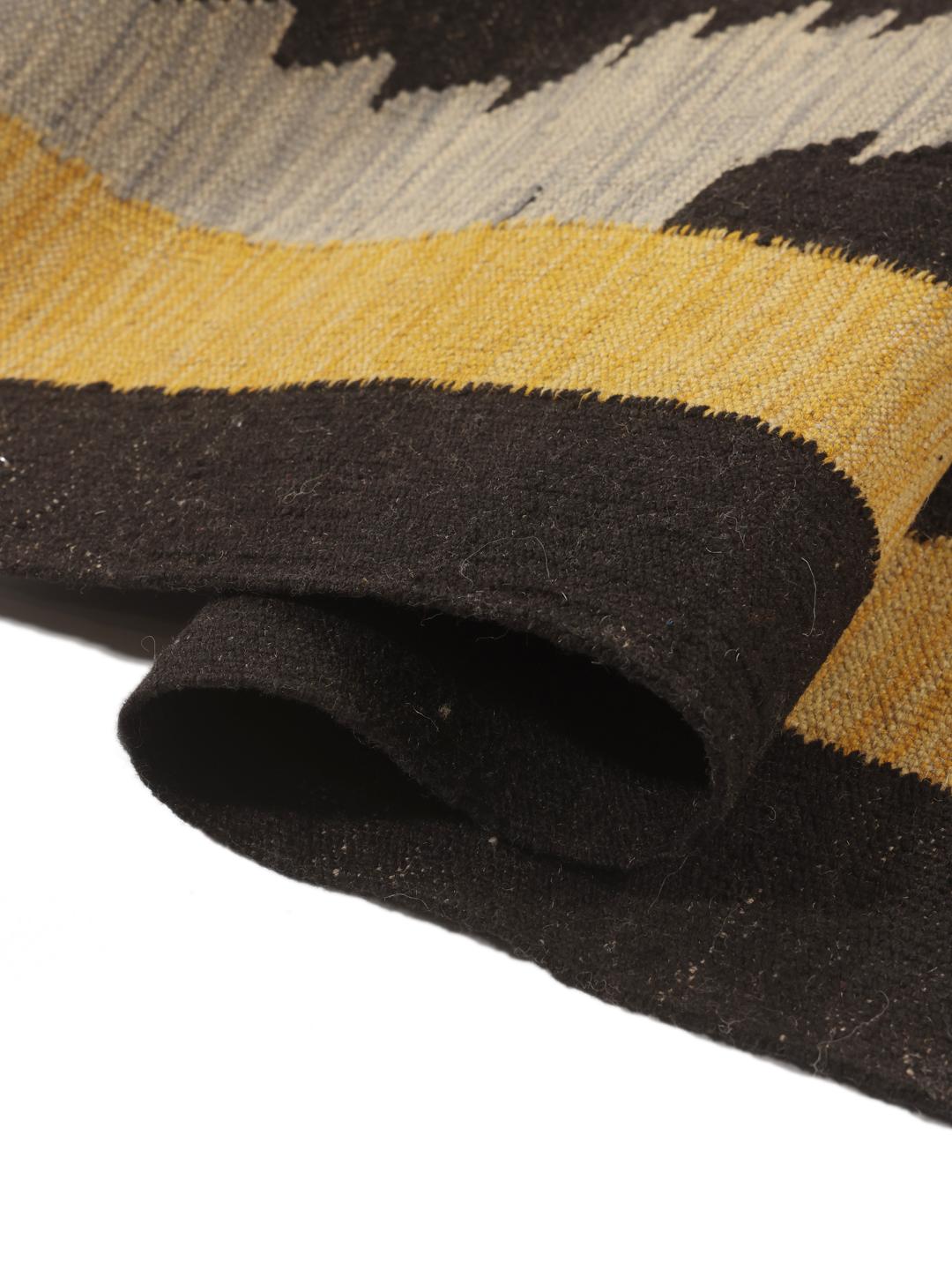
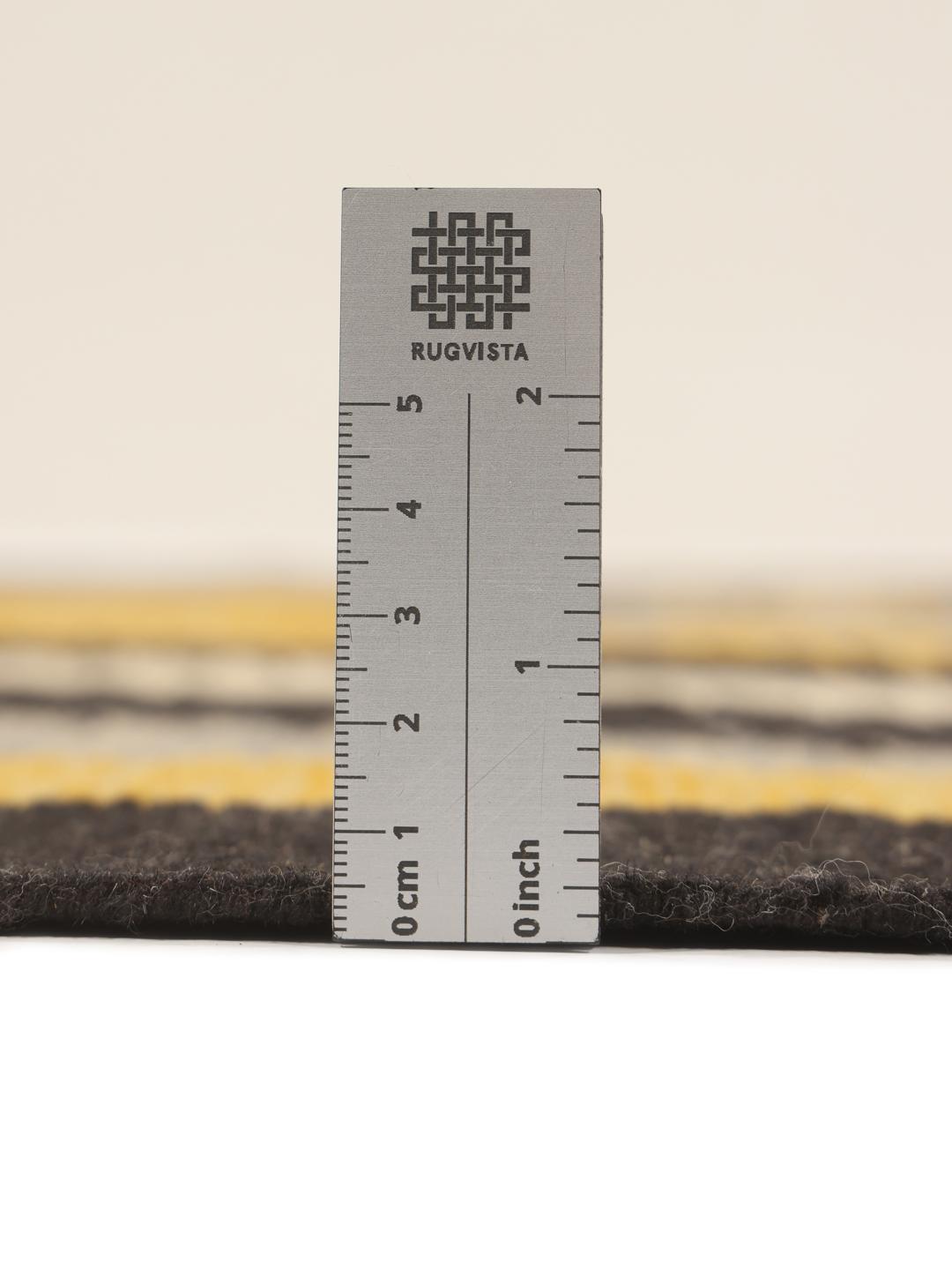
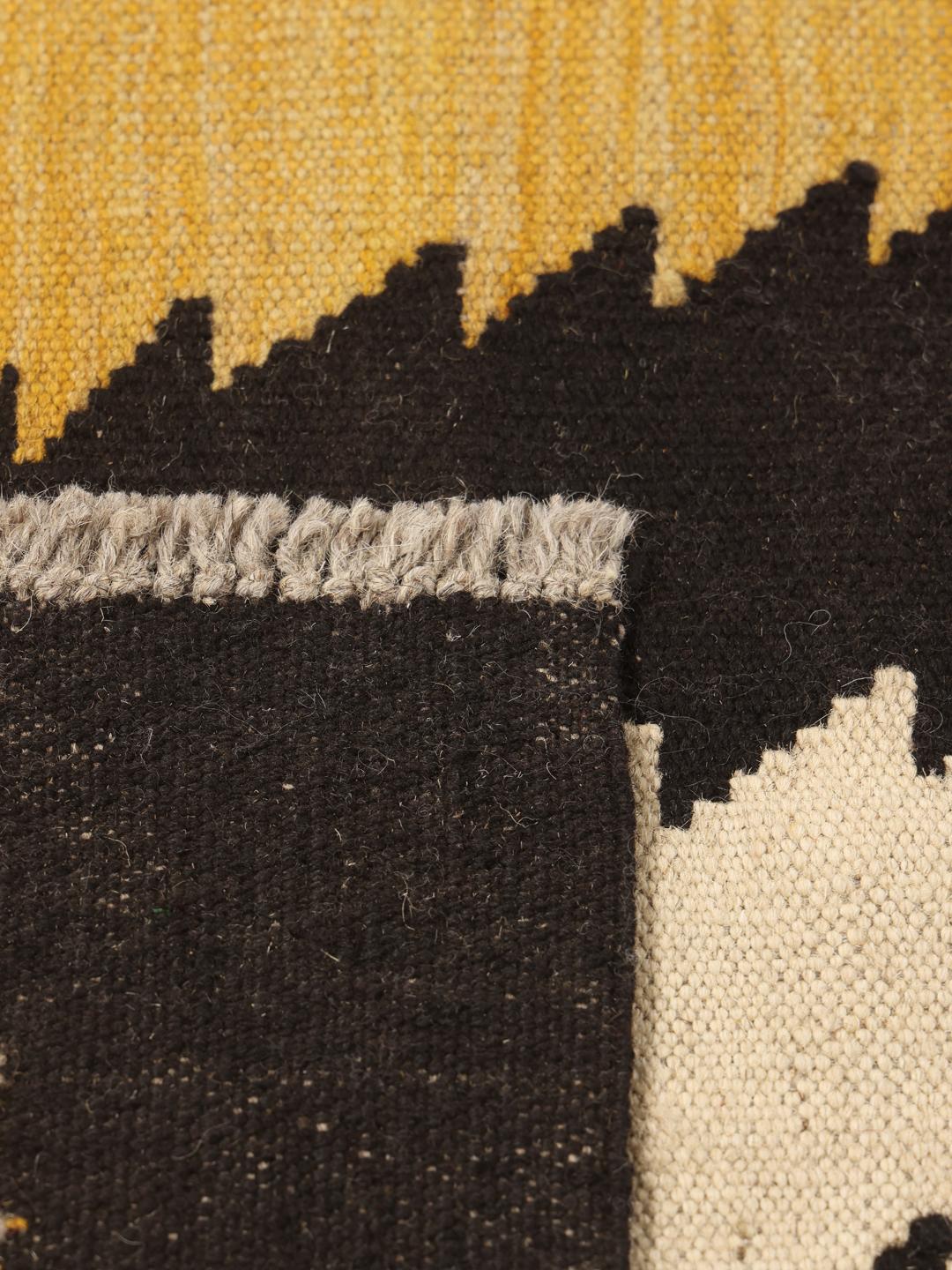
Kilim rugs are a foundational textile tradition across the Middle East and Central Asia, celebrated for their flat-woven construction that lacks a traditional pile. Historically, these rugs were created by nomadic tribes as versatile, portable floor coverings, storage sacks, and wall hangings, designed to withstand the rigors of a migratory lifestyle while adding beauty to the home.
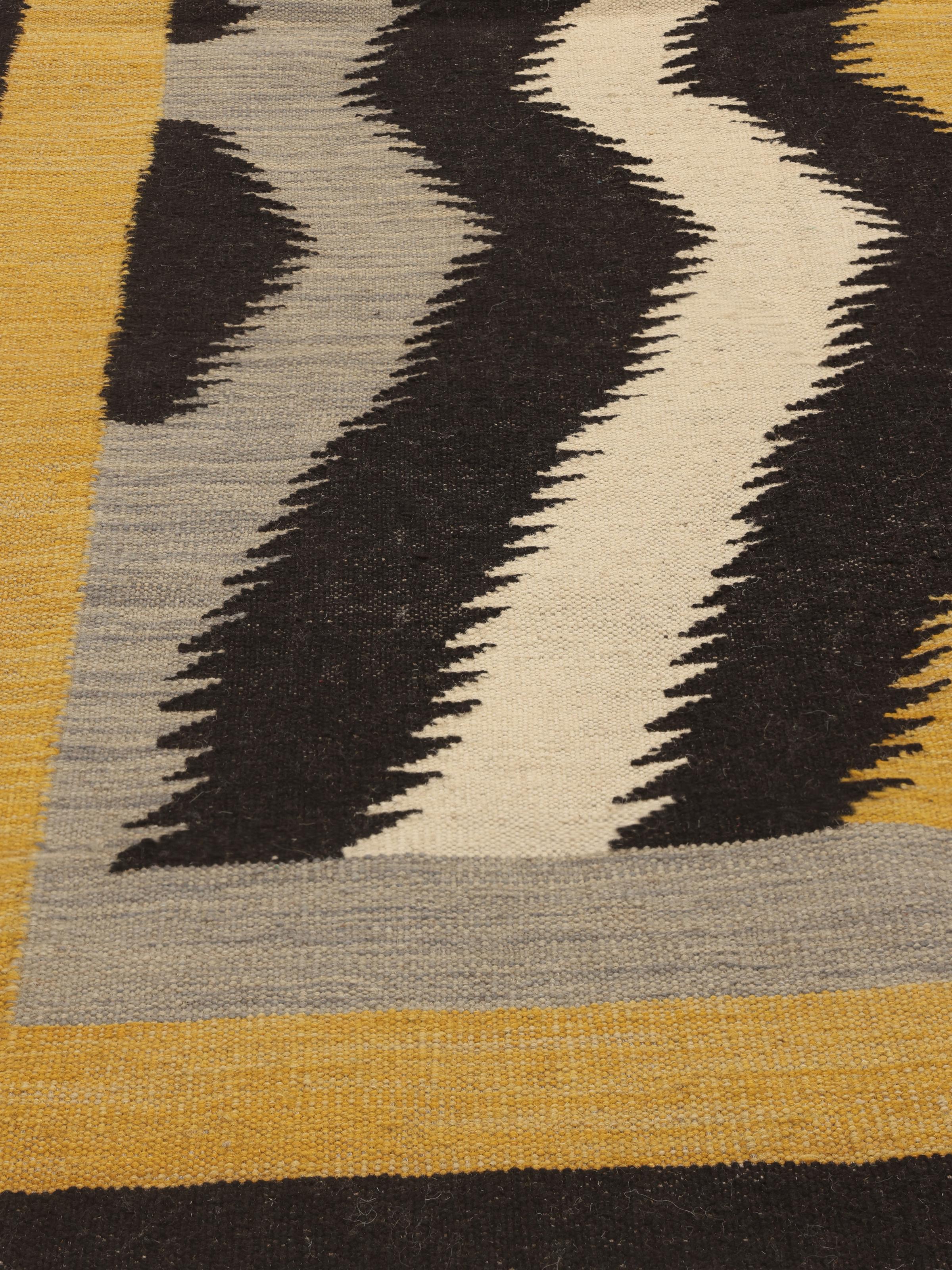
The terminology of the Kilim refers to the specific slit-weave technique where the weft threads are passed back and forth around the warp threads, creating the characteristic sharp, geometric patterns. This method is highly valued for its ability to produce intricate, bold designs without the need for complex loom attachments, relying instead on the weaver's memory and skill.
Modern Kilims, such as this piece from Afghanistan, represent an evolution of these ancient techniques into contemporary design language. By utilising the traditional flat-weave, weavers are now applying minimalist palettes and graphic, large-scale motifs that fit perfectly within modern interiors, bridging the gap between historical craft and current interior trends.
Owning a Kilim is an investment in cultural heritage and human skill. Because these rugs are traditionally made without patterns on paper, each one reflects the individual interpretation of the weaver. To own one is to possess a piece of art that represents centuries of design evolution, ensuring that your home is grounded in genuine, storied quality.