The tradition of flatweaving holds a storied place in the cultural heritage of Afghanistan and the wider Middle East, where nomadic and village communities mastered the art of creating durable textiles without a raised pile. Originally crafted as versatile floor coverings, blankets, and storage bags for life on the move, these flatwoven rugs relied on readily available materials and deep ancestral knowledge passed down through generations.
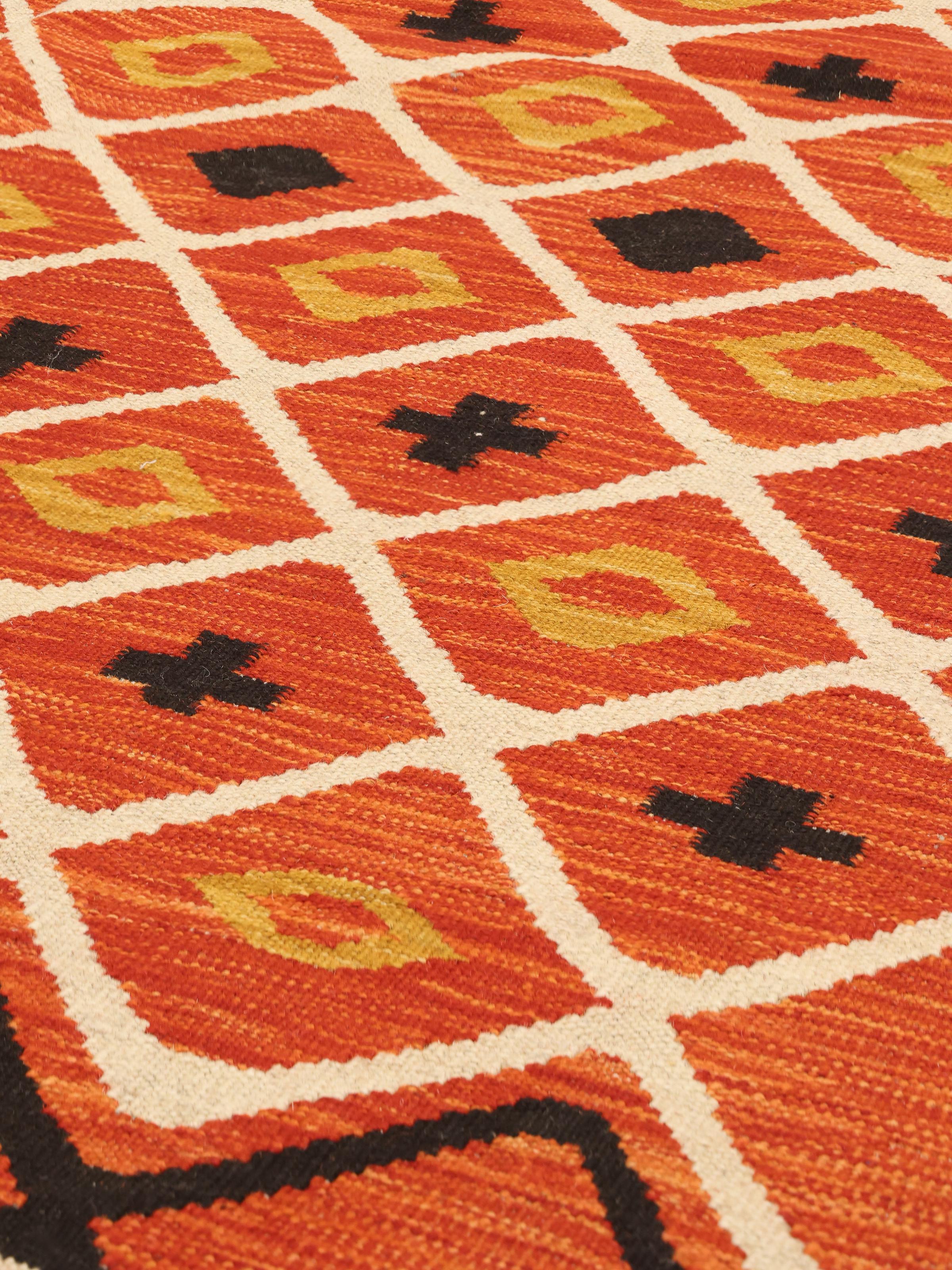
The term Kelim refers to this specific tapestry-woven technique, where the weft yarns are tightly beaten down to completely conceal the warp threads. This construction method produces a lightweight yet remarkably tough fabric that is reversible and practical, making it a staple of traditional households across the region.
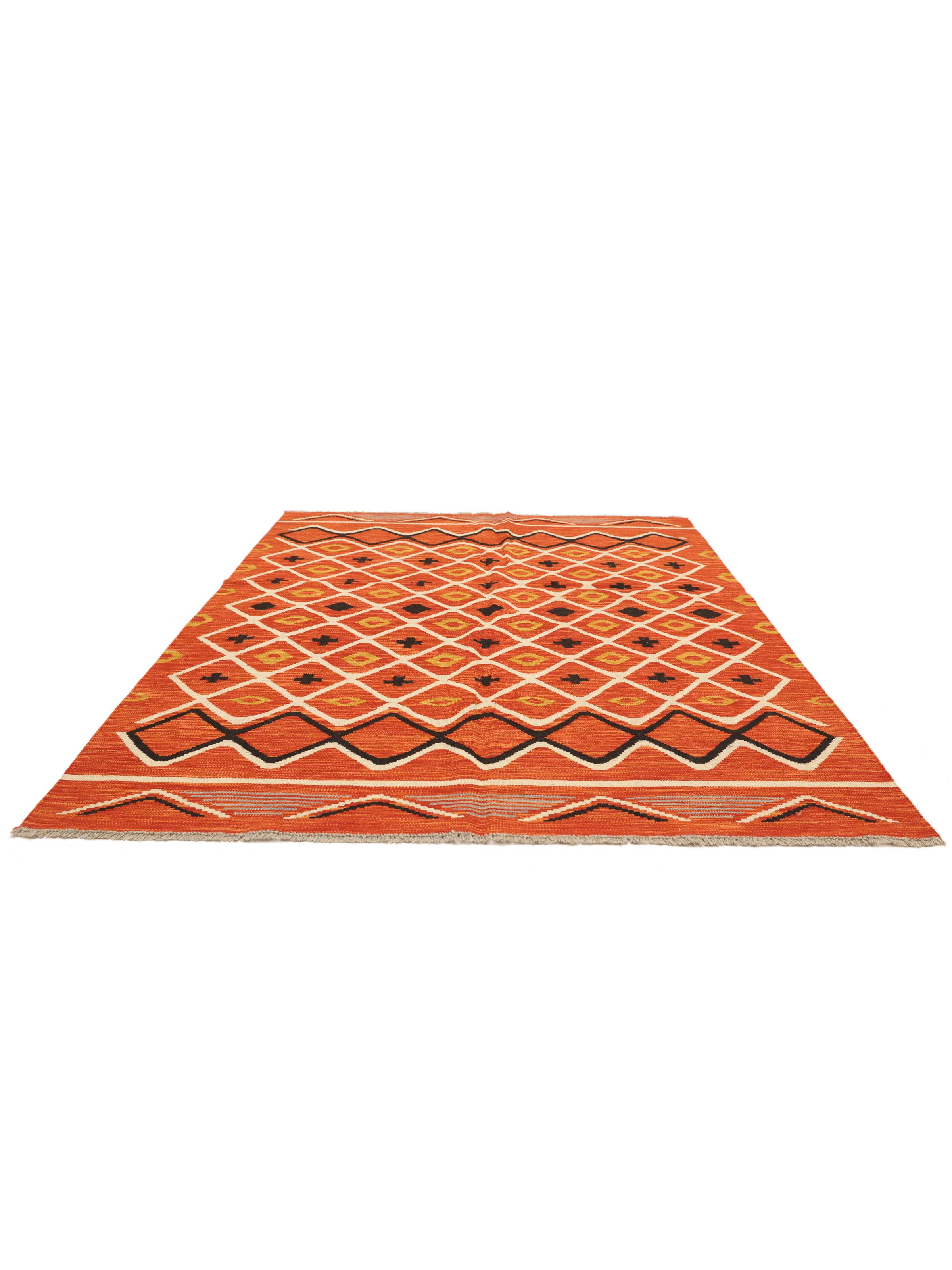
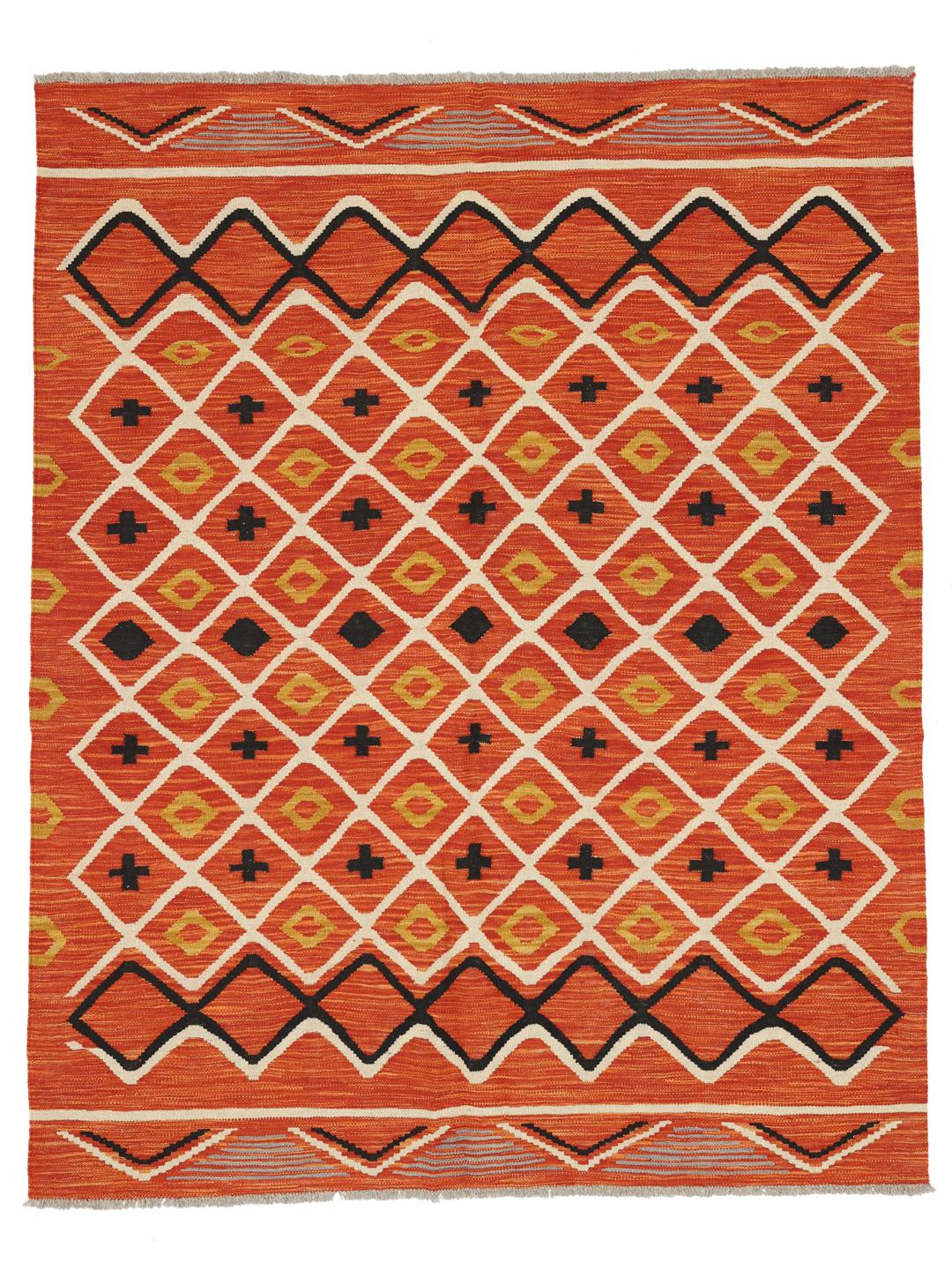
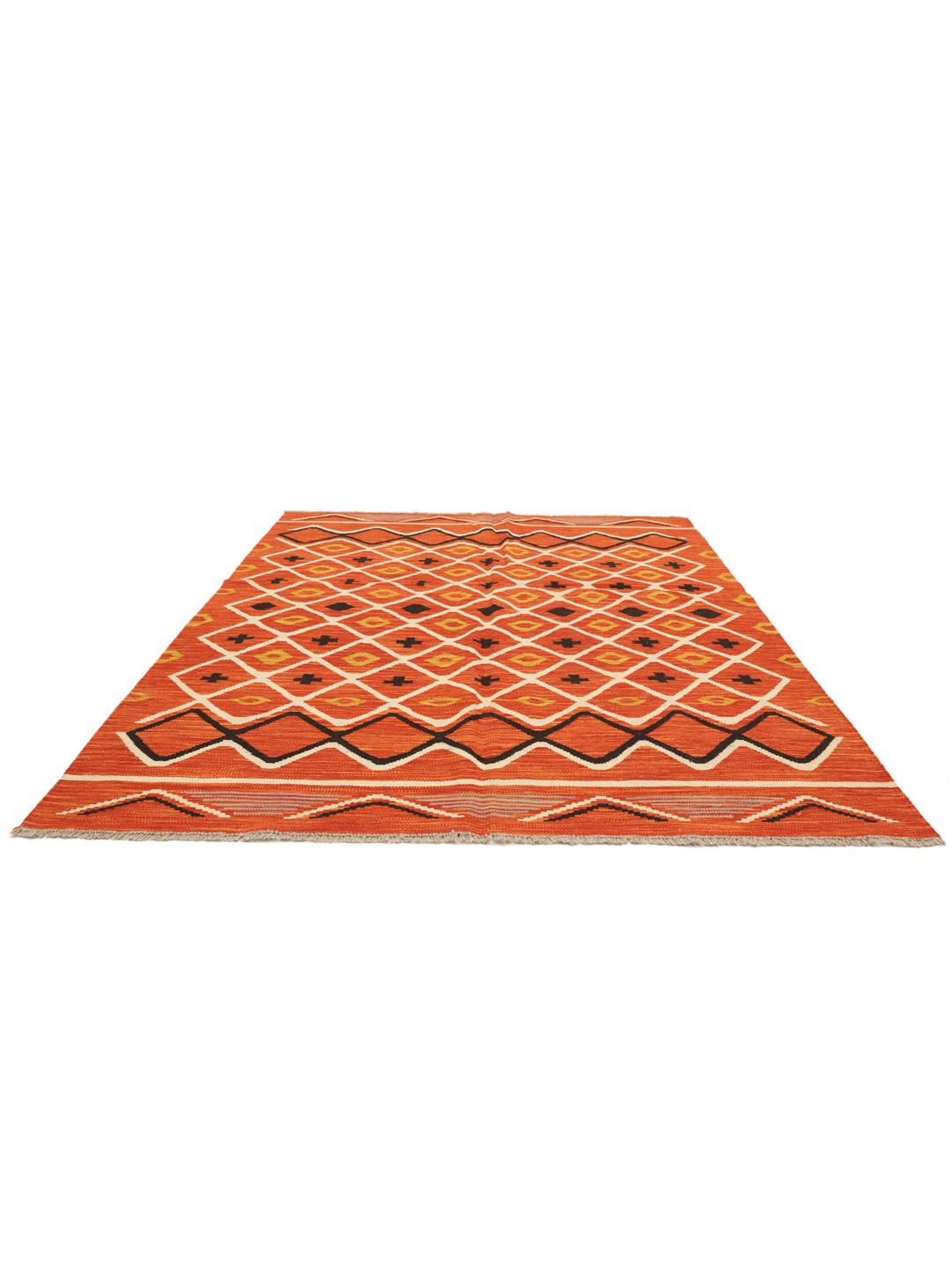
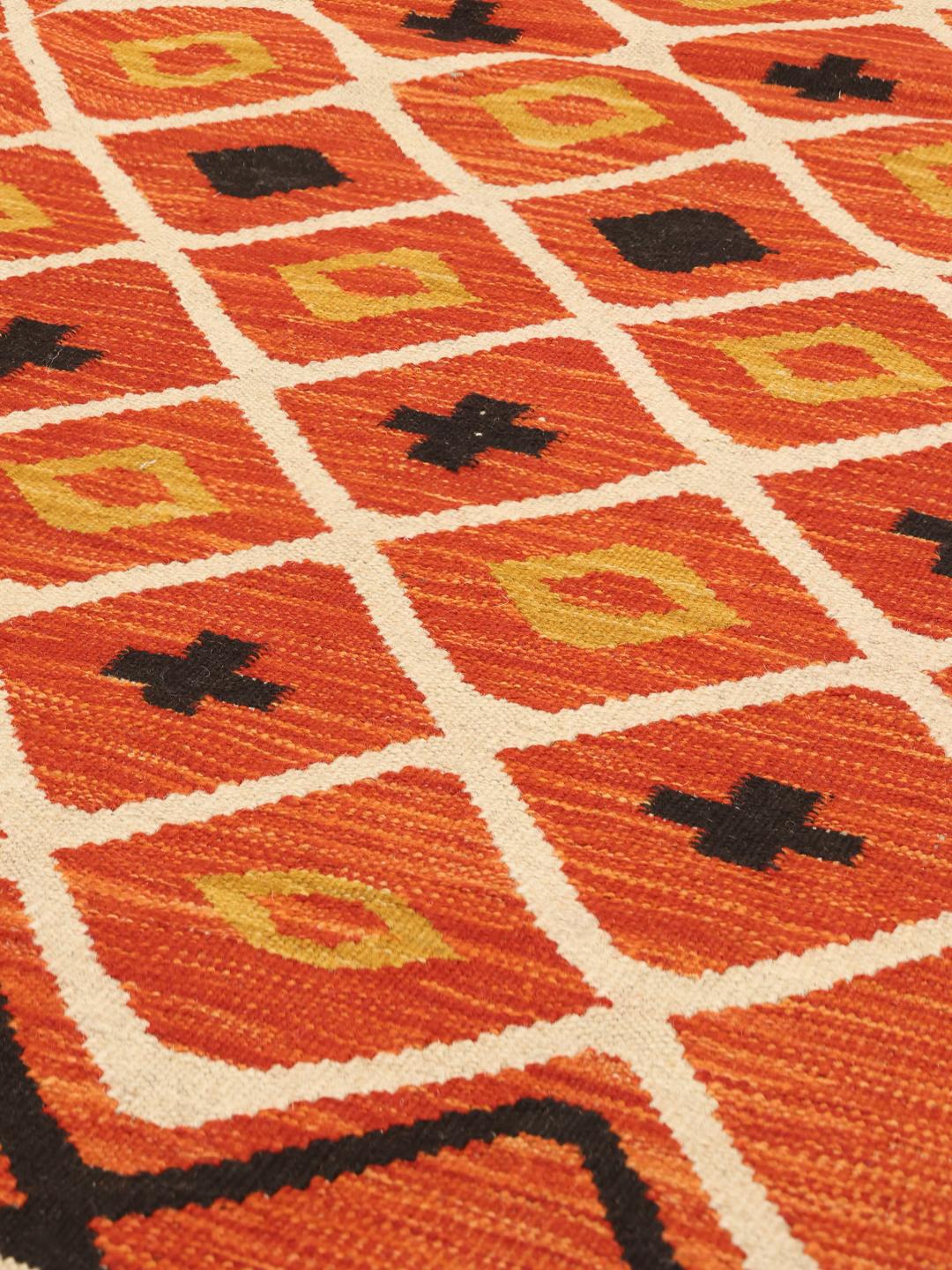
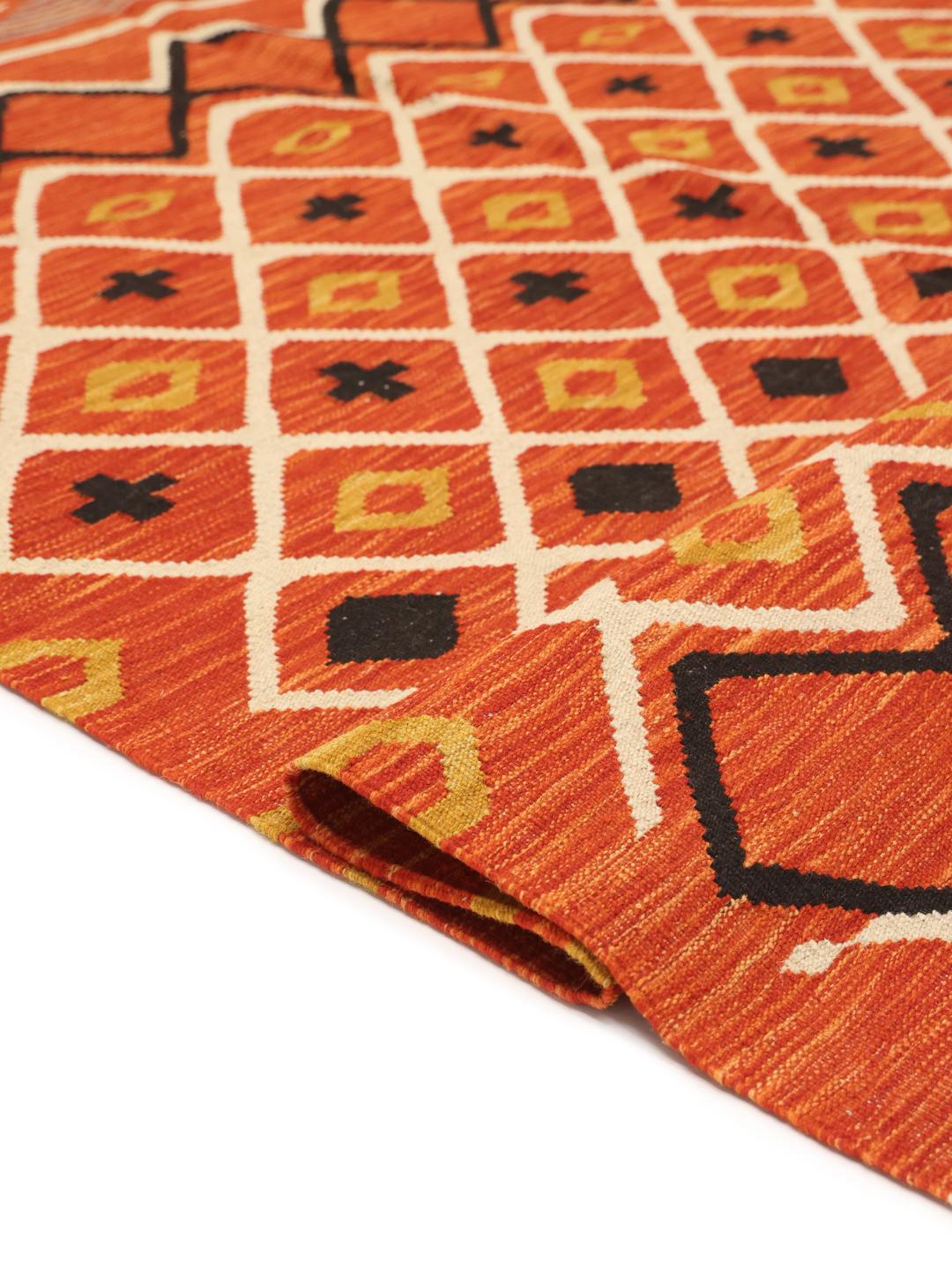
Visually, Kelim rugs are celebrated for their striking geometric language, often featuring bold diamonds, triangles, and symbolic motifs inspired by daily life and tribal heritage. In this particular piece, repeating diamond structures and balanced accents create an engaging rhythm across the red field, showcasing the traditional motifs that collectors and design enthusiasts cherish.
Today, these rugs are valued not only for their striking aesthetic and connection to ancient craft practices, but also for the way they bridge traditional artistry with modern interior spaces. Owning a piece from this tradition means celebrating a sustainable, human-made craft that has endured for centuries.