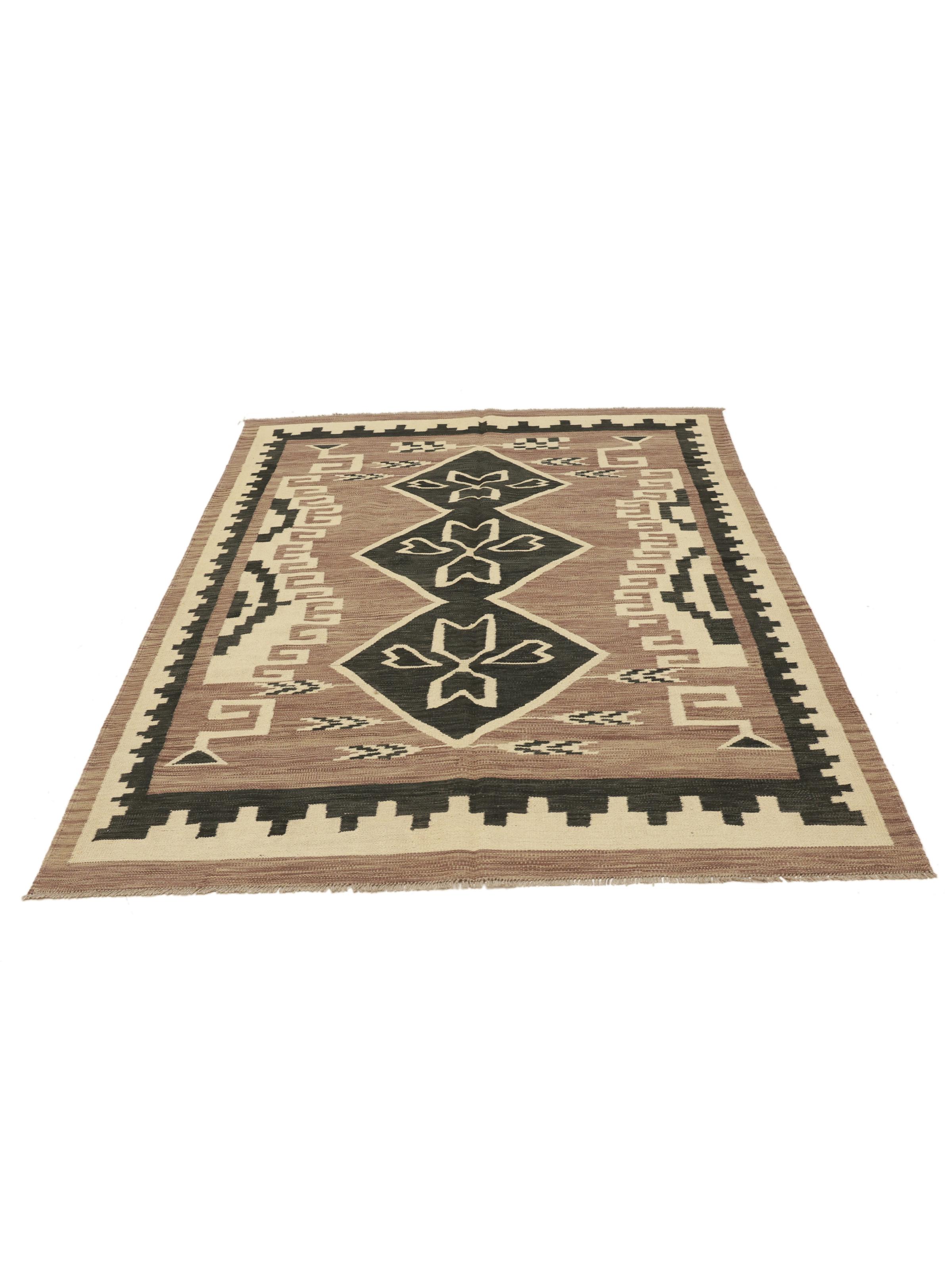
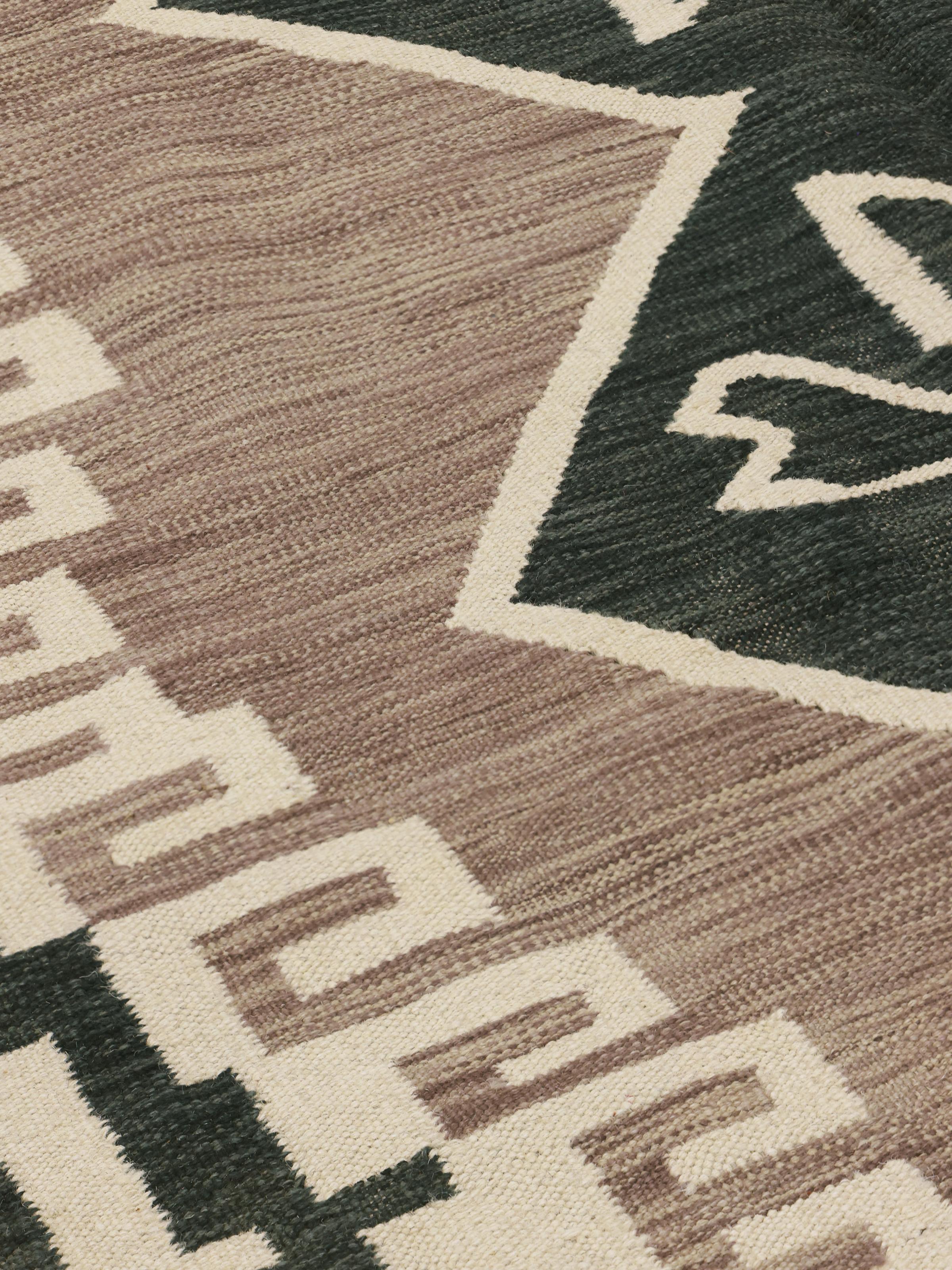
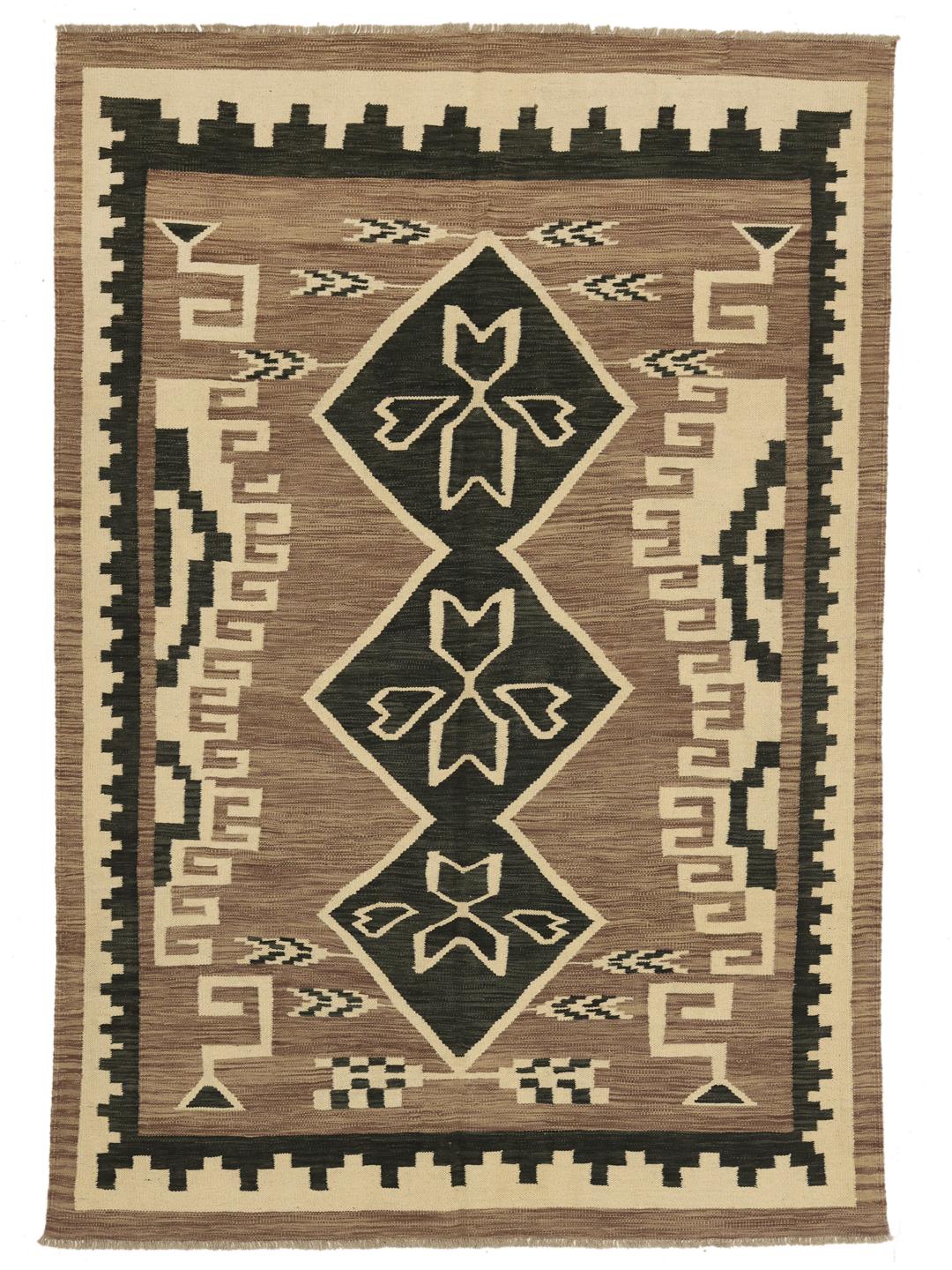
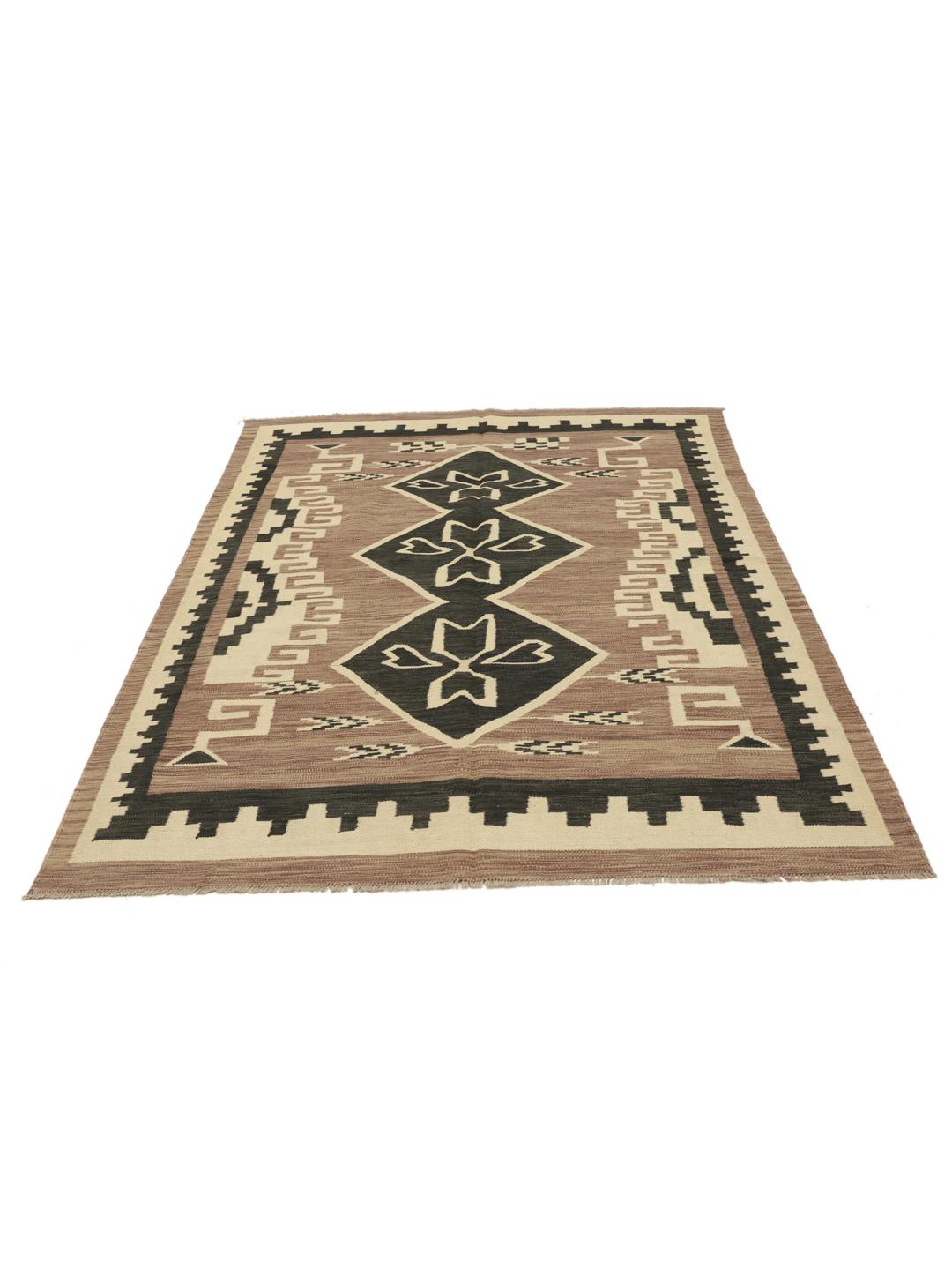
Flatwoven kilims hold a long and respected history across Central Asia and the Middle East, where nomadic and village weavers created versatile textiles for daily use. Unlike knotted pile rugs, kilims are crafted by tightly interlocking warp and weft threads to produce a smooth, lightweight fabric without a pile. Historically, these woven cloths served multiple purposes in traditional households, functioning as floor coverings, blankets, and storage bags.
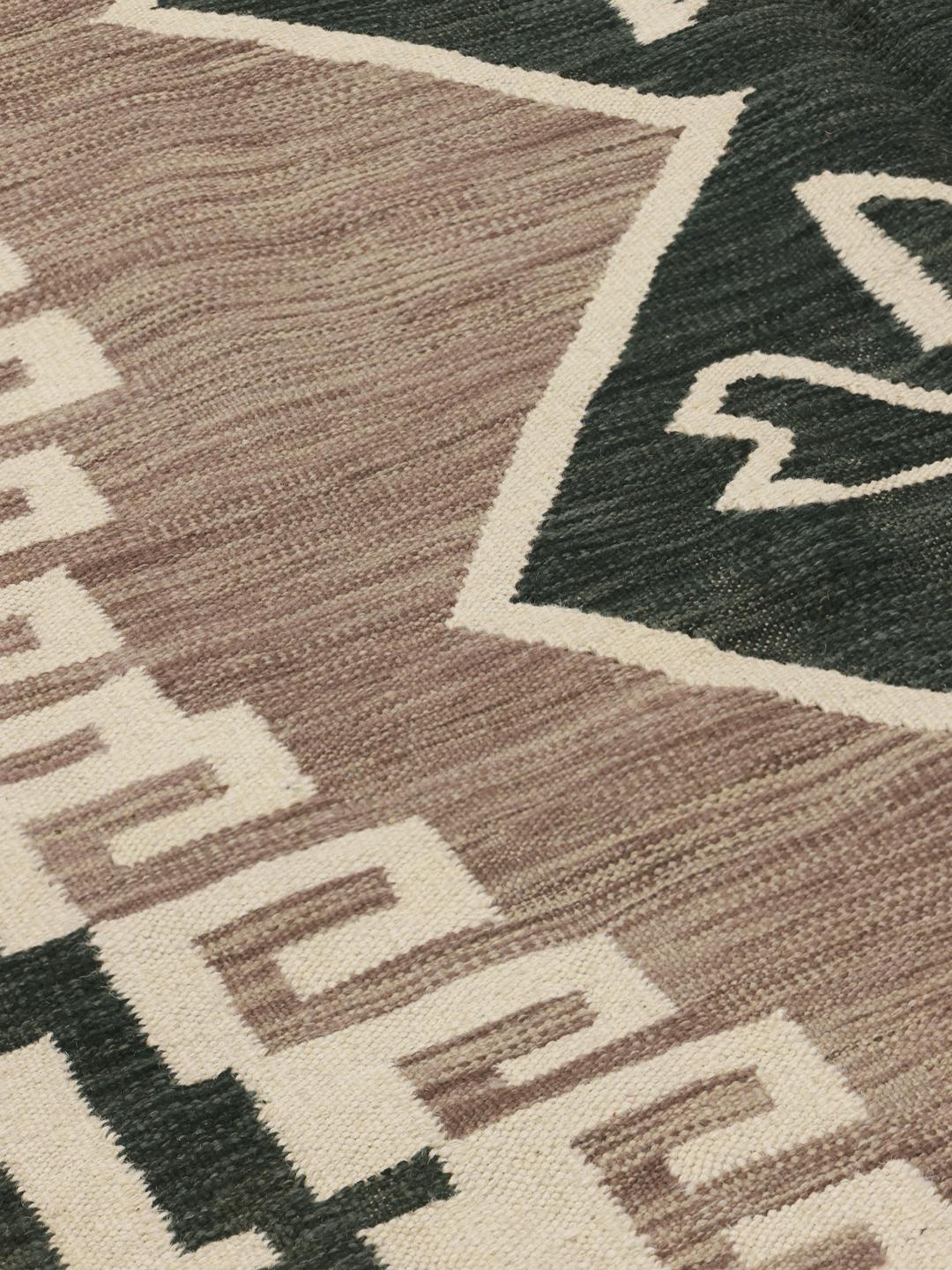
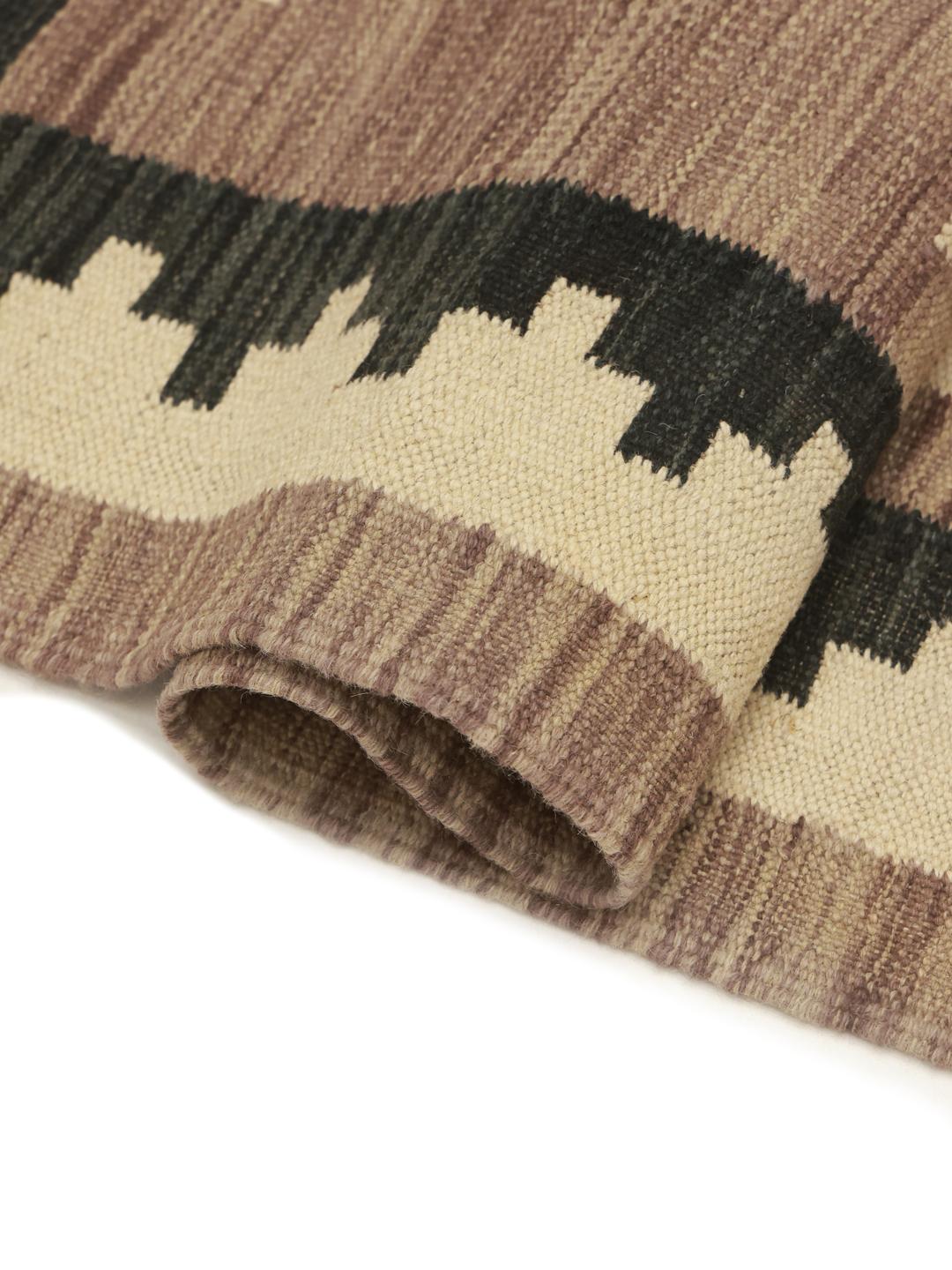
The term kilim refers to this specific flatweave technique, which relies entirely on the interplay of warp and weft yarns to form geometric designs. Because the pattern is created directly through the weave rather than being knotted into a foundation, both sides of the textile often share a similar appearance. This time-honoured construction method requires immense skill to maintain even tension across the entire width of the loom.
Afghan weaving traditions are celebrated for their strong geometric vocabulary and earthy colour palettes inspired by local landscapes. Artisans frequently incorporate symbolic motifs such as diamonds, zig-zags, and stylised borders that have been passed down through generations. These patterns are not merely decorative but often carry traditional meanings related to protection, family, and the natural world.
Collecting vintage and modern kilims allows you to connect with a living craft heritage that values patience and human skill over mass production. Owning a piece like this means preserving ancient textile traditions in a modern interior, offering a sense of history, authenticity, and enduring value that synthetic floor coverings simply cannot match.