Flatwoven textiles known as kelims hold a storied place in the craft traditions of Afghanistan and the wider Central Asian region. Historically created by nomadic and village communities, these versatile coverings served as durable floor spreads, storage sacks, and blankets designed to withstand the rigours of a mobile lifestyle. Over generations, weaving families developed distinct regional motifs and dyeing methods that reflected their local surroundings and cultural identity.
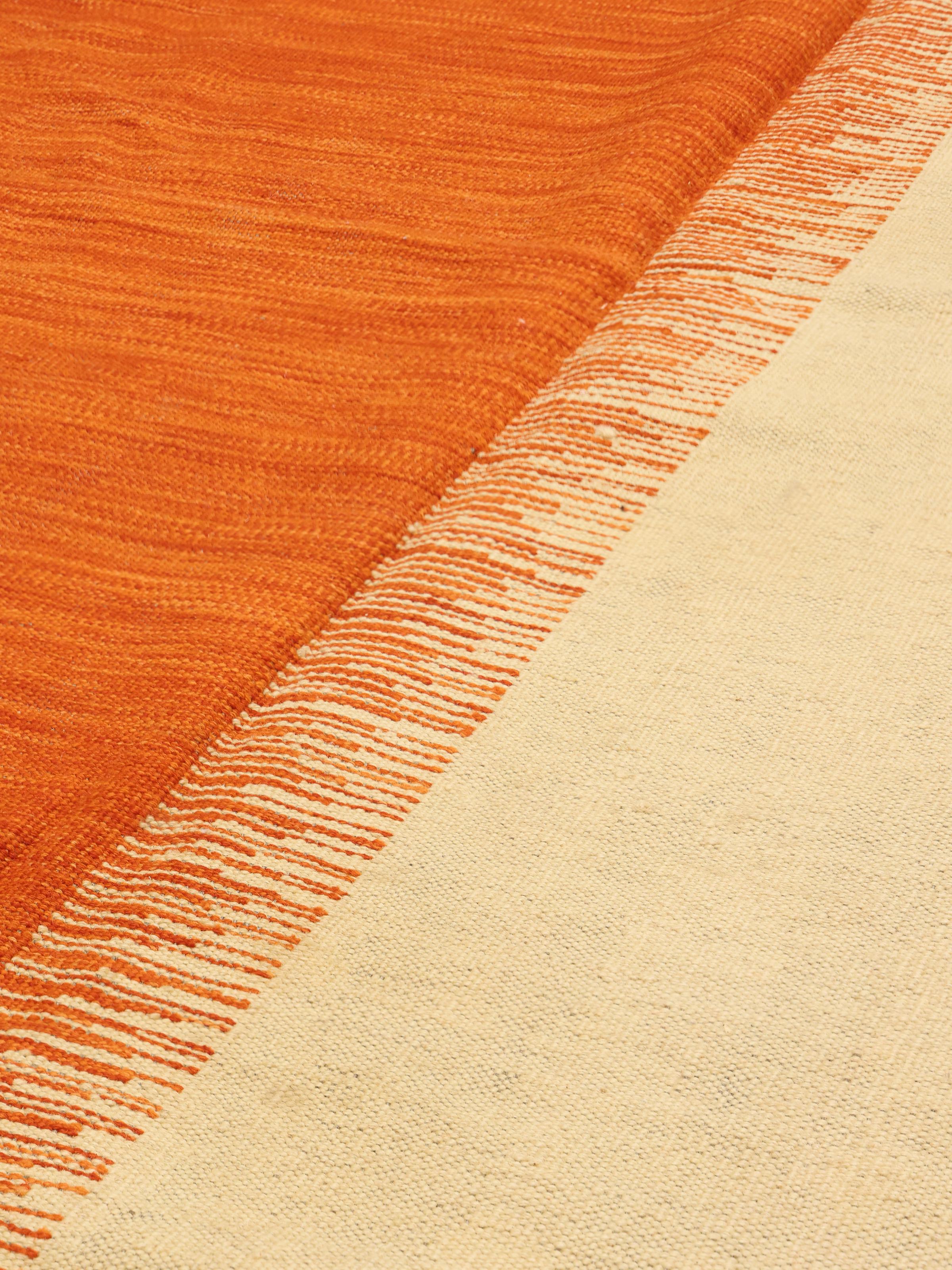
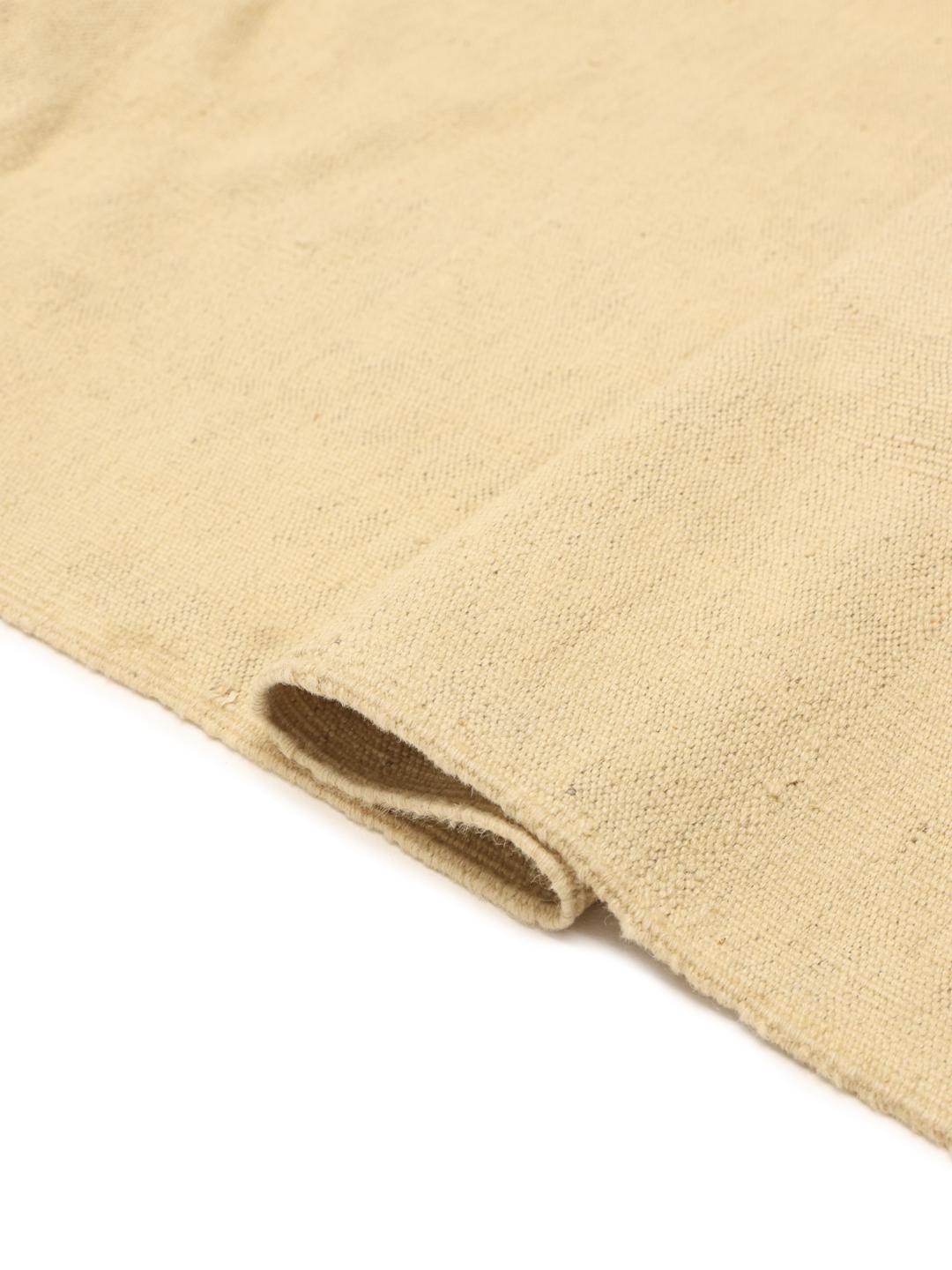
The term kelim refers specifically to a flatweave construction where no pile is knotted into the foundation. Instead, the coloured weft threads are tightly interwoven across the vertical warp threads to create a smooth, reversible textile with pattern visibility on both sides. This technique requires deep technical skill, particularly when creating crisp vertical colour changes without leaving structural gaps in the fabric.
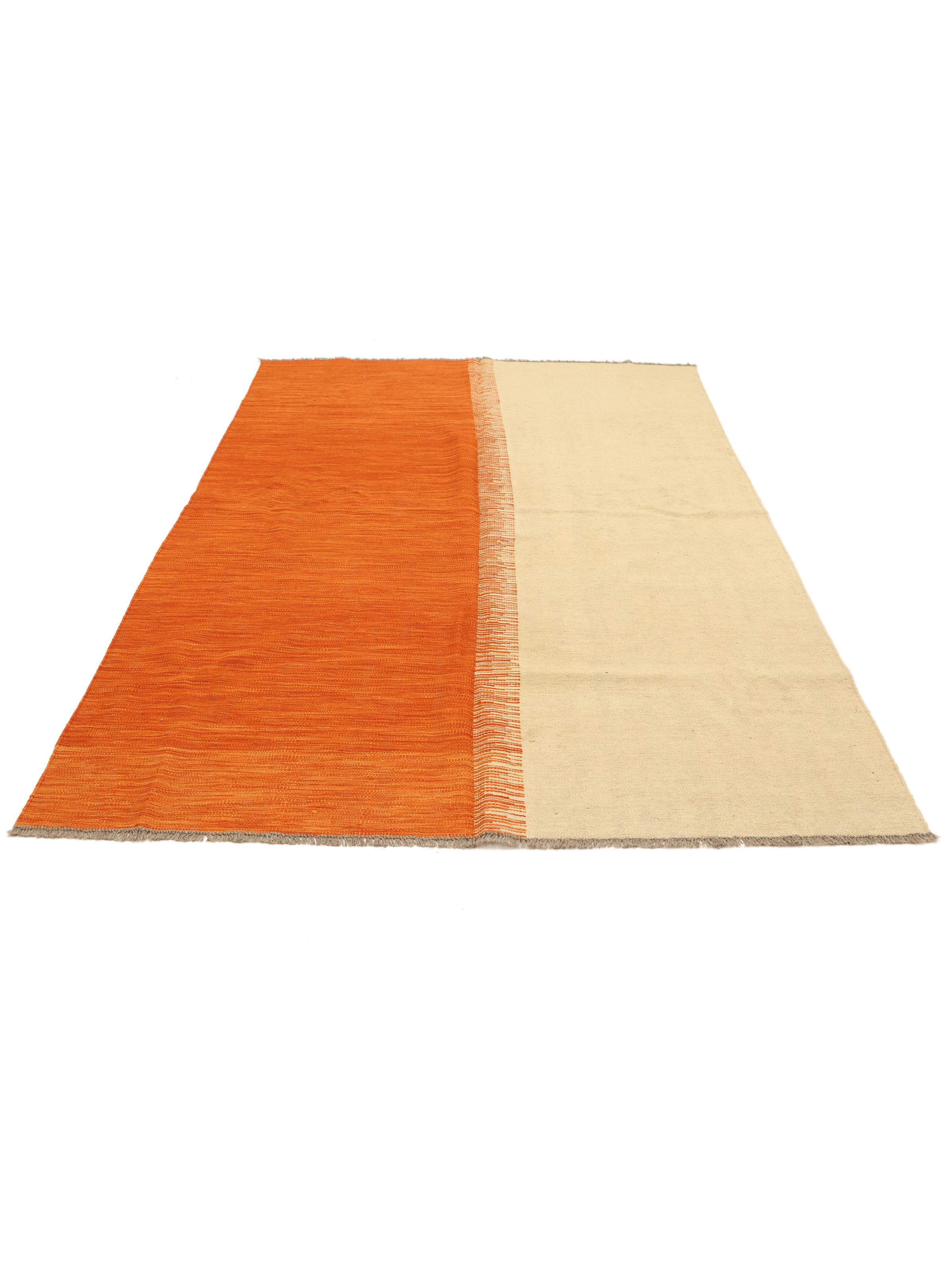
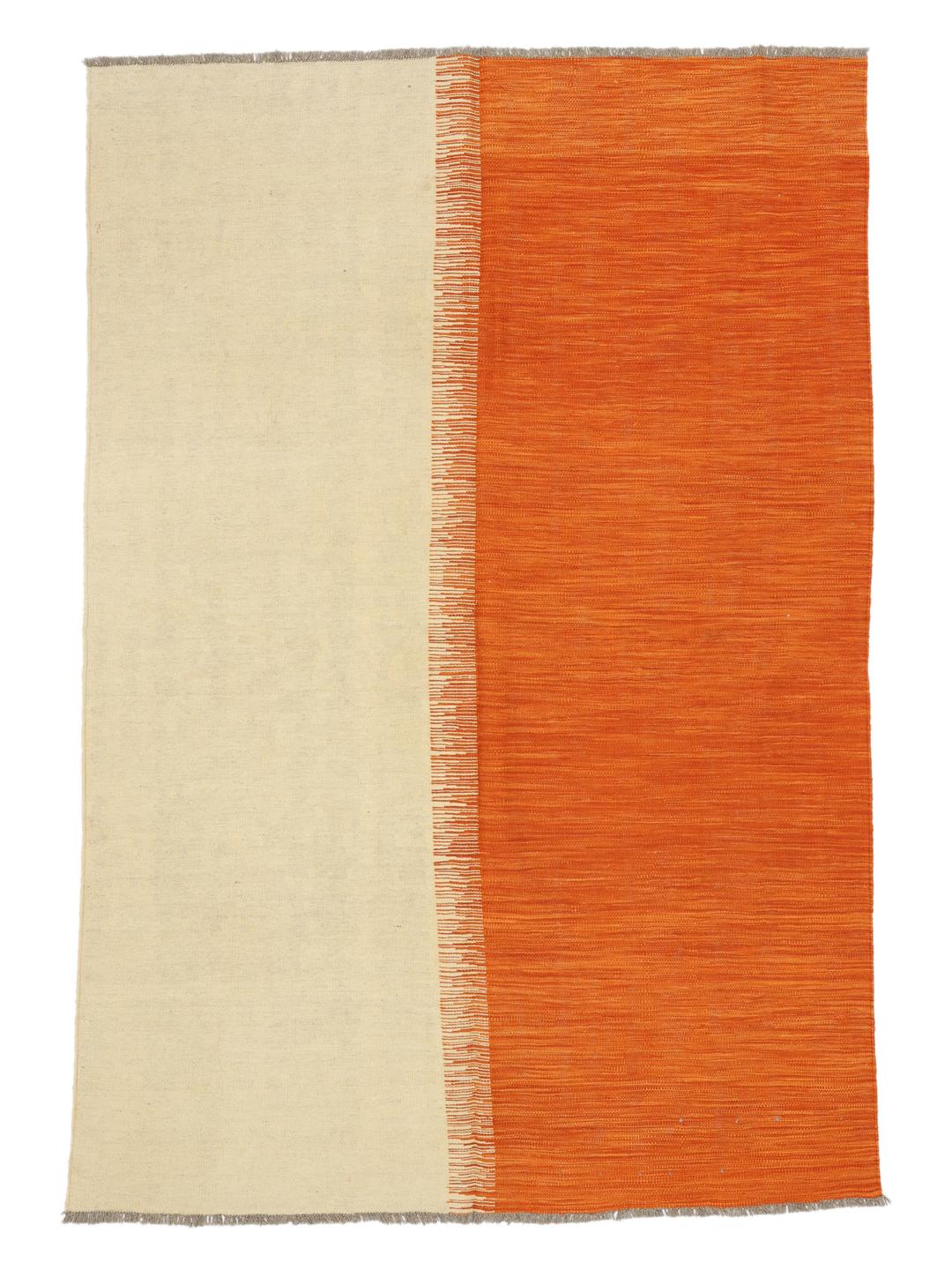
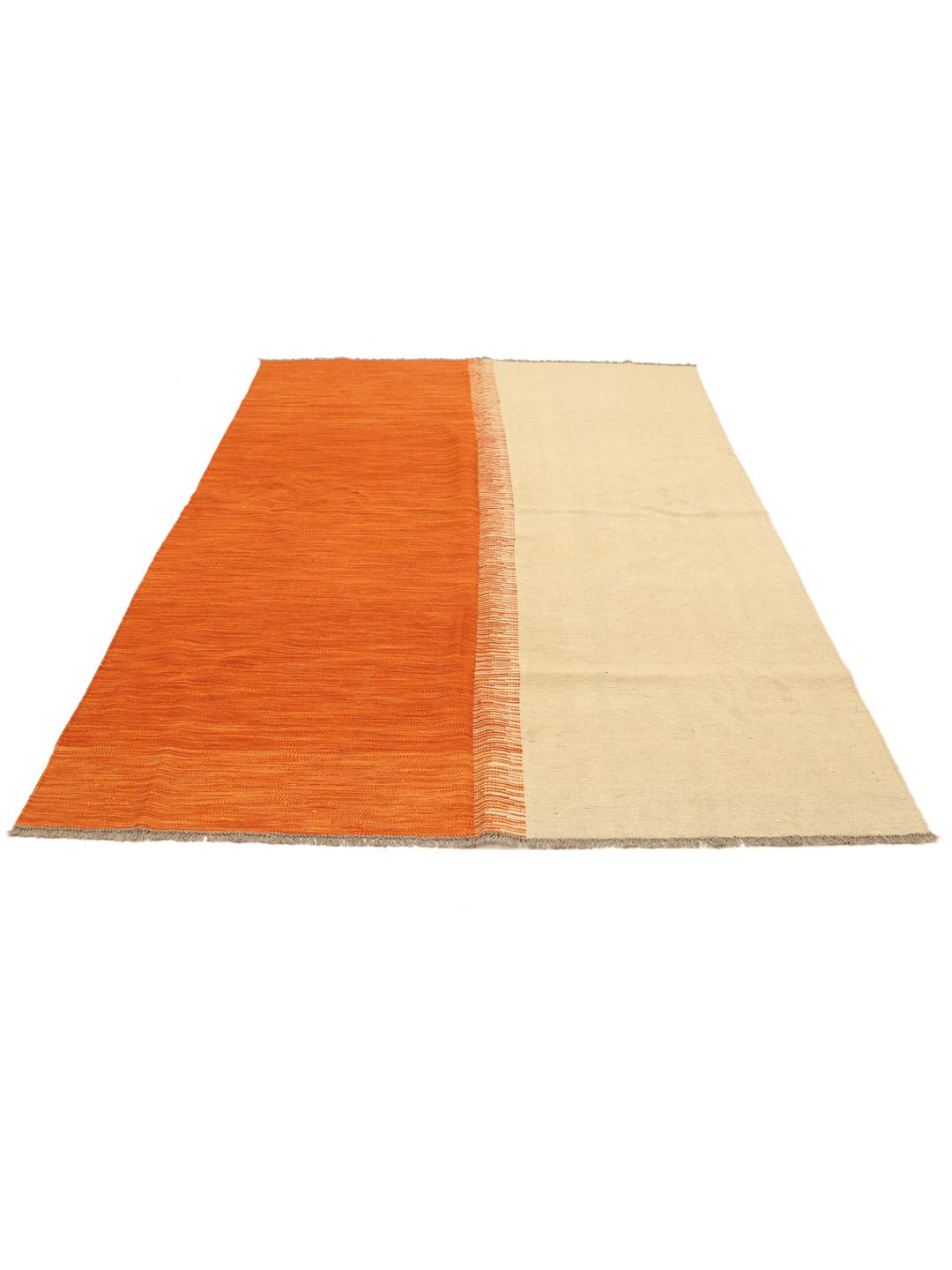
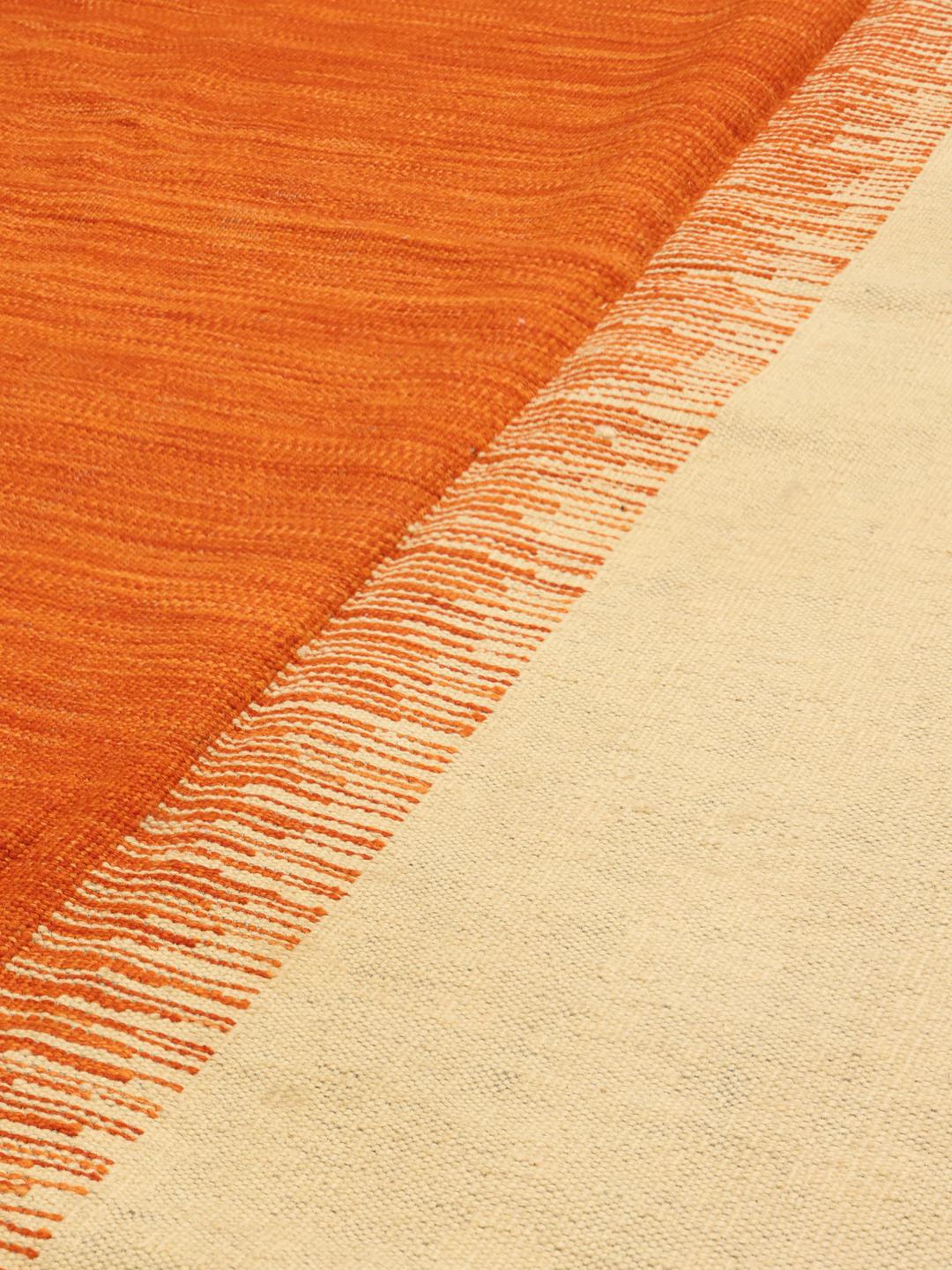
While traditional kelims often relied on intricate tribal geometric patterns and earthy red or brown dyes, modern interpretations embrace simplified colour blocking and contemporary palettes. This specific piece bridges historical craft methods with modern aesthetic sensibilities, pairing ancient weaving techniques with a fresh orange and beige colour division that complements contemporary interior design.
Collecting a handmade kelim means acquiring a tangible link to a rich textile history preserved by generations of artisans. Each piece represents hours of thoughtful human labour, honouring a craft tradition that values sustainability, resourcefulness, and enduring quality over mass production.