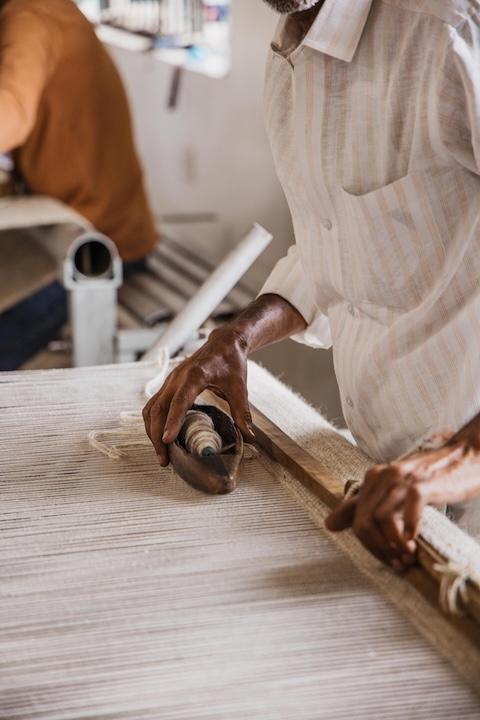
Kelim rugs have a long history rooted in the nomadic and village traditions of the Middle East and Central Asia. Originally created as versatile, flat-woven textiles used for floor coverings, blankets, and storage sacks by travelling communities, these rugs relied entirely on portable upright or horizontal looms. Over generations, weaving families developed distinct regional styles, passing down knowledge of natural dyeing and pattern composition from elders to younger family members.
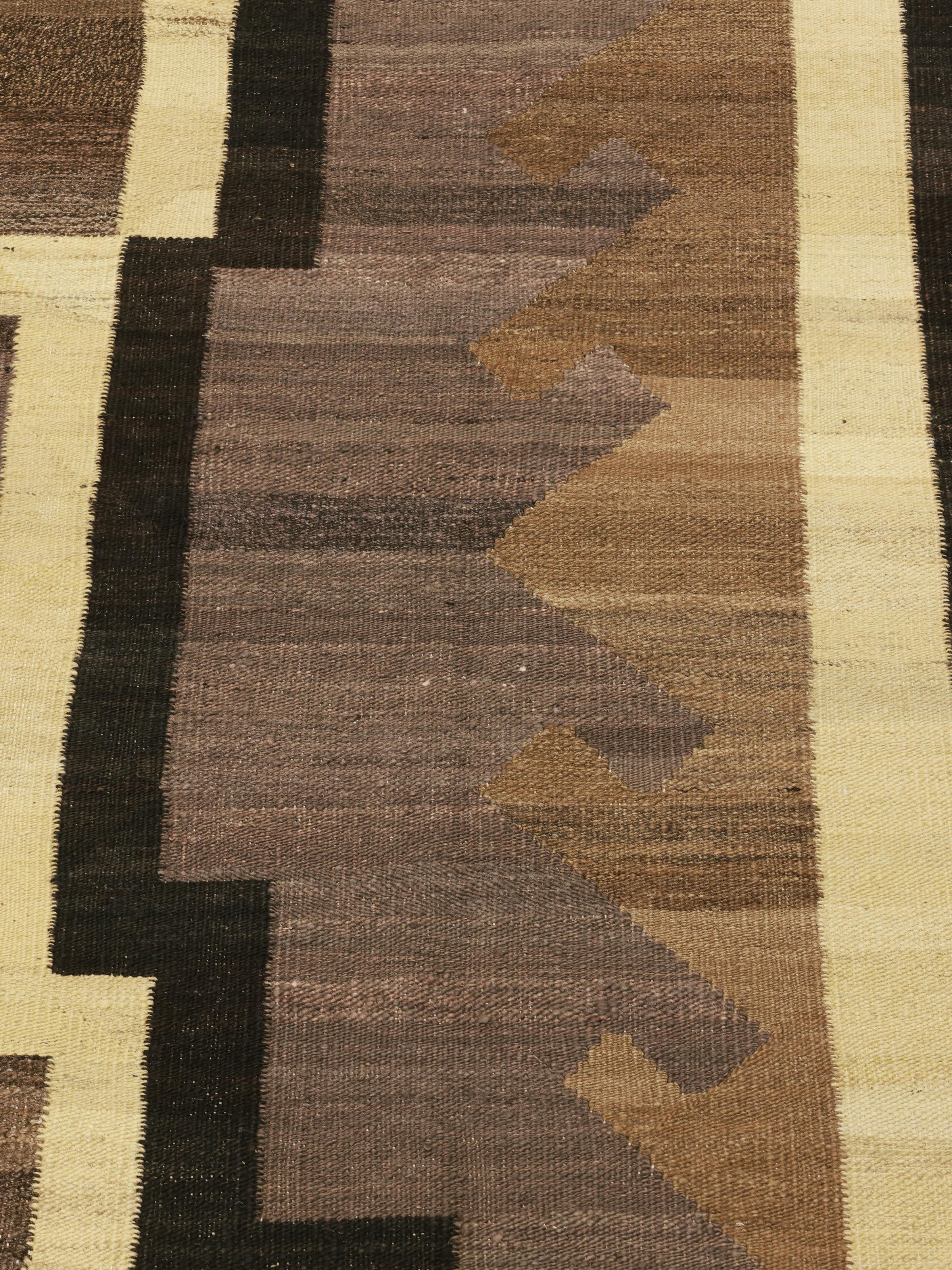
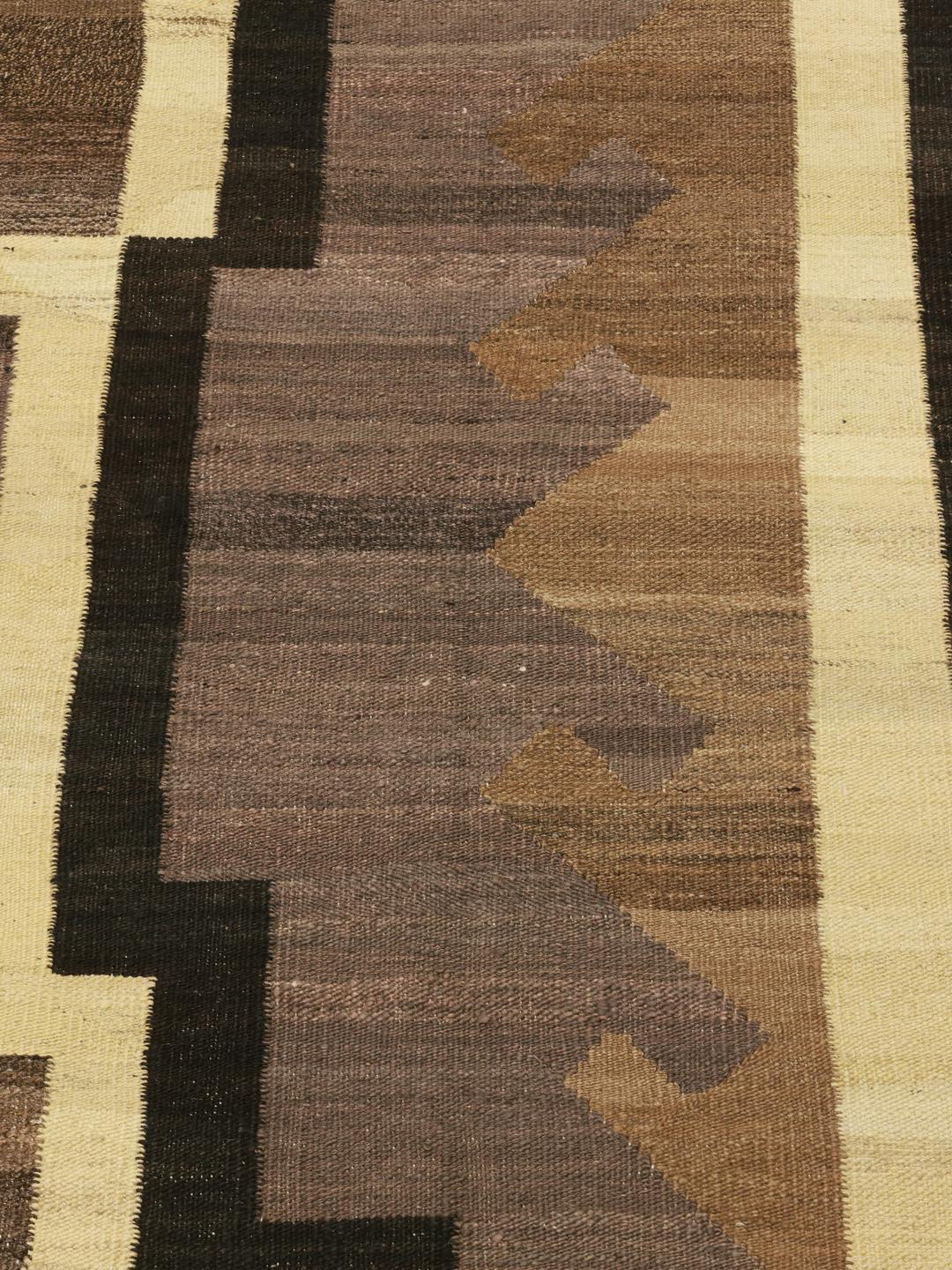
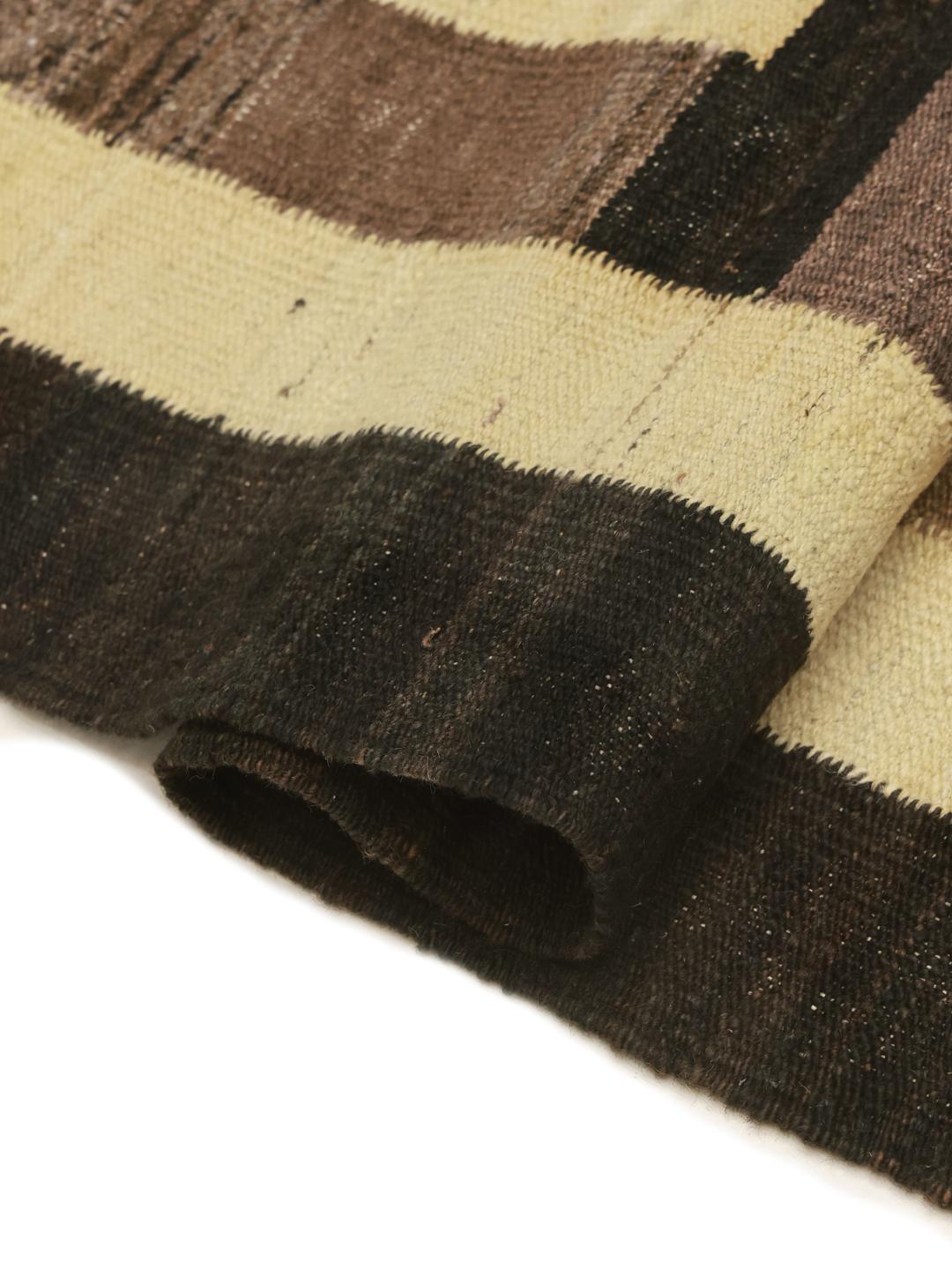
The term kelim refers specifically to a flat-weaving technique where no pile is knotted into the foundation. Instead, the coloured weft threads are tightly packed down to cover the warp completely, creating a smooth surface on both sides of the textile. This traditional method requires exceptional control over thread tension to keep the edges straight and the geometric motifs symmetrical.
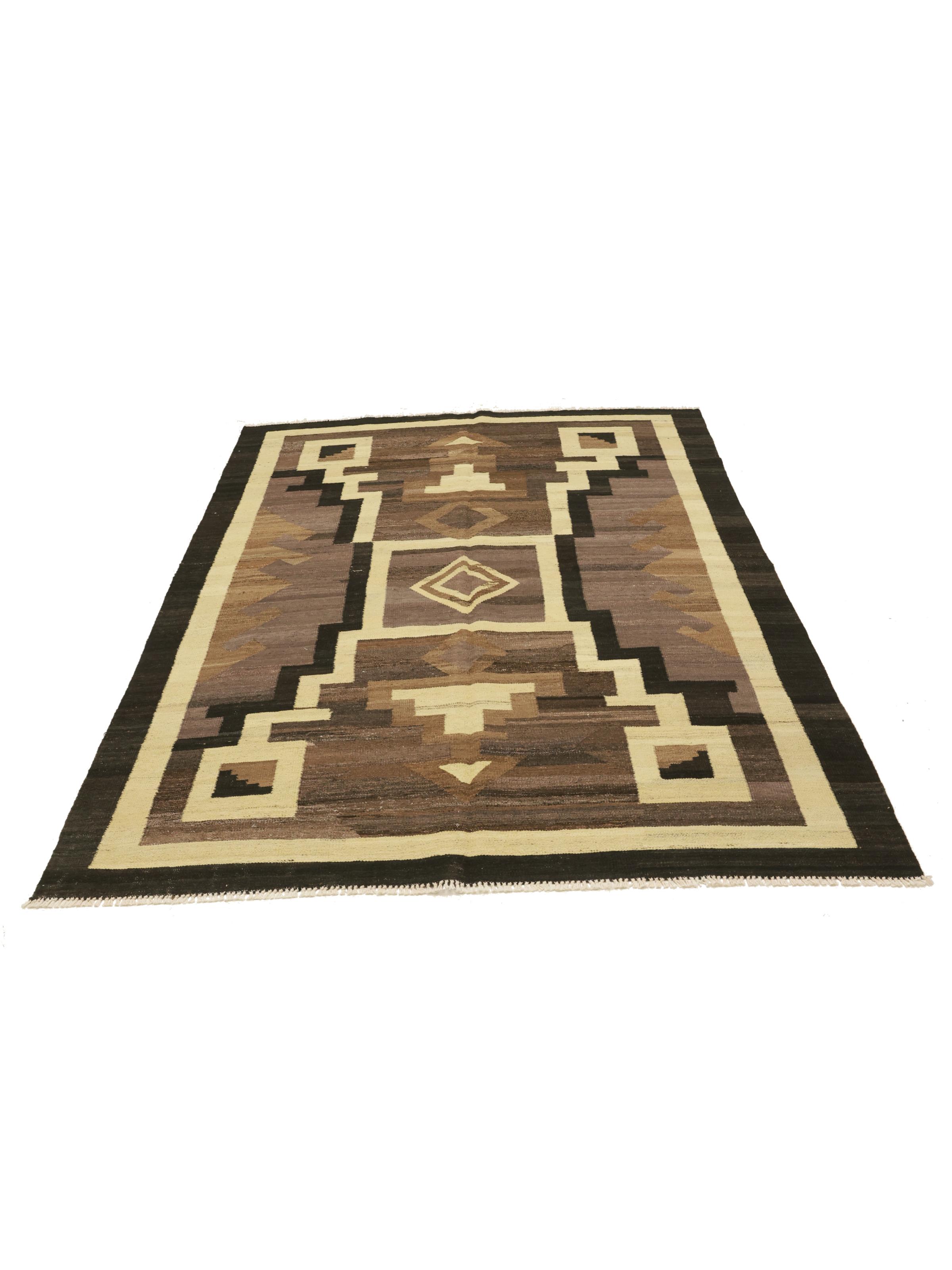
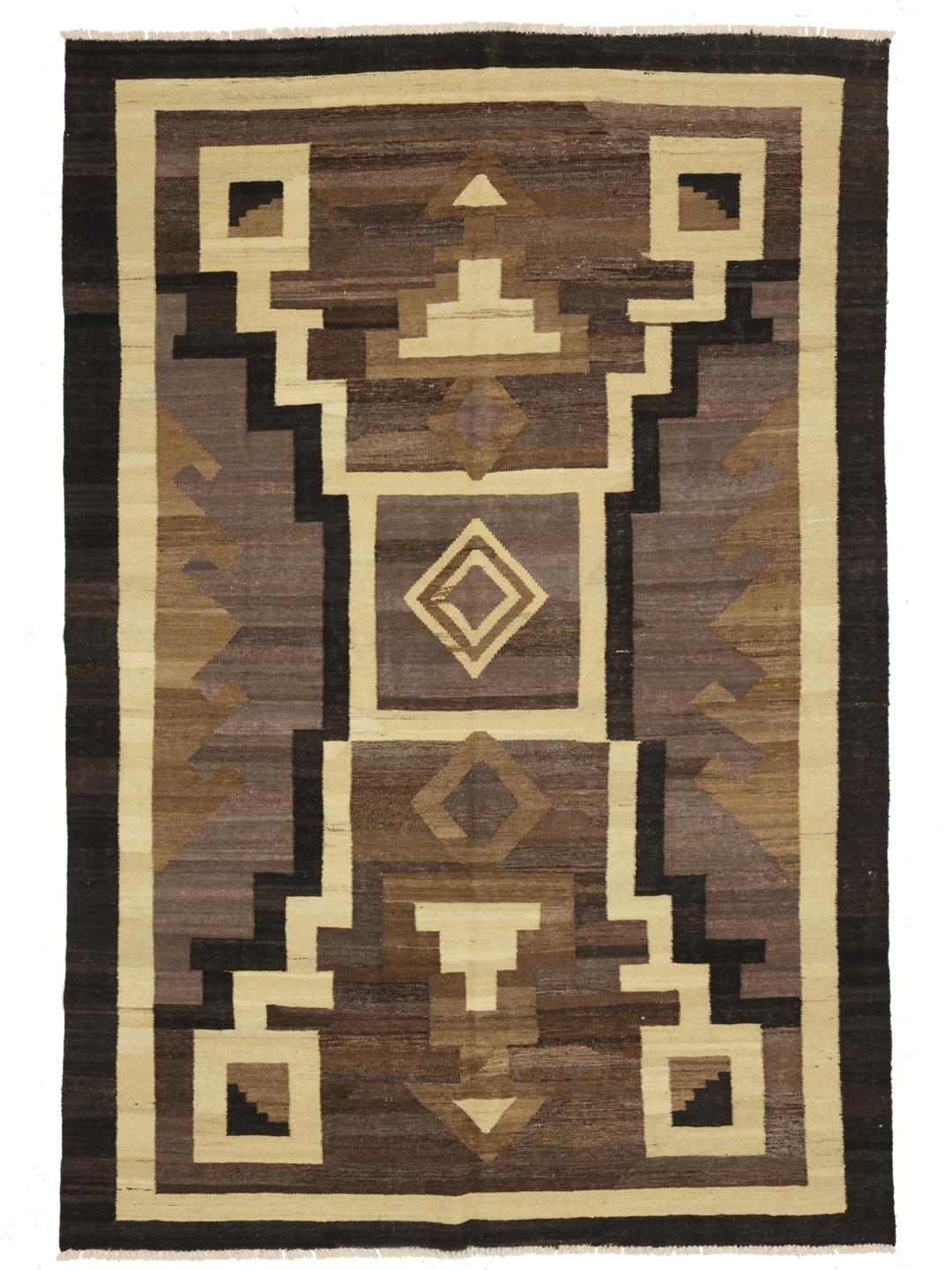
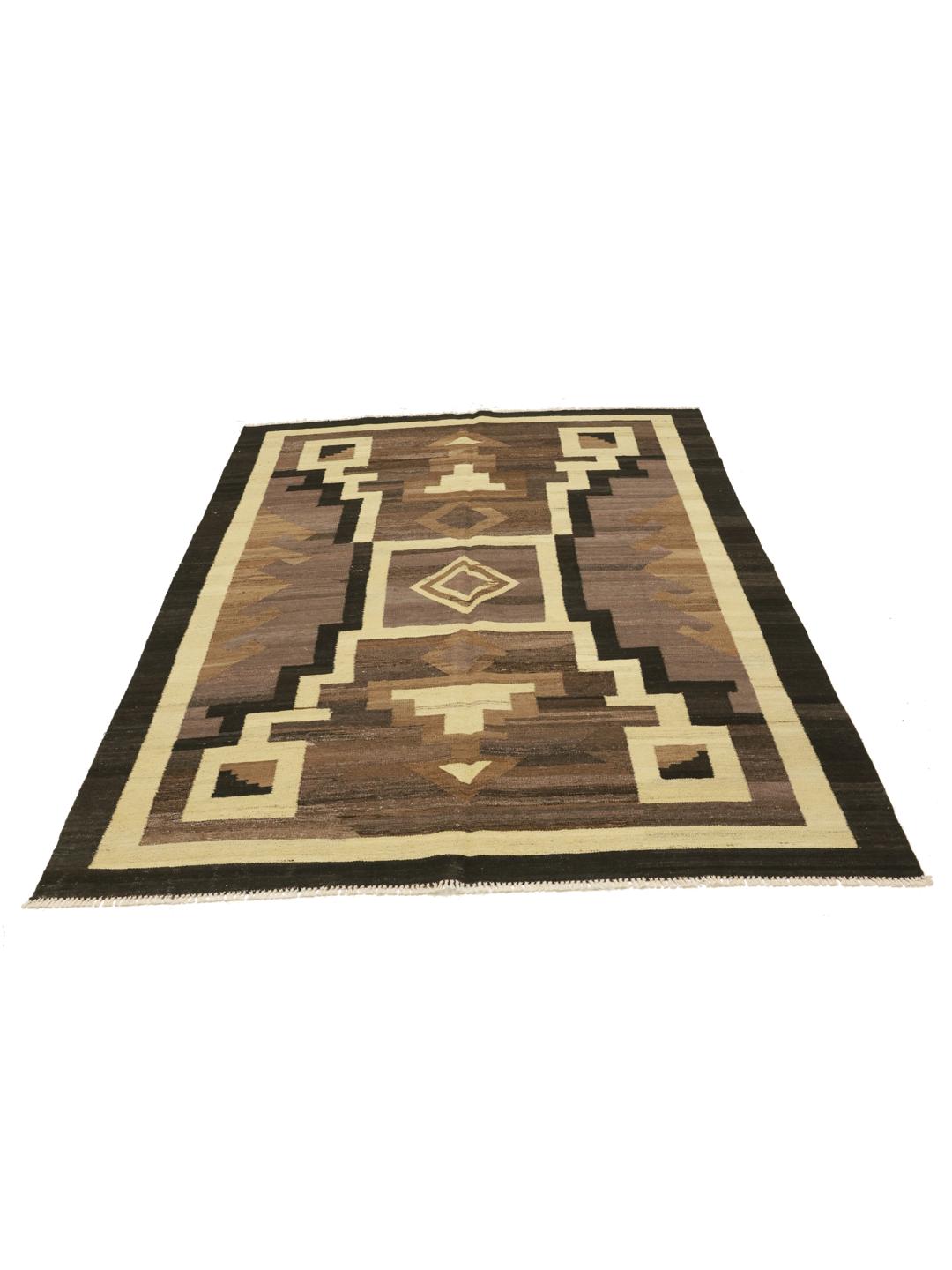
Design traditions in Kelim weaving typically focus on bold geometric shapes, repeating borders, and symbolic motifs inspired by daily life and regional folklore. Triangles, diamonds, and staggered lines are arranged with careful balance, often framed by contrasting border bands. In this particular piece, the earthy brown and beige colour palette highlights the sharp angles of the traditional layout, giving the classic aesthetic a fresh yet grounded feel.
Today, collecting Kelim rugs represents an appreciation for enduring craft traditions that predate modern industrial manufacturing. Because each weaver brings their own subtle interpretation to the traditional symbols, these rugs are valued not just as floor coverings, but as cultural documents of human skill. Owning a hand-woven piece connects your home to a centuries-old craft lineage that values patience, utility, and timeless design.