Kilim rugs represent one of the most enduring textile traditions of the Middle East and Central Asia. Historically, these flat-weave rugs were essential components of nomadic life, prized for their portability and versatility. They served as floor coverings, wall hangings, and storage bags, reflecting a culture that valued functionality and beauty in equal measure.
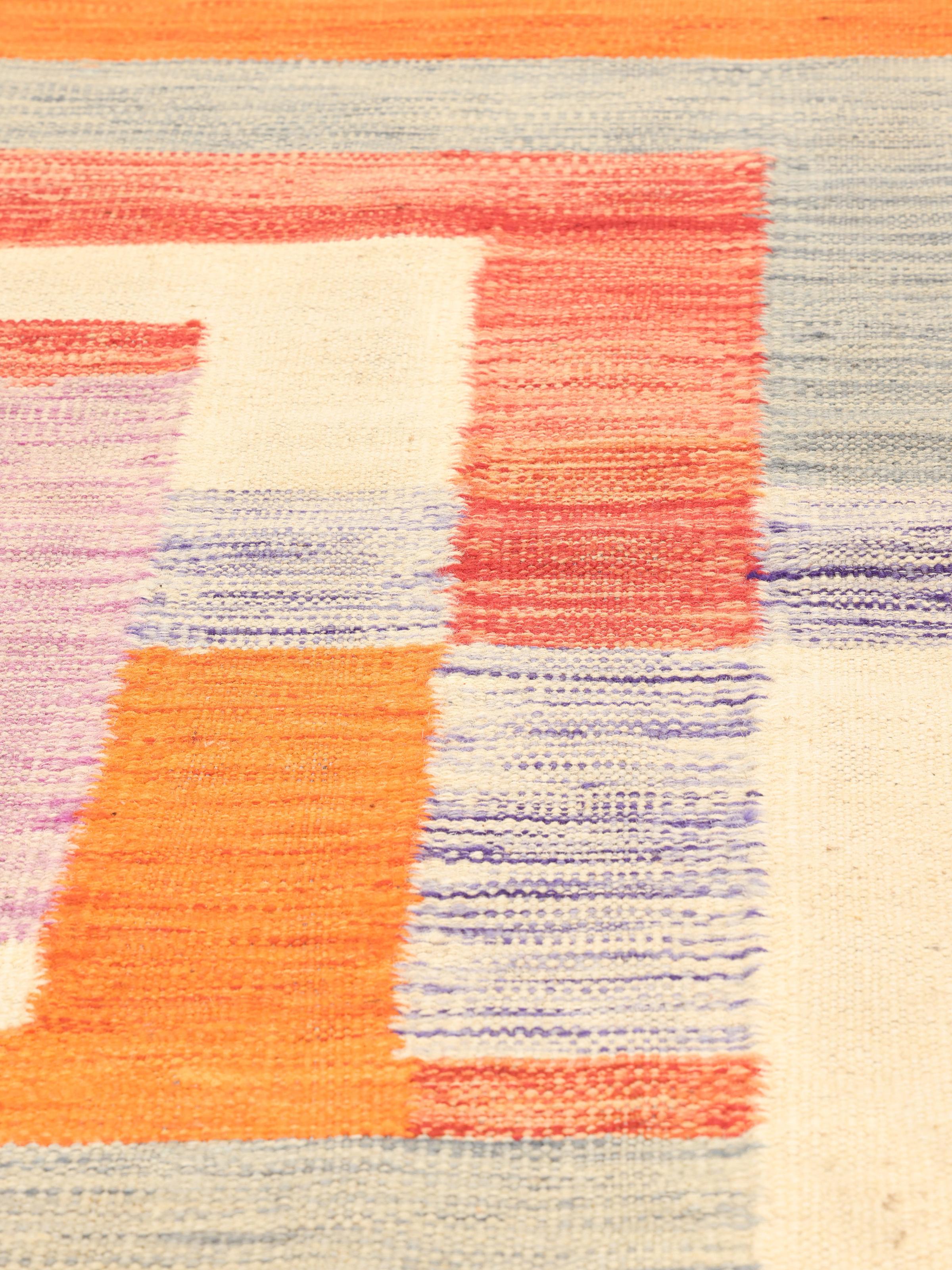
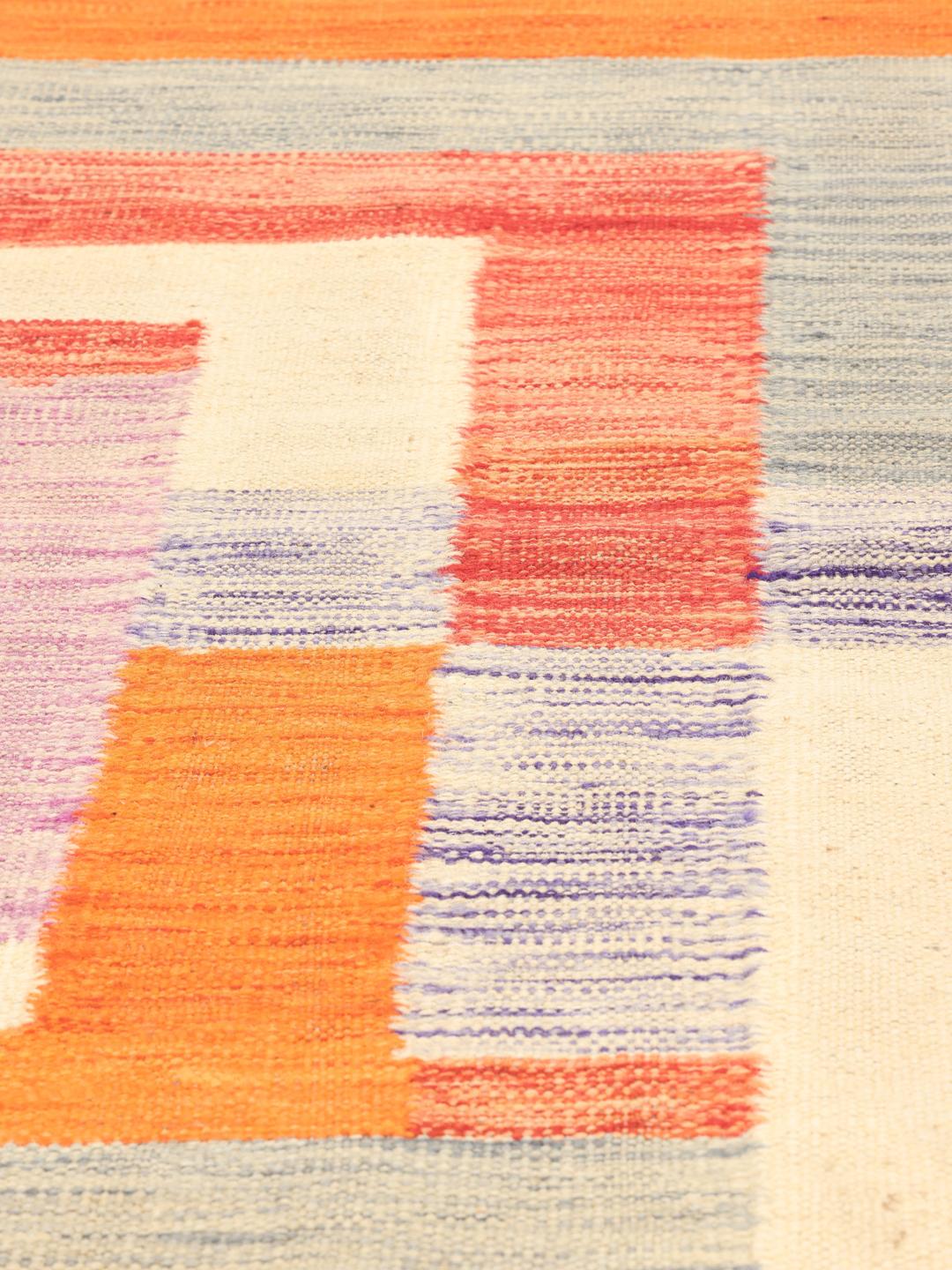
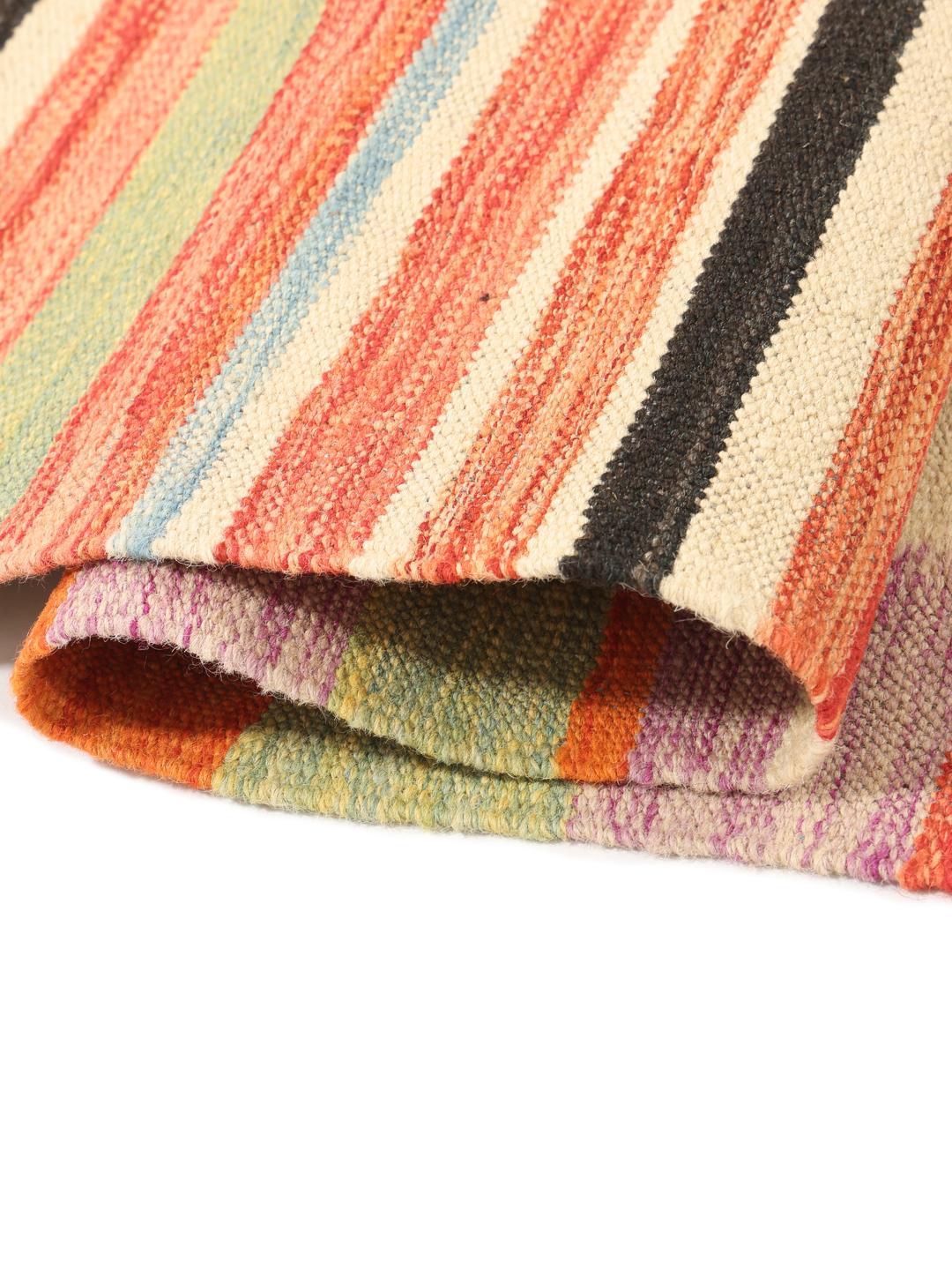
The term 'Kilim' refers specifically to the tapestry-weave technique, where the weft threads are passed through the warp threads to create the pattern. Unlike knotted rugs, Kilims lack a pile, resulting in a thin, lightweight, and durable fabric. This technique allows for sharp, geometric designs that have become a hallmark of the style, as the weaver builds the pattern directly into the structure of the rug.
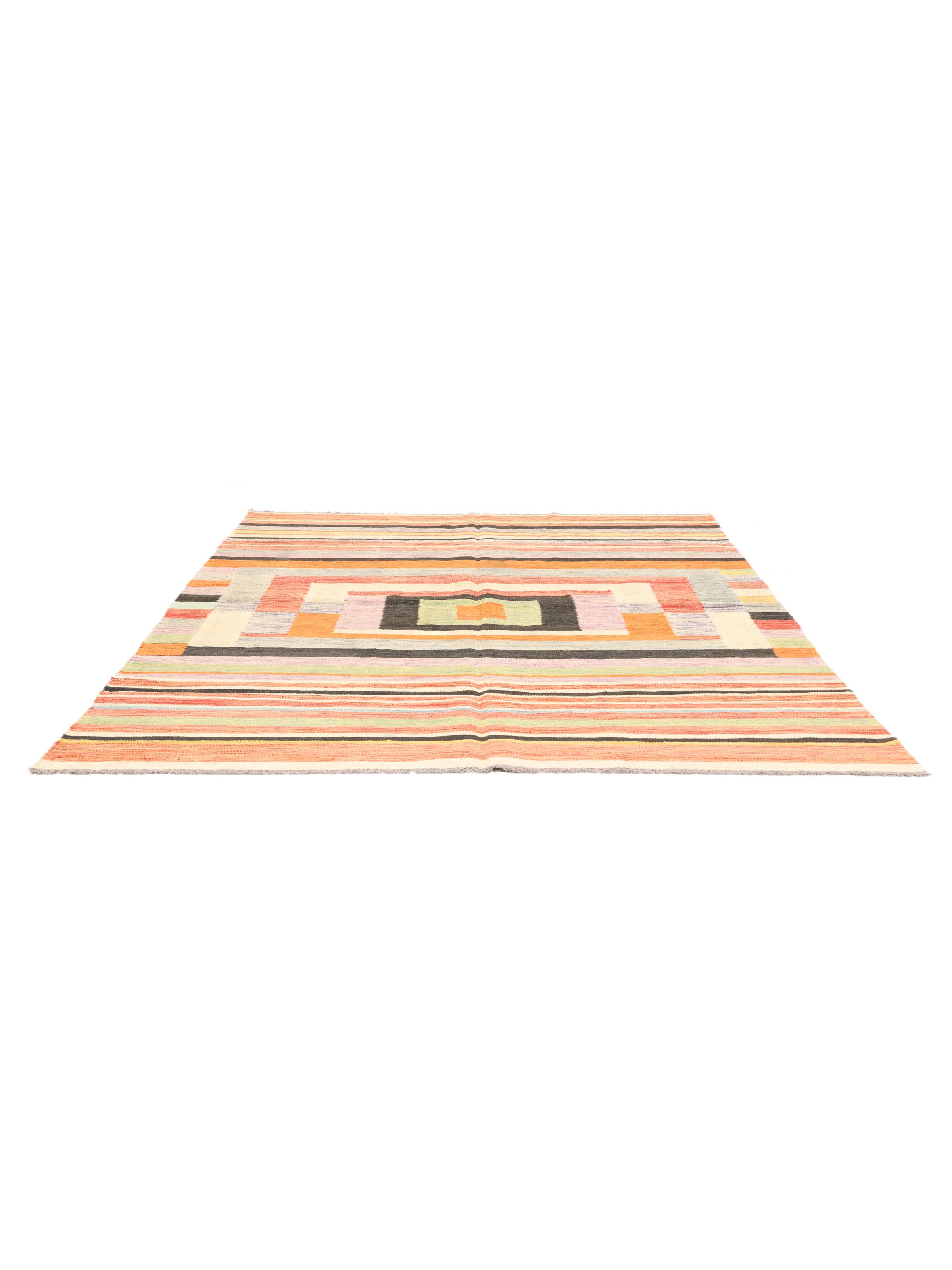
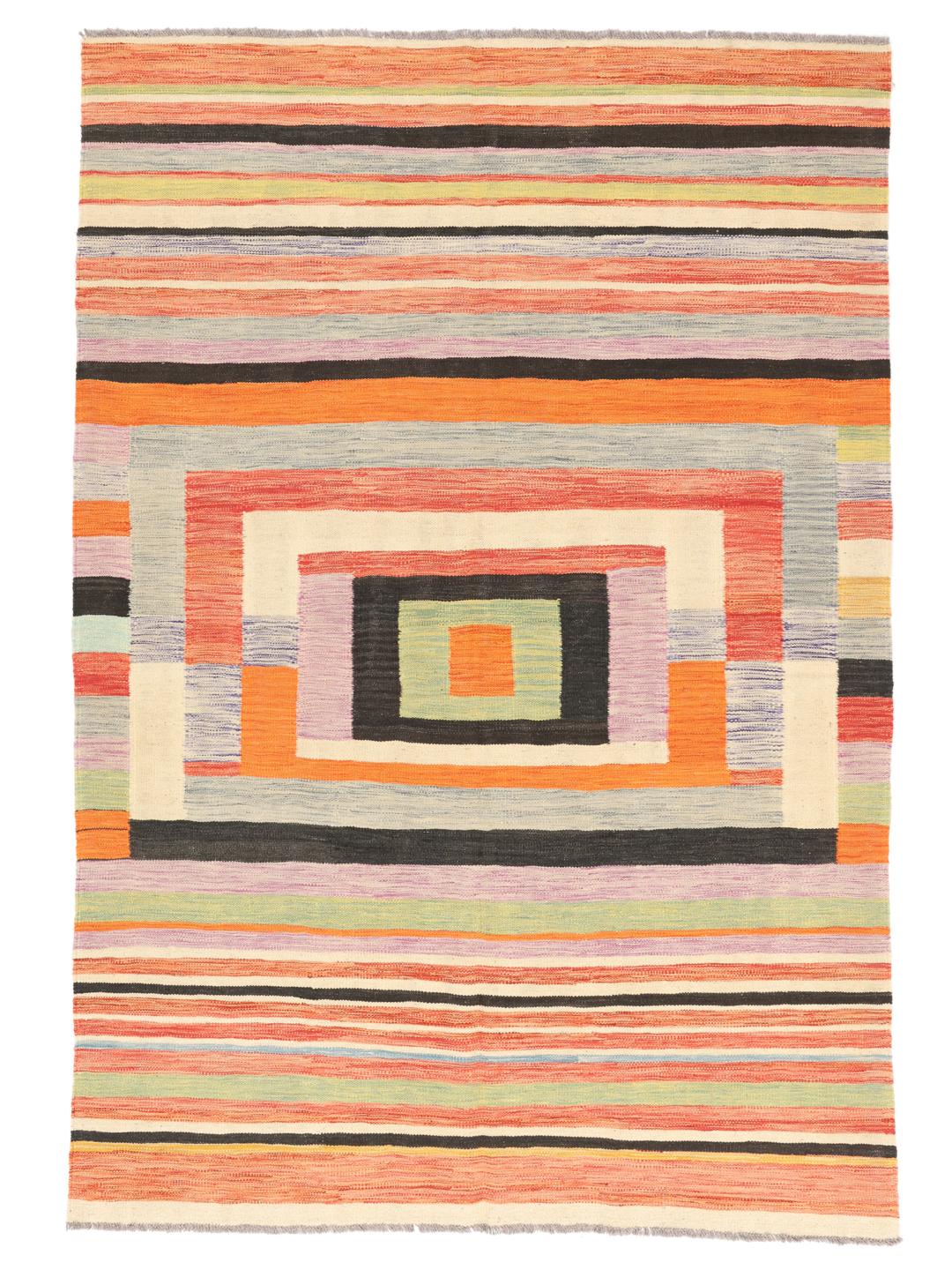
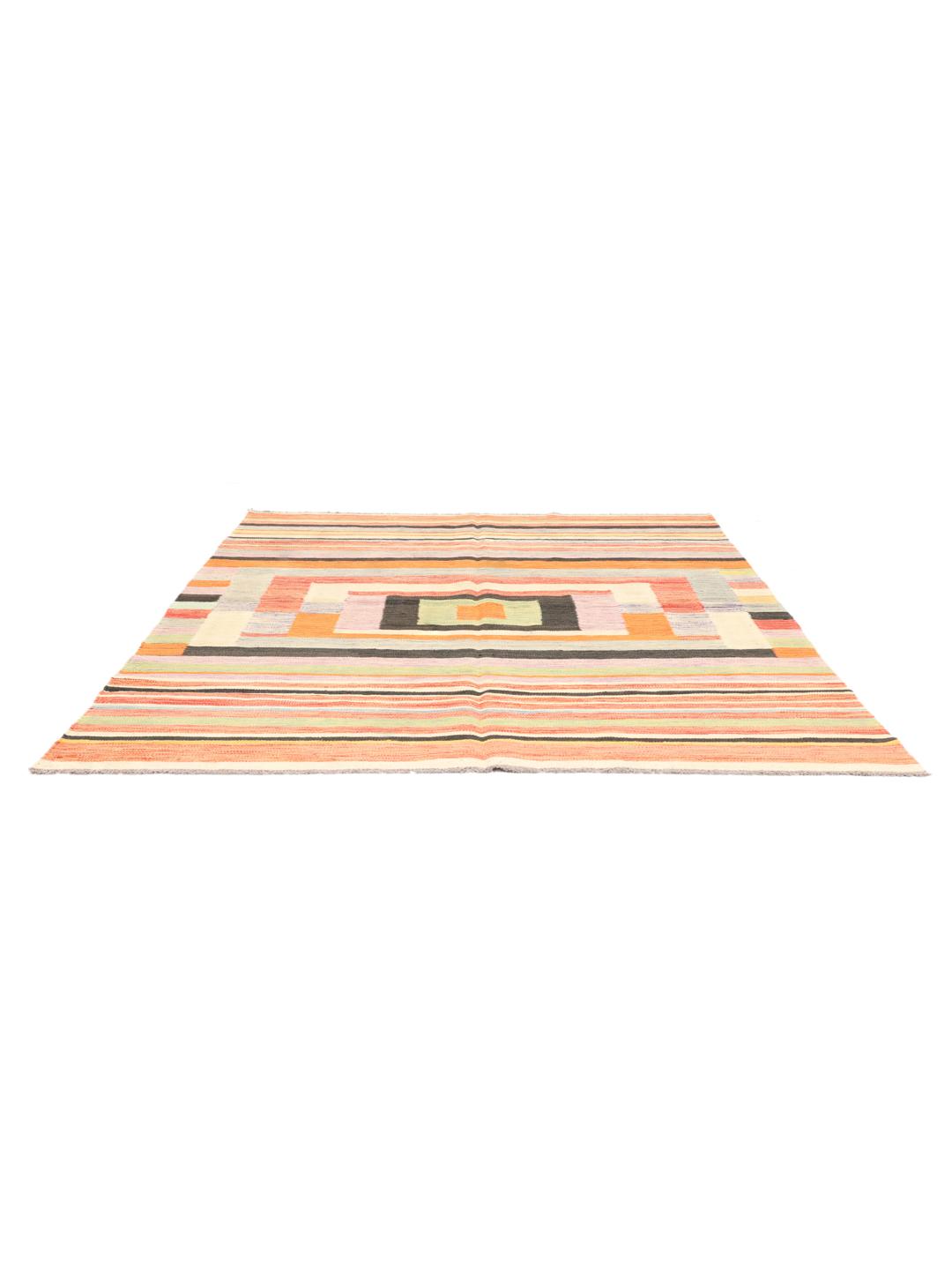
Signature design elements in modern Kilims often include bold, repeating stripes and nested geometric frames that draw the eye toward the centre. While traditional designs often focused on tribal symbolism, contemporary interpretations like this one emphasise colour and composition, using bold shifts in hue to create depth and movement. The use of vibrant, contrasting colours is a modern evolution of the natural dyes once sourced from local plants and minerals.
Owning a Kilim is a connection to a long lineage of craftspeople who have perfected the art of the loom over centuries. These rugs are highly valued by collectors and design enthusiasts alike, not only for their aesthetic appeal but for the skill required to maintain consistent tension and pattern alignment throughout the entire weaving process. By choosing this piece, you are supporting a tradition that continues to thrive through the hands of dedicated artisans.