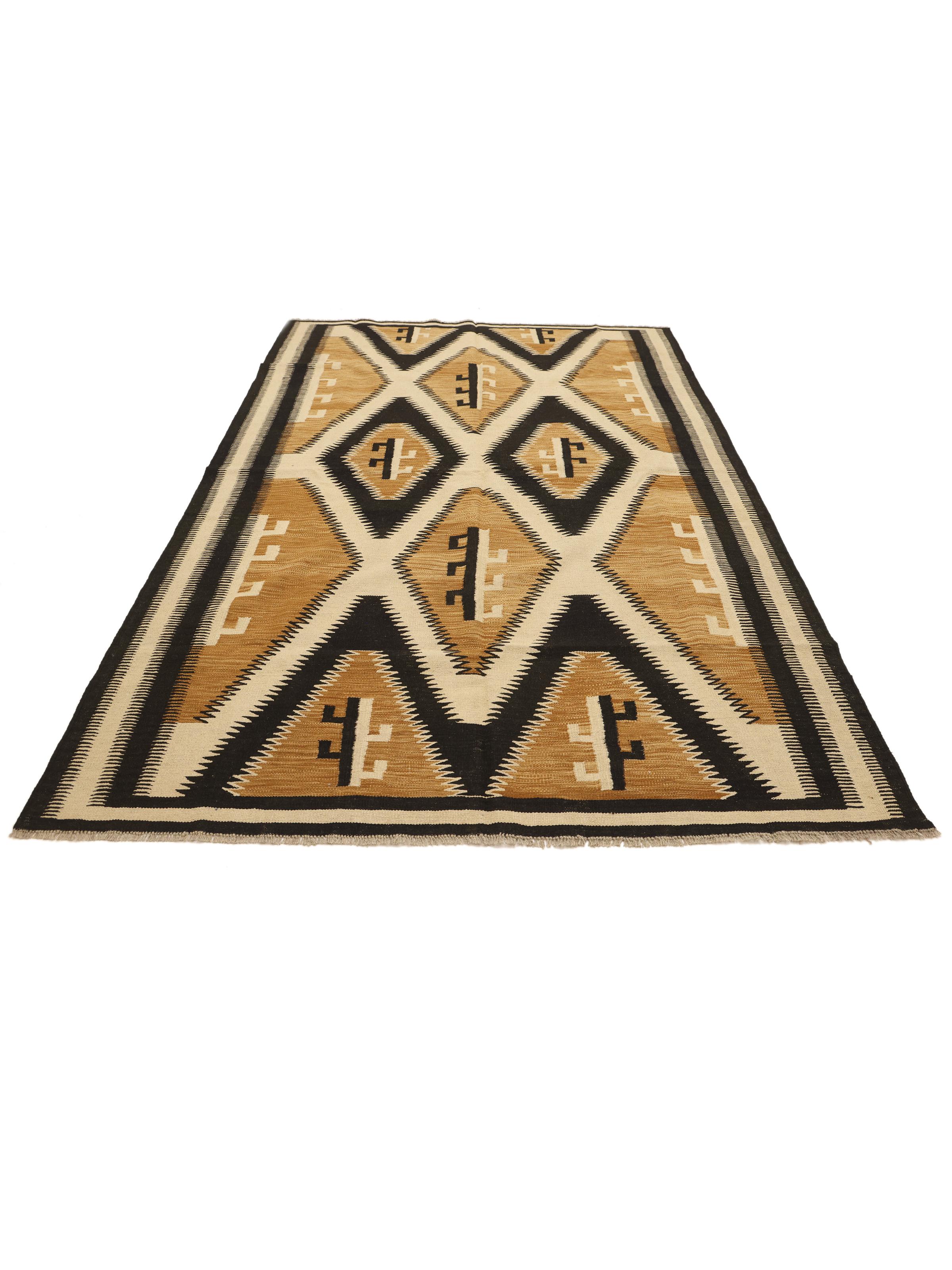
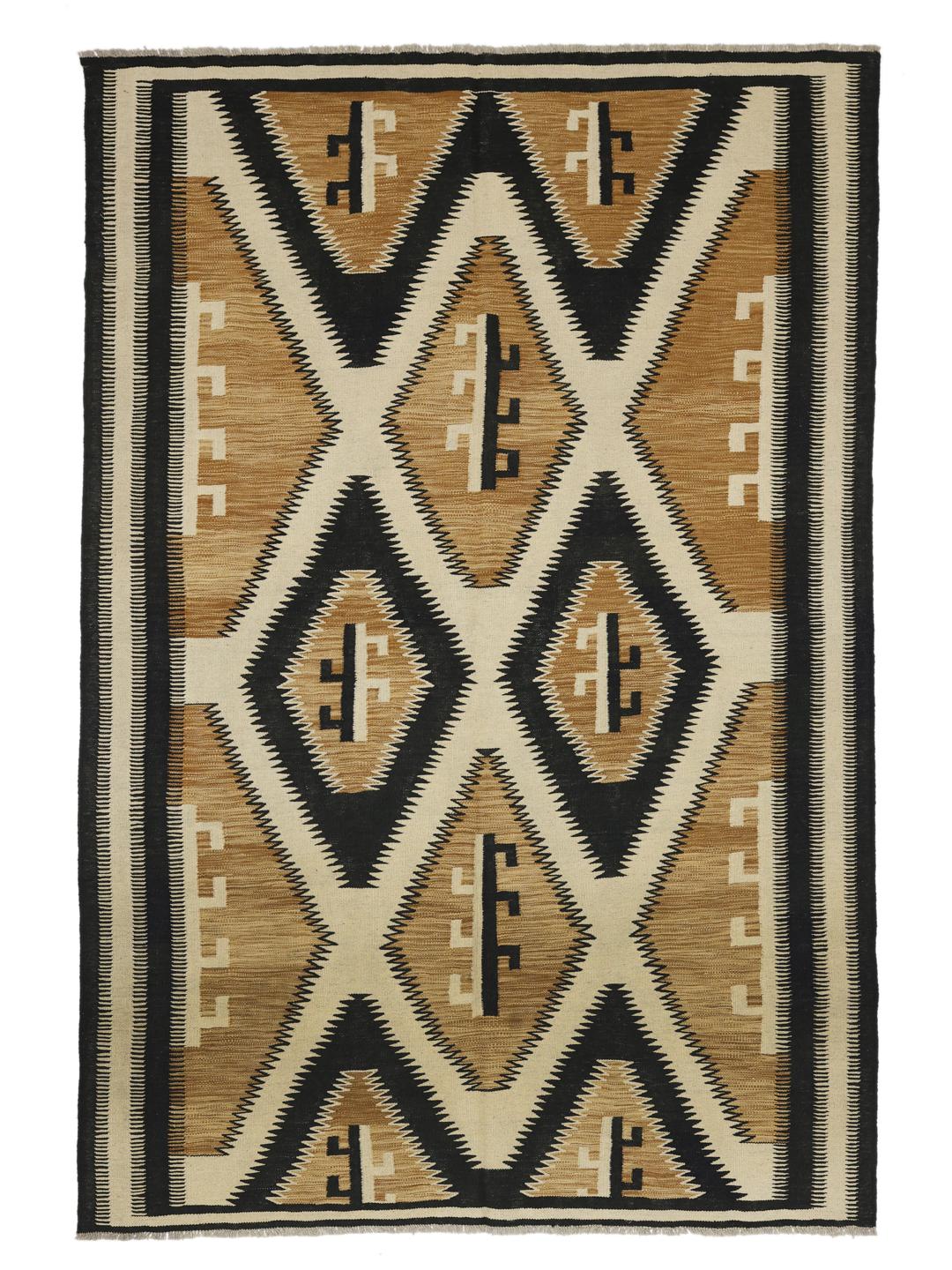
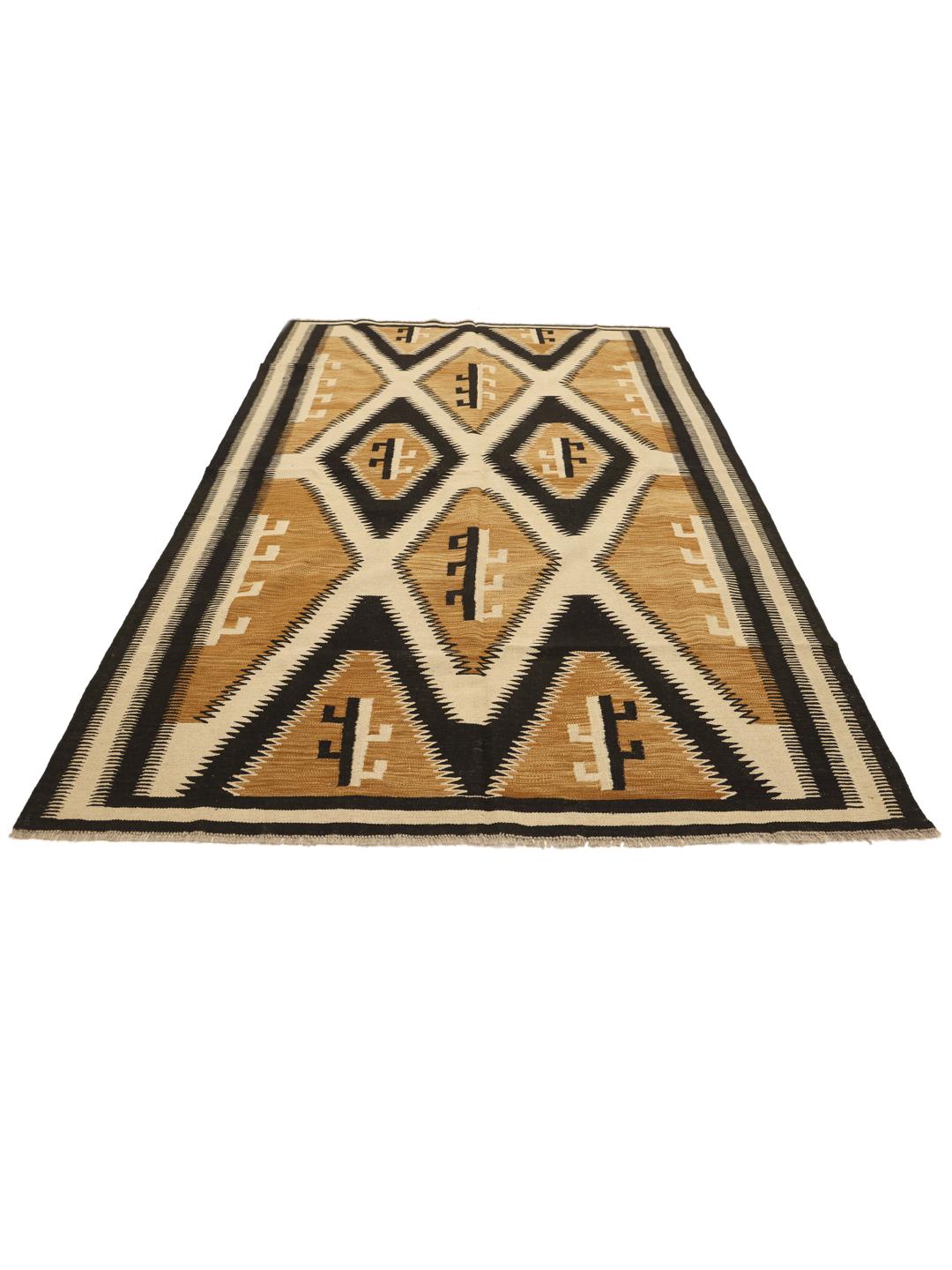
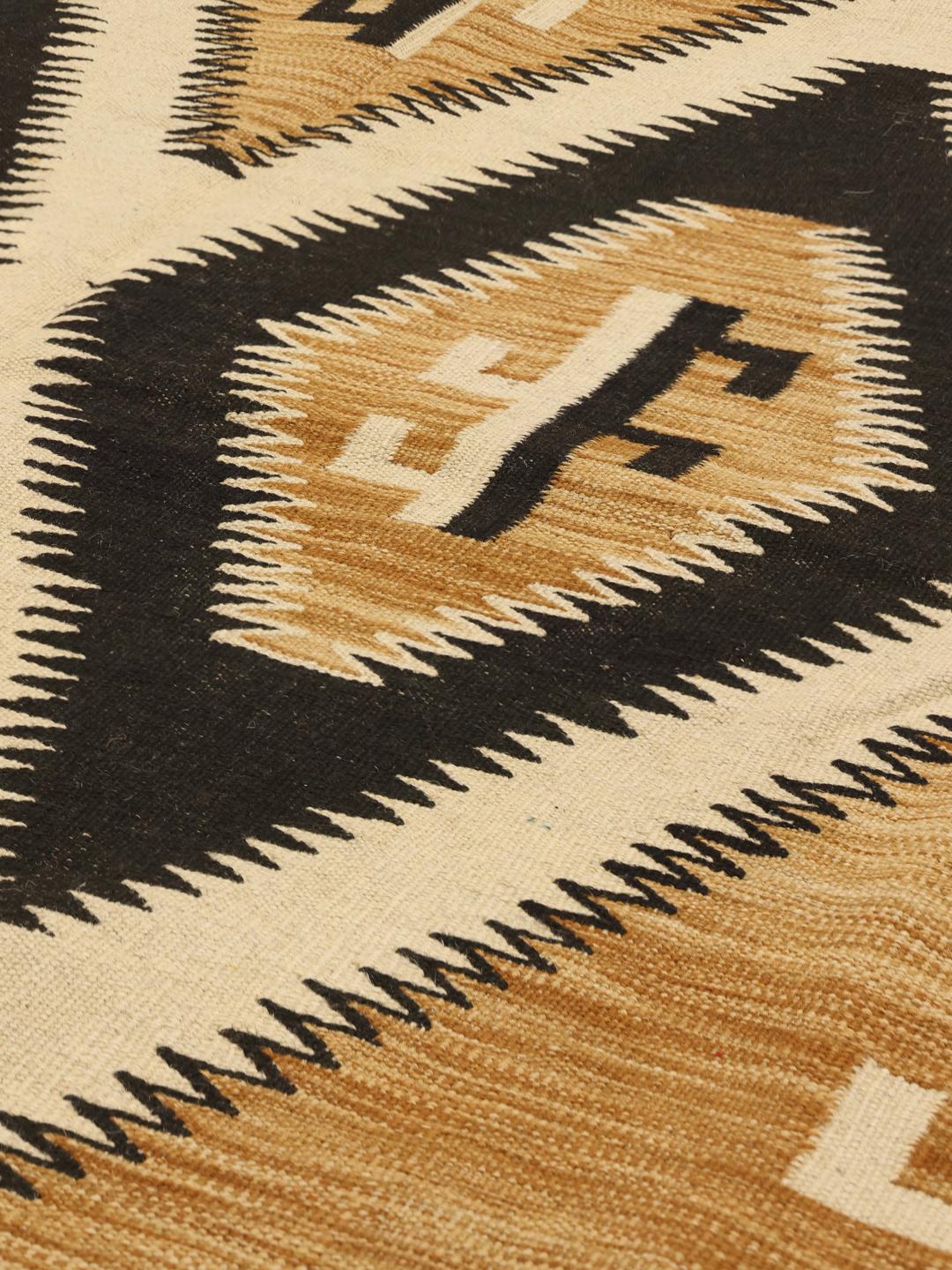
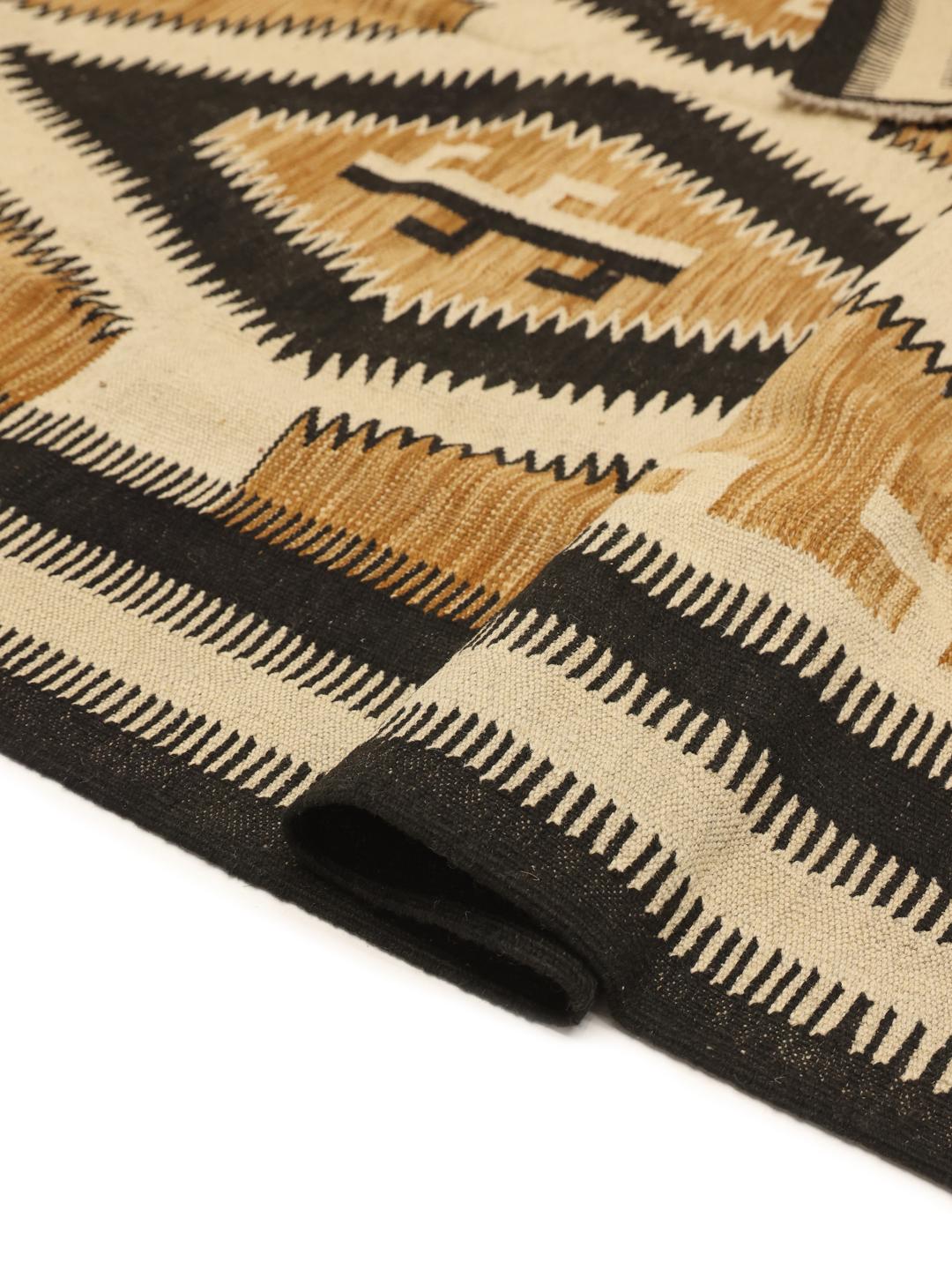
Kelim weaving has deep roots across the Middle East and Central Asia, evolving as a practical craft for nomadic and village communities who created durable textiles for daily life. Unlike pile carpets, flatwoven kelims are crafted by tightly interlocking warp and weft threads, producing a lightweight yet remarkably strong fabric that was traditionally used for floor coverings, bags, and blankets.
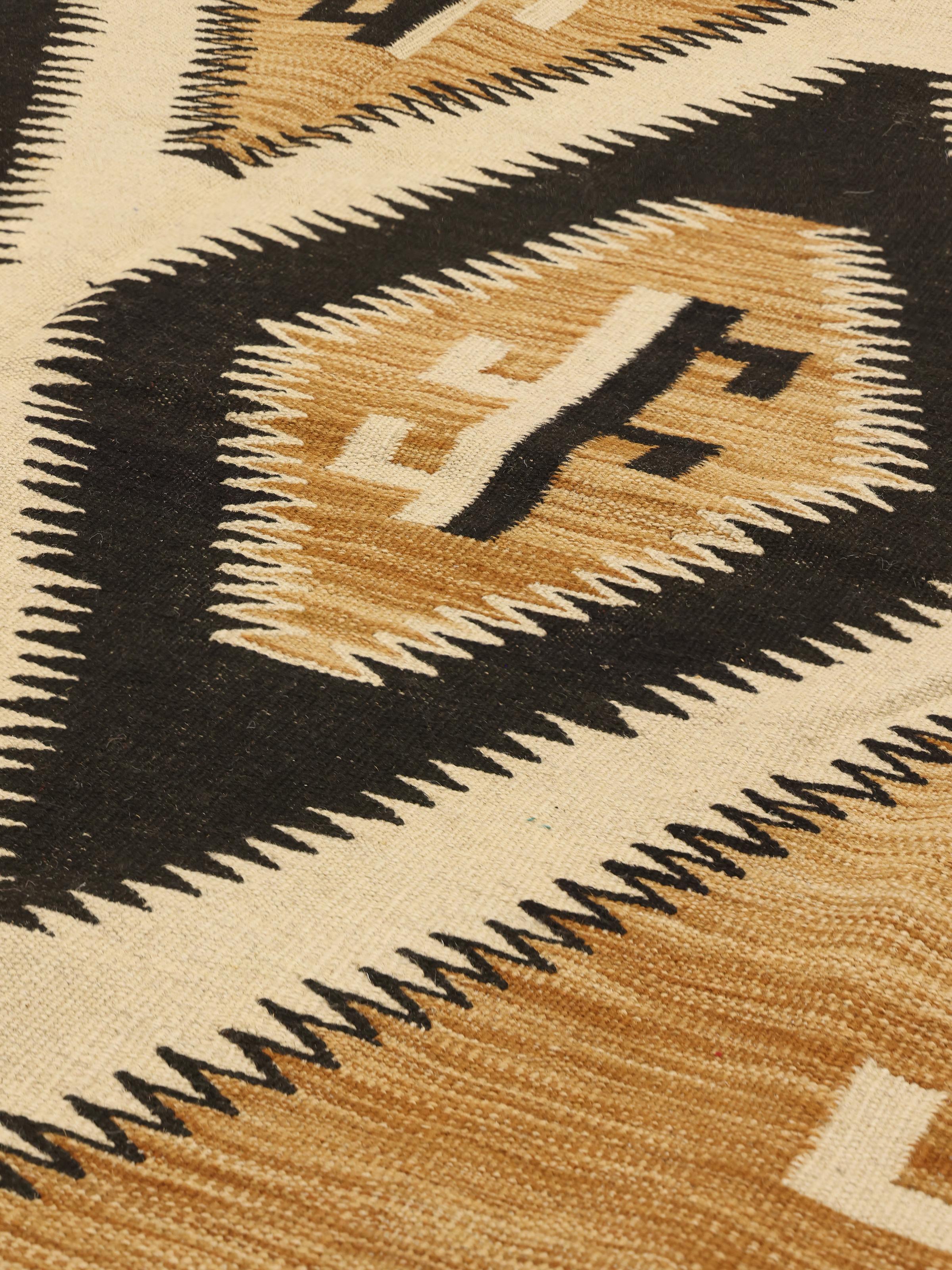
The term kelim itself refers to this specific flatweave construction technique, where patterns are formed by weaving coloured weft threads back and forth over the warp. This method creates a reversible textile with sharp, geometric clarity, requiring exceptional spatial awareness and skill from the weaver since mistakes cannot easily be hidden beneath a deep pile.
Visually, this tradition is defined by bold geometric motifs, striking diamond structures, and deliberate symmetry inspired by tribal heritage and everyday surroundings. The sharp edges of the shapes are an inherent characteristic of the slit-weave technique, where colour blocks meet without interlocking, creating the signature stepped outlines that make kelims instantly recognisable.
Collecting vintage and modern kelims is valued by interior enthusiasts and textile historians alike for their raw authenticity and the distinct human story woven into every thread. Owning a piece like this connects your modern home to an enduring lineage of global craftsmanship, celebrating functional art that stands the test of time.