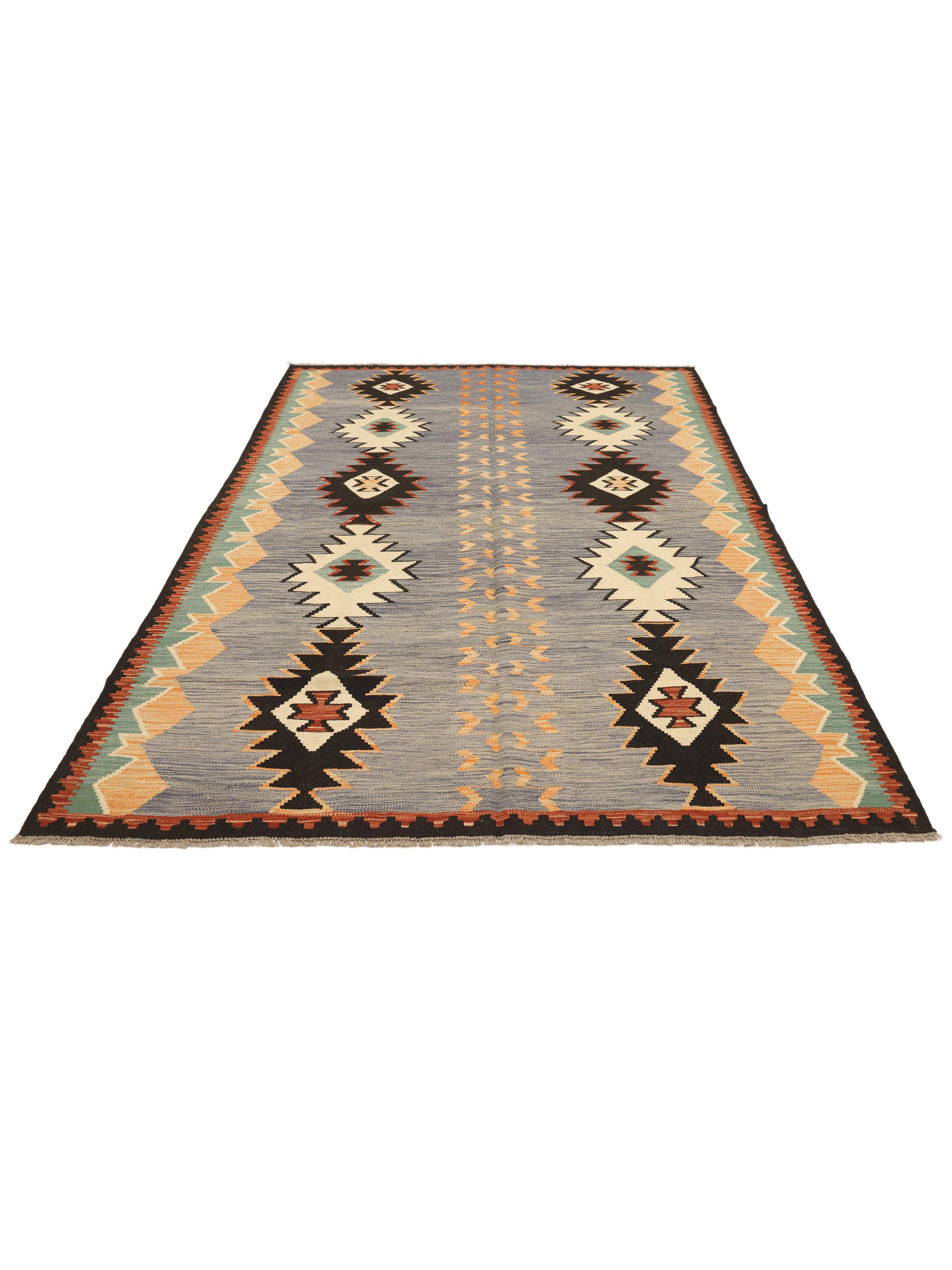
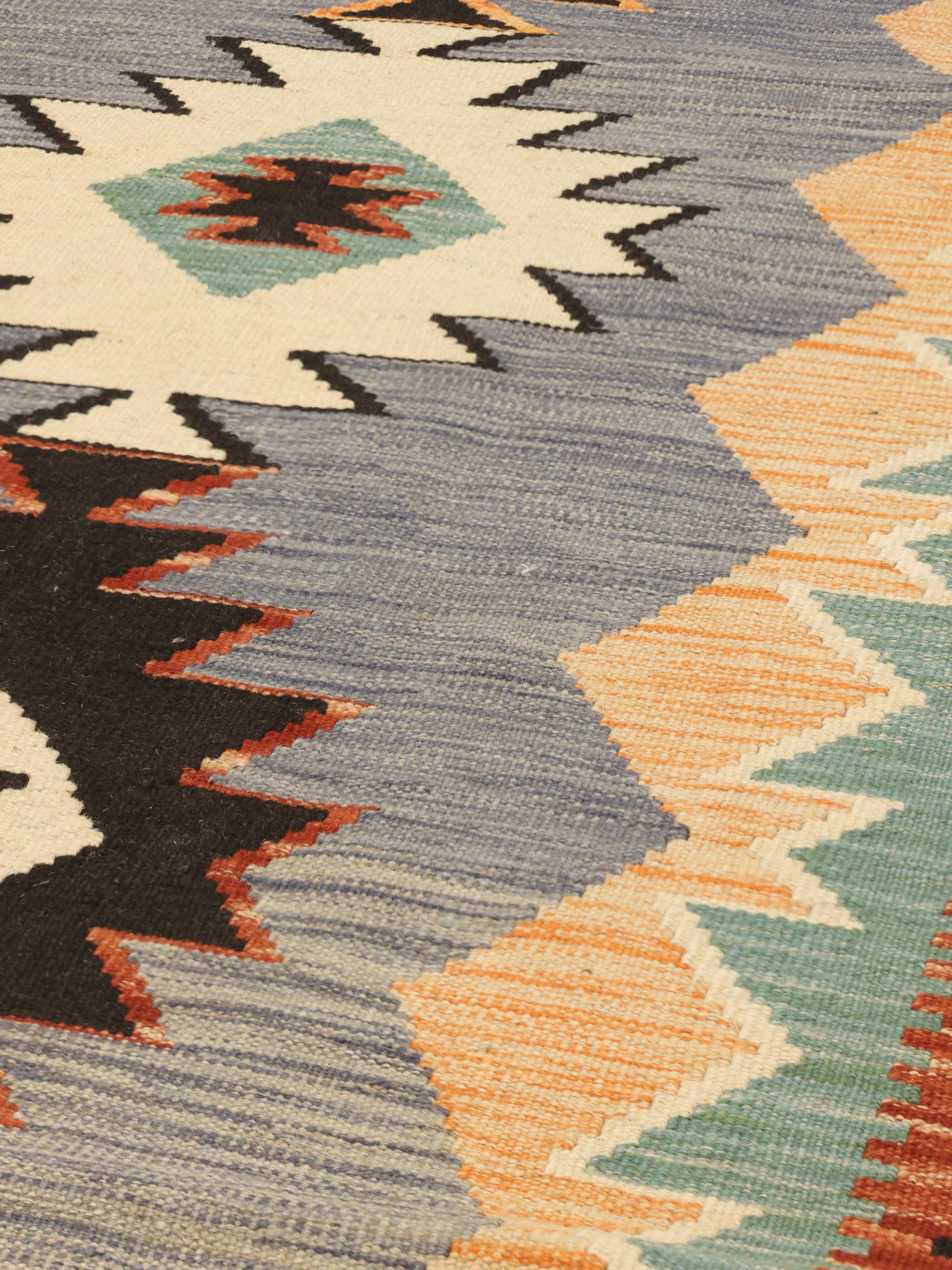
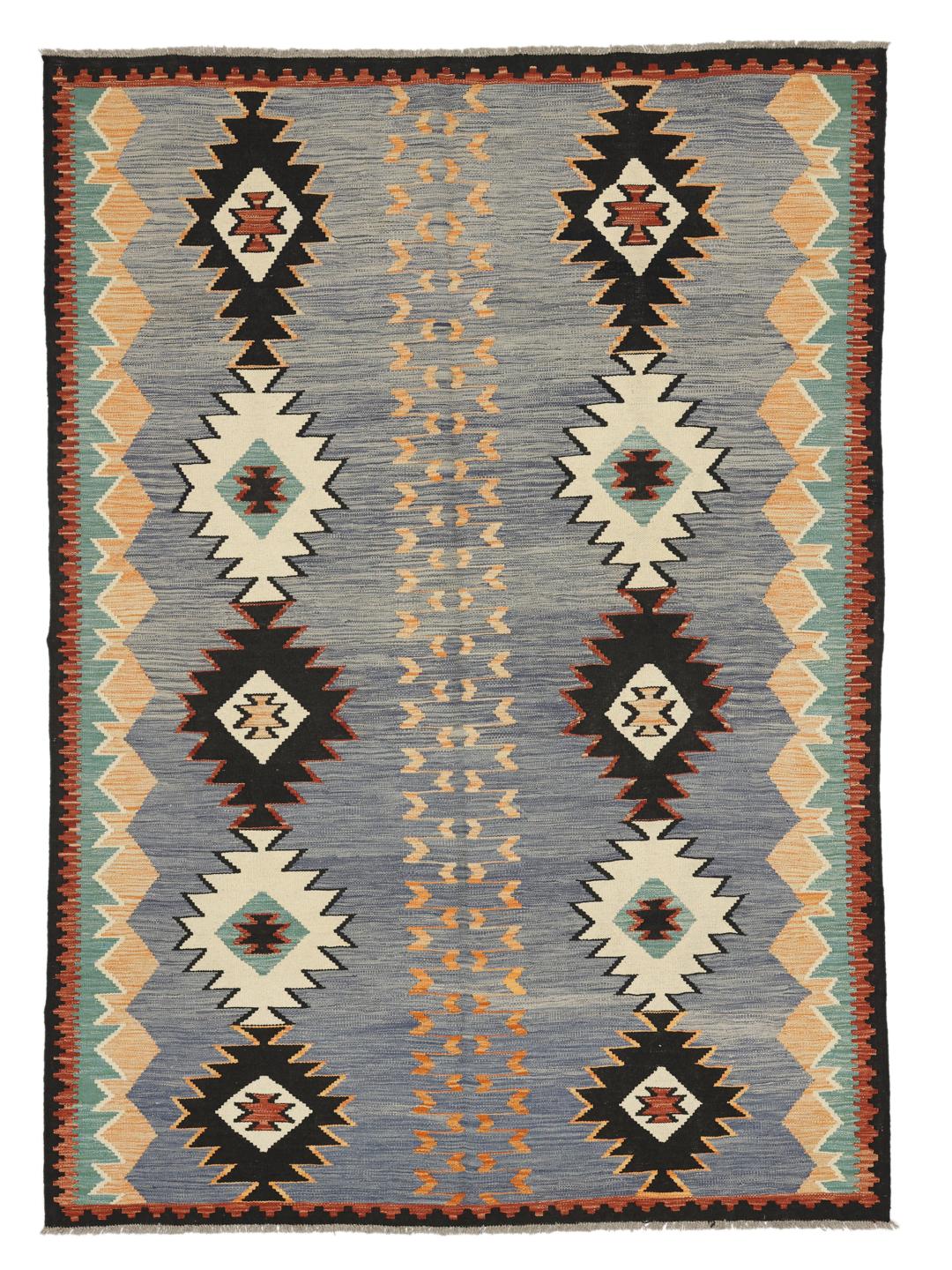
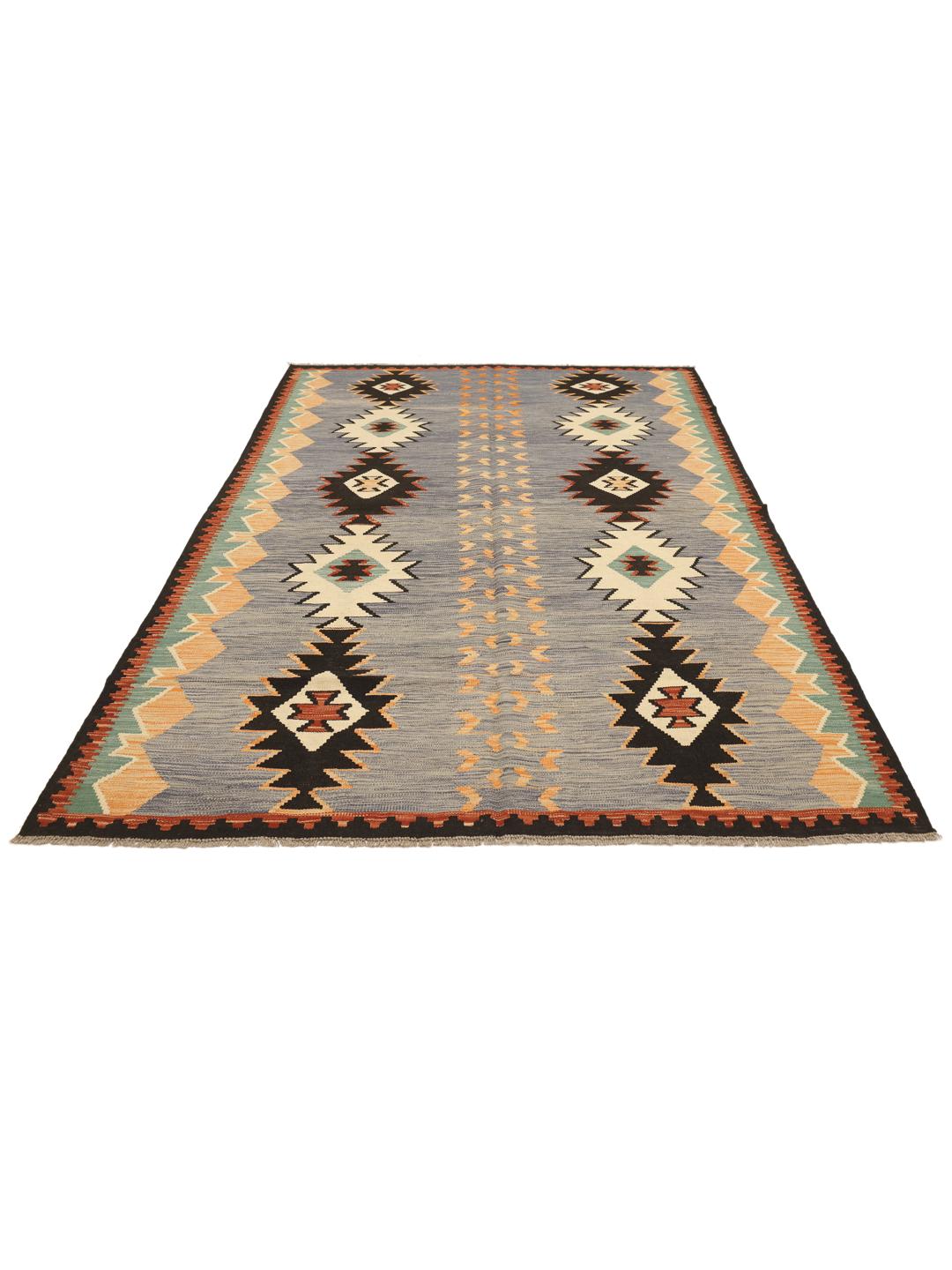
Kelim flatweaves have a long and storied history across the Middle East and Central Asia, where nomadic and village communities perfected the art of weaving without a pile. Unlike knotted carpets, flatweaves are constructed by tightly interlocking coloured warp and weft threads to create a smooth, tapestry-like surface that was traditionally used for floor coverings, horse covers, and storage bags during travel.
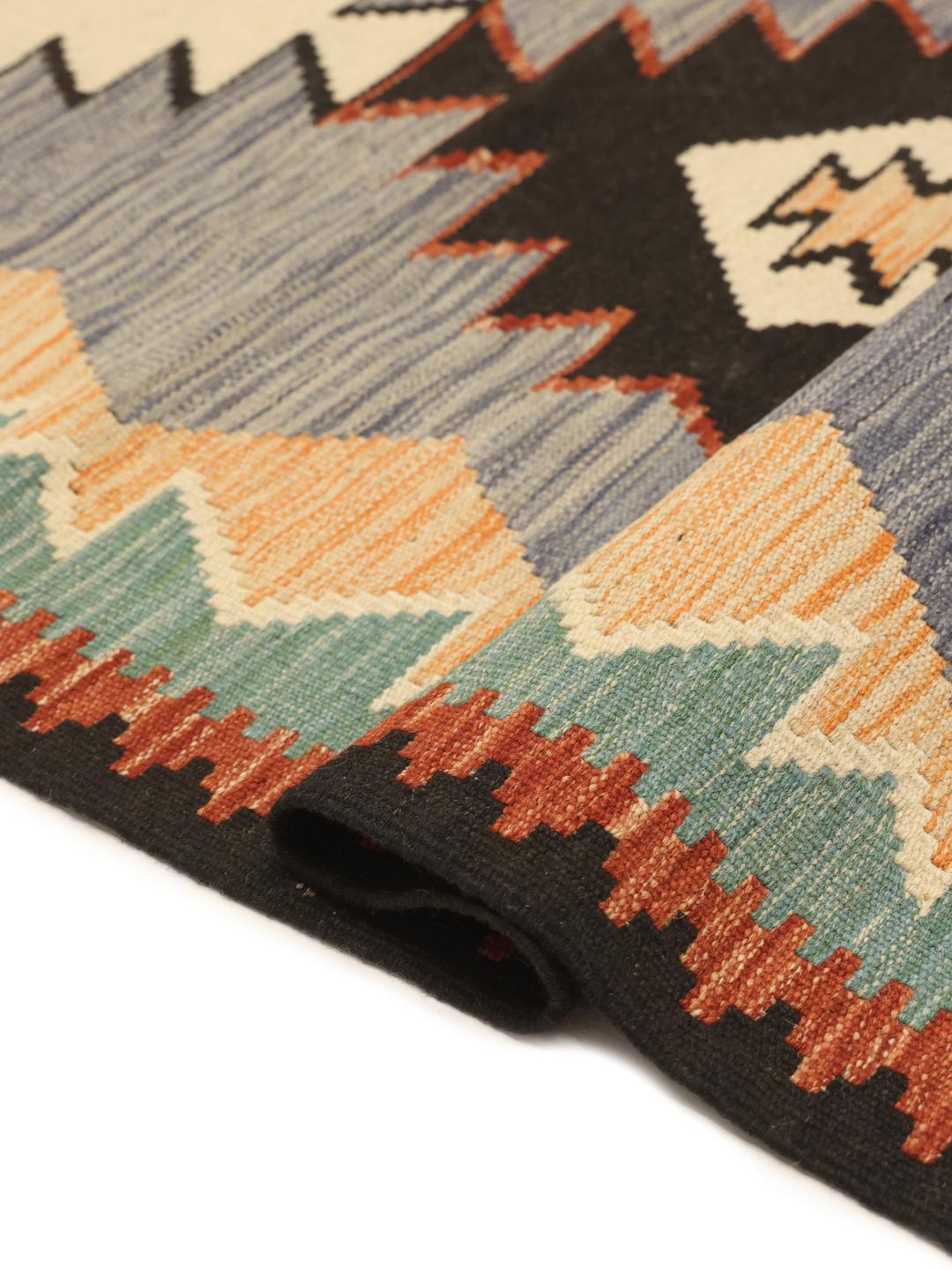
The term flatweave refers to the absence of a raised pile, relying entirely on the tension of the woven threads for its structure. This technique demands exceptional precision from the weaver, as every geometric shift in the design must be counted directly into the foundational grid during the weaving process.
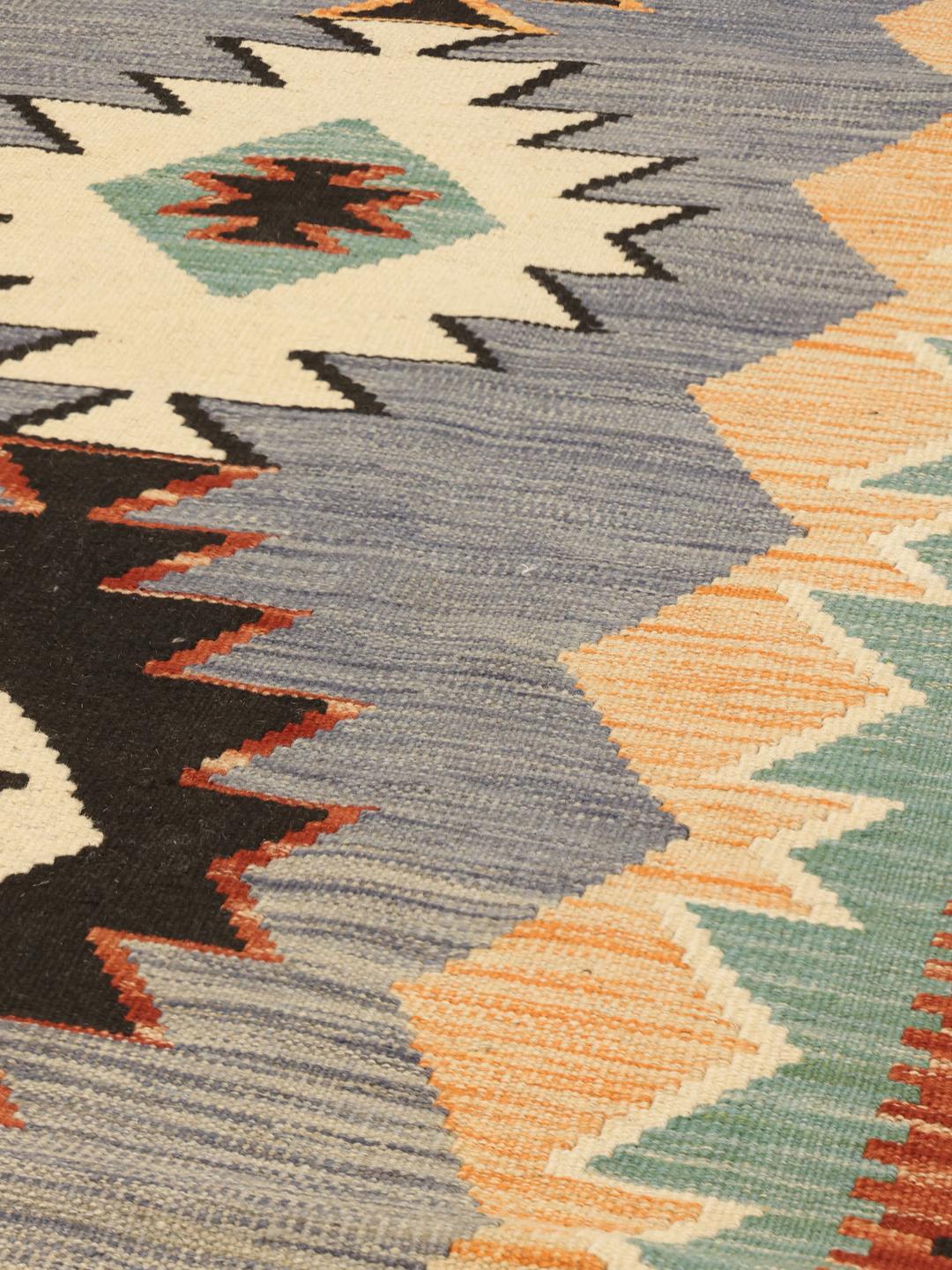
Signature design elements of these rugs include bold geometric motifs such as diamonds, triangles, and zig-zags, often arranged in repeating sequences that carry symbolic meaning for the weaving communities. In this particular piece, the crisp arrangement of geometric shapes against a solid field showcases the enduring appeal of traditional motifs interpreted through a modern aesthetic lens.
Rugs from this tradition are highly valued by collectors and interior enthusiasts alike for their lightweight versatility and deep cultural roots. Owning a piece like this connects your home to an ancient craft tradition, celebrating the skill and patience of the artisan who brought the design to life.