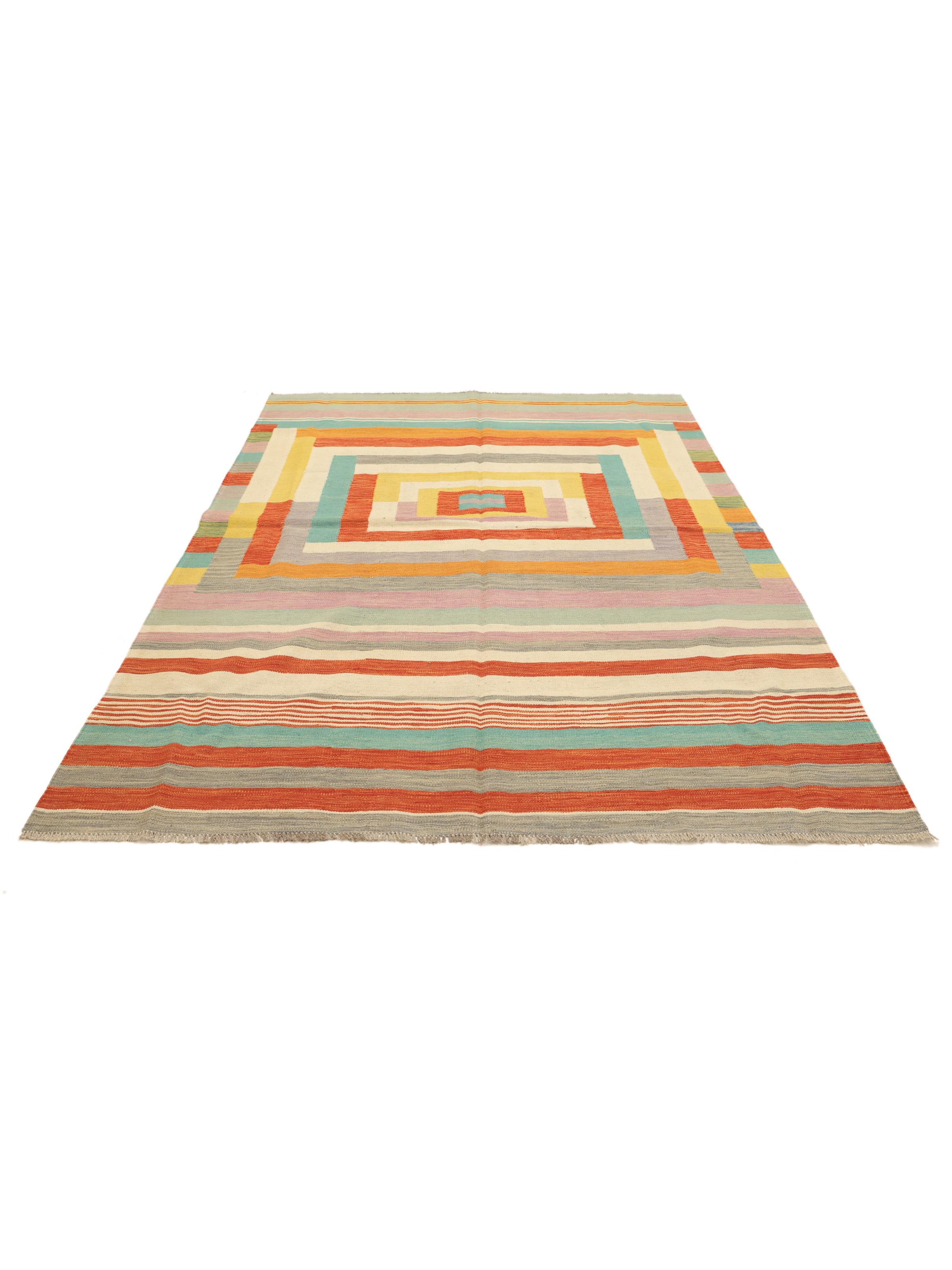
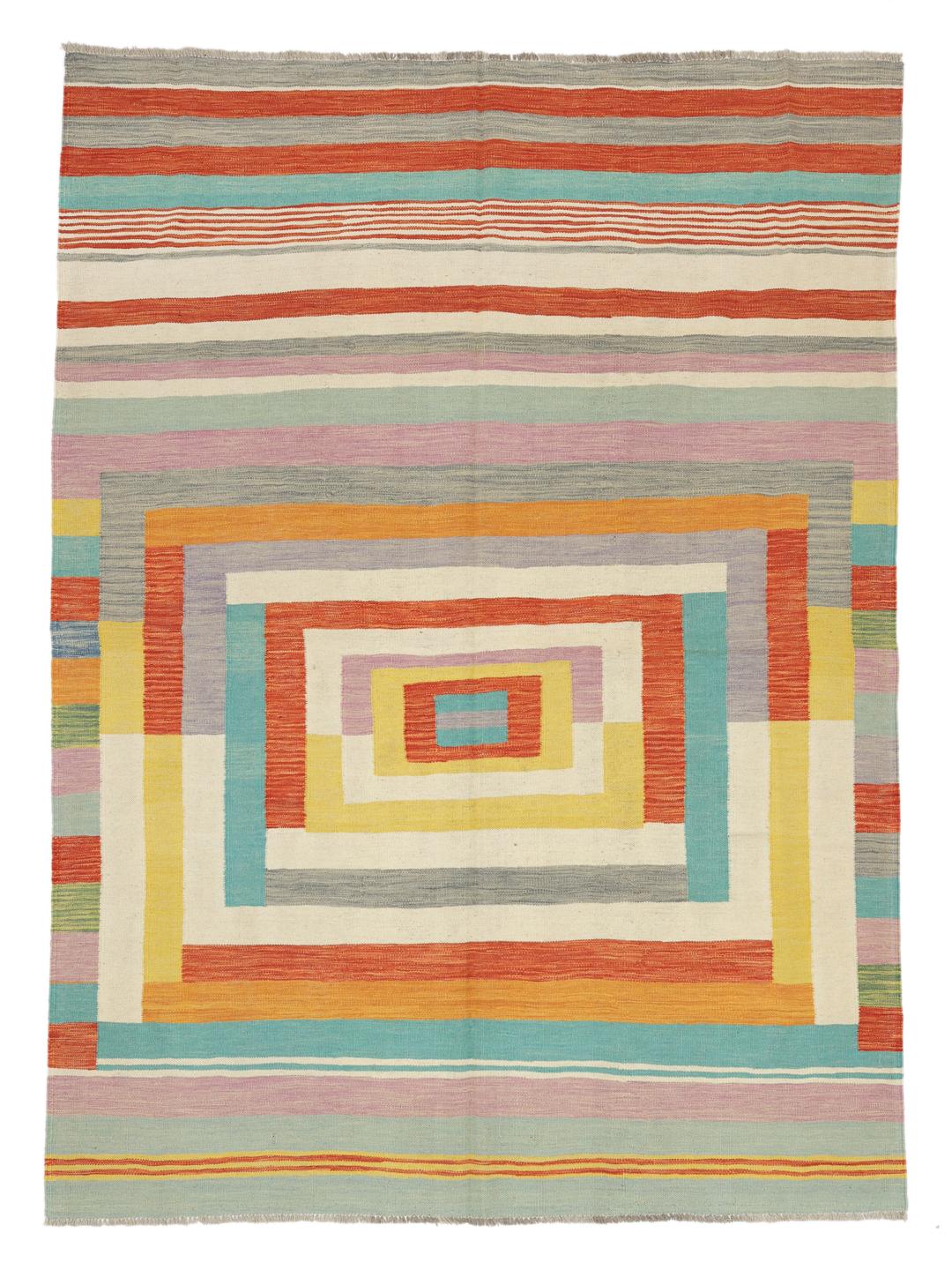
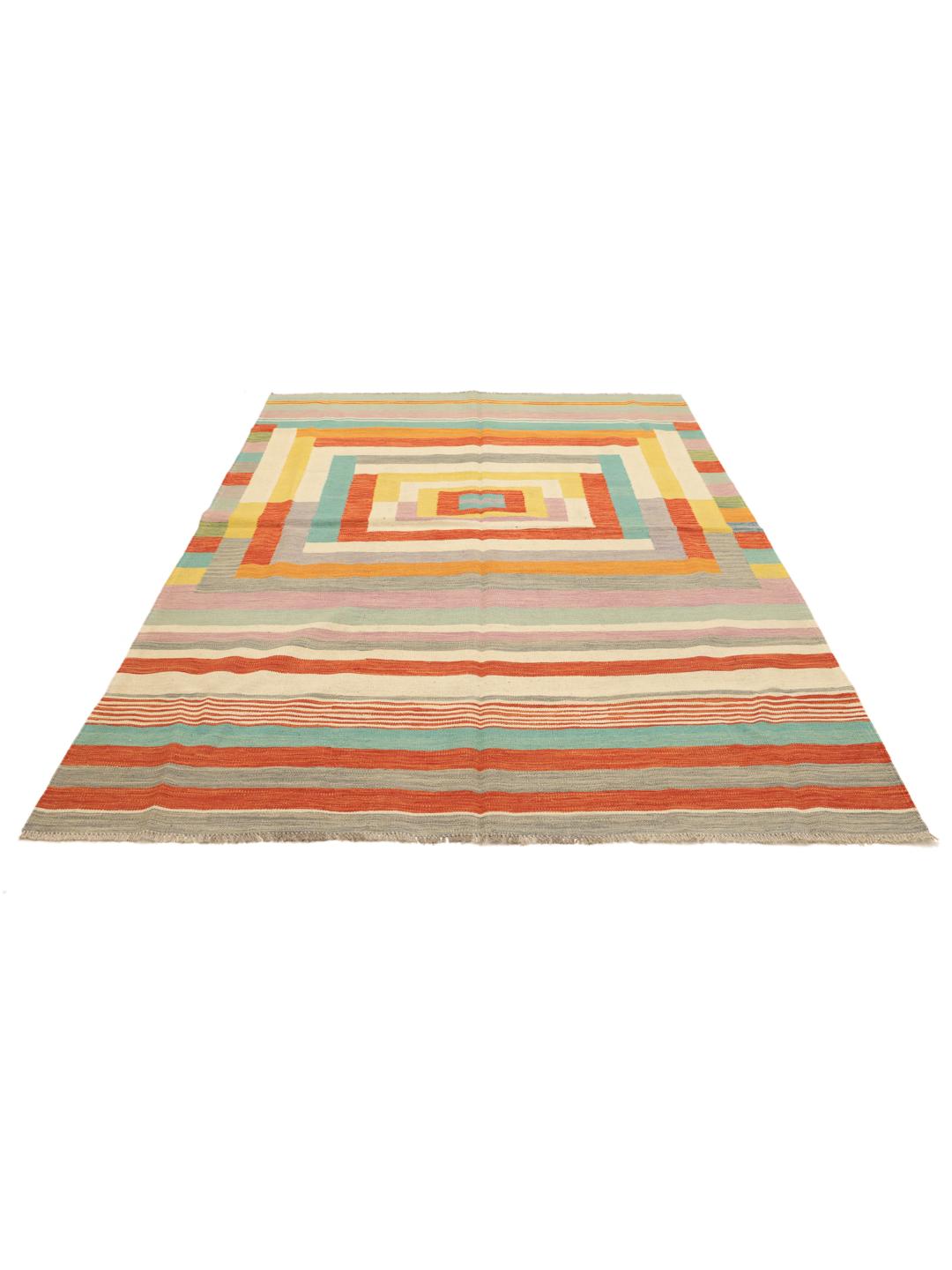
Kelim rug-making is an ancient craft with deep roots across Central Asia and the Middle East, where nomadic and village weavers mastered the art of flatweaving. Historically, these textiles were created as durable floor coverings, blankets, and storage bags for life on the move. Over generations, this utilitarian craft evolved into a celebrated artistic tradition, blending regional symbolism with practical utility.
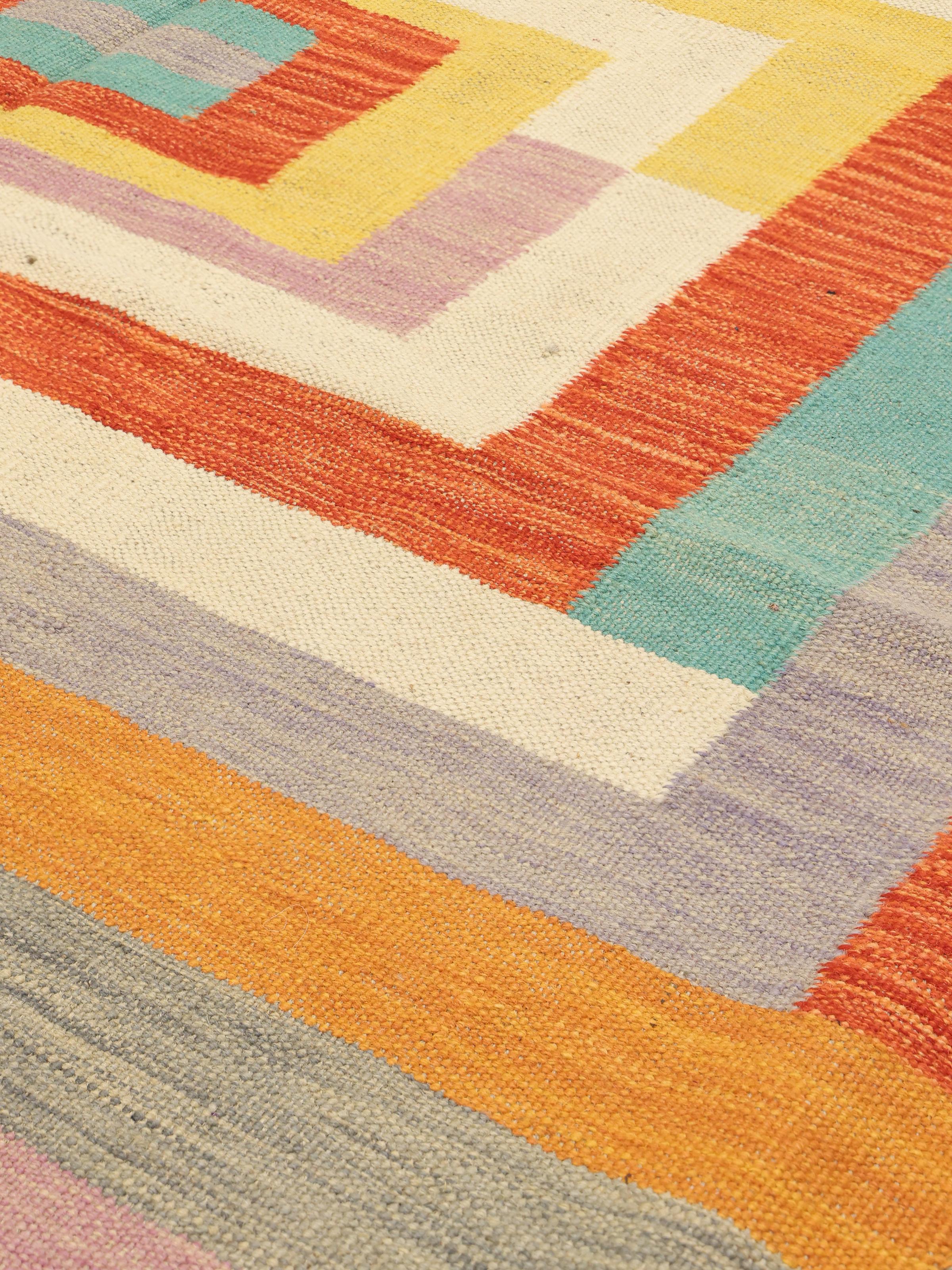
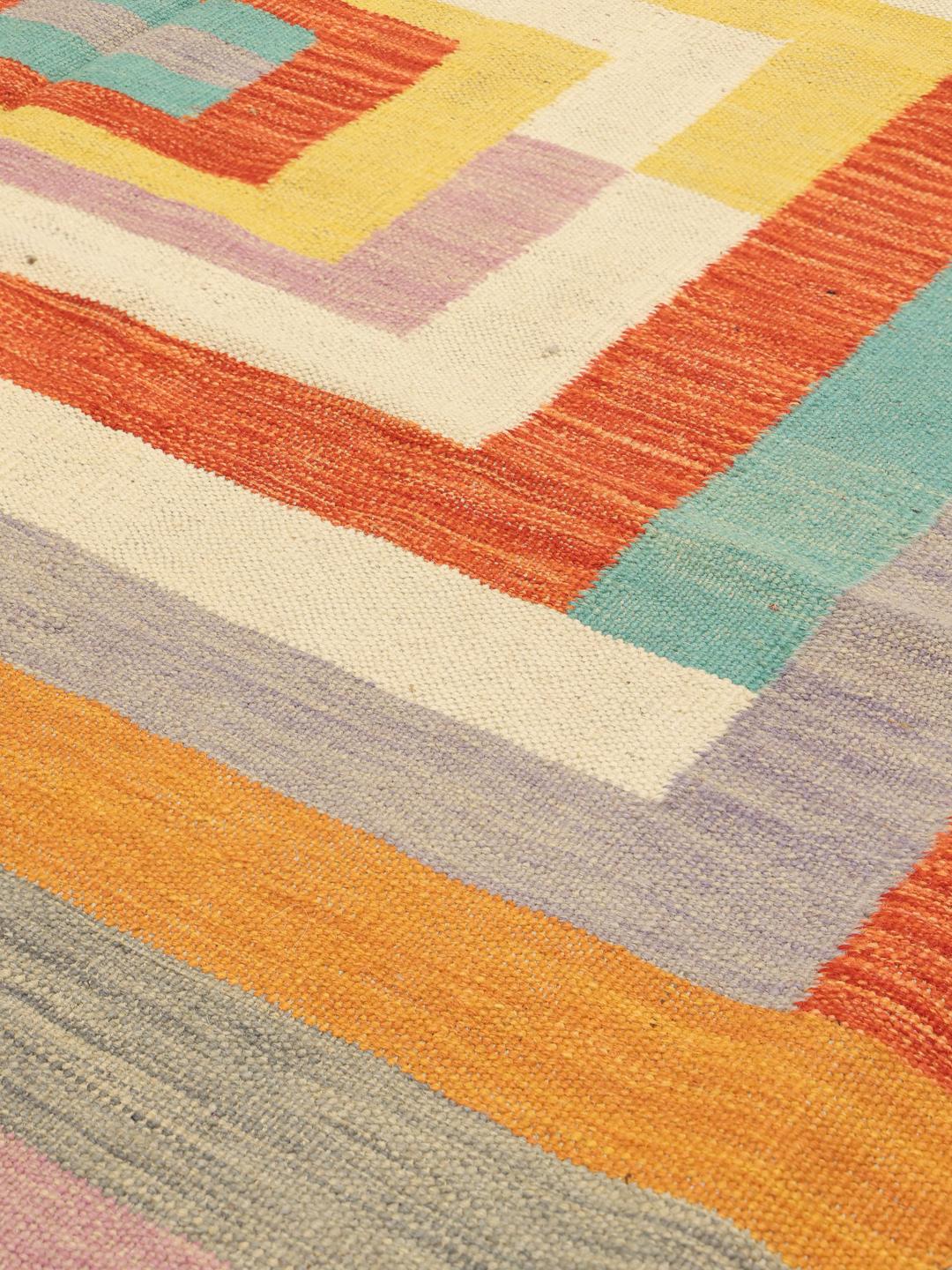
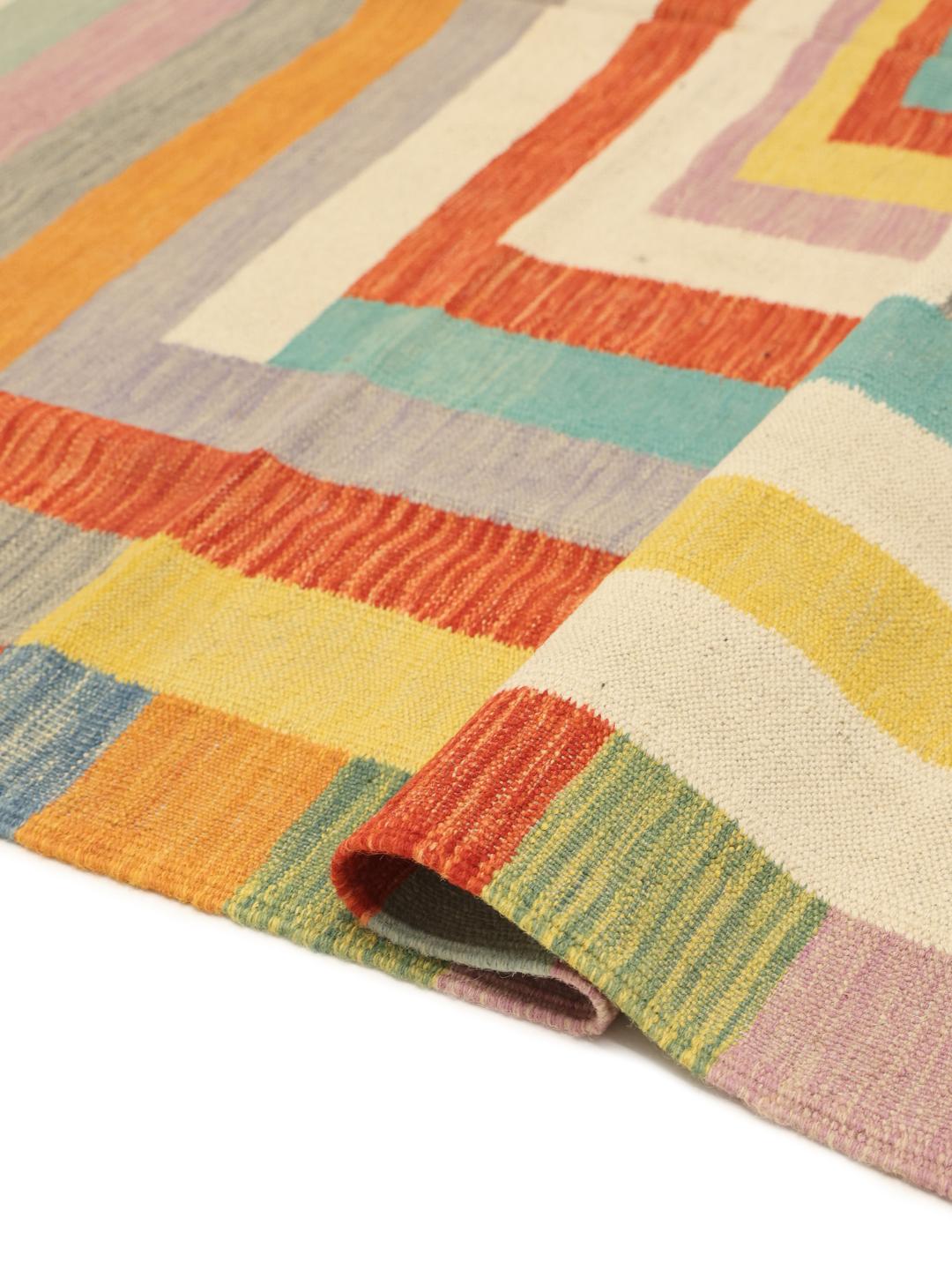
The term kelim refers to a flatwoven textile made without a knotted pile, where the pattern is created by tightly interweaving the coloured weft threads through the warp foundation. This technique produces a lightweight yet exceptionally durable fabric that is reversible and lies smoothly on the floor. Without a raised pile, the design takes on a sharp, graphic clarity that highlights the weaver's skill.
Traditional kelim design relies heavily on geometric motifs, repeating bands, and symbolic markers passed down within weaving communities. While older styles often featured earthy tribal palettes, modern interpretations embrace bolder colour blocking and contemporary geometric arrangements. This particular piece reinterprets classic striped and boxed compositions through a fresh lens, bridging historical techniques with modern aesthetics.
Collecting handmade kelims allows you to connect with a living heritage of textile artistry that values human skill above mass production. Each piece reflects the landscape, culture, and personal expression of the artisan who wove it. Owning such a rug is an investment in authentic craftsmanship, preserving centuries-old traditions while adding warmth and personality to contemporary spaces.