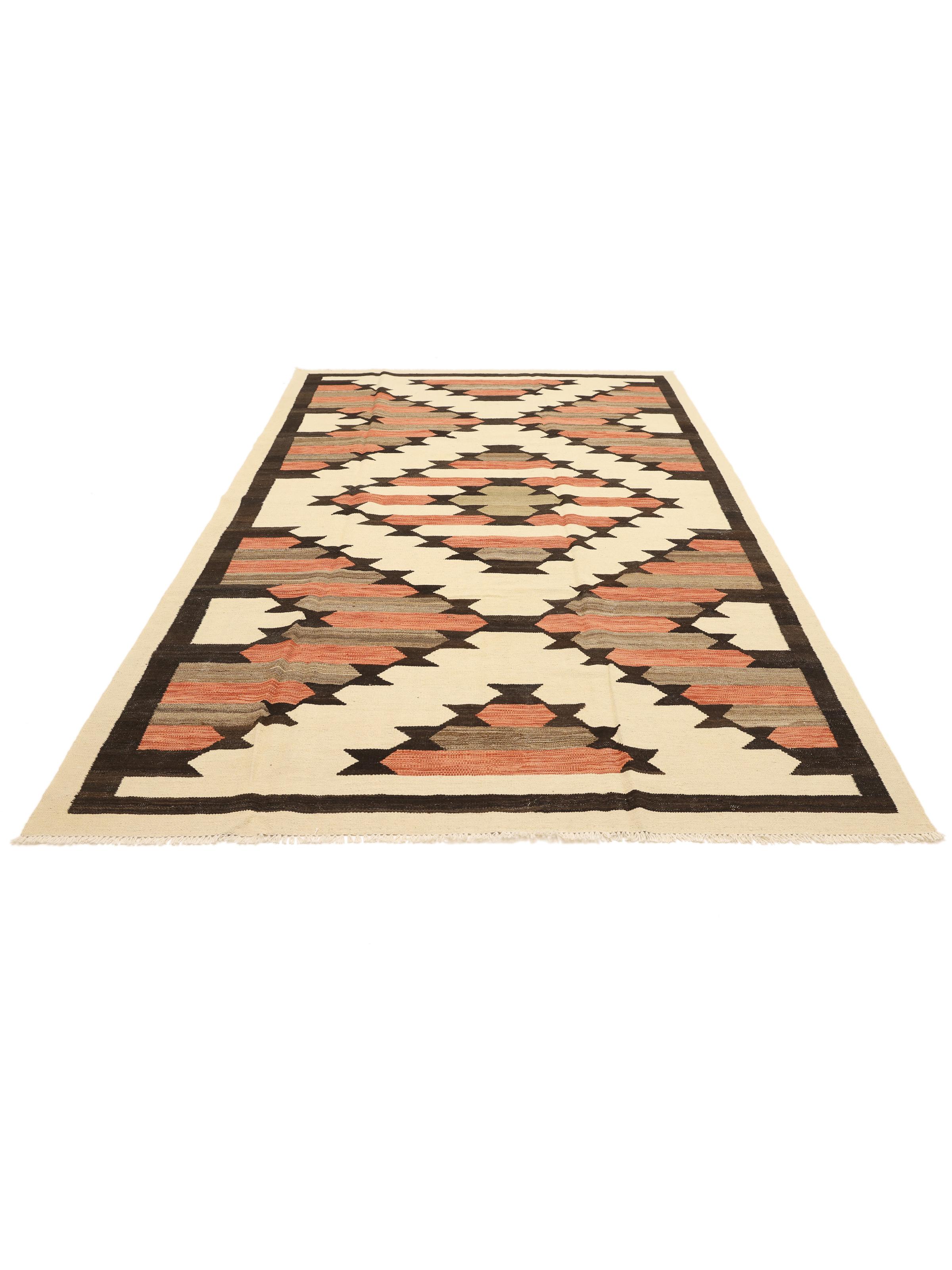
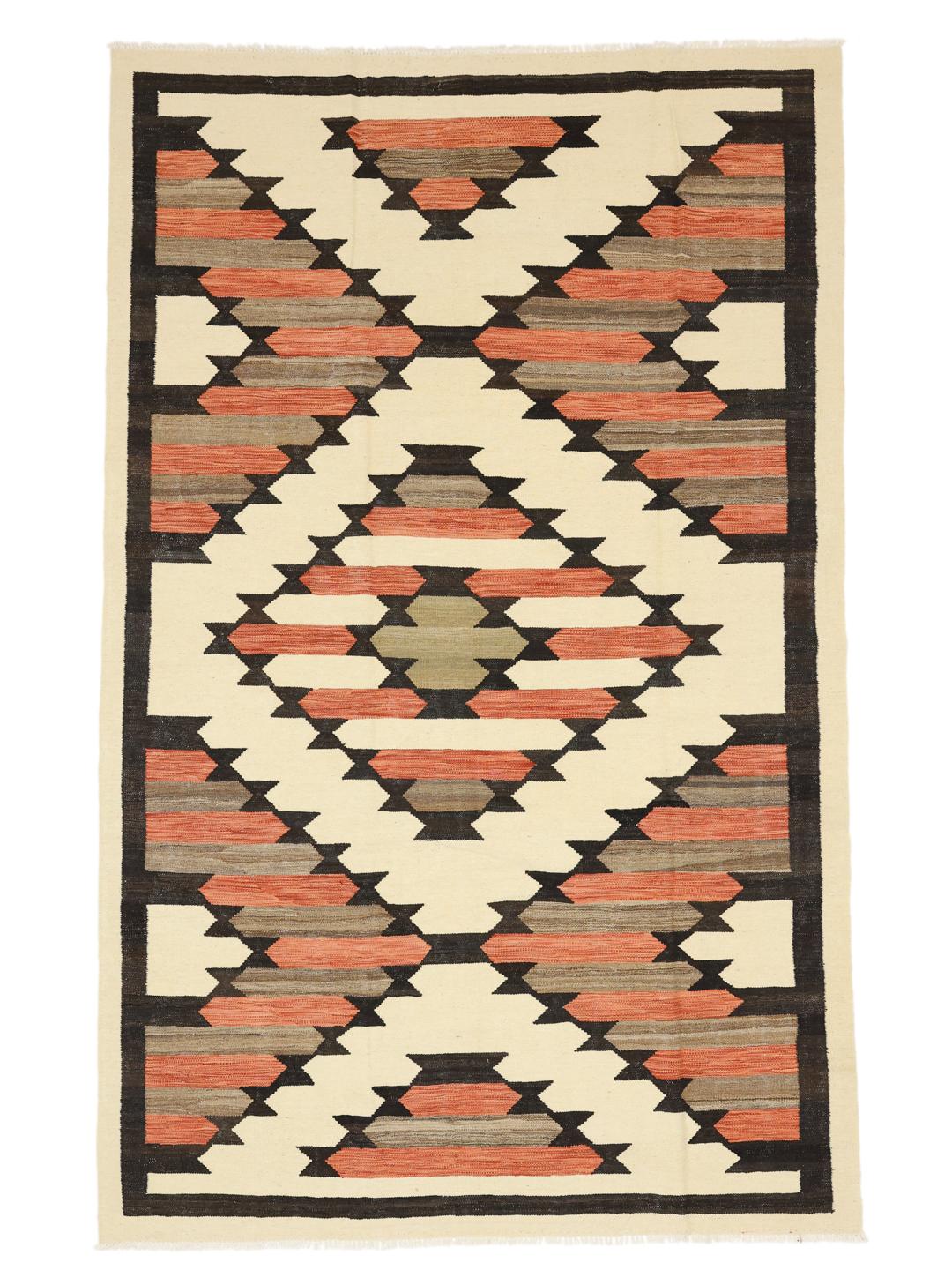
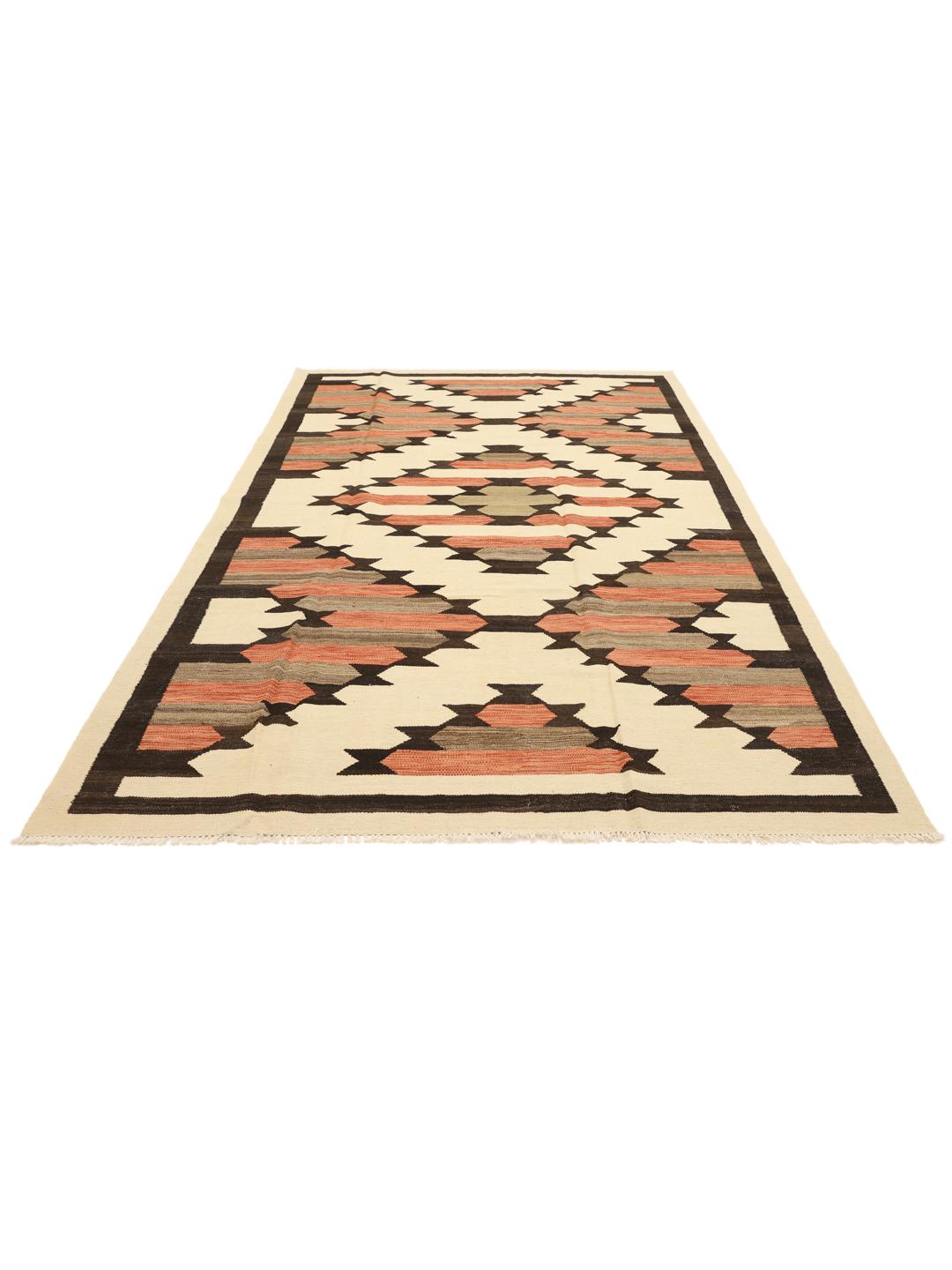
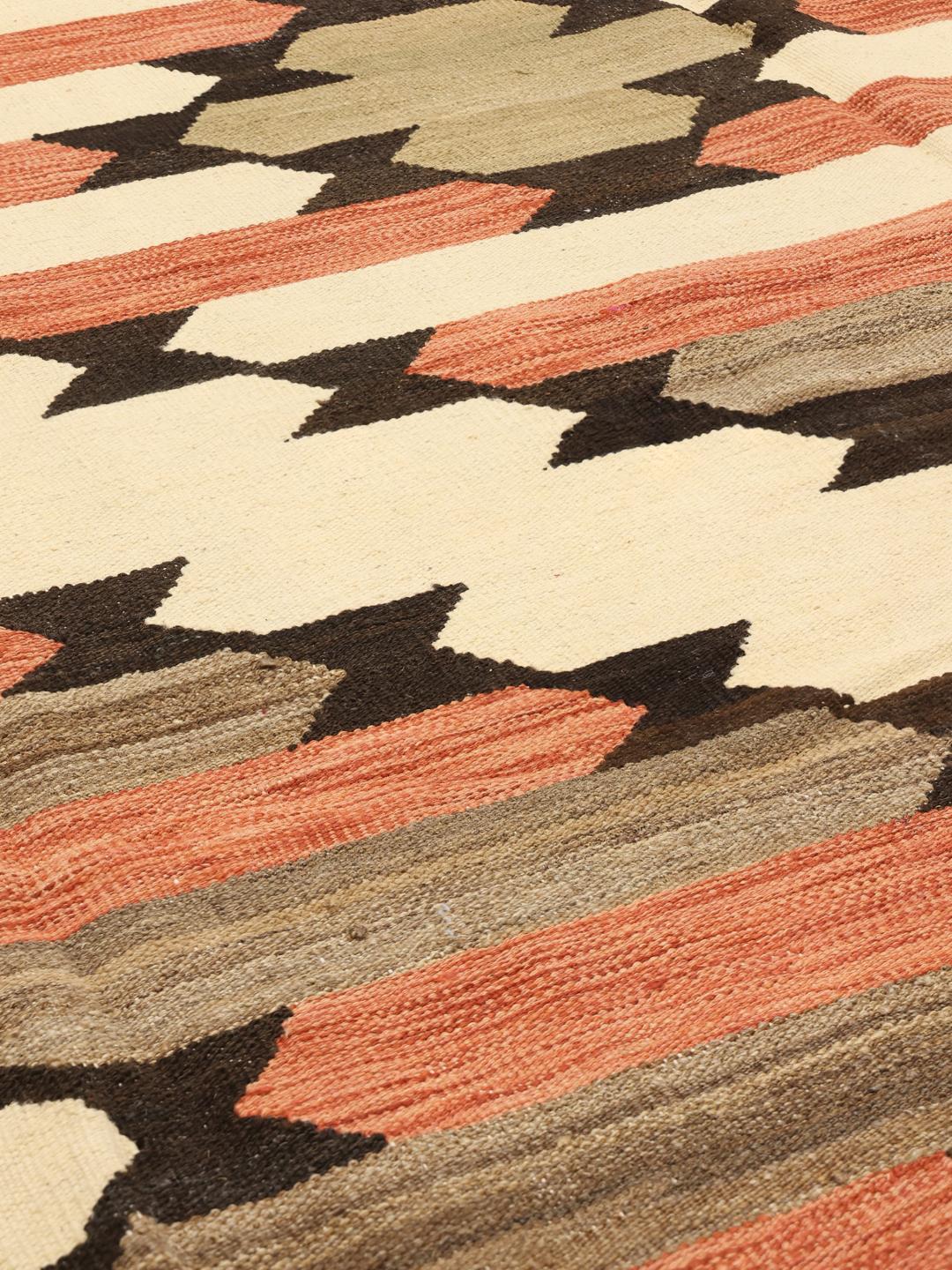
Flatwoven rugs like this Kelim Modern have deep roots across Central Asia and the Middle East, where nomadic and village communities traditionally created versatile textiles for daily living.
Unlike pile rugs, flatweaves were lightweight, portable, and durable enough to serve as floor coverings, blankets, or pack saddles along ancient trade routes.
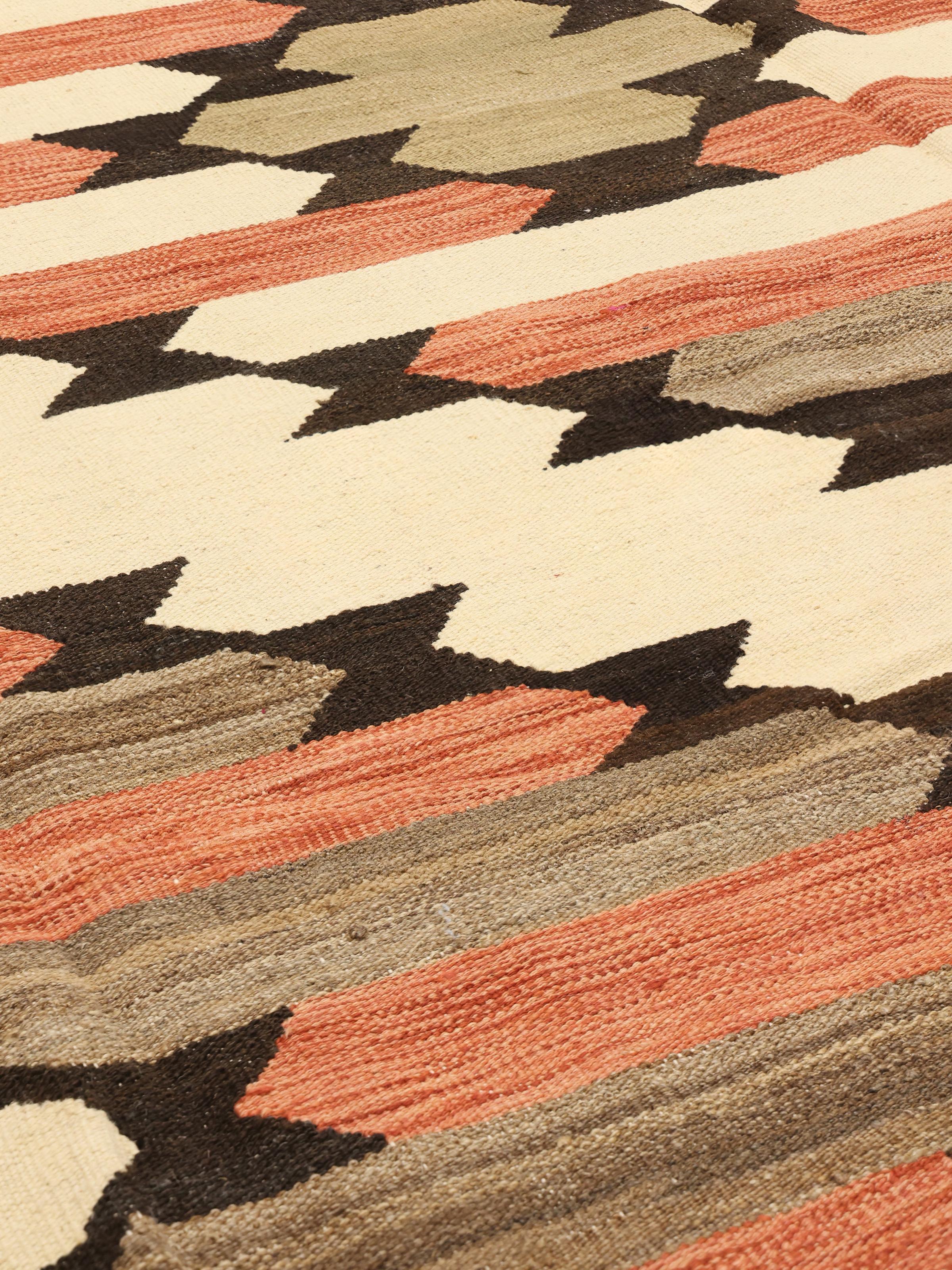
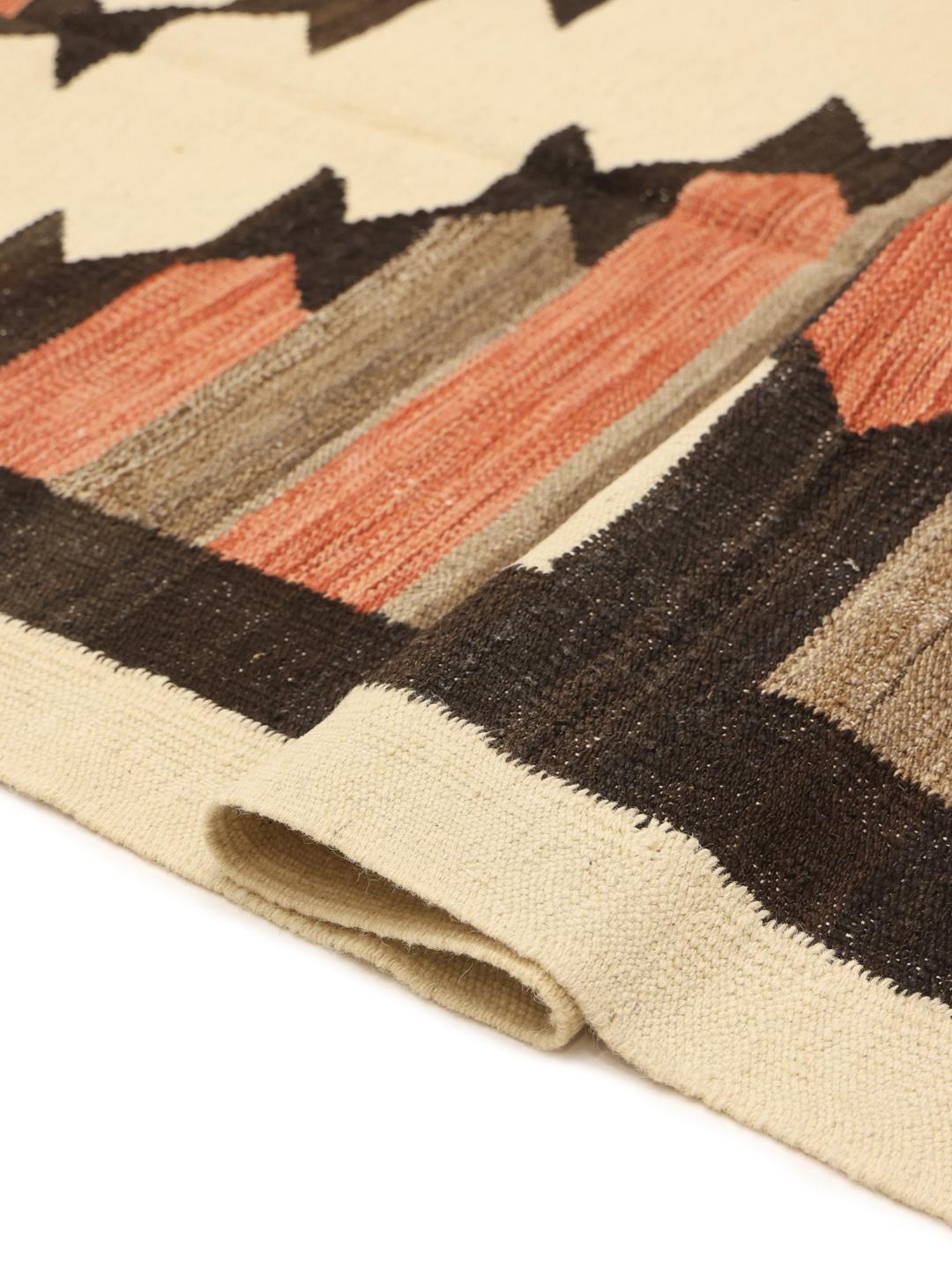
The term kelim refers to a flat tapestry-weaving technique where the pattern is created by tightly interweaving the coloured weft threads through the vertical warp strands.
This construction method produces a reversible, low-profile textile that has remained largely unchanged for centuries, valued for its crisp geometric definition and robust longevity.
Signature design elements in this tradition typically feature bold geometric arrangements, diamond medallions, and sharp zig-zag borders rooted in tribal symbolism.
While traditional palettes often leaned heavily on deep reds and earthy tones, modern interpretations frequently introduce softer background shades like beige to blend seamlessly into contemporary interiors.
Collecting a hand-woven kelim connects your home to a rich heritage of textile artistry.
Each piece preserves the regional knowledge and aesthetic choices of the makers, offering a lasting sense of culture and genuine human skill that mass-produced alternatives simply cannot match.