Kilim rugs represent one of the most enduring weaving traditions in the Middle East and Central Asia. Historically, these flat-woven textiles were essential to nomadic life, serving as floor coverings, blankets, and storage bags due to their durability and portability.
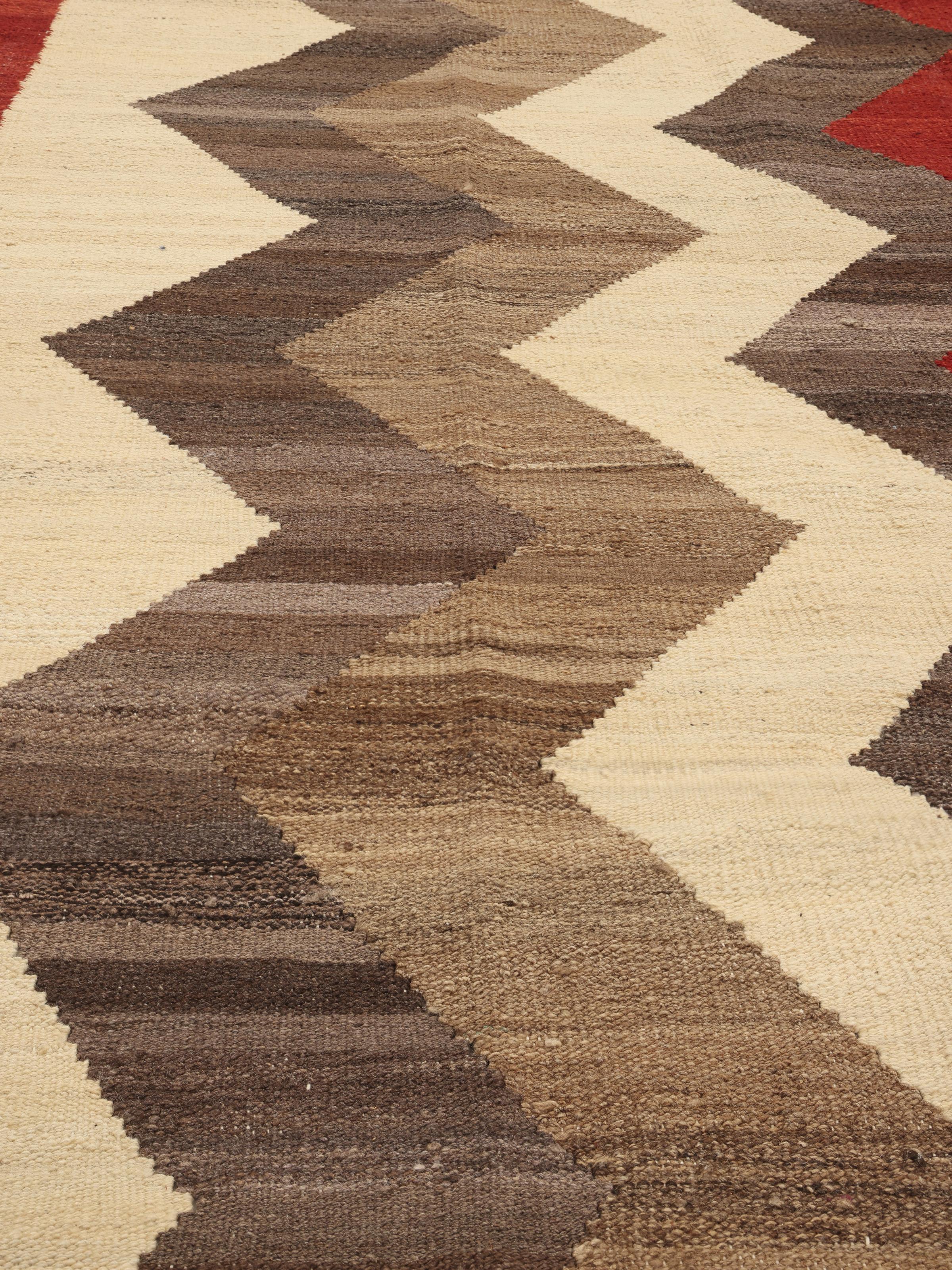
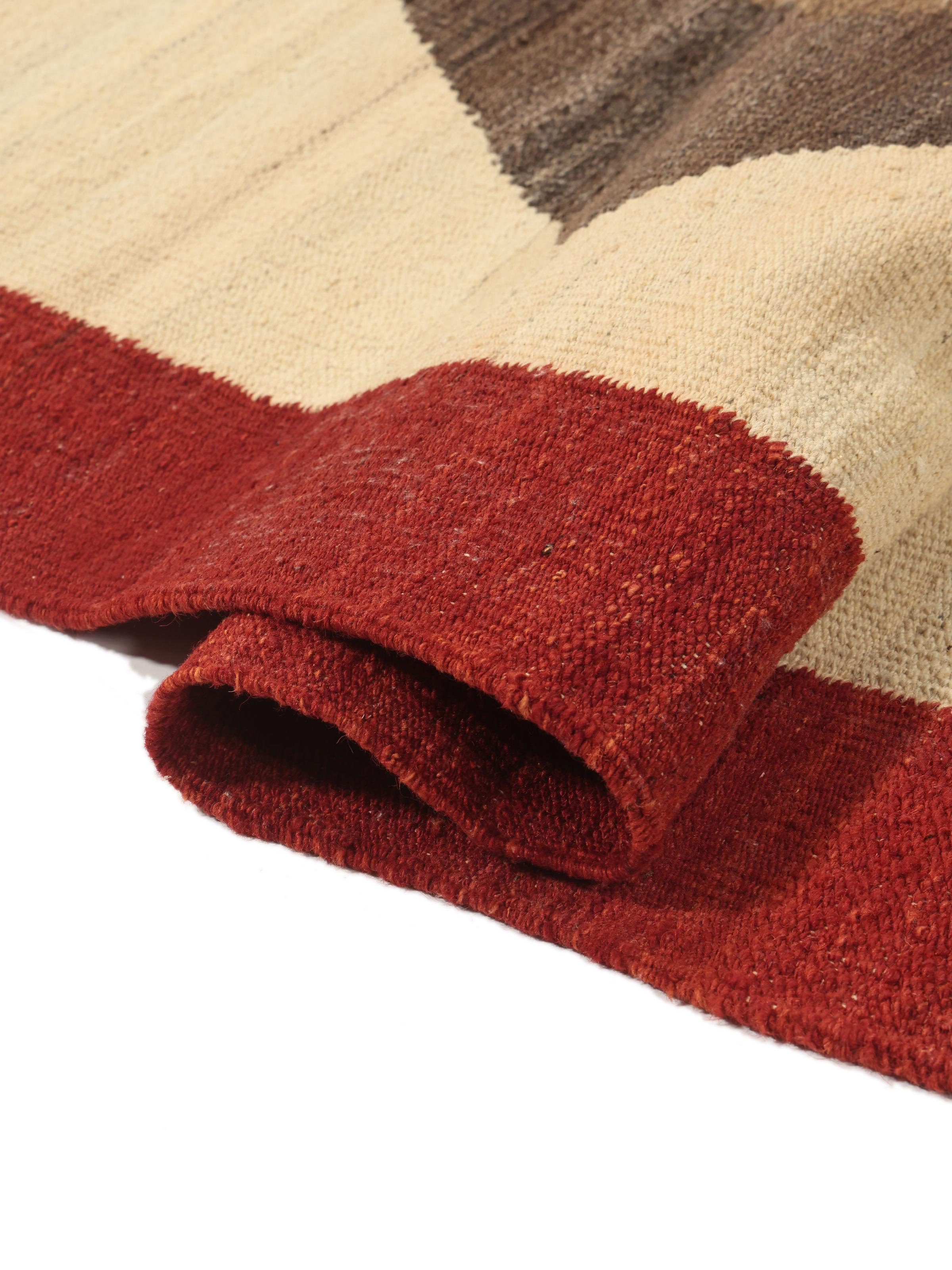
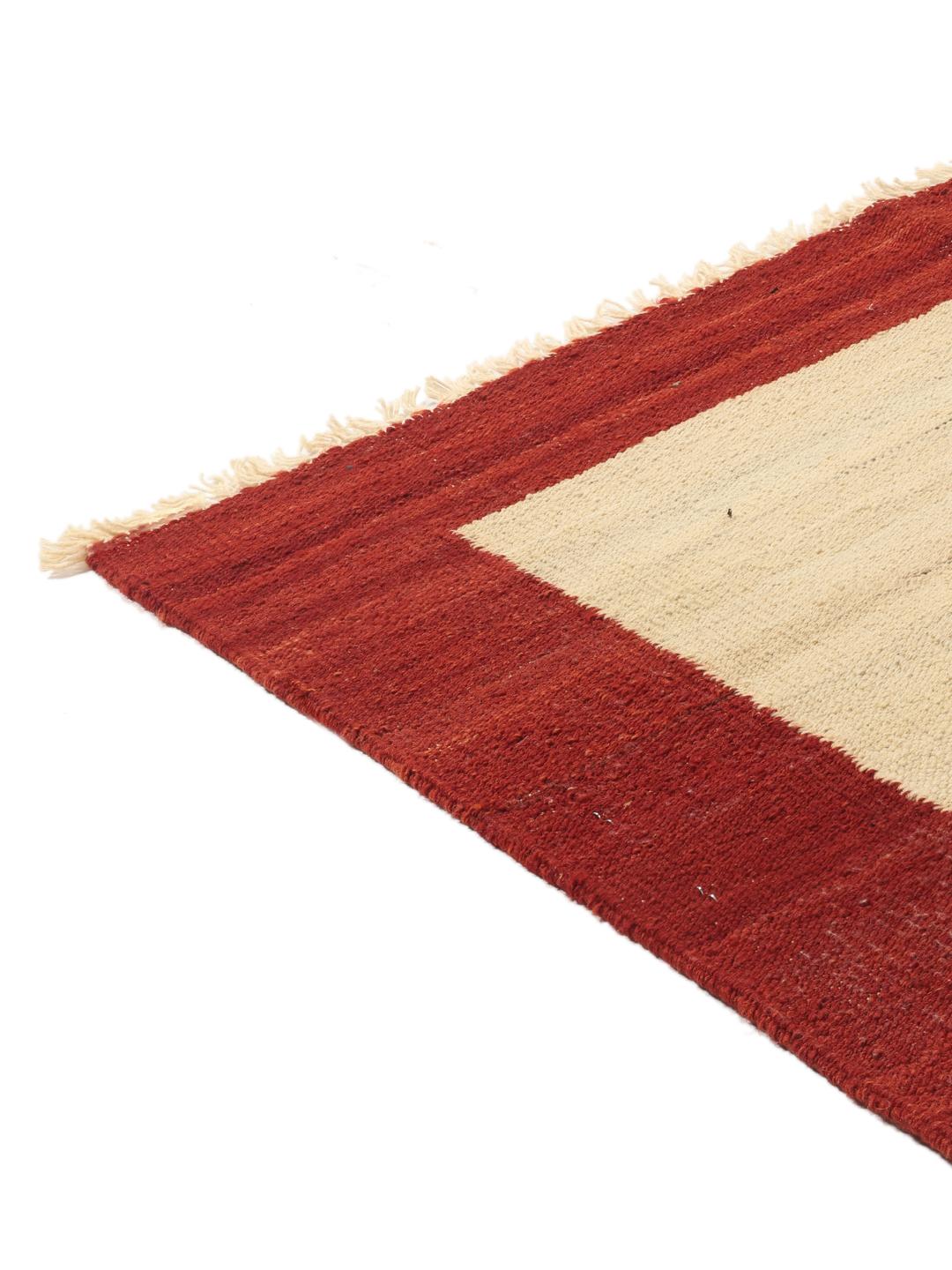
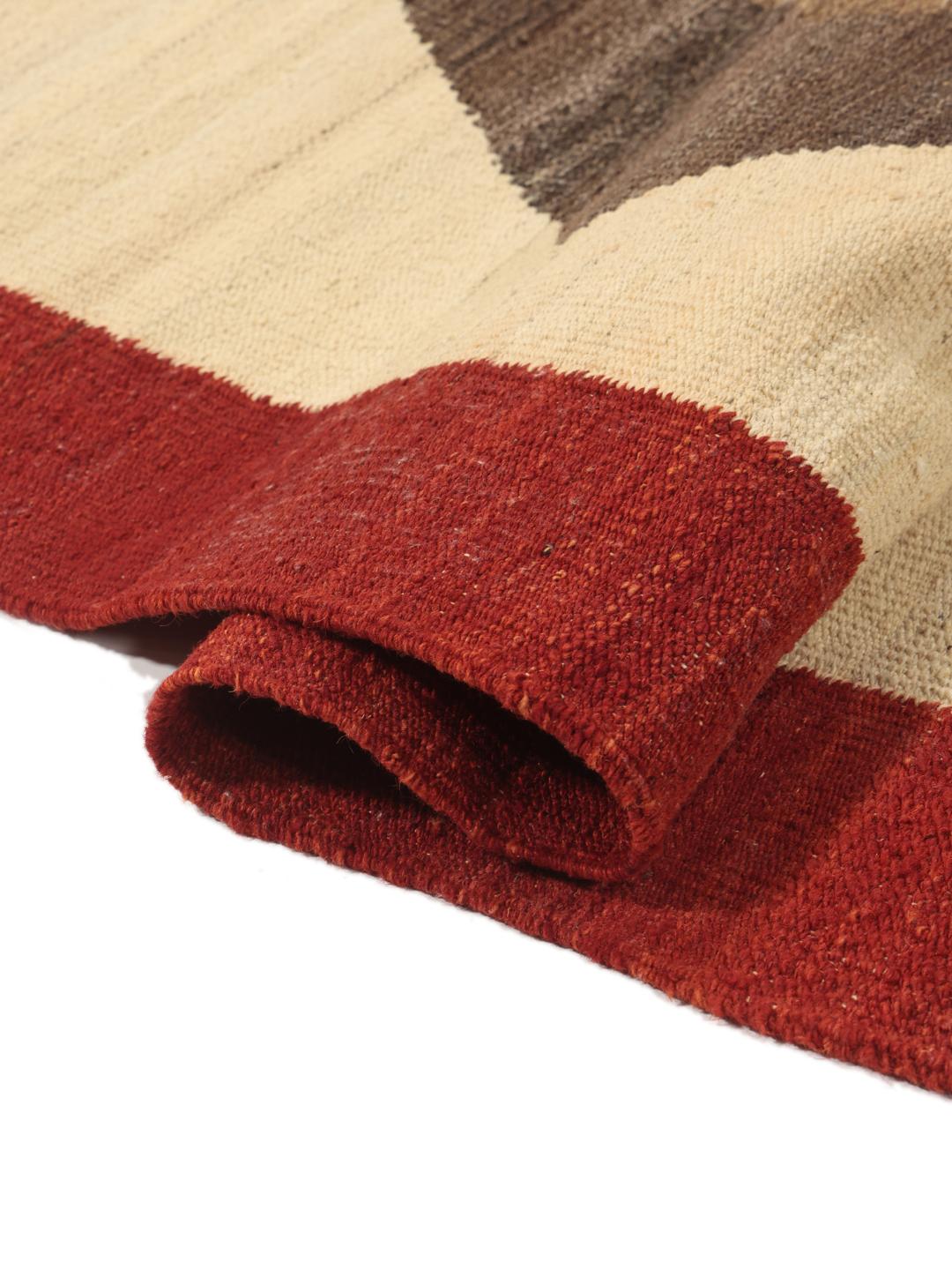
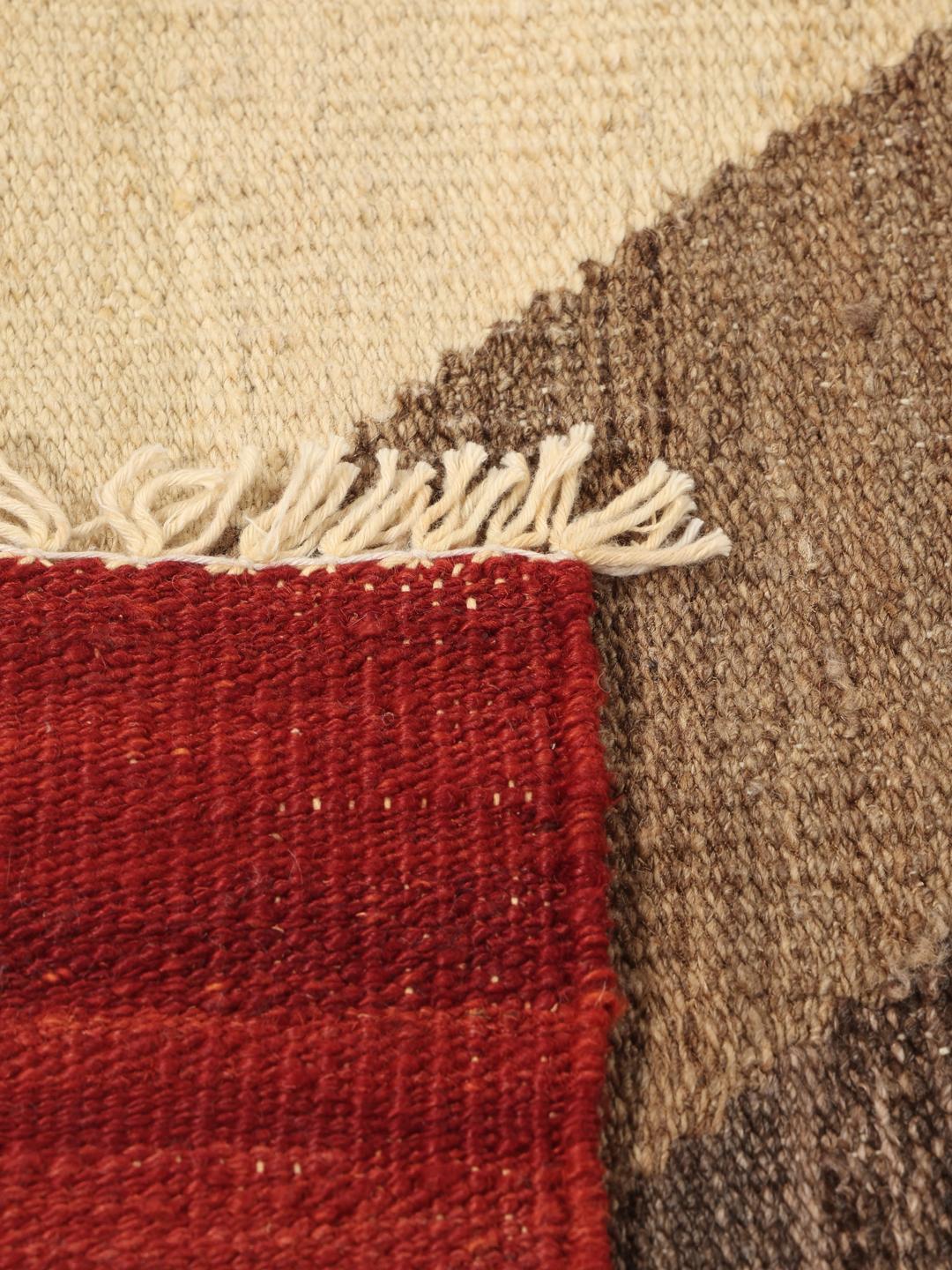
The term 'Kilim' refers to the specific technique of interlocking the weft threads with the warp to create a smooth, pileless surface. This method allows for sharp, geometric designs and clean lines, as the pattern is built directly into the structure of the rug rather than added as a knotted pile.
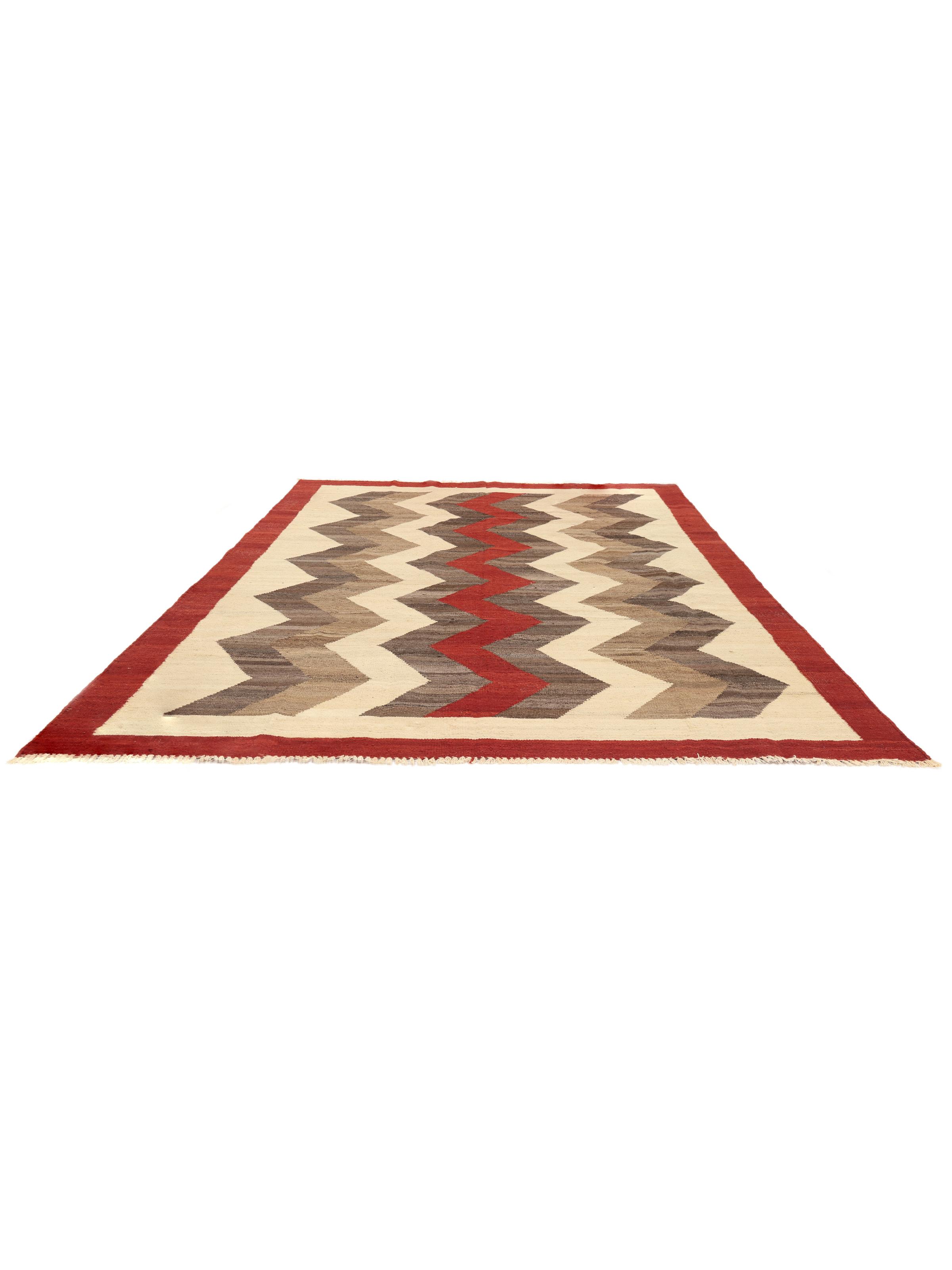
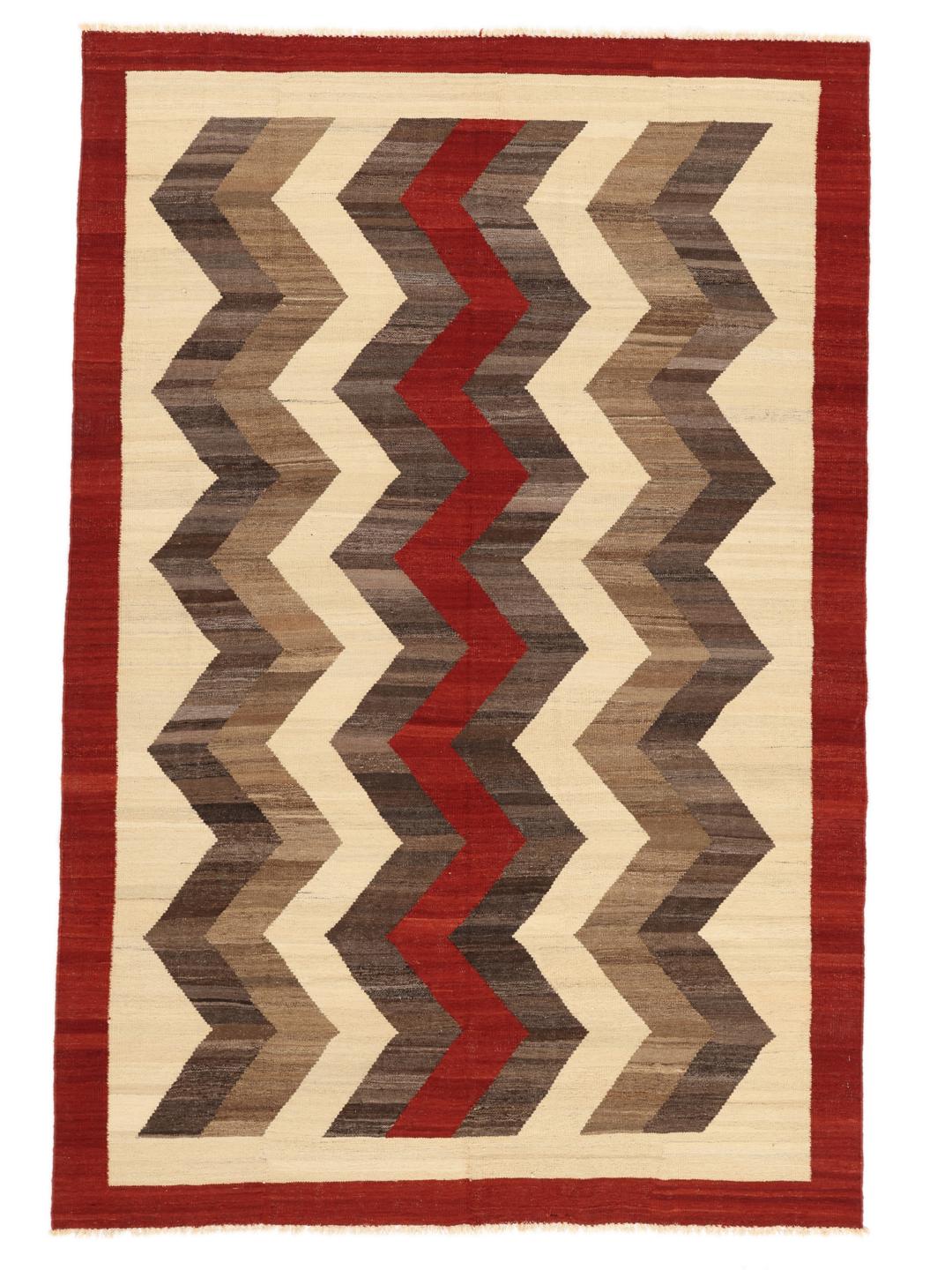
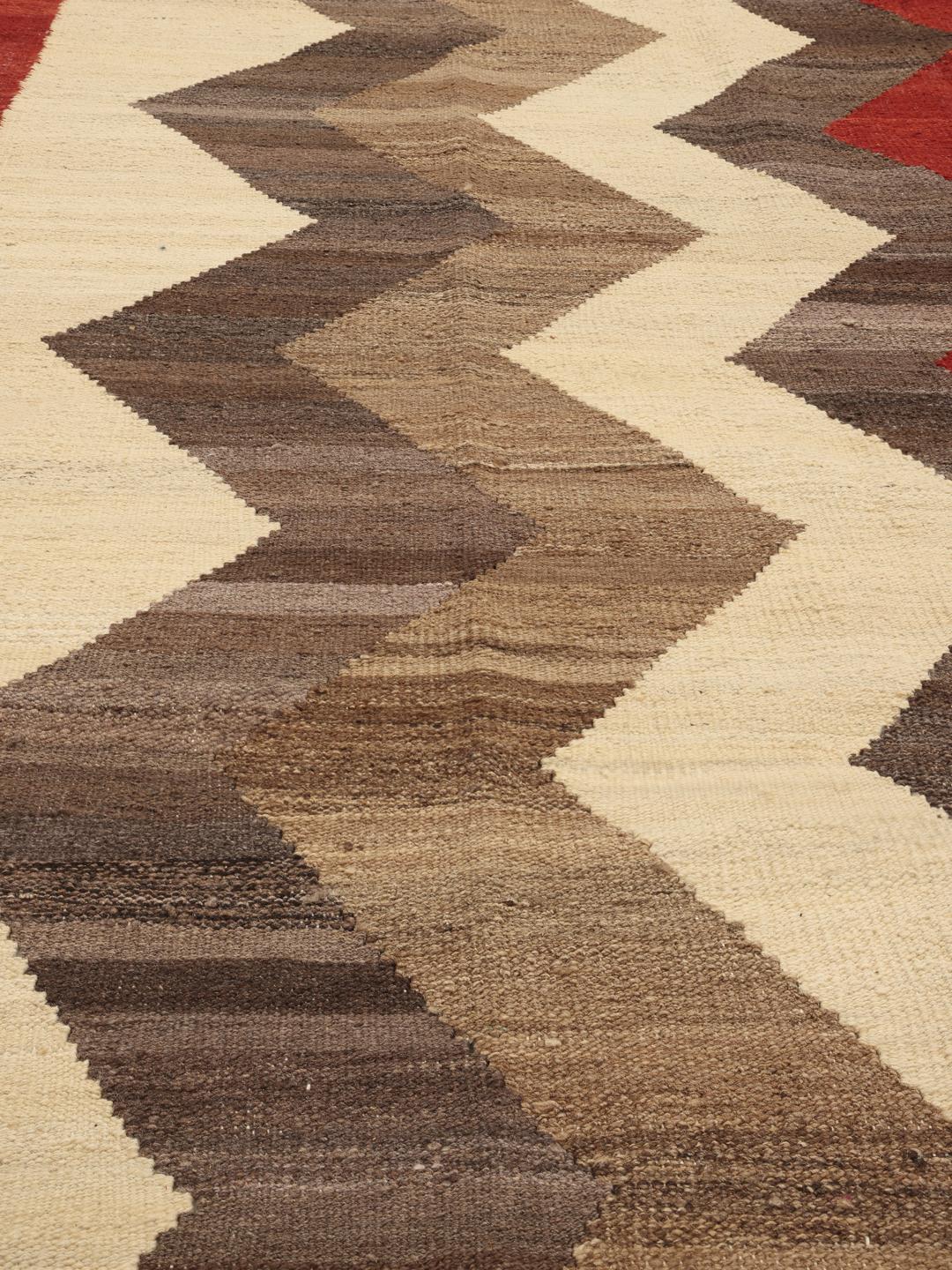
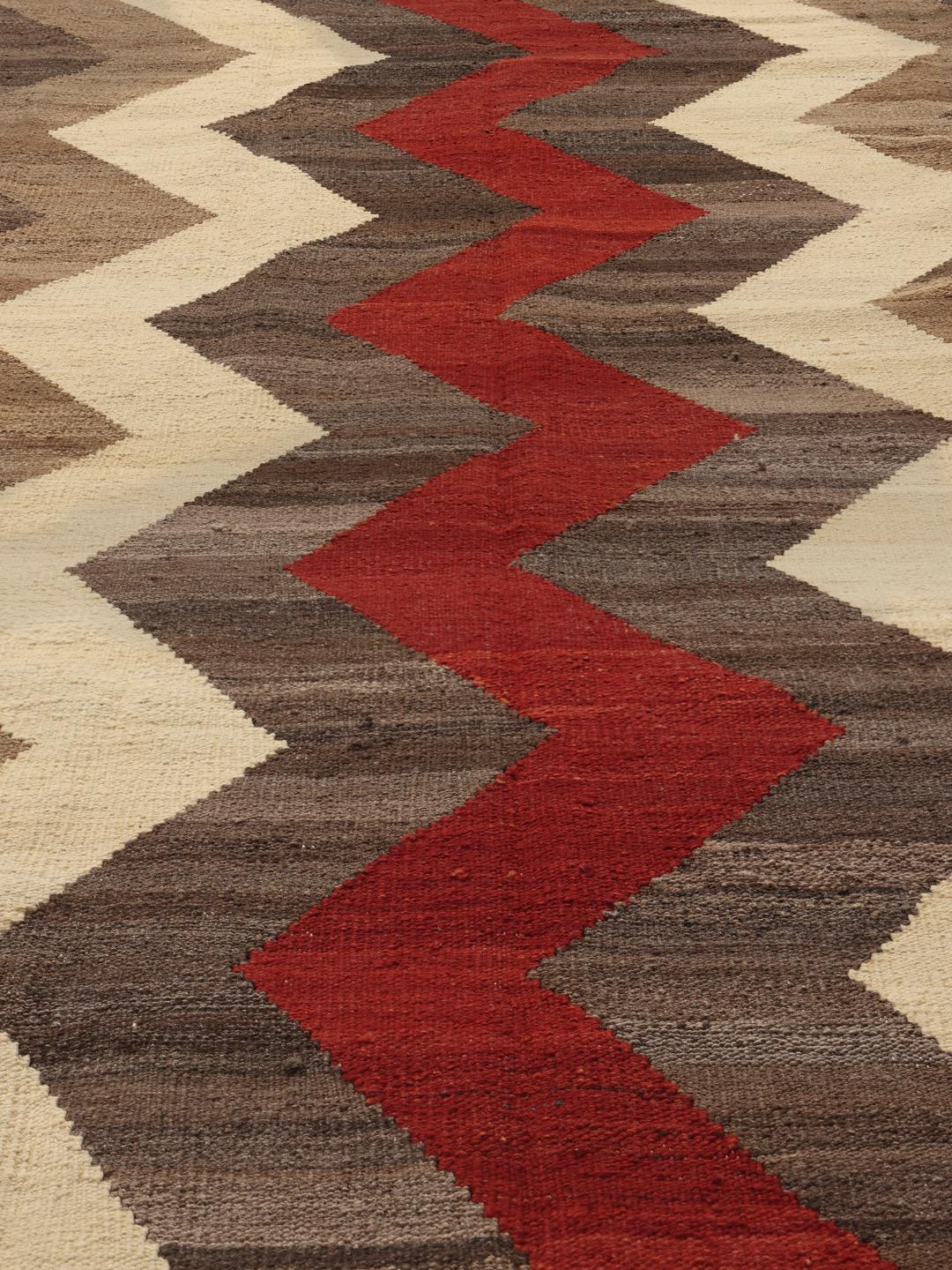
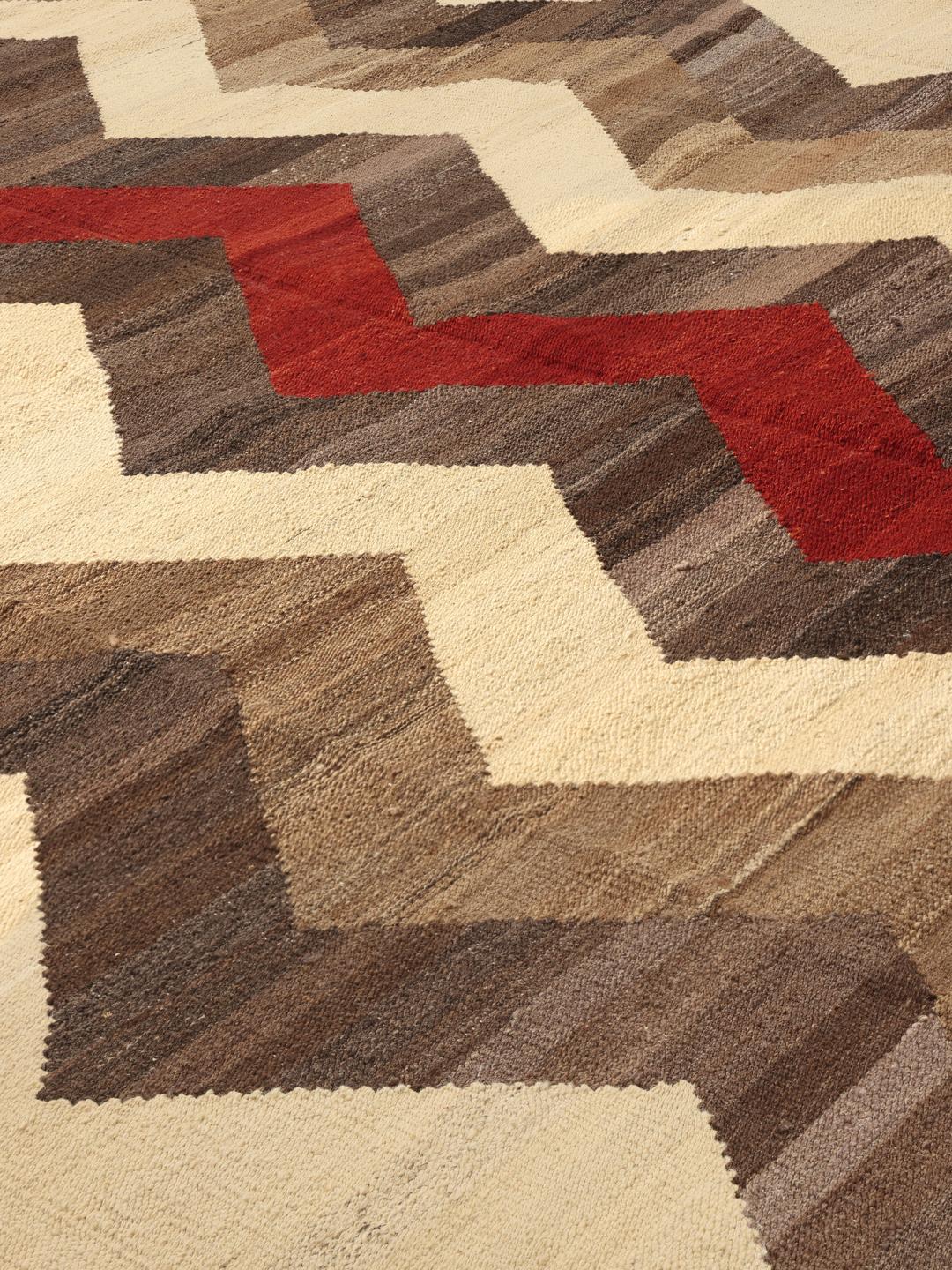
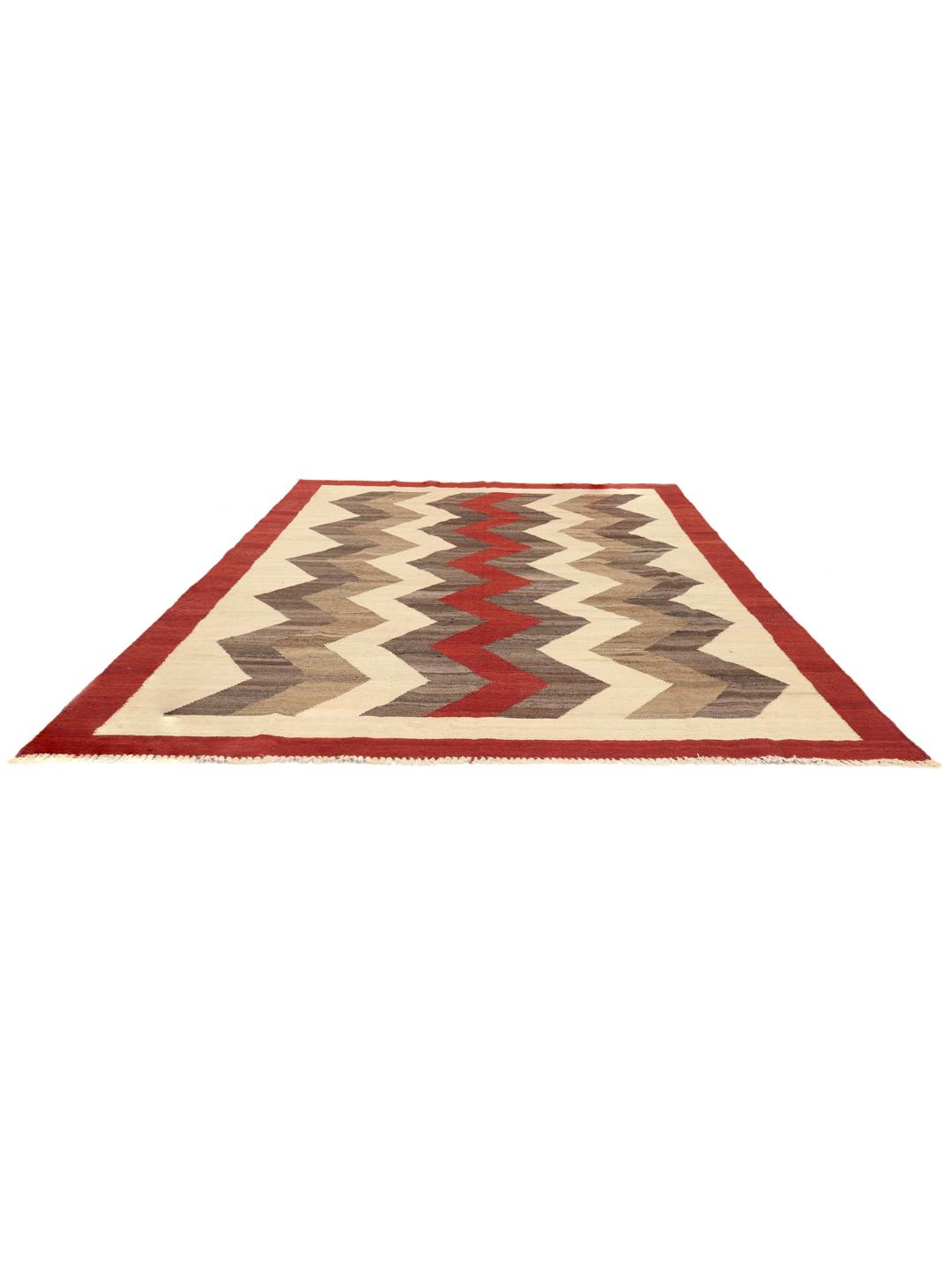
Design-wise, this piece showcases the classic zig-zag motif, a pattern deeply embedded in the tribal visual language of the region. These geometric shapes often carried symbolic meanings related to protection or nature, though in modern interpretations, they are celebrated primarily for their dynamic and graphic aesthetic.
Owning a Kilim is an invitation to connect with a rich heritage of craft. These rugs are highly valued by collectors and interior enthusiasts alike for their authenticity, the warmth of their hand-dyed wool, and the fact that each piece represents a unique expression of the weaver’s cultural background and personal creativity.