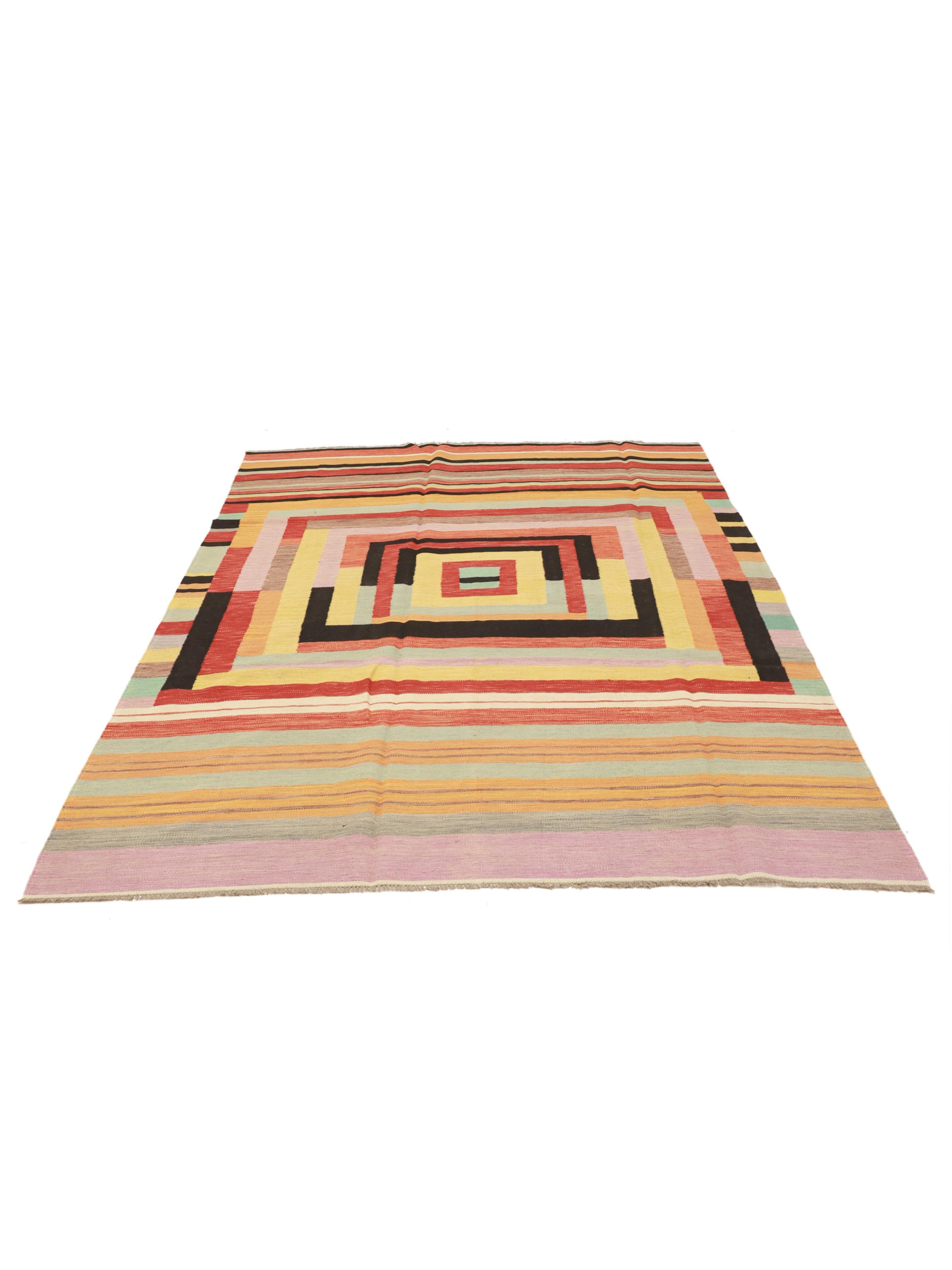
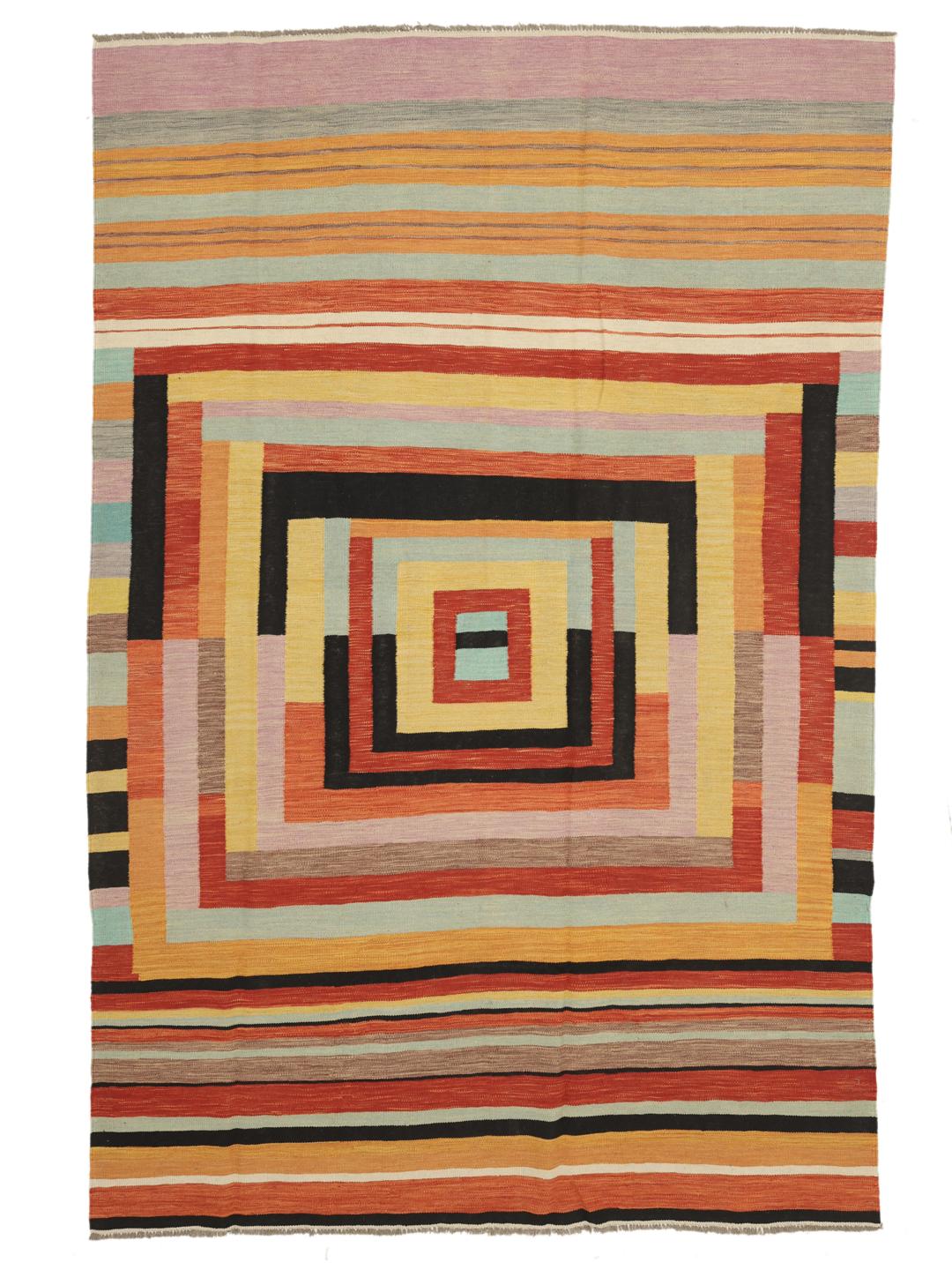
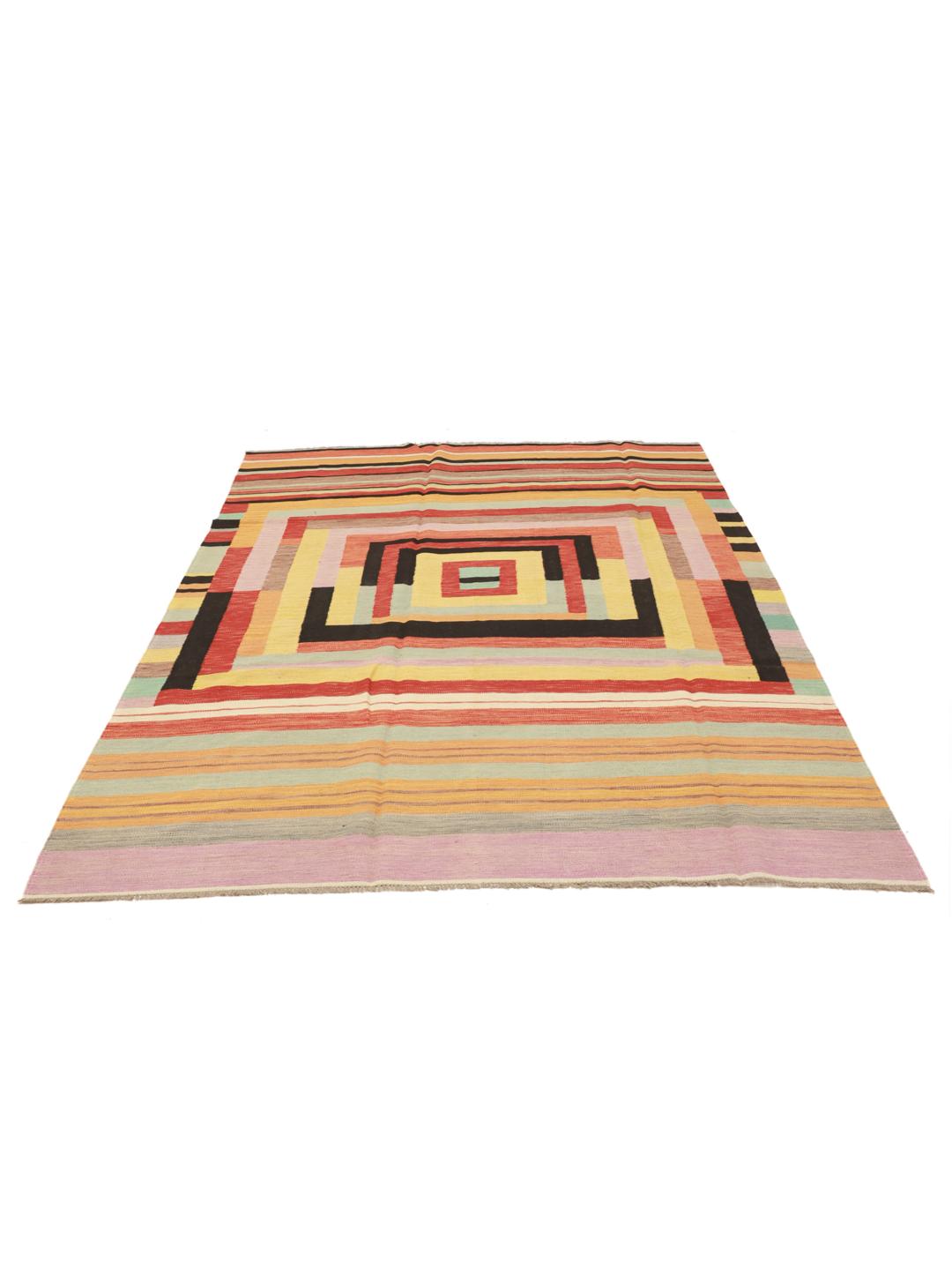
Kelim weaving has a rich heritage rooted in the nomadic and village traditions of the Middle East and Central Asia. Historically, weavers created these flat-woven textiles for practical use as floor coverings, blankets, and storage sacks, passing down patterns and dyeing techniques through generations.
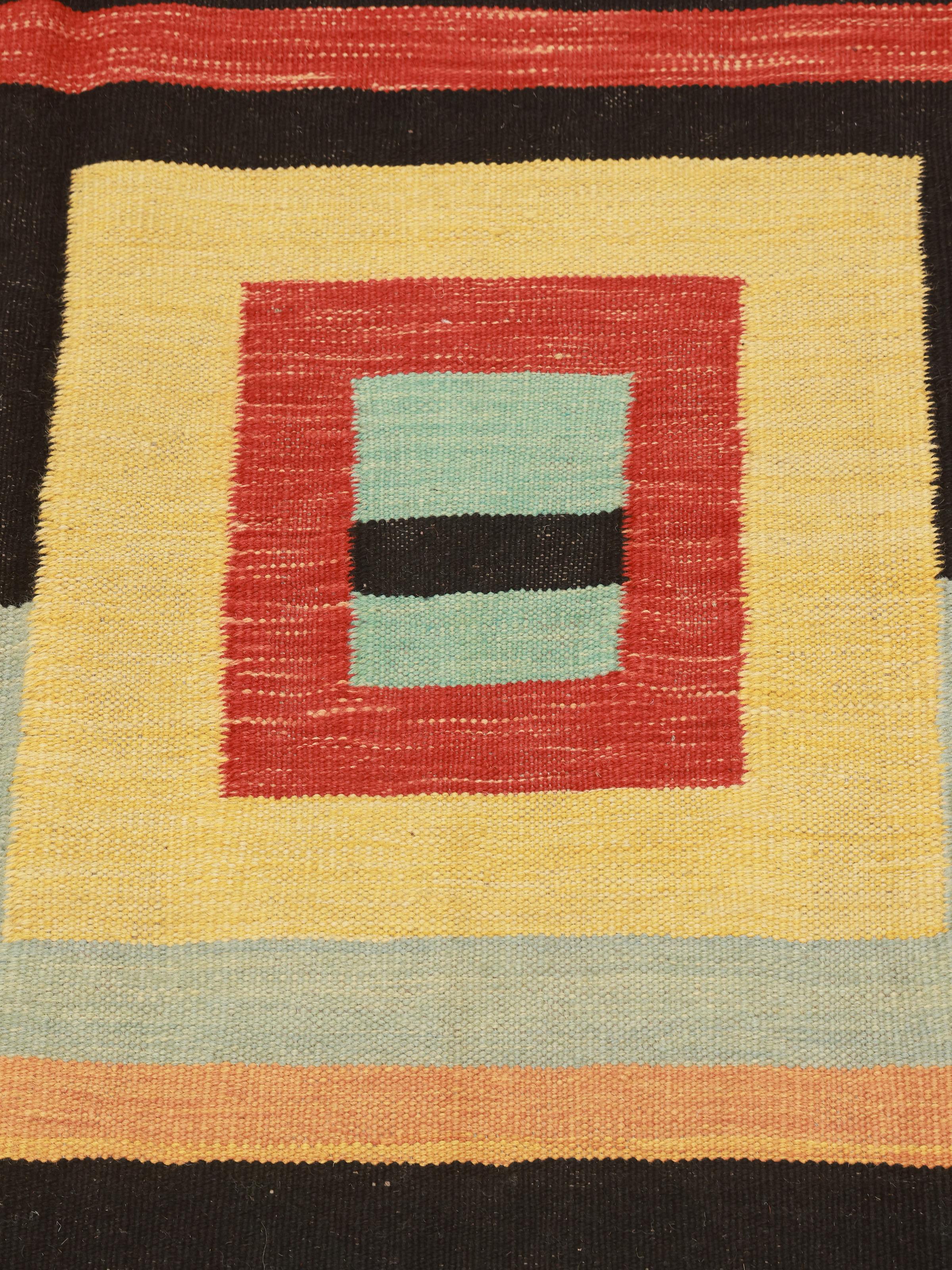
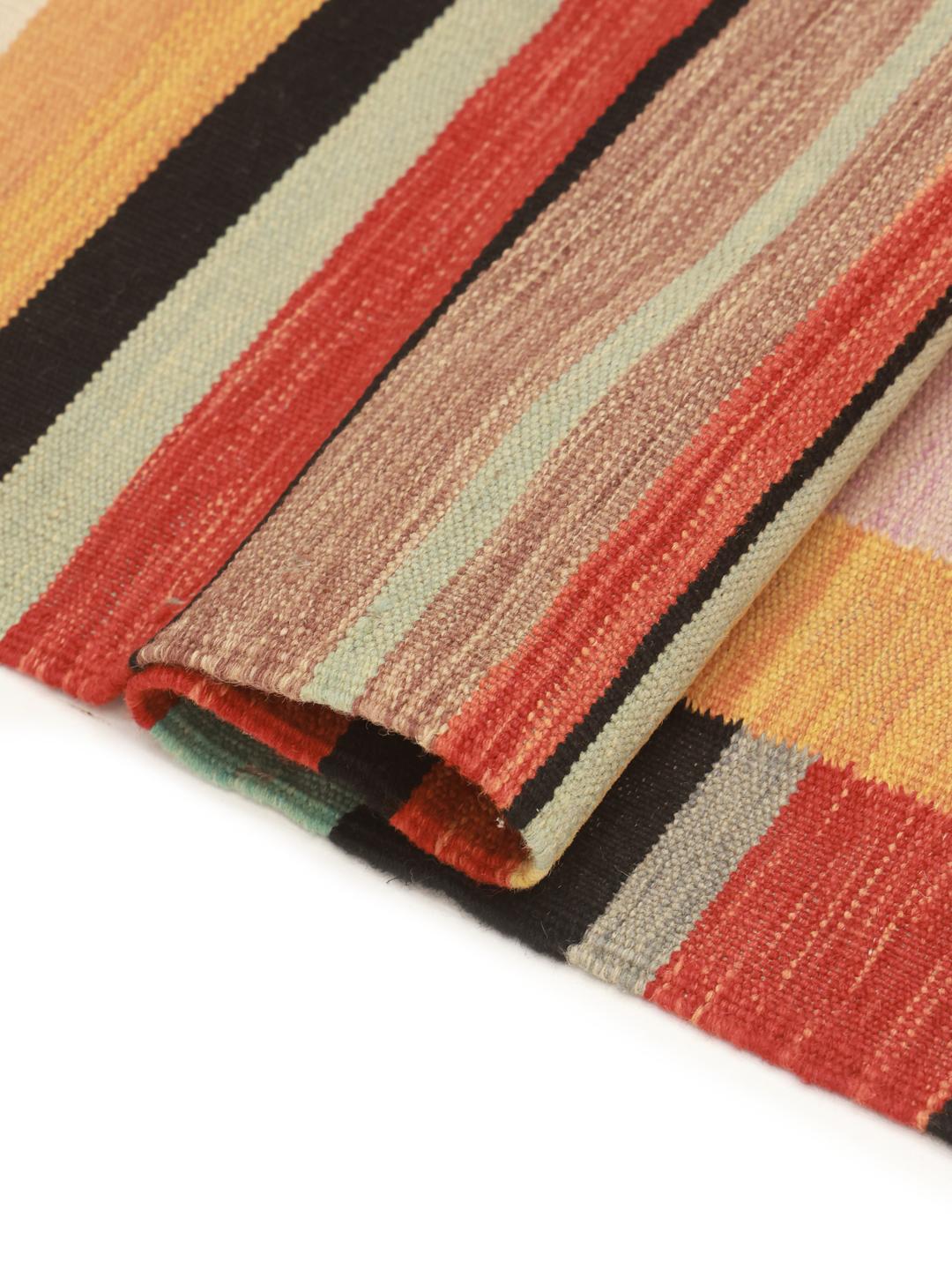
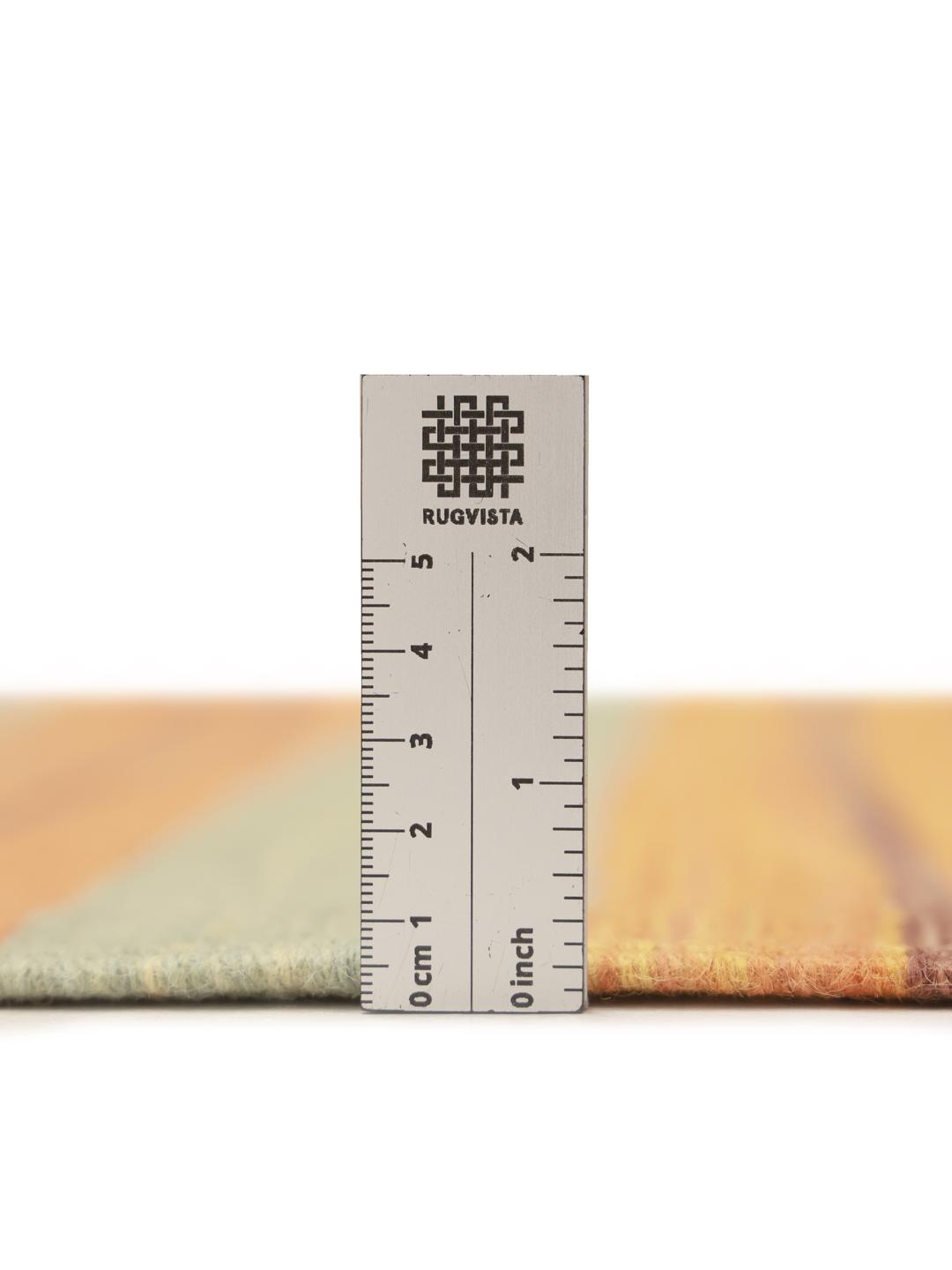
The term flatweave or kelim denotes a construction without a raised pile, where the pattern is created by tightly interweaving the coloured weft threads directly through the warp foundation. This technique yields a lightweight yet remarkably sturdy textile that can be easily rolled, moved, and maintained.
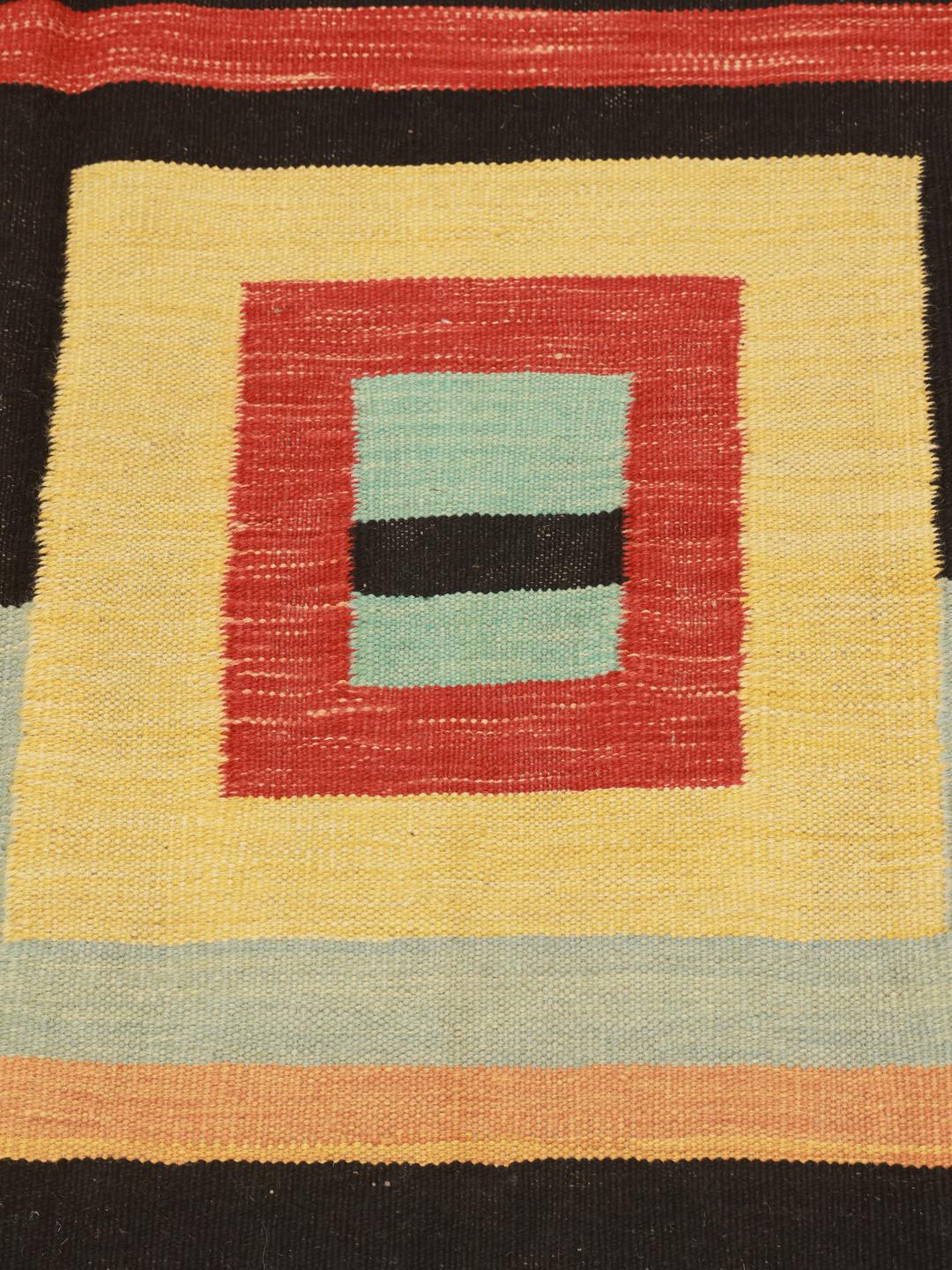
Traditional Afghan kelims often feature bold geometric arrangements, stripes, and medallions inspired by tribal motifs and local surroundings. In this modern interpretation, those ancestral design conventions are re-imagined with contemporary colour palettes, bridging traditional craft with modern interior aesthetics.
Owning a kelim connects your home to a long lineage of textile artistry where every piece represents hours of dedicated human labour. These textiles are valued by collectors and homeowners alike for their authenticity, cultural resonance, and enduring artistic expression.