Kelim rug-making traditions have ancient roots across the Middle East and Central Asia, where nomadic and village weavers developed flatweaving techniques out of practical necessity. Unlike pile rugs, kelims are woven by tightly interweaving warp and weft strands together, producing a lightweight yet durable textile that was originally used for portable floor coverings, animal trappings, and storage bags during seasonal migrations.
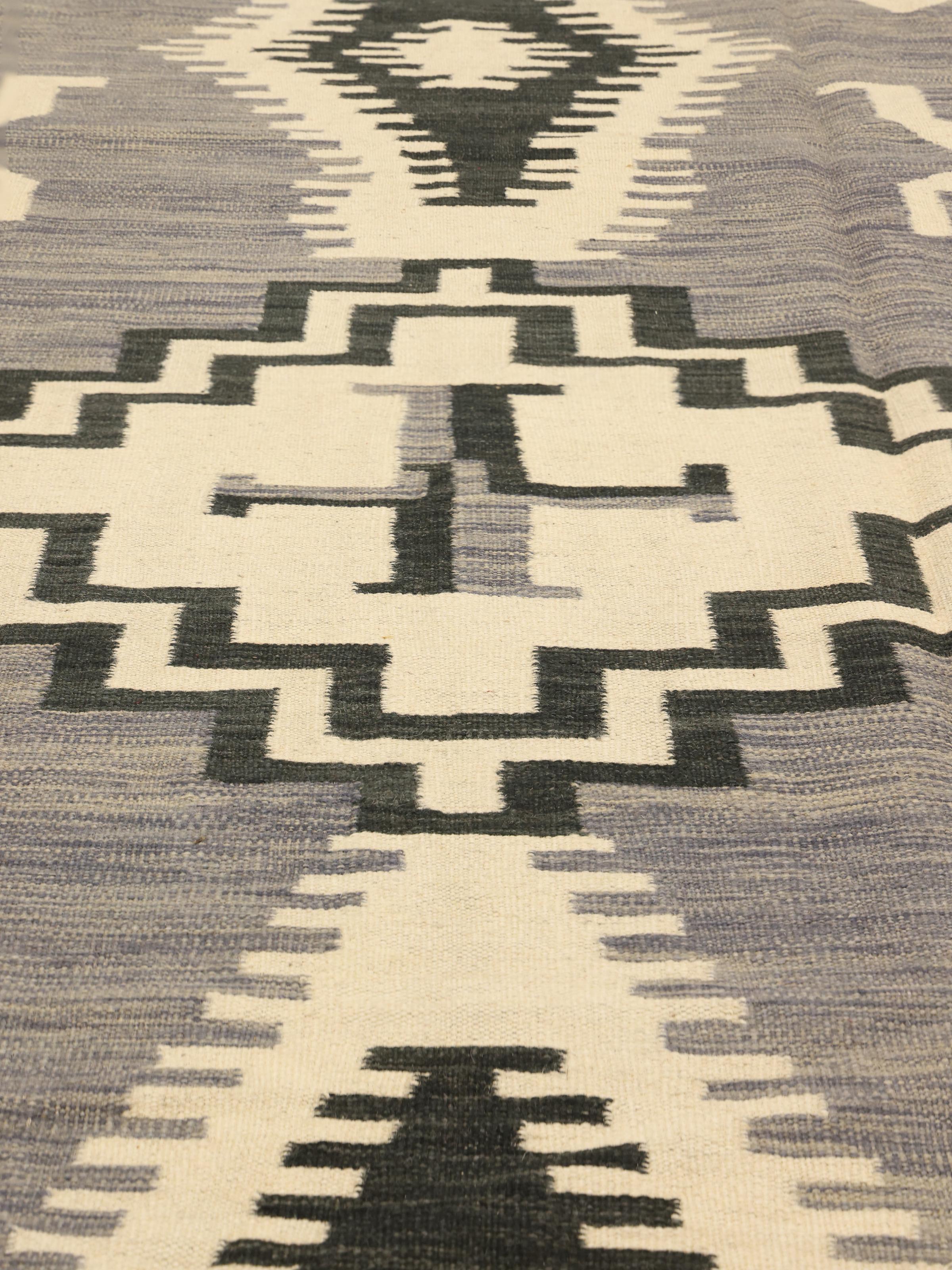
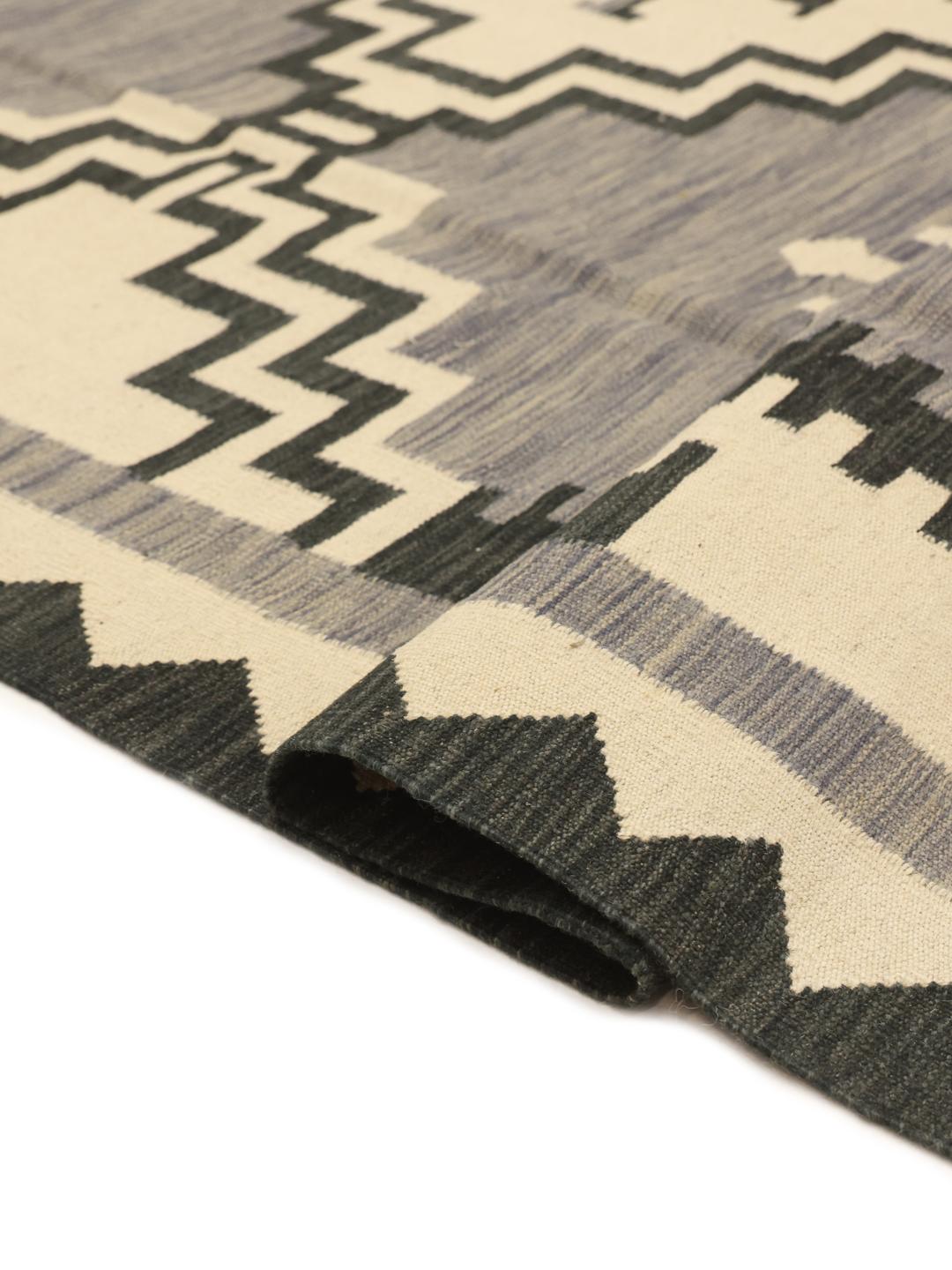
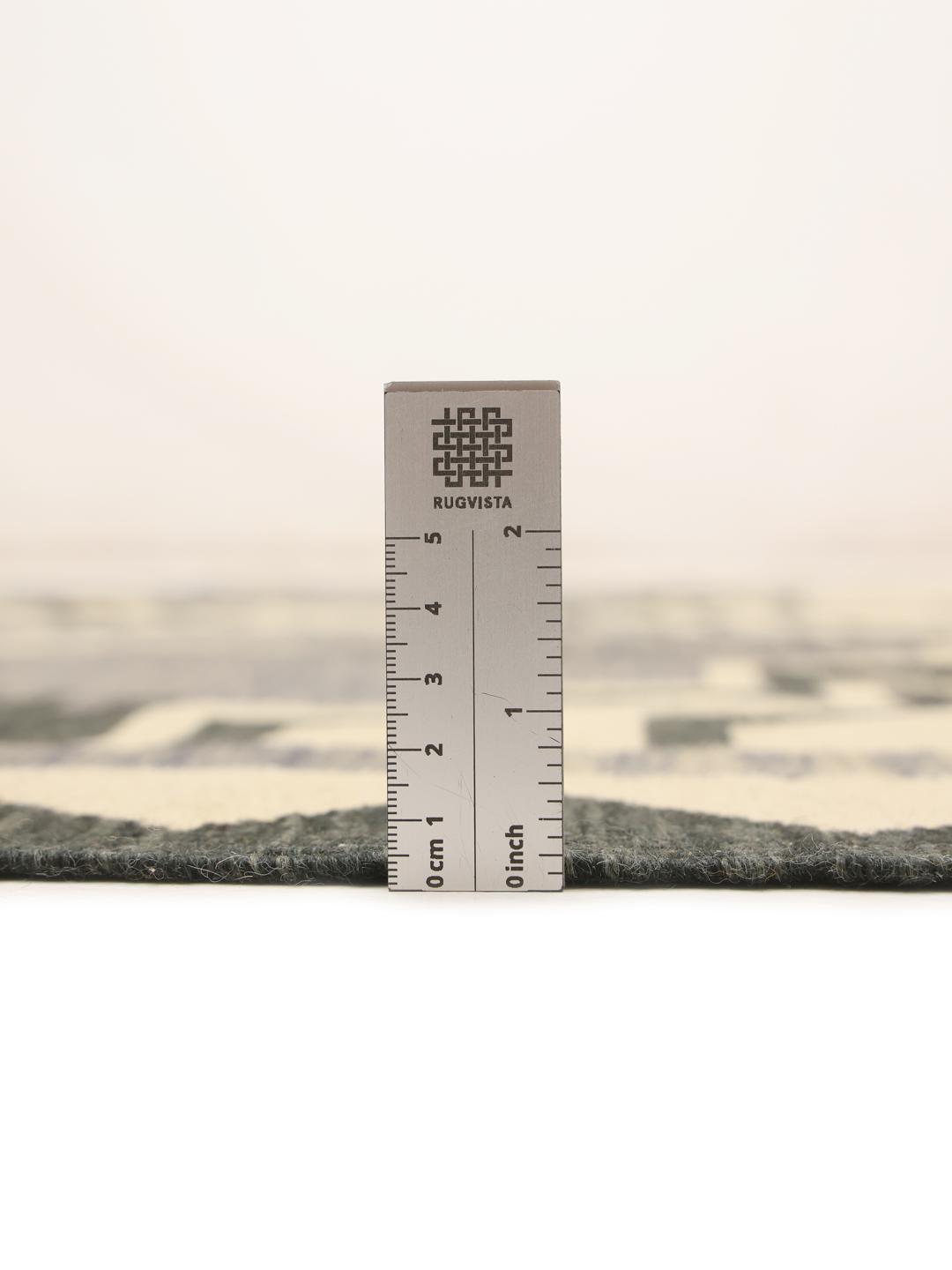
The flatwoven construction means there is no cut pile, relying instead on the precise tension of the interlocking yarns to create crisp geometric motifs and reversible patterns. This construction method results in a sturdy, low-profile textile that lies flat and holds up well in high-traffic areas of the home.
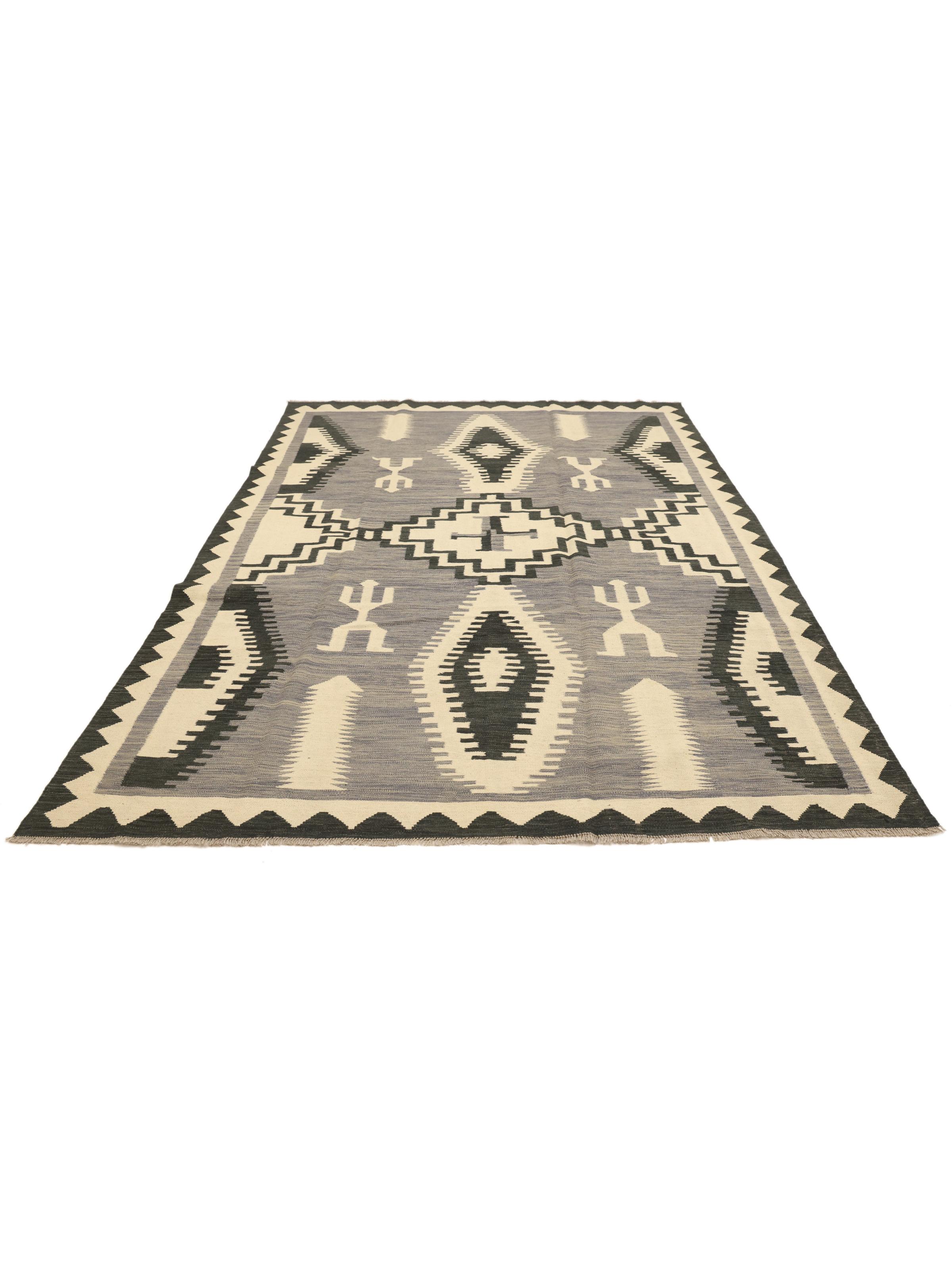
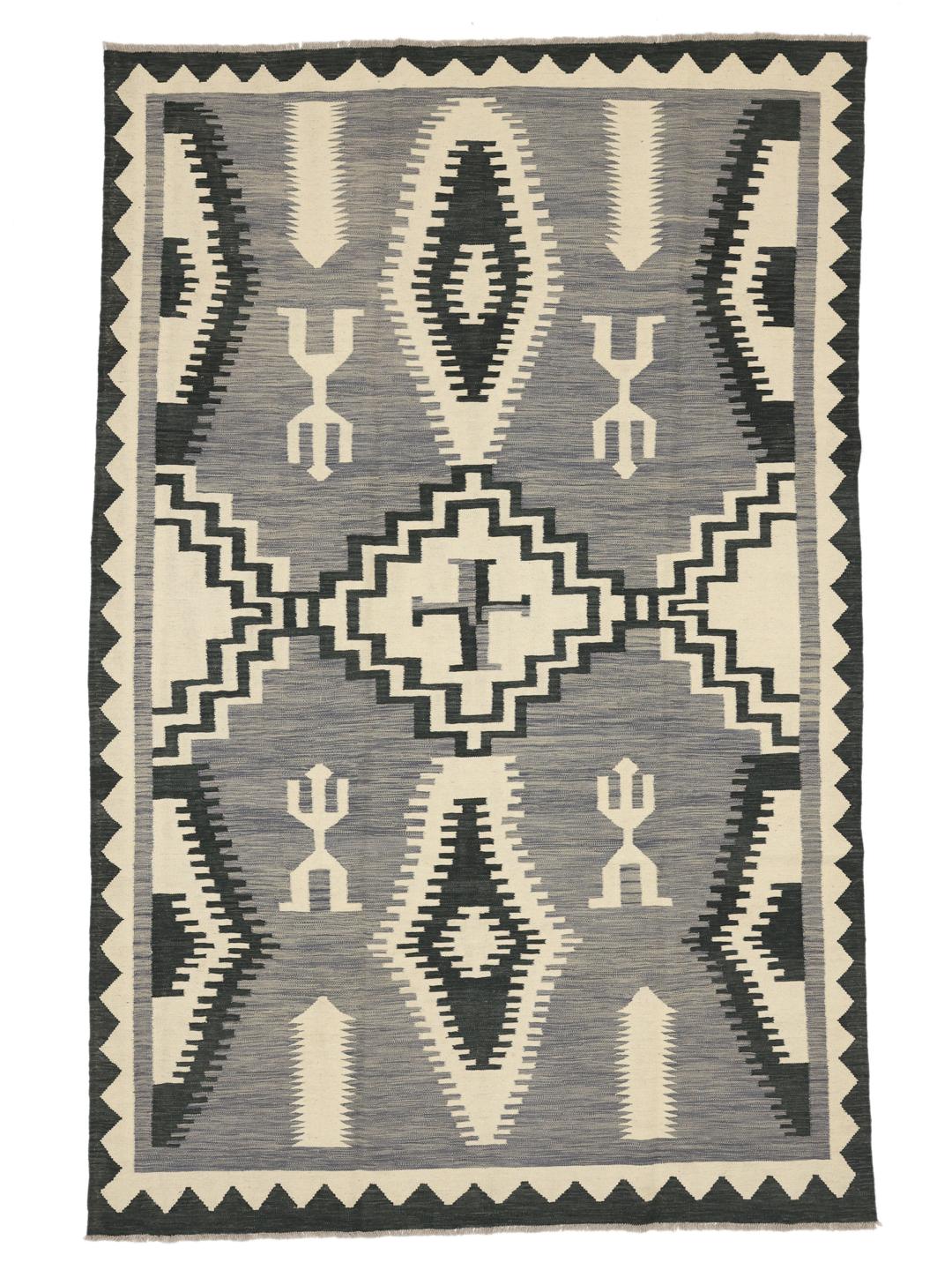
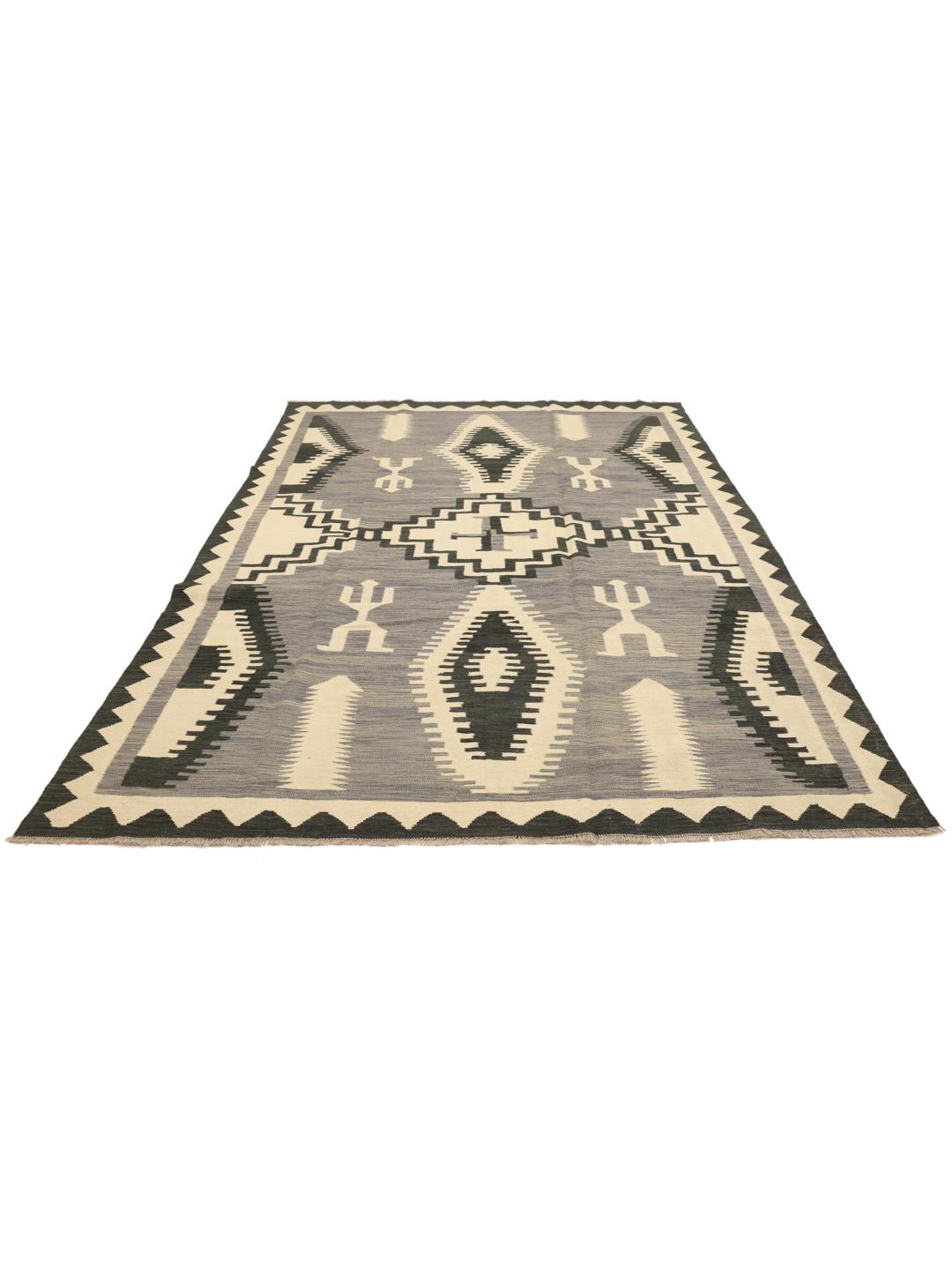
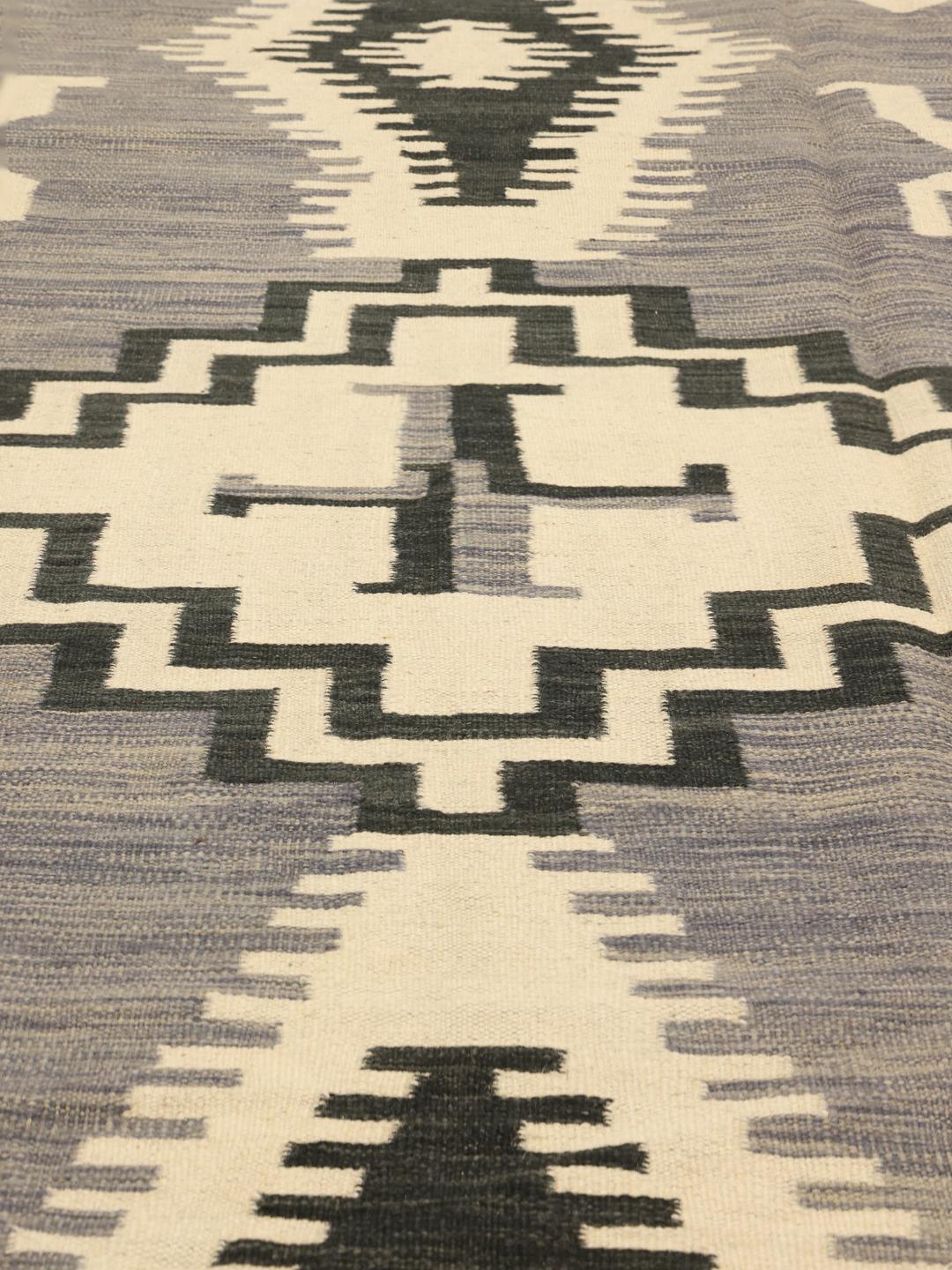
Design traditions in Afghan kelims often feature bold geometric arrangements, diamond medallions, and striking borders inspired by tribal heritage and symbols of protection or prosperity. The contrasting tones in this particular piece highlight the traditional motifs clearly, giving the age-old weaving style a fresh, contemporary presence suitable for modern homes.
Collecting a vintage or modern kelim means acquiring a tangible piece of textile history rooted in generations of human skill. Each rug reflects the personal touches and regional aesthetic choices of the artisan who made it, connecting your living space to a long-standing craft tradition.