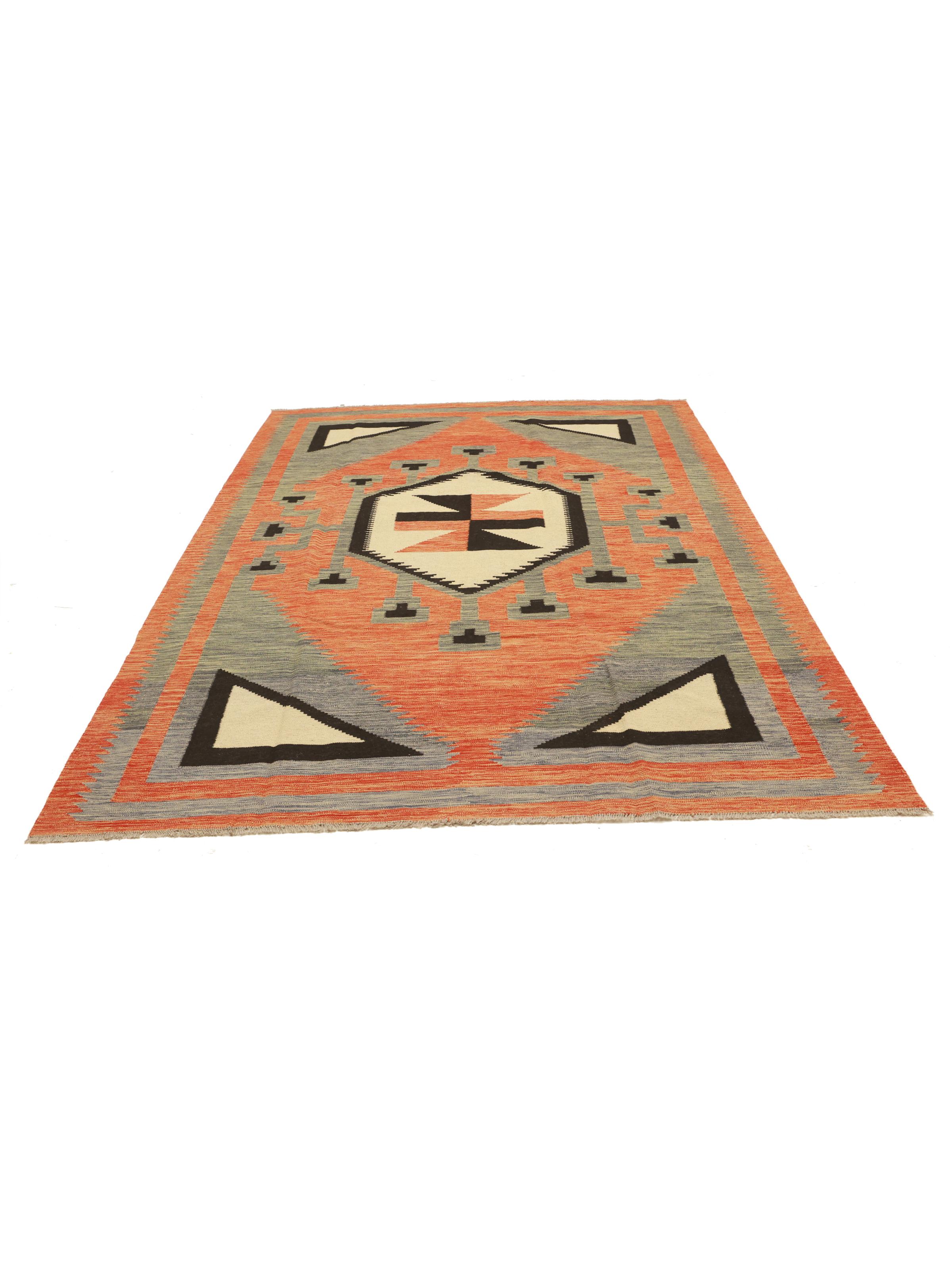
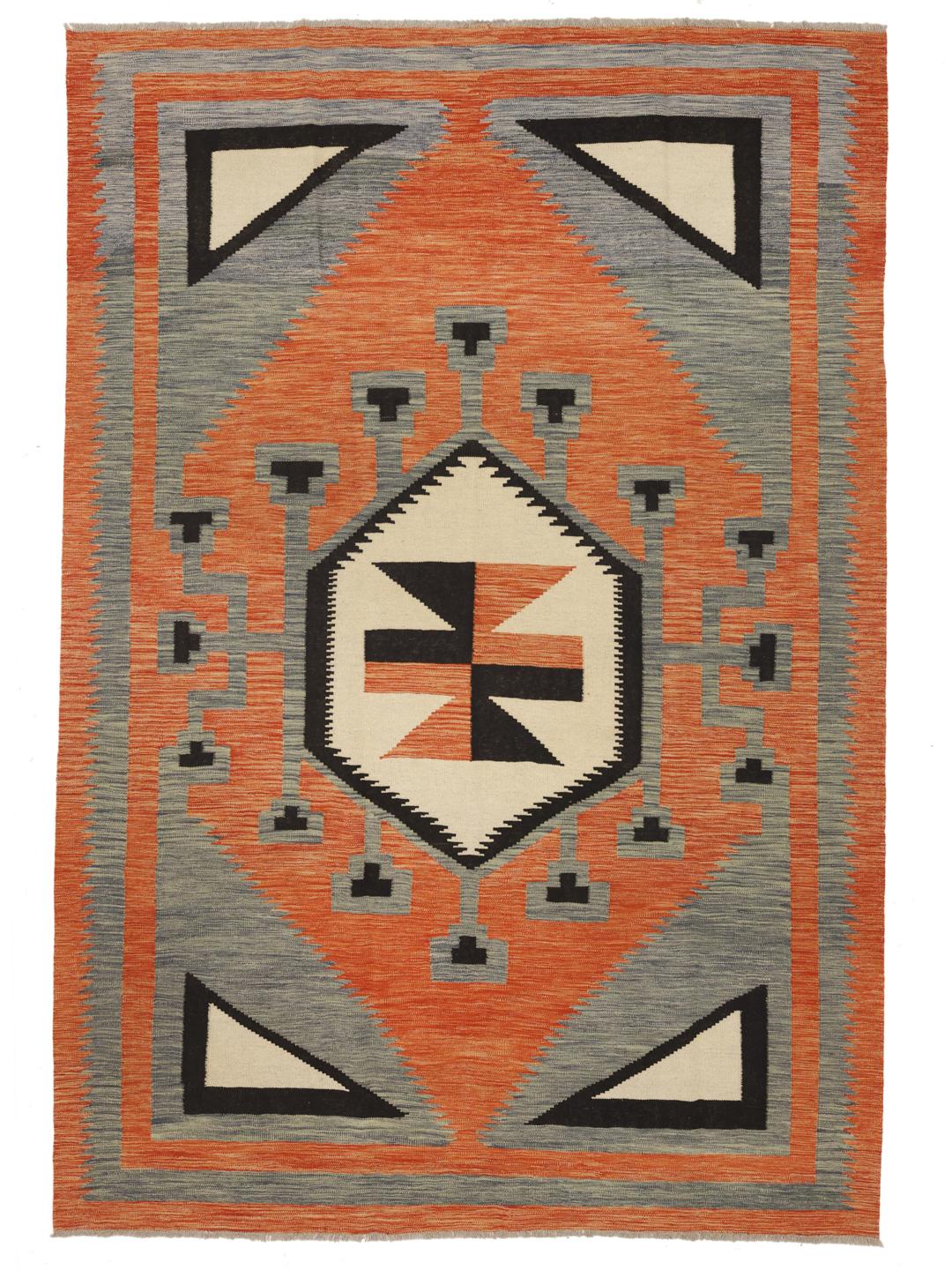
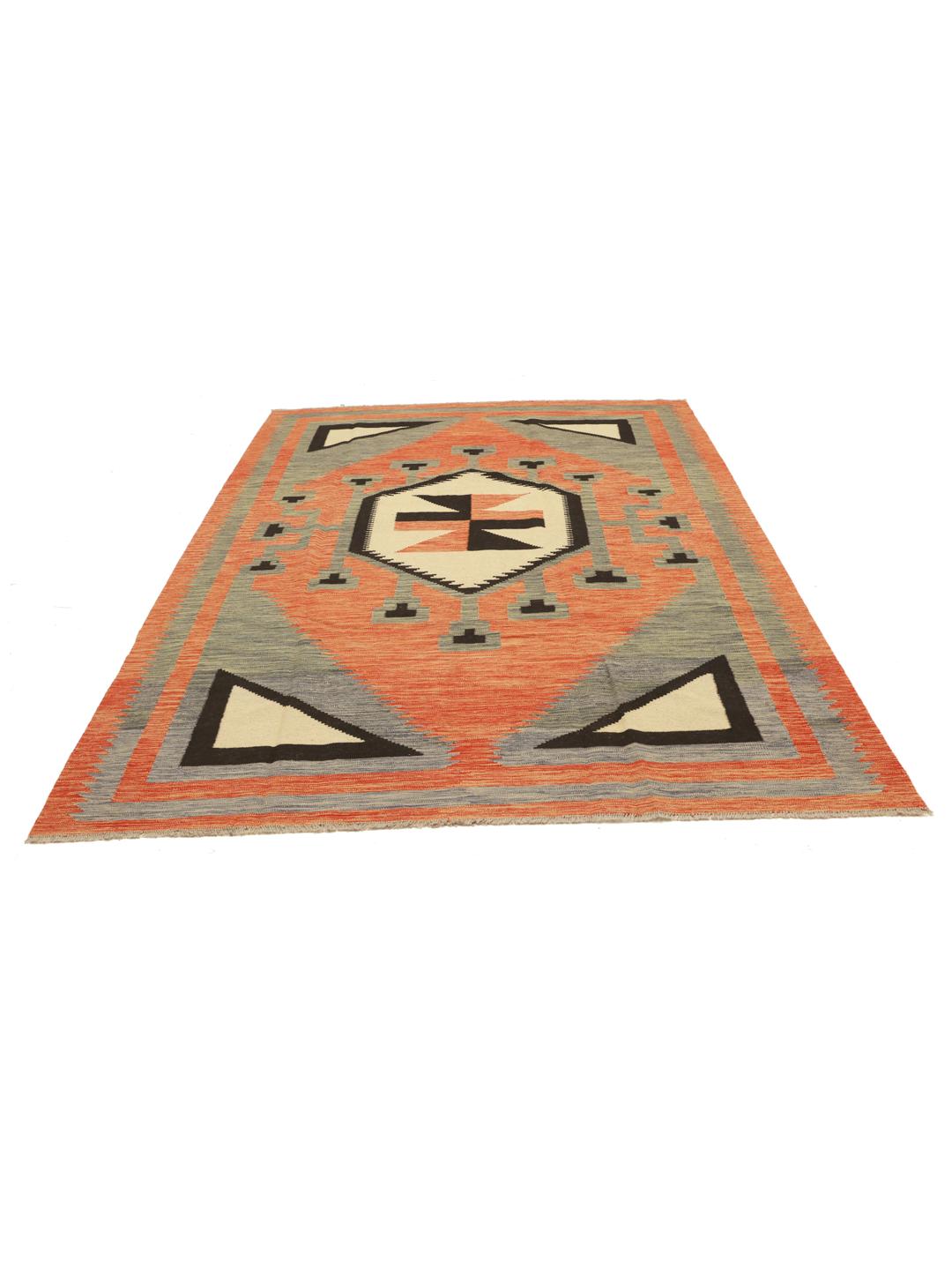
Flatwoven rugs like this Kelim Modern have a long and storied history rooted in the nomadic and village traditions of Central Asia and the Middle East.
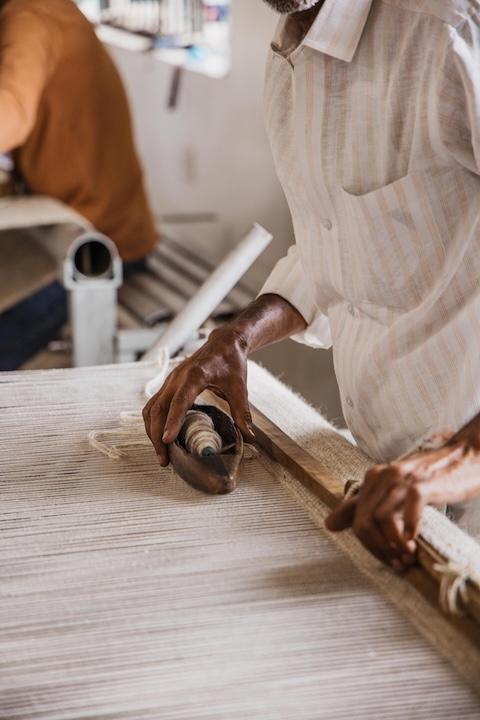
Originally created as practical floor coverings, bedding, and transport sacks by tribal weavers, these flatweaves relied on sheer utility and local wool resources.
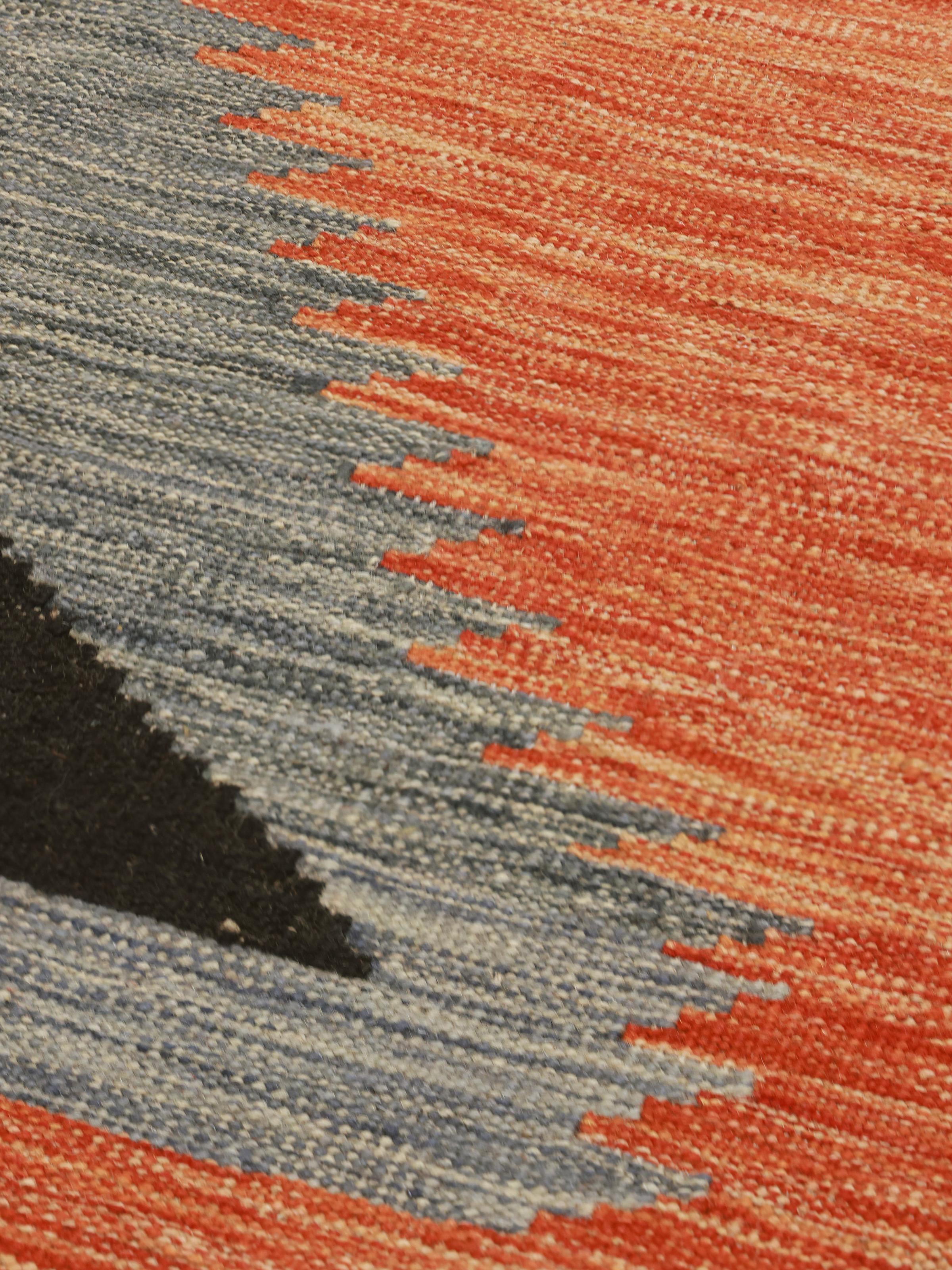
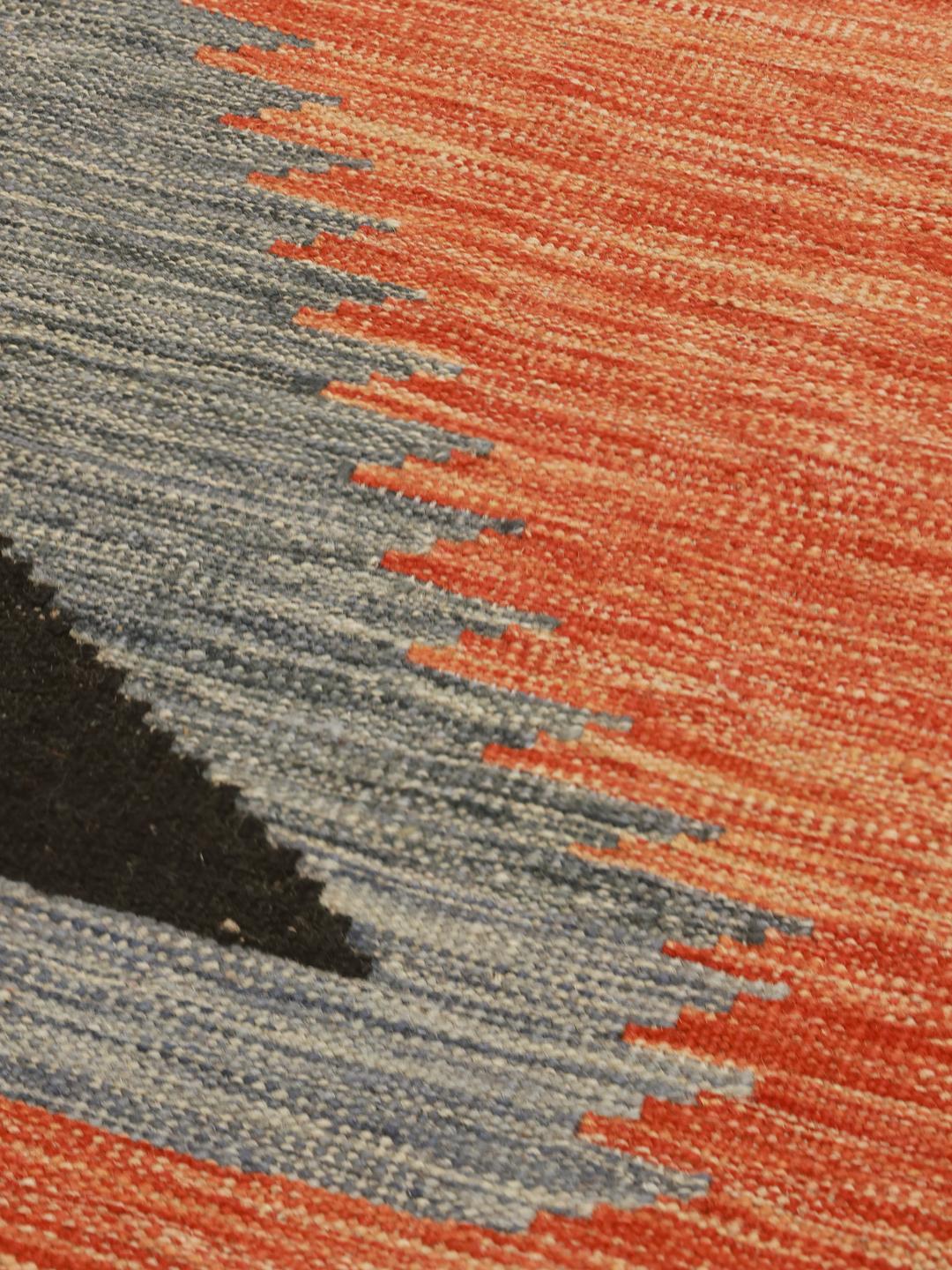
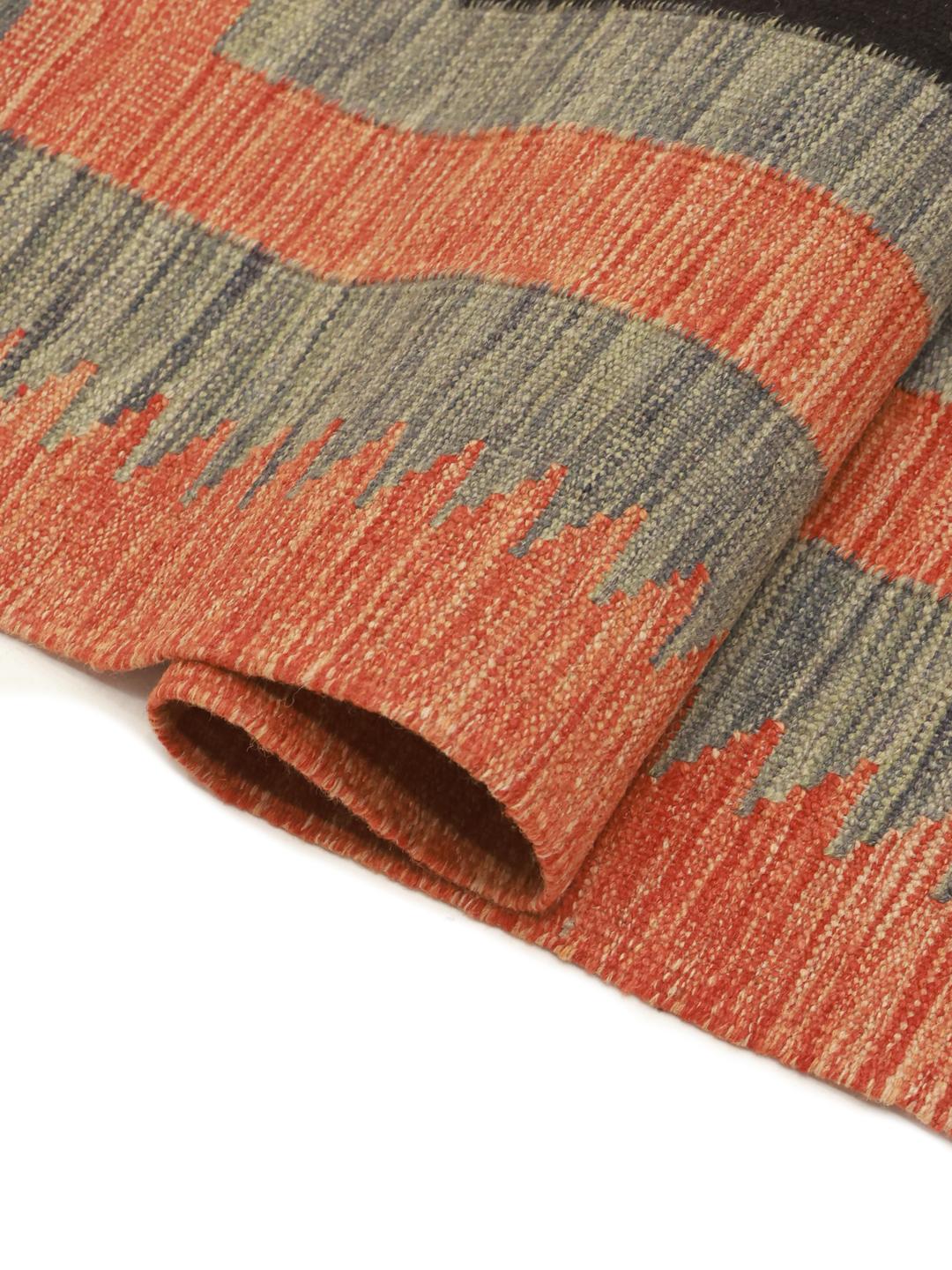
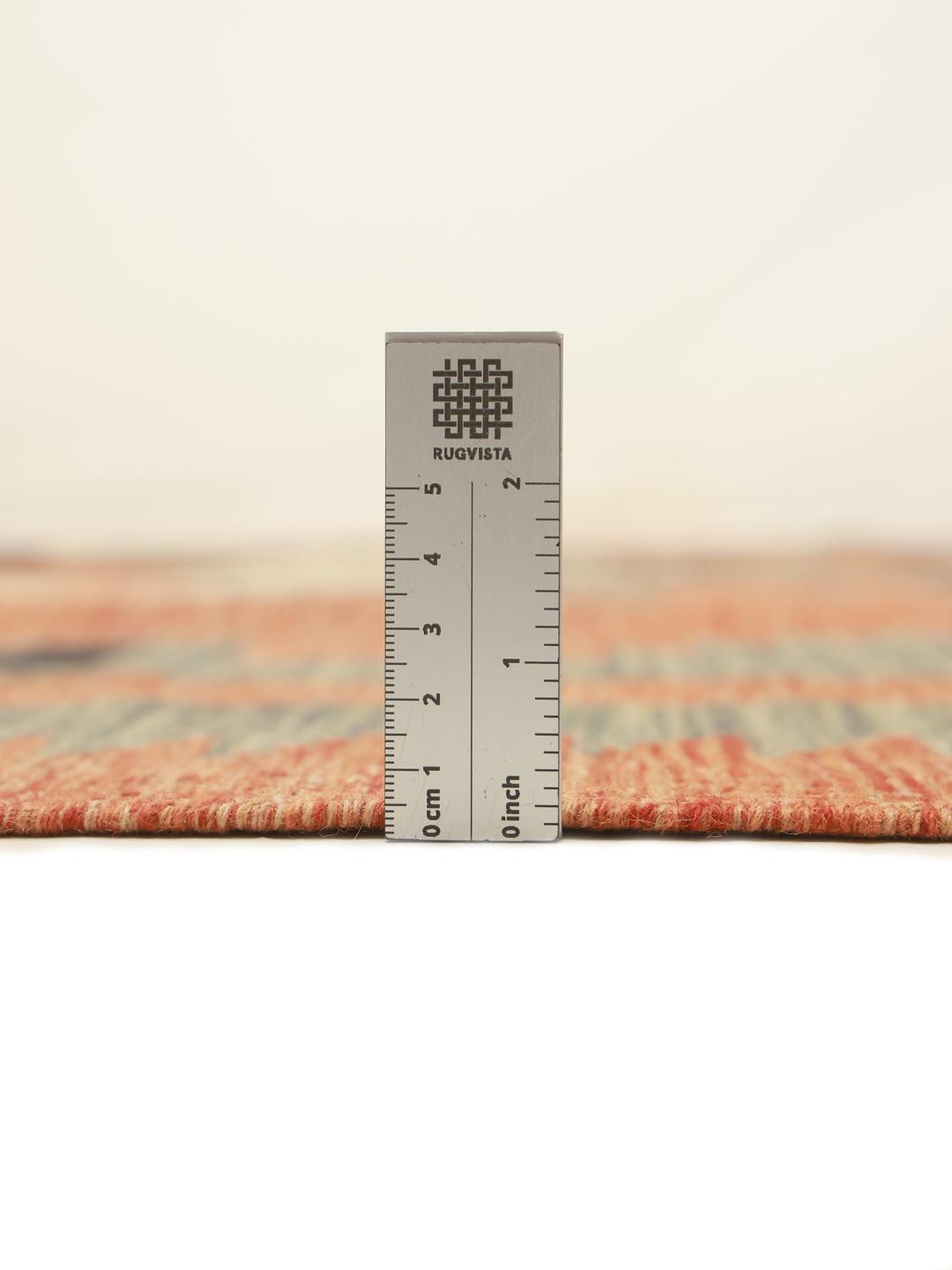
The flatweave technique means there is no raised pile, as the weft yarns are tightly interlaced across the warp threads to form a smooth, reversible textile.
This construction method allows for sharp, geometric pattern definition and creates a sturdy, lightweight fabric that has endured through centuries of domestic use.
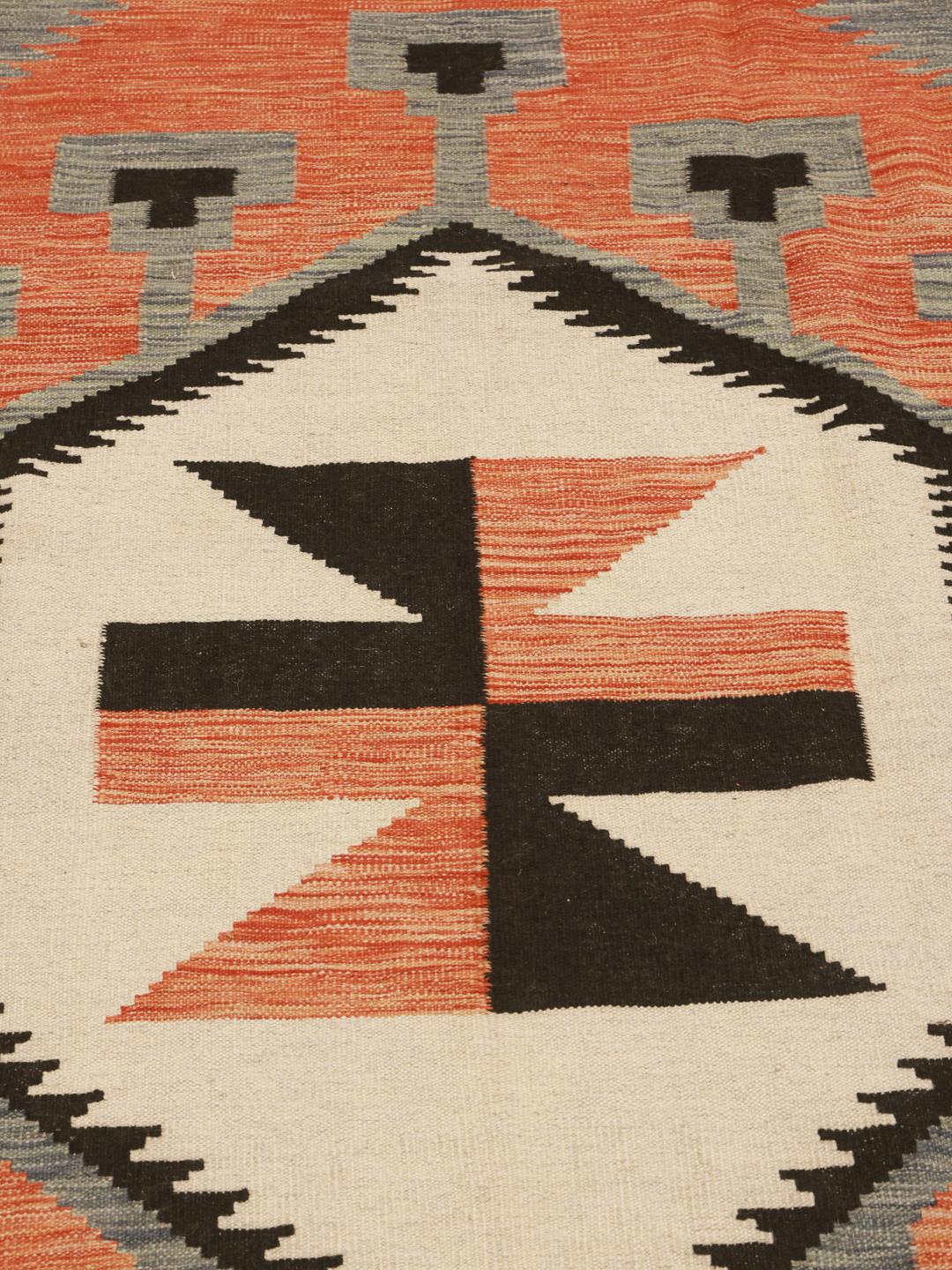
Traditional Afghan kelims often feature bold geometric symbols, diamond medallions, and striking border designs passed down through generations of families.
The striking interplay of triangles and central motifs in this piece reflects a continuation of regional visual storytelling adapted for contemporary interiors.
Collecting a vintage or modern kelim connects your home to an enduring craft lineage where skill is transferred directly from hand to hand.
Owning such a textile means preserving a piece of cultural heritage that values honest materials and human artistry over mass production.