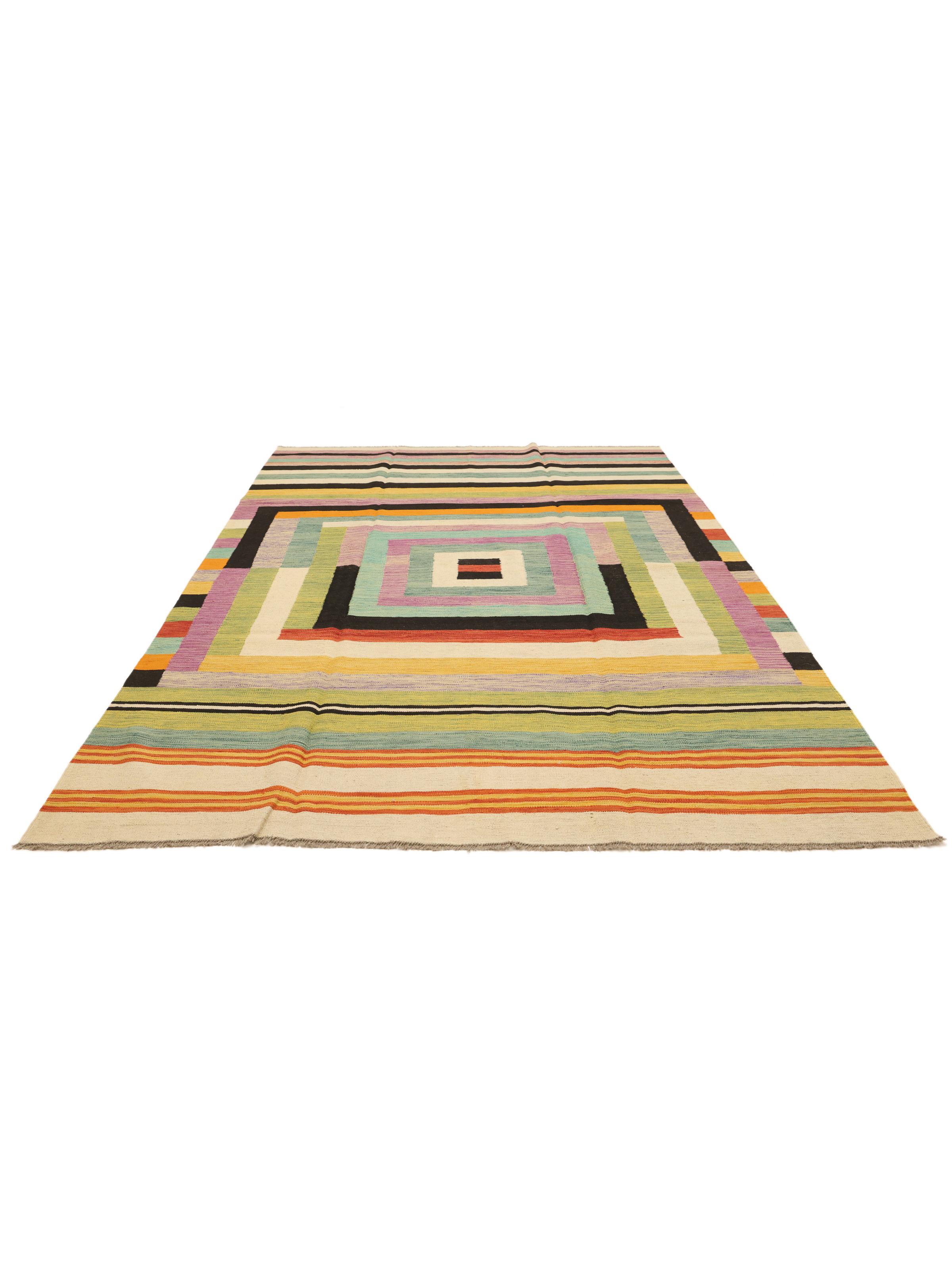
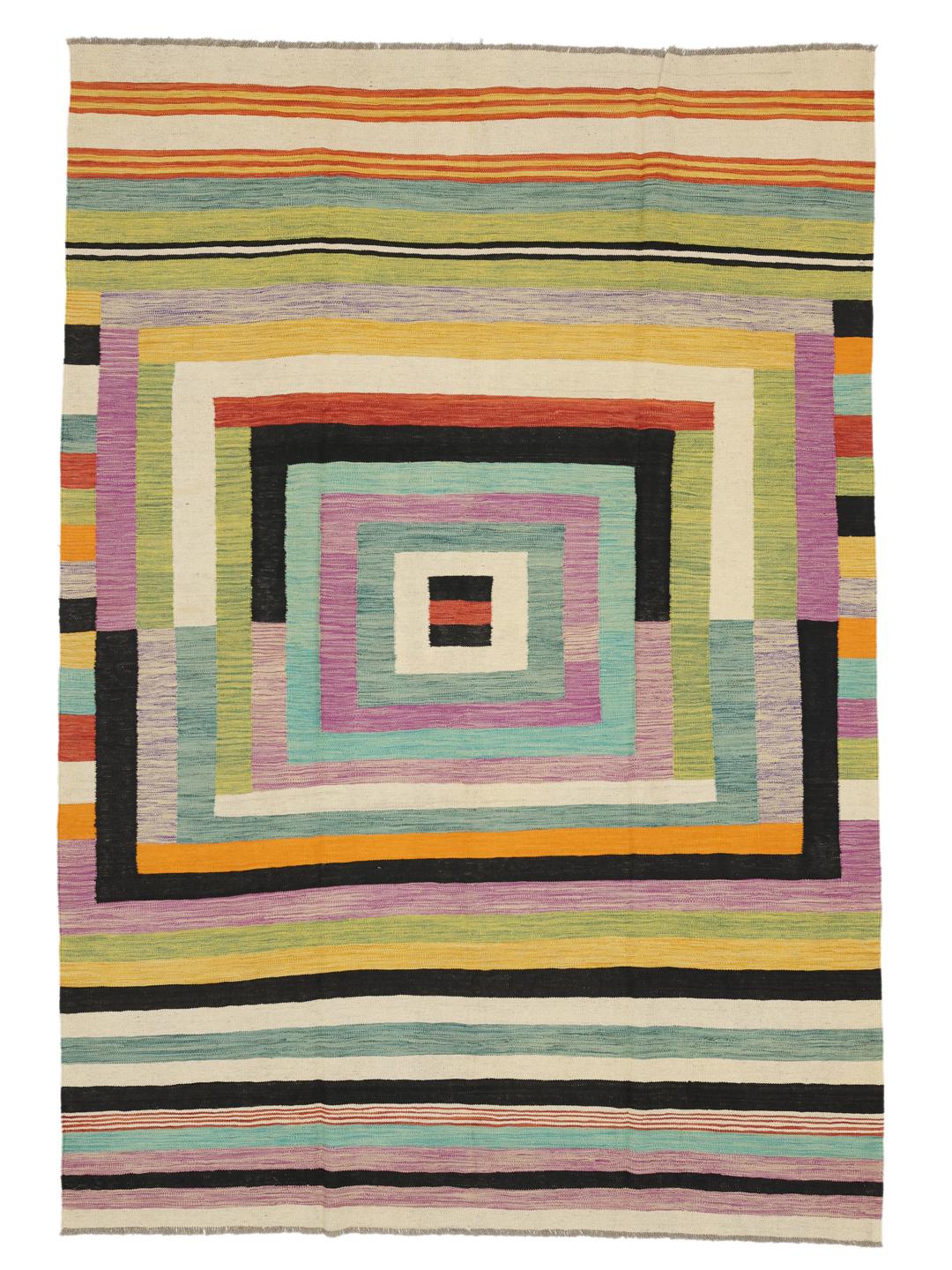
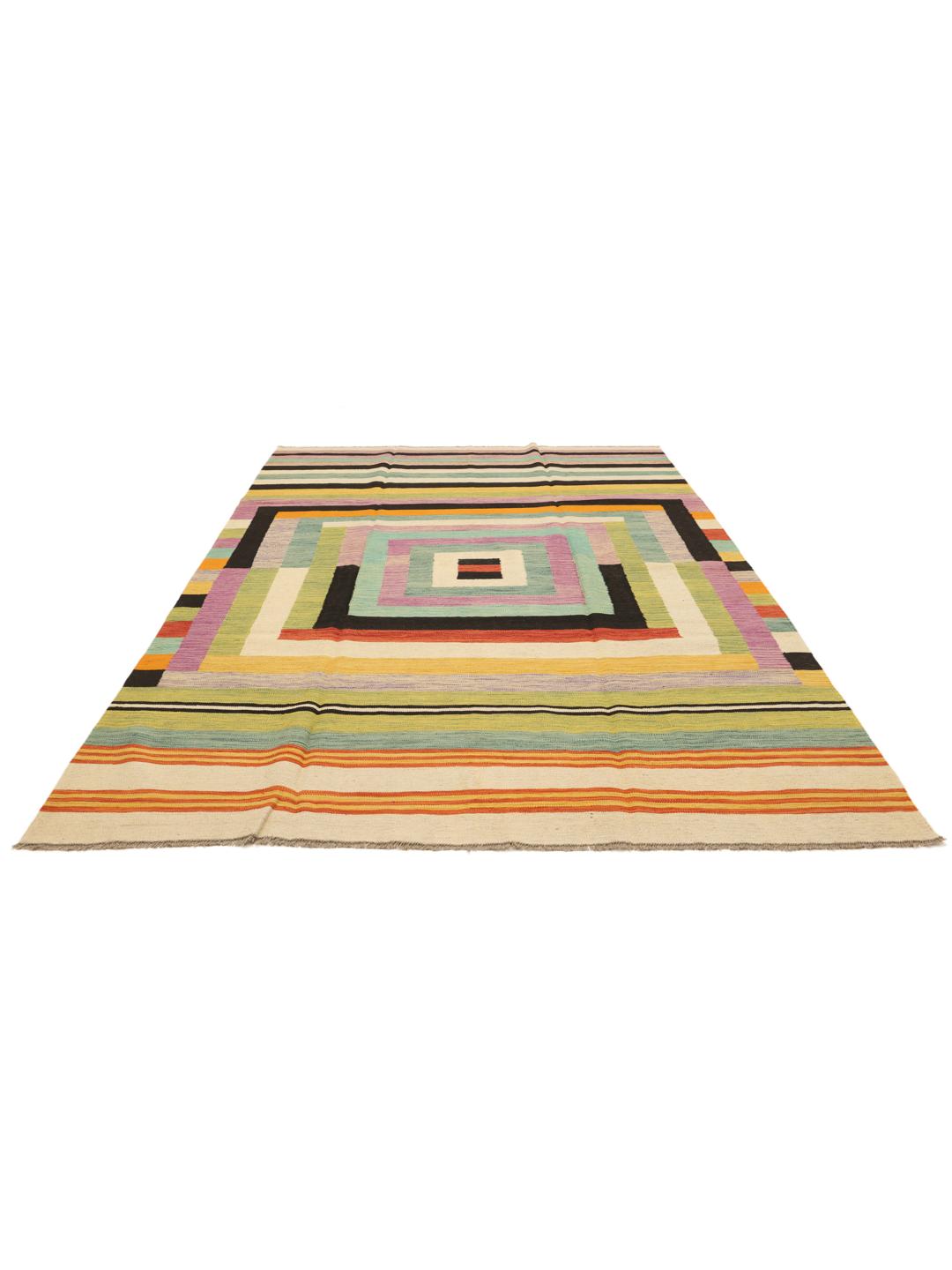
Kilim weaving has a long and storied history rooted in the nomadic and village traditions of the Middle East and Central Asia. Originally created as practical, portable floor coverings and blankets for nomadic lifestyles, these flatwoven textiles have evolved into cherished expressions of regional artistry and cultural identity.
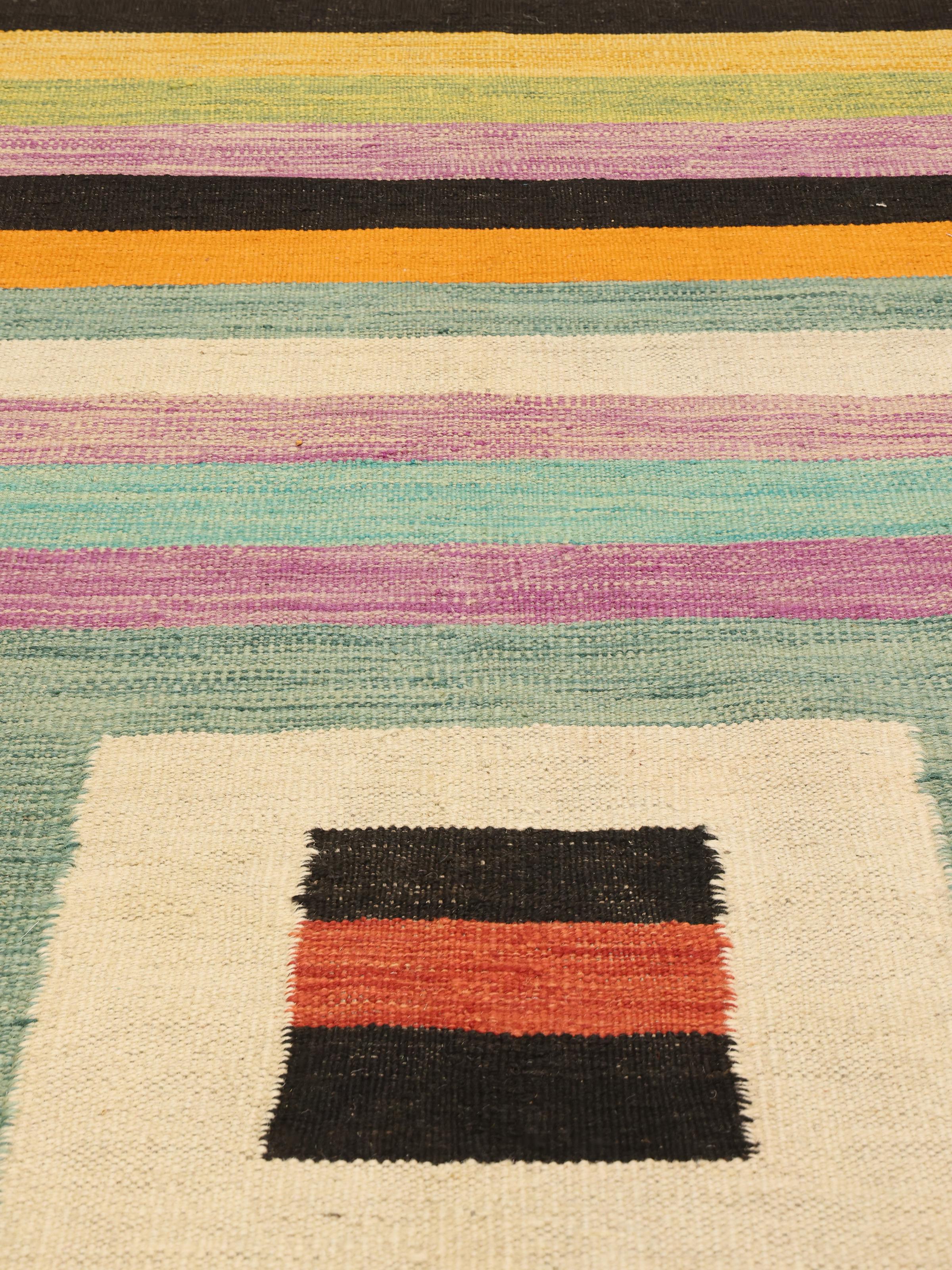
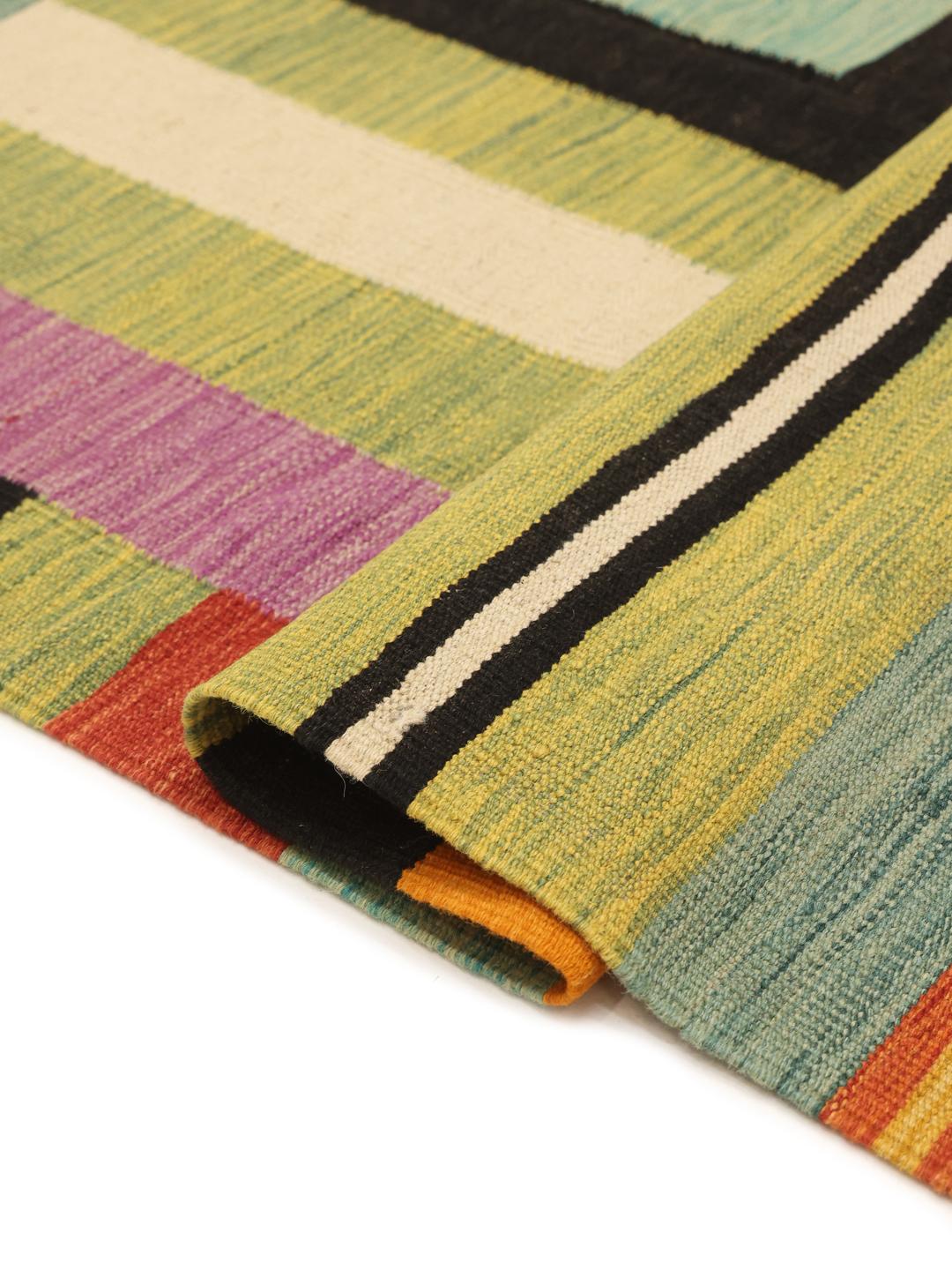
The term flatweave or kelim refers to a textile constructed without a knotted pile, where the pattern is created by tightly interlacing horizontal weft threads through vertical warp threads. This technique produces a lightweight yet remarkably durable fabric with a smooth surface on both sides, making the textile versatile for daily living.
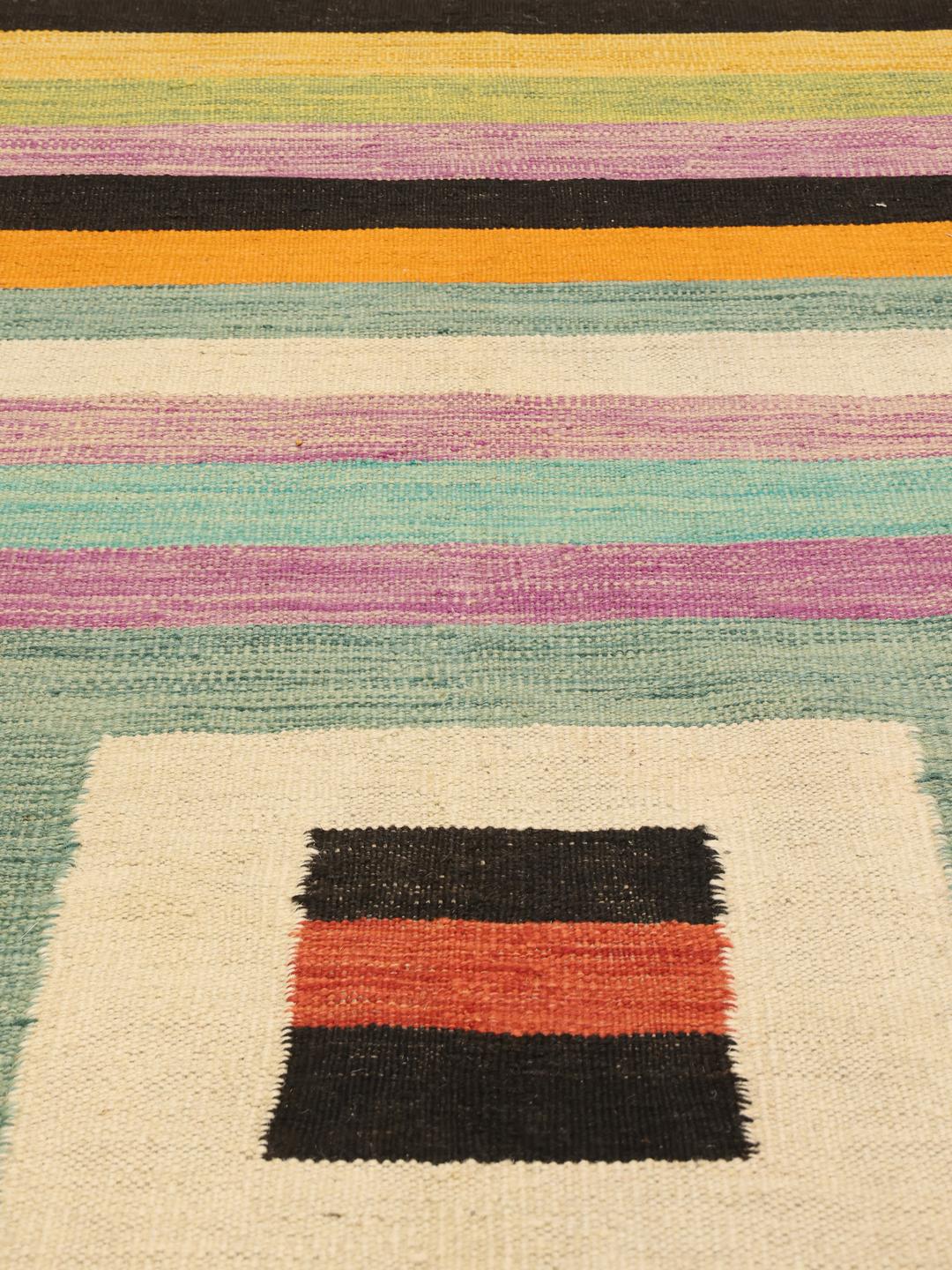
Traditional kilim designs often feature geometric motifs, bold stripes, and symmetrical medallions that carry symbolic meanings tied to protection, family, and nature. Modern interpretations like this Afghan piece build upon that ancient visual vocabulary, blending traditional geometric layouts with contemporary colour palettes to suit modern interior aesthetics.
Collecting vintage and modern kelim rugs allows you to connect with centuries of textile craftsmanship and storytelling. Each rug represents hours of skilled labour by traditional makers, offering a tangible piece of cultural heritage that brings genuine warmth, history, and character into contemporary homes.