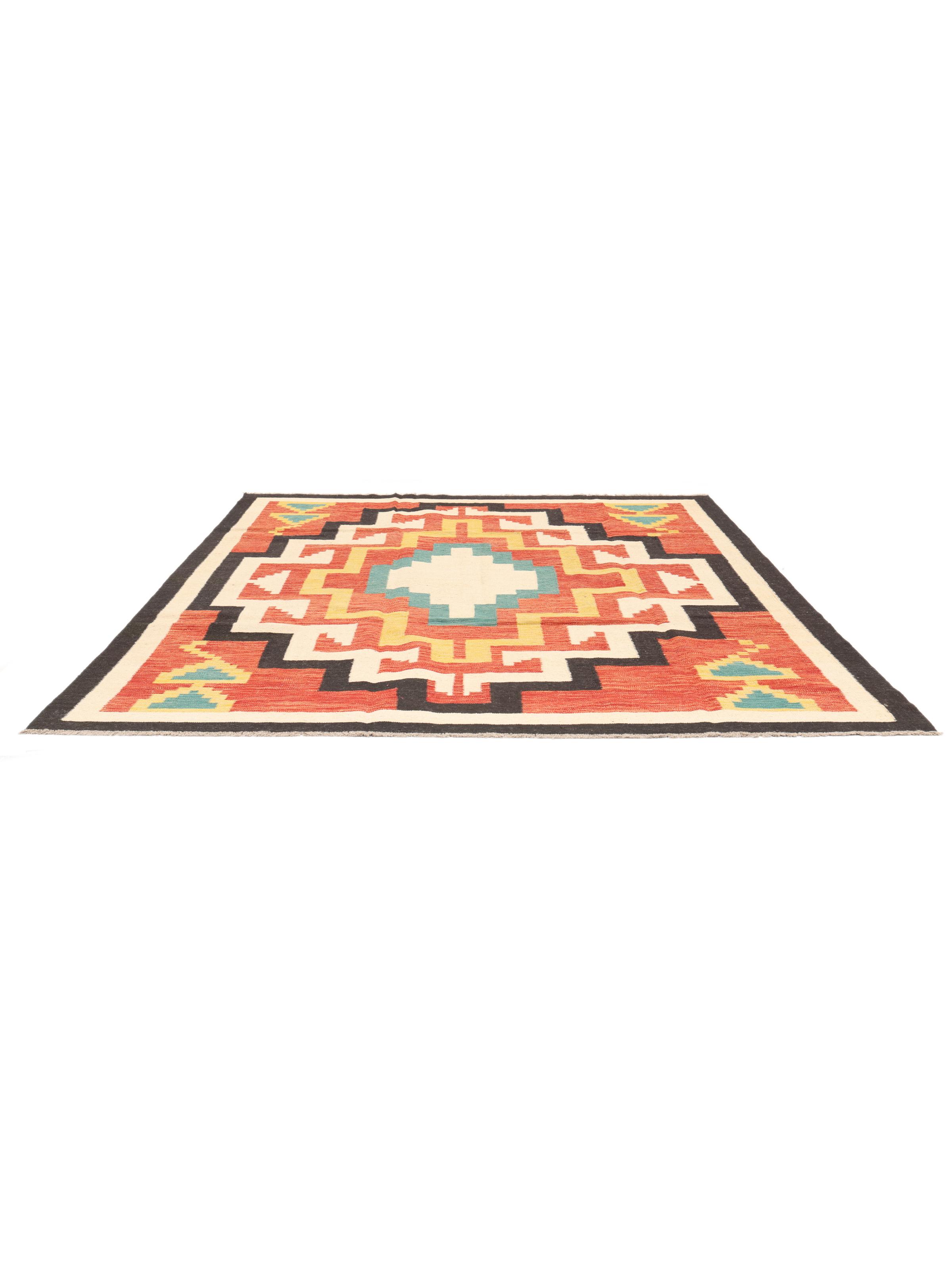
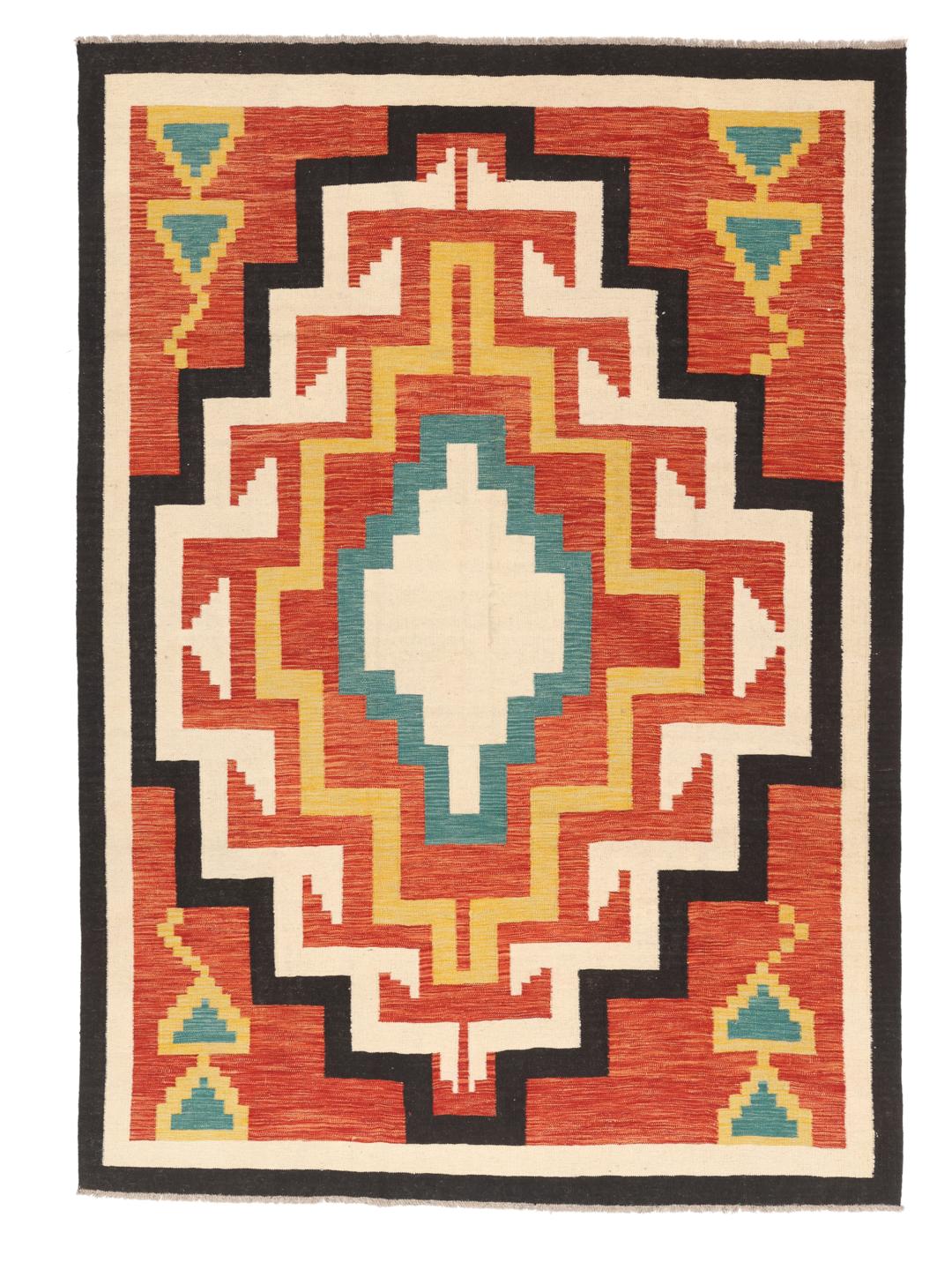
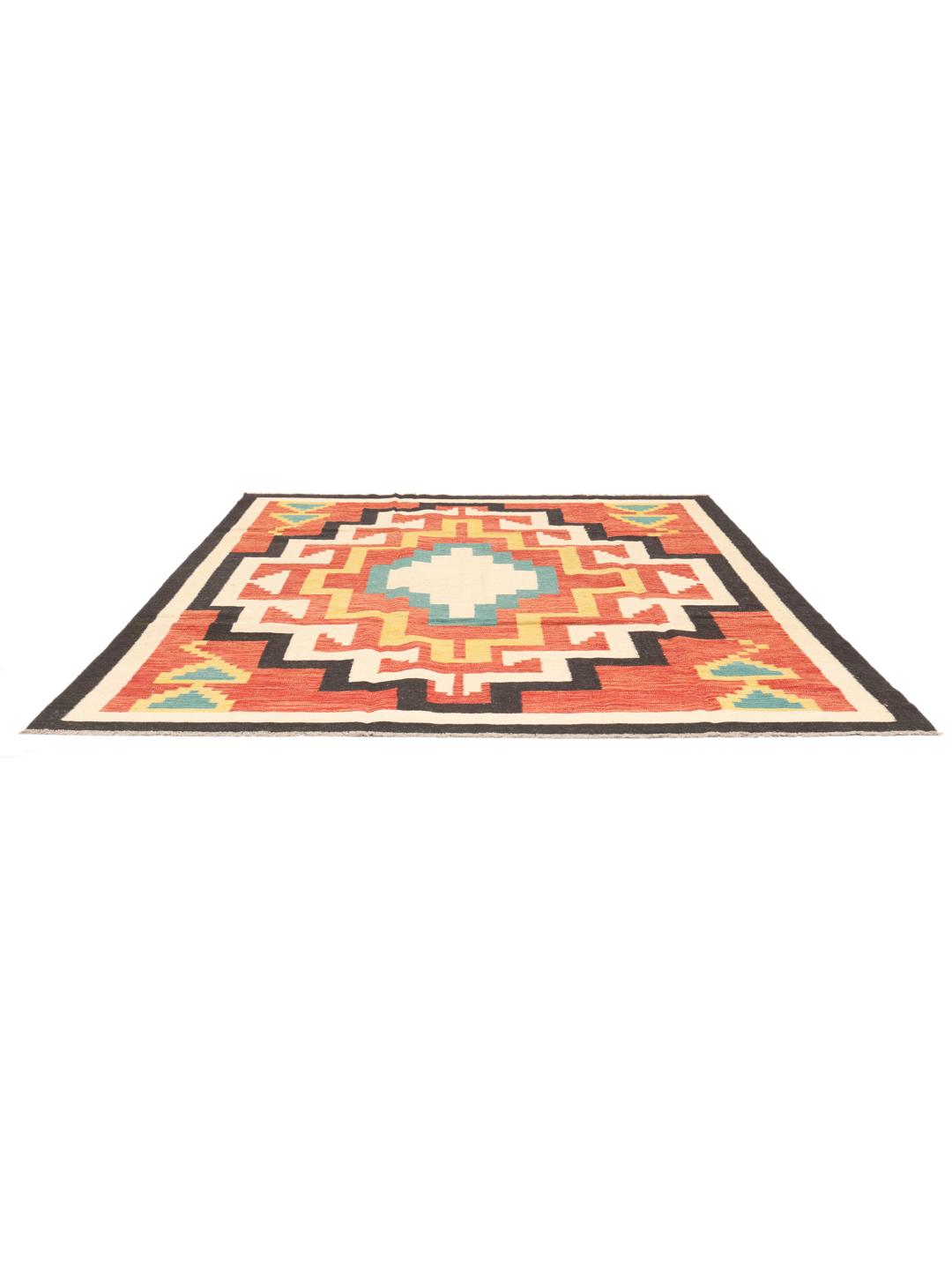
Kilim rugs represent a storied tradition of flat-weaving that has been practised for centuries across the Middle East and Central Asia. Originally designed for nomadic life, these rugs were prized for their versatility, portability, and durability, serving as everything from floor coverings to tent hangings and storage bags.
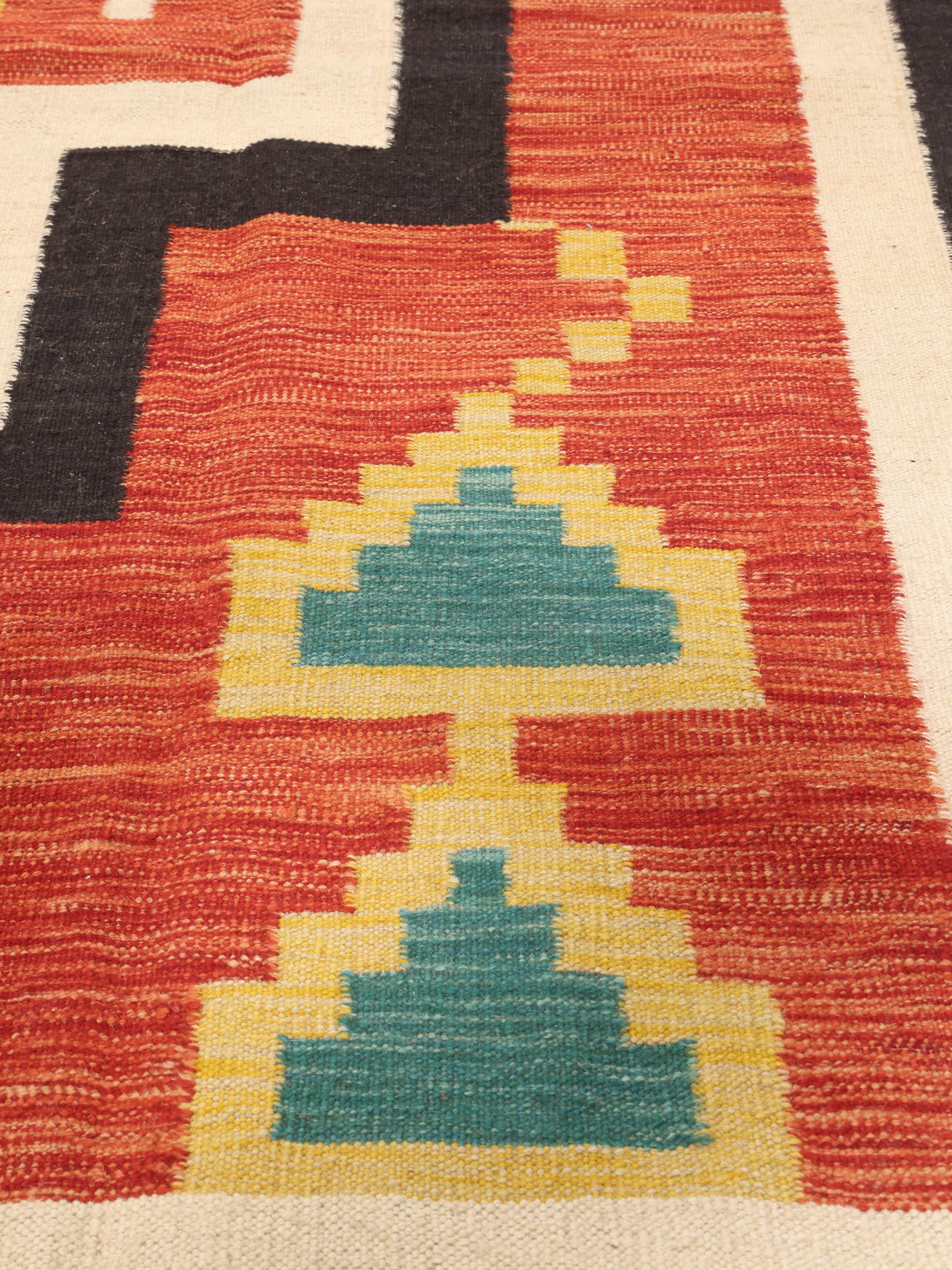
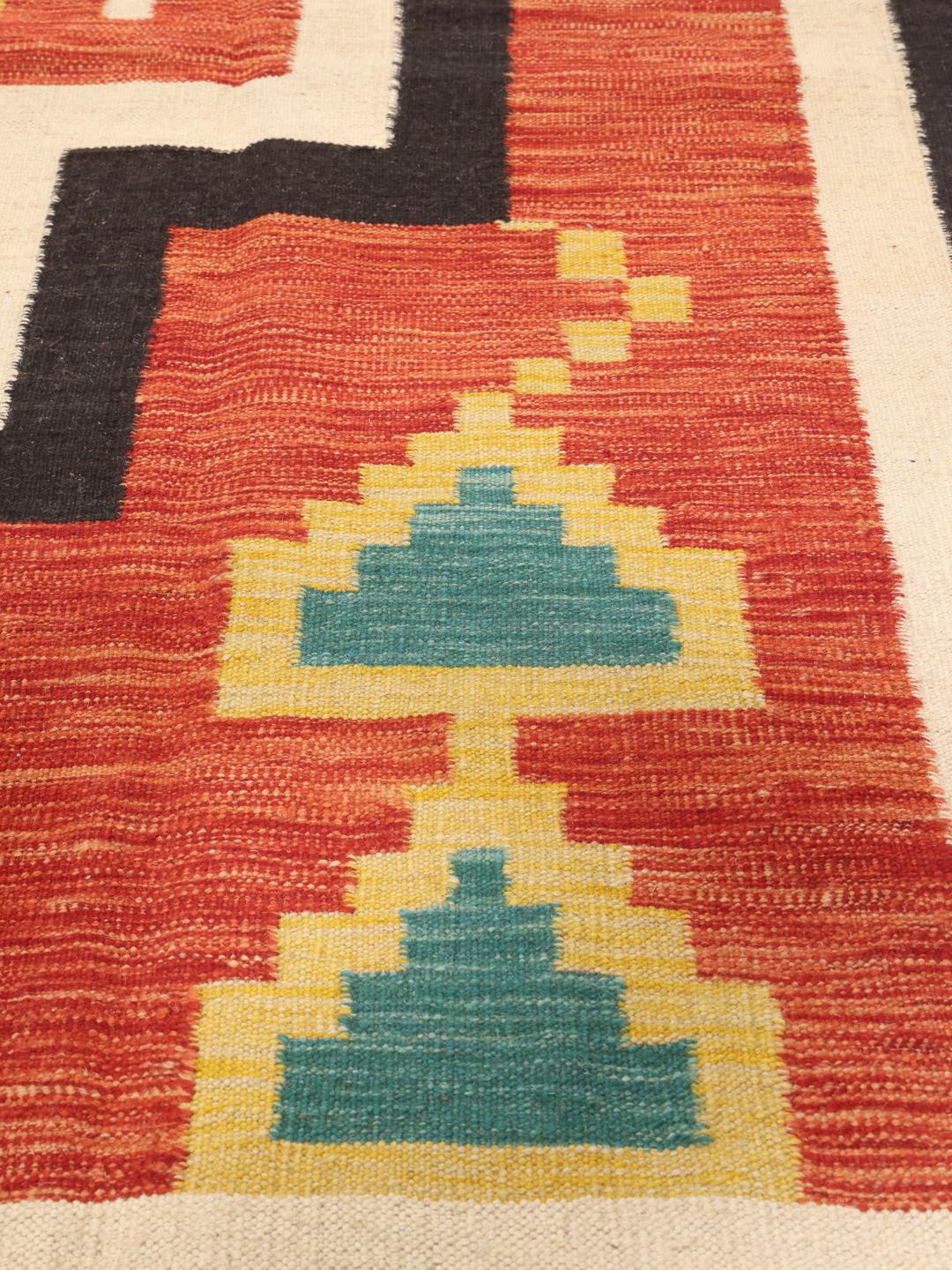
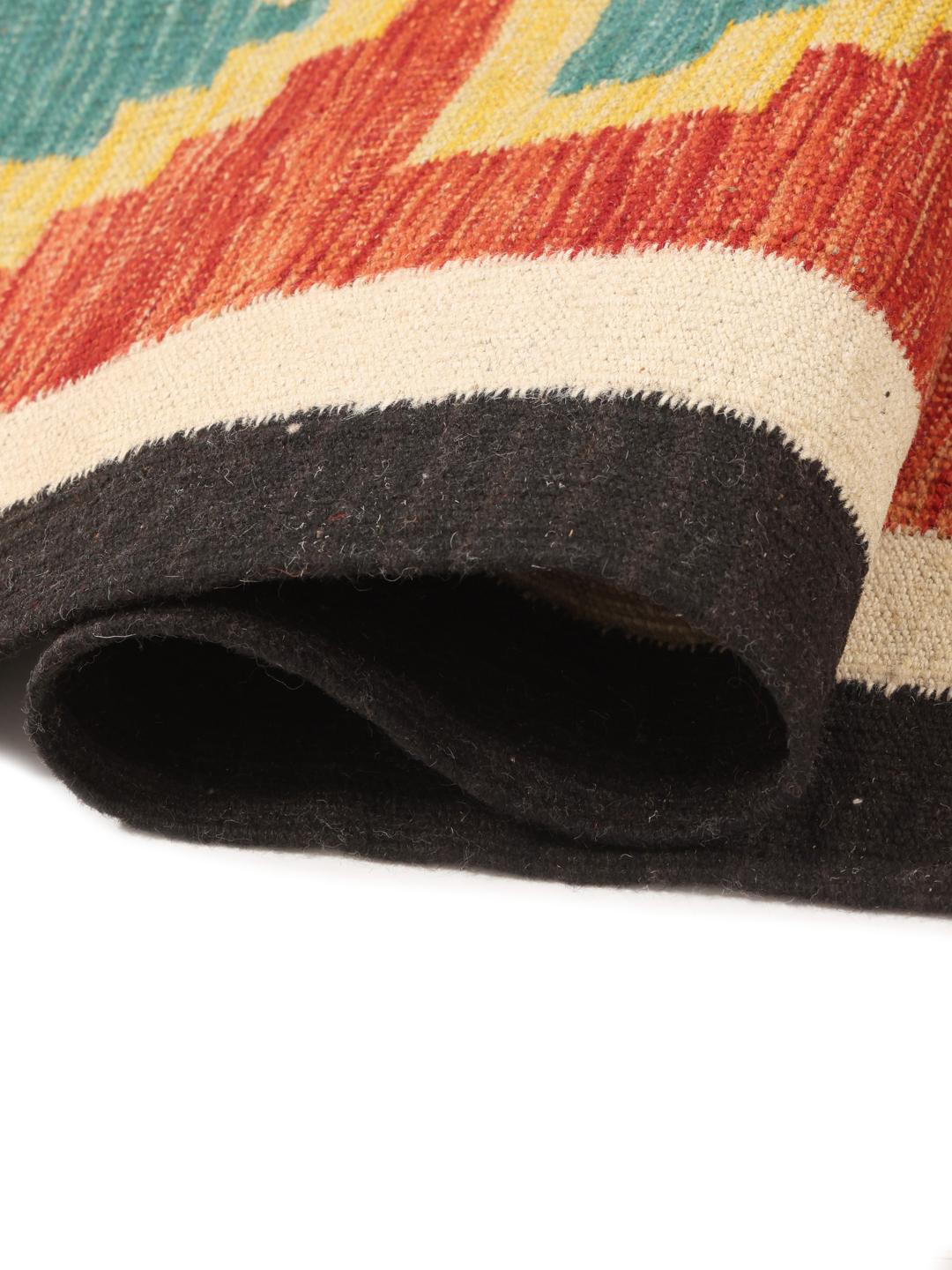
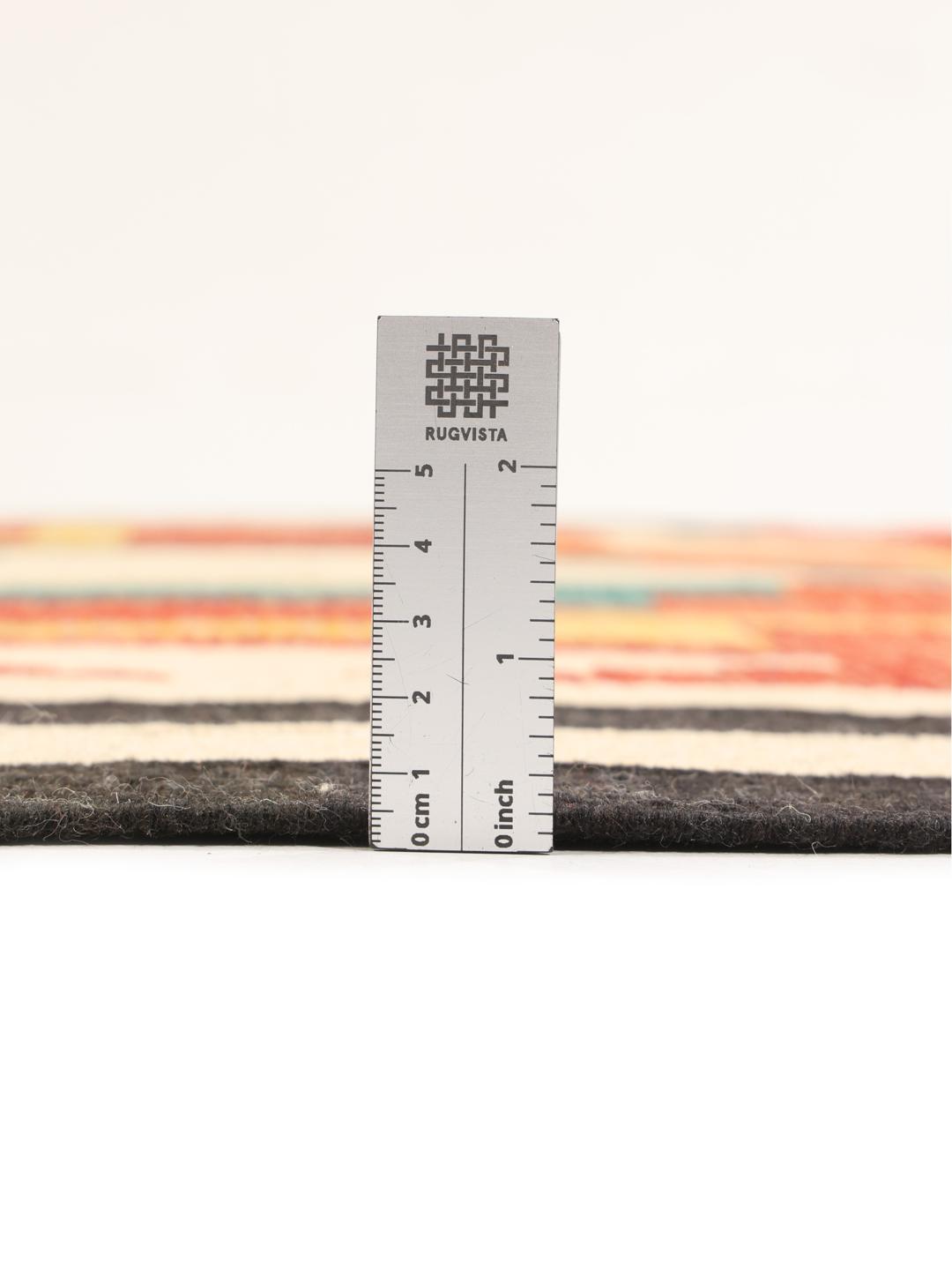
The term 'kilim' refers specifically to this tapestry-weave technique, where the design is created by interweaving the coloured weft threads through the warp. This method results in a reversible rug without a pile, characterised by its clean lines and sharp, geometric motifs that remain as crisp on the back as they are on the front.
Visually, these rugs are defined by their bold, angular aesthetics. The motifs often carry symbolic meanings, drawing from regional folklore, tribal identity, and the natural environment. While traditional palettes often leaned toward natural dyes, modern iterations like this one incorporate vibrant, contemporary colours that allow the ancient geometry to feel entirely fresh and relevant in today's homes.
Collecting a kilim rug is an investment in cultural heritage and human skill. By choosing a hand-woven piece, you are supporting a legacy of craft that has been passed down through generations. These rugs are valued not just for their aesthetic appeal, but for their ability to bring a sense of history and warmth into modern architectural spaces.