Kelim flatweaves hold a prominent place in the textile heritage of Central Asia and the Middle East, originating among nomadic and village communities who needed durable, versatile coverings for travel and home use.
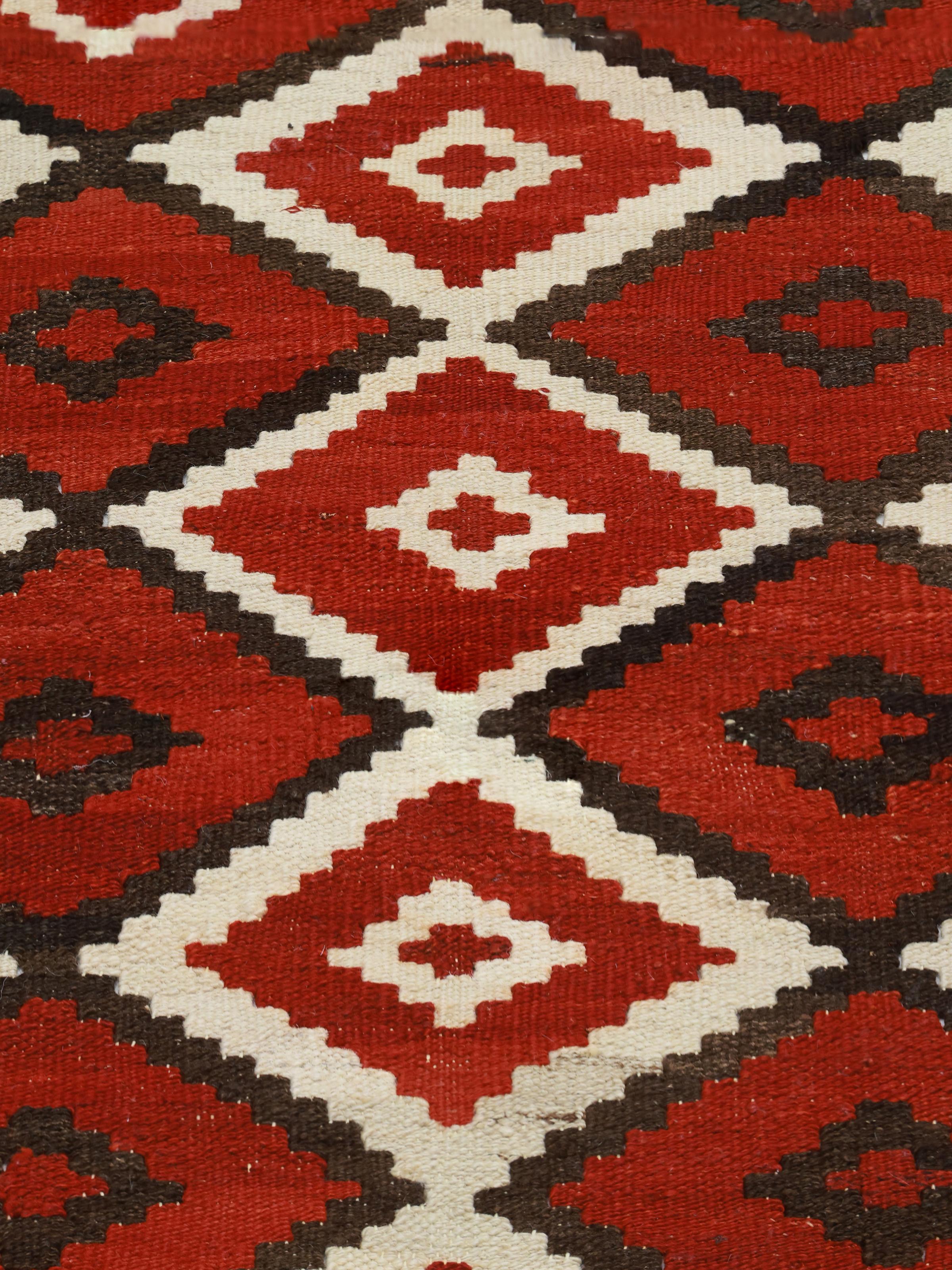
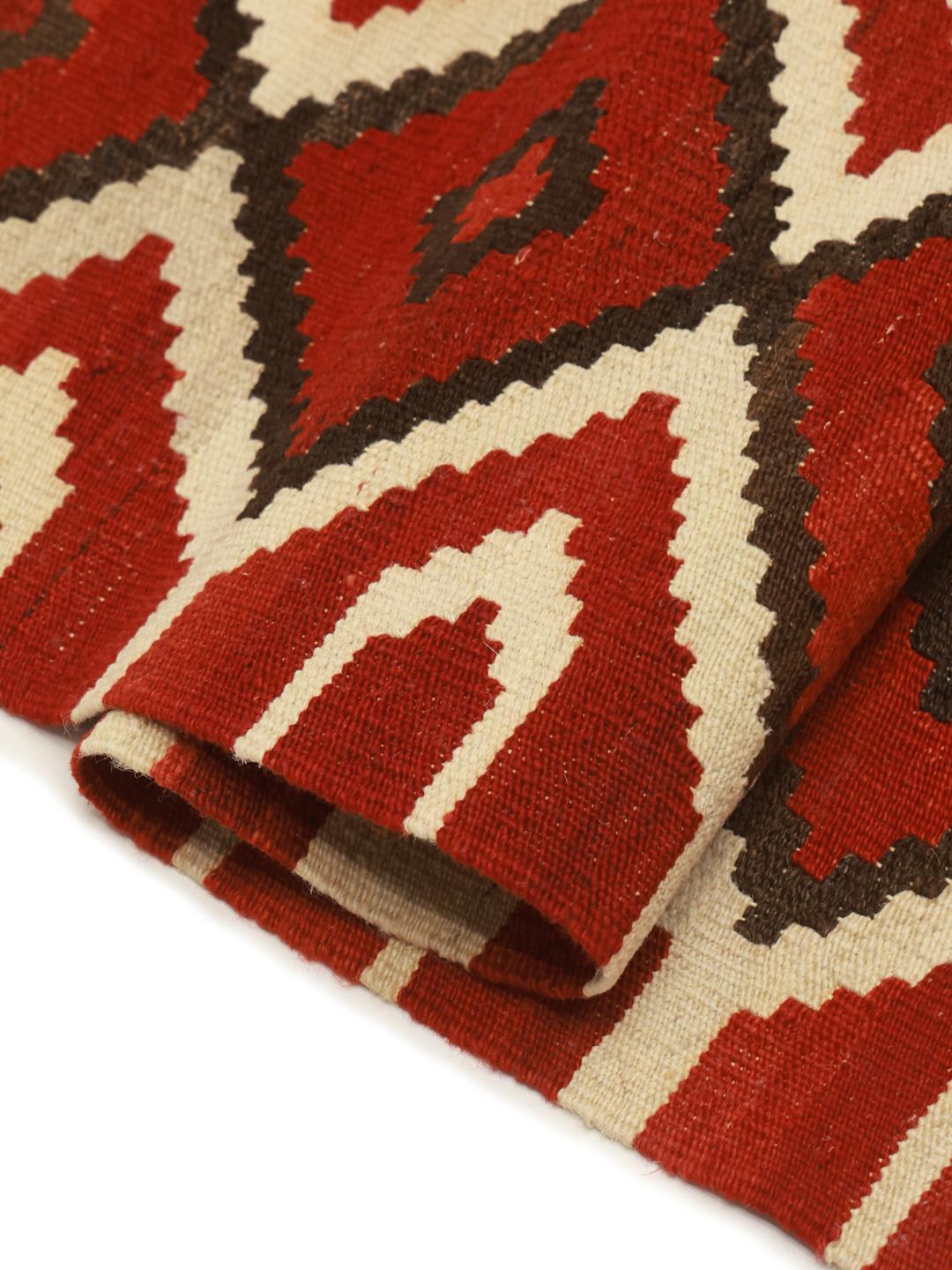
Unlike pile rugs, kelims are woven by tightly interlocking the coloured weft threads through the vertical warp strings, producing a flat, lightweight textile that was easily transported and laid across tent floors.
The flatweave technique requires precise tension control by the weaver, as every colour change demands careful management of the yarn junctions.
This construction method results in a nimble, strong fabric that lacks a traditional pile yet offers exceptional resilience against daily wear.
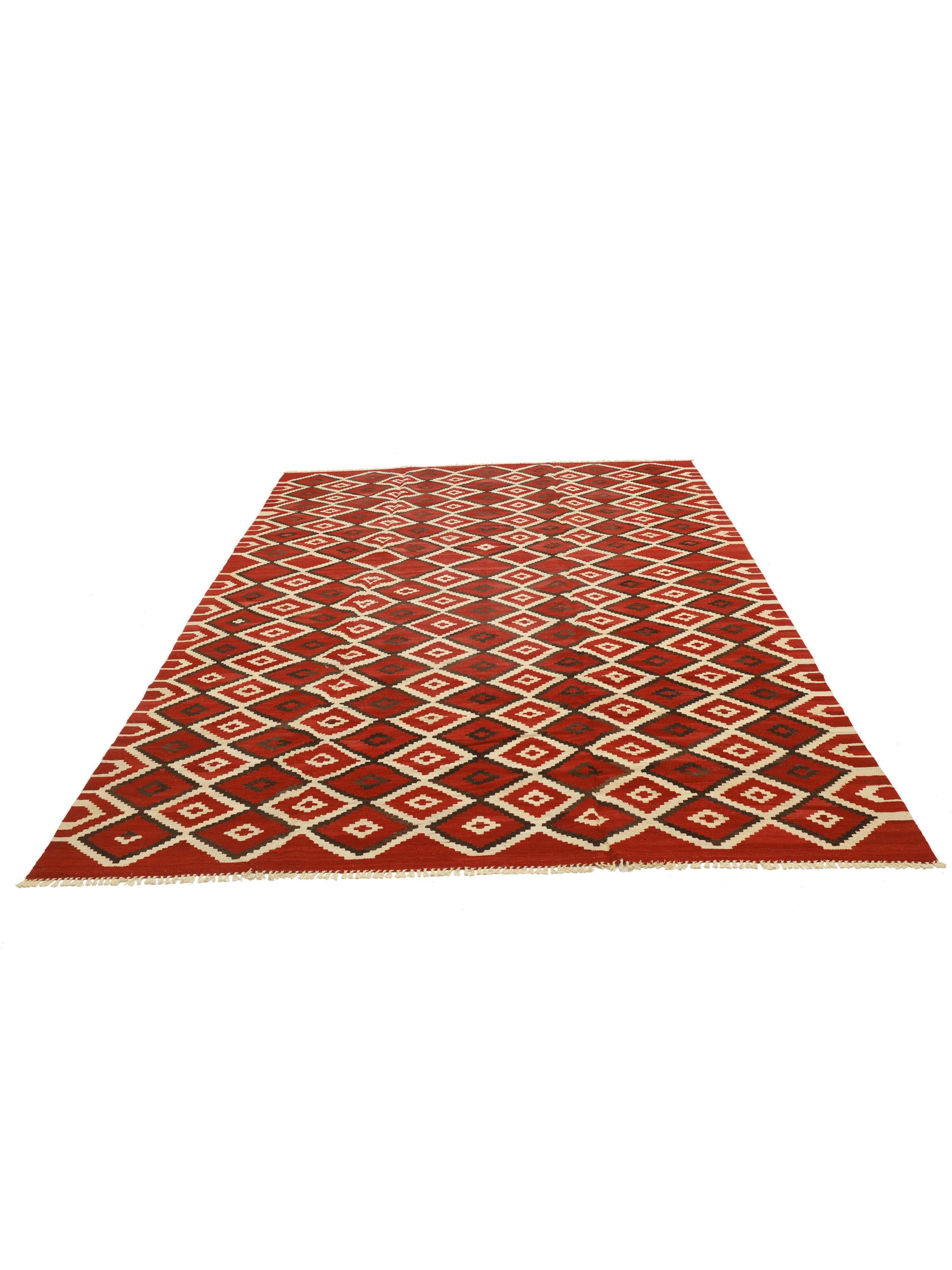
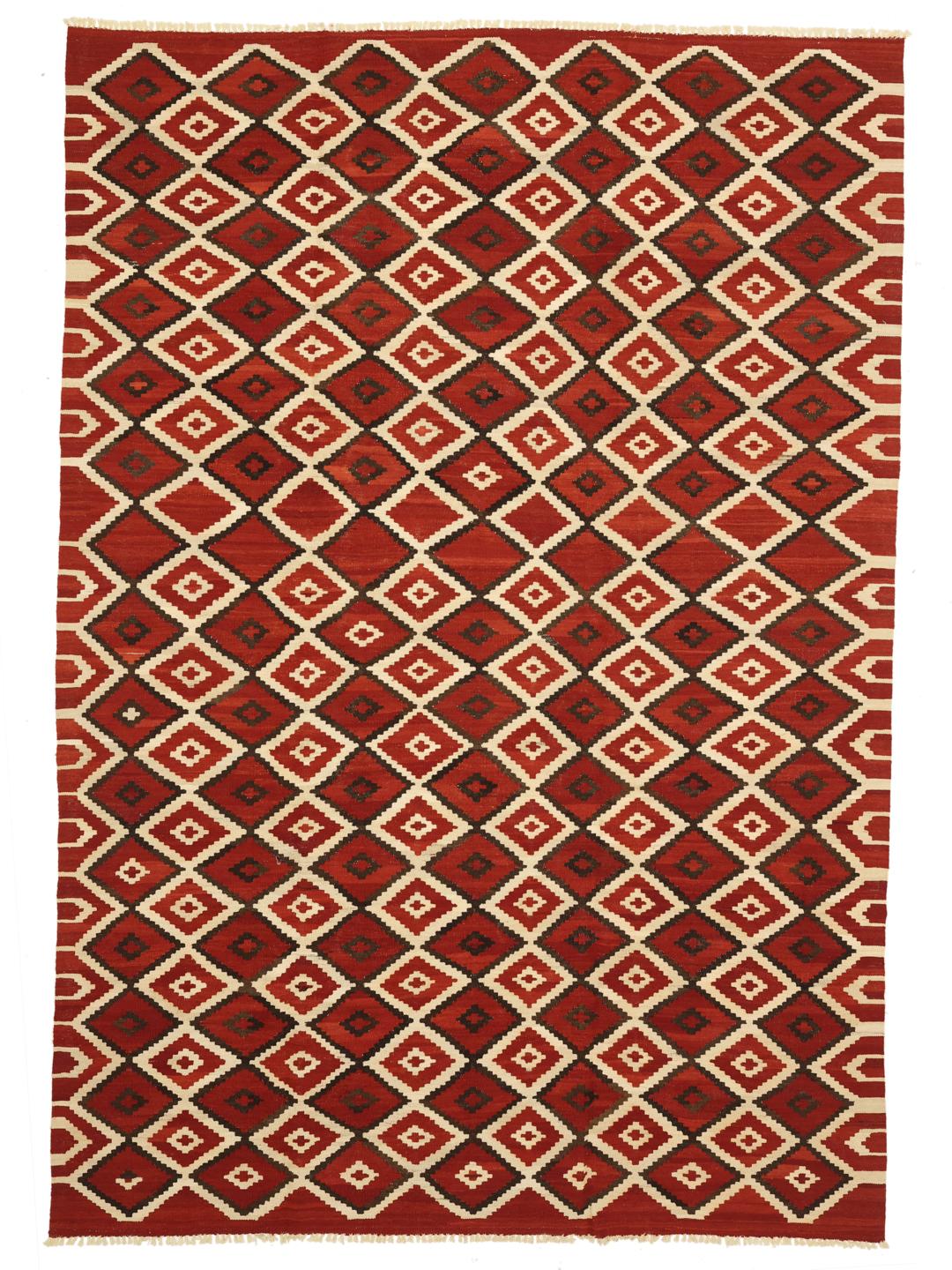
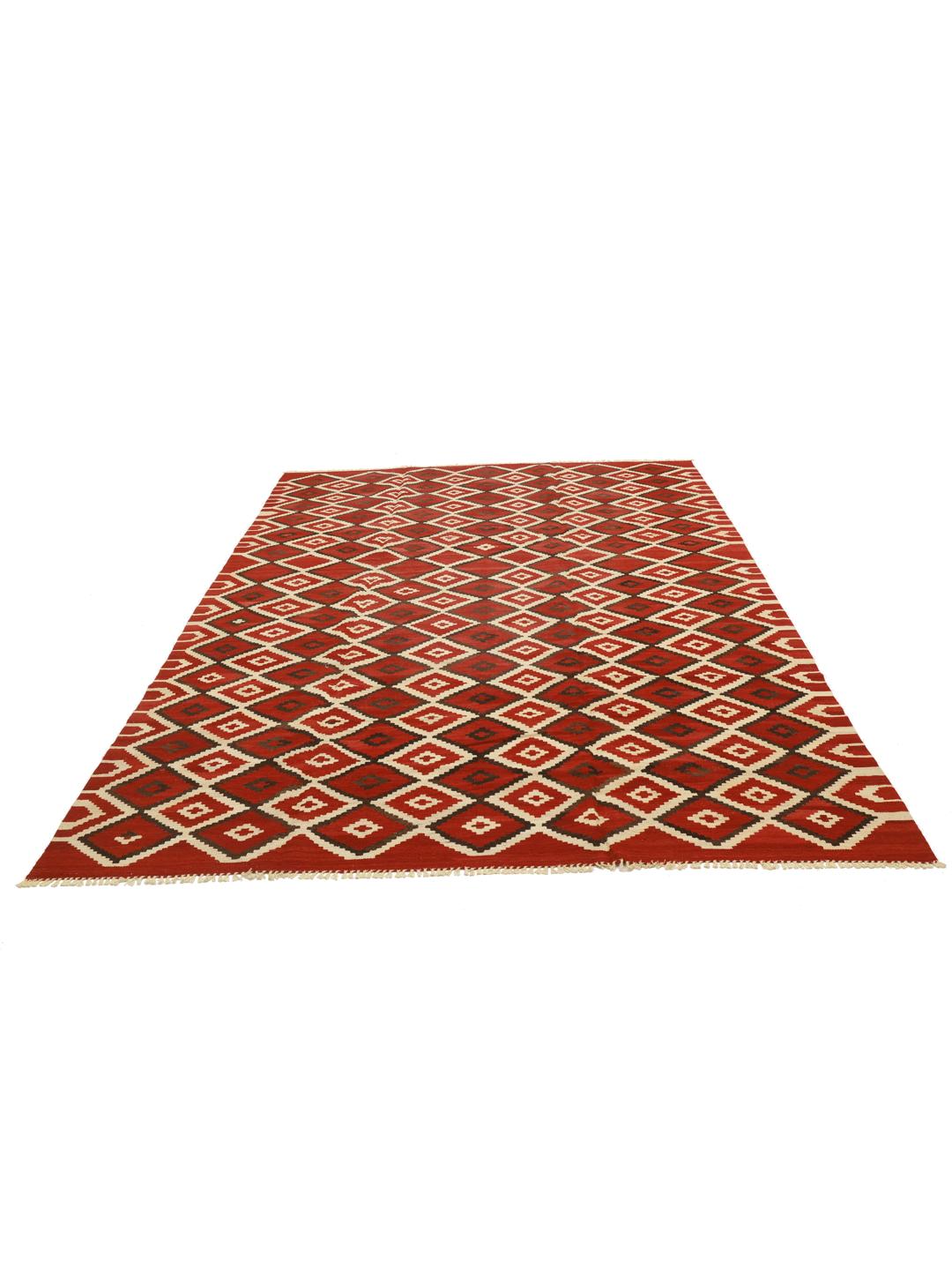
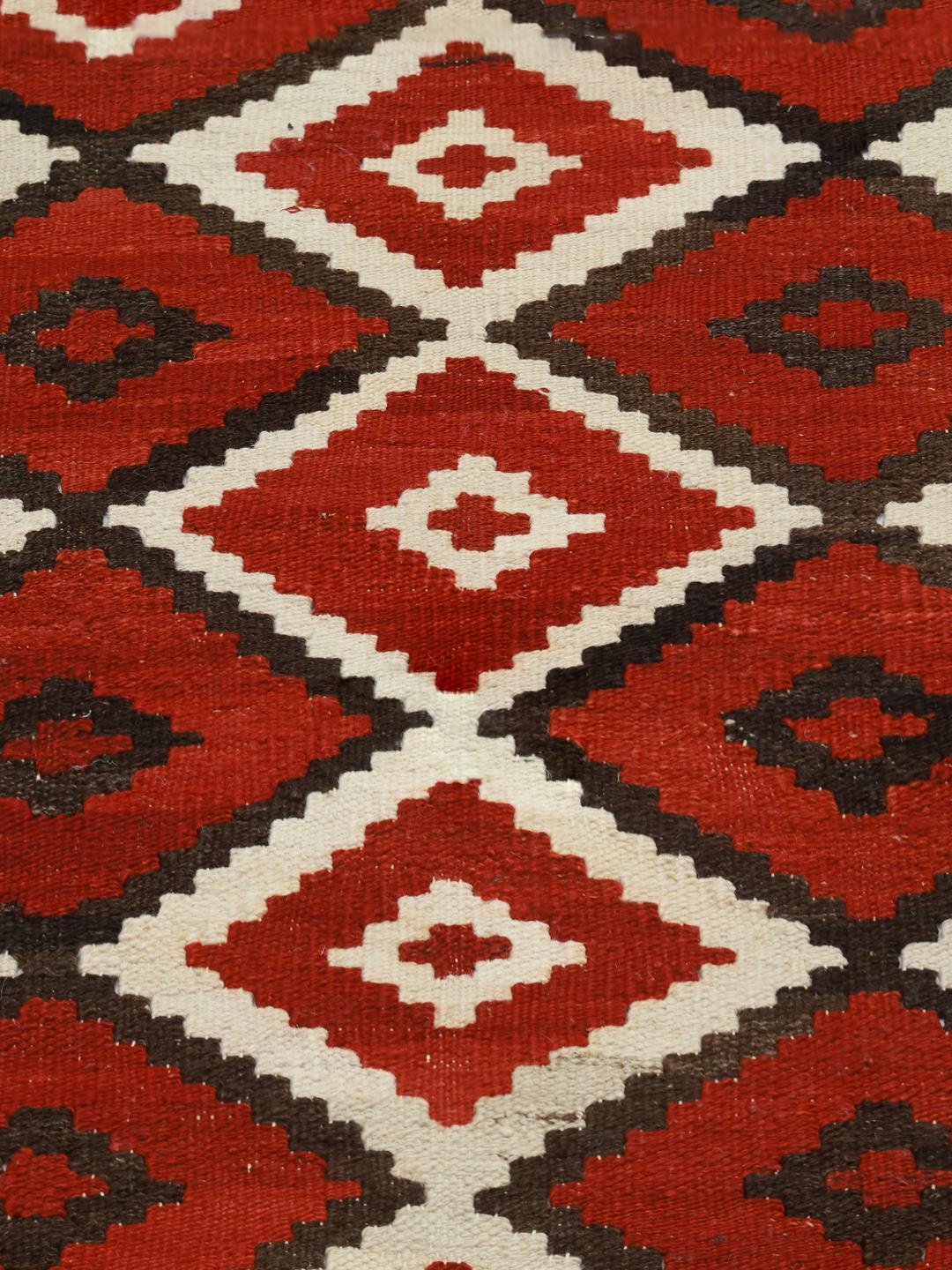
The design of this piece features a repeating geometric diamond pattern, a motif deeply rooted in tribal visual traditions symbolising protection, prosperity, and the natural world.
The arrangement of contrasting red and dark-grey rhombuses creates a rhythmic visual flow across the field, maintaining a balance between order and organic irregularity.
Owning a kelim connects modern interiors to a long lineage of domestic craft and textile artistry.
Each piece preserves traditional methods passed down through generations, offering collectors and homeowners a tangible link to the enduring cultural heritage of Afghan weavers.