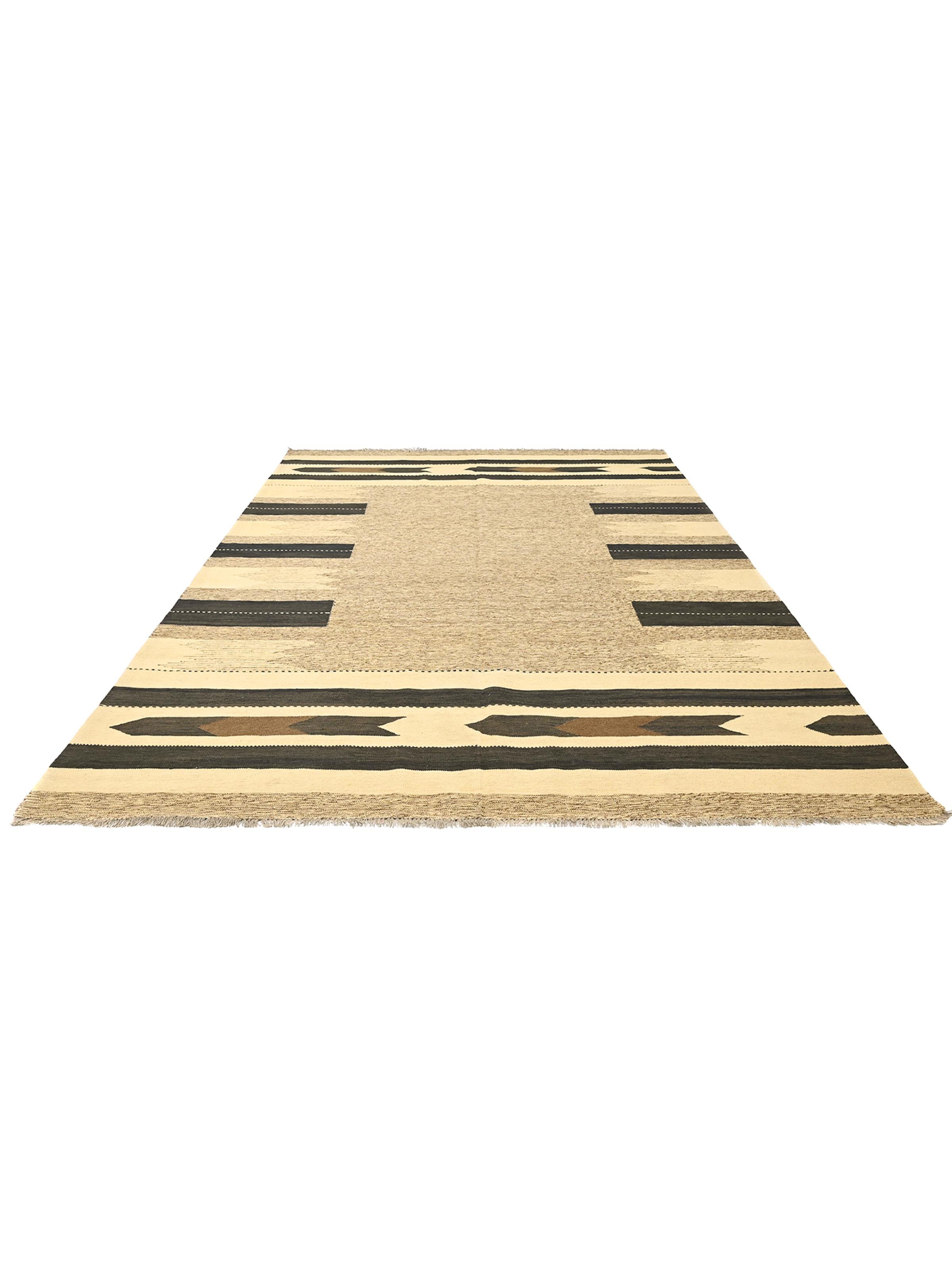
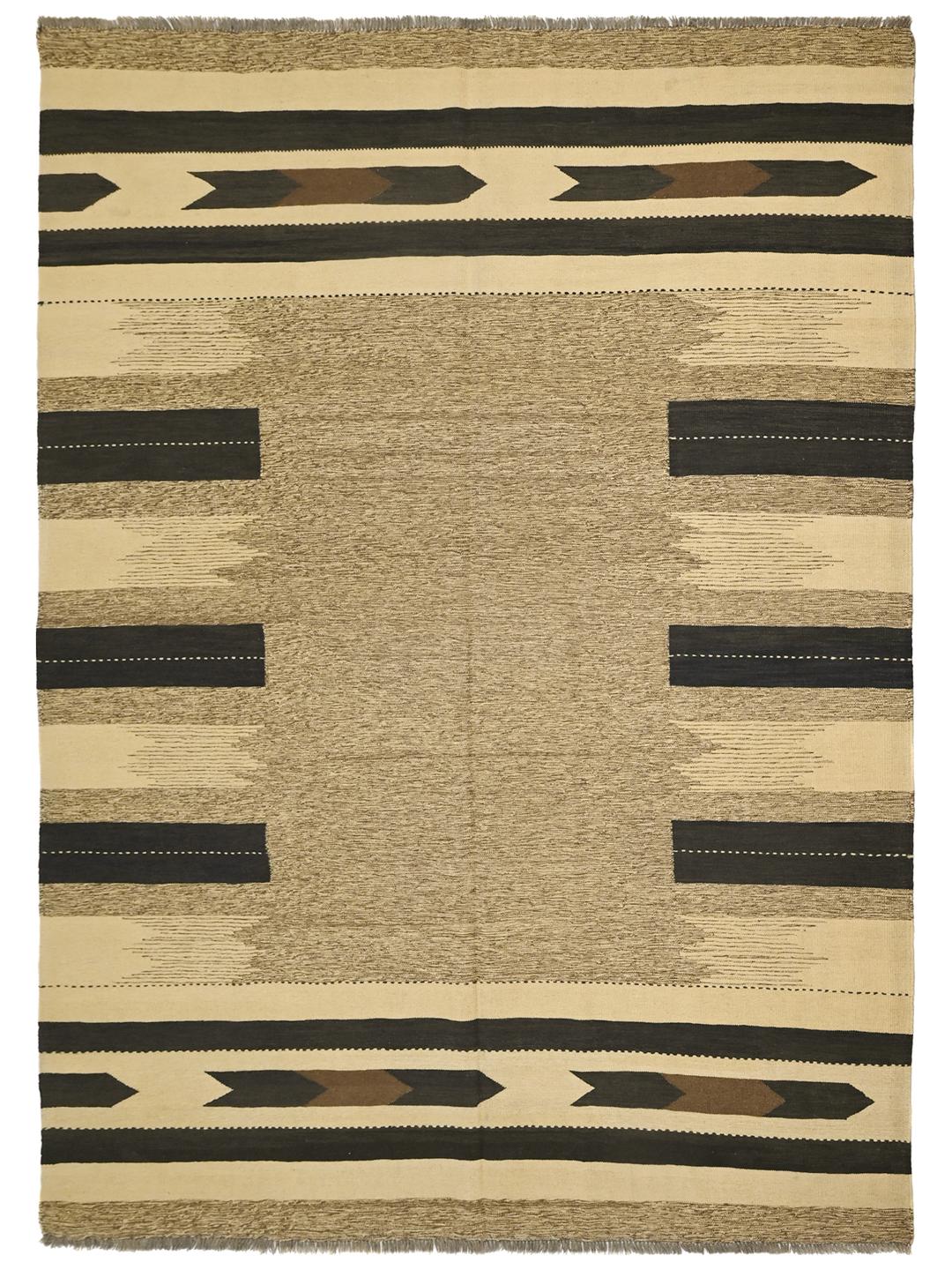
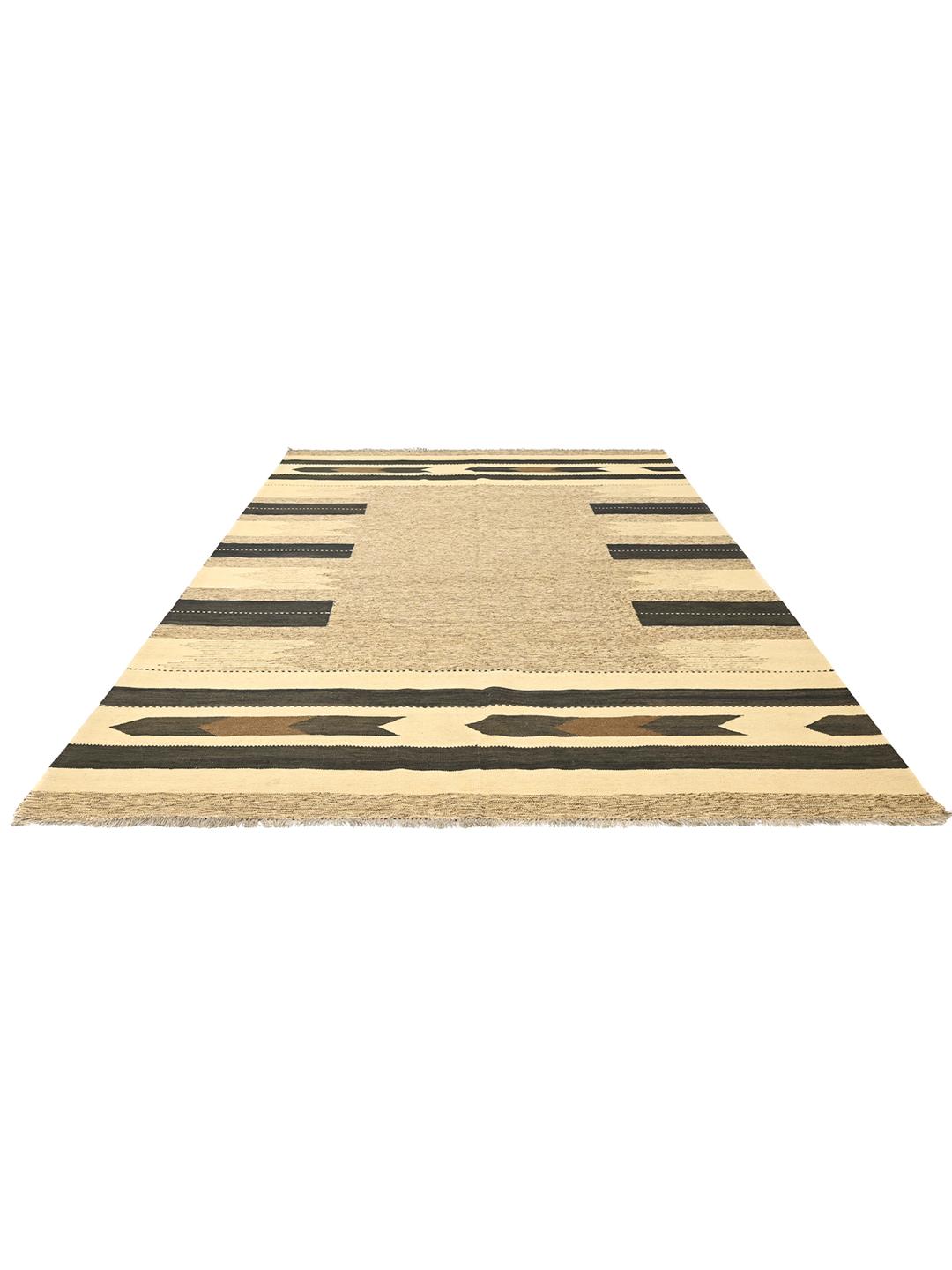
Kilim weaving is one of the oldest textile traditions in Central Asia and the Middle East, developed by nomadic communities who needed light, durable, and easily transportable floor coverings. In Afghanistan, these flatweaves have long been a core element of household life, prized both for their functional utility and their expressive regional patterns.
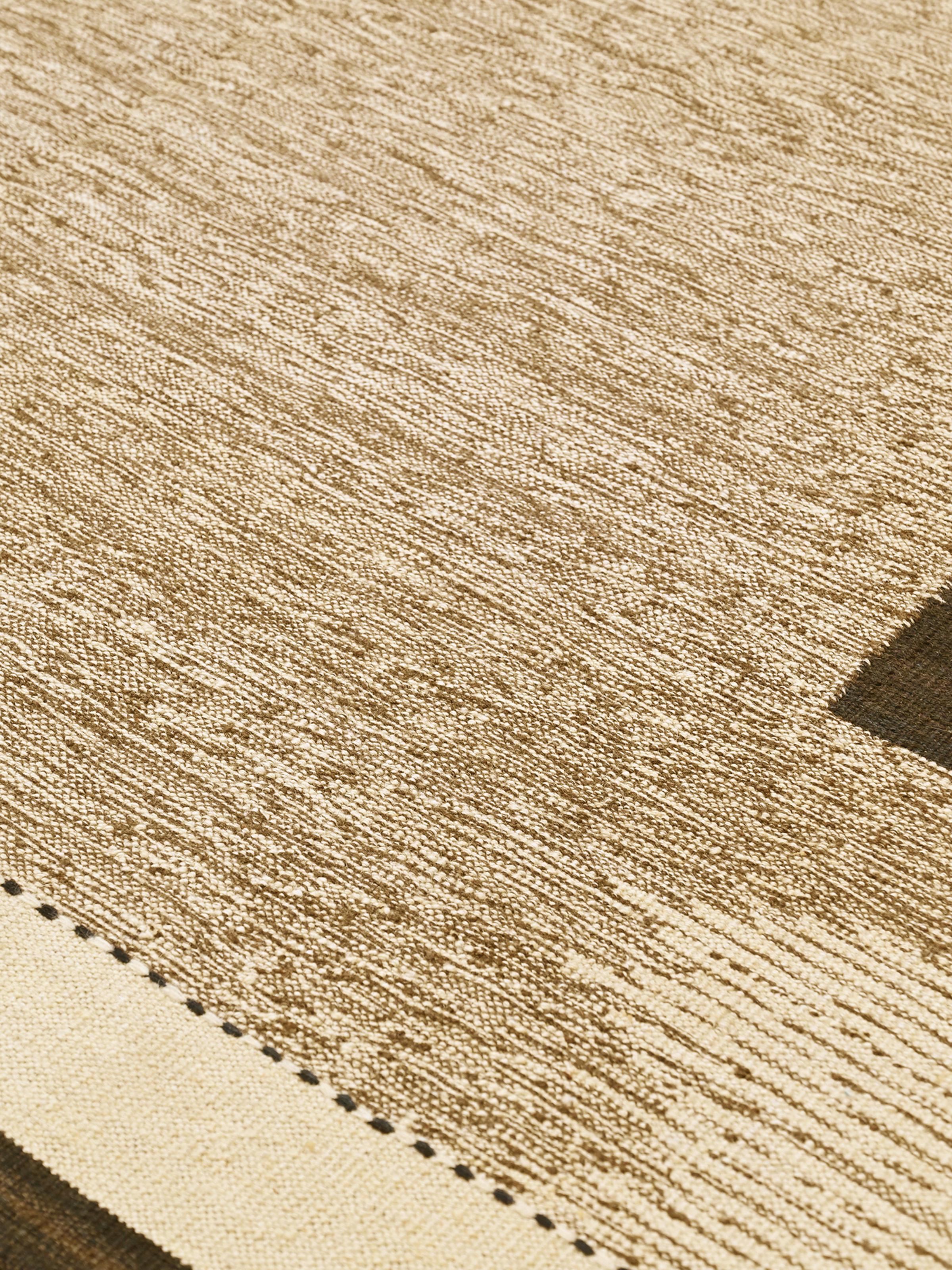
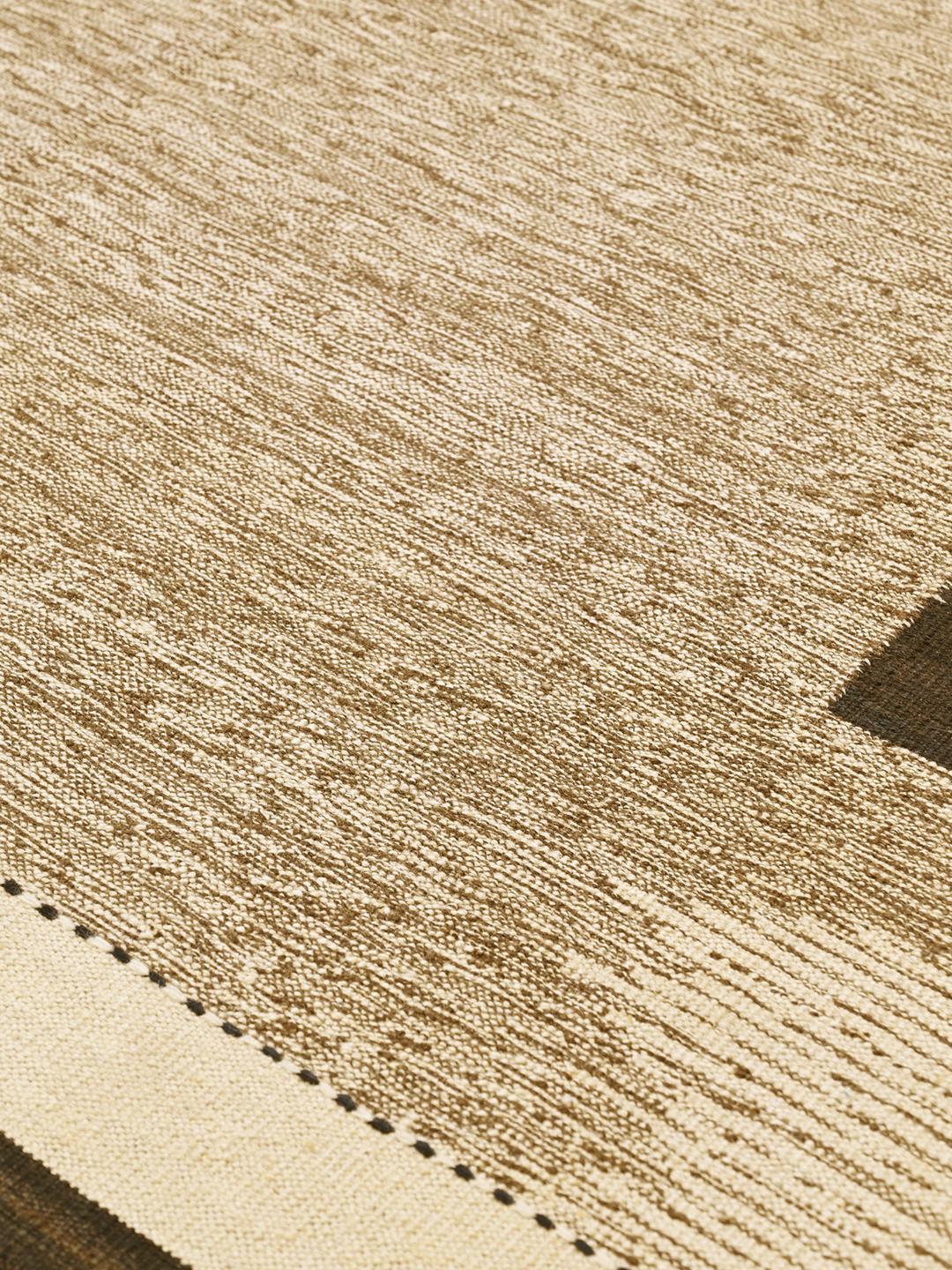
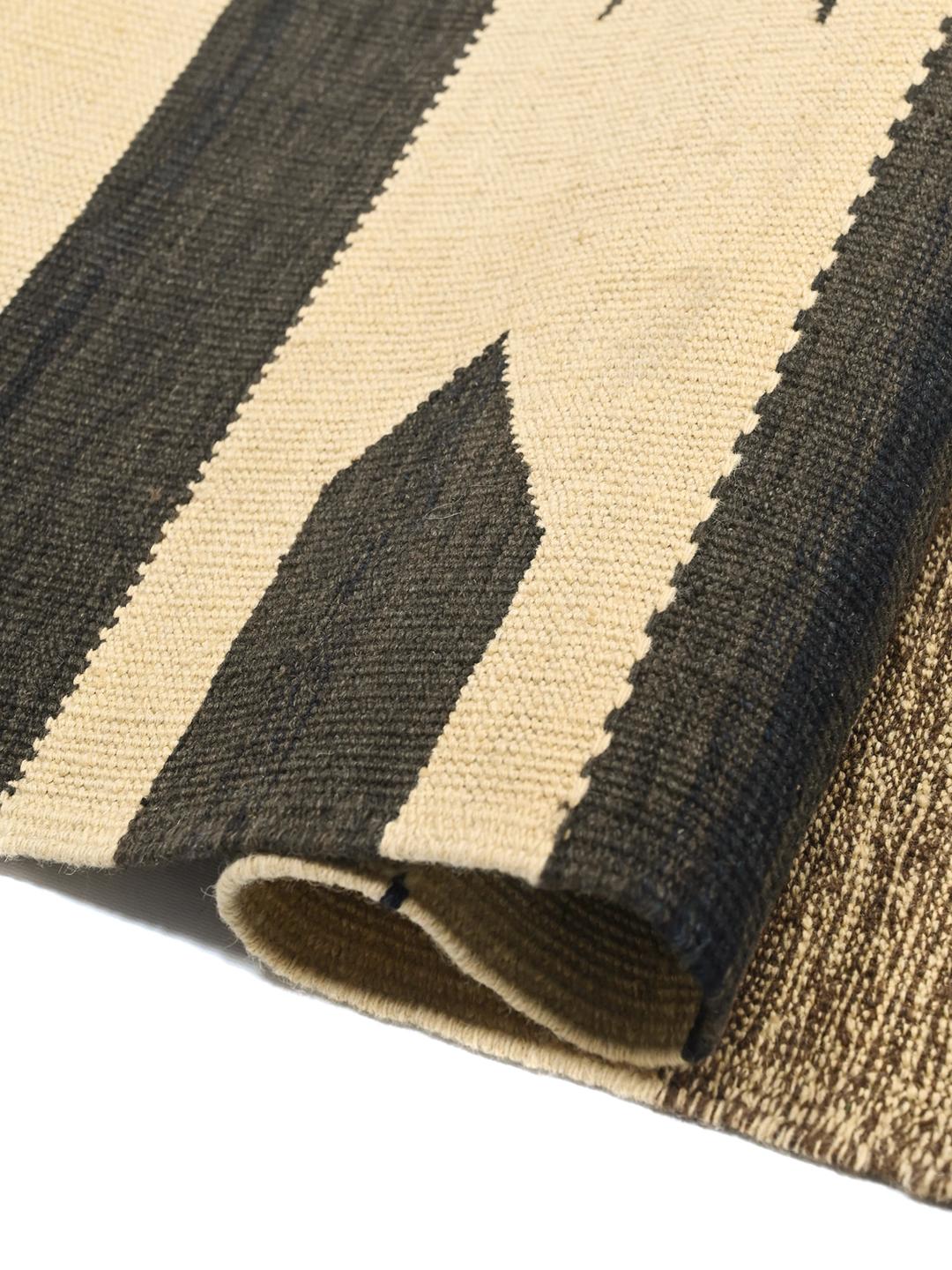
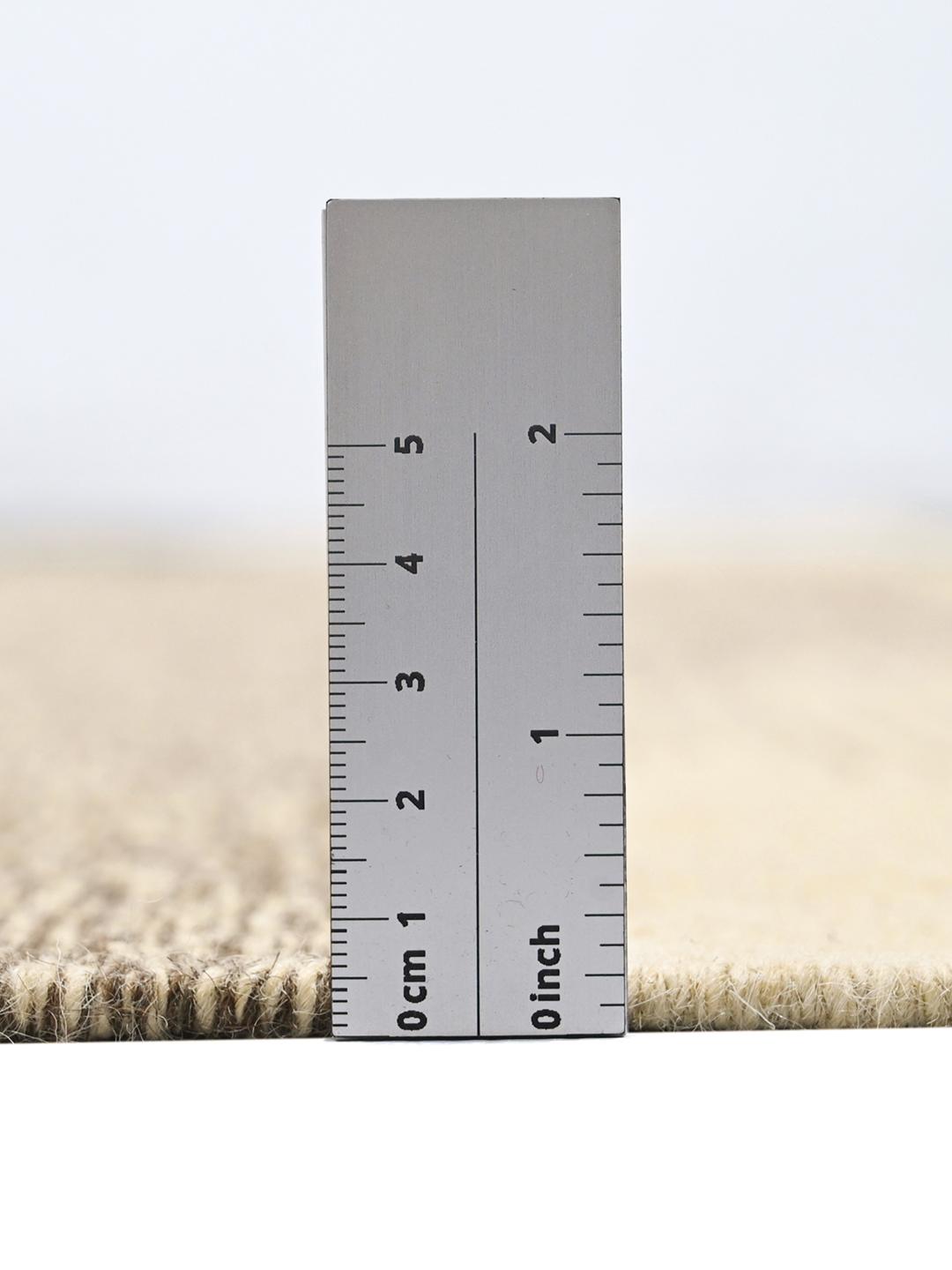
Unlike pile rugs, which use knotted yarns to build up height, a kilim is created by tightly interweaving the horizontal and vertical threads. This flatweave construction creates a crisp finish with clear design lines, resulting in a lighter rug that retains exceptional structural integrity over decades.
The visual language of the Kelim Modern style combines age-old tribal motifs, such as protective geometric symbols and striped bands, with modern spatial arrangements. The use of natural earth tones like brown and beige reflects traditional dye palettes derived from native plants and local sheep wool.
Owning an authentic Afghan flatweave connects your living space to a rich lineage of handcraft. Highly regarded by collectors and design enthusiasts alike, these rugs are valued for their honesty of material, historical depth, and individual character.