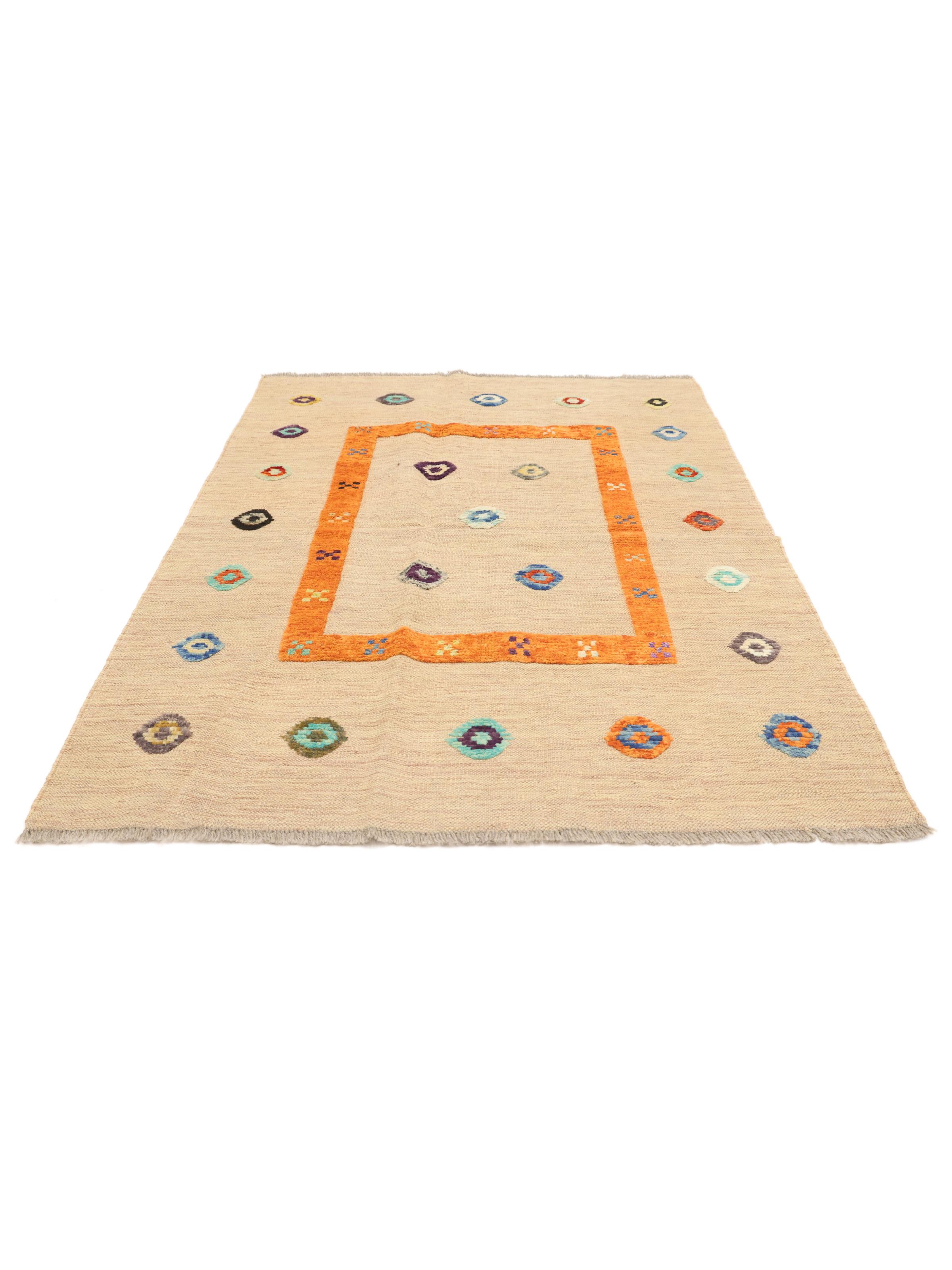
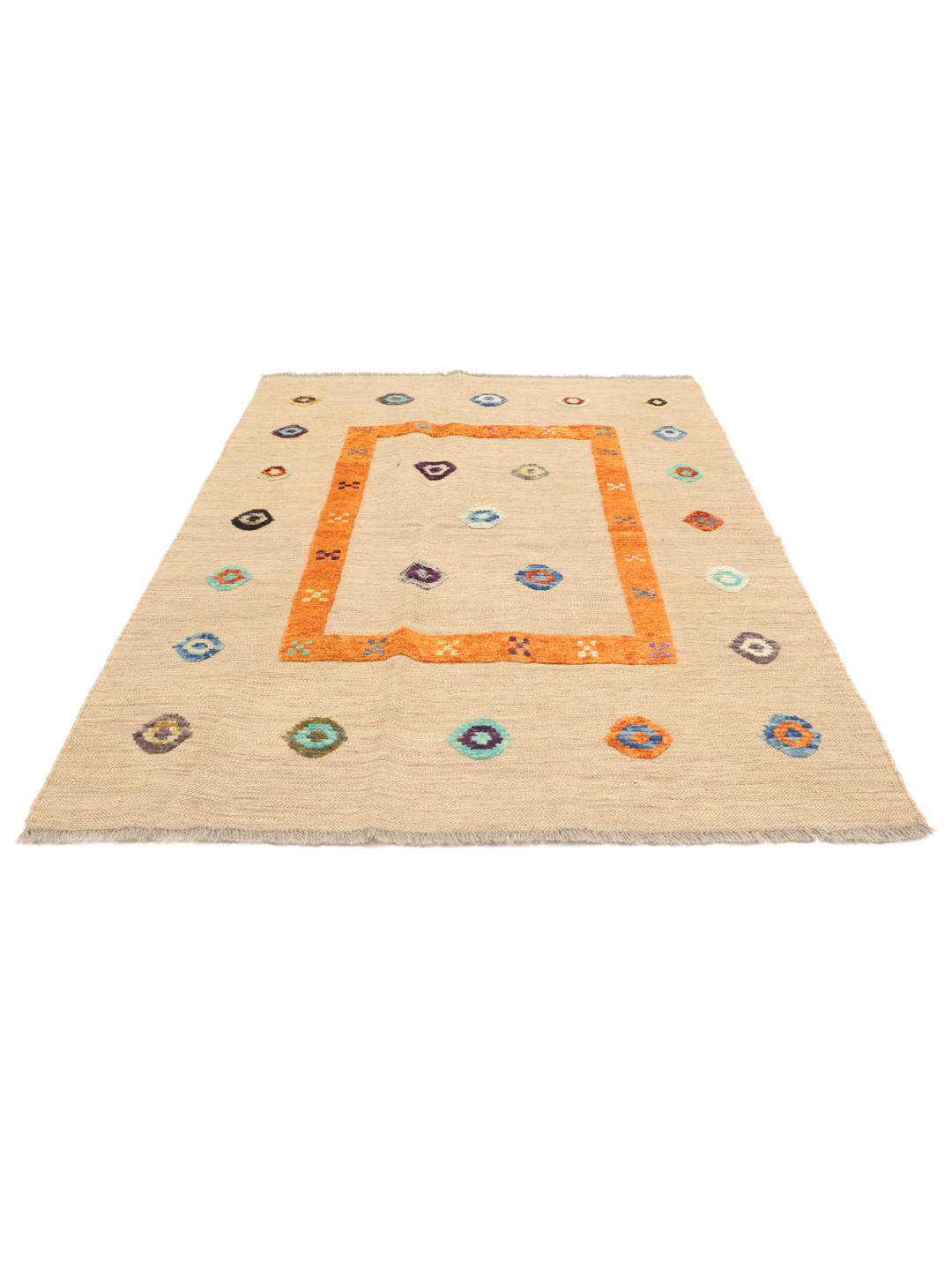
The term Kelim refers to a storied tradition of flat-woven rugs that have been produced for centuries across the Middle East and Central Asia. These rugs are historically significant, serving both functional purposes as floor coverings and nomadic essentials like saddlebags or tent hangings. Afghan weavers, in particular, have refined the art of the Nimbaft, creating pieces that are celebrated for their durability and distinctive, earthy colour palettes.
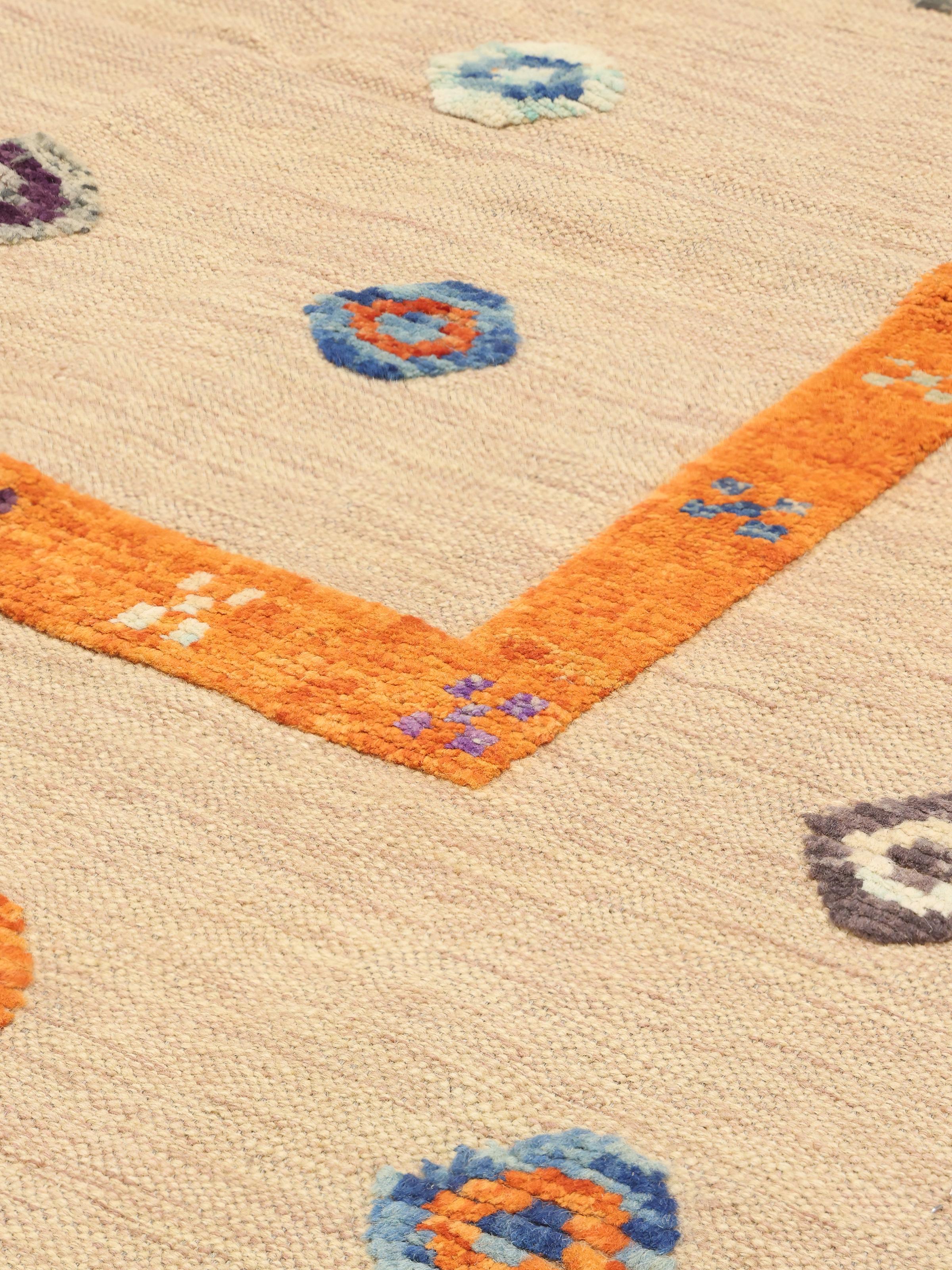
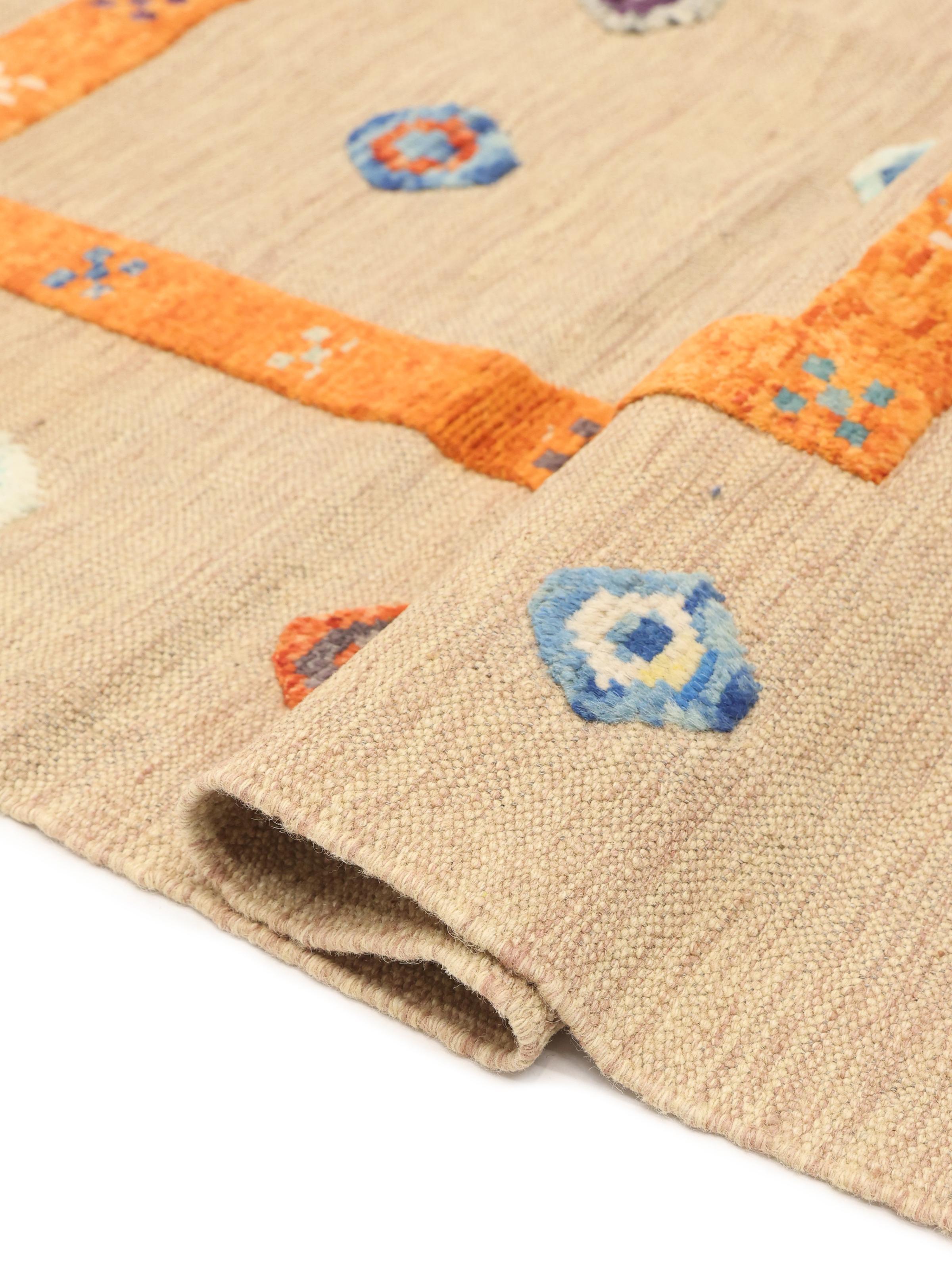
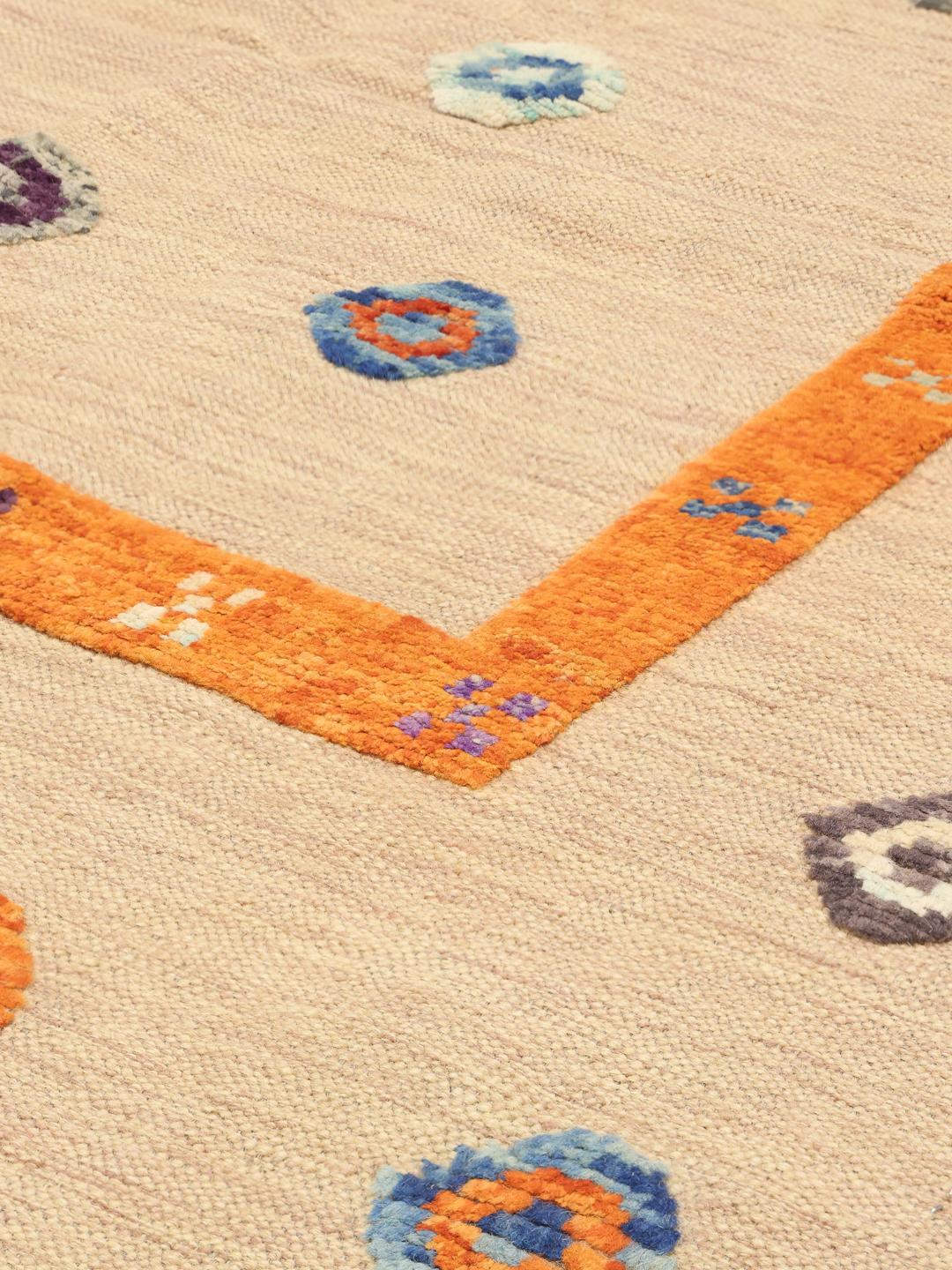
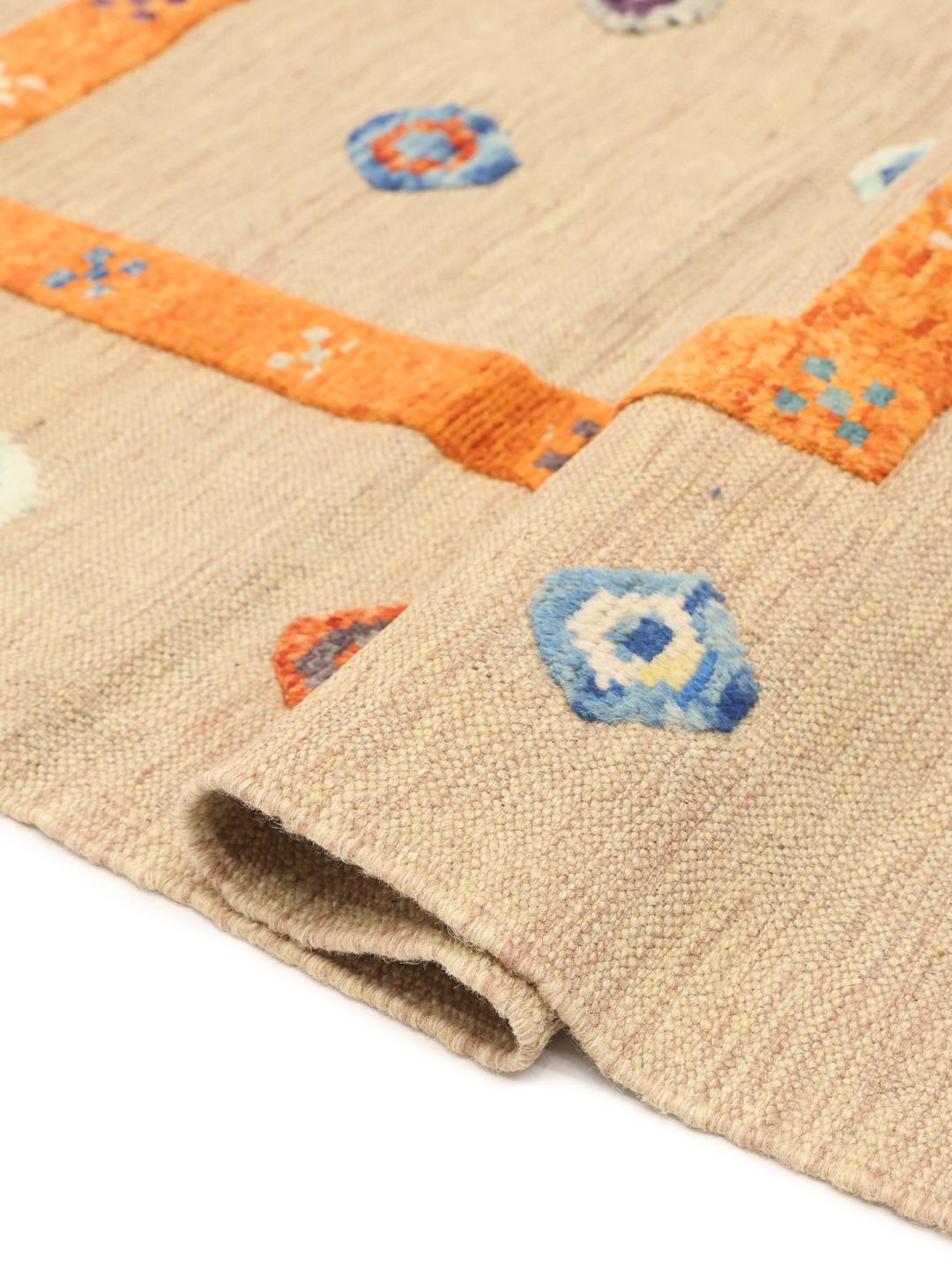
The term Nimbaft describes a specific approach to these flat-woven structures, where the weave is tight and precise, resulting in a durable, reversible textile. This technique matters because it creates a robust fabric that is less prone to shedding or pile-crushing, making it perfect for homes where the rug will see plenty of activity. The weave provides a clean, refined surface that highlights the clarity of the pattern work.
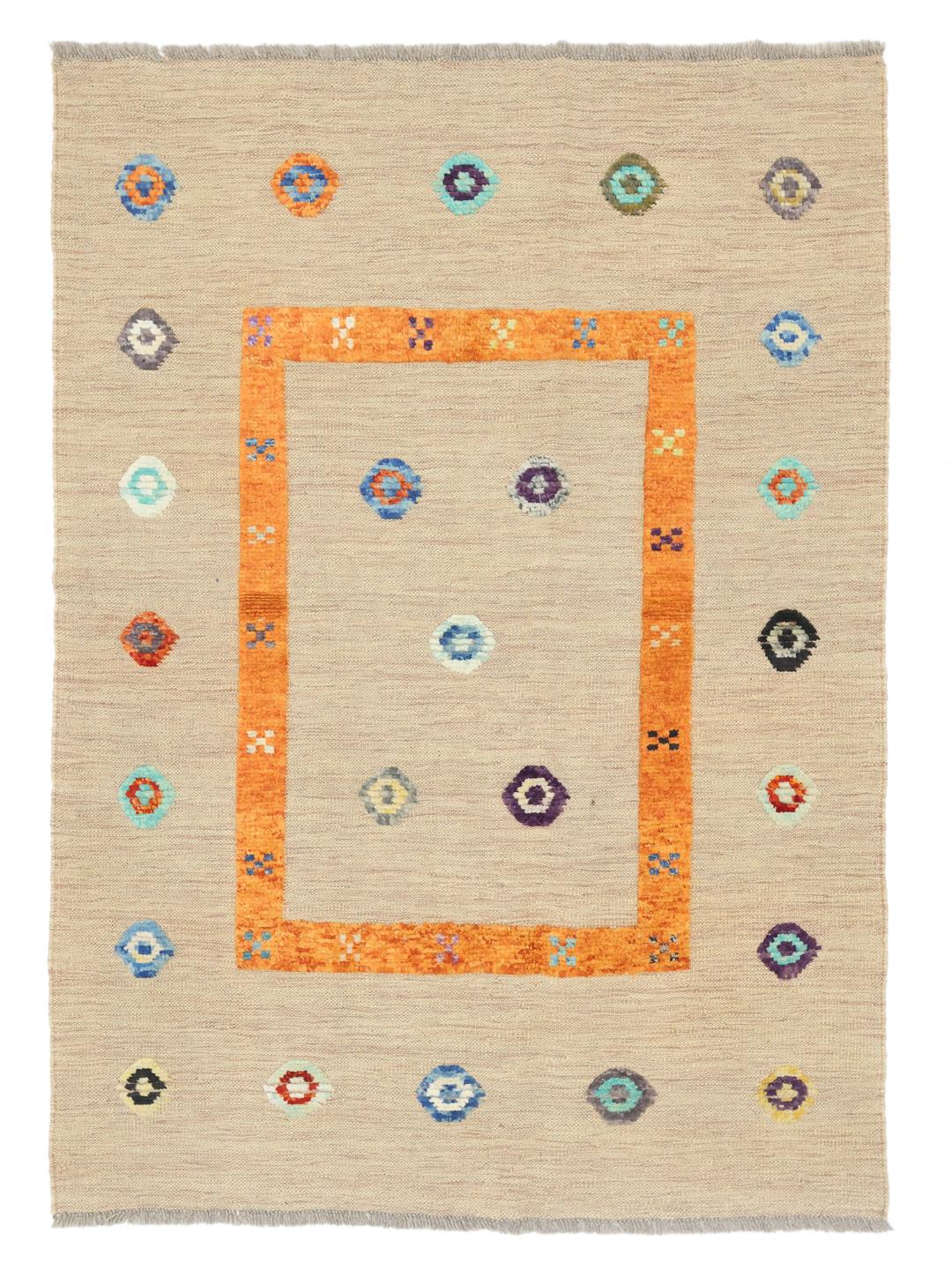
Visually, these rugs often feature geometric motifs that reflect the cultural landscape of their origin. While many traditional rugs focus on dense, all-over patterns, this Nimbaft takes a more open approach, using scattered, vibrant icons against a simple base. This use of negative space is a hallmark of certain regional styles, allowing each individual motif to stand out as a piece of artistic expression.
Collecting a hand-woven Kelim is an investment in human skill and regional history. These rugs are valued not only for their aesthetic beauty but for the stories they carry from the hands of the weavers to your home. Owning one is a way to honour a craft tradition that remains largely unchanged by modern technology, preserving a legacy of beauty and functionality for future generations.