The Kelim tradition, or Kilim, is a storied form of flat-weaving that has been practised for centuries across the Middle East and Central Asia. These rugs are deeply rooted in the nomadic lifestyle of the regions they originate from, where they were traditionally used as floor coverings, wall hangings, and functional textiles for transporting goods. The Nimbaft style, in particular, showcases the evolution of these techniques in Afghanistan, where weavers have refined their methods to produce pieces that are both structurally sound and artistically expressive.
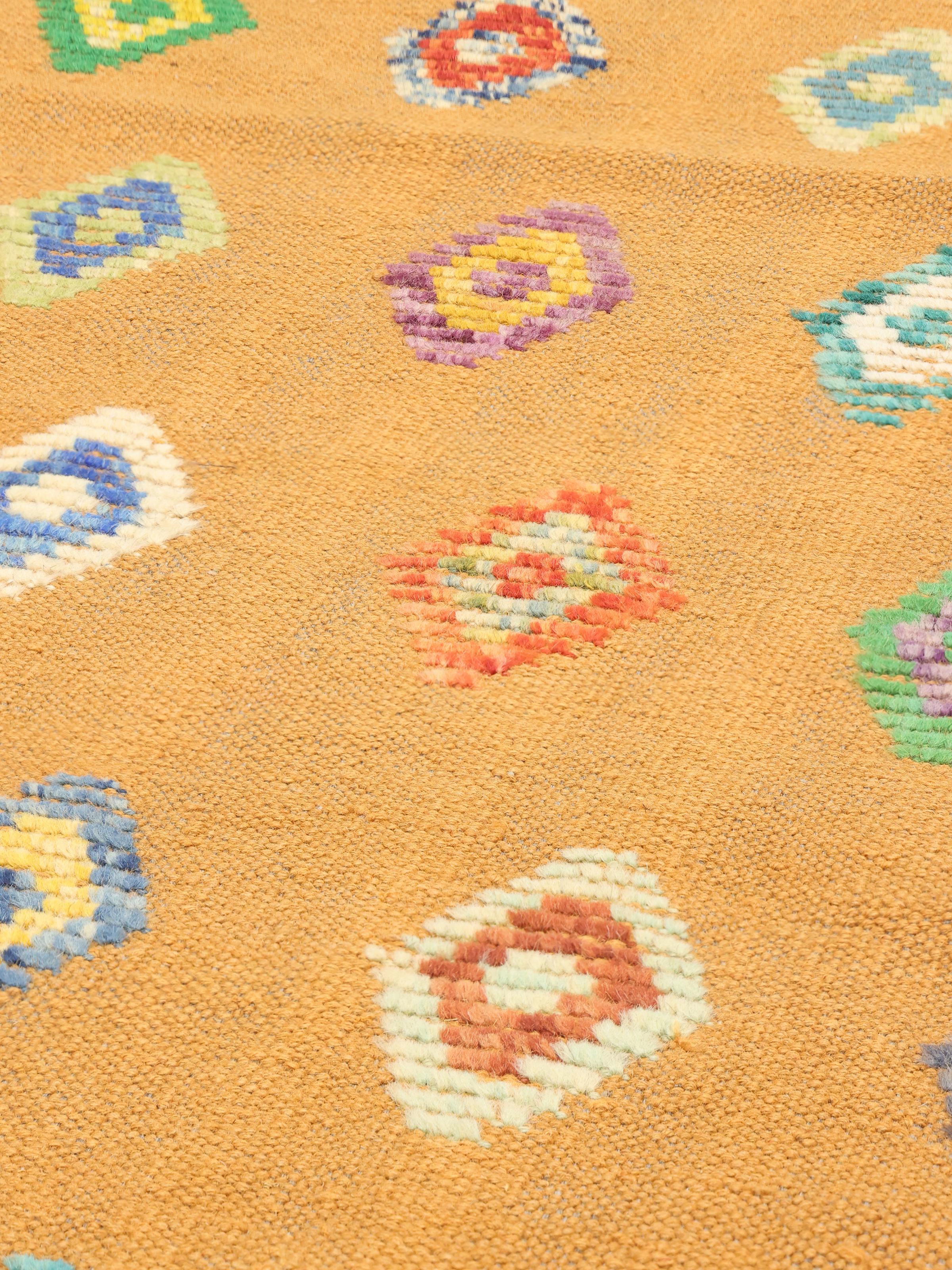
The term 'Kelim' refers to the specific technique where the pattern is created by tightly interlacing the coloured weft strands with the warp. This absence of a pile is what defines the category, resulting in a rug that is remarkably light yet sturdy. This construction method allows for the creation of intricate geometric shapes, as the weaver must work within a grid-like structure to form the patterns, leading to the sharp, clean lines that are the hallmark of this tradition.
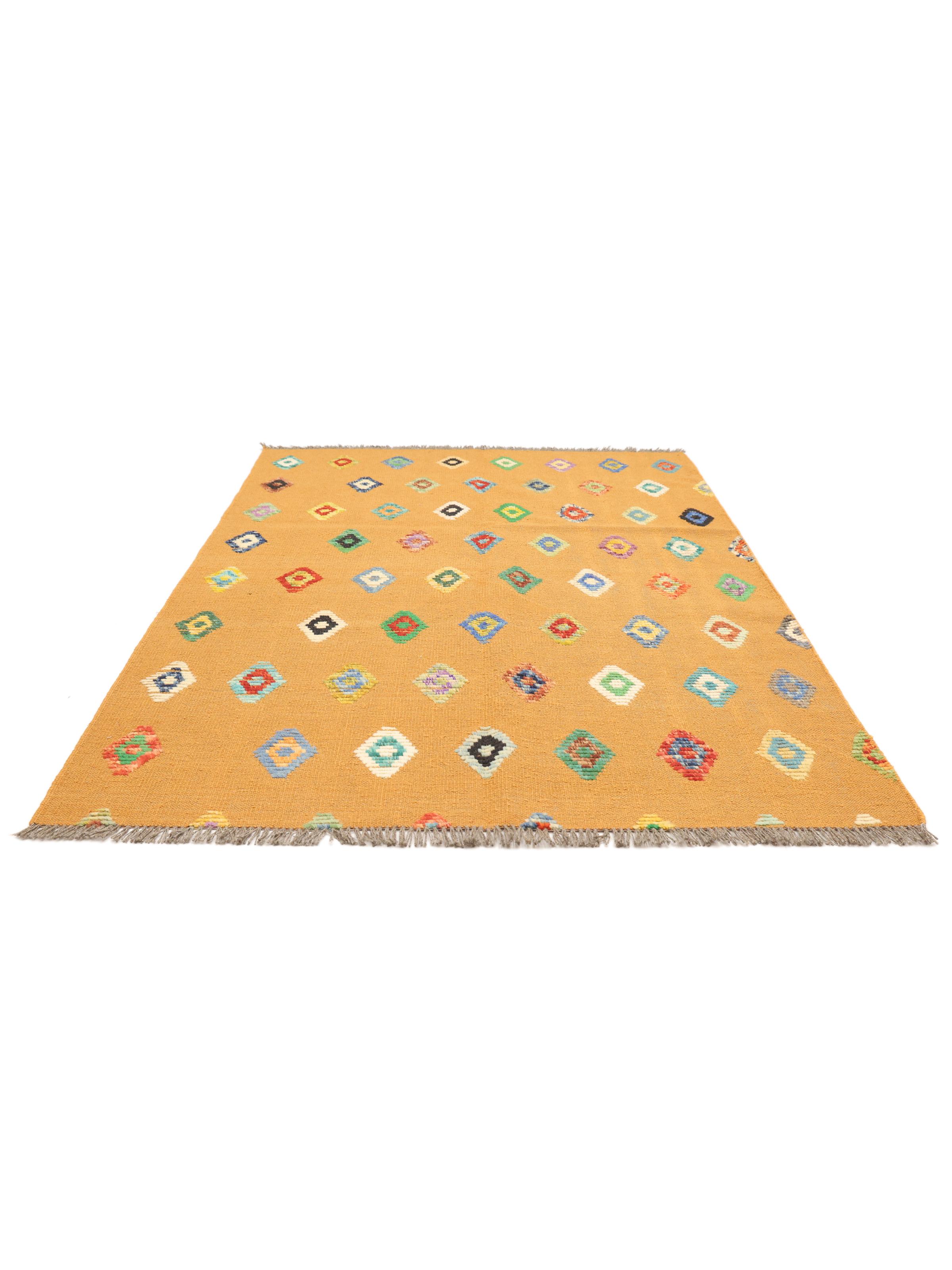
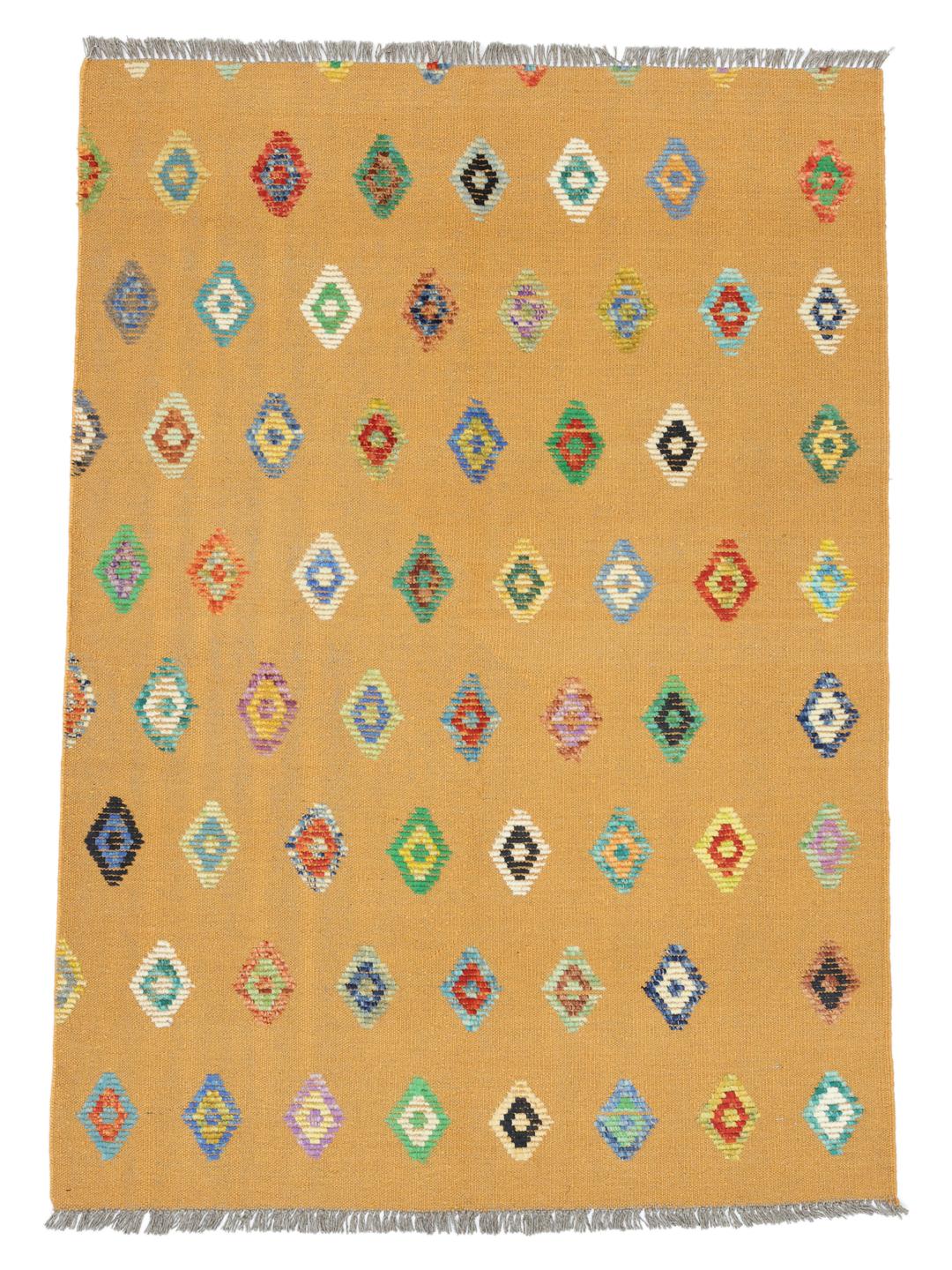
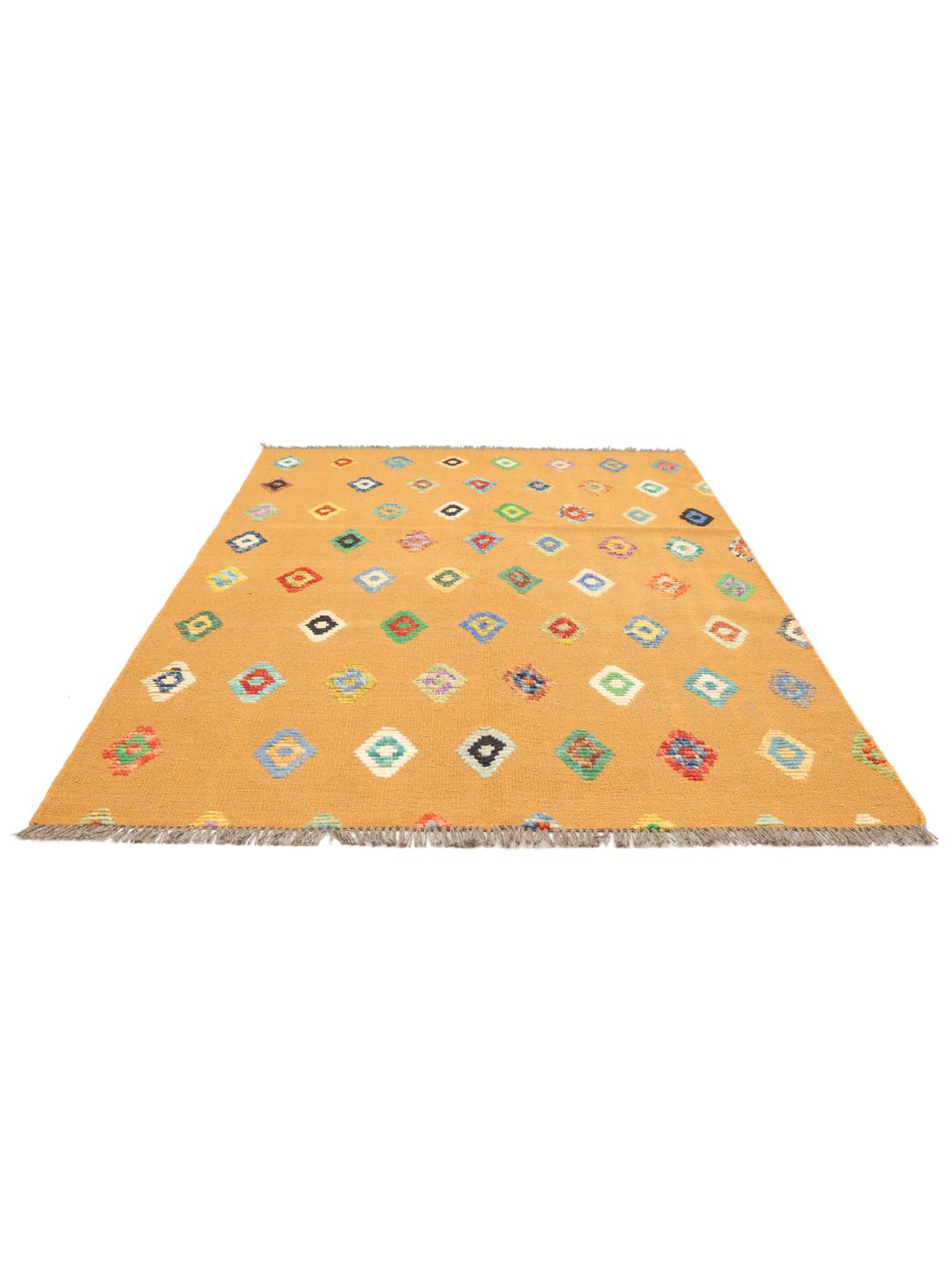
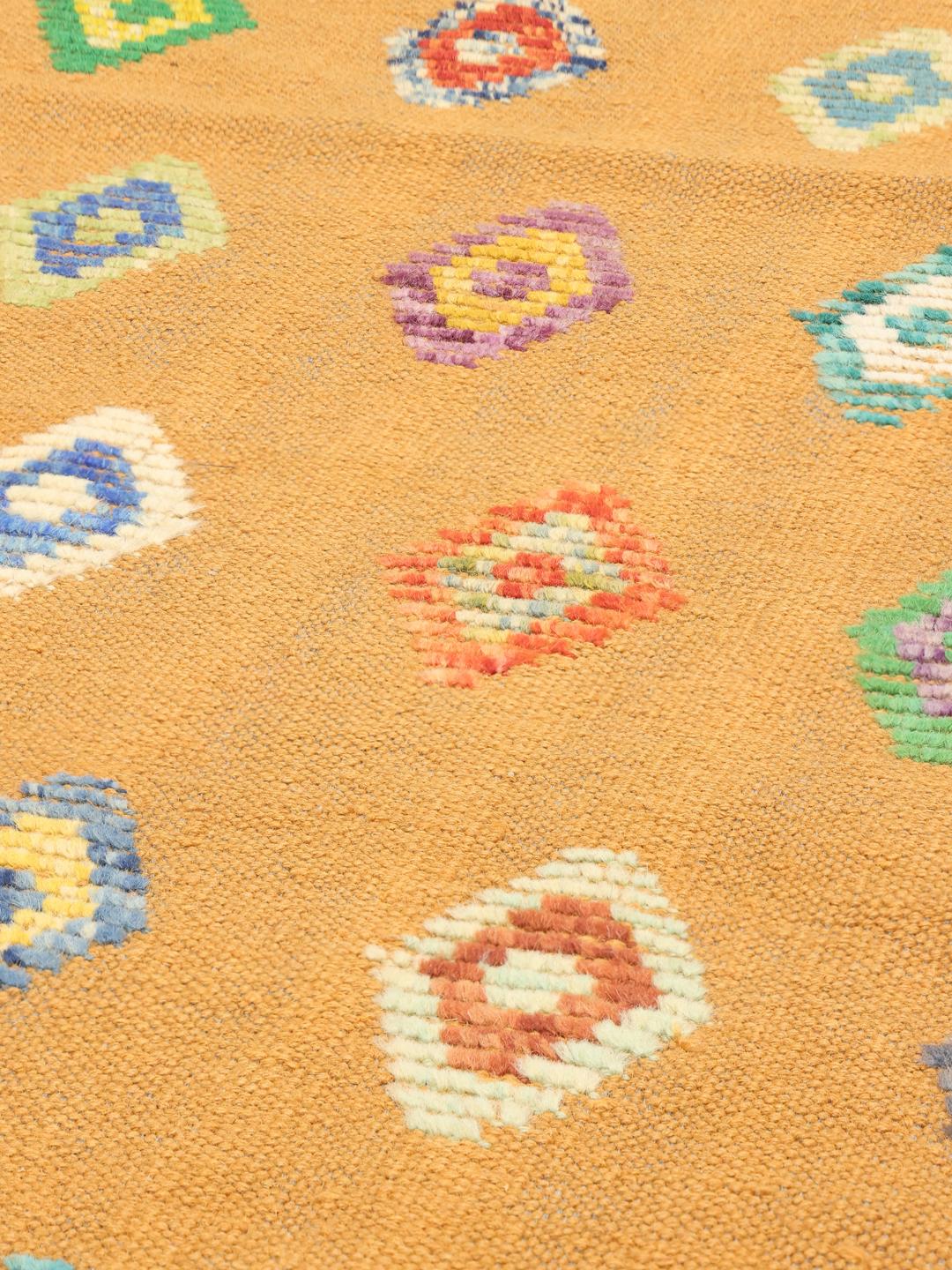
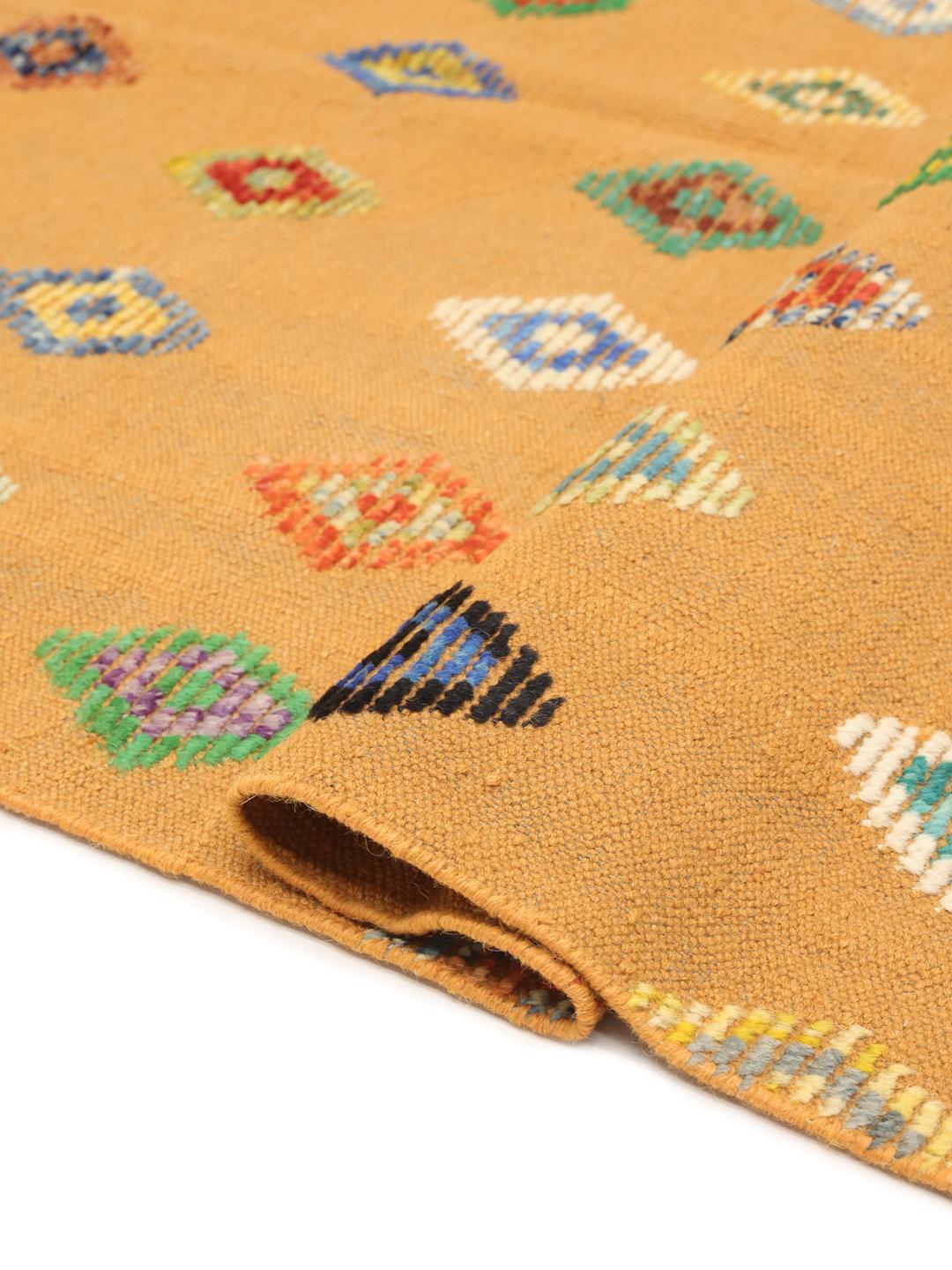
The signature design elements of this rug are the repeated diamond motifs, which serve as a classic geometric language in Afghan weaving. These shapes are often interpreted as protective symbols or representations of tribal identity, passed down through generations of weavers. The use of a golden field combined with a variety of vibrant accent colours is a hallmark of this specific weaving community, reflecting the natural dyes and artistic preferences of the region.
Collecting a Kelim Nimbaft is an invitation to celebrate the skill of the artisan. These rugs are highly valued not only for their aesthetic beauty but for the cultural narrative they hold. By choosing a hand-woven piece, you are supporting a craft that relies on human intuition and years of experience, ensuring that this heritage of design continues to thrive in the modern home.